
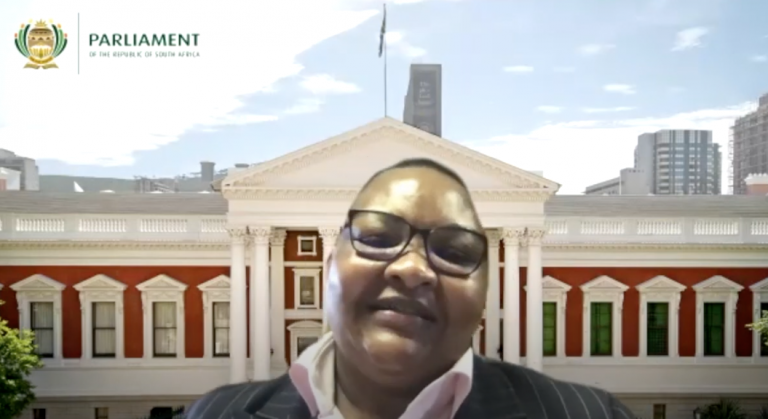
Limpopo Education MEC Polly Boshielo talks about her department’s response to education needs during COVID-19, Matric performance in the province and more.
SADTU Accuses Government Of Using COVID-19 To Avoid Honouring 2018 Public Sector Wage Agreement
CHARLES MOLELE
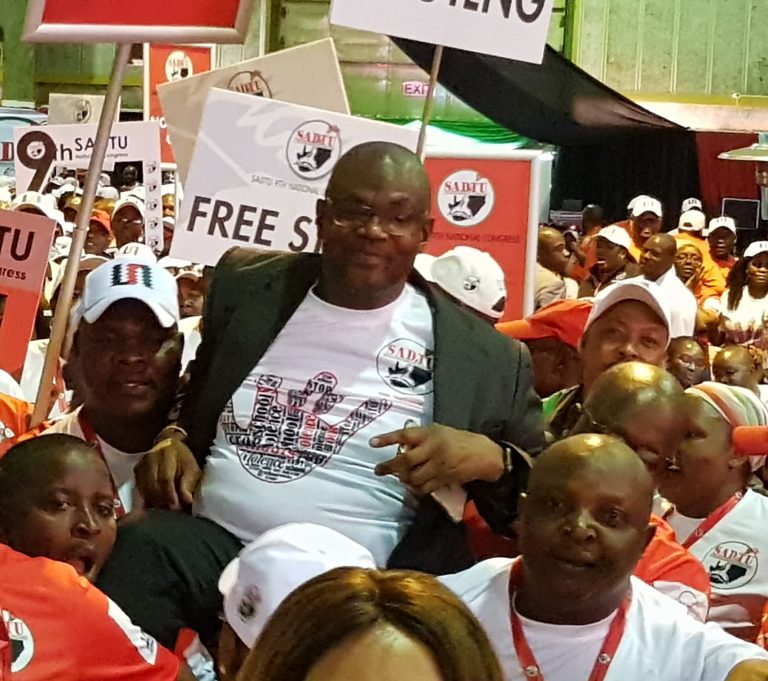
THE South African Democratic Teachers Union (Sadtu) has accused the government of opportunistically using the COVID-19 pandemic for failing to honour a 2018 agreement to increase public sector wages.
SADTU, the country’s biggest teachers’ union, said on Monday that it is confident that the Labour Appeal Court will rule in favour of the workers.
This comes after Judge President of the Labour Court, Justice Basheer Waglay, ruled on Friday in favour of an application by the unions for the matter to be heard directly at the Labour Appeal Court to expedite its resolution.
SADTU’s General Secretary Mugwena Maluleke said the unions were confident that they would emerge victorious, accusing the government of “spewing out flimsy excuses for reneging on the agreement”.
“In the first two financial years, the government had no qualms with the agreement. But shockingly, in the third year, the government has described it as unlawful, unaffordable and against public policy,” said Maluleke.
“The government is citing other priorities such as poverty and social grants for not complying with the collective agreement, as if such socio-economic problems had not existed beforehand. The government is plucking excuses out of the air and cluttering the process with breath-taking falsehoods.”
The unions have been locked in a four-month legal battle over the government’s refusal to implement the third leg of the wage agreement it had signed in January 2018 after enforcing the terms of the deal during the first two years without argument.
In papers filed in the Labour Court, SADTU and the other unions argued that the government should not be permitted to take advantage of the COVID-19 pandemic in an opportunistic manner to avoid its legal obligations set out in an agreement it had freely and deliberately undertaken to respect.
The unions said if this were to be allowed, it would strike at the heart of the principles of collective bargaining and industrial peace protected by the Constitution and the Labour Relations Act.
The unions also rejected claims by the National Treasury that the public wage increases were unaffordable, saying the Cabinet was aware of the economic conditions when it concluded the agreement.
They also rejected the claim from the government that it was coerced into the agreement, saying it was “staggeringly shocking to suggest that cabinet made an unconstitutional offer because it was threatened by trade unions”.
Senzo Mchunu, Minister of Public Service and Administration, has said that the government did not have the necessary funds to honour the wage agreement.
The government has rejected the public-sector unions’ claim that it was using the COVID-19 pandemic as an excuse to refuse to grant the wage increases.
Instead, it has blamed the unions for turning down cost-cutting proposals to make the increases affordable.
Following Judge Waglay’s decision on Friday, the unions were informed that the matter will be heard in the Labour Appeal Court on 2 December.
In a letter to the unions, the Labour Court registrar writes: “Although the Judge President is of the view that this is not the sort of matter which should forgo a hearing by the Labour Court, he has decided, for a number of reasons, to have the matter ventilated in the Labour Appeal Court, as a court of first instance.”
“To make matters worse, the government is trying to criminalise the legitimate collective agreement that it willingly signed. It seeks to exploit the adverse economic situation created by the COVID-19 pandemic. That is a blatant cynical attempt to hide behind this worldwide tragedy,” said Maluleke.
(COMPILED BY INSIDE EDUCATION STAFF)
Demonstrations Throughout France In Tribute To Beheaded Teacher
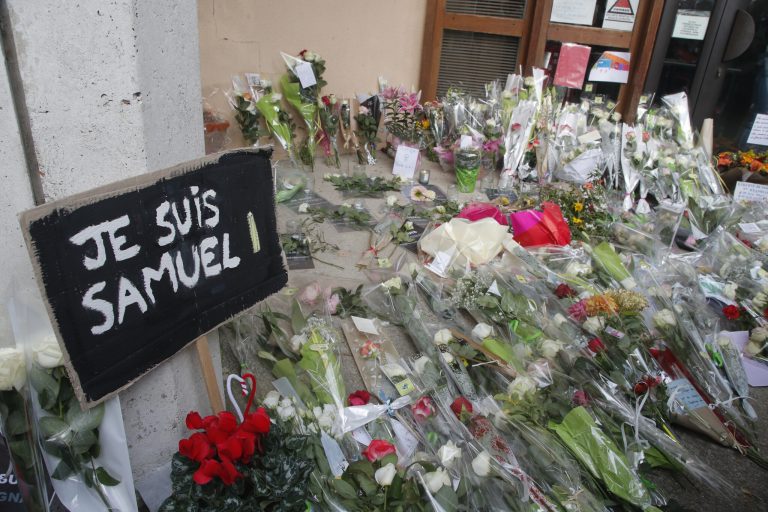
DEMONSTRATIONS are planned across France in tribute to a teacher who was beheaded by an attacker after showing his students caricatures of Mohammad.
Samuel Paty was murdered near the school where he worked, in the commune of Conflans Saint-Honorine, northwest of Paris, on Friday.
The suspected killer, who officials said was an 18-year-old Chechen refugee, was armed with a knife and a plastic pellet gun, was later shot dead by officers in a nearby town, police said.
French authorities have launched an anti-terror investigation.
President Emmanuel Macron called it an “assassination” and an “Islamist terrorist attack”.
The leaders of the main political parties, associations and trade unions will demonstrate on Sunday afternoon in Paris, Place de la République, and in many other cities including Lyon, Toulouse, Strasbourg, Nantes, Marseille, Lille and Bordeaux.
The Minister of Education Jean-Michel Blanquer and the Minister Delegate for Citizenship Marlène Schiappa have announced that they will represent the government “in support of teachers, secularism, freedom of expression and against Islamism”.
Here’s what we know about the attack so far:
Who was the victim?
Paty, a 47-year-old history and geography teacher, was decapitated near the school at around 5 pm local time.
Police told the AFP news agency that he had hosted a class discussion with secondary school students about cartoons of Islam’s Prophet Muhammad.
Some Muslim parents said they had complained to the school and French media reported Paty had received a number of threats in the wake of the class.
Blanquer said the school had taken “appropriate” steps in response to the complaints in setting up measures that both “supported the teacher and opened up a dialogue with parents”.
The minister added he would prepare a pedagogical “framework” on how to address the attack with students when they returned to school after half term. He said a minute’s silence would be organised.
President Emmanuel Macron visited the Bois d’Aulne school and met the history teacher’s colleagues on Friday evening.
He said afterwards: “One of our citizens was assassinated tonight because he was a teacher, because he taught students about the liberty of expression, the liberty to believe or not to believe.
“Our countryman was the victim of a cowardly attack. The victim of an Islamist terrorist attack.”
Who was the alleged perpetrator?
His alleged attacker was reported to be 18 years old, of Chechen origin and born in Moscow.
Officials said he was shot dead in the neighbouring town of Éragny after he acted in a threatening manner and failed to respond to an order to put down his weapons.
Officials said he was unknown to intelligence services.
French anti-terrorism prosecutor Jean-Francois Ricard told reporters the suspect, who had been granted a 10-year residency in France as a refugee in March, was armed with a knife and an airsoft gun, which fires plastic pellets.
His half-sister joined the Islamic State group in Syria in 2014, Ricard said. He didn’t give her name, and it is not clear where she is now.
The prosecutor said a text claiming responsibility and a photograph of the victim were found on the suspect’s phone.
He also confirmed that a Twitter account under the name Abdoulakh A belonged to the suspect. It posted a photo of the decapitated head minutes after the attack along with the message “I have executed one of the dogs from hell who dared to put Muhammad down.”
Ricard said the suspect had been seen at the school asking students about the teacher, and the headmaster had received several threatening phone calls.
France’s anti-terrorism prosecutor’s office said authorities investigating the killing of Samuel Paty in Conflans-Sainte-Honorine on Friday arrested nine suspects, including the teen’s grandfather, parents and 17-year-old brother.
A picture of the decapitated teacher was posted on social media immediately after the attack on an account that belonged to the assailant shot by police, France’s national anti-terror prosecutor said on Saturday.
What’s the background to this attack?
The incident came as the French government works on a bill to address Islamist radicals who authorities claim are creating a “parallel society outside the values of the French Republic”.
This marks the second terrorism-related incident since a trial began into the January 2015 massacre at the satirical magazine Charlie Hebdo, which had published cartoons depicting Muhammad.
The magazine republished them this year as the trial got underway.
Three weeks ago, an 18-year-old from Pakistan was arrested after stabbing two people outside the former Charlie Hebdo offices.
He told police he was upset about the publication of the caricatures. His victims suffered non-life-threatening injuries.
How have people reacted to the incident?
Politicians across the political spectrum have denounced the murder, and are taking part in demonstrations against extremism on Sunday.
Charlie Hebdo tweeted on Friday: “Intolerance just reached a new threshold and seems to stop at nothing to impose terror in our country.”
European Commission President Ursula von der Leyen on Saturday expressed her condolences to the victim’s family and said her “thoughts were going out to teachers in France and throughout Europe” after the attack.
“Without them (teachers), there are no citizens. Without them, there is no democracy,” she added.
The Assembly of Chechens in Europe, which is based in Strasbourg, France, said in a statement: “Like all French people our community is horrified by this incident.”
The rector of the Lyon mosque, Kamel Kabtane, said the the murdered teacher “did his job” and was “respectful” in teaching his pupils about freedom of expression. He condemned the perpetrator, saying he had proved by his actions that he was “not religious”.
Paty “was entitled to raise the intellectual level on tolerance and freedom of expression,” he said.
“He was respectful and he even suggested to students who might feel shocked to go out. He wanted to speak without offending, without hurting,” Kabtane said in an interview with AFP.
(SOURCE: AP)
Acornhoek Physics Summer School is Accelerating Space Education in South Africa
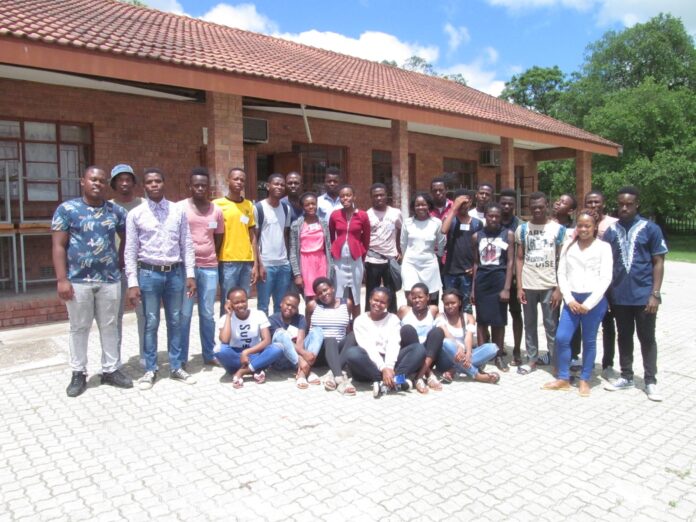
ACORNHOEK Physics Summer School is a summer school that is hosted every year to improve understanding of Physics and Mathematics. The summer school started in 2016, with the first classes being held at Magwagwaza high school, South Africa, from December 5 to 15, 2016 and January 2 to 6, 2017.
Since then, the summer school has been taking place every year during December and January holidays. During the summer school, classes are held on Physics, Mathematics, while career guidance is provided and other fun activities are involved.
Grade 11 students are taught Grade 12 Maths and science, and every year, alumni of the school come back to support the next batch. This summer school was founded by Sibusiso Mdhluli a current student of the University of Northwest & Cape Town and Shepherd Mpolwane a student of the University of Limpopo.
This year’s summer school will be held from 7 to 18 December 2020. Due to Covid-19, it will combine e-learning with physical learning i.e. students will learn from home for some days and learn at the venue on other days. A new course in Astronomy and Programming (Python) has been added, to provide early exposure to students to skills which are fast becoming essential for the 4th industrial revolution.
Fundraising of about R100,000 ($6,040) is needed to cover the purchase of 21 tablets (20 for students and 1 for teaching) which will be used for e-learning, data bundles, transport, meals during physical lessons, stationery, pay tutors and other safety product which may be needed for Covid-19.
In this interview, Sibusiso talks about the growth and impact of the summer school since inception and the present challenges faced.
Can you tell us about yourself, interests and your background?
My name is Sibusiso Mdhluli and I am based in South Africa. I am currently finishing my Master’s in Astrophysics at the University of the Western Cape. My interest is more into Machine Learning which is the area of Artificial Intelligence and this is part of the work I’ve been doing for my Masters. My other interest involves looking at ways of improving the education system in rural areas.
What was the inspiration behind Acornhoek Physics Summer School?
The summer school started when I noticed that many students where I come from are having challenges in terms of Physics and Maths. Since it’s more like a remote area, we don’t have many industrial materials to bring motivation to the students so they can see the need to do Science and Maths. After my friend, Shephard Mpulwane, and I finished our undergraduate (studies) in 2015, I suggested that we start a summer school in 2016 where we get students in grade 11 and teach them grade 12 physics and Maths during December holidays.
This also came from my own experience. When I finished my grade 11, I decided to spend my December time studying grade 12 physics and mathematics, and I realised how much it helped me. By the time I started my grade 12, I was almost ahead of all the other students and was part of the top students. When I saw how much it worked for me, I suggested to my friend, that we can follow the same pattern for summer school. And since then we have never looked back.
Every year we train grade 11 students for three weeks in December, give them career guidance and this year, we decided to integrate Astronomy into the curriculum. This will make them the first high school students in the country to study Astronomy.
What is the mission and vision of the Summer school?
The mission of the Summer school is to help students from rural areas to perform better in Maths and Science and expose them to various career opportunities.
How has been the program so far, and how many students have benefited in this impactful program?
So far, this is the number of students we have worked with:
2016 – 5
2017 – 17
2018 – 8
2019 – 22
For this year, we plan to host 20 students.
You’re a student set on a great mission to impact lives, how have you been able to fund the program so far?
When we started in 2016, the students were contributing something minimal to sustain the program. For the first time last year, we got funding from the Department of Physics and Astronomy, University of the Western Cape, which was approved by Prof Roy Maartens. We also got another funding from IDIA – Inter-University Institute for Data-Intensive Astronomy, University of the Western Cape, which was approved by Prof Carolina Odman. Friends and colleagues also came through for us for last year’s summer school, and we were able to raise over R30 000, which we used to fund last year summer school.
How has Covid-19 affected the Summer School?
Since the pandemic started this year, we were not sure if we will be able to hold the summer school. What we finally decided on is to change the mode of the summer school so as to minimize social contacts between students and tutors and abide by the Covid-19 social distancing rules.
The plan is that the summer school will be a mixture of online and onsite classes. To make this possible, we have to provide students with tablets. Presently, we are trying to raise funding of about R100,000 ($6,040) to acquire the necessary materials needed for them to attend the training online.
The alumni of the Summer School, what have they grown to become. Highlight notable success stories of the alumni?
Almost all of our alumni are at various levels in universities pursuing different degrees. Some of our first set of students will be finishing their undergraduate degrees this year. The network is developed by giving the alumni the chance to come back and tutor at the Summer School.
Where do you see the Summer School in 5 or 10 years to come?
We would like to train more students intensively, accommodate them for that period of three weeks; since for now they attend and leave the same day. We would like to be able to provide bursaries for university studies to all the students who participated in the summer school. We also look forward to extending this project to other places in the country because we have seen the great impact it has created in this location.
(SOURCE: AFRICANEWS.SPACE)
Uganda’s Student Leaders Seek Parliament Intervention In Re-opening Of Universities

STUDENT leaders from public and private universities have called on government to reconsider the decision to re-open academic institutions for only finalists.
The guild student leaders from Makerere University, Kyambogo University and Uganda Christian University who presented a joint petition to Speaker Rebecca Kadaga on 14th October 2020, argued that the decision to re-open institutions of higher learning to only finalists disadvantages continuing students.
The Information and Senate Representative from Makerere University, Joshua Muhwezi Lawel said government’s proposal to make it compulsory for continuing students to adapt to online learning is not feasible since internet penetration is still very low.
“This model discriminates students with disabilities especially those with visual and auditory impairments,” he said adding that, “online learning model is still affected by number of challenges which include bandwidth limitation, high costs of internet subscription, unreliable internet and infrastructure limited to only urban areas.”
Muhwezi added that online learning does not favour courses that require practical engagement especially science courses like human and veterinary medicine and engineering.
“We propose that online learning is suspended because it is discriminatory and inefficient,” he said.
Muhwezi called on government to make arrangements for continuing students to attend classes physically arguing that the Standard Operating Procedures to curb the spread of the coronavirus are easily observed in gazetted areas.
“Students doing practical courses should be allowed to come back and access accommodation in their respective halls of residence and hostels since online studies are not feasible,” said Muhwezi.
The Guild President of Uganda Christian University, Timothy Kadaga called on government to suspend taxes on private universities since they have been closed for the past six months and yet their operations largely depend on tuition fees from students.
“The tax suspension will give these universities time to recover from the six months of inactivity,” he said.
Timothy Kadaga also urged institutions of higher learning to exercise lenience in tuition fees payments saying that parents cannot afford the 100 per cent fees.
“Parents have been affected financially; we therefore, ask that institutions of higher learning should allow students to pay 60 per cent of the tuition fees as opposed to the required 100 per cent,” he said.
Speaker Kadaga said she will convene a meeting between the student leadership and the Ministers of Education, Health and Finance to find a way forward.
“We need to find a solution on whether continuing students should study online or not,” she said.
The Speaker added that attempts by legislators to move a motion to suspend taxes on private universities were futile.
“We tried to move a motion on taxes on private universities but the Minister vehemently opposed it,” Kadaga said.
The Ministry of Education and Sports announced that academic institutions will re-open on 15 October 2020 for finalist students at all levels following a six months’ closure due to the Covid-19 pandemic.
(SOURCE: EAGLEONLINE)
Nzimande Condemns Torching Of UKZN’s Student Residence
NYAKALLO TEFU
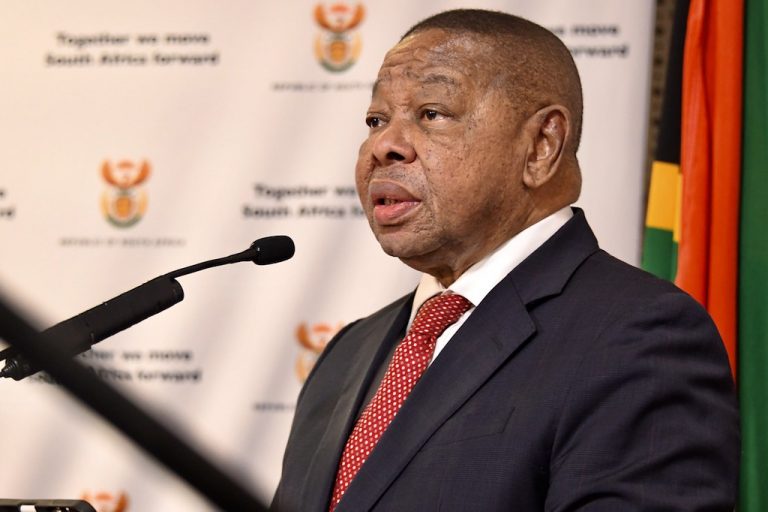
HIGHER Education Minister Dr Blade Nzimande has asked the management of the University of KwaZulu-Natal to tighten up security at its campuses.
This follows the torching of a student residence – The Oval – at UKNZ’s Westville campus this week.
“The destruction of university property is a criminal offence and all those engaging in such acts must be arrested and face the full might of the law,” said Nzimande.
Nzimande has urged university management, working together with law enforcement agencies, to swiftly bring those responsible for ‘this shameful’ and ‘outrageous act’ to book.
Higher Education spokesperson, Ishmael Mnisi said: “The Minister Nzimande further calls upon the university community – both students and staff – to isolate, identify and expose these criminals who continue to vandalise the university property.
“The minister further said that these criminals must be totally removed from our institutions as they do not deserve to be within our institutions, but belong to jail.”
Details of why the building was set alight are not yet clear.
(COMPILED BY INSIDE EDUCATION STAFF)
Ramaphosa Vows To Create 300 000 Teaching Posts To Help Young Jobless People

CHARLES MOLELE
PRESIDENT Cyril Ramaphosa has vowed to create more than 800 000 jobs in the next three years using the government’s R100bn war chest
These will include 300 000 contract-based teaching jobs for unemployed youth.
He said the education and school assistants – who will be paid a stipend of R3 500 per month with 1% contributed towards UIF – will be employed at the country’s 23,093 schools.
Outlining his much-anticipated Economic Recovery Plan in Parliament on Thursday, Ramaphosa said government has committed R100 billion over the next three years to create jobs through public and social employment.
“We are going to create 300,000 opportunities for young people to be engaged as education and school assistants at schools throughout the country, to help teachers with basic and routine work so that more time is spent on teaching and enabling learners to catch up from time lost because of COVID,” said Ramaphosa.
He added: “The employment stimulus is focused on those interventions that can be rolled out most quickly and have the greatest impact on economic recovery.”
“At the heart of the employment stimulus is a new, innovative approach to public employment which harnesses the energies and capabilities of the wider society.”
(COMPILED BY INSIDE EDUCATION STAFF)
What South Africa’s Teachers Brought To The Virtual Classroom During COVID-19
MMAKI JANTJIES
WHILE celebrating this year’s World Teachers Day, we should recognise how the COVID-19 pandemic has amplified the key role that teachers already play in South Africa’s schools.
Before the pandemic, many teachers in the country had not received substantive formal technology training, either to support blended teaching and learning or to fully apply online learning. The decision by the Ministry of Basic Education to shut down schools in response to the pandemic forced teachers to adapt and innovate to ensure that learning continued despite the challenges faced.
South African schools are clustered into quintiles ranging from one to five. This was done to ensure an equal and fair distribution of resources across schools. Schools in the lower quintiles are often based in under-served communities where resources are limited, while quintile five schools are well resourced. This approach was introduced to address past inequities which affected schools. Regional variances, therefore, exist in terms of access to computer labs and related computing resources.
Although many rural and peri-urban schools have some form of computing or information technology resources, some have none at all.
The Basic Education Department created a COVID-19 guide for teachers addressing aspects of health as well as potential resources that they could use when teaching from home. This is how teachers across South African schools have responded to COVID-19:
- Having little to no previous experience, they have had to adapt to online learning platforms while learning how to use learning management systems during the pandemic.
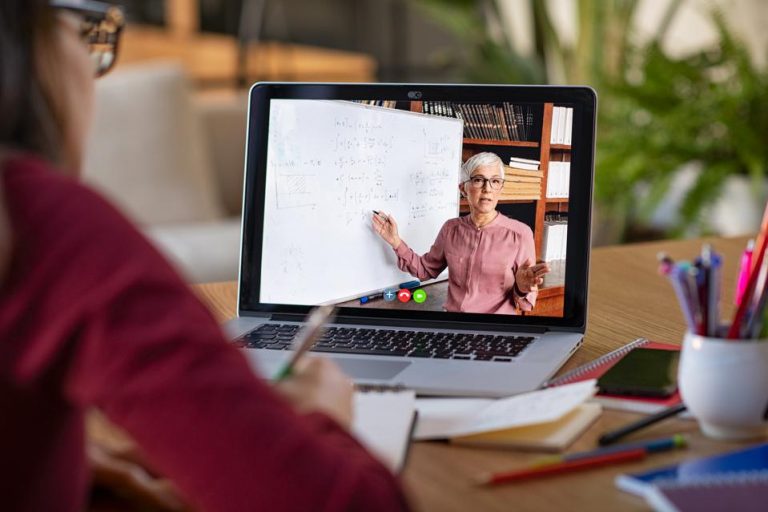
- To keep supporting learners, the teachers used online teaching resources and conducted one-on-one consultations using platforms like Zoom, WhatsApp and Google messaging services that allow video calls.
- The WhatsApp messaging service has been repurposed for learning. Schools have created WhatsApp learning groups to take pictures of book pages and send them to parents, while learners receiving teaching material through their smartphone apps have enabled classes to continue. The Department of Basic Education also launched a complementary WhatsApp portal to provide teachers with information about COVID-19 and educational material.
- In some instances, teachers pasted pieces of paper on the wall and used them as “whiteboards”, then recorded themselves on their phones to teach learners from these whiteboards. They shared the videos with parents via the WhatsApp groups. Schools have also used platforms such as Facebook to share information and send learning material to parents.
Radio and television have also been used by teachers to supplement learning. Prior to the pandemic, these had lost popularity as key learning media. But, teachers now recognise that since most learners have access to them, they should be incorporated into remote learning material. The Basic Education Department also recognised that pupils were more likely to be able to access radio and television compared to any other technological medium of learning.
While South Africa’s focus prior to the pandemic was on digital transformation in the fourth industrial revolution, teachers have emerged as key players in digital skills development and sustainability.
Going forward
Beyond COVID-19, a lesson for South Africa and many other countries is the role that teachers play in co-creating a digital learning environment. For technology to be adopted in schools, the school leadership and teachers play an important role in the sustainable use of any educational technology.
Indeed, teachers are best placed to adapt lesson plans to suit the child’s home environment. For some, online devices may be readily accessible, while others will need to receive printed materials or tune into radio or TV lessons. Having a range of options is critical in a country like South Africa, where there are enormous variations in income and access to resources.
How technology is introduced also makes a difference. I’ve been working with a number of schools to help provide digital skills that can be used in science, technology, engineering and maths lessons. What we have found is that giving teachers and school principals ownership of the process is vital in the technology adoption process.
To this end, teachers should be encouraged to support each other through the learning journey. Champions of technology in schools need to be recognised and rewarded in order that technology adoption is not seen as just an additional task or burden for teachers.
The education system needs to build e-learning ecosystems involving national and provincial governments, schools, teachers, parents, telecommunications companies, NGOs and the private sector. Most importantly, teachers need to be supported and trained in digital education. These interventions should look beyond the pandemic as critical components enabling learning with technology in and beyond the classroom.
Education professionals and researchers should listen to teachers, work with them and reward them for innovating with technology in schools. Teachers still hold the key to children’s learning and no keyboard or screen can replace their role.
(Mmaki Jantjies is Associate professor in Information Systems, University of the Western Cape)
(SOURCE: THE CONVERSATION)
Lesufi: Grade 2 Learner Allegedly Found Raped And Murdered In Katlehong

NYAKALLO TEFU
A GRADE 2 girl learner from Sekgutlong Primary School in Katlehong on the East Rand, who went missing this past weekend, has been found dead.
The learner was allegedly raped and murdered, and was found in one of the neighbours’ backyard.
Gauteng Education MEC Panyaza Lesufi said he was appalled by the death of the Grade 2 learner.
“She was allegedly raped and murdered, and was found in one of the neighbours’ backyards,” said Lesufi.
It is alleged that the learner had gone missing from her home on Sunday, October 11 October.
“We rebuke the horrifying acts of the perpetrators involved in the death of this learner, and we wish for the uncompromised safety of all our learners,” said MEC Lesufi.
The provincial education department said according to information from the local police, a suspect has been apprehended in connection with the girl’s death.
Lesufi said the department has sent a Psycho-Social Unit to the school to provide the necessary counselling to those who have been affected by the incident.
“It is with great sorrow to hear about the disheartening passing of one of our youngest learners at Sekgutlong Primary School,” said Lesufi.
(COMPILED BY INSIDE EDUCATION STAFF)
Zimbabwe Universities Missing From Africa’s Top 60
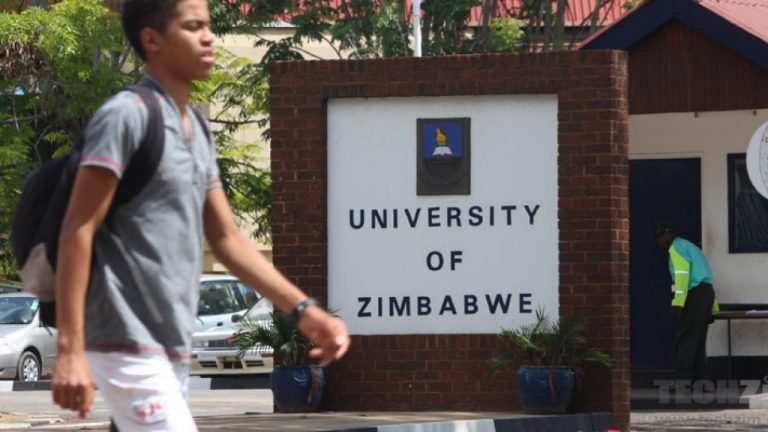
ZIMBABWE’s top universities have not made it onto Africa’s top 60 higher learning institutions in what could be a hint the country’s education standards may be lagging behind compared to those on other countries on the continent.
Zimbabwe’s education was once rated highly during the 1980s and 1990s period and revered as one of the best on the continent.
But the recent 2020 African University Ranking (UniRank) index only included three of the country’s universities on its list.
UniRank is the leading international higher education directory and search engine featuring reviews and rankings of over 13 000 universities and colleges in 200 countries.
The University of Zimbabwe, which is the country’s leading institution, was placed on position 62 out of 200 in Africa.
It was followed by Midlands State University, ranked 82 and Africa University at position 91.
“The selection criteria included being chartered, licensed and/or accredited by the appropriate higher education-related organization in each country, offering at least four-year undergraduate degrees and postgraduate degrees,” UniRank 2020 reported.
The rankings also considered delivering courses predominantly in a traditional, face-to-face, non-distance education format.
South Africa’s top universities dominated the list and were ranked as the top six in Africa.
These included University of Pretoria, University of Cape Town, University of the Witwatersrand, University of Johannesburg, University of KwaZulu-Natal and Universiteit Stellenbosch.
“Our aim is to provide a non-academic League Table of the top Universities in Africa based on valid, unbiased and non-influenceable web metrics provided by independent web intelligence sources rather than data submitted by the Universities themselves,” added UniRank.
(SOURCE: NEWZIMBABWE)
