Home Blog Page 38

Mpumalanga Education warns schools against withholding report cards

0

By Thapelo Molefe

As schools close across the country, the Mpumalanga Department of Education has reiterated that no school is permitted to withhold learner report cards under any circumstances, urging parents to report any institution that fails to comply.

The department said the reminder follows Section 29(12) of the National Protocol on Assessment (Grades R–12), which explicitly prohibits both public and independent schools from withholding a learner’s report card for any reason.

The department said a report card is the official tool through which schools provide parents with a full picture of a learner’s academic progress, strengths, and areas that require improvement. Schools have been instructed to issue these documents promptly at the end of the school term.

“Should any school fail to release a report card, parents are encouraged to report the matter immediately to the nearest circuit office,” said the department on Wednesday.

It also warned schools to use proper administrative channels to address parental obligations, without punishing learners or restricting access to their academic records.

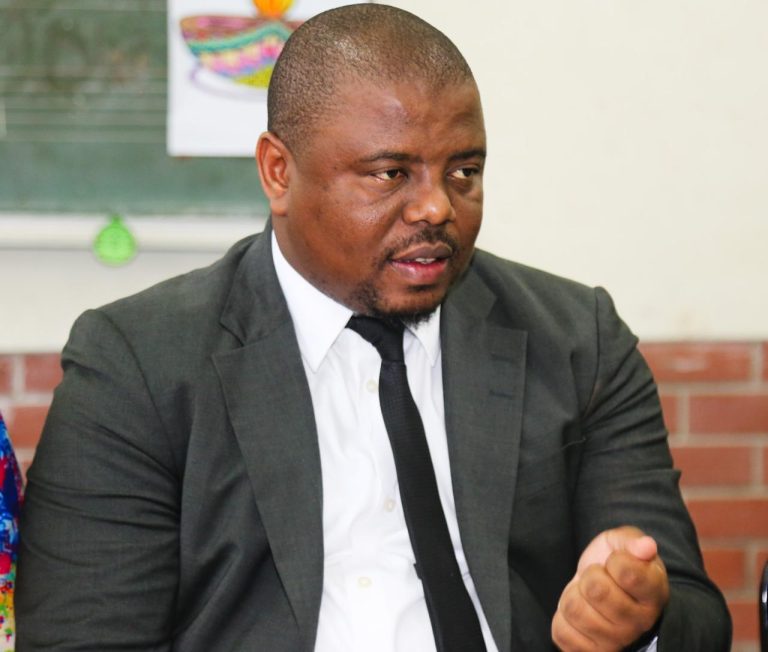
Education MEC Lindi Masina urged schools to ensure all issued reports are correct and free of errors. 

“Parents have the right to receive a full and accurate account of their children’s performance throughout the year. We therefore urge all schools to refrain from withholding learner report cards for any reason,” Masina said.

The department congratulated learners for reaching the end of the academic year and encouraged those who did not pass to remain hopeful, reminding them that support is available. 

Parents were urged to provide emotional support and maintain a calm environment as children receive their results.

Schools will reopen on 14 January 2026.

INSIDE EDUCATION

DA says Gauteng education’s security cuts put learners, staff at risk

0

By Charmaine Ndlela 

The DA has accused the Gauteng Department of Education of endangering learners and teachers by cancelling professional school security contracts without conducting risk assessments.

DA Gauteng education spokesperson Michael Waters said a recent written reply from MEC Matome Chiloane confirmed that the department did not follow basic due diligence before withdrawing accredited security services from schools across the province.

According to the DA, the MEC admitted the department failed to assess the financial implications of recovering contracted security, consider the heightened risks of vandalism, burglary or arson, evaluate the safety impact on learners, teachers and school staff, or review the consequences for schools already classified as high-risk.

Waters said the department terminated contracts with trained, PSIRA-accredited security guards and replaced them with untrained patrollers who are not deployed after hours, over weekends or during school holiday periods when schools are most vulnerable.

Waters said that this decision had already had devastating real-world consequences, citing the recent murders of a principal and administrator at Enxiweni Primary School in Tembisa.

The tragedy highlighted “gross negligence” on the part of the Gauteng Education Department, according to the DA.  

“Schools are high-value public assets, many of which face daily threats from gangs, break-ins, and criminal networks,” Waters said. “Instead of reinforcing security, MEC Chiloane weakened it and now school communities are paying the price.”

The DA demanded the immediate reinstatement of accredited security personnel at all high-risk schools, and a full account of how the decision to cancel professional security services was authorised.

INSIDE EDUCATION

KZN Education MEC accepts SIU findings, moves to discipline officials over R2.5m school toilet contract

0

Staff Reporter

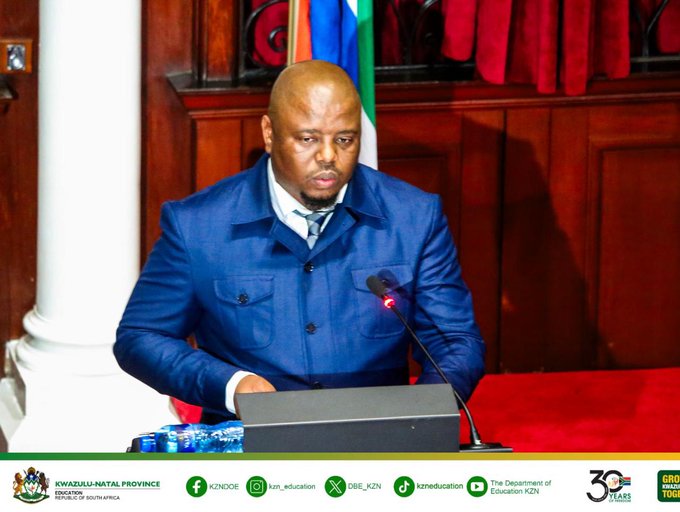
KwaZulu-Natal Education MEC Sipho Hlomuka said his department had accepted findings by the Special Investigating Unit into an irregular R2.5 million contract for chemical toilets at schools, and that disciplinary proceedings would be implemented against the implicated employees.  

Hlomuka was responding to an SIU statement released on Monday that said the Special Tribunal had ordered the MEC to initiate disciplinary proceedings against 16 departmental officials implicated in the awarding and extension of a contract for 72 chemical toilets in the Pinetown District.

Hlomuka said he had directed the head of department to ensure the SIU’s disciplinary directives were implemented “without delay, and that consequence-management processes are conducted fairly, consistently and within the prescripts of the law”.  

The SIU welcomed the tribunal order, saying it “goes beyond declaring the contract invalid to actively enforcing consequence management at all levels of state administration,” and praised the judgment for reinforcing accountability at the senior levels of the education department, SIU spokesperson Kaizer Kganyago said.

The tribunal also set aside the unlawful contract and ordered the service provider, Hawulethu (Pty) Ltd, to repay all profits derived from it.

Said Hlomuka: “As the Executive Authority, I wish to reaffirm our unwavering commitment to transparency, accountability, and ethical governance.”

The SIU investigation into the June 2020 procurement found that the contract, valued at R2,538,000.00, was awarded without any competitive bidding process, in violation of constitutional and public finance rules.

It said 16 officials failed to follow mandatory supply chain management processes and that Hawulethu was contacted and delivered goods before being formally appointed as a service provider. The company “overcharged by more than 100 per cent,” the SIU said.

Hlomuka said the department would cooperate with efforts to recover losses and backed the SIU’s legal bid to reclaim irregular profits.

He said that the department would tighten controls to prevent a repeat of the irregular procurement, including strengthening supply-chain checks, intensifying internal audit monitoring and expanding training and capacity-building programmes for officials.

He also ordered that quarterly progress reports on SIU-related matters be submitted to his office.

“It is important to highlight that the vast majority of our officials conduct their responsibilities with diligence and integrity,” Hlomuka said, but added that “any breach of public trust — no matter how isolated — undermines our collective mission to deliver quality education to the children of KwaZulu-Natal.”

 “The Department will not tolerate any form of corruption or negligence that compromises the right of learners to learn in a well-resourced, functional schooling environment. Every rand allocated to this Department must reach our schools, our teachers, and ultimately, our learners,” he said.

INSIDE EDUCATION

No phones before 16? SFC-SA challenges childhood in the digital age

0

By Marcus Moloko

Smartphone Free Childhood South Africa (SFC-SA) has launched a campaign to delay or restrict smartphone and social media access for children under 16.

The group contends that early, unmoderated smartphone exposure can harm children and is calling for age-appropriate technology policies.

SFC-SA says its approach is pro-child, not anti-tech.

It supports delays and safeguards rather than blanket bans, and says it has mobilised thousands of parents through campaigns and school-based pledges.

Media coverage has amplified the call, pointing to international momentum, such as Australia’s under-16 social media restrictions and Malaysia’s announced plans, as examples South African policymakers may consider when debating local measures.

Several media reports say SFC-SA has launched a nationwide digital parent pact. The idea is to help parents with children in the same school grade commit collectively to withholding smartphones until high school.

Supporters say this could reduce peer pressure and create community backing for delayed adoption and clearer, coordinated boundaries around devices and social platforms.

An IOL report said that any policy change in South Africa would likely depend on constitutional and statutory tests. These would need to balance children’s rights, freedom of expression, and access to information against the state’s duty to protect minors from harm.

If the advocacy intensifies, groups could pursue court action in several forms:

  • Applications compelling regulators or education authorities to issue age-based social media guidelines.
  • Constitutional challenges seeking a declaration that unrestricted smartphone access undermines children’s rights to safety and well-being.
  • Public interest litigation pushing platforms and mobile networks to implement age verification and default protections for under-16s.

These legal routes would likely rely on comparative evidence and child-protection frameworks, using overseas precedents as persuasive (not binding) authority.

For minors, the potential impacts are complex. Possible benefits of restricting smartphones under 16 could include reduced exposure to cyberbullying, adult content, and addictive design; improved sleep, attention, and mental health; and more time for in-person social development and learning.

SFC-SA said it is highlighting research-based harms and advocating for mindful, age-appropriate technology to safeguard childhood.

Possible downsides include reduced access to digital literacy, educational apps, and online communities; potential exclusion from school communications that rely on mobile platforms; and a greater burden on parents and schools to provide alternative channels and supervised access. A strict ban or delay could also widen inequalities if enforcement is uneven or if safer, supervised technology is not made accessible across different socioeconomic contexts.

In the near term, South Africa’s trajectory is likely to involve policy debate, school-level compacts, and advocacy aimed at both government and platforms rather than immediate national legislation.

If litigation is pursued, it could test how courts weigh child protection against access and expression, and might result in court-ordered guidelines or obligations on platforms to verify age and provide default safeguards for minors.

International developments will likely continue to shape the local conversation as advocates press for clearer rules and stronger protections for children online.

INSIDE EDUCATION

Ramaphosa touts 2 million youth earning opportunities, urges skills overhaul at NGC

By Akani Nkuna

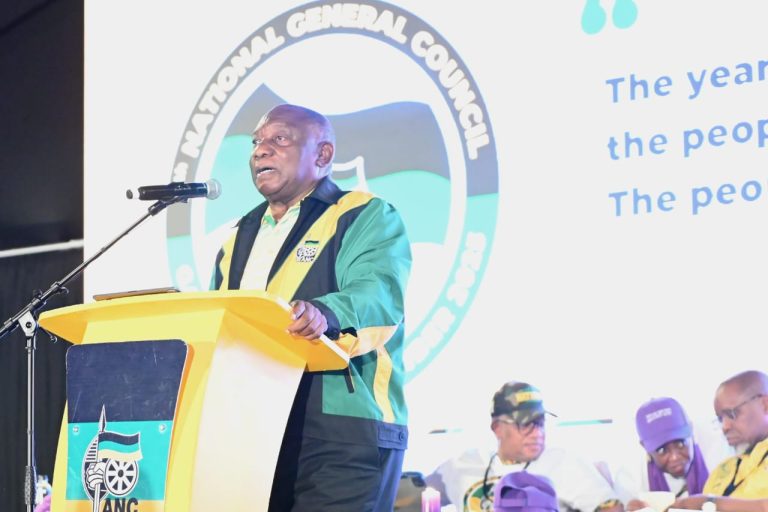
President Cyril Ramaphosa said on Monday that the Presidential Employment Stimulus programme had created earning opportunities for more than two million people since it was launched in October 2020.

Giving his political report at the opening session of the ANC’s 5th National General Council at the Birchwood Hotel in Boksburg, Ramaphosa told delegates to keep education and skills reform at the centre of efforts to tackle poverty and unemployment.

The midterm policy meeting is scheduled to run from 8 to 10 December.

Ramaphosa said the Basic Education Employment Initiative had created more than one million opportunities for young people as school assistants.

“We have often said that education must be at the centre of our fight against poverty. We have seen a steady progress in improving our educational outcomes. Last year, our learners achieved an 87% matric pass rate, the highest recorded in our democratic history,” he told delegates.

The national pass rate for the 2024 National Senior Certificate was 87.3%, up from 82.9% in 2023, the highest on record, Ramaphosa said.  

He also praised the National Student Financial Aid Scheme (NSFAS) for widening access to post-school education, saying it funded over 800,000 university and TVET students.

“However, we need to do much more if we are to have a skills revolution,” Ramaphosa said.

“The skills system needs to shift towards producing skills linked to demand in the economy. We need to consider a radical overhaul of the SETA system and introduce a dual academic and on-the-job training system,” he said.

INSIDE EDUCATION 

KZN education MEC ordered to discipline 16 officials over irregular R2.5 million mobile toilets contract

By Lebone Rodah Mosima

KwaZulu-Natal education MEC Sipho Hlomuka has been ordered by the Special Tribunal to initiate disciplinary proceedings against 16 officials implicated in the irregular awarding and extension of a R2.5 million contract for chemical toilets at schools, the Special Investigating Unit (SIU) said on Monday.

The tribunal also set aside the unlawful contract and ordered the service provider, Hawulethu (Pty) Ltd, to repay all profits derived from it.

“The Special Investigating Unit (SIU) welcomes this significant order by the Special Tribunal, which goes beyond declaring the contract invalid to actively enforcing consequence management at all levels of state administration,” SIU spokesperson Kaizer Kganyago said.

“We commend the Tribunal for placing this responsibility squarely with the most senior official in the education department, reinforcing accountability where it matters most.”

The order names officials across supply chain, finance and operations who served on quotation evaluation and adjudication committees or approved requisitions, extensions and payments.

The MEC was ordered to institute disciplinary action against: Ms Ngobi (Acting Director: Demand and Acquisition), a member of the Quotation Evaluation Committee (QEC); Mr Ngcobo (Deputy Director: Finance), who nominated Hawulethu (Pty) Ltd and was chairperson of the QEC; Ms Madiba (Acting Director: Finance), a member of the QEC; Ms Naidoo (Accounting Clerk), a member of the QEC who was allocated and signed as the budget controller; Mr Mavundla (Admin Clerk), a member of the Quotation Adjudication Committee (QAC); Ms Hadebe (Chief Education Specialist), chairperson of the QAC; Mr Maharaj (Educational Specialist), a member of the QAC; and Ms Nkwanyana (Educational Specialist), a member of the QAC.

The order also covers Ms Gumede (Chief Director: Operations Management), who authorised the extension of the contract with Hawulethu (Pty) Ltd; Mr Nkosi (Educational Specialist), who approved the extension; Ms Dlamini (Deputy Director General IDS), who approved the extension; Mr Mthembu (Deputy Director General), who approved the extension of the project; Ms Mthethwa (Educational Specialist), who approved the requisition and authority to purchase; Mr Reddy (Chief Admin Clerk), who approved commitments and final payment orders to Hawulethu (Pty) Ltd; Ms Mabaso (Provincial Admin Clerk), who approved the final payment order to Hawulethu (Pty) Ltd; and Ms Brijlal (Admin Clerk), who signed and checked the final payment order, the SIU said.

The judgment follows an SIU investigation into the procurement of 72 chemical toilets for schools in June 2020. The SIU said the contract, valued at R2,538,000.00, was awarded without competitive bidding, in violation of Section 217 of the Constitution, the Public Finance Management Act and Treasury regulations.

The investigation found that Hawulethu was contacted and delivered goods before being formally appointed as a service provider and that it overcharged by more than 100%.

The SIU also said Hawulethu submitted claims for services not rendered and failed to declare conflicts of interest involving its director. It found the contract was improperly extended without proper procurement procedures, and that multiple payments were split to avoid procurement thresholds.

Kganyago said the tribunal’s consequential relief included forfeiture of all profits derived from the contract, an audited statement of account within 30 days, repayment of all profits plus interest to the education department, and payment of legal costs.

President Cyril Ramaphosa authorised the SIU under Proclamation R23 of 2020 to investigate alleged corruption and maladministration linked to PPE procurement and the conduct of state employees, the unit said.

The SIU can institute civil action in the High Court or Special Tribunal and refers evidence of criminal conduct to the National Prosecuting Authority.

INSIDE EDUCATION

Gwarube sets 2026 priorities as matric marking continues

0

By Charmaine Ndlela

Basic Education Minister Siviwe Gwarube on Monday thanked education district directors for steering schools through a demanding 2025 academic year, as South Africa’s education system juggles the finalisation of matric exam marking and preparations for 2026.

Seventy-five education districts attended a meeting in Pretoria aimed at reviewing progress in the sector, addressing existing challenges and strengthening collaboration, the department said.

Gwarube urged leaders to continue supporting schools in safeguarding learners and confronting urgent social pressures, including gender-based violence and rising child pregnancies.

“With commitment, collaborative and strong leadership, I am confident in the sector’s ability to drive quality education for every learner, regardless of backgrounds,” Gwarube said.

She said district leaders were central to translating national policy into tangible improvements at school level, including ensuring exam readiness, improving school functionality, and strengthening teaching and learning across districts.

As planning accelerates for the 2026 academic year, she outlined four priorities for districts: action-driven monitoring, timely delivery of learning materials, responsive decision-making, and strengthening foundational learning — including the integration of Early Childhood Development.

The department said the gathering was the last district directors’ meeting for the 2025 academic year.

INSIDE EDUCATION

Zambia stun hosts South Africa to sweep CAF African Schools qualifier titles

0

By Levy Masiteng 

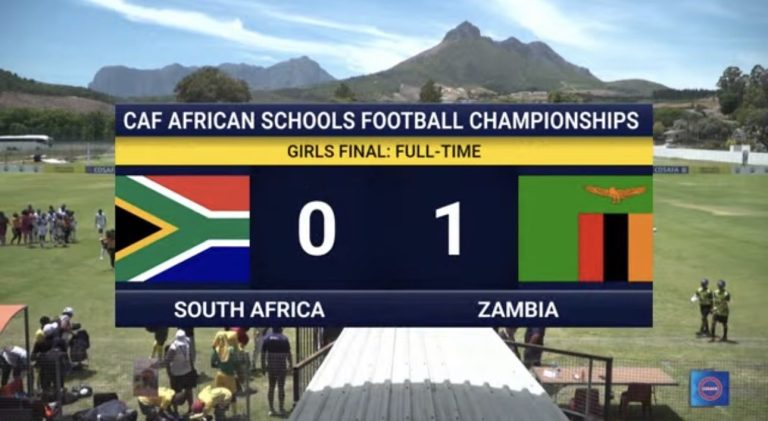
In a stunning upset, Zambia emerged victorious in both the boys’ and girls’ finals at the CAF African Schools Football Championship Qualifier South Africa 2025, held in Stellenbosch. 

Over the weekend, Zambia defeated their South African counterparts, ending South Africa’s three-year dominance in the competition.

Zambia’s boys’ team won the championship title, taking home a prize of USD 100,000, while the girls’ team also claimed the top spot, winning the same amount. 

South Africa, the host nation, received USD 75,000 for finishing as runners-up in both competitions.

In the boys’ final, Zambia came from behind to defeat South Africa 2-1, with Maxen Msimuko scoring the winning goal. 

In the girls’ final, Zambia secured a 1-0 win over South Africa, thanks to a goal from Matildah Hambulo. 

South Africa’s teams had a tough outing, despite showing promising performances throughout the tournament. 

“The boys’ team took an early lead in the final but conceded two goals, while the girls’ team was unable to capitalise on their chances,” CAF said in a statement. 

CAF said its sponsor, TotalEnergies, provided four sets of home kits to the winners of each competition, along with a Sunshine 24″ TV, and a solar lighting, charging and entertainment system.

“South Africa received the same donations as the host nation of the competition.”

The CAF African Schools Football Championship is a prestigious competition that aims to promote football development among young players in Africa. 

The tournament is sponsored by CAF President Patrice Motsepe, who has invested USD 10 million in the competition.

“This prize money is to be used for infrastructure development at schools, and many teams have invested in educational and sporting aids for their learners,” said CAF.

Zambia will represent the COSAFA region at the continental finals next year, where they will compete against other top teams from across Africa.

INSIDE EDUCATION

Western Cape tops teacher misconduct reports as SACE flags assault, sex offences

0

By Thapelo Molefe

The Western Cape has reported the highest number of teacher misconduct cases in the country, as the South African Council for Educators (SACE) warns of persistent trends of assaults and sexual offences committed by educators in schools.

According to SACE’s 2024/25 Annual Report, a total of 606 new complaints of unprofessional conduct were lodged against teachers during the year under review, with assault and corporal punishment of learners again ranking as the most common offences.

Of these cases, the Western Cape accounted for 211, the highest of all nine provinces. Gauteng followed with 136 cases, while KwaZulu-Natal (71) and Limpopo (47) also featured prominently. The Northern Cape recorded the fewest, with just nine cases.

SACE said the Western Cape also reported the highest number of finalised disciplinary cases as required under Section 26 of the SACE Act, which mandates provincial departments to submit their completed disciplinary inquiries for processing. However, the council noted that other provinces continue to lag, despite repeated engagements.

“Although attempts were made through stakeholder engagements to encourage other provincial education departments to submit their finalised disciplinary cases, not all provinces are complying,” the council said.

Of the 606 cases recorded, 283 involved assault, including 257 cases of corporal punishment against learners, which remains outlawed in South Africa. A further 127 cases related to sexual misconduct, which includes sexual assault, harassment, and inappropriate relationships with learners.

Quarterly data shows that assaults consistently remained the top form of misconduct in every quarter of the year. Sexual misconduct trended as the second-most common across all reporting periods.

SACE said the recurring pattern points to an urgent need for intensified professional development on discipline and behaviour management.

“These patterns underscore the urgent need for professional development in positive discipline, particularly among educators who continue to apply corporal punishment,” the report stated.

The report also highlights a gendered dimension to violations, with male teachers making up the majority of offenders across categories. SACE said this aligns with societal trends of gender-based violence and emphasised the need to prioritise cases involving violations against women and children.

During the financial year, SACE processed and concluded 612 cases, including matters rolled over from previous years. A total of 134 disciplinary hearings were conducted, resulting in 109 teachers being sanctioned.

The sanctions included 36 educators being struck off the teachers’ roll permanently for serious offences such as sexual misconduct, rape, impregnating learners, fraud and severe assault.

Another three educators were removed for a specified period of between five and 15 years, after which they may apply to return to the profession. 

In addition, 70 educators received suspended removals coupled with fines, largely for cases involving corporal punishment and other minor offences. Those in this category were also directed to attend professional development programmes focused on positive discipline.

This marks a notable increase compared to the previous financial year, when 91 teachers were sanctioned.

The report shows that the Western Cape Department of Education submitted 174 cases, the highest number of employer-reported matters. Parents accounted for the second-largest source of complaints at 109, followed by educators or colleagues at 84.

The council said many complaints received do not fall within its direct disciplinary mandate and should be resolved at school or district level. This has prompted SACE to strengthen its initial screening process to ensure it is not burdened with matters that could have been handled by principals or school governing bodies.

SACE said it will intensify its ethical enforcement efforts while also strengthening proactive support for teachers.

The council emphasised that its disciplinary processes remain guided by the constitutional principle that accused educators are presumed innocent until proven guilty.

It also noted challenges such as postponed hearings, uncooperative witnesses, and difficulties securing testimony from traumatised learners.

Despite these obstacles, SACE said the latest statistics demonstrate its commitment to safeguarding learners.

“These outcomes reflect SACE’s commitment to ethical enforcement and its role in protecting the dignity and safety of learners and the broader school community,” the council said.

The council said it will continue to push for full compliance from all provincial education departments, especially those under-reporting completed disciplinary cases.

INSIDE EDUCATION

Manamela receives report on alleged degree-selling syndicate at VUT

0

By Thapelo Molefe

Higher Education and Training Minister Buti Manamela has received the Vaal University of Technology’s (VUT) report on an alleged “degree-selling syndicate” at the institution, and will announce a way forward once he has reviewed it. 

This was confirmed by his spokesperson, Matshepo Seedat, who told Inside Education: “I can confirm that the minister has received the report from the VUT. The minister will study it and communicate his decision in due course.”

The submission of the report follows Manamela’s directive last week ordering VUT to explain why it allegedly failed for more than a year to act on whistleblower claims that fraudulent qualifications were being sold, mainly for Congolese students, dating back to 2018. 

The whistleblower alleged senior officials ignored repeated alerts and that implicated individuals continued to access the campus while recruiting prospective students for 2026.

In his letter to the VUT Council Chairperson, Manamela demanded an explanation for the reported 12-month delay, evidence that consequence management is underway, and immediate safeguards to protect the 2026 registration process from manipulation.

He also warned that the matter could be escalated to the Hawks if VUT’s internal processes fall short.

VUT confirmed that the allegations formed part of a wider probe into irregularities at the institution, and said consequence management measures were already in motion.

INSIDE EDUCATION