Home Blog Page 380

Cameroon: Students Return To School After Seven Months

0

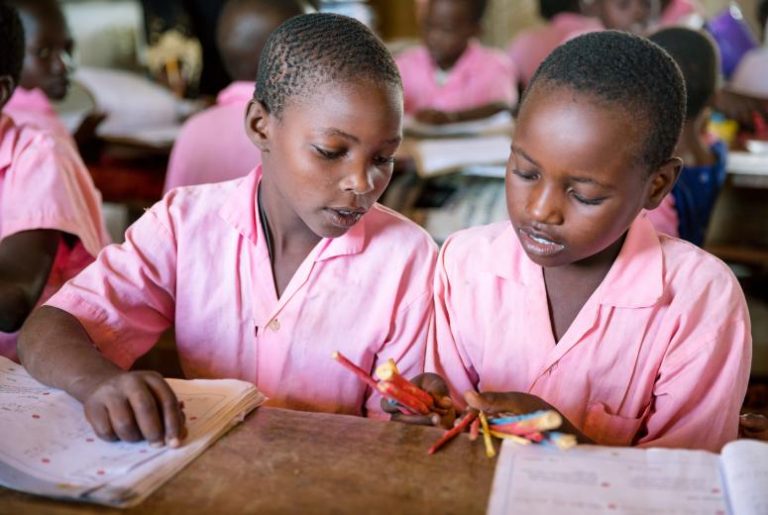
STREETS in the Central African country of Cameroon were full of children on Monday morning, marching towards their schools, seven months after they were closed due to restrictions aimed at to stem the spread of COVID-19.

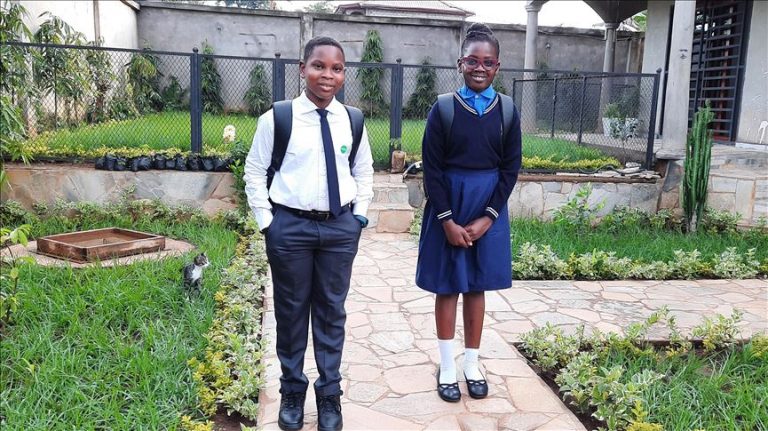
Wearing masks and carrying backpacks full of books and stationery, nursery, primary and secondary school students were full of excitement to revisit schools and meet their friends after a long hiatus.

Cameroon announced the reopening of schools after seven months under strict guidelines, prepared by an expert committee.

The Central African country has recorded 20,924 coronavirus cases, with 19,764 recoveries and 420 deaths, according to Africa Centres for Disease Control and Prevention

At a media briefing last week, the government said it was well-equipped for the upcoming school year. But asked parents to be responsible and help children to abide by strict guidelines to keep the pandemic away.

The higher education institutions will also open in the country on Oct. 15, according to Communication Minister Rene Emmanuel Sadi.

Speaking to Anadolu Agency, Ntiabang K. Lerato,10, a sixth-grade student said she was excited to return to school after staying at home for over the past seven months.

‘’I have my mask and I will respect the school guidelines against the virus. It is a good thing to go back to school because I want to study and become a doctor. I hope the virus will be over soon so that everything should be normal again,’’ she said.

Her mother, Ntiabang Shaitou said she is also happy at the resumption of classes.

‘’The holidays were too long and uneventful. It seems like nothing was happening at all. It was hard to put up a learning program for the kids and then make them stick to it,” she said.

Government addresses Parents ‘concern

Parents across had expressed concern about the safety measures. But with the strict guidelines in place, they feel satisfied.

Shaitou said she was initially worried and was apprehended about the safety of kids.

“But I am thankful that in my country the situation is not as alarming as in some countries in Europe. Our children have done their COVID-19 test and it is negative,” she added.

The mother of two kids said schools have taken steps to ensure everyone starts school with a negative COVID-19 test. She, however, said parents are anxious to see what the coming weeks will look like.

Minister of Secondary Education Nalova Lyonga has assured that the government has taken enough measures to fight against the spread of the pandemic. She said students will be imparted lessons every day on the pandemic and guidelines to ensure they abide by measures like wearing the face mask and other preventive measures.

“We are preparing for the new school year now following the instructions of the hierarchy. We have cleaned up the whole campus, we are going to respect the rule of 50 students per class,’‘said Bayiha Mahop Joshua, principal of the Oyack High School in the commercial city of Douala.

He said they have also arranged to take temperatures of students and teachers at the entrance of the school. Also, instructions have been given to test all teachers.

In August, the World Health Organization (WHO) and United Nations Children’s Fund (UNICEF) urged African governments to promote the safe reopening of schools while taking measures to limit the spread of the virus.

“Schools have paved the way to success for many Africans. They also provide a haven for many children in challenging circumstances to develop and thrive,” Matshidiso Moeti, WHO regional director for Africa said.

A secondary school teacher in a remote area of Nikolagoung Foe Nicole Peagie said despite lack of manpower, his community will respect the barriers and will do everything possible to keep the pandemic away while performing his duties.

“I don’t think there is any particular danger, because a lot of measures are being taken to ensure that the new school year takes off under the best possible conditions. I think it will be safe,” said Ines Mekawe another teacher.

(SOURCE: ANADOLU)
South Africa’s First STEM Digital School

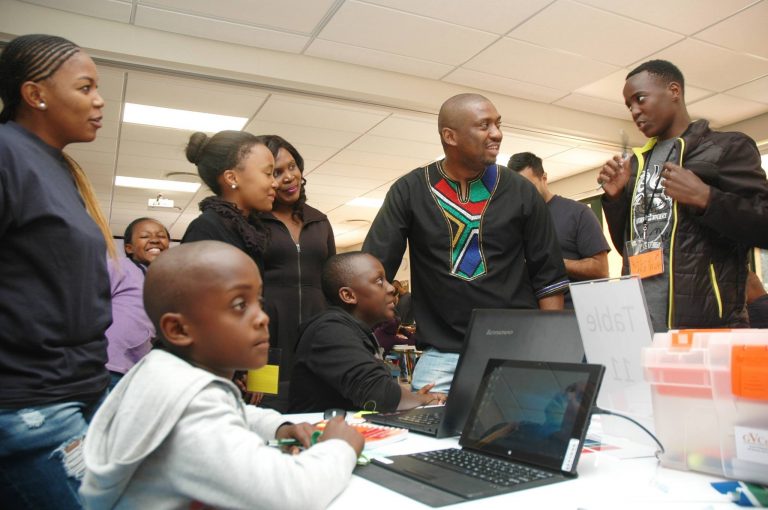
THIS year, computer science and non-profit organisation, Africa Teen Geeks launched their STEM (science, technology, engineering, and math) digital school to help learners continue their computer science education.

The digital school launched at the end of March this year to comply with social distancing measures and ensure the safety of their learners

The organisation’s classes were at 12pm exclusively for matrics and classes for the other grades were held from 8am to 5pm.

The organisation has partnered with the Department of Basic Education and the SASOL Foundation to ensure that the digital school remained free of charge for learners.  

Anacletta Koloko Program Practitioner, Corporate Affairs, Sasol Foundation, stated that free digital learning and online textbooks have become important for their existing efforts to support STEM education in South Africa.

“During this time of crisis, these resources are becoming even more relevant in ensuring that our children’s development continues to be supported,” said Koloko.

Providing IT training to lower-income communities

Africa Teen Geeks was founded in 2014 and has since become the largest computer science non-profit organisation (NPO) in Africa. 

The organisation has worked to provide education and training to learners who want to pursue a STEM career. Along with the STEM digital school, the NPO has also provided Saturday coding classes and a Girl Geek Summit.

There is a growing to teach children in lower-income communities as there are very few qualified computer science teachers in these communities, according to Africa Teen Geek. As a result, children fall behind in their computer science studies. The NPO aims to address this by training young individuals in computer science and sending them to teach at different schools in these areas.

Partnership with UNISA

The NPO has also partnered with the University of South Africa (UNISA) and in 2015, they were able to host their first computer science week. More than 12 000 children from impoverished communities attended and were able to learn about computer science at UNISA’s labs.

Many of the learners who attended had never touched a computer before but then end of the first day, they were able to write their first code.

It is through these Africa Teen Geek’s efforts such as computer science week and with the effort of more than 1000 volunteers that they have helped almost 50 000 children.

(SOURCE: VENTUREBURN)

Official Countdown Has Begun To The Largest Matric Exams Ever In SA History – Motshekga

NYAKALLO TEFU

MORE than 1 million matriculants across the country are expected to sit down for their final exams from November 5.

The combined examination makes this the largest public examination that has ever been administered in South Africa. 

Basic Education Minister Angie Motshekga announced this during an update on the COVID-plagued academic year in Pretoria on Thursday morning.

“So today, we launch the official countdown to the examinations. It is now 34 days to the start of the NSC examinations for the matric class of 2020,” she said.  

“We therefore appeal to parents, guardians, and communities to rally behind all the candidates who will be writing their final exams this year.  It is an extraordinary time for them and all of us, but they need the support more.”

Motshekga said the advent of COVID-19, has necessitated the need to reschedule the 2020 National Senior Certificate examinations, to accommodate the disruptions caused by the pandemic. 

“As we had already announced before, the June Senior Certificate (SC) examination was postponed, and will now be written together with the National Senior Certificate (NSC) examination in November 2020,” said Motshekga.

“The examination timetable for the combined June and November examination, had to be amended; so that this examination commences in November, instead of October 2020, as was initially planned.  The late start of the examination, is intended to allow as much time as possible to cover critical curriculum content, and to ensure that all examination processes are appropriately managed.

Motshekga said all examination centres, both public and independent, have been audited, in preparation for the 2020 combined examination. 

She added that a protocol, to ensure compliance with COVID-19 protocols, has been developed and distributed, to guide all the Chief Invigilators, Invigilators and all other officials involved in the management of the conduct and administration of the examination. 

All Provincial Education Departments have secured the extra rooms at existing examination centres that are needed for the writing of the combined 2020 November Grade 12 examinations.

(COMPILED BY INSIDE EDUCATION STAFF)

Level 1 Lockdown: Universities Can Return Students To 100% Attendance, Says Nzimande

NYAKALLO TEFU

HIGHER Education Minister Blade Nzimande says government is now in a position to welcome back 100% of university students back to campuses, including international students who are currently outside the borders of South Africa.

Nzimande was addressing the media on Wednesday on higher education and training’s response to COVID-19 epidemic lockdown Level 1.

“All universities are implementing their plans to return all students and staff from the 1st October, subject to any restrictions linked to their own risk assessment due to their local context and conditions,” said Nzimande.

“It must however be noted that the prescripts of COGTA regulations will apply. This means that the health and safety protocols in terms of physical distancing (at least 1.5m), wearing masks, washing hands, sanitising and environmental cleaning will be applied.”

Nzimande added that government will now be able to move to a 50% occupancy of rooms up to a maximum of 250 persons indoors at a time, with ventilation of rooms remaining critical.

“As a sector, we will also allow the hosting of side gatherings up to 500 people at a time,” he said.

“With respect to international students returning who remain  outside our country, they will need to meet the requirements of the COGTA regulations – which includes having a test, not older than 72 hours, showing that they are negative for the virus on arrival in South Africa; if not, they will need to go into quarantine at their own expense for at least 10 days before proceeding to their respective institutions.”

 Out of 25 universities in South Africa, ten universities aim to complete the academic year before the end of the 2020 calendar year while four universities plan to end in January 2021, seven universities plan to complete in February 2021, and five universities plan to complete in March 2021, said Nzimande.

 “There were some universities that were not able to start their academic year effectively before the lockdown and that is also reflected in this staggered end of the academic year,” he said.

Nzimande said the higher education and training sector expect that the results from the National Senior Certificate examinations would be announced on 23 February 2021.

“As a result, the start of the academic year for first year students will be between 8 March 2021 and 12 April 2021,” said Nzimande. 

(COMPILED BY INSIDE EDUCATION STAFF)

US Awards Grant To Strengthen US-SA Higher Education Network With South Africa

THE United States Department of State has awarded a R8.3-million grant to strengthen the US-South Africa Higher Education Network, a consortium of higher education institutions in the two countries.

Through the grant, the network will engage other institutions of higher education in order to increase the number of staff and student exchanges between the nations, a joint statement issued by the US Embassy in South Africa and the University of Pretoria (UP) on Wednesday said.

The United States-South Africa Higher Education Network (US-SA HEN) was founded in 2018 with funding from South Africa’s higher education and training department to promote exchanges, collaborative research and other partnerships.

The network’s current managing partners are UP, Rutgers University-Newark and the University of Venda.

“Today’s launch is a springboard for demonstrating the impact of partnerships for change,” UP vice-chancellor Professor Tawana Kupe said at the virtual launch of the grant.

“As much as there is a focus on increasing the quality and number of well-rounded doctoral candidates, there is also a parallel focus on adapting traditional educational approaches and developing lasting solutions to some of the challenges that afflict our global society,” he added, citing the global Covid-19 pandemic as an example.

The two-year grant will also facilitate joint research, especially in agriculture, food security, and in science, technology, engineering and mathematics (STEM), and provide training and transfer skills in all aspects of university administration.

According to US assistant secretary for African affairs Tibor Nagy, every year the US Embassy funds programmes for more than 150 South African students, faculty and professionals to travel to the United States to increase understanding between the two countries.

“With this award to support the United States-South Africa Higher Education Network, we reaffirm our commitment to further increase bilateral cooperation and faculty mobility between the US and South Africa,” Nagy added.

(SOURCE: ANA)

Qualified Employees Stand A Chance Of Getting A Decent Job, Better Salary – Stats SA

0

THEBE MABANGA

THE latest Quarterly Labour Force Survey shows that education remains a key determinant to the type and level of employment one enjoys, their salary and prospects of having it paid in full during disruptions such as the national lockdown.

The survey went into some detail in analysing the impact of COVID-19 on the labour market.

The survey found that 2.2 million lost their jobs during the second of 2020, but the unemployment rate fell from 30.1 % in the first quarter to 23.3% in the second quarter.

This is because a total of 5 million people dropped out of the labour force to become economically inactive for reasons other than being discouraged work seekers.

The survey confirms that education influence prospects of being employed.

It found that of the 4,3million people defined as unemployed in the second quarter just over a third, or 36.3 %, did not have matric while over half, at 53 %, had less than matric.

This means 89% of unemployed people have a matric of less.

While unemployed gradates are a point of policy focus in South Africa’s debate on unemployment, they account for only 2.4% of the unemployed, while 7.5% have other tertiary qualification.

Since 2012, the unemployment rate is consistently highest among those without matric, at around 30%, followed by those with matric at between 25% and 28.7% and closely matching the overall unemployment rate.

Other tertiary accounts for about 15% to 17 %, while for graduates the rate is consistently the lowest at around 5% but peaked at a worryingly high 9.1% in the first quarter of this year.

The national lockdown severely affected workers employment prospects and earnings, but those with post matric qualification fared better. 

Stats SA found that there were 11.5 million employed persons who continued to receive their salary during the lockdown.

About one in five of the employed had a reduction in their pay/salary during the lockdown.

“Those with higher levels of education had higher chances of receiving a full salary than those with lower levels of education. Almost 9 in every 10 employed graduates (89.7%) continued to receive full salaries, compared to 75.2% of those with less than matric as their highest level of education,” says the statistics agency.

For those with matric, the rate was slightly higher at 77.6 % and among those with other tertiary qualification, the rate stood at 83.2%.

Stats SA has also found, through another survey, the Quarterly Earnings Survey (QES) that the proportion of employees in permanent employment and with higher average salaries is consistently highest among graduates.

Those without post matric education now face the prospect of falling into the category of not being in Employment, Education or Training (NEETs).

Compared to the second quarter of a year earlier, the percentage of young persons aged 15–34 years who were not in employment, education or training (NEET) increased by 4.4 percentage points from  40.3% to 44.7% ,out of 20.5 million in the second quarter of this year.  

The NEET rate for males increased by 4.9 percentage points, while for females the rate increased by 4.0 percentage points to 47.9 % in the second quarter of this year.  

In both instances, the second quarter of 2019 and 2020, more than four in every ten young people were not in employment, education or training. 

(COMPILED BY INSIDE EDUCATION STAFF)

Trump Administration Plans To Distribute 100 Million Rapid COVID-19 Tests To States

0

RACHAEL RETTNER

TRUMP administration has announced a plan to distribute millions of rapid COVID-19 tests to states, with a focus on using the tests to reopen schools.

On Monday (Sept. 28), President Donald Trump said in a news conference that the federal government would soon begin deploying 150 million rapid COVID-19 tests across the country. Of these, 50 million tests would go to support “vulnerable communities,” such as those in nursing homes, while 100 million tests would go to states “to support efforts to reopen their economies and schools immediately and fast as they can,” Trump said.The rapid test, which is made by Abbott, is an antigen test, which looks for specific viral proteins, and can provide results in 15 minutes.

Known as the Abbott BinaxNOW COVID-19 Ag Card, the test is a simple nasal swab that requires no lab equipment.

The test received emergency use authorization from the U.S. Food and Drug Administration in late August, Live Science previously reported.

The test is authorized for use in point-of-care settings, that is, at the time patients receive care. The Trump administration recently awarded a $760 million contract to Abbott for delivery of its rapid tests, according to a statement from the U.S. Department of Health & Human Services.

To start, 6.5 million tests will be shipped to states this week. Although governors will be allowed to use the tests as they see fit, they are encouraged to use them in schools, officials said. 

“We expressed a hope to all the governors today that they would particularly use these Abbott Binax tests to open up American’s schools and to keep them open,” Vice President Mike Pence said at the conference. 

There are about 56 million school-aged children in the United States, and 3.7 million teachers, according to the National Center for Educational Statistics. Trump specifically mentioned using the tests for teachers, saying the testing efforts would “allow every state to, on a very regular basis, test every teacher who needs it.”

(Originally published on Live Science)  

Soweto Grade 12 Pupil Receives A Bronze Medal At 61st International Maths Ambassador

0

TURKMEN TERZI

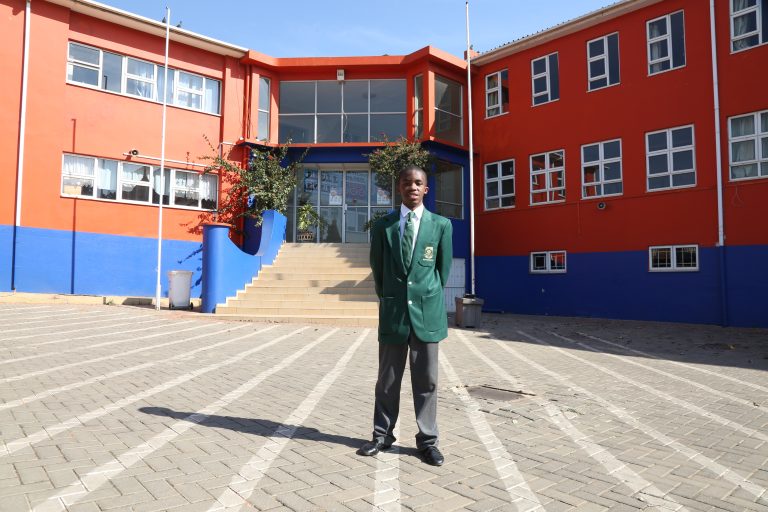
A GRADE 12 pupil from Soweto has become the country’s first black pupil to garner a bronze medal at the International Mathematical Olympiad (IMO). Kgaogelo Bopape from Horizon International School in Johannesburg earned a bronze medal at the 61st International Mathematical Olympiad.

This year the Olympiad was to be held in the Russian city of St Petersburg, but due to the global coronavirus pandemic, it had to be held virtually with each country supervised by a neutral IMO commissioner.

Soweto resident Bopape represented South Africa along with five other high school learners at IMO which was held last week.

“Kgaogelo is the first black learner in South Africa to achieve this prestigious award and has become a source of great pride for the institution, his community, and the country as a whole,” the Horizon International School proudly announced.

“The key to Kgaogelo’s impressive achievements is his persistence to keep improving himself in what he does. His passion and drive to achieve his personal best at all times is certainly shown in the classroom and all competitive events that he has participated in,” Bopape’s mathematics teacher Huseyin Akinci said.

Bronze medals were awarded to Andi Qu (Grade 12) from St John’s College in Gauteng and Jean Weight (Grade 12) from Curro Hermanus in the Western Cape.

“South Africa has been taking part in the IMO since 1992, Over the years, learners achieved one gold medal, nine silver medals, 46 bronze medals, and 63 honourable mentions. We are very proud of the team’s achievements this year, and would like to congratulate them on their successes,” said Prof Kerstin Jordaan, the executive director at the South African Mathematics Foundation (SAMF), who shared details of SA’s success.

 “We would like to congratulate each team member on their achievements and thank them for being mathematics ambassadors for South Africa,” said Celiwe Ross, Human Capital Director at Old Mutual, the main sponsor of the Old Mutual South African Mathematics Olympiad (SAMO) programme.

Bopape was part of a six-student team, which represented South Africa at IMO in Britain last year, where he received Honourable Mention.

He has been awarded gold medals twice, at the Pan Africa Mathematics Olympiads which were held in Kenya in 2018 and in Cape Town  in 2019.

Kgaogelo Bopape (Grade 12) from Horizon International School in Gauteng.

China ranked the overall winning country of this year’s IMO, followed by Russia and then the United States of America.

South Africa finished with a ranking of 61st out of 105 participating countries. In previous years South Africa ranked 46th (2019), 62nd (2018), 60th (2017), 58th (2016) and with the highest ranking of 27th in 1992, 1999, and 2000.

(COMPILED BY INSIDE EDUCATION STAFF)

UCT: Decolonisation In The Context Of Vision 2030

HOW will the University of Cape Town (UCT) embed decolonisation in Vision 2030, the institution’s new strategic vision? How will the university embed decoloniality as it unleashes human potential for a fair and just society? And what does it mean to be a global university in Africa?

These were the questions posed during a panel discussion on decolonisation in the context of Vision 2030. The discussion was part of a three-hour webinar on decolonisation and decoloniality, hosted by UCT on Tuesday, 22 September.

The panel discussion, which was moderated by Deputy Vice-Chancellor for Transformation Professor Loretta Feris, followed presentations by three recipients of the university’s decolonisation grant, and a UCT alumna.

The recipients were Associate Professor Shose Kessi, the dean of Humanities and the co-director of the Hub for Decolonial Feminist Psychology in Africa; the head of UCT’s Archaeological Materials Laboratory, Professor Shadreck Chirikure; and a lecturer in the Political Science department Dr Lwazi Lushaba, who spoke alongside UCT alumna and Fulbright scholar Ziyana Lategan. Professor Floretta Boonzaier, another grant recipient and the co-director of the Hub for Decolonial Feminist Psychology in Africa, was unable to join the discussion.

Speaking on the panel were four renowned UCT scholars who work in the area of decolonisation:

  • Professor Elelwani Ramugondo (Department of Health and Rehabilitation Sciences and the co-chair of UCT’s Curriculum Change Working Group from 2016 to 2017)
  • Professor Rebecca Ackermann (Department of Archaeology, the director of the Human Evolution Research Institute and the deputy dean of transformation)
  • Dr June Bam-Hutchison (Centre for African Studies, the interim head of the newly launched San and Khoe Research Unit who led, in partnership with the A/Xarra Restorative Justice Forum, the co-design processes of the renaming of the Jameson Memorial Hall to the Sarah Baartman Hall, and the introduction of the historic inaugural certificated foundational Khoekhoegowab at the university)
  • Dr Kasturi Behari-Leak (Centre for Higher Education Development, the interim director of the academic staff and professional development centre, and the president of the Higher Education Learning and Teaching Association of Southern Africa).

Embedding decolonisation

For Dr Bam-Hutchison, indigenous ways of knowing must inform Vision 2030, a practical example of which is the work she has led in collaboration with the A/Xarra Restorative Justice Forum. From their years of work, certain factors have emerged as necessary for the act of decolonising. Crucial to decoloniality is multilingualism, critically understanding the formation of knowledge production processes, as well as interdisciplinarity – it cannot occur without these factors.

Bam-Hutchison also emphasised the importance of recognising prior learning to grow a cohort of scholars who will make a difference in the communities from which they emerge.

“It’s really about validating [and] theorising knowledges that have been on the periphery; people with these archives on the periphery and restoring as well as centring archives that have been lost due to colonialism,” she said.

According to Professor Ackermann, it is important to acknowledge her privilege but, even more so, to do something with it. Part of Ackermann’s decolonial work includes “actively working to stitch black and female postgraduates” into the academic networks she has been afforded access to because of her race and nationality as a North American. And this must be done in a way that centres and values black and female voices.

The paleoanthropologist added that decolonisation means owning the fact that her discipline has a dark history of racism and othering. It also means, more broadly, valuing diversity in research.

“Diverse and intersectional teams produce better science because they’ve got this rich, complex heterogeneity of thinking and practice,” said Ackermann.

Global, African university

When asked what it means to be a global university in Africa, Dr Behari-Leak noted that the very question surfaces the tension between being globally relevant and locally authentic. This, she said, is the decolonial work the university must do.

Included in this work is acknowledging that UCT is “not an island unto itself”.

Dr Kasturi Behari-Leak said that the big challenge is unpacking Vision 2030, using a decolonial attitude to translate it into meaningful praxis in the areas of teaching and learning, research and social responsiveness.

“There are 25 other universities in the country that we need to demonstrate a relational ontology with, and how we are growing together as part of South Africa, into Africa,” said Behari-Leak.

In her final remarks, Professor Ramugondo said that the question of being a global university in Africa pushes UCT to “reckon with the fact that we may be ambivalent about our Africanness”.

Professor Elelwani Ramugondo asked the question: What would knowledge look like if it was produced from the perspective of the colonised?

“Perhaps, as we think about a university, a global university, which finds itself in Africa, we are to ask ourselves: What do we mean by global? Do we mean the whole world with everyone in it? Or are we talking about a slice of the global?

“When we talk about global, to what extent are we resisting that allure, that attraction to a global that leaves many behind? And I think we ought to ask ourselves a very difficult question about on whose behalf we speak,” said Ramugondo.

She added that in calling UCT an African university, the question must be asked as to whether someone from communities such as Nyanga, Bonteheuwel, Bishop Lavis, Gugulethu and Soweto are included.

“Or are we going to find ourselves with Vision 2030 seeing less of exactly those people that would want to call this their university too?”

(SOURCE: UCT)

COVID-19: What Is The Best Pedagogy For Managing The Transition Back To School?

0

GOING to school is important for children, but it may be a daunting experience this year due to the pandemic. Returning after months of being locked-down and studying at home will result in an elevated level of anxiety and uncertainty for parents and children.

The situation is also challenging for school leaders, administrators and teachers. They need to select a suitable approach to ensure a smooth transition for school children to a ‘new normal’, where physical school attendance is strictly subject to health and hygiene protocols.

Whatever the approach chosen – face-to-face, distance/remote or hybrid/blended teaching and learning – learning to adapt to different environments is something that schools and teachers will need to help students navigate.

What should teachers and schools do to prepare and support children and their families for this transition? Here are some suggestions with a focus on one aspect: pedagogy.

Open, factual, honest and speedy communication  

A return to school and learning routines presents a certain level of anxiety for children and parents, particularly after a few months of home confinement. Open, factual, honest and speedy conversations about COVID-19 sanitary measures as well as plans for returning to school will help to reduce confusion and concerns. Using familiar communication methods (such as newsletters, email, telephone or SMS) and short, clear and repeated messages to update families and pupils about what will be the same and what will be different may be a welcome way schools can prepare pupils and parents for a seamless return to school.

Plan for adjusted pedagogy  

Adjusting to the ‘new normal’ is a process, not a simple fix, which requires educators, and especially school leaders, to take the time to think and plan.  At the instructional level, teachers will need to allow for multiple entry points into any new or newly adapted activities (rather than opt in or opt out), and plan for differentiating classroom learning by level and student need. This will help to cater for the different, new needs that students may have, not only in terms of their gaps in knowledge but also in terms of their social, emotional wellbeing and mental health. Moreover, by showing empathy to students and acknowledging the difficulties they faced during self-isolation, teachers can support the children’s social emotional learning too.

Engage creatively children in learning 

Learning is part of living and evolves with contexts. Children’s home learning experiences present an excellent example of learning to do and learning to learn. Teachers should explore and learn about these experiences to innovate their pedagogical approaches. There are a variety of simple, creative ways that can be used to encourage children to share their experiences and to explore their understanding of the COVID-19 pandemic and its effects on their lives. For example, children can express themselves with writing, poetry, music, art, dance, drama, etc. This not only encourages them to share their emotions and experiences but is also an effective way to teach creativity – a core skill for the 21st century needed for adapting and dealing with change.  By examining these works, and by talking with pupils, teachers will also gain insight into the way they learn (examining self-monitoring, reflection, self-management,  and metacognitive processes).

Harness experiences from confinement to build pupils’ confidence and resilience

Now more than ever, building the confidence and resilience of school children is of utmost importance: children with high self-esteem are better able to make difficult decisions, approach adults for support, and be self-sufficient in their learning.

The level of responsibility that children of all ages have had to embrace over the past months is overwhelming and should be celebrated as well as harnessed. By listening to and validating their worries and guiding them on coping strategies, teachers can help children feel more safe and supported at school, thus building new levels of confidence and autonomy. Another strategy that teachers can use is to select and use quality outputs of pupil work that were produced during home-learning as a vehicle for substantive conversations in teaching and learning activities. This practice is useful to instil confidence in students’ capabilities to take charge of their own learning and thus help build their resilience.

Leverage school-family partnership for teaching and learning

The life of working from home during lockdown has created a genuine opportunity for parents’ understanding and empathy for the work of teachers, and vice versa, presenting many benefits for teaching and learning. For example, greater parent understanding of the curriculum could help establish more meaningful student learning goals and better support systems at home. Schools should take this opportunity to consolidate, and even extend, the communication strategies and partnerships with parents, to harness this increased shared understanding to refine, modify and adapt learning processes, structures and materials to better support children.  

(This article was written by Le Thu Huong, Programme Specialist, Section of Education Policy at UNESCO)