Home Blog Page 382

Case Law Suggests South Africa Must Do More About Disrupted Schooling

0

MARIETTE REYNEKE

SINCE the first case of COVID-19 was reported in South Africa, the question of how to manage the country’s schools has been top of mind. Schools were closed in March and, as part of a phased approach, began returning from June. The risks associated with the pandemic mean the situation could change at any moment.

There has been much debate about whether schools should be open at all. Some have pointed out that children’s rights – to dignity, life, equality and education, among other things – must be considered throughout. While this is correct, in the legal sense, the situation is slightly more complex.

This can be illustrated by at least two South African court judgments. Drawing from these findings, there are a few basic legal principles to consider when it comes to children’s rights.

First, whenever a decision needs to be taken that concerns children, as with the closure of schools, all relevant factors must be taken into account. The best possible decision needs to be taken for the specific circumstances.

Second, when children are affected by the decision, the decision maker needs to do a separate or additional investigation into the impact of the decision on the interests of the children concerned.

The decision-maker must then take all reasonable steps to minimise any negative impact on the best interests of children. This is of paramount importance in terms of the Constitution.

The national and provincial departments of education took the first step to take the most appropriate decision in the circumstance: to close the schools when it did. But the second step – thoroughly assessing the impact of closures – should have received more attention, especially when it came to how children were affected by the closure of school feeding schemes.

Education authorities knew that children would suffer without feeding schemes but said they did not have the capacity to keep the schemes running while schools were closed. Civil society groups urged the department to rethink its position; the matter eventually went to court.

It is clear that the department did not fulfil the second step: going the extra mile to mitigate the negative effects of school closures on children. And it dismally failed on step three by not taking all reasonable steps to minimise the impact of closing feeding schemes.

One would have expected a department responsible for 13 million children to prioritise those children’s best interests. But it seems as though the political will to comply with the constitutional obligation to optimise children’s best interests is lacking. This can also be seen in the general state of public schooling, from overcrowded classrooms to a lack of water and sanitation at many schools.

And yet the country’s Constitution, as well as several court rulings, offer clear guidelines for how children’s best interests should be managed and prioritised.

Case law

I base my arguments here on two important cases. In 2007 the Constitutional Court set a clear precedent in S v M on how to ensure that decision-makers give effect to children’s best interests.

The case dealt with the question of whether a single mother found guilty of fraud – and who had four children – should be sentenced to direct imprisonment or correctional supervision.

Courts normally consider a few factors in determining an appropriate sentence: the interests of the community, the offender’s personal circumstances (including whether or not they have dependants) and the gravity of the offence. The central question in this case was how to act in the best interests of the woman’s children – and, by association, the children of all offenders.

The court ruled that the children’s best interests tipped the scales in favour of correctional supervision. The offender was a single mother and there was nobody to take care of the children if she was jailed. Crucially, other factors were taken into account: the woman had already paid some of the money back to the people she defrauded, and she’d stolen a relatively small amount. This case permanently shifted the approach to sentencing when an offender has dependants. There must be an independent investigation into the impact of a sentencing decision on the interests of an offender’s children.

A second case, from the Supreme Court of Appeal, shows how crucial it is for the decision-maker to take as many steps as possible to mitigate the negative effects of any action on children.

The facts in Howells v S 2000 JOL 6577 (A) are similar to those in S v M: a single mother convicted of fraud, who had no-one to take care of her child.

In this instance, though, the offender was in a position of trust with her employer and defrauded him of a large amount of money. The severity of the crime meant direct imprisonment was the only acceptable sentence. However, it was clear that her child’s best interests would be affected as the child would need to go into foster care.

The child’s interest could not and should not change the court’s sentencing decision. In this instance the court’s separate investigation ended with several recommendations designed to do as little harm to the child as possible. These included ensuring that mother and child maintained contact so their relationship could develop and they could eventually be reunited. The court ruled that the Department of Correctional Services should ensure the mother and child had frequent contact and that the child could visit the mother. This was not part of the traditional approach to sentencing.

Considering COVID

These cases and others that form part of South Africa’s case law show that it’s not enough just to consider children’s best interests. Decision-makers also need to go a step or two further and optimise children’s circumstances as much as is possible.

There will no doubt be more tough decisions around COVID and schooling in the coming months, or even years. The department of education has to consider postponing exams, closing schools where there are COVID cases, and how to catch up on lost class time. In doing so, it must do everything possible to go the extra mile for pupils and minimise the impact of the pandemic. This may include, but not be limited to, making sure schools have access to clean water and proper sanitation and allowing schools to be flexible in managing the impact on the children at that particular school.

*Mariëtte Reyneke is Associate Professor in Education law, University of the Free State.

(SOURCE: THE CONVERSATION)
Teacher Of The Week: Limpopo’s Mokhudu Machaba Is Among 10 Finalists Vying For A U$1m Global Teacher Prize 2020

NYAKALLO TEFU

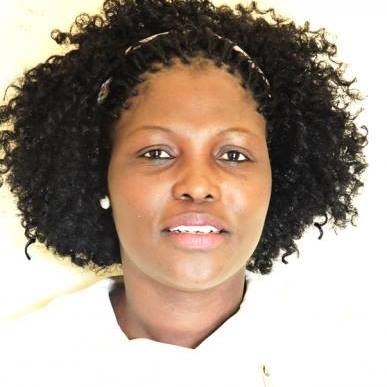
LIMPOPO Education MEC Polly Boshielo says she is elated after a teacher Mokhudu Machaba from Ngwanamago Primary School was selected as one of the top finalists for the Varkey Foundation  Global Teacher Prize 2020.

Mokhudu was chosen from more than 12,000 nominations from over 140 countries to continue in the running for this $1 million prize.

Now in its sixth year, the US$1 million award is the largest prize of its kind.

“I am thrilled to have one of our own recognised at a global scale for her determination to help our children rise above challenges presented to them,” said Boshielo.

Machaba joins among others US teacher Leah Juelke and South Korean teacher Yun Jeong-hyun vying for the top prize.

Machaba is recognized for her commitment to ensure the hardships she went through do not befall her students.

Starting with the use of a single cellphone for Internet access in class, she obtained laptops from the Internet Service Providers Association Super Teacher awards, Microsoft, and the South African government – all by showcasing her students’ activities.

She has now introduced her students to Coding Week, using Minecraft as an introduction, and students have also started talking with learners from other countries through the Microsoft Educator Platform and mystery Skypes.

In 2009, Mokhudu was the runner-up in the ISPA Super Teacher prize for ICT Integration in the classroom. In 2015 she was crowned Provincial winner of the National Teaching Award (Technology Enhanced Teaching category), and she has also been recognized as one of the 50 Inspiring Women in Tech for South Africa.

The department said Machaba started with just a single cell phone for internet access in class and went on to win prizes for integrating ICT in the classroom.

“We are proud of her for making it to the finals. We are behind her and rooting for the overall winner position”, said MEC Boshielo.

The awards are set to take place on December 03 2020.

Another finalist, Juelke, a Fargo native, graduated from the school where she now works.

However, her experience spans far beyond the Midwest.

“I’ve always kind of had a passion for learning about different cultures and traveling,” Juelke said.

“My first job was in Taiwan. I worked at a boarding school, and then I worked in Ecuador for three years at a private school as an English and social studies teacher.”

She is the 2018 North Dakota Teacher of the Year and holds certification in the world of English learners programs, formerly known as the English as a second language program, that accommodates students who don’t speak English as their first language to help them learn their curriculum with English.

Students in the English learner track at Fargo South attend their core classes with these accommodations and attend elective classes with the general population of the school.

(COMPILED BY INSIDE EDUCATION STAFF)

Zimbabwe Teachers Union Rejects UNICEF Push to Keep African Schools Open During Pandemic

0

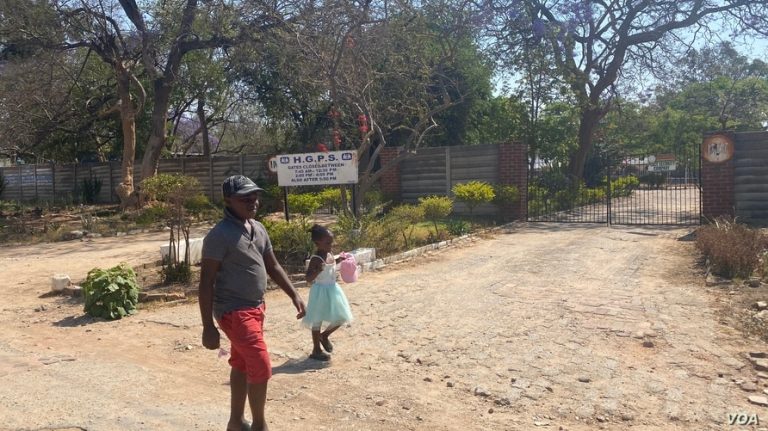
HARARE – Schools across Africa are slowly reopening after months of remote learning during the coronavirus pandemic. But Zimbabwe’s teachers union is resisting going back to the classroom and has rejected a call by the U.N. Children’s Fund (UNICEF) for governments to reopen schools.

On Tuesday, Mohamed Malick Fall, regional director for UNICEF in Eastern and Southern Africa, urged governments in the region to open schools closed earlier this year following an outbreak of coronavirus.

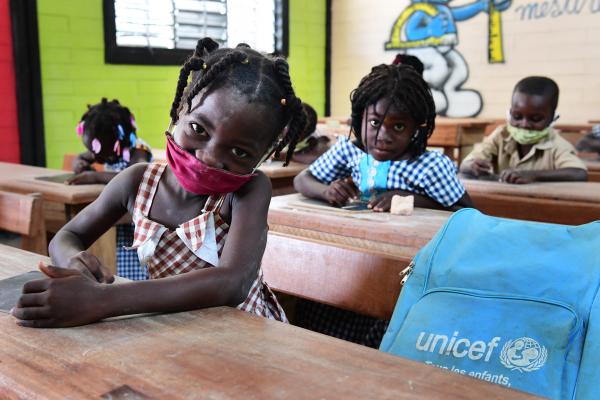
Fall said the pandemic has caused “an unprecedented education crisis” over the last seven months as radio and online learning methods are not reaching all the students. Some also lost the daily meals they were receiving at school.

And that’s not all, said Fall.

“Lost learning hurts children and community, teenage pregnancy and violence against children increase. Now we acknowledge the safe reopening of schools will not be easy. While evidence show that children are not the main driver of the pandemic, there will be cases of COVID-19 in school(s). It will not be a practice in perfection. But it can be done with community commitment, government leadership and investment,” he said.

South Africa, despite its large COVID-19 caseloads, reopened schools for all grades at the end of August.

UNICEF says most countries in eastern and southern Africa have seen a phased return to schools, starting with exam classes.

In Zimbabwe exam classes are scheduled to start next week. But that now hangs in balance after the country’s biggest teachers’ union called for a strike unless their concerns are addressed.

The teachers earn about $100 a month, including a $75 “COVID-19 allowance” introduced two months ago. They want an additional $500 to be above the poverty line.

Sifiso Ndlovu, the head of the Zimbabwe Teachers Association, said he is “worried” that UNICEF has not looked at his country’s lack of preparedness to reopen schools.

“The safety issues that we have been concerned about in the schools have not been met thoroughly as to guarantee safe and healthy reopening of schools without high incidents of COVID-19. Secondly, UNICEF seem to be oblivious that the learning conditions for students is also dependent on the working conditions of the teachers and above all it should be supported by budgetary support even from UNICEF,” he said.

Amon Murwira is Zimbabwe’s minister of higher and tertiary education. He said the government allocated about $60,000 to ensure that when schools reopen they are observing World Health Organization guidelines for COVID-19.

Neighboring Zambia opened schools Monday. Via WhatsApp, Christopher Yalukanda, from the Zambia National Union of Teachers said his organization is checking on the preparedness of schools after the over half-a-year-long closures.

“What we observed is that most of children came back equipped with masks, the schools have already acquired some face masks, sanitizers and they have set up some washing points within the school. In order to take care of social distancing schools have divided or staggering timetable, which means not all the learners will report to school the same day,” said Yalukanda.

He said it was too early to conclude that Zambia has successfully reopened schools and is following WHO guidelines to contain the coronavirus. He said the teachers union will go around the country to assess the situation.

(SOURCE: VOANEWS)

Eastern Cape: Isolation Sites Identified For Matriculants Who May Test Positive For COVID-19 During Trial Exams

0

THE Eastern Cape MEC for Education Fundile Gade says matriculants at the Ethembeni Secondary School who tests positive for COVID-19 will be able to continue with their trial exams.

This after 98 learners tested positive for coronavirus at the school, located in Burgersdorp within the Joe Gqabi District of the Eastern Cape.

The positive cases at the school come as matriculants are currently writing their trial examinations.

“The Department of Public Works (DPW) has indicated that these learners will be isolated in Aliwal North, in the Eastern Cape. In this centre, learners will be allowed to continue writing their Trial Exams,” said Gade.

He said public works will advise on the availability of sites during the process as more learners may need to be isolated.

“There are also isolation sites in Steynsburg which have been identified for Grade 12 learners should there be a need to quarantine those who tested negative, as they could be in the incubation phase,” said Gade.

He said a multi departmental team, which consists of the local municipality, officials from the departments of Health (DoH) and Public Works (DPW) and Education has been sent to the school to help contain the spread of the virus.

“The teams on the ground will assess the situation daily and advise should this outbreak require the activation of a multi departmental Disaster Management team,” said Gade.

Trial examinations began on 14 September and will end 14 October 2020.

Learners will kick off their final exams on 5 November 2020, ending 15 December. 

(COMPILED BY INSIDE EDUCATION STAFF)

Kenyan Teachers Ordered Back to School To Prepare For Reopening

0

NAIROBI: The Teachers Service Commission (TSC) on Monday ordered both primary and secondary school teachers to report back to learning institutions by September 28 ahead of the eventual reopening of schools.

TSC Chief Executive Officer Nancy Macharia said teachers are prepared to recover the time lost due to a nationwide coronavirus-triggered closure of schools in mid-March.

Macharia made the announcement after meeting with education stakeholders convened by Education Cabinet Secretary Prof George Magoha at the Kenya Institute of Curriculum Development (KICD).

“We ask our teachers to report to school on Monday, September 28 to prepare for the eventual opening of schools, so our teachers can report any day between now and Monday and start preparing schools,” said Macharia.

Magoha, who has cautiously evaded to publicly comment on the reopening of learning institutions said: “I think it’s about time to call our children back to school.”

Magoha however said they will issue dates for re-opening after ‘appropriate government machinery has gone through the plans.’

A ministerial forum to review the proposed school calendar is set to take place by Friday, September 25, bringing together CS Magoha, Interior’s Fred Matiangi and Mutahi Kagwe (Health).

The ministerial forum will precede a presidential address on the further re-opening of the economy which has slowed down since March, and the re-opening of schools.

CS Magoha had earlier on expressed fears that achieving social distancing in public schools will be a challenge.

He however noted that the government will attempt to provide masks to vulnerable and less fortunate school going children.

(SOURCE: CAPITALNEWS)

Student Entrepreneur’s Digital Library Helps Children To Read

COMPETING in the 2020 Entrepreneurship Intervarsity competition, University of Cape Town (UCT) student Qhawe Bula and his team have developed a unique digital library comprising a series of read-along children’s audiobooks written in South Africa’s 11 official languages. This in an effort to change the way young children view literature and language, and to encourage a culture of reading.

The novel idea topped the business ideas category at the regional round of the Entrepreneurship Intervarsity competition in July. The competition aims to identify top student entrepreneurs at South Africa’s public universities, showcase their businesses and attract investors to their enterprises.

South Africa faces enormous literacy challenges: 78% of grade 4 learners can’t read for meaning. But Bula’s digital library, TAQA, is paving the way for change in this area.

Research indicates that children are likely to learn a second language much faster if they have a firm grasp of their mother tongue. TAQA, Bula said, helps improve children’s ability to read in their mother tongue, which, in turn, helps them to learn how to read and understand a second language much easier.

“TAQA’s main aim is to protect and celebrate African cultures and identities. We believe that by leveraging language and technology we can go a long way towards achieving this goal,” Bula said.

The platform is aimed at children between the ages of two and nine.

Breaking barriers

According to Bula, a second-year Bachelor of Social Sciences student, TAQA helps children to read for meaning. And bringing children proudly South African stories that they can relate to, and in languages they understand, is one way of doing that. It teaches them the power of storytelling and nurtures a love for reading.

“With TAQA we really want to help grow a love and affinity for reading and improve children’s competencies in their mother tongue.”

“With TAQA we really want to help grow a love and affinity for reading and improve children’s competencies in their mother tongue,” he said.

“We want to break down language barriers. They still exist, and doing it will solve many of our problems.”

He continued: “We believe that it’s important for young South Africans to see themselves and their languages represented and celebrated in mainstream storytelling. We are committed to telling proudly South African stories.”

Bula said that TAQA believes in the importance of preserving indigenous languages.

(SOURCE: UCT NEWS)

24 million Students Could Drop Out Of School Due To The Coronavirus Pandemic, UN Says

0

THE disruption to schools caused by the coronavirus pandemic constitutes a “global education emergency” that threatens to derail the education of at least 24 million students projected to drop out of school as a result, said Henrietta Fore, executive director of the United Nations Children’s Fund. 

“At the height of Covid-19,” 192 countries shuttered schools, leaving 1.6 billion students without in-person learning, Fore said on a press call hosted by the World Health Organization and the United Nations Educational, Scientific and Cultural Organization. She added that now, more than 870 million students, “or half the world’s student population in 51 countries,” are still unable to return to school. 

“The longer children remain out of school, the less likely they are to return,” she said. “That’s why we are urging governments to prioritize reopening schools when restrictions are lifted.”

She added that beyond education, schools around the world provide many students with a source of nutrition and immunizations.

“At least 24 million children are projected to drop out of school due to Covid-19,” she said. 

Many schools went online in the spring as the virus spread around the world, turning to virtual education to replace in-person learning. Education experts, however, have acknowledged the shortcomings of virtual learning, saying that it cannot replace in-person schooling. Fore said that more than 460 million students across the globe don’t have internet access, computers or mobile devices to participate in virtual learning while their schools are closed. 

“We know that closing schools for prolonged periods of time [has] devastating consequences for children,” she said. “They become more exposed to physical and emotional violence. Their mental health is affected. They are more vulnerable to child labor, sexual abuse, and are less likely to break out of the cycle of poverty.”

The reopening of schools has become a hot-button issue, particularly in the U.S., where President Donald Trump has pushed to reopen schools regardless of how widely the virus is spreading in the community. Public health officials have emphasized the importance of reopening schools for in-person learning but have acknowledged that the virus presents a risk for young people. While young people typically don’t become as sick due to Covid-19 as older people, the long-term health consequences of a Covid-19 infection in young people are still being researched, and some young people have died from the disease.

Public health specialists, including White House coronavirus advisor Dr. Anthony Fauci, have said the best way to reopen schools is to contain the virus in the community. UNESCO Director-General Audrey Azoulay said Tuesday that it’s possible to reopen schools safely with new protocols. She added that it will require “rethinking the role and training of teachers.”

UNESCO, UNICEF and the WHO jointly published Monday a 10-page document that outlines guidelines to reopen and operate schools during the pandemic. 

“It is of utmost importance that education and health work closely together to ensure that schools reopen safely as a matter of priority,” she said. “When we deal with education, the decision that we make today will impact tomorrow’s world.”

The United Nations agencies’ guidelines detail a number of measures that communities, schools, classrooms and individuals should weigh when deciding whether to reopen or attend school. Some of the policy measures include encouraging students to stay home if they believe they’ve been exposed to the virus and for schools to ensure adequate ventilation in indoor classrooms. 

WHO Director-General Tedros Adhanom Ghebreyesus said Tuesday that “many questions remain, but we’re starting to have a clearer picture” about how the virus affects children. He reiterated that the virus can kill children, though it’s rare, and that kids can become infected and spread the virus to others. Tedros added that more research is needed to learn what increases the risk of death in children as well as the potential long-term health complications from Covid-19.

Tedros said that the risk of reopening schools amid the pandemic will be determined by each community’s ability to bring the virus under control through proven public health measures, such as mask wearing, social distancing, testing, tracing and isolation. In places where there are no or only few new cases of the virus, “the decision to close schools should be a last resort.”

“Although children have largely been spared, many of the most serious health effects of the virus they have suffered in other ways,” he said. “Millions of children have missed out on months of schooling. We all want to see children back at school, and we all want to make sure the schools are the safe and supportive learning environments they should be.”

(SOURCE: CNBC AFRICA)

Old School Sports Gear To Aid Children In Khayelitsha Township, Cape Town

0

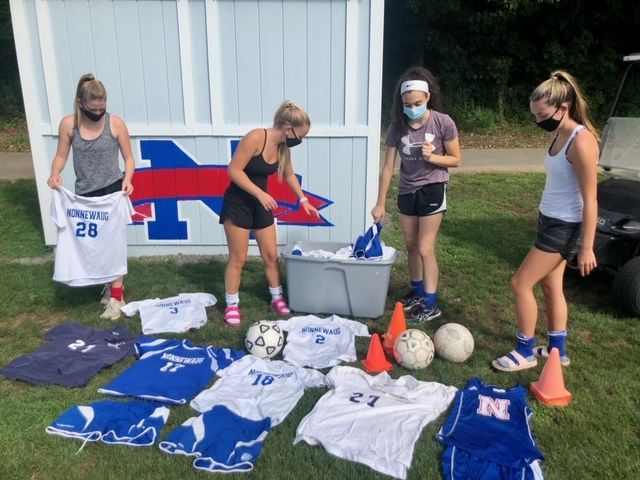
WOODBURY — Nonnewaug High School in Connecticut, US, is sending old sports equipment to an impoverished section of Cape Town, South Africa where it will be used by soccer-loving kids using sports as a path toward a better life.

Nonnewaug Athletic Director Declan Curtin said the first shipment to the African nation was sent out last week and includes soccer balls, cones and jerseys, items that have been sitting in storage for several years.

The town of Khayelitsha has a sports program but no money to purchase equipment.

“It’s the perfect opportunity to look in our closets and find things that we might not be using anymore that will be treasured in South Africa,” Curtin said.

Nonnewaug is looking for local sponsorships to help with postage costs and for future shipments, including cleats, which are in high demand as some kids in the South African program play barefoot.

The connection with Cape Town’s Khayelitsha township was made through Region 14 Superintendent Joseph Olzacki, who has connections on the African continent.

Before coming to Woodbury, Olzacki spent five years in Rwanda where he headed up a team of American teachers brought in by the African nation to elevate its educational system to American standards.

While there, Olzacki was at a United Nations conference when he met Cape Town native Abongile “Bongi” Quasana, who helped start a youth soccer program in 1998 to “get kids off the streets” and bring purpose to their lives.

Olzacki said the endeavor can also bring a sense of purpose and pride to Nonnewaug students.

“This is a way for kids to learn that they can effect change 10,000 miles away,” Olzacki said.

Curtin said he had been looking for a goodwill project for the school’s sports leadership council. A short conversation with Olzacki got the ball rolling.

Quasana expressed his joy during an interview with the Republican-American last week from Cape Town. He said children there live in harsh conditions, often without enough money for food. But sports, specifically soccer, has given them hope and inspiration.

“We are so happy for this. We are trying to make change in this country and we are doing it though soccer. People can change. I’ve seen it because of soccer,” Quasana said.

“We don’t want to win soccer games. We want to understand humanity.”

Last week, Nonnewaug athletes were pouring through the equipment and getting it ready for shipment.

“We’re just so grateful to be able to help out and maybe allow someone else to fulfill their dreams,” said senior soccer player Mia Higgins.

Curtin said the goodwill connection to Africa has been a fun project that involves leadership, teamwork and an understanding of things on a more global scale.

Quasana promised he would send pictures back to Woodbury, and offered thanks to the community for helping make a difference a world away, in a place most Americans will never see.

(SOURCE: The Republican-American)

Teacher of the Week: Table View Primary Celebrates Principal’s 50th Birthday With #JerusalemaChallenge

CLASSROOM CORNER|

TEACHER: WAJ GOUWS

SCHOOL: Table View Primary School, Western Cape

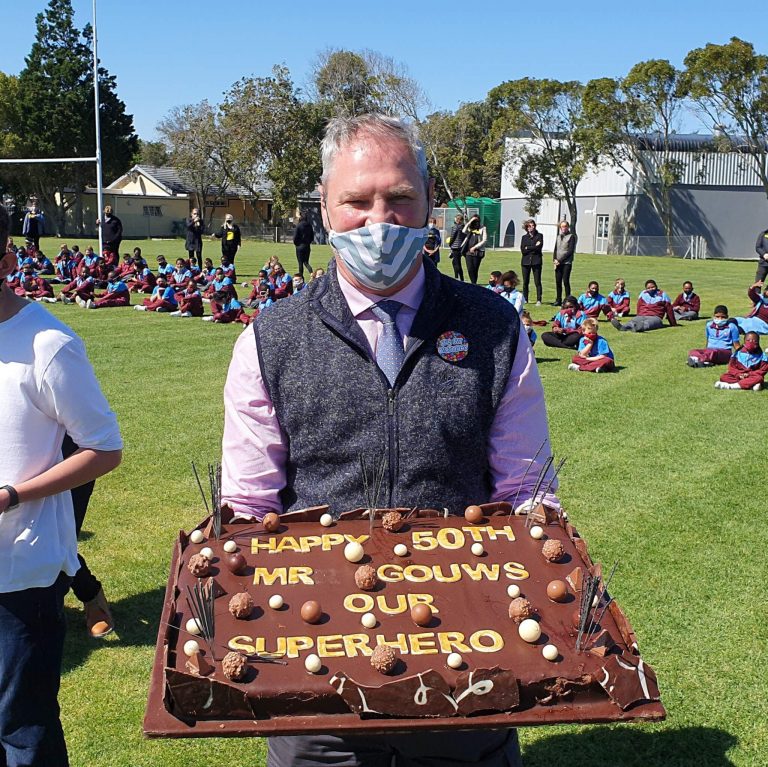
TABLE View Primary School was thrilled to celebrate their school principal, WAJ Gouws’, 50th birthday on September 10 2020.

The Grade 1-7 learners assembled on the field, socially distanced, and sang happy birthday to him.  

Another surprise followed.

The Grade 7 learners have been excited to take part in the Jerusalema Challenge and thought that Gouws’ 50th birthday would be the perfect opportunity to celebrate!

The song is “Jerusalema” – produced by South African DJ and artist, Master KG featuring Nomcebo Zikode – had the grade 7 teachers and learners from Table View Primary School join in on the vibrant global sensation.

“During these challenging times of Covid-19, our school has embraced the motto ‘Superheroes Wear Masks’ and Mr Gouws (aka Batman) has been our school’s superhero leading us through these times of uncertainty. All our learners and staff members were glad to have an opportunity to show him how much we appreciate his strength, humility and true superhero leadership,” said Bianca Akerman, the school’s marketer.

You can watch the Grade 7’s rise to the #JerusalemaChallenge on Table View Primary School’s YouTube channel https://youtu.be/bOxAFgEFlUY

(COMPILED BY INSIDE EDUCATION $ AWSUMNEWS)

Senegalese Scientist Launches Website To Spotlight Africans Working in STEM

0

NELLIE PEYTON

GROWING up in a trading town in Senegal, Adji Bousso Dieng loved school and had a particular talent for maths. But with a dearth of career role models, she had no idea which path to follow.

Some two decades later and a research scientist working on artificial intelligence at Google, Dieng wants to give young Africans the inspiring examples she missed out on.

Over 1 billion children are out of school due to the COVID-19 pandemic.

For the most vulnerable kids, this is only the latest blow — and could put an end to their education for good.

GPE and ECW are working to tackle this — but they urgently need more funding from governments. “I didn’t have a career role model to look up to and say, ‘oh I want to be this’,” said Dieng, who recently earned a PhD in statistics and will next year become the first Black female faculty member at Princeton University’s School of Engineering and Applied Science.

“It was not obvious to stay in school, in the context in Senegal where you’re supposed to get married,” she said.

This month, Dieng launched a website called “The Africa I Know”, which features profiles of successful African professionals working in fields such as science, technology, and engineering.

Speaking by phone from her home in New York, Dieng said her mother had taught her to value education. The family business was selling fabric, and neither of her parents finished school.

“My father was polygamous, and so he had three wives which is very common in Senegal,” Dieng told the Thomson Reuters Foundation. “My mom was the only one who sent her kids to school.”


Dieng went to the public school in Kaolack, a large town in the peanut-farming region of Senegal, where schools follow the French curriculum as a legacy of colonial rule.

Computer science, which Dieng will teach at Princeton, was not something she knew about as a teenager.

Her school had one room with old computers in it, and the instruction consisted of teachers saying “type this sentence” into Microsoft Word.

But the quality of education in other subjects was high, she said.

At the end of high school she was chosen to represent Senegal at an excellence camp for girls’ education in Burkina Faso, part of a programme founded by the Malian astrophysicist and former Prime Minister Cheick Modibo Diarra.

From there, she won a scholarship to attend engineering school in France.

“It was really exciting,” Dieng said. “I went from Kaolack to Paris.”

But her dream had always been to move to the United States, and after learning English she went on to pursue higher degrees at some of the top US universities — Cornell and then Columbia University in New York.

The idea for “The Africa I Know” took shape during the COVID-19 pandemic, Dieng said.

“Everyone was like, ‘it’s going to be very bad in Africa’. I’ve found myself educating people and saying this is not true, we are doing well, Africans are capable,” she said. “There’s this narrative that Africans need help. People don’t get to see everything that I see.”

The website, which launched on Sept. 1, is divided into three sections: inspire, inform, and educate.

Besides inspiring profiles of Africans working in STEM (science, technology, engineering, and mathematics), the site includes informative examples of Africans using technology to solve problems.

The third section is dedicated to highlighting positive aspects of African history that are often overlooked.

“I took inspiration from, when I was growing up, what I would have wanted to see,” Dieng said.

Now that she is setting precedents at Princeton — she will also be the first Black faculty member in the Computer Science Department — Dieng also hopes to encourage Black Americans and students of colour from any background in the field.

“I never had a Black lecturer since I left Senegal, so I really understand how they feel,” she said.

“I’ll be making sure that I admit students from everywhere, that they see representation.”

(SOURCE: REUTERS)