Home Blog Page 382

A White Professor Says She Has Been Pretending To Be Black For Her Entire Professional Career

0

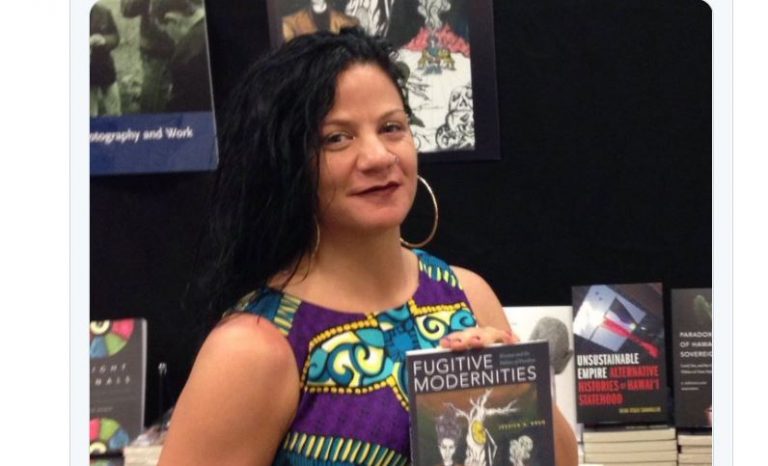
IN a scenario reminiscent of the Rachel Dolezal scandal, an African history professor at George Washington University has admitted to pretending to be a Black woman throughout her career.

“I have eschewed my lived experience as a white Jewish child in suburban Kansas City under various assumed identities within a Blackness that I had no right to claim: first North African Blackness, then US rooted Blackness, then Caribbean rooted Bronx Blackness,” Jessica A. Krug confessed in a post on Medium

“I am not a culture vulture. I am a culture leech,” Krug wrote, saying she’s been battling “unaddressed mental health demons” for her entire life. Krug said mental health issues could never “explain nor justify, neither condone nor excuse” her false identity.

“I should absolutely be cancelled,” she added. “No. I don’t write in passive voice, ever, because I believe we must name power. So. You should absolutely cancel me, and I absolutely cancel myself.”

Writer Robert Jones Jr. tweeted about the post early Thursday afternoon, saying he’s “in a state of complete and utter shock and sadness.” He also referred to Krug as Jess La Bombera, calling her an activist he had often “deferred to and stepped aside”foronline.

George Washington University confirmed they are aware of Krug’s post.Her faculty page says she is a specialist in African American history and Latin America. Although the biography has since changed, Business Insider reporter Graham Starr surfaced a cached version describing Krug as “an unrepentant and unreformed child of the hood.”

A video hosted by New York-based creative company Cell Laboratories shows Krug using a Caribbean accent as she speaks before the New York City Council. In the video, she identifies herself by the moniker Jess La Bombelera.

“You posin’ like you opposin’ them for your sound bites, your social media, your re-election campaigns, [get the] fuck outta here!” Bombalera says in the video. Over the course of the nearly four-minute video, she refers to her “Black and brown siblings,” calling out white New Yorkers who waited “with us” to make public comments, but then failed to yield time to Black, brown, and indigenous speakers. “Bombalera” goes on to identify herself as a member of New York’s Black community, saying that the last time the city had a curfew, it was “because Black people were standing up for one of our own.”

Yarimar Bonilla, a political anthropology professor associated with Hunter College and CUNY’s Graduate Center, confirmed the woman in the video is Krug.In a Twitter thread, Bonilla said that while they were scholars at the New York Public Library’s Schomburg Center for Research in Black Culture, Krug dressed and acting “inappropriately,” showing up to a morning seminar dressed for a salsa club, and acting “woker-than-though [sic].”

“In that sense, she did gaslight us. Not only into thinking she was a WOC but also into thinking we were somehow both politically and intellectually inferior,” she tweeted.

Bonilla also said Krug claimed to be the daughter of “addicts from the hood” while questioning“the work of real WOC doing transformative interdisciplinary work that she PANNED.”

Krug recently published a story for Essence named “On Puerto Rico, Blackness, and Being When Nations Aren’t Enough,” which was reposted by Caribbean news and culture site Repeating Islands on Aug. 29. According to Duke University Press’ official Twitter account, Krug’s book Fugitive Modernities was a 2019 finalist for the Frederick Douglass Book Prize. However, as of Thursday morning, the link was scrubbed. A cached version reveals the full article published Aug. 27.

(SOURCE: THE DAILY BEAST)

Parliament Concerned About Post-lockdown Disruption of Schooling In Some Provinces

0

NYAKALLO TEFU

THE Select Committee on Education and Technology, Sports, Arts and Culture has raised concerns about the disruption of schooling, often by disgruntled community members who were against the decision to reopen schools, claiming the reopening of schools will expose learners to COVID-19.

The committee said this after a briefing by the Department of Basic Education on the status of the reopening of schools and a revised school calendar, following a four-month break due to the lockdown.

The committee welcomed reports that all grades have since returned to school following a phased-in reopening approach, as well as a comprehensive catch-up plan by the department to try make up for lost teaching and learning time due to the lockdown.

“We are worried about the disruption of schooling, it further adds on the time lost – under normal circumstances if a learner misses a school day due to sickness or other reasons, they will take a minimum of two days to catch up, we cannot accept any further disruption of schooling in this situation,” said committee chairperson Elleck Nchabeleng.

The Chairperson also urged parents to “put their hands on deck” and help their children catch up with the curriculum as “these are no ordinary times”.

The department also told the committee that not all learners have returned to school despite the announcement for all grades to go back, and this decision was based on fear and anxiety.

Some parents fear that their kids can get infected, despite scientific evidence that very few school children die from the COVID-19 pandemic.

The committee was also assured that talks are going on between the department and universities on the reviewed school calendar for next year’s university registration by learners who will sit for their matric exams this year.

Responding to committee members’ questions on personal protective equipment (PPEs) spending, the department said it was among those state institutions and departments that will be investigated by the Special Investigative Unit for possible irregularities in the procurement of PPEs.

(COMPILED BY INSIDE EDUCATION STAFF)

Oxford Is Best University In World But Cambridge Drops To Sixth

0

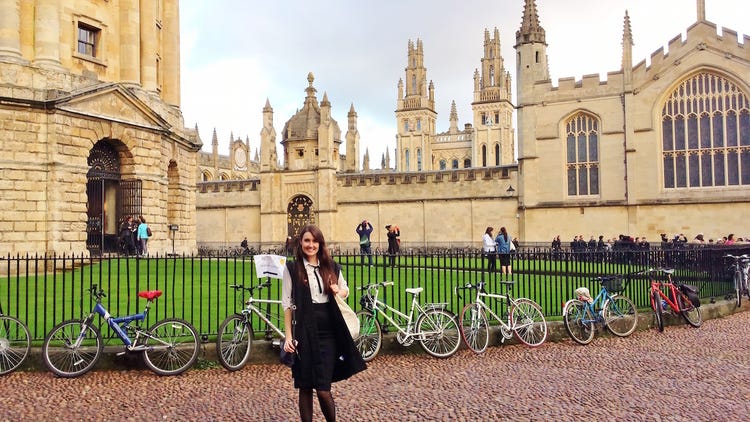
OXFORD has been ranked first in an international league table of universities for a fifth year in a row.

According to the Times Higher Education world rankings, Oxford is the best but Cambridge has dropped from third to sixth place and Imperial College London from 10th to 11th place.

It means the UK stands at an all-time low of just two universities in the global top 10.

Experts warned that a “hard Brexit” — combined with the impact of Covid-19 and a loss of international student fee income — could make universities “increasingly vulnerable” with the UK at risk of losing its status as a “higher education superpower”.

Overall, the UK has 29 universities in the top 200, up slightly from 28 last year.

The US claimed a record eight places in the top 10.

University of Cape Town Retains Its Spot As The Top Tertiary Institution On The African Continent

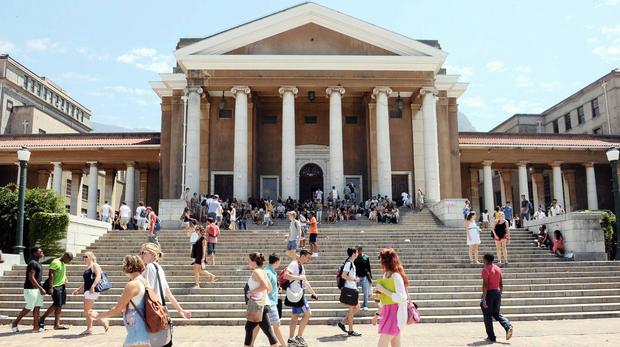
THE University of Cape Town has retained its spot as the continent’s top university, tying at 155th among more than 1 500 institutions in the 2021 Times Higher Education (THE) World University Rankings published on Wednesday.

The World University Rankings, published once a year, assesses institutions worldwide across 13 performance indicators in five areas: teaching (30%), research (30%), citations (30%), international outlook (7.5%) and industry income (2.5%).

Improved scores in key categories

UCT’s strongest performance remains in the industry income category (knowledge transfer), reflecting the substantial and continued contribution of the university’s research to industry.

The research category (volume, income and reputation) also saw an improvement in the research reputation survey score, indicating UCT’s growing reputation among leading international academics, and in the ratio of papers to academic staff score.

 The citations category (research influence) score, which measures the number of times a piece of research is cited, also improved.

Scores increased too in the teaching category (the learning environment): both in the ratio of students to academic staff and the ratio of international income to academic staff.

In the international outlook category (international staff, students and research collaborations) the co-authorship score improved, evidence that UCT’s collaboration with international partners is flourishing.

UCT top in Africa in four of the five major rankings

Earlier this year, UCT also took the continent’s top place in the Quacquarelli Symonds World University Rankings and in the Centre for World University Rankings. UCT is also Africa’s top university on the US News Best Global Universities rankings, the most recent of which were issued in 2019 and the next are expected in October 2020.

n terms of top 200 representation, the United Stated dominates with 59 spots, while the United Kingdom is next with 29 followed by Germany with 21.

Overall, European representation is in a steady decline, losing nine places in the last five years as a result of China, Australia, South Korea, Hong Kong, and Canada all gaining positions.

“We have observed the rise of Asia in the world rankings for several years now, but this year marks a major milestone, as mainland China’s Tsinghua University disrupts the traditional domination of Western universities at the top of the table, breaking into the top 20 for the first time, and as mainland China doubles its representation in the top 100,” said Times Higher Education chief knowledge officer Phil Baty.

“This new ranking provides further clear evidence of a shift in the balance of power in the global knowledge economy from the established higher education systems in the west to those in parts of the East.”

South Africa: Back-to-School in the Time of Covid-19 Poses Major Challenges for South African Teachers

0

LAURA ANGELA BAGNETTO

SECONDARY school teacher Nikiwe Ndlovu was looking to go back to school last month after lockdown in iLembe District, a rural area in the eastern KwaZulu-Natal province of South Africa. She was attending a teacher’s meeting before the opening of the school when she contracted Covid-19.

Ndlovu has health issues so she did not realize that she had the coronavirus until she tested positive, creating even more challenges as she tried to teach Technology, Life Orientation and Natural Science in grades 8-12 while living at home in isolation.

“It’s very difficult to teach on WhatsApp because some learners don’t even have phones — they rely on their friends for sharing the activity I used to send,” she says, adding that network difficulties in the rural areas and students’ lack of data add to the mix.

Students are falling behind due to Covid-19, and educators are trying to pick up the slack in an effort to ensure students are safe and can continue their education.

UNESCO, the UN cultural agency, calls the pandemic the “biggest educational disruption in history”, and has set up a global campaign to help students, especially girls, get back to school.

Some teachers return

All eyes are on Philani Xaba, principal at Noodsberg Primary School in Tongaat at Bamshela near Durban, as he works on creating a safe space for students to learn, but what he says is with little help from the provincial government.

His school has 863 learners, and he is trying to create social distancing within sanitized classrooms, but only eight of his 27 teachers came back to school on 20 July. The others filed a comorbidities claim, which in South Africa means that you are vulnerable and susceptible to getting Covid-19 and cannot do your job.

Within a week, seven teachers tested positive for Covid-19. The government has not replaced them, he says, nor have they replaced the others on comorbidities leave.

“When we reopened the school, Covid-19 took over, because the teachers were sitting together in the staff rooms, meeting together during breaks, so it spread like fire,” he says. No students have contracted it.

The government has not replaced the teachers, he says, nor have they replaced the other seven off sick.

“I’ve utilized all the resources that I have,” says Xaba. “Even if you are an administrative person you are now in the classroom to occupy all the learners so they are not alone,” he adds.

And that is for the students who do come to school.

Fear means low attendance

According to their global monitoring of school closures, UNESCO noted that at the peak of the pandemic in April 2020, more than 1.5 billion students were affected by school closures around the world–more than 90 percent of the world’s young people in 200 countries.

“This is a crisis situation right now, and we also need to see that as a window of opportunity to really create new education systems that are gender responsive, that are inclusive, and are more resilient not just on this current situation but for future crises as well,” says Justine Sass, chief of section for education and inclusion on their “Building Back Equal” campaign.

Principal Xaba agrees.

“Parents are so scared to bring their learners to school,” he says, when they were informed of new South African government guidelines at parent meetings. “That’s why all of the schools, if you check the attendance, is so poor. I think it’s about at 30 percent or even less,” he says.

“In one of the meetings, a parent asked me, ‘have you all been screened and checked for Covid-19, as was said on the radio?’ And I told them that no, it was said, but we have not yet been tested. We just come in and are afraid,” he says.

At Ekukhanyeni Special needs school in the Pietermaritzburg area of KwaZulu-Natal Province, the attendance is even lower–at about 20 percent since the school opened last week, says teacher Thembi Nesemare.

“The majority of children, although they have disabilities, some have underlying conditions, too, like HIV/AIDS, epilepsy, and chronic chest infections. That’s why they haven’t brought those students to school,” she says.

“Continuity of learning hasn’t been very good for girls with disabilities, for children with disabilities; we need to ensure that there are inclusive measures,” says UNESCO education expert Sass, as educators in South Africa are doing their best under stressful conditions.

Part of the South Africa Department of Education guidelines includes the option to homeschool children if they are vulnerable. But where Nesemare teaches, there are additional socio-economic problems.

“The majority of parents who have children with disabilities in this community are illiterate,” she tells RFI, which makes it difficult for parents to help their children at home to get ahead at school.

Problems with masks

Part of daily education, especially in Nesimare’s school, is to remind the children that they need to socially distance, wash their hands and keep a mask on.

“We have a concern with children who are autistic, because some are very sensitive about material touching their face,” she says. “This is a matter that we have put forth to the department to assist with finding what other mechanism other than the mask can be used for a child with autism,” she says.

Lack of cleaners and screeners

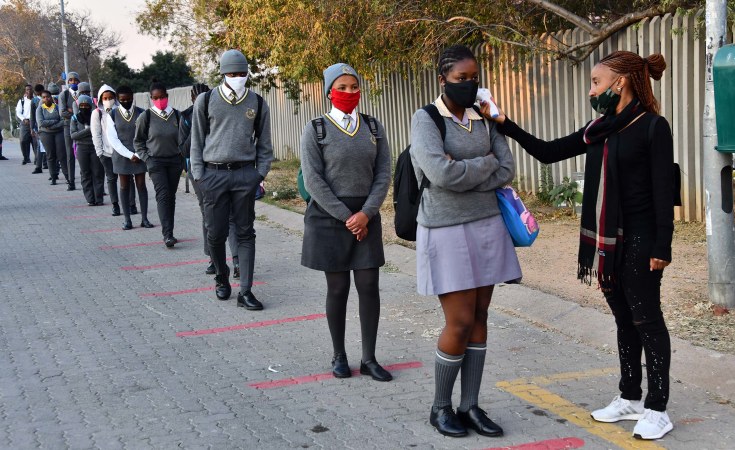
When the teachers and students do decide to come to school, they must go through a daily screening process, where a monitor takes their temperature and gives them alcohol gel as part of Covid-19 preventative measures.

In Xaba’s school, if half of the school comes in the morning, that’s 432 students. School starts at 8:00.

“How many screeners should there be?” asks Xaba. “There’s only one in our school. Which means that the school day begins late, because all these learners cannot enter the school without being screened, without forms being filled out, without being sanitized by the gate,” he says.

“We’re very concerned that this is going to be a crisis within a crisis, and special measures have to be taken for this context,” she says. “We can’t push children to go back into schools if the school situation isn’t going to be safe for them, or if the health measures are not going to be in place for their return,” says UNESCO’s Sass.

Special measures

The South Africa nationwide guidelines give the individual schools the opportunity to tailor the school year for their students, while maintaining social distancing.

Principals are given the choice of having half the students who make up a ‘Group A’ come in one week, while they stay home the next week and learners in ‘Group B’ arrive. Or Group A and Group B can alternate days–Group A on Monday, Group B on Tuesday, which is another option.

Xaba says he was worried about the students not having enough time with teachers, so his school has selected the third option: Group A, or half the school, comes in the morning, from 7:30-12, and then Group B, the other half, come in the afternoon. Each section learns the same thing, so their curriculum is cut in half for the 2020-2021 school year.

“We need to put an extra hour, more than the 7-hour school day, so that the second session can have the same time as the morning session,” he says.

His school was not given mobile classrooms as promised, and while South Africa is still cold as it goes into Spring, he says it is too dusty in the Summer to hold classes outside, either.

“Our students are going to fall behind because when we came back to school they couldn’t provide enough classrooms for a Covid-19 situation,” he adds with a sigh.

RFI contacted the Education Department in eastern KwaZulu-Natal province, but they were not available for comment.

Teaching takes its toll

Although Ndlovu is still recovering from Covid-19 and is even isolated from her own children at home, she is trying to do as much as she can for her students, and creates packets of exercises and homework.

“When I send an activities packet to school, the principal brings the finished work for me to mark on the weekends and give the students feedback,” she says.

All these changes to the class format, timings and class sizes puts pressure on teachers, too.

Teaching while in isolation with Covid-19 under these circumstances has taken a toll on Ndlovu.

“The doctor said I must deal with the stress because he said that I am depressed, while pretending I am strong,” she says.

“I’m trying to be strong because I do not want the children to fall apart because of me,” she says, referring to both her students and her own children.

“I am so grateful that teachers worked hard to help the learners in attendance. Even though there are challenges, the teachers work tirelessly,” she says.

“In some of the schools, we did not even have fumigation, or deep cleaning in rural areas–you will find the teachers cleaning the schools for ourselves so the learners arrive in a safe place,” she adds.

It is also impossible to generalize how education is carried out South Africa in this time of pandemic, which varies according to the province, city, community, and school, says Nesemare, the special needs teacher.

“Our school is in an area where the parents are not working. Some have been told you can’t come back until we’re at Pandemic level 1, and we’re at level 2 right now,” she says.

“We’ve been on lockdown for five months. Some parents prefer sending kids to school where they will be able to eat instead of facing starvation– those are the factors here,” she says.

Ndlovu is hoping to be well enough to physically go back to school in October to teach in person.

“My children at school really need me to be there for them,” she says.

(SOURCE: Radio France Internationale)

Umalusi To Ensure Covid-free Exams For 1.2 Million Grade 12 Learners

NYAKALLO TEFU

UMALUSI says that matric exams will go ahead as planned and that matric papers have already been set, and will not be scaled down despite disruptions caused by the coronavirus induced national lockdown.

Over 1.2 million Grade 12 learners are expected to sit for their exams in November.

The combined June and November examination will commence officially on Thursday, 5 November and terminate on Tuesday, 15 December 2020.

Umalusi, the Council for Quality Assurance in General and Further Education and Training, announced on Monday its state of readiness for the monitoring, distribution and marking of the 2020 National Senior Certificate exams.  

The council’s chief executive officer (CEO) Mafu Rakometsi said Umalusi will conduct external moderation of question papers set by the assessment bodies to ensure that the question papers and their marking guidelines are of a required standard.

“All question papers to be used cover the curriculum as prescribed and approved in 2019,” said Rakometsi.

Rakometsi said accounting and business studies question papers, which will consist of two question papers each for the first time in 2020, have also been set.  

He said the council undertook the ‘state of readiness’ process to gauge the assessment body’s level of preparedness to conduct, administer and manage credible national examinations prior to the commencement of such examinations.

Rakometsi said an adopted risk management approach will be applied where audits will be carried out in the main remotely.

“Each of the nine Provincial Departments of Education will be required to submit valid evidence for each of the pre-determined key indicators that address the appropriate state of readiness focus areas,” said Rakometsi.

Final exams will also put pressure on markers because those that are re-writing their matric exams will also be part of the group writing their finals this year.

Umalusi said it will ensure markers are fully qualified for the task ahead.

The council said it will also verify the conduct of marking.

“External moderators will be deployed to marking centres identified by assessment bodies across the country,” said Rakometsi.

“Moderators will spend approximately three days per question paper in a marking centre.”

The council said it will ensure that all COVID-19 regulations and protocols are followed to ensure the safety of staff and learners. 

(COMPILED BY INSIDE EDUCATION STAFF)

SAUS Raises COVID-19 Concerns As 66% Of Students Return To Unsafe SA Campuses

NYAKALLO TEFU

SOUTH AFRICAN Union of Students (SAUS) has raised safety concerns as 66% of university return to several campuses under Level 2 lockdown, particularly at several universities such as Fort Hare, Walter Sisulu, Sefako Makgatho and Mangosuthu University of Technology.

The students’ union said most of these historically disadvantaged universities were ill-prepared to receive thousands of students and posed a serious academic risk.

“We are in the process of doing oversight visits this week, particularly where universities are said to be at high risk,” said SAUS spokesperson Thabo Shingange.

“Some of these issues are around their structural inadequacies that come from the past. However, what we are saying as a union is that past injustices have to be balanced with elements of accountability. Twenty six years into democracy, why is the University of Fort Hare still plummeting into the ground? Why is Mangosuthu University of Technology still plummeting into the ground? We need to begin to speak to these particular things as a union.”

SAUS concerns come just a few days after Higher Education Minister Blade Nzimande identified six universities considered as high risk for students.

Nzimande said failure by these universities to adequately resume classes since March, poses a serious academic risk.

Nzimande identified the following universities:

  • Mangosuthu University of Technology 
  • Vaal University of Technology
  • Sefako Makgatho University
  • University of Fort Hare
  • Walter Sisulu University
  • Central University of Technology

Nzimande said up to 66% of university students will be able to return to university campuses.

“According to the criteria developed, I am happy to report under Level 2 of the lockdown, it will be possible for us now to allow for up to a maximum of 66 percent of students to return to university campuses,” he said.

Nzimande added: “Some Universities have not adequately resumed academic teaching & learning for a significant proportion of their student populations since March when the recess period started.”

“This poses a serious risk. The Department is currently engaging with all Medium and High Risk institutions identified above to secure commitments and actions to lower risks and expedite operational capabilities to ensure successful completion of the 2020 Academic Year. Special support measures will be put in place to ensure academic activities resume at an accelerated pace at these universities.”

EFF Student Command spokesperson Xola Mehlomakhulu said the organization does not support the re-opening of some of these high risk universities without any scientifically proven knowledge of how they were going to respond to emergencies.

“This could potentially be another spike or spread of the virus,” said Mehlomakhulu.

“We don’t condone the return of students back to campuses without sufficient measures. I think that should be the prioritization of the students.”

Nzimande said universities need to strike the right balance between the imperative of enabling all institutions to complete the requirements for the 2020 academic year in order to give all students a fair chance, and the need to ensure the start of the 2021 academic year in ways that do not render the system unmanageable or impairing the principle of equity of access across the system.

“For this reason, I have met with both the COVID-19 Ministerial Task Team and Vice-Chancellors in the last week to impress upon the principle to agree on a fixed period within which all institutions must complete the current academic year and a fixed period of starting dates for the opening of the 2021 academic year,” said Nzimande.

(COMPILED BY INSIDE EDUCATION STAFF

Women In STEM Fields: Bridging the Gender Digital Divide in South Africa

UPASANA SINGH

With the increased dependence on accurate information and user friendly technology during the COVID-19 pandemic, the world saw the exacerbation of the digital divide in most developing countries. The digital divide, in simple terms, highlights the inequality in access to technology and data, across different groups of people.

One group that was particularly marginalised in developing countries, during this period, was women. While we have come to realise that during crises such as the COVID-19 pandemic, connectivity is the key, it is crucial to ensure that all women have digital access to enhance the sustainability of their livelihood.

Females often have less access to technology, and in particular, the internet for a number of reasons. Cost is usually the primary barrier. Many females struggle to afford technological devices and data access for utilizing the internet. Cultural differences sometimes allure to developing stereotypes that ‘technology is only for males’.

This cultivates a sense of fear among females, as they do not want to be discriminated against. The Gender Digital Divide (GDD) in terms of access to the internet is largest in the world’s least developed countries at 32.9%.

The internet GDD is the largest in Africa.

According to the 2019 UNESCO report titled “Cracking the code: Girls’ and women’s education in STEM”, only 35% of STEM students in higher education globally, are women. To understand the South African scenario some stats include – only 3% of female students in higher education choose technology related studies; women make up 5% of CEOs in technology related companies; in 2018, the Engineering Council of South Africa (ECSA) estimated the total number of women engineers registered with them to be just 11%.

While equality transformation in the IT and other technology-related industries has commenced, women are still largely underrepresented. Without equal access to technology and connectivity women cannot participate equally in digital societies; speak out and campaign on issues that affect them; and are less involved in creating digital artefacts and content.

This also negatively impacts developing countries’ potential for economic growth and development. To bridge this GDD females must have a right to be safe while they are online. They should feel free to speak up without the fear of harassment. Since lockdown commenced on the 17th of March 2020 in South Africa, through supporting many female academics from different race, age, economic and cultural groups, in the move to online digital teaching and assessment practices, through a series of academic empowerment workshops at multiple Higher Education Institutions in South Africa and Africa at large, the GDD became more evident to the author.

digiFEM© : Bridging the Gender Digital Divide in South Africa.

While the attendees were not solely made up of females, the ‘voice’ most predominant during the webinar sessions were those of the female participants. The most prominent barrier that emerged among these female academics was that of ‘digital literacy’. Basic digital skills were clearly lacking among many female participants, and they attributed this to unequal access to learning relevant technical skills, and a lack of encouragement to pursue digital literacy and technology related courses in school.

We all know that education is the key to success in life, and likewise, it is also essential to closing the GDD. Thus, more females should be allowed/encouraged to attend school and further encouragement should be given to them to pursue careers in the field of technology. Access was the second key factor prohibiting the female academics fully embracing digital teaching and assessment.

Many struggled to connect to online training sessions, while others who did connect, had limited data so they had to resort to listening to the audio only, and switching their videos off.

Thus, through these interactions the author developed the digiFEM© framework, to assist academic institutions, corporate and government departments in addressing the fundamental foundations required to bridge the GDD in South Africa. While the framework is still being tested, it hopes to serve as an enabler to reduce the GDD among women in South Africa.

As outlined in the digiFEM© framework above, the starting point is to provide the infrastructure to support digital technologies. Issues such as electricity shortages need to be addressed, e.g. the creation of digital hotspots could facilitate access even in rural areas.

The actual devices are often not available for females, so the technology must also be provided, e.g. partnering with corporates to provide internet enabled devices would empower women with the technology.

Once the foundations of infrastructure and technology have been developed, it is hoped that essential economic and social issues related to access and devices, which is prevalent in developing countries, would have been reduced/resolved. Next, training in digital literacy is essential.

This often means providing training from the basic essentials to advanced skills on how to use the device, as well as how to use the Internet. Following from digital literacy, is creating  awareness of the power of digitisation.

Educating these digitally empowered females with the potential of digital technologies to support their livelihoods through exposure to electronic commerce for launching or increasing the reach of their own small businesses, is one example. Finally, creating opportunities for these females to build communities of practice will provide a platform for sharing the innovative ways in which they have harnessed and adopted technology, and thus reduced the GDD. These communities of practice would also help to address the cultural and social issues that are present in many of the rural African communities.

Thus, if we want to successfully implement strategies to reduce the GDD in South Africa, a holistic approach is required. All stakeholders need to take a more active role. Governments need to invest in more digital skills training programmes targeted specifically at women. Furthermore, corporates must develop women in the IT workforce, by promoting talented individuals to leadership positions.

Let us embrace the spirit of Letsema – a Sotho word, which means “people coming together to work for a common purpose” – to collectively work together to educate, share and empower other females and reduce the GDD.

ABOUT THE AUTHOR|

Dr Upasana Singh is a senior lecturer in the Discipline of Information Systems and Technology at the University of KwaZulu Natal, Westville Campus, in Durban South Africa. She lectures on a wide-range of IT-related subjects and she has a keen interest in Educational Technologies.

School of Management, IT and Governance: University of KwaZulu-Natal.

Call For SA’s 50 Most Inspiring Women In STEM

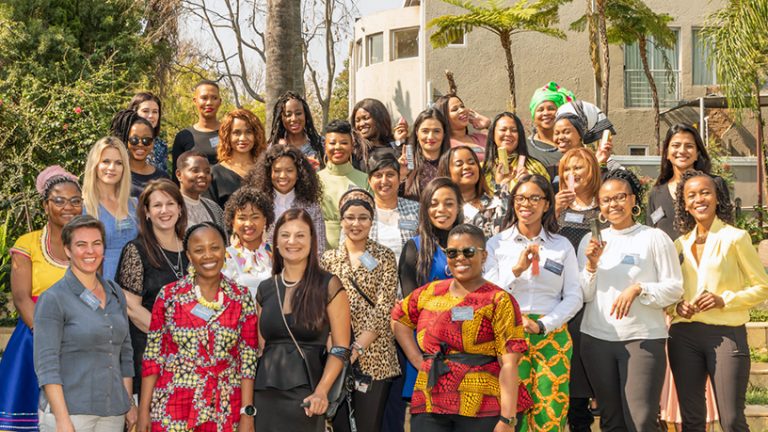
INSPIRING Fifty has today opened nominations for this year’s 50 most inspiring South African women who work in the fields of science, technology, engineering and mathematics (STEM).

A Dutch-born non-profit organisation, Inspiring Fifty showcases inspiring female role models in the STEM industry. This is the fourth year it has been in SA, but the organisation itself was established in 2013 in the Netherlands by founders, Janneke Niessen and Joelle Frijters.

Despite the progress made on the gender equality front, South African women continue to earn significantly less than men and are under-represented in key STEM fields. This is deterring young women from pursuing careers in these fields, keeping the status quo intact and holding the country back, according to the organisation.

The #InspiringFiftySA campaign says it is changing this by celebrating and showcasing South Africa’s top women in STEM, with the top 50 winners being afforded an opportunity to become part of the Inspiring Fifty network andreceiving an award.

The network consists of women who support each other in the struggles of being a female leader in STEM, and the platform also provides tangible connections to extended industry networks, business opportunities, capacity and resources to bid for larger projects, and scholarships and bursaries.

“According to Statistics SA, women account for 23% of STEM professionals in SA. Of them, 17% are in leadership positions,” says tech entrepreneur Ellen Fischat, ambassador of #InspiringFiftySA.

“The above percentages are even lower when looking at women of colour. In SA, the STEM sector remains very male, but also very pale. Without visible and relatable role models, girls and women of colour are not encouraged to choose careers in STEM.”

When it comes to equal opportunities for men and women, SA continues to lag. A 2019 report by PwC shows that women earn 28% less than their male colleagues. This means female workers have to work over 2.5 hours more every day to earn the same salary as their male counterparts.

In terms of JSE-listed companies, men account for 96.6% of CEOs, 87.2% of CFOs, and 91% of executive directors.

That is not because women are incapable, notes Inspiring Fifty SA. Data by the Department of Basic Education shows that in 2017, female matriculants attained 62.6% of A-passes. A similar situation applies to colleges and universities, in which girls outperform boys.

Mmabatho Mokiti, director of Web site building platform Redshift, agrees: “There is a term called ‘pack mentality’ which is very prevalent amongst men; for instance, through their old boys’ clubs. This makes it difficult for women in the workspace, resulting in them changing to other careers.”

Mokiti, who was one of the 50 winners in 2018, applauds the initiative.

“#InspiringFiftySA is building a pack, but a different one; one that comprises powerful women who are breaking boundaries, challenging the status quo and making South Africa a better, more equal place for all who work and live here,” she notes.

Since its inception in 2017, #InspiringFiftySA has grown from strength to strength, resulting in an international partnership with AccelerateHer, a UK-based initiative that aims to redress the under-representation of women in tech, as well as ongoing support from the Dutch Consulate and Embassy in Cape Town and Pretoria, respectively.

(SOURCE: ITWEB)

Amanzimtoti School To Contest Lions Sports Festival

0

KINGSWAY High School will participate in the Lions International Sports Festival in Cape Town from 24 to 31 July 2021. As one of only two South African schools per age group that will take part in the tournament, its first team rugby, first team netball and first team hockey will do battle.

“What makes this prestigious festival so special, is that the British and Irish Lions only tour South Africa once every 12 years. We are looking forward to flying the Kingsway High School and Amanzimtoti flag high at the tournament,” said rugby director, Mark Cameron.

“There will be scouts from all over the world at the tournament, which is an added incentive for our players to excel.”

The school will take 50 learners, (25 rugby players, 15 hockey players and 10 netball players). They will be accompanied by team coaches, team managers, medical staff as well as the heads of rugby, hockey and netball.

The tournament, which features schools and clubs from around the world, takes place in the week leading up to the second test in Cape Town at a venue still to be announced in either Cape Town or Stellenbosch.

The Kingsway teams will fly to Cape Town on 24 July and back home a week later.

“We will only know who we will play against in the first game closer to the time. Our first games will be on Monday 26 July, followed by games on Wednesday 28 July and Friday 30 July. Plans are to visit Table Mountain on Tuesday 27 July and have an educational excursion on Thursday 29 July.”

Cameron is chomping at the bit for sports to be allowed back at the schools.

“We are waiting for the department of education to give the go-ahead. We normally start our off-season preparation in October leading to preseason in January. We are hoping for a good preseason and will play pre-season warm-up matches in February and March.”

He is hoping they will have local sports festivals like the Scottburgh Festival and Voortrekker Festival in March to prepare for the big one in July.

“Going into level two helps, but all school sports are still not allowed to start training. The department announced that there will be no sports this year at all.”

“We are hoping to start training as soon as possible as one needs to be conditioned and well prepared to play in a tournament like this. We are really excited about the future of our sport at Kingsway High School. Lots of planning has already taken place to ensure our sports stars develop their skills and become better players.”

(SOURCE: South Coast Sun)