Home Blog Page 383

Over 22 500 Teachers Set To Return To Classroom Amid COVID-19 Safety Concerns

0

NYAKALLO TEFU

OVER 22 500 teachers are set to return to work amid COVID-19 safety concerns.

The Basic Education Department has instructed all teachers granted concessions to work from home during the nationwide lockdown to report back to school on Monday.

Teachers with co-morbidities were granted permission to work from home owing to the COVID-19 pandemic will this week return to school in accordance with the collective agreement 1 of 2020 aimed at providing concession for educators employed in terms of the Act No. 78 of 1998 of Employment of Educators Act (EEA), who were affected due to severe risk factors ofCOVID-19.

In July, the DBE called on all unemployed teachers to register on the National Recruitment Database (NRD) for temporary employment as substitute educators in a public school.

Last week, President Cyril Ramaphosa announced that the country would move from level 2 to level 1 lockdown, meaning concessions work ended on Sunday at midnight.

“The affected people will therefore have to report for duty from Monday, 21 September 2020. If, however, some individuals are still not well, they are advised to follow the normal sick leave protocols,” said Minister Angie Motshekga.

Motshekga has vowed to ensure that the contractual agreement between the department and the substitute educators is fulfilled.

“Schools should also consider ways in which they could best utilise the substitute educators with who they have contractual obligation,” said Motshekga.

The department has urged school principals to re-work timetables to accommodate all teachers returning to work this week. 

“We are expecting that 22,500 teachers who have been working from home under levels 4,3, and 2 will now have to work from the school where they have been employed,” said the department’s spokesperson Elijah Mhlanga.

“If they feel that they are not well, they are advised to apply for sick leave using the proper channels that they know.”

The SA Democratic Teachers Union said it cautiously welcomed the return of teachers to school.

“We are happy with the decision because we did sign a Collective Agreement for teachers with comorbidities to be given concession. We were fully aware that at Level 1 teachers would have to report for duty at school,” said SADTU spokesperson Nomusa Cembi.

“However, we are saying even though the collective agreement has come to an end, this is not the end of the employer’s obligation to the wellness of the employee. Those educators that are still not well can still take the normal route of taking sick leave.”

She added: “We are concerned that Basic Education Department has not handled the issue of teachers with comorbidities in some provinces. We have situations where some teachers who said they had comorbidities were asked to report for duty.”

(COMPILED BY INSIDE EDUCATION STAFF)

Department of Basic Education Scraps Final Exams For Grade 10 and 11

0

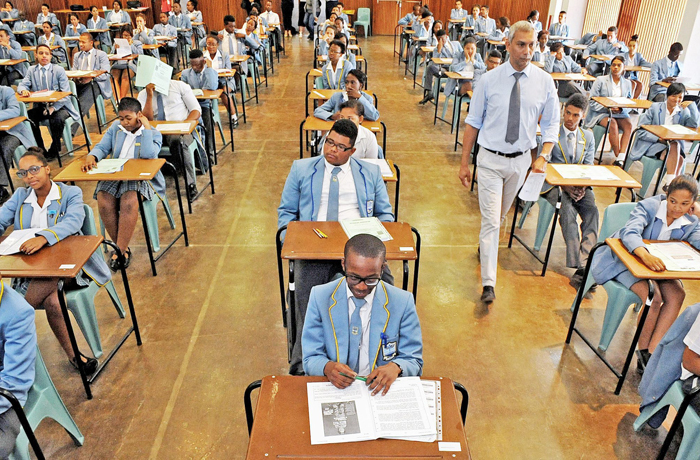
THE Department of Basic Education has scrapped this year’s exams for Grade 10 and 11 in favour of controlled tests.

In a circular, department said COVID-19 infections, the loss of teaching time and the closure of schools during lockdown has resulted in the non-completion of the curriculum.

DBE spokesperson Elijah Mhlanga said more teaching time will probably be allotted next year in order to allow learners to complete their syllabus.

“It’s a once-off measure that we’ve got installed position once we checked out the whole lot that affected training this year and we felt it will no longer be honest to have a full-scale exam when faculties have been closed and reopened. With the trimmed curriculum we realised that we aren’t going to complete the syllabus,” said Mhlanga.

“Grade 10s and 11s be informed the similar factor, it’s only the level of problem of what they’re finding out. It’s mainly one thing that’s not in reality new to them. So what we’re going to do is create extra time subsequent year to be sure that the entire paintings that was once no longer lined is roofed then.”

The department said it will instead replace the exams for Grade 10 and 11 with controlled tests.

The controlled test must cover a substantial portion of the curriculum taught, preferably work covered in all terms, wherever possible.

The test, it said, must be administered under controlled conditions. The document said that fundamental subjects like languages, maths and maths literacy will offer the required number of papers with a reduced duration.

(COMPILED BY INSIDE EDUCATION STAFF)

Gauteng Education Department Launches Investigation After School Allegedly Suspends Learner For Speaking Out Against Racism

0

THE Gauteng Education Department has launched an investigation into the suspension of a pupil following claims of racism.

The pupil from Roosevelt High School in Randburg, Johannesburg was suspended on 27 August and faced charges related to racism.

According to the pupil’s attorney, she spoke out against racism at the school when she was suspended.

The pupil, along with other pupils, had previously sent an email to the management of the school asking to have a sit down to address issues at the school which included racism.

The meeting happened and the grievances were noted.

Thereafter, the pupil took to Twitter.

“The disciplinary hearing that was supposed to take place on 15 September 2020 has been postponed indefinitely,” said education spokesperson Steve Mabona.

Mabona said senior officials from the department of education visited the school on Wednesday to get more details about this case as very little information has been shared thus far.  

(COMPILED BY INSIDE EDUCATION STAFF)

Select Committee on Education Welcomes Plans of Department of Sports For The Next Financial Year

0

THE Select Committee on Education and Technology, Sports, Arts and Culture has congratulated the Deputy Minister of the Department of Sport, Arts and Culture, Nocawe Mafu, on the birth of a new department after the successful amalgamation of the two historically separate departments of sport and recreation, and arts and culture.
 
Mafu, who led the newly merged department of Sports, Arts and Culture in its meeting with the committee on Wednesday, told the committee that the process of amalgamation is completed and that now there is only one department, under one Director-General.

The department briefed the committee on its revised budget and annual performance plan for the 2020/21 financial year, and on the COVID-19 relief fund.
 
Briefing the committee, Mafu assured the committee that in spite of challenges, the department is performing well in all its programmes.

She said the budget had to be adjusted because of the new COVID-19 realities, and funds had to be redirected according to the new priorities presented by COVID-19, among other things.  
 
The chairperson of the committee, Elleck Nchabeleng, highlighted concerns that have been expressed by the people on the ground on the distribution of relief funds, the application of consequence management as a result of the Auditor-General’s report on the funds, and non-compliance by some of the institutions under the department’s oversight.

“There is much theory on consequence management and less translation of that into action. Consequence management should not be a talk shop,” said Nchabeleng.
 
He said the internal audit resource within the department is supposed to pick up non-compliance and advise the department long before auditing takes place.

Members of the committee told the department about the unequal distribution of the relief fund among the racial groups, and double-dipping.

On the distribution of funds among racial groups, they said a huge chunk went to Africans, and on the distribution of funds to the country’s nine provinces, a huge chunk went to Gauteng.
 
The committee also wanted answers on a number of questions on Robben Island and Iziko museums.

Nchabeleng said Robben Island cannot be treated as an ordinary museum or heritage site.

“It is a premier heritage site and our beacon of hope, and always remember that there were political prisoners who were imprisoned there,” said Nchabeleng.
 
Nchbeleng, who declared his personal interest in Robben Island, said the committee needs to have a meeting with the few Robben Island’s ex-political prisoners who are still alive to hear their views about the island that was their university of the politics of freedom, reconciliation and patriotism.
 
Mafu answered all the questions of the committee and assured the committee about the department’s plans in place for the improvement of its performance.

On the relief fund, she said the department has been consistent in working on its plans of mitigating the effects of the lockdown.

They told the committee about the distribution of the relief fund and cleared all what was not clear.
 
On the role of the department on gender-based-violence (GBV), Mafu said the department is responsible for social cohesion, and based on that, it has a bigger role in the implementation of the government’s National Strategic Plan on GBV.

She said in as much as the plan is driven from the Presidency, the department reports on its role to the President regularly.
 
On school sport, which the committee wanted more explanation, Mafu said the Department of Basic Education is a custodian of schools, and based on that, school sport is its responsibility.

However, she said the Minister of the Department of Sport, Arts and Culture interacts with the Minister of Basic Education on the issue of sport.

(REPORTING BY INSIDE EDUCATION STAFF)

Over 400 Maths And Science Teachers From Zimbabwe Unable To Enter SA Due To Travel Restrictions – DA

0

THE Democratic Alliance has called on the Department of Education in Limpopo to engage with the Home Affairs Department to allow some educators from Zimbabwe to enter the country.

The party said about 400 gateway subject teachers are unable to return to teaching as the country has not opened the borders since they were closed when the country was put on lockdown.

Gateway subjects include mathematics, physical science, economics, agricultural sciences, geography and accounting.

The DA’s provincial leader Jacques Smalle said gateway subjects are considered critical for the country’s development and economic growth.

“These teachers should be allowed to enter the country as a matter of urgency, given their immense contribution to the education of learners in the province and the high demand for their skills,” said Smalle.

Smalle said that in the 2019 National Senior Certificate (NSC) exams in the province had lower percentages than the national averages of learners that achieved 30% and above in all eleven of the gateway subjects.

The country is still under lockdown level 2, which means borders are still closed.  

Schools reopened in August as the Department of Basic Education pushes teachers and learners to complete the 2020 academic year.

(COMPILED BY INSIDE EDUCATION STAFF)

Over 5 Million SA Learners Still Not Receiving School Meals – DBE report

0

NYAKALLO TEFU

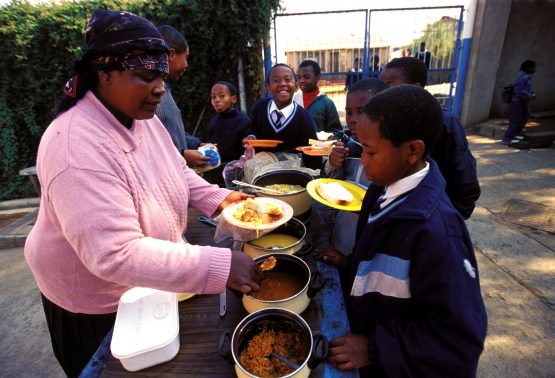
WHILE the implementation of the National School Nutrition Programme has improved, over 5 million children who qualify to benefit from the school feeding scheme are still not receiving their meals.

This was revealed in Parliament by the Department of Basic Education’s director general Mweli Mathanzima during a presentation on the state of reopening schools, updates on the National School Nutrition Programme, and draft directions for Learners with Special Education Needs.

The department said that as of August 26, 4.4 million learners out of the 9 million qualifying learners were receiving their meals

According to official data from basic education, 9.7 million children from a total of 19,000 schools depended on the feeding programme.

The programme fell away during the coronavirus lockdown imposed by President Cyril Ramaphosa in March.

A high court judge later ruled that the department must maintain the programme even if schools were closed, or learners are attending irregularly.

The department of basic education has attributed the low number of learners collecting meals to the lack of transport available for the learners who live far from their school.

The department said a large amount of food was wasted because learners did not show up to school to collect their meals.

It also said fears around COVID-19 also meant many parents had not sent their children to school, reducing the number of learners who collected meals at schools.

Equal Education and Section27 said they will continue to monitor the rollout of the National School Nutrition Programme (NSNP).

Section27’s spokesperson Julia Chaskalson told Inside Education on Monday: “Data from the DG’s presentation implies that yes, only 4.4million learners are being fed – less than half of the intended beneficiaries. We are in the process of cross-checking the numbers from the different presentations at parliament and checking them against the court reports to try figure out how many learners are actually collecting meals. We are worried that because many schools are having rotating systems to ensure social distancing, many learners at home might do not receive the meals that they are eligible for.”

Chaskalson added: “It’s important that even if learners are at home on a particular day because of rotating or platoon systems, that the school and education authorities plan for this and send learners home with food parcels or that they provide scholar transport so that learners can come into school to collect their meals.”

Equal Education and Section 27 say they want to ensure the Department of Basic Education (DBE) upholds learners’ rights to basic nutrition.

This includes learners who are only in school on certain days due to rotating timetables during lockdown.

Those who have to stay out of school due to medical or other reasons should also receive meals.

The groups welcome the education department’s efforts to improve the rollout of the NSNP after the scheme was halted during lockdown.

“The DBE has updated NSNP monitoring tools and some provinces are developing electronic systems for reporting and monitoring information on the NSNP,” the NGOs said in a joint statement.

“The education departments developed communications plans so that learners and parents [or] caregivers would know that the NSNP had restarted.”

The civil organisations say still face challenges getting accurate information on the number of leaners who are receiving meals.

“In some cases it is unclear whether the data refers to all learners who are receiving meals, or only learners who are back at school, or only learners who are still at home,” said the NGOs.

“Feedback to us from school communities shows that there has been improvement in the rollout of the NSNP but there are still some obstacles that prevent learners from benefiting from the NSNP if they are not at school for classes. Many learners will not be at school every day, either because of social distancing arrangements in school or for medical reasons.”

SECTION27 and EELC said they have written to Basic Education Minister Angie Motshekga and the Education MECs this week to express that they welcome the improvements, and to ask that the next set of reports should include information on how they will ensure that learners who are only back in classrooms on certain days, or learners who have permission to stay home, are still able to get food. 

The organizations said feedback to us from school communities shows that there has been improvement in the rollout of the NSNP but there are still some obstacles that prevent learners from benefiting from the NSNP if they are not at school for classes.

SECTION27 and EELC says:  

  • Last week, Equalisers (EE learner members) from a few schools in King William’s Town and one school in Keiskammahoek in the Eastern Cape said that learners only got meals when they were at school for classes, but that when their grades were told to remain at home because of the rotating school timetables necessary for physical distancing, they could not receive meals.
  • In the last week of August, Equalisers from a few schools in Tembisa and in Daveyton in Gauteng, said that there wasn’t enough food for all learners at school and some were only given a piece of fruit or didn’t get any food at all. 
  • In the last week of August, at one school in Sekhukhune in Limpopo, not enough food was delivered for all learners that should get meals and so only Grade 12s who were back at school were given meals. 
  • In the last week of August, we received reports from several schools across Vhembe, Mopani and Sekhukhune districts in Limpopo that only the matrics who were then back at school were receiving meals, and that the lack of scholar transport prevented learners in other grades from collecting their meals.
  • In the last week of August, Equalisers in a small number of schools in Nquthu in northern KwaZulu-Natal, and in GaMashashane in Limpopo, said that they still weren’t receiving meals. Learners and caregivers from two schools in eThekwini district in KwaZulu-Natal said that only the Grade 12s who were back at school in mid-August were receiving meals, as most other learners didn’t have scholar transport and lived too far away from school to walk to collect their meals or food parcels. 

(COMPILED BY INSIDE EDUCATION STAFF)

Seven KZN Learners Suspended Over Two Separate Bullying Incidents

0

THE KwaZulu Natal Department of Education has expelled five learners from the Newlands East Secondary School after they were captured on camera assaulting a Grade 10 learner in February 2020.

The video of the attack surfaced on social media few days ago, prompting authorities to take swift action and discipline the learners involved in the attack. 

The five learners remain on suspension pending an investigation by the school governing body. 

KZN’s Head of department (HOD), Dr Enock Vusumuzi Nzama, has sent letters of expulsion to the district after applying his mind to the recommendations. 

“As the Department, we want to send a strong warning to any learner that involves herself/himself in any form of bullying that they will be dealt with harshly,” said Nzama. 

Meanwhile just this week, the provincial department of education suspended two learners at Mathole High School over a bullying incident after a video surfaced on social media.

In the gruesome video, the two learners can be seen attacking a fellow learner, dragging her on the ground as one of them continuously kicks her.

After the video surfaced on Twitter, many called for KZN education MEC Kwazi Mshengu to take urgent action.

“The School Governing Body has been directed to finalize the disciplinary process within 7 working days as stipulated in the South African Schools Act,” said Mshengu.

The provincial department said the victim and others who were involved are being offered professional therapy from the Department of Social Development.

In a statement the Department of Education urged members of the public to stop circulating the video clip.

“Further circulation will only serve to inflict more harm to the dignity of the victim for the rest of her life,” added the Department.

The victim is being assisted by the Legal Services Unit to open a case with the police.

The Department said the Legal Services Unit will contact social media platforms’ administrators with the aim to remove and block the circulation of the video. 

(COMPILED BY INSIDE EDUCATION STAFF)

Afrikanerbond Backs Decision To Allow Eastern Cape Matrics To Write Exams In isiXhosa

0

GREATER recognition urgently needs to be given to mother tongue instruction in South Africa’s education system to avoid negative consequences for the country’s children and its indigenous languages, the Afrikanerbond said on Sunday.

“It is a step in the right direction to allow matriculants in the Eastern Cape to write exams in isiXhosa – their mother tongue; part of the motivation is to increase the pass rate,” Afrikanerbond chief secretary Jan Bosman said in a statement.

As early as 2010, Basic Education Minister Angie Motshekga acknowledged that poor English skills was a major factor behind the miserable 2009 matric results, that most school pupils, including matriculants, had to study in English despite it not being their home language, and that pupils whose first language was not English experienced difficulty articulating themselves properly.

“Is the fact that matriculants in the Eastern Cape are now allowed to write exams in their mother tongue a recognition and admission that government’s policy to enforce English has failed? The continued gambling with the teaching of South African students will, however, continue with the insistence on English as medium of instruction. In a country with 11 official languages this policy is illogical and matric results show that the majority of pupils cannot cope with instruction in English,” Bosman said.

Research had repeatedly proven that “forced unfamiliar language teaching” caused widespread illiteracy. Poor performance in literacy, maths, and science was directly related to premature interruption of the mother tongue as medium of instruction.

“It is imperative that government should revisit mother tongue education for all South Africans. Evidence has proven over and over again that language leads to achievement. Unfortunately, this principle has been forsaken and the language achievement of South Africa’s school population [is] extremely weak. Every year it is argued that poor education and the need for mother-tongue education is at the root of our education problem,” Bosman said.

The Afrikanerbond had long supported mother tongue education from Grade 1 to Grade 12. To force English on pupils in the education system was not the answer, and the poor matric results showed this. To allow matric pupils to write exams in their mother tongue was a start, but could not be the only answer.

“The fact of the matter is that if government does not take immediate steps to create the conditions for the development and use of all of our official languages, as required by section 6 (5) (a) of the Constitution, the prospects for our indigenous languages – and for the future education of children from the affected language groups – would be extremely negative. Above all, greater recognition must be given to the role of mother tongue [instruction] in our education system,” Bosman said.

(SOURCE: African News Agency (ANA))

#TuksSport: Q&A With Dr Rendani Mulaudzi, Celebrating His 20 Years Of Service

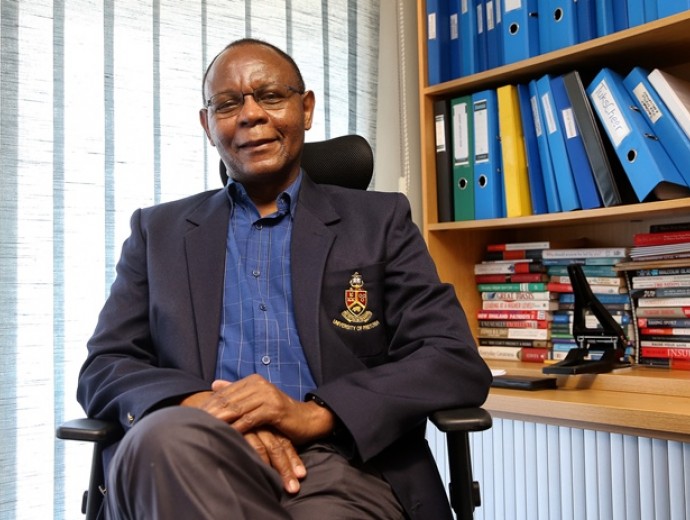
Dr. Rendani Mulaudzi joined TuksSport in 2000 as a Sports Manager. In 2007, he was appointed as a Deputy Director. With his widespread experience in the sport industry, in 2005, he starting serving as an Acting General Manager of AmaTuks.

Today, he is a TuksSport Deputy Director of Sport Management and Acting CEO of AmaTuks.

Here, Dr. Mulaudzi tells us more about his milestone mark of 20 years, and advice to aspiring sports administrators, managers, club owners, etc.

1. What does leadership in the sport industry mean to you?

Leadership in the sport industry means taking care of strategic and general management details so that the athlete/player gets the most benefit. This means that empowering people to plan for the short-, medium, and long term so that programmes are successful and sustainable. Effective leadership is being able to make a positive difference in others’ lives (athletes, players, colleagues, and the community) without taking credit for it. It is about being able to have the power to see oneself so that one understands one’s strengths and weaknesses and does not have to rely on others telling him/her that he/she is up to or not up to the job. Leadership also means knowing when to move on and ensuring that there are people who are able to succeed one.

2. What does a milestone mark of 20 years at TuksSport mean to you?

Children born in 2000 are now students of the University. Isn’t it amazing how time flies?  It has been an honour and a huge privilege to have been here at the start of a TuksSport that has become a juggernaut sport programme that for many successive years has been the programme of choice among all universities.

I was there at the beginning when the master plan designed by the retired Director of TuksSport, Mr. Kobus van der Walt transformed TuksSport into a leader in sport management, coach and performance management, and volunteer management. I was privileged to have been there and influential insignificant and non-significant ways towards the success of AmaTuks from 2005 to now; the establishment of the High Performance Centre (hpc); laying out of the Bestmed TuksAthletics synthetic and mondo tracks and building the of the clubhouse and technical area; laying out of the TuksHockey Astro and building of the clubhouse and so many other achievements.

More than the physical facilities, has been ensuring that athletes/players as well as my colleagues achieve their personal and professional goals. The intangibles such as where one influenced and changed someone’s life for the better, and where one thought a mundane act was just that, only to find out it benefitted someone tremendously, are the issues I remember dearly and will cherish as long as I shall live.  There are simply too many milestones to describe from the last 20 years. However, serving the students and colleagues at TuksSport and the University is the milestone that I am always thankful for. I was given the opportunity to do, as my father used to say, “nothing but the best is good enough” and had colleagues buying into it and supporting me until now.

3. What are the three key lessons you have learned from being a Sports Manager to holding the Deputy Director’s position?

I have learned a thousand plus lessons during my 20 years at TuksSport and the University of Pretoria. (a) I have learned to visualise/envision programmes and projects so that it is possible to achieve objectives as planned. (b) I have learned that it takes teams to achieve success and sustainability of sport club programmes.  Credit should always be given to my colleagues (sport managers, coaches, and professional personnel) for being there for me as and when I needed their support, skills, expertise, and talents. (c) I have learned how to get the best out of people without screaming and threatening. A kind word now and then, a gentle nudge in the right direction, a pat on the shoulder, a frank word when things were not going the way they are supposed to, and having colleagues who listened to me, has been a blessing.

4. You are also the Acting CEO of AmaTuks, where do you see the football club heading to after this season? Also, what are the plans of the club going forward that you can share with the public?

Football is facing a huge problem in the sense that there are no longer spectators to physically support their teams. Spectators are an important source of revenue for professional clubs and going forward until there is a vaccine for COVID-19, the new normal will remain.  This means that those of us involved in football must find new ways of keeping our spectators and fans interested and passionate about their teams.  

As far as AmaTuks is concerned, the idea is to get promoted into the Premier Soccer League as soon as possible.  The PSL is better funded than the NFD and there are more televised games.  Playing in the PSL gives AmaTuks, TuksSport, and the University media exposure that is worth over R100 million in a season.  Therefore, we are working very hard in putting together a team that can win promotion into the PSL, and with that, will come participation in the MDC where many of our student-players can participate in preparation for participating in Varsity Football.  

Furthermore, playing in the PSL would allow for investment in ensuring that talented youth can be recruited into the TuksSport High School Football Academy to get them to study at the university as well as provide opportunities for the few very talented ones to play for AmaTuks.  So, there is room to do a lot of developmental and empowering acts especially if there are adequate financial resources from the PSL that can be employed in youth development.

5. Where do you see TuksSport in the next 20 years, considering that you are also marking a milestone of 20 years this year?

The infrastructure is there to continue supporting the programmes that have made TuksSport exceptionally successful.  The people are also there who have the vision and expertise to ensure that TuksSport continues to become better than it is right now.  The future looks exciting because of the challenges brought by COVID-19.  Clubs will have to think outside the box to produce the same or better results than they have in the past.  I am excited to see young managers, both male and female, who are coming through and proving that they have what it takes to be successful.  

6. What is your advice to aspiring sports administrators, managers, club owners, etc?

They must know that sport is a controversial arena in which everyone has an opinion.  This implies sport administrators must be aware of social and political issues that are always in the public forum.  They must be persistent learners who are better informed than most people who are involved in sport, especially those in external sport governing bodies. They must be good listeners and noticers so that they are aware of things happening around them, and notice issues being discussed or in the news in sport. In other words, they must have a perspective. Having perspective means learning from those who have proven themselves to be absolutely professional in how they run different sport programmes.

As I have mentioned earlier, sport is about teams. Aspiring sports administrators and managers must value the team – it all begins and ends with the team comprising both leaders and followers. Everyone has roles and responsibilities they must take care of to the high standard expected. Last but not least, aspiring sports administrators, managers, and leaders must surround themselves with likeminded people, some of whom can serve as mentors and sounding boards when one needs clarity on issues.

(SOURCE: University of Pretoria)

Leading Schools In Terms Of Crisis: Six Lessons For School Leaders

0

PROFESSOR FELIX MARINGE

Good leaders must never be caught off guard and suffer complete paralysis in times of crisis. Leaders must develop a wide range of possible responses to predictable disruptions. Schools need to develop a predictive capacity around a number of possible scenarios and how to prepare for learning continuity in any event.

Good leaders prioritise learning continuity despite the odds. Schools, districts and provincial authorities need to begin a process of developing alternative curricula that can be drawn upon in times of crisis.

Good leaders should always be aware of high anxiety levels amongst teachers and learners in times of crisis. Morning briefings, lunchtime staff room drop ins, end of day farewells have been found to be reassuring and comforting enabling the school community to develop confidence and courage to work through the difficult environment.

Good leaders recognize that parents are the strongest allies in times of crisis; schools need to develop capacity in parents for supervising and monitoring home learning. Research tells us that personalized communication captures the attention and increases both the parents and children’s engagement substantially.

Good leaders focus on the most vulnerable especially in times of crisis. Good crisis planning is based on the needs of the most vulnerable who always have the most to lose when teaching and learning is disrupted.

Good leaders are aware of different pedagogical principles that underpin different teaching and learning approaches; emergency remote learning is best achieved through emphasizing the learning of basic concepts in small bite sized chunks rather than long drawn lectures and approaches more suited to face to face teaching and learning. 

(SOURCE: Zenex Foundation| Felix Maringe, Professor of Higher Education and Head of the Wits School of Education)