Home Blog Page 383

Ramaphosa: Teachers, Nurses And Police Play An Important Role In Keeping The Wheels Of Our Country Turning

CYRIL RAMAPHOSA

THERE are few callings more important for a person than the call to public service. It is an opportunity to improve people’s lives and change society for the better. It carries great responsibility and often demands much of individuals and their families.
 
Tomorrow is the start of Public Service Month, which is held in September each year to promote a culture of pride and ethics in the public service and improvement in all facets of service provision.
 
A streamlined, efficient and well-integrated civil service is the hallmark of a capable state. Likewise, an unproductive, inefficient and cumbersome civil service can frustrate the implementation of even the best policies.
 
Public servants are the first interface between government and citizens. Their encounters, whether positive or negative, are crucial in how the state is perceived by the wider population.
 
Our key priority is to build a capable state. If we are to build a more capable state we have to seriously and urgently address the shortcomings in the organisation and the capacity of the public service.
 
The view that the public service is bloated is misplaced. Public servants include officials and administrators, but they also include doctors, nurses, police men and women and teachers who play an invaluable role in keeping the wheels of our country turning.
 
The real issue is whether – given its size, cost and needs of our country – the public service is performing as it should. The experience of our people is that in several areas, the state is falling short of expectations.
 
There are some fundamental problems that we are working to fix.
 
One of the areas to which we’re giving attention is known as the ‘political-administrative’ interface, where lines of accountability at the most senior levels of the state have become blurred. Political office bearers such as Ministers, MECs and Mayors often veer towards getting involved in administrative matters that should be the responsibility of professional public servants.
 
While the public service is required to implement the electoral mandate of the governing party and to account to the Executive, they need to be able to do this work without undue political interference.
 
Public service managers must be given the space, the means and the resources to manage.
 
Senior appointments are sometimes made on political considerations rather than expertise.

This severely limits the capacity and effective functioning of the state.
 
As much as the ranks of our civil service comprise individuals committed to driving government’s programme of action, it has also over the years been associated with patronage. This is manifested through the appointment of people into senior positions based on considerations other than their capability to execute the tasks of the office they are appointed to.
 
The building of a capable, ethical and developmental state is among our foremost priorities. We want the public service to be oriented towards efficiency, performance and developmental outcomes.
 
The civil service should attract high-calibre and qualified candidates. As one of the ways of achieving this, the National Development Plan (NDP) proposes a formal graduate recruitment scheme for the public service. Our people want the best and the brightest in society to serve them.
 
The civil service must be seen as a career destination of choice by those who want to make a difference in the life of their country, and not merely as a comfortable 9-to-5 desk job or a place to earn a salary with minimal effort.
 
Should some still harbour this view they should take advantage of opportunities to exit the public service to make way for those who are up to the task.
 
Training and upskilling is critical to professionalising the civil service.
 
The National School of Government is playing an important role in building a culture of lifelong learning for those already in the ranks. As an example, the school offers a certificate programme for anyone who wants to be appointed into senior management. Many of the school’s programmes – from advanced project management to financial management and budgeting to change leadership – are offered online.
 
The school is also engaged in collaboration with international training institutes to offer courses on wider governance issues.
 
Being a public servant is an honour and a privilege. It demands dedication, selflessness, professionalism, commitment and the utmost faithfulness to the principles of Batho Pele, of putting the people first.
 
Public servants are entrusted with managing state resources for the benefit of the public and in guarding against them being misused and abused. They are representatives of a government derived of the people and for the people, and are guardians of our Constitution.
 
At a time when we have been confronted with a series of scandals that point to clear complicity by certain public servants in acts of corruption, this Public Service Month should be an opportunity for the men and women tasked with this weighty responsibility to set themselves apart – to rededicate themselves to their calling and to fully comprehend what it truly means to be a servant of the people.
 
As the NDP reminds us, a capable developmental state cannot be created by decree: “It has to be built, brick by brick, institution by institution, and sustained and rejuvenated over time.”
 
Our ability to steadily acquire a high level of capability as envisaged by the NDP is a defining characteristic of what a capable developmental state should have to become an economically prosperous, socially inclusive and a well-governed state that is able to meet the needs of our people.

  • FROM THE DESK OF THE PRESIDENT

590,000 Students Return To Elementary, Middle Schools In Beijing

0

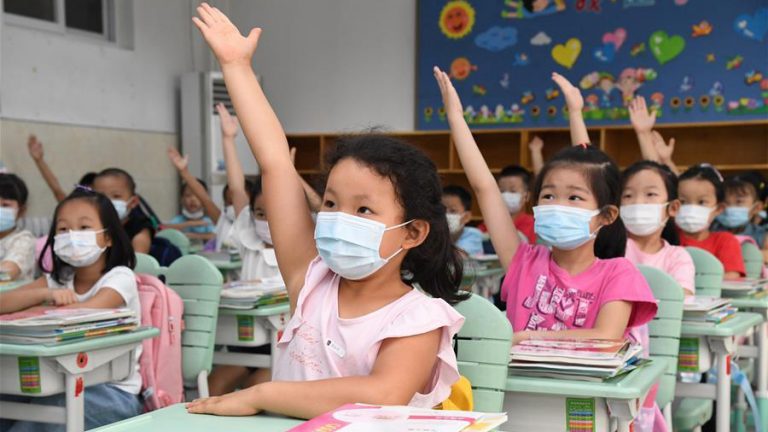
THE first batch of some 590,000 students has returned to primary and middle schools in Beijing, which started opening on Saturday, August 29, with a staggered timetable and COVID-19 confinement measures in place.

After having their temperatures checked, students entered the teaching buildings of Beijing Bayi Primary School, in which touch-free hand washing equipment is installed on each floor.

COVID-19-related health signs, such as lines on the floor spaced about one meter apart, can be easily found in the school to remind students to keep up social distancing.

Each freshman has also received a special gift bag, containing anti-coronavirus materials, such as a box of masks and sterilized tissues, in addition to the original welcome items like name tags.

Following the epidemic prevention guidelines, schools have also released distinct agendas on school opening day for students of different grades.

“Students enter the school with 10-minute intervals between grades to avoid crowds,” said He Shiming, president of the Fengtai Second Middle School in Beijing, adding that school opening ceremonies were held separately on the playground for different grades.

“The school has been well-prepared for the big day. The teachers have started to track and monitor the health status of students 15 days in advance, and the children were asked to report their temperatures every day,” said a parent of a pupil.

‘The last yet most important step’

With support from local governments, schools and educational institutions across China’s capital undertook a great deal of work in preparation for reopening, including preserving medical equipment like protective gear and sanitizers.

Beijing has dispatched more than 1,000 inspectors to instruct elementary and secondary schools to help COVID-19 precautionary work before the start of the fall semester.

Inspectors checked anti-epidemic and security preparations at all of the city’s primary and middle schools in advance, including facial recognition devices, social distancing lines, anti-coronavirus tips and disinfectants.

“There are 39 items in the guideline to be inspected in elementary and middle schools, while 50 ones in kindergartens. Our inspectors are required to carry them out one by one and record the details,” said Wang Fang, director of Beijing’s Haidian District Education Commission.

“The inspections can be regarded as the last yet most important step in preparation for reopening, ensuring that teachers and students can start the new semester safely and healthily,” Wang said.

From kindergartens to universities, schools in the capital have started a phased reopening with a slew of COVID-19 precautionary measures.

An estimated 400,000 primary and junior high school students will return to the classroom on Tuesday, September 1. Meanwhile, all elementary and secondary schools in Beijing will fully open on September 7, according to the local educational authorities.

(SOURCE: CGTN)

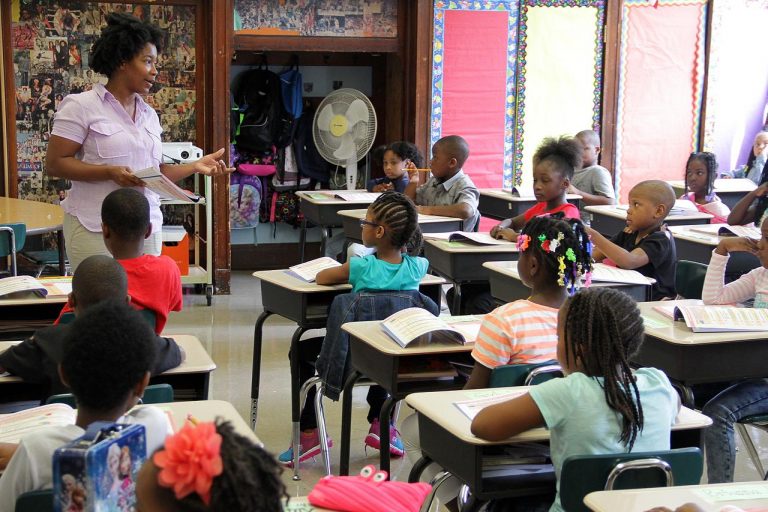
Top Limpopo Educator, Florence Bekwa, Is Our Teacher Of The Week

CLASSROOM CORNER|

Teacher: Florence Bekwa

School: Magangeni Primary School, Malamulele, Limpopo

A PASSIONATE teacher from Magangeni Primary School in Malamulele, Florence Bekwa, won an excellence award during the 20th annual teaching-award ceremony held at the Ranch Hotel near Polokwane.

She won the excellence in primary school teaching award during the 20thannual national teaching awards held at Soshanguve East Secondary School.

She walked away with a vehicle (Renault Kwid), an award and a certificate. The awards were held under the theme: “Supporting teachers for the system on the rise“.

Those who know Bekwa were not surprised when she was announced as winner in her category.

Bekwa said that she was excited about the accolade.

“It is a dream come true to scoop this award, and I dedicate this award to my learners. I would like to thank God, my learners and colleagues who are always supportive and make my job easy. I want to develop our community by producing the best learners who will be the doctors, lawyers and engineers of tomorrow,” Bekwa said.

She encouraged other teachers to use innovative strategies to educate learners.

“Let us work to the best of our ability and grab this opportunity to change the world through education and make a difference in the lives of young people. Let us go the extra mile to educate learners, especially those with difficulties in learning.”

Magangeni Primary School’s principal, Mr Lucky Mashamba, was very excited about his teacher’s achievements.

“We feel very excited about her winning, because it puts our school in the limelight. Ours is the only school in the Vhembe East district circuit with a teacher who will represent us at national level. It is really a milestone for our school.”

Mashamba encouraged other educators to participate in the national teaching awards.

“All the schools must participate in the national teaching awards because, as an educator, you don’t know how much you are worth until you are measured against other educators. We have the best educators, but they are not participating,” Mashamba said.

(SOURCE: Zoutnet)

Infections Rise To More Than 1,000 On University Of Alabama Campus

0

MORE than 1,000 students at the University of Alabama have tested positive for Covid-19 since classes resumed on the Tuscaloosa campus less than two weeks ago, according to the University of Alabama System.

The UA System coronavirus dashboard notes another 158 cases were recorded on campus over the course of the year prior to August 18, bringing the total to 1,201 cases. Classes resumed August 19.

UA in Tuscaloosa has by far the most students who have tested positive for Covid-19 among the three campuses that make up the University of Alabama System. The University of Alabama at Birmingham (UAB) has confirmed 157 cases among students this year, and the University of Alabama in Huntsville (UAH) has reported 10, per the dashboard.

No positive students have been hospitalized as a result of Covid-19, the UA System said in a news release Friday.

“Our exposure notification efforts have revealed no evidence of virus transmission due to in-person class instruction,” said Dr. Ricky Friend, dean of the College of Community Health Sciences at UA.

“We remain satisfied that the precautions implemented prior to the resumption of classes — including masking, distancing, and a blend of in-person and remote instruction — are appropriate and effective,” he said.

To help prevent the spread of coronavirus, UA President Stuart Bell urged the community in a Wednesday letter to wear masks and social distance, both on and off campus.

“At this critical time, we must be united and fully committed in our fight against COVID-19,” Bell said. “I believe we will be successful this semester, and we all want to remain on campus throughout this fall, but we can only do so with your daily assistance.”

Bell had previously called the rise in cases “unacceptable” and told students and faculty that university police and Tuscaloosa police will monitor restaurants, off-campus residences and Greek housing to ensure patrons and residents follow coronavirus safety guidelines. Tuscaloosa Mayor Walt Maddox on Monday also ordered all bars in the city to close for two weeks due to the rise in cases.

(COMPILED BY CNN NEWS)

Education Programme Distributes Tablets To 600 Grade 1-3 Teachers

ANGLO American has started distributing tablets to more than 450 Grade 1-3 teachers in 72 schools around its operations in South Africa to help improve teacher skills and drive better literacy and numeracy outcomes for learners.

The tablet distribution is the latest step in Anglo American’s broader education programme, which was launched in 2018 by Basic Education Minister Angie Motshekga and former Anglo American Deputy Chairman Norman Mbazima.

The programme aims to improve learning outcomes for nearly 70 000 learners at more than 100 early childhood development (ECD) sites and 100 schools in the Northern Cape, Limpopo, and Mpumalanga by improving reading, writing, and numeracy levels, and addressing some systemic causes of poor education outcomes.

Anglo American’s Global Lead of Education Zaheera Soomar said a key pillar of the programme was Grade 1-3 teacher support because it aims to improve learners’ numeracy skills and their ability to read for meaning.

The tablets will give the teachers access to structured lesson plans as well as video material, through a specially developed app.

“The major focus of the tablet roll-out is to support and improve the content knowledge and teaching skills of the teachers themselves. Although the roll-out of the tablets was delayed by the Covid-19 pandemic, the response from all the schools and teachers involved has been extremely enthusiastic, further proving the need and importance of these interventions,” said Soomar.

The project management and coaching staff expressed their excitement and gratitude for the opportunity to work digitally with the Foundation Phase teachers.

“Everyone always assumes that the Grade 1-3 teachers will be resistant to technology, or scared to implement it,” said Class Act Project Manager Lungi Batala. “But, in fact, the opposite is true. Many of the teachers are comfortable with digital devices. And those who were a little apprehensive soon mastered the tablet and apps, with some support from their coaches and colleagues.”

Programme representatives are delivering the tablets to the schools under strict Covid-19 protocols.

The teachers are receiving training on how to use the tablets and content and receive a data allowance to allow them to access remote support and updates as required.

Soomar emphasized that the tablets would help the education programme achieve its ambitious learner-focused ECD targets, which include 90% of grade 3 learners passing with at least 50% in Numeracy and Literacy.

Nelisiwe Zondi, the Molteno / CIE Project Manager echoed these sentiments, “The excitement with which the tablets were received was quite exhilarating. Teachers have gone straight to work using these tablets. It is actually eye-opening that teachers are able to navigate the tablets with ease and are embracing technology especially during these times when they will need them most as they prepare to teach remotely. The training was very successful and gave teachers added affirmation and confidence.”

We are proud to say that the AASA foundation phase teachers have taken the first steps towards implementing 21st-century teaching and learning.

About the Anglo American Education programme

The Anglo American South Africa Education Programme aims to improve learners’ educational outcomes and quality passes through addressing some underlying reasons for poor education outcomes by supporting school management teams, governing bodies, principals, and teaching staff.

The programme has set ambitious learner-focussed targets, including:

• 90% of learners aged five meeting the minimum requirements for school readiness
• 90% of grade 3 learners passing with at least 50% in Numeracy and Literacy
• 75% of grade 6 learners passing with at least 50% in Mathematics and English First Additional Language
• 90% matriculation pass rate, with a 50% university entrance
• 65% of grade 12 learners passing with at least 50% in Mathematics.

(COMPILED BY INSIDE EDUCATION STAFF)

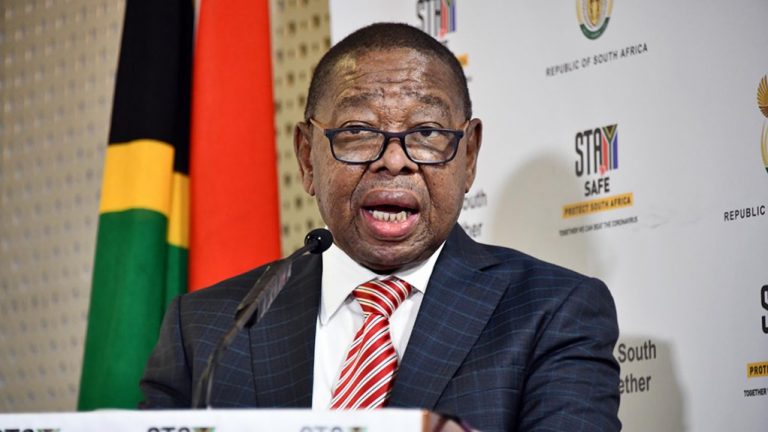
Nzimande: 66% Of University Students To Return To Campus Under Level 2 Lockdown

NYAKALLO TEFU

HIGHER EDUCATION Minister Blade Nzimande says 66% of public university students will return to campus under Level 2 lockdown to complete.

Nzimande made the announcement during a media briefing on COVID-19 Level 2 measures for the higher education sector.

“I am happy to report under Level 2 of the lockdown, it will be possible for us now to allow for up to a maximum of 66% of students to return to university campuses,” said Nzimande.

Nzimande said the pressure for universities to complete the 2020 academic year is because the 2021 academic year is expected to begin between March and April.

“The starting dates for the 2021 academic year will range from March 15 to April 15,” he said.

A majority of South African university students have not been at their campuses since March when President Cyril Ramaphosa announced a nationwide lockdown due to the outbreak of coronavirus.

“Institutions have reported differential levels of responsiveness in terms of their progress in completing the requirements for the current academic year and the readiness to commence the 2021 programme,” said Nzimande.

Nzimande said so far, 80 people from the public higher education sector have succumbed to the coronavirus.

He’s sent his condolences to all their families and friends.

“The total number of positive COVID-19 cases reported by institutions was 1,552 of which 975 were staff members and 577 were students,” said Nzimande.

Students are expected to return on 1 September 2020.

(COMPILED BY INSIDE EDUCATION STAFF)

Nigerian University Students Find Online Learning Painful: Here’s Why

IN response to the compulsory closure of institutions of learning as part of measures aimed at curbing the spread of COVID-19 in Nigeria, efforts were made to keep students busy with academic activities during the lockdown.

Thus, schools, especially privately owned universities, engaged students in different kinds of online learning approaches. This was limited to private schools because the government owned universities were on strike.

To fully understand how students feel about online learning during COVID-19 pandemic, our study investigated the views of students of Anchor University, a private higher education institution owned by the Deeper Christian Life Ministry in Lagos, Nigeria.

We found that Anchor University was one of the private tertiary institutions in Nigeria that took the initiative to respond to the challenge.

Lecturers went the extra mile to ensure that students had meaningful learning experiences. They engaged students with materials varying from text notes and voice notes, to animated videos. They also used different online tools and platforms like Google classroom, Google meet, WhatsApp, and YouTube.

So how did the students feel about this?

Our findings showed that the students had negative dispositions towards online schooling. Some of these views were tied to their home front situations. The challenges they mentioned included higher data consumption, distractions from the neighborhood, friends and relatives, erratic power supply and internet network fluctuations.

Most of the issues they complained about would have been taken care of in the school environment of Anchor University if the students were physically in school.

The research

To arrive at our findings, we collected data from 104 students out of about 500 students. Participants were drawn from the sciences, arts and the social sciences disciplines.

The participants, whose age ranges between 17 and 22 were drawn from classes between 100 and 400 levels. They all responded to an online questionnaire regarding their disposition to online teaching and learning at the early part of COVID-19 pandemic lockdown.

The results showed that students were not in favour of online teaching and learning. They had a preference for face-to-face learning and wished the practice would not be retained, post COVID-19.

Over 60% of the participants did not find it fun learning through uploaded videos and other online learning channels. For example, majority of the students say they concentrate more with a teacher in the class than when watching a video online.

Some students said they are not learning more content from online teaching than they would have in a face-to-face approach. Others said they would rather all the online lectures be repeated in the classroom after the lockdown.

Our findings surprised us.

The assumption has always been that students would readily welcome online learning given that they enjoy watching films on television and are familiar with modern technologies including laptop computers and mobile hand-held devices like smart phones and iPads.

Our findings contradict research done elsewhere on online learning. One example is a report done six years ago that assessed the attitude of students towards e-learning in South west Nigerian universities.

Also, our findings are not in tandem with a research report done 4 years ago analysing students’ attitude towards e-learning at Babcock University, Nigeria. The report showed that students have positive attitude to online learning.

Another report done 2 years ago among Purdue University students, US, found that video provides great benefits to teachers and learners, stimulating stronger course performance in many contexts, and affecting student motivation, confidence and attitudes positively.

The contradictions could be traced to the fact that students did not really expect the sudden shift to complete online mode of learning.

Recommendations

Based on the findings, we made a number of recommendations that tertiary institutions could follow should they continue learning and teaching via online channels and platforms:

  • They should provide adequate training for lecturers to acquire requisite skills to effectively facilitate online delivery of learning content.
  • They should provide adequate orientation, motivation and training for students to acquire relevant skills to maximally benefit from online teaching and learning. They should be exposed to modern information technology applications to support their learning.

We also made some recommendations for parents. They should try to provide an enabling environment for students at home. They should try as much as possible to provide support ranging from making available the necessary electronic gadgets (such as laptops and android phones), access to electricity power supply (generating sets and solar panels) and sufficient data for strong and consistent internet connection.

Parents should also provide an emotionally enabling environment so that students can benefit from the face-to-screen online teaching and learning. These would help the students to benefit maximally from online schooling.

Israel Olasunkanmi: Lecturer, University of Ibadan, University of Ibadan

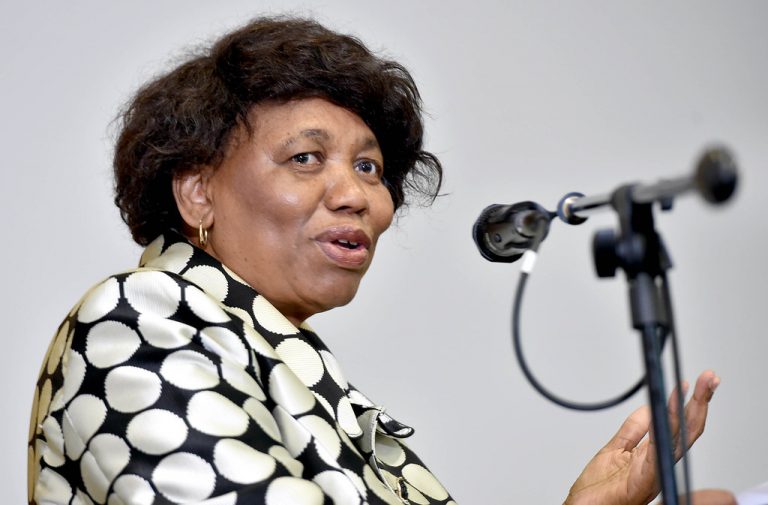
Woza Matrics: Basic Education Minister Angie Motshekga Launches Free-to-air TV Programme Ahead Of Final Exams

AS of September 1, matriculants will have access to extra help with school work after the Department of Basic Education launched a free-to-air television initiative called Woza Matrics.

DBE said this is owing to the fact that matric learners have lost a lot of school time this year because of the coronavirus pandemic.

The department further said it has partnered with the South African Broadcasting Commission, Multichoice and eMedia Investments to ensure every learner is able to watch the programme.

“Woza Matrics will be broadcast on SABC 3, on all DSTV packages and on Openview (Channel 122) from 8:00-10:00 and 13:00-15:00 every day, 7 days a week,” said the DBE.

The initiative will cover all the main subjects including Maths, Life Sciences, Geography, Physical Science, Accounting, Economics, Math Literacy, English First Additional Language, History and Business Studies.

Minister of Basic Education Angie Motshekga said the initiative has come at the right time when they are working to get schooling back on track.

“Matric is always stressful, but 2020 has been filled with unusual stresses,” said Motshekga. 

The Department has urged all learners to take advantage of this initiative.

“I want to congratulate all our grade 12 learners and their families for the perseverance and determination. It is abundantly clear that additional support is required for learners and we will continue to provide this,” added Motshekga.

The SABC and Council of Education Ministers have also welcomed the initiative, adding that it would go a long way in assisting learners in matric to prepare for the final exams.

“As the SABC, we are pleased to be one of the key role players in saving the 2020 matric year through the Woza matric campaign Education forms an integral part of our mandate, and it is for this reason that we have availed our platforms to advance the education agenda in our country,” said Madoda Mxakwe, SABC GCEO.

(COMPILED BY INSIDE EDUCATION STAFF)

More Than 6 000 KZN School Teachers Apply To Stay At Home Due To COVID-19 Fears

SANDILE MOTHA

MORE than 6000 teachers in KwaZulu Natal have applied to stay at home due to the high risk for a serious COVID‑19 infection or concerns of potential transmission of the virus.

Inside Education has learnt that the teachers have remained absent and are on paid leave.

The majority of these teachers are deemed vulnerable to the novel COVID-19 due to their age and co-morbidities.

This emerged during a response by the department of education to questions by the Democratic Alliance in the KZN provincial legislature.

“The DA is extremely concerned by the numbers reflected in the MEC reply, which do not even begin to include the number of teachers who may be sick or who are on incapacity and maternity leave. According to the reply, there are currently; 5 970 educators who have applied for concessions, 284 who are over the age of 60 and with no-comorbidities who have applied for concessions and 1 400 teachers who are working from home on lesson preparation and assessment development and who are being monitored by their respective principals,” said Dr. Imraan Keeka, MPL and party spokesperson on the education portfolio.

According to the reply, Pinetown and Umlazi districts are worst affected, with teacher shortages of 1 242 and 1 197 respectively.

So severe is the situation confronting the province such that the department has requested national treasury to assist its effort to create 4000 new posts in order to accommodate the shortfall.

“The current situation within DOE does not bode well for our learners. Our grade 12s have experienced a particularly difficult year and it is imperative that DOE fulfils its side of the bargain. There can be no substitute for the imperative. There can be no substitute for both educators and learners being in classrooms,” added Keeka.

However, provincial education spokesperson, Kwazi Mthethwa said there was no need to panic, insisting that substitute teacher post had already been advertised.

“We are giving the issue off filling the vacancies the urgency it deserves. To this effect, the department has already issued a circular to invite applications for various substitute positions,” Mthethwa told Inside Education on Tuesday.

While Grade 7 and Grade 12 cohort of pupils had already been phased in back to the system, other grades were phased in this week.

Kwazi Mshengu, KZN MEC for education while addressing media this week on the latest developments on the state of readiness said schools will operate on a 50% capacity and that the pupils would be divided into groups. This according to Mshengu, would ensure that social distancing is effectively implemented.

“We have agreed on a gradual introduction of leaners. For instance, on Tuesday, we welcomed a portion of Grade R, Grade 6, Grade 10 and 11. The other groups will be slowly phased in as the week progresses up until Friday,” said Mshengu.

Meanwhile, teacher unions have raised their reservations on the state of readiness. According to a latest survey conducted by jointly by the National Professional Teachers Organisation of South Africa (NAPTOSA), Professional Educators Union (PEU), South African Democratic Teachers Union (SADTU) and the National Teachers Union, only 12% of schools in the province has been supplied with sufficient face masks.

The survey also revealed that a high number of teachers were suffering from anxiety, fatigue and exhaustion because of the workload.

(COMPILED BY INSIDE EDUCATION STAFF)

SADTU Calls For Matric Exams To Be Delayed Due To COVID-19 Disruptions

NYAKALLO TEFU

AS MORE than 1 million matriculants prepare to write their final exams, the South African Democratic Teachers Union (SADTU) has called on the Department of Basic Education to push back the start of the exams from 5 November to November 25 in order to give learners more time to prepare.

The decision was taken at SADTU’s national executive committee meeting at the weekend.  

Grade 12 pupils will begin writing their finals on the 9th of November after DBE adjusted the school calendar to cover as much ground as possible that was lost during the lockdown.

“The NEC noted that many learners would not be in a position to fully prepare for the NSC examinations, especially from disadvantaged communities because of the intermittent closing and opening of schools due to COVID 19 and the levels of support that differed from school to school based on the availability of infrastructure and resources,” SADTU said in a statement.

“The NEC reiterated the union’s call for the DBE to trim, reorganise and reset the examination papers for the 2020 examinations. The NEC meeting also resolved to urge the DBE to delay the start of examinations from 5 November to 26 November to allow learners more time to prepare for the examinations.”

The NEC noted that the combination of the June and November examinations was bound to affect the marking process, adding that this would require additional markers with an extended period of marking to ensure quality and reliability.

DBE spokesperson Elijah Mhlanga said the department has been facing a shortage of markers even before COVID-19 pandemic and it was now using this time to get the situation under control.

“It is being address through training and skilling of teachers who have the potential to be appointed as markers,” he said.

The Congress of South African Students said it supported SADTU’s decision to push back the matric exams to later in November in order to allow learners time to prepare adequately.

COSAS also said it wanted the contents of this year’s matric exams to be trimmed by as much as 50%.

The student’s movement said it had written to the Minister Angie Motshekga asking that the matric exam papers must take into account the amount of time pupils were exposed to the curriculum.

This year was an abnormal academic year and there must be some changes when it comes to the way learners are assessed, it said.

“We are adjusting to the fact that they will write 100% of the paper but that should be done next year. That is why we – as COSAS – say they should write 50% of the paper this year because it wouldn’t be fair for them to write their matric exams now at 100% after they have been home for so long. If DBE says they will write their paper next year, they will be given a fair chance to prepare themselves,” said COSAS regional convenor, Mthokozisi Sweli.  

(COMPILED BY INSIDE EDUCATION STAFF)