Home Blog Page 384

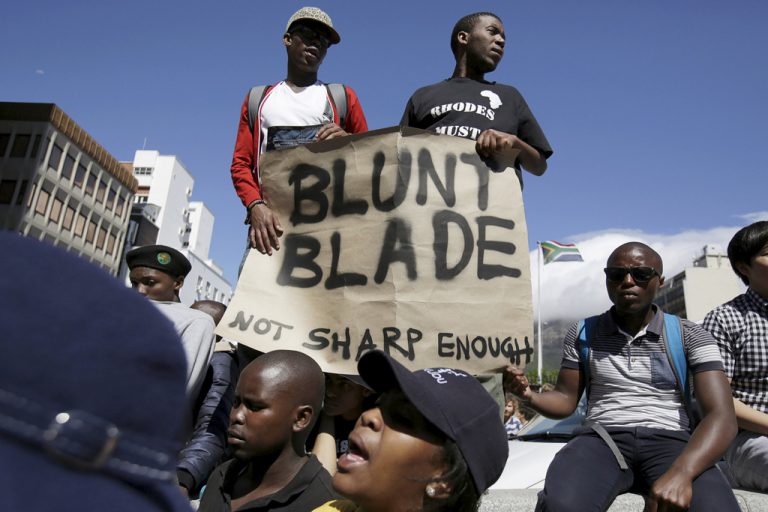
EFF Student Command Slams NSFAS Decision To Cut Funding To 5 000 Students

NYAKALLO TEFU

The EFF Student Command says the decision by the National Student Financial Aid Scheme to cut the funding of 5,000 students was “callous’ and “a blatant attack on the poor”.

This comes after the NSFAS announced that the decision to withdraw the funding came after the South African Revenue Service provided financial information which revealed that the students had declared their total household family income to be above the R350 000 threshold.

NSFAS administrator Randall Carolissen confirmed that the students were funded for the 2020 academic year.

Reacting Carollissen’s announcement, the EFFSC said: “We see this as a blatant attack on the poor and a failure of government to provide a system of checks and balances that does not subject the poor to parading their poverty in order to get the assistance they require from the state.”

The South African Students Congress has also rejected the NSFAS decision to withdraw the funding to 5 000 students.

“As an organisation, we view this move not only as an inhumane act but as an act that seeks to deepen student struggles in the post-schooling and training sector. Moreover, Sasco is angered by this decision that comes during the times of Covid-19 and a lockdown of economic activities where many small-medium enterprises are at the brink of collapse, where unemployment rates are on a continuous rise and inequalities continue to widen,” SASCO said in a statement.

“Sasco interprets this move as but another exposition of control systems and incompetence of the financial scheme as headed by DR Randall [Carolissen].”

The organisation called on the following measures to be considered:

  1. Use the system progressively to determine funding of students and avoid the dehumanising process of proving how poor you are for you to be funded by the government;
  2. Reversal of defunding 5,000 students by NSFAS;
  3. Funding of all students with the family income of up to R600,000.
  4. Speedily appoint the board of NSFAS that has a track record of activism and that is pro-poor and working class, so we can rate NSFAS based on its Annual Performance Plans.

In a statement, NSFAS said the financial information was obtained from the South African Revenue Services (SARS).

“NSFAS has issued communique to all affected students to notify them of their funding status and the process that they should follow,” said the fund.

Affected students, however, now have 14 days from the date of issue to petition this decision by submitting proof of family income or change of income to NSFAS for review.

The documents need to be submitted to IncomeReview@nsfas.org.za.

NSFAS reserves the right to make the correct funding decisions based on its financial eligibility verification processes.

For the 2020 academic year, NSFAS received a record number of 543 268 first-time funding applications.

Of these, 430 000 applications were approved for NSFAS funding.

(COMPILED BY INSIDE POLITICS STAFF)

UCT Student Uyinene Mrwetyana Remembered A Year After Her Brutal Murder

0

NYAKALLO TEFU

SOUTH Africans of all hues on Monday placed flowers, pictures and colourful ribbons on the railings outside Clareinch Post Office in Cape Town, Western Cape, to commemorate one year since the brutal killing of Uyinene Mrwetyana.

Others took to Twitter and Facebook to remember the 19-year-old University of Cape Town student who was raped and killed at the Clareinch Post Office before her body was dumped in Khayelitsha.

Post office employee Luyanda Botha pleaded guilty and was handed three life sentences for the gruesome murder of Mrwetyana.

Mrwetyana’s murder sparked a nationwide outcry and mass protests against gender-based violence.

UCT vice-chancellor Mamokgethi Phakeng said on Monday that the Uyinene Mrwetyana Foundation will co-host with the Psychological Society of South Africa and the University of South Africa’s Masculinity & Health Research Unit a webinar in commemoration of the life of Uyinene.

The webinar will unpack violence against women. The programme will feature leading psychologists, including UCT’s Professor Floretta Boonzaier.

“A year ago today, in the most horrific way, we lost our student Uyinene Mrwetyana to SGBV. This sparked a wave of outrage and pain not only at UCT but in South Africa and the rest of the world. Uyinene’s brutal rape and murder became one of a long list of women and vulnerable people who are violated daily,” said Phakeng.

“We had not even recovered from the Uyinene tragedy when just a few days ago, the higher education sector and the country was again devastated by the brutal murder of Wits University first-year student, Asithandile Zozo. We convey our heartfelt condolences to the Zozo family and stand in solidarity with the Wits community as we continue the fight against GBV.”

Social media users have also shared their memories and thoughts on the commemoration day.

(COMPILED BY INSIDE EDUCATION STAFF)

Ramaphosa: Key Sectors of SA’s Economy Must Adapt To Effects Of Climate Change

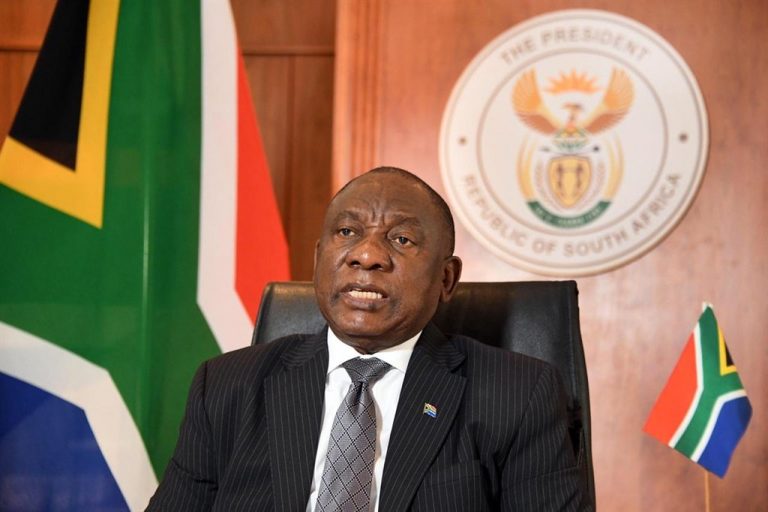
CYRIL RAMAPHOSA

THE coronavirus pandemic has had a dramatic impact on the social, economic, business and industrial landscape of our country and countries around the world. As we work with our social partners to develop an urgent economic recovery programme, we are determined that we should not merely return to where we were before the pandemic struck.

We are instead looking at actions that will build a new, inclusive economy that creates employment and fosters sustainable growth.
 
An important aspect of this new economy is that it must be able to withstand the effects of climate change. A climate-resilient economy is necessary to protect jobs, ensure the sustainability of our industries, preserve our natural resources and ensure food security.
 
While the dramatic scaling down of human and industrial activity during COVID-19 lockdowns has been good for the environment and natural ecosystems, these activities are now resuming. The coronavirus pandemic is devastating, but unless we act now, the impact of climate change on humanity will be catastrophic.
 
Unless we act swiftly to significantly reduce carbon emissions and adapt to the effects of climate change, we will be facing one state of disaster after another for many years to come.
 
Climate change has long been a measurable reality for South Africa. We have felt its effects in adverse weather conditions, droughts, flooding and rising temperatures.
 
But climate change is about much more than changing weather patterns. It impacts on water resources, food security, public health, public infrastructure, ecosystems and biodiversity. It affects the most vulnerable in society, who suffer the effects of extreme weather events and the degradation of ecosystems.
 
As we work to reduce our carbon emissions, we have to build resilience and reduce the vulnerability of communities to climate change. It has to be factored into every aspect of government planning: from water use management to the construction of human settlements, from public transport to infrastructure, from disaster management to energy.
 
Similarly, nearly every key sector of our economy – from mining to construction, from agriculture to automotive manufacturing – needs to adapt to the effects of climate change.
 
It is to respond to this massive challenge, that Cabinet last week approved the National Climate Change Adaptation Strategy.
 
This strategy will guide one important aspect of our climate change response. In line with our commitments under the Paris Agreement to Combat Climate Change, we are moving ahead with both mitigation strategies – to reduce our carbon emissions – and adaptation strategies – to prepare our society for the effects of climate change.
 
As the Paris Agreement comes fully into force this year, we are committed to meeting our international responsibilities to reduce greenhouse gas emissions.

One of the key instruments for this, the Climate Change Bill, is currently under consideration in NEDLAC. We will also be establishing the Presidential Climate Change Commission to coordinate our national response and implementing the carbon tax to encourage companies to reduce their emissions.
 
While these mitigation measures are implemented, the adaptation strategy calls for a multi-sectoral response to climate change that brings together government, the private sector, civil society organisations and communities.
 
Work is already underway in government and in the private sector to respond to climate change, with tangible projects being implemented at both national and provincial government level.
 
In provinces such as Gauteng and the Western Cape, new low-carbon technologies are being used to power public transport. Thousands of solar water heaters have been installed in public housing. The renewable energy power producer programme plays an important role in increasing the contribution of renewable energy to our electricity supply.
 
As we build a new economy, we cannot afford to be out of step with international moves towards green growth and green development. Our major trading partners have signalled a move towards ‘carbon border taxes’ to exclude products from those countries that they consider to be violating their climate change commitments.
 
Our country’s research and development activity has long engaged with the green economy.
 
We have already made significant advances in the waste and recycling economies. Looking ahead, the Hydrogen SA initiative has built local expertise for the hydrogen economy over a decade, with projects under way to support local manufacturing of fuel cell components. This supports the beneficiation of platinum group metals. The hydrogen economy, when linked to renewable energy, can also position South Africa as a global player in the many applications of green hydrogen.
 
Climate adaptation can also support infrastructure development and local production. The country can develop its own expertise in areas such as smart grids, e-mobility, smart water and sanitation solutions, ecological infrastructure and broadband connectivity.
 
The additional benefit of positioning our country as a significant global player in this space is that we will be able to draw on green funding sources and instruments.

We already have a National Green Fund, the ‘Working for Water’ and ‘Working on Fire’ public employment programmes and the National Treasury’s Cities Support Programme.

All of these support the development of new green industries and the greening of existing initiatives.
 
As we count the devastating cost the coronavirus pandemic has had on our economy, we must resist the temptation to relegate the critical issue of climate change to the back-burner.
 
Far from being an ‘added liability’ focused solely on issues of compliance, climate change adaptation is an opportunity to quicken the pace towards a sustainable economy that is just and inclusive.
 
We need to act now, guided by a common strategy, to combat climate change and build a new, resilient economy.

University Of The Free State Athletes Unite Against Gender-Based Violence

JOHANN THORMAHLEN

IT IS TIME to unite and stand up against gender-based violence (GBV) to address and eradicate this scourge in society. This is the strong message from female athletes of the University of the Free State (UFS) in a month where the focus will be on women.

As South Africa commemorates Women’s Day on 9 August 2020, the UFS shines a spotlight on women, calling on all South Africans to challenge, fight, and eradicate all forms of gender-based violence.

Speaking out against GBV, UFS sport stars Sne Mdletshe, Lynique Beneke, Shindré-Lee Simmons, Kesa Molotsane, Casey-Jean Botha, Lefébre Rademan, and Noxolo Magudu have partnered with KovsieSport in condemning any form of violence against women. They added their voices to a video campaign aimed at raising awareness of violence against women. The campaign involves athletes, coaches, administrators, and alumni, and consists of a series of videos that will be featured on UFS platforms. 

Increasing impact 

Mdletshe, Kovsies’ netball captain, is one of the sports stars featured in the first video of the series. She says it is crucial to address GBV. “We need to tackle it head on, because we cannot carry on like this.”

UFS Olympic long jumper, Lynique Beneke, says GBV needs attention, as it will only get worse if not addressed seriously. “This has been breeding for decades, where it’s acceptable or often justified.”

Shindré-Lee Simmons, Kovsies’ women’s hockey captain, says it is important to be frank about GBV in South Africa, “as its prevalence has had an increasing impact on families and the country”.

Influence of sport

Godfrey Tenoff, Head of the KovsieSport GBV campaign, says the video campaign will be a continuous project for Kovsiesport, as GBV is a threat to everyone, including UFS sportsmen and sportswomen. “This is specifically crucial during the COVID-19 pandemic. “Sport will be an integral part of our strategy to highlight and eventually eradicate gender-based violence.”

Unique platform 

Simmons says it is crucial for sports stars to use the platform; they have to address the issue and educate others.
“We as athletes have the platform to speak up and people will listen,” says Mdletshe.

According to Beneke, sport can promote change. “We are uniquely positioned to support and model healthy relationships, values, and norms that can reduce and end gender-based violence.”

 (SOURCE: University of Free State)

Values-driven Limpopo Educator, Olga Chauke, Is Our Teacher Of The Week

CLASSROOM CORNER|

Teacher of the Week

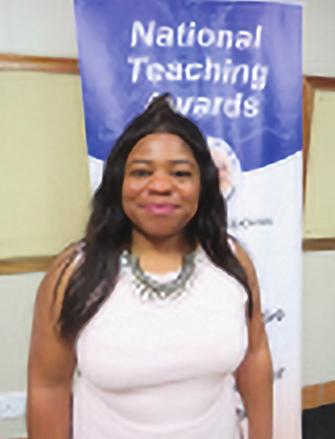
Teacher: Olga Fabisi Chauke

School: Lephalale Primary School, Limpopo

TEACHER Olga Fabisi Chauke from Lephalale Primary School in Limpopo chose the teaching profession to make a contribution in shaping the world of tomorrow.

She is stimulated by the relationship she has with learners and enjoys interacting with them, learning from them and helping them to understand the content she shares with them.

Some of the challenges she confronts are the passivity of the learners are lack of parental involvement.

She tries to involve the schools’ management team in cases where parental support is inadequate.

Her participation in the National Teachers Awards (NTA) has been life changing also to her colleagues, learners and community.

She promises to continue with her studies, continue being an inspiration to learners and colleagues, and do what she does best in the classroom – shaping the world of tomorrow.

(COMPILED BY INSIDE EDUCATION STAFF)

How Africa Can Harness the Fourth Industrial Revolution

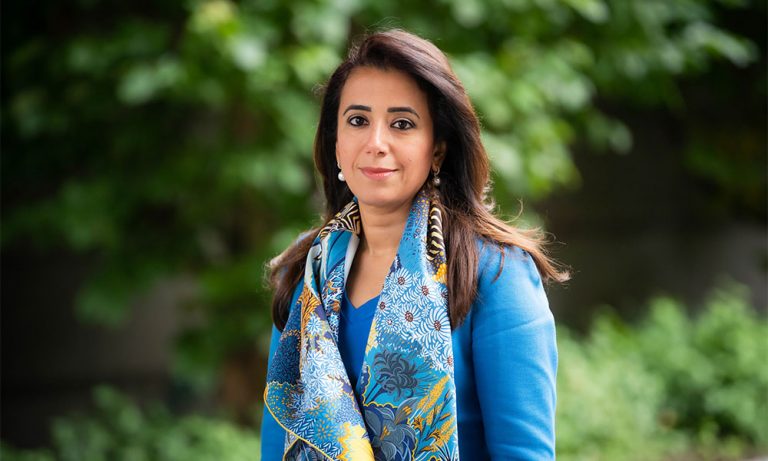
HANAN MORSY

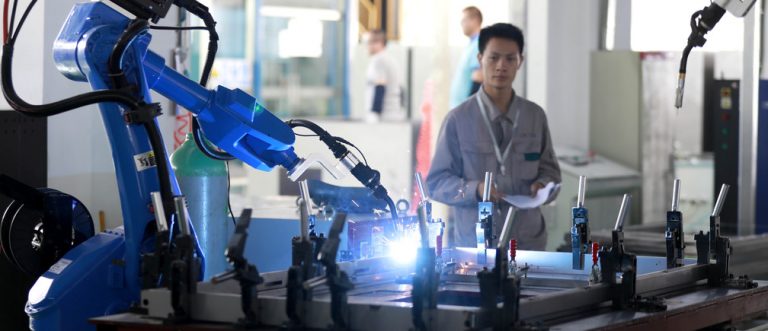
ABIDJAN – Key features of the Fourth Industrial Revolution (4IR) – accelerating digitalization, artificial intelligence (AI), cloud computing, robotics, and 3D printing – have obvious and important implications for education, employment, and the future of work.

This is especially true for African countries. Over the past decade, the share of the continent’s under-20 population has expanded by more than 25%, and is projected to be the continent’s largest age cohort by 2070. As Africa meets the 4IR, its youth will be one of its most important assets.

But to capture this demographic dividend, African countries must overhaul their education systems to prepare for the coming technological revolution. While automation could increase skills premiums and exacerbate income inequality, it also could increase productivity and create new occupations. As such, the 4IR represents a unique opportunity for African countries to leapfrog over development hurdles with the help of technology.

The 4IR will heavily influence which skills are needed in the labor market. Around the world, demand is evolving toward adaptable social, behavioral, and non-repetitive cognitive skills, and away from routine tasks and narrow skills tied to specific jobs. In Africa, demand for software engineers, marketing specialists, writers, and financial advisers is rising, whereas demand for mechanical technicians, administrative assistants, and accountants is falling.

Developing such skills starts in early childhood. In addition to strengthening education, African countries need to increase investment in nutrition, health, and social protections for children. Sadly, Africa is home to one-third of the world’s stunted children under age five, and that number is still rising. Yet the link between nutrition and a workforce’s cognitive capacity is clear. Governments that invest in better nutrition, particularly for the first 1,000 days from conception to age two, will see far-reaching economic – as well as humanitarian – returns.

At the other end of the youth spectrum, higher education is more important now than ever for preparing workers to adapt to the changing job landscape they will encounter over the course of their careers. Studies in Kenya and Tanzania, cited by the African Development Bank (AfDB), for example, show that non-repetitive and cognitive skills are associated with better starting pay, greater job satisfaction, and higher wages over time. Yet, across Africa, less than 4% of the population has a university degree. Moreover, education has remained concentrated in social sciences and humanities, and has lagged in the STEM (science, technology, engineering, and math) fields that are crucial for harnessing the 4IR.

As a result, there is a growing mismatch between businesses’ evolving demands and the skills furnished by African education systems. The sooner African countries can close these gaps, the better chance they will have of reaping the benefits of new technologies.

Some countries are already making significant strides in this direction. Egypt, for example, has introduced “interactive classrooms,” distributing 1.5 million tablets preloaded with an electronic encyclopedia that can also be accessed from school networks and youth centers. Around 2,500 Egyptian schools already have high-speed Internet access, and new solar-powered, “smart” classrooms are being created in remote areas with the help of advanced mobile technologies.

For its part, the African Development Bank (AfDB) has launched “Coding for Employment” as part of its Jobs for Youth in Africa strategy to provide digital skills to the next generation. Among other components, this program (which targets youth aged 15-35) furnishes universities and training centers with computers and other equipment; provides demand-driven training programs in partnership with leading technology firms; and equips youth with essential soft and interpersonal skills, as well as direct employment opportunities. Moreover, in collaboration with academic institutions, the AfDB is participating in research on how to make African education systems more agile and responsive.

Although economic growth was strong in Africa before the COVID-19 crisis, it was not inclusive; poverty and inequality remain high across the region. And while the continent has made large gains in school enrollment, it lags behind other regions on a number of indicators, including average number of years of education and school quality. High-school dropout rates in Africa still exceed 30%, more than twice the global average of 13%.

To catch up with other regions, African countries must adopt national strategies for education and skills development, focusing not only on youth but also on adult workers, dropouts, informal-economy workers, and those from economically and socially disadvantaged groups. African employers often cite inadequately prepared workers as a major constraint on their businesses’ growth. Similarly, AfDB research finds that close to half of employed African youth consider their skills to be mismatched to their jobs, and that two-thirds are either over- or under-educated, leading to depressed wages and job satisfaction.

Only by tackling these skill and education mismatches can African countries build an adaptable and flexible workforce that is ready for the 4IR. Doing so will require a new educational philosophy that prizes soft skills while investing in basic and digital infrastructure. To reduce dropout rates, attendance incentives and access to schools in remote areas must be enhanced, and primary school, at a minimum, should be made mandatory.

By ensuring more demand-driven education, African countries can reduce persistent labor-market mismatches and make education both more attractive to students and more relevant for employers. One exciting option is for African countries to use new dynamic information systems to track current and future labor-market needs in the economy, making it easier for youth to learn about job openings, apply for jobs, and meet their skill requirements.

An overhaul of African education would translate into increased productivity and output for the continent as a whole. AfDB research finds that improvements in both educational attainment (completion rates) and quality (more and better teachers, textbooks, and other resources) are positively correlated with worker productivity, and in turn with a country’s development outcomes.

The importance of skills development for Africa’s youth thus must cannot be overlooked. It represents one of the key drivers of innovation on the continent. To benefit from that relationship, the African workforce must start preparing today for tomorrow’s jobs.

HANAN MORSY is Director of the African Development Bank’s Macroeconomic Policy, Forecasting, and Research Department.

COVID-19: Engendering Complex, Multiple Perspectives For Women

CECILE GERWEL PROCHES, CRISTY LEASK and UPASANA SINGH

COVID-19 has brought about major disruption to the lives of citizens across the globe. Our lives have been changed in ways that we have yet to comprehend fully.

Women, under more “normal conditions”, generally experience multiple demands and challenges that affect their physical, emotional and mental health.

This year, 2020, has however, exacerbated the strain that many women are feeling.

Many have personally experienced increased home and work responsibilities, childcare and home-schooling, and possibly even job loss.

The stereotype that we can multitask may contribute to increased stress levels.

Women can in many cases be primarily responsible for taking care of elderly parents or other relatives.

They could also be the primary caregiver in the household or even be solely responsible for providing financially.

As we write this reflective piece, we grapple with the myriad and complex emotional responses to the pandemic.

The adjustment to isolation to mitigate the spread and safeguard our health lead some of us to experience separation from the loss of the daily routine and an overwhelming loss of personal space with home-school.

These emotional responses can be paradoxical as seeking to protect health, we have overlooked our under‐represented communities.

So many people have been affected by the COVID‐19 pandemic. However, there is a marked inequity in the impact for the woman as the primary caretaker for the family.

Often many women are front line workers assisting with online schooling while working which can create overwhelming multiple emotional responses.

While some job profiles had clear boundaries prior to the pandemic, with the ability to “switch off’ from the office, once you left it, the pandemic now blurred these boundaries.

Lack of office space, household responsibilities, unconducive working environments, and in many cases, no set office timings, caused many to suffer burnout in the first few weeks of the pandemic.

As time went on, and the adaptation to the “new” working arrangements settled in, “normality” may have been somewhat achieved for some.

Of course, the question could be asked as to precisely what the “new norm” is, and whether this is indeed normal and healthy, and the long-term consequences.

At the onset of the pandemic, there was a great sense of anxiety concerning the unknown aspects surrounding this virus.

Anxiety for ourselves, for our elderly parents, for our young children – all made us fearful. Working females may also have had to deal with the fear of job retention.

With economic times being difficult prior to the pandemic, many households have grown to accept the norm of double income.

The prospect of job losses post the pandemic added to the individual’s anxiety burden. With the rapid increase in fake news, it was difficult to decipher what was media hype, and what was fact.

This is a time of paradox; staying safe at home and full attention to the impact that this can have on many women and children. It is also by being aware of and, where possible, reaching out to those who we can support one another, whether in our personal or professional lives.

We encourage leaders and managers to be mindful of the added burdens that female workers may be facing during the pandemic.

We must first acknowledge that we are experiencing the pandemic in diverse ways and that the way in which we process and make sense of our reality is going to be different from individual to individual.

This is where potential conflict could arise between leaders and managers, and those who are reporting to them, should unchecked assumptions, attitudes, stereotypes and judgements, come to the fore, without us being aware of how they impact the other.

Females that are currently working may be experiencing a multitude of emotions, at different times.

These may include feeling overwhelmed, anxious, guilty, lonely, and even helpless.

Despite knowing their limitations some may take on additional work tasks to prove their worth and justify their existence in the organisation, as they continue to work from home.

 Others may be experiencing burnout, especially if they may have faced months of working from home, while having had to deal with homeschooling. The usual stress relievers that we may have turned to, are most probably unavailable due to the pandemic.

However, there may be those who are experiencing increased motivation levels and productivity, and could be benefiting from remote working.

It could also be that sleeping patterns are now significantly impacted, with some females finding that they are only able to deal with work late at night when the house is quiet. The pandemic may have brought about despondency for some females, who may have previously considered themselves high achievers, or who could have been pursuing multiple goals and objectives but may now find themselves unable to accomplish all these tasks, and perhaps having to sacrifice their dreams. Homeschooling and remote working may also affect personal relationships in the home negatively, and additional worries about personal finances may also present as a major challenge. The increased technological demands on staff working from home may also contribute to stress for some females.

Coupled with this is an uncertain future. The thought of returning to work could also be a new burden for females, especially if there is doubt concerning schooling arrangements for children.

Women, who already had to face the glass ceiling, imposter syndrome, criticisms regarding their choices about their careers and personal lives, gender inequalities and stereotypes, and even battling self (doubt, mindset, etc.), but to name a few, now face COVID-19.

Just as the medical fraternity by the day comes to realise just how different the disease presents itself in different individuals, so should we be mindful of the diverse “secondary” symptoms for females that may not yet be that evident.

We should thus be conscious as leaders and managers as to what our female employees have lost as they suddenly had to depart from their workplaces, to individually craft a space in their own homes to continue with work, under abnormal conditions. An individual, genuinely empathetic approach is required to provide staff, and especially female employees with a safe space to navigate this new complex reality, characterised by such uncertainty. Organisations can further assist by determining whether female employees need professional intervention / counselling, coaching and/or mentoring, or more support from the manager / workplace. A conducive and supportive culture is of the essence right now.

It is clear that there is a greater need to appreciate each personal story, for example, being homebound alone is very different from being homebound with children in a safe, secure space. As we navigate the future-forward there will be increased complexity, ambiguity and paradox.

The insight we have into our emotional responses and how we behave under pressure will enable increased awareness, tolerance and ability to recognise our bias.

Lastly, we laughed collectively at just how much we craved certainty when in crisis, it was this laughter that allowed a moment to feel peace in the collective.    

While the pandemic caused us to distance physically from family, friends and colleagues, technology may have helped foster connection in many more ways than was conceivably possible. Many of us have had the opportunity to ‘travel the world’, albeit virtually and connect with colleagues while fostering collaboration through virtual webinars and conferences. Though the virtual environment can be limiting in terms of engagement, many new relationships have grown, and these connections present new opportunities. On the personal front, we may also be experiencing closer ties with family and friends on the virtual platform.

As the impact of the COVID-19 pandemic expands past the eight-month mark, we are aware that if we are to significantly transform societies and educational spaces, women and girls need to be at the forefront of social and economic recovery efforts.

So, as women in communities, we commit not to waste the chance to turn demanding experiences into significant learning and social change. We are also aware that we need a systemic response.

ABOUT THE AUTHORS|

Professor Cecile Gerwel Proches is an academic in the Graduate School of Business and Leadership at the University of KwaZulu-Natal in Durban, South Africa.

Dr Cristy Leask began her career as a registered Counselling Psychologist in the National Health Service and then went on to join Virgin Group as a Human Resources Manager in London. Her consulting, research and teaching focus on leadership, sustainability and complexity.

Dr Upasana Singh is a senior lecturer in the Discipline of Information Systems and Technology at the University of KwaZulu Natal, Westville Campus, in Durban, South Africa. She lectures on a wide-range of IT-related subjects and she has a keen interest in Educational Technologies. In 2019 she completed her Fellowship in “Teaching Advancement in Universities” (TAU), from the CHE.

Communication in 4IR

DR LEYLA TAVERNARO-HAIDARIAN

The Fourth Industrial Revolution (4IR) with its emergence of new technologies, such as artificial intelligence, cloud computing or robotics and the general fusion of what we have traditionally thought of as the separate realms of the digital and organic is frequently met with awe and skepticism.

Central among concerns is the idea that ‘truth’ has never been more compromised. News of fake news and doubts around the legitimacy of sources or the underlying motives of those who manipulate information is a point of consternation.

Yet was truth ever really more accessible to us than now or any less skewed? Whose truth were journalists telling during apartheid in South Africa?

And by contrast, what injustices are being exposed by cell phone recordings in the United States today? Maybe it is not so much the technologies we have at our disposal, then, but the way in which we engage and communicate – our relationships with one another – that determine the reliability of truth and communication in this era.

These relationships, however, have not changed much from one industrial revolution to the next.

Influenced, in part, by a Hobbesian perspective, we still largely define how we relate to others in terms of competing interests and fundamental distrust.

We think of our affairs as incompatible with those of others and we organize social life as a contest.

This shapes not only our democratic processes but also academic debates, journalistic routines and our legal systems.

As a result, any possibility of a collective search for truth is sidelined by partisan posturing and the relentless pursuit of winning an argument or case. What this produces, at best, is a narrow, reified view of reality.

Yet a different way of relating to others is conceivable. If we foreground, instead, our mutuality and interconnectedness, truth becomes a collective endeavor.

Grounding ethical decision-making in non-partisan collaboration, in joint consultation and in participatory deliberation enables us to reimagine truth as the culmination of many complementary perspectives.

Since we cannot know reality directly and since our views are shaped and circumscribed by our various experiences, by our education and by our social positions, access to ‘truth’ can be seen as relative.

From within this vantage point, the more we collaborate with others – and with the tools of 4IR – the more effective communication can become in bringing us closer to Truth with a capital T.

ABOUT AUTHOR|

Dr. Leyla Tavernaro-Haidarian, PhD
Department of Communication
University of Johannesburg

(SOURCE: University of Johannesburg)

NGOs Urge Motshekga To Ensure School Feeding Scheme Reaches 9.6 Million Learners As Per Court Order

NYAKALLO TEFU

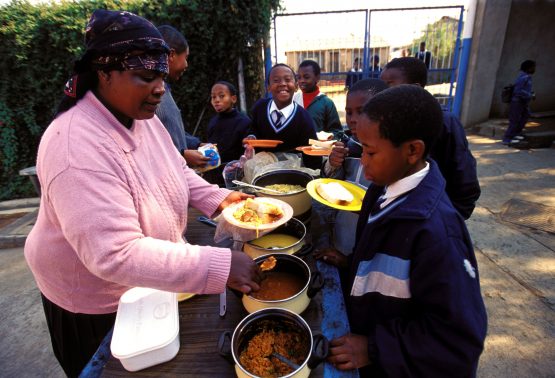
MORE than 9 million learners face hunger and food shortages after the Department of Basic Education once again fails to ensure universal access to the national school feeding scheme as per last month’s court order.  

The Equal Education Law Centre and Section27, representing Equal Education and the governing bodies of two schools in Limpopo, issued a statement on Wednesday saying the department has failed to deliver food to all learners across the country as ordered by the high court in Pretoria.

On Tuesday, the NGOS wrote a letter to Basic Education Minister Angie Motshekga and provincial MECs of Education about their latest National School Nutrition Programme (NSNP) progress report required by the high court.

The NGOs said the latest report from Motshekga and provincial MECs of Education, which arrived on 7 August 2020, was at least more coherent than previous documents filed with the high court.

“The documents promisingly show an increase in the number of meals being made available to qualifying learners in all provinces since we launched the urgent court case,” said the NGOs.

The NGOs said, however, the report lacks crucial information and plans to address obstacles to the collection of food from various schools.

Basic Education Director-General Mathanzima Mweli said in an affidavit last week that the NSNP was ready to implement on a full scale but due to fears of COVID-19, parents were not allowing pupils to collect their meals at schools.

Mweli also said long distances from schools also prevented pupils from coming to school to collect the meals and this affected the number of pupils benefiting from the programme.

“It is unacceptable that learners and families may be unaware that they can fetch the school meals they are entitled to because of poor communication from education departments, or because they might not have transport to school,” said the NGOS.

“These court reports are an opportunity for the education departments to work with school communities and with us to solve problems in the best interests of learners across the country – but inaccurate data and contradictory information in the reports undermine the potential for meaningful engagement. We will continue monitoring the delivery of food with schools throughout the country so that we have a sense of the uptake of the NSNP and any obstacles to the uptake, as well as how these problems are being fixed.”

(COMPILED BY INSIDE EDUCATION STAFF)

Outrage Over Fatal Stabbing Of Wits Student Kwasa Lugalo In The Eastern Cape

A 20-year-old Wits University student has been murdered in the Eastern Cape, allegedly by her boyfriend after she told him she no longer wants to be in romantic relationship with him.

Police in the Eastern Cape are investigating the death of Kwasa Zozo Lugalo and said a 23-year-old suspect in the case is currently in hospital after he tried to commit suicide.

“The suspect is alleged to have attempted suicide immediately after committing this particular crime is currently admitted in hospital. Once he is discharged the police will charge him with murder,” said the Eastern Cape police’s spokesperson Tembinkosi Kinana.

On social media #JusticeForKwasa has been trending with tweeps expressing shock at the murder of the 20-year-old.

The University of Wits has released a statement saying women are being murdered in shocking numbers by men in SA.

“We are tired of mourning the loss of the lives of women. Rest in peace. #JusticeForKwasa,” said Wits in a statement.

The university said government must implement existing legislation to hold murderers, rapists and abusers accountable.

“Schools must create effective curricular that speaks to gender equality and diversity,” said Wits management.

Wits added that Lugalo was a determined and driven young woman.

The murder of Lugalo comes a year after that of University of Cape Town first-year student Uyinene Mrwetyana.

(COMPILED BY INSIDE POLITICS STAFF)