Home Blog Page 385

COVID-19: Engendering Complex, Multiple Perspectives For Women

CECILE GERWEL PROCHES, CRISTY LEASK and UPASANA SINGH

COVID-19 has brought about major disruption to the lives of citizens across the globe. Our lives have been changed in ways that we have yet to comprehend fully.

Women, under more “normal conditions”, generally experience multiple demands and challenges that affect their physical, emotional and mental health.

This year, 2020, has however, exacerbated the strain that many women are feeling.

Many have personally experienced increased home and work responsibilities, childcare and home-schooling, and possibly even job loss.

The stereotype that we can multitask may contribute to increased stress levels.

Women can in many cases be primarily responsible for taking care of elderly parents or other relatives.

They could also be the primary caregiver in the household or even be solely responsible for providing financially.

As we write this reflective piece, we grapple with the myriad and complex emotional responses to the pandemic.

The adjustment to isolation to mitigate the spread and safeguard our health lead some of us to experience separation from the loss of the daily routine and an overwhelming loss of personal space with home-school.

These emotional responses can be paradoxical as seeking to protect health, we have overlooked our under‐represented communities.

So many people have been affected by the COVID‐19 pandemic. However, there is a marked inequity in the impact for the woman as the primary caretaker for the family.

Often many women are front line workers assisting with online schooling while working which can create overwhelming multiple emotional responses.

While some job profiles had clear boundaries prior to the pandemic, with the ability to “switch off’ from the office, once you left it, the pandemic now blurred these boundaries.

Lack of office space, household responsibilities, unconducive working environments, and in many cases, no set office timings, caused many to suffer burnout in the first few weeks of the pandemic.

As time went on, and the adaptation to the “new” working arrangements settled in, “normality” may have been somewhat achieved for some.

Of course, the question could be asked as to precisely what the “new norm” is, and whether this is indeed normal and healthy, and the long-term consequences.

At the onset of the pandemic, there was a great sense of anxiety concerning the unknown aspects surrounding this virus.

Anxiety for ourselves, for our elderly parents, for our young children – all made us fearful. Working females may also have had to deal with the fear of job retention.

With economic times being difficult prior to the pandemic, many households have grown to accept the norm of double income.

The prospect of job losses post the pandemic added to the individual’s anxiety burden. With the rapid increase in fake news, it was difficult to decipher what was media hype, and what was fact.

This is a time of paradox; staying safe at home and full attention to the impact that this can have on many women and children. It is also by being aware of and, where possible, reaching out to those who we can support one another, whether in our personal or professional lives.

We encourage leaders and managers to be mindful of the added burdens that female workers may be facing during the pandemic.

We must first acknowledge that we are experiencing the pandemic in diverse ways and that the way in which we process and make sense of our reality is going to be different from individual to individual.

This is where potential conflict could arise between leaders and managers, and those who are reporting to them, should unchecked assumptions, attitudes, stereotypes and judgements, come to the fore, without us being aware of how they impact the other.

Females that are currently working may be experiencing a multitude of emotions, at different times.

These may include feeling overwhelmed, anxious, guilty, lonely, and even helpless.

Despite knowing their limitations some may take on additional work tasks to prove their worth and justify their existence in the organisation, as they continue to work from home.

 Others may be experiencing burnout, especially if they may have faced months of working from home, while having had to deal with homeschooling. The usual stress relievers that we may have turned to, are most probably unavailable due to the pandemic.

However, there may be those who are experiencing increased motivation levels and productivity, and could be benefiting from remote working.

It could also be that sleeping patterns are now significantly impacted, with some females finding that they are only able to deal with work late at night when the house is quiet. The pandemic may have brought about despondency for some females, who may have previously considered themselves high achievers, or who could have been pursuing multiple goals and objectives but may now find themselves unable to accomplish all these tasks, and perhaps having to sacrifice their dreams. Homeschooling and remote working may also affect personal relationships in the home negatively, and additional worries about personal finances may also present as a major challenge. The increased technological demands on staff working from home may also contribute to stress for some females.

Coupled with this is an uncertain future. The thought of returning to work could also be a new burden for females, especially if there is doubt concerning schooling arrangements for children.

Women, who already had to face the glass ceiling, imposter syndrome, criticisms regarding their choices about their careers and personal lives, gender inequalities and stereotypes, and even battling self (doubt, mindset, etc.), but to name a few, now face COVID-19.

Just as the medical fraternity by the day comes to realise just how different the disease presents itself in different individuals, so should we be mindful of the diverse “secondary” symptoms for females that may not yet be that evident.

We should thus be conscious as leaders and managers as to what our female employees have lost as they suddenly had to depart from their workplaces, to individually craft a space in their own homes to continue with work, under abnormal conditions. An individual, genuinely empathetic approach is required to provide staff, and especially female employees with a safe space to navigate this new complex reality, characterised by such uncertainty. Organisations can further assist by determining whether female employees need professional intervention / counselling, coaching and/or mentoring, or more support from the manager / workplace. A conducive and supportive culture is of the essence right now.

It is clear that there is a greater need to appreciate each personal story, for example, being homebound alone is very different from being homebound with children in a safe, secure space. As we navigate the future-forward there will be increased complexity, ambiguity and paradox.

The insight we have into our emotional responses and how we behave under pressure will enable increased awareness, tolerance and ability to recognise our bias.

Lastly, we laughed collectively at just how much we craved certainty when in crisis, it was this laughter that allowed a moment to feel peace in the collective.    

While the pandemic caused us to distance physically from family, friends and colleagues, technology may have helped foster connection in many more ways than was conceivably possible. Many of us have had the opportunity to ‘travel the world’, albeit virtually and connect with colleagues while fostering collaboration through virtual webinars and conferences. Though the virtual environment can be limiting in terms of engagement, many new relationships have grown, and these connections present new opportunities. On the personal front, we may also be experiencing closer ties with family and friends on the virtual platform.

As the impact of the COVID-19 pandemic expands past the eight-month mark, we are aware that if we are to significantly transform societies and educational spaces, women and girls need to be at the forefront of social and economic recovery efforts.

So, as women in communities, we commit not to waste the chance to turn demanding experiences into significant learning and social change. We are also aware that we need a systemic response.

ABOUT THE AUTHORS|

Professor Cecile Gerwel Proches is an academic in the Graduate School of Business and Leadership at the University of KwaZulu-Natal in Durban, South Africa.

Dr Cristy Leask began her career as a registered Counselling Psychologist in the National Health Service and then went on to join Virgin Group as a Human Resources Manager in London. Her consulting, research and teaching focus on leadership, sustainability and complexity.

Dr Upasana Singh is a senior lecturer in the Discipline of Information Systems and Technology at the University of KwaZulu Natal, Westville Campus, in Durban, South Africa. She lectures on a wide-range of IT-related subjects and she has a keen interest in Educational Technologies. In 2019 she completed her Fellowship in “Teaching Advancement in Universities” (TAU), from the CHE.
Communication in 4IR

DR LEYLA TAVERNARO-HAIDARIAN

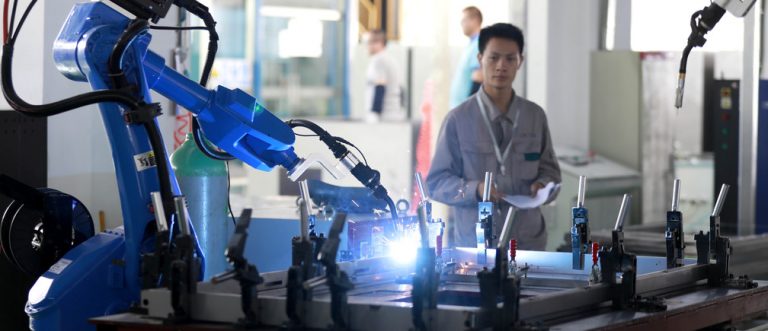
The Fourth Industrial Revolution (4IR) with its emergence of new technologies, such as artificial intelligence, cloud computing or robotics and the general fusion of what we have traditionally thought of as the separate realms of the digital and organic is frequently met with awe and skepticism.

Central among concerns is the idea that ‘truth’ has never been more compromised. News of fake news and doubts around the legitimacy of sources or the underlying motives of those who manipulate information is a point of consternation.

Yet was truth ever really more accessible to us than now or any less skewed? Whose truth were journalists telling during apartheid in South Africa?

And by contrast, what injustices are being exposed by cell phone recordings in the United States today? Maybe it is not so much the technologies we have at our disposal, then, but the way in which we engage and communicate – our relationships with one another – that determine the reliability of truth and communication in this era.

These relationships, however, have not changed much from one industrial revolution to the next.

Influenced, in part, by a Hobbesian perspective, we still largely define how we relate to others in terms of competing interests and fundamental distrust.

We think of our affairs as incompatible with those of others and we organize social life as a contest.

This shapes not only our democratic processes but also academic debates, journalistic routines and our legal systems.

As a result, any possibility of a collective search for truth is sidelined by partisan posturing and the relentless pursuit of winning an argument or case. What this produces, at best, is a narrow, reified view of reality.

Yet a different way of relating to others is conceivable. If we foreground, instead, our mutuality and interconnectedness, truth becomes a collective endeavor.

Grounding ethical decision-making in non-partisan collaboration, in joint consultation and in participatory deliberation enables us to reimagine truth as the culmination of many complementary perspectives.

Since we cannot know reality directly and since our views are shaped and circumscribed by our various experiences, by our education and by our social positions, access to ‘truth’ can be seen as relative.

From within this vantage point, the more we collaborate with others – and with the tools of 4IR – the more effective communication can become in bringing us closer to Truth with a capital T.

ABOUT AUTHOR|

Dr. Leyla Tavernaro-Haidarian, PhD
Department of Communication
University of Johannesburg

(SOURCE: University of Johannesburg)

NGOs Urge Motshekga To Ensure School Feeding Scheme Reaches 9.6 Million Learners As Per Court Order

NYAKALLO TEFU

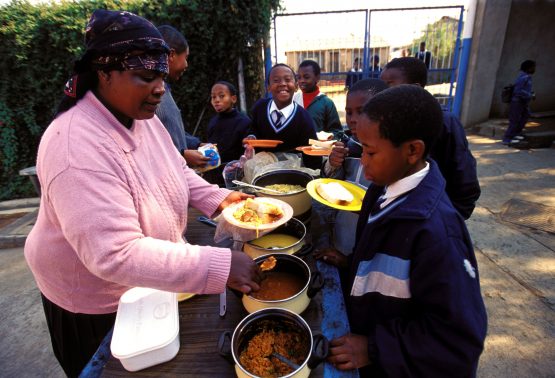
MORE than 9 million learners face hunger and food shortages after the Department of Basic Education once again fails to ensure universal access to the national school feeding scheme as per last month’s court order.  

The Equal Education Law Centre and Section27, representing Equal Education and the governing bodies of two schools in Limpopo, issued a statement on Wednesday saying the department has failed to deliver food to all learners across the country as ordered by the high court in Pretoria.

On Tuesday, the NGOS wrote a letter to Basic Education Minister Angie Motshekga and provincial MECs of Education about their latest National School Nutrition Programme (NSNP) progress report required by the high court.

The NGOs said the latest report from Motshekga and provincial MECs of Education, which arrived on 7 August 2020, was at least more coherent than previous documents filed with the high court.

“The documents promisingly show an increase in the number of meals being made available to qualifying learners in all provinces since we launched the urgent court case,” said the NGOs.

The NGOs said, however, the report lacks crucial information and plans to address obstacles to the collection of food from various schools.

Basic Education Director-General Mathanzima Mweli said in an affidavit last week that the NSNP was ready to implement on a full scale but due to fears of COVID-19, parents were not allowing pupils to collect their meals at schools.

Mweli also said long distances from schools also prevented pupils from coming to school to collect the meals and this affected the number of pupils benefiting from the programme.

“It is unacceptable that learners and families may be unaware that they can fetch the school meals they are entitled to because of poor communication from education departments, or because they might not have transport to school,” said the NGOS.

“These court reports are an opportunity for the education departments to work with school communities and with us to solve problems in the best interests of learners across the country – but inaccurate data and contradictory information in the reports undermine the potential for meaningful engagement. We will continue monitoring the delivery of food with schools throughout the country so that we have a sense of the uptake of the NSNP and any obstacles to the uptake, as well as how these problems are being fixed.”

(COMPILED BY INSIDE EDUCATION STAFF)

Outrage Over Fatal Stabbing Of Wits Student Kwasa Lugalo In The Eastern Cape

A 20-year-old Wits University student has been murdered in the Eastern Cape, allegedly by her boyfriend after she told him she no longer wants to be in romantic relationship with him.

Police in the Eastern Cape are investigating the death of Kwasa Zozo Lugalo and said a 23-year-old suspect in the case is currently in hospital after he tried to commit suicide.

“The suspect is alleged to have attempted suicide immediately after committing this particular crime is currently admitted in hospital. Once he is discharged the police will charge him with murder,” said the Eastern Cape police’s spokesperson Tembinkosi Kinana.

On social media #JusticeForKwasa has been trending with tweeps expressing shock at the murder of the 20-year-old.

The University of Wits has released a statement saying women are being murdered in shocking numbers by men in SA.

“We are tired of mourning the loss of the lives of women. Rest in peace. #JusticeForKwasa,” said Wits in a statement.

The university said government must implement existing legislation to hold murderers, rapists and abusers accountable.

“Schools must create effective curricular that speaks to gender equality and diversity,” said Wits management.

Wits added that Lugalo was a determined and driven young woman.

The murder of Lugalo comes a year after that of University of Cape Town first-year student Uyinene Mrwetyana.

(COMPILED BY INSIDE POLITICS STAFF)

Millions Of Children Hit As Education Faces $150 Billion Of Cuts

A GROUP of 275 former world leaders, economists and educationalists have called on G20 nations and other countries to take action to prevent the global health crisis creating a ‘COVID generation’ – tens of millions of children with no hope of an education.

The leaders – including many presidents and prime ministers – say urgent measures are now required and as country lockdowns come to an end, an immediate priority is the fate of 30 million children who, according to a UNESCO report, may never return to school.

In a letter to G20 heads, national governments and global financial institutions, the former leaders also warn that the world’s poorest children have been locked out of learning, denied internet access and, with the loss of free school meals – once a lifeline for 300 million boys and girls – hunger is growing.

The letter states: “We cannot stand by and allow these young people to be robbed of their education and a fair chance in life.”

Inger Ashing, CEO of Save the children, said: “COVID-19 is a global public health crisis that has left the world facing an unprecedented education emergency. That emergency threatens to rob millions of children of their right to education, exacerbating inequalities linked to wealth and gender – and trapping entire countries in a downward spiral of slow growth, rising poverty, and shrinking opportunity. Governments should be investing in learning, instead we’re facing unparalleled budget cuts. The international community is sleepwalking into an avoidable education disaster that will scar an entire generation.”

Leaders are also urging the G20 to ramp up funding and ‘rebuild education better’, stating:* “The World Bank now estimates that over the next year overall education spending in low and middle-income countries could be $100-150 billion lower than previously planned.” *

Mary Robinson, former President of Ireland and UN High Commissioner for Human Rights, Ban Ki-Moon, former UN Secretary General, Graca Machel, Helen Clark former New Zealand Prime Minister and Gordon Brown former United Kingdom Prime Minister and UN Global Education Envoy said: “We call on the G20, the IMF, World Bank and regional development banks and all countries to recognise the scale of the crisis and support three emergency initiatives.”

(SOURCE: Reliefweb)

Equal Education At Loggerheads With DBE Over Roll-out Of School Feeding Scheme To 9 Million Learners

NYAKALLO TEFU

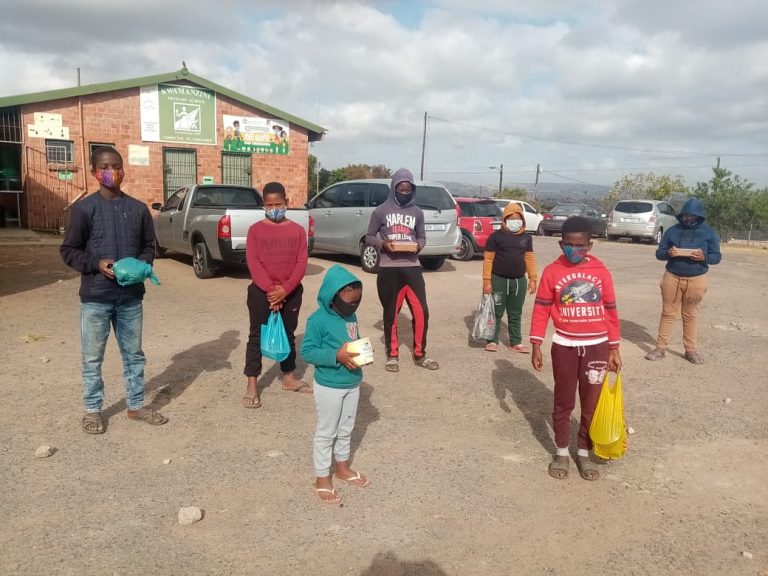
THE reopening of schools this week is off to a chaotic start following complaints that Department of Basic Education has not fully implemented the national school nutrition programme.

According to Equal Education, DBE has, through social media and news interviews, created the false narrative that the NSNP is being diligently and effectively rolled out.

The Equal Education says some provinces claim that all learners are able to get food but their plans do not have information to back up their claims.

In July, the high court ordered that plans to guide the full roll out of the NSNP must be filed with it by Friday 31 July, by both the Education MECs and Minister Angie Motshekga.

However, the provincial MECs failed to meet that deadline.

Equal Education said it has written to Motshekga to raise issues with the implementation of the feeding scheme.

“We are angry that school communities continue to report to us that food is still not being provided to every school and every learner,” said Equal Education.

“We will continue to monitor the situation on the ground and evaluate the implementation plans for the resumption of the NSNP from the Minister and MECs. We remind Minister Motshekga and the Education MECs, that as our counsel Advocate Tembeka Ngcukaitobi SC said, nothing is more undignified than starvation. And as the judgment says, hunger is an issue of justice.”

Director-General said in an affidavit last week that the feeding scheme is ready to implement on a full scale but due to fears of Covid-19, many parents did not allow learners to collect the meals.

Mweli also mentioned that long distances from schools also prevented pupils from coming to school to collect the meals and this affected the number of pupils benefiting from the programme.

The court declared that Motshekga was under a legal duty to ensure that the NSNP provides a daily meal to all qualifying pupils, whether they are attending school or not.

In his report to the court and to Equal Education and two schools which brought the application — dated August 7 — Mweli said provinces were required to submit statistics on pupils who are receiving meals from July 20.

KwaZulu-Natal did not specify the actual number of pupils fed but reflected the distribution of meals.

The province said it distributed 2.3 million meals during that period.

Last Friday, the KZN education department said by the end of 2020 more than 300 schools will have new mobile kitchens.

The department said R50 million has been set aside to procure 300 mobile kitchens to ensure that food for pupils is prepared in a safe and hygienic place.

MEC of Education Kwazi Mshengu said the funds for the mobile kitchen are taken from savings from the National School Nutrition Programme.

Gauteng has mentioned that 117,849 pupils received meals and no challenges were reported.

In Mpumalanga, 700,586 pupils received meals.

The province noted that not all pupils came for feeding or collection of pre-packed food parcels.

Northern Cape recorded 17,028 pupils receiving meals, but the data was only for August 5.

The Free State recorded 22,153 pupils receiving meals.

Equal Education said the plans of the Education MECs are full of holes – with very important information completely missing or with extremely limited information on the number of learners currently receiving school meals (including those learners at home), ways of communicating with learners and their families about collecting cooked meals or food parcels, providing transport for learners who live far from their closest school, and how provinces are  monitoring that all qualifying learners receive meals.

Equal Education said some provinces claim that all learners are able to get food but their plans do not have information to back up their claims.

In addition, some provinces do not say anything at all about the number of learners whose nutritional needs they are meeting.

“School communities are telling us that the quality of some of the food parcels being provided is shocking,” said Equal Education.

“They do not contain all the necessary food groups (starch, protein and fruit or vegetables) and cannot then be considered nutritious. It is the duty of each Education MEC to implement the NSNP in such a manner that it provides a nutritious daily meal.”

(COMPILED BY INSIDE EDUCATION STAFF)

Cash-strapped National School of the Arts Receives R5m In Funding From GDE

NYAKALLO TEFU

THE Gauteng Department of Education has offered the cash-strapped National School of the Arts a R5 million bailout.

In recent months, the National School of the Arts has had to stop all its performances due to COVID-19 lockdown and non-payment of school fees by parents.

The school’s management announced last week that the institution may face closure as 40% of parents were not able to pay for their children’s fees for the 2020 academic year.

The school also said it has approached some of its alumni for assistance in raising the R5 million needed to cover its operations and debt.

Gauteng education spokesperson Steve Mabona said the department would not allow the art school to close.

“The department allocates funding to such schools for them to cover expenses,” said Mabona.

In existence for 50 years now, students have included the likes of actress Charlize Theron, TV personality Lorna Maseko, presenter Jeannie D and actress Moshidi Motshegwa but now, will the school have to close its doors?

“The performances are the backbone of the school,” said Gary Natali, principal at the National School of the Arts told eNCA.

“Children come to the school because they can perform. We also have wonderful art exhibitions. All of that has taken a back seat at the moment. The only other place is where a school can save is on the SGB employed staff members. And unfortunately, we may have to look at possible retrenchments.”

(COMPILED BY INSIDE EDUCATION STAFF)

Northern Cape MEC Mack Jack Laid To Rest in Graaff-Reinet, Eastern Cape

NYAKALLO TEFU

NORTHERN Cape MEC for Education Mack Jack was laid to rest in his Eastern Cape hometown of Graaff-Reinet on Sunday.

Jack died in hospital after being diagnosed with the novel corona virus.

Delivering the eulogy at his funeral, Northern Cape Premier Saul said that the ANC and the Northern Cape provincial government were now poorer without Jack.

“Death has stolen from us our black jewel, our dynamic, jovial and glittering star. Our star faded. We are left heart-broken and completely distraught,” said Saul.

“He had warrior spirit and extraordinary energy. His commitment and diligence and service to our people will be sorely missed especially at this critical time where we are confronted by an enemy that is wreaking havoc in our communities.”

Saul said Jack’s contribution to improving the lives of the people of the Northern Cape will always be remembered.

“He did good on his promise to bring about positive change in the lives of our people and the responsibility and trust bestowed on him, he held with honour and truth,” said Saul.

Jack completed his High Schooling in Thubalethu High School in Fort Beaufort in the Eastern Cape in 1984.

His career in the education sector started when he was a teacher and later a principal from 1988 to 1997.

He then went on to become Chief Education Specialist at the Department of Education.

He joined a Local Teacher Organisation called GRAPTO (Graaaf-Reinet Professional Teacher Organisation) under NEUSA (National Education Union of SA) and was elected as Deputy Secretary at its inaugural meeting at the time.

He then served both as Local Secretary and Chairperson of the South African Democratic Teachers Union (SADTU) and also led the Congress of South Africa Trade Union (COSATU) Local.

“In the short space of time that he has served the Education Department in the Province, Mac Jack has shown qualitative leadership. He was very passionate and focussed in improving the education system,” said SADTU in a statement.

In a statement, COSATU said Jack served as a distinctive trade unionist and did not disappoint workers when he was called to serve different structures of the ANC and ultimately in government.

“Comrade Jack possessed a great sense of humour and continued to work together with the trade union movement in an endeavour to harmonise workplaces and to ensure equitable stakeholder participation in socio-economic matters that concerns people of the Northern Cape,” said COSATU.

“The trade union movement will miss his vibrancy, selflessness, and profound vision of reinvigorating education but most of all, his passion for economic development in the province.”

Sihle Zikalala, Kwa-Zulu Natal Premier, took to twitter to bid farewell to Jack.

Free State Education MEC Tate Mekgoe also took to Twitter to bid farewell to his fellow MEC.

Basic Education Minister Angie Motshekga also sent her condolences to the Jack family, saying he served with dedication throughout his term.

“Jack was a seasoned government leader and educationist,” said Motshekga.

“The passing of MEC Jack has robbed Basic Education Department of a seasoned educationist, policy expert and a leader who could build bridges between communities and the department.”

(COMPILED BY INSIDE EDUCATION STAFF)

Wits University Launches Second COVID-19 Vaccine Trial

NYAKALLO TEFU

WITS University launched its second vaccine trial on Monday.

The Phase 2 trial in South Africa will evaluate if the nanoparticle S-protein, in the COVID-19 vaccine known as NVX-CoV2373, protects against the virus in adults aged 18-64-years-old.

South Africa is the fifth worst affected country with more than 583 000 coronavirus cases and just under 12 000 deaths.

US drug developer Novavax expects its vaccine, once approved, would be supplied to South Africa through a deal signed earlier this year with the Serum Institute of India to develop and commercialize NVX-CoV2373.

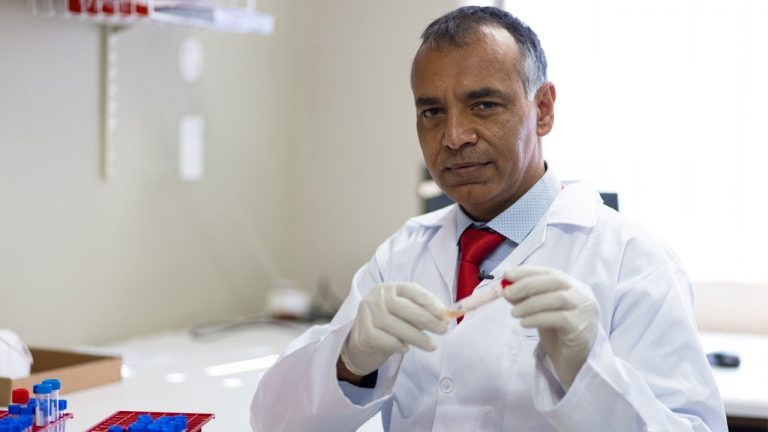
“NVX-CoV2373 is produced by the biotech company, Novavax (Maryland, U.S.A). Novavax is a late-stage biotechnology company that develops next-generation vaccines for serious infectious diseases,” said Wits Professor of Vaccinology, Shabir Madhi.

Madhi is leading the clinical trial in South Africa after having engaged personally with Novavax to motivate for clinical development of the vaccine.

“The major motivation for Covid-19 vaccines being evaluated at an early stage in South Africa is to generate evidence in the African context on how well these vaccines work in settings such as our own,” said Madhi.

The Phase 2 trial in the country is set to enrol about 2 900 volunteers aged 18 to 64-years-old.

Madhi said this would enable informed decision-making when advocating for the adoption of this [NVX-CoV2373 vaccine candidate] or other COVID-19 vaccines in African countries once they are shown to be safe and effective.

“Participating in the clinical development of these vaccines at the outset will assist in advocating for South Africans to be amongst the first in line to access these life-saving vaccines, once they become available.”

President and CEO of Novavax, Stanley Erck, said: “This important Phase 2 clinical trial will not only provide additional data on safety and immunogenicity of NVX-CoV2373, it also has the potential to provide an early indication of efficacy, as South Africa is experiencing a surge of COVID-19.”

 The Bill & Melinda Gates Foundation awarded Novavax a $15 million grant towards the COVID-19 vaccine efficacy trial in South Africa.

The South African study is part of a larger, global clinical programme to evaluate NVX-CoV2373, including larger Phase 3 studies with approximately 30 000 participants, to be launched throughout the world.

According to REUTERS, Novavax intends to begin Phase 2 of the small clinical trial in the United States and Australia in the near future and said it would include about 1,500 candidates. It also aims to begin Phase III as soon as late September.

The US government in July awarded Novavax valued over R27bn to cover testing its potential coronavirus vaccine in the United States and manufacturing with the aim of delivering a 100 million doses by January.

(COMPILED BY INSIDE EDUCATION STAFF)

Ramaphosa: Beware Of A ‘Second Wave’ Of Infections As We Move To Level 2 Lockdown

CYRIL RAMAPHOSA

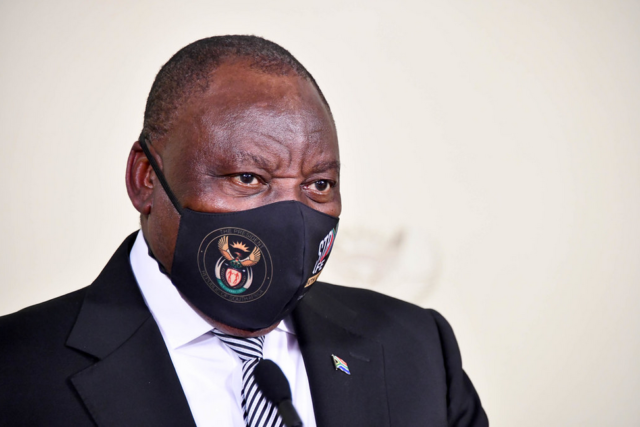
ON TUESDAY, our country will move to alert level 2 in our response to the coronavirus pandemic. This will come as a relief to all South Africans who have had to live under stringent restrictions for the last five months. It is a sign of the progress we are making in reducing new infections and demand on our health facilities. It is also a very important development as we strive to restart our economy.
 
But it is too soon to celebrate.

 
We are still very much in the middle of a deadly pandemic that has taken over 11,000 lives in South Africa alone.

At more than half a million confirmed cases, we still have the fifth highest number of infections in the world. And there is always a chance of a resurgence of the disease.
 
If we ever need a stark reminder of the need for vigilance, we should look to recent events thousands of kilometres away in New Zealand.

Three months since the country was declared coronavirus-free, New Zealand is once again under lockdown.

Although the latest outbreak was of relatively few cases, the government swiftly re-imposed lockdown restrictions.
 
Similar restrictions have had to be re-imposed in several parts of Europe as they experience a ‘second wave’ of infections. These experiences show just how swiftly things can change when it comes to COVID-19.
 
It is a wake-up call to any among us who may harbour illusions that we are even close to seeing the end of this grave public health emergency.
 
Certainly, there are signs of hope. The number of new confirmed cases in South Africa continues to decline. At the peak of the disease just one month ago, we were recording around 12,000 new cases a day. This has dropped to an average of around 5,000 a day over the past week. Our recovery rate stands at 80%.
 
As the country moves to alert level 2, many restrictions on social and economic activity have been lifted. With this comes increased risk of transmission.
 
We now need to manage this risk and ensure the gains we have made thus far in containing the pandemic’s spread are not reversed. The greatest threat to the health of nation right now is complacency. It may be that we are now permitted to meet friends and family, to visit entertainment venues, to travel for leisure and to consume alcohol in restaurants, bars and taverns.
 
But as the old adage goes, just because you can, doesn’t mean you should.
 
Many people who have the coronavirus do not have symptoms and may not even know they are infected. This is a sobering reality because it means that any of us could be infected right now and could unwittingly infect others.
 
This is particular the case when visiting relatives, especially the elderly and those with pre-existing medical conditions that render them vulnerable to infection. It is also true for attending religious services or cultural activities.
 
The ‘second wave’ of infections that several other countries have experienced is an ever-present possibility for us too. Although many restrictions have been lifted, it does not mean they will not return should we experience a significant rise in infections. This pandemic is a matter of life and death. We need to adapt and we need to be vigilant.
 
In the days, weeks and months that lie ahead, we must urgently focus our efforts on recovery.

Our economy and our society has suffered a great deal.

As we return to economic activity across almost all industries – and work to repair the damage done – we have a responsibility to not let our guard down as individuals, employers, communities, families, professionals, workers and citizens.
 
None of us wants a return to the early days of extreme lockdown restrictions. We want to move on with our lives. We want our friends and loved ones to remain healthy and safe.
 
As a nation, let us continue to work together to ensure that we progress. The move to alert level 2 of the lockdown is not a ‘free for all.’ The rules on social distancing, mask wearing, social gatherings and international travel remain.
 
Our success rests on our ability to abide by these regulations and to ensure that we each behave carefully and responsibly.
 
Every time we are considering any form of non-essential activity, we should ask: what is the risk of infection to ourselves and to others? Where there is a risk, even a slight one, it is better not to do it.
 
Let us proceed, as ever, with caution. Let us keep each other safe.