Home Blog Page 386

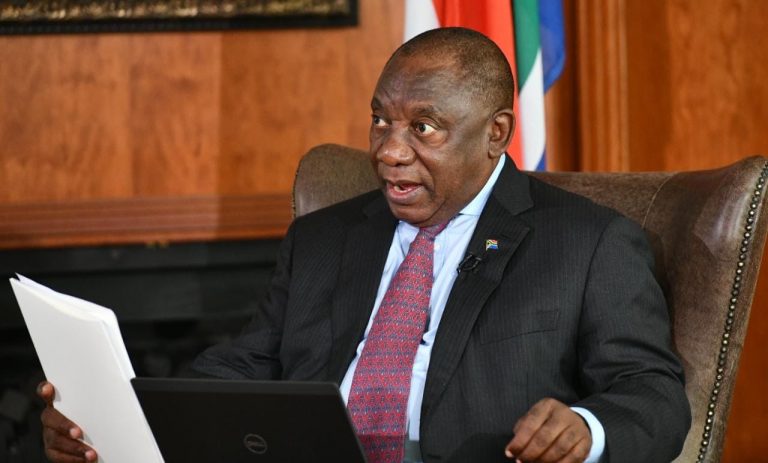
Ramaphosa: Beware Of A ‘Second Wave’ Of Infections As We Move To Level 2 Lockdown

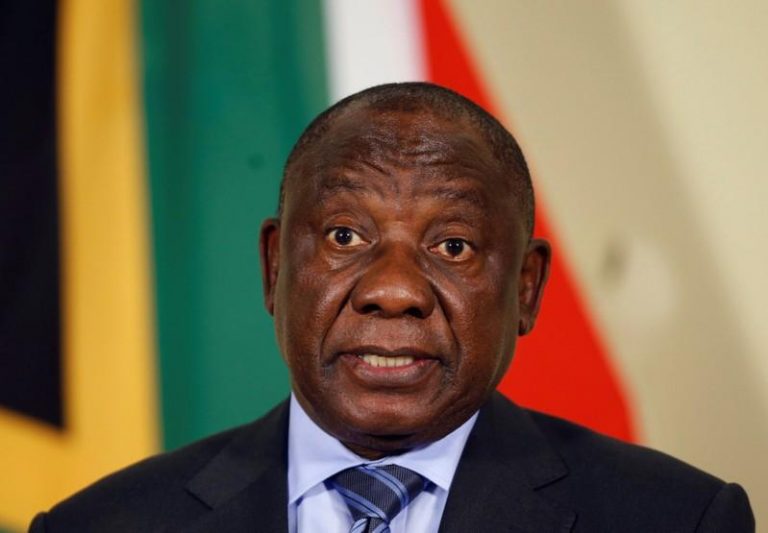
CYRIL RAMAPHOSA

ON TUESDAY, our country will move to alert level 2 in our response to the coronavirus pandemic. This will come as a relief to all South Africans who have had to live under stringent restrictions for the last five months. It is a sign of the progress we are making in reducing new infections and demand on our health facilities. It is also a very important development as we strive to restart our economy.
 
But it is too soon to celebrate.

 
We are still very much in the middle of a deadly pandemic that has taken over 11,000 lives in South Africa alone.

At more than half a million confirmed cases, we still have the fifth highest number of infections in the world. And there is always a chance of a resurgence of the disease.
 
If we ever need a stark reminder of the need for vigilance, we should look to recent events thousands of kilometres away in New Zealand.

Three months since the country was declared coronavirus-free, New Zealand is once again under lockdown.

Although the latest outbreak was of relatively few cases, the government swiftly re-imposed lockdown restrictions.
 
Similar restrictions have had to be re-imposed in several parts of Europe as they experience a ‘second wave’ of infections. These experiences show just how swiftly things can change when it comes to COVID-19.
 
It is a wake-up call to any among us who may harbour illusions that we are even close to seeing the end of this grave public health emergency.
 
Certainly, there are signs of hope. The number of new confirmed cases in South Africa continues to decline. At the peak of the disease just one month ago, we were recording around 12,000 new cases a day. This has dropped to an average of around 5,000 a day over the past week. Our recovery rate stands at 80%.
 
As the country moves to alert level 2, many restrictions on social and economic activity have been lifted. With this comes increased risk of transmission.
 
We now need to manage this risk and ensure the gains we have made thus far in containing the pandemic’s spread are not reversed. The greatest threat to the health of nation right now is complacency. It may be that we are now permitted to meet friends and family, to visit entertainment venues, to travel for leisure and to consume alcohol in restaurants, bars and taverns.
 
But as the old adage goes, just because you can, doesn’t mean you should.
 
Many people who have the coronavirus do not have symptoms and may not even know they are infected. This is a sobering reality because it means that any of us could be infected right now and could unwittingly infect others.
 
This is particular the case when visiting relatives, especially the elderly and those with pre-existing medical conditions that render them vulnerable to infection. It is also true for attending religious services or cultural activities.
 
The ‘second wave’ of infections that several other countries have experienced is an ever-present possibility for us too. Although many restrictions have been lifted, it does not mean they will not return should we experience a significant rise in infections. This pandemic is a matter of life and death. We need to adapt and we need to be vigilant.
 
In the days, weeks and months that lie ahead, we must urgently focus our efforts on recovery.

Our economy and our society has suffered a great deal.

As we return to economic activity across almost all industries – and work to repair the damage done – we have a responsibility to not let our guard down as individuals, employers, communities, families, professionals, workers and citizens.
 
None of us wants a return to the early days of extreme lockdown restrictions. We want to move on with our lives. We want our friends and loved ones to remain healthy and safe.
 
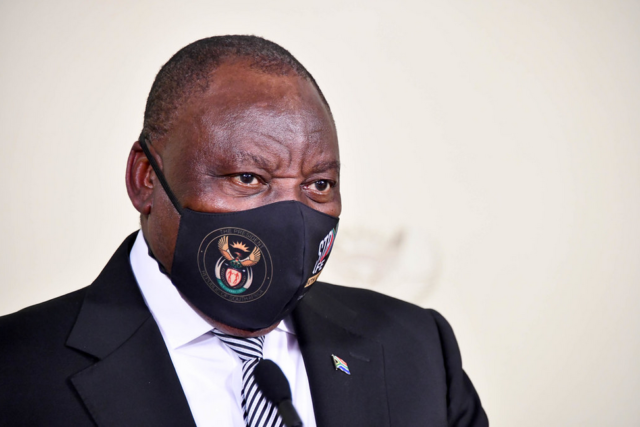
As a nation, let us continue to work together to ensure that we progress. The move to alert level 2 of the lockdown is not a ‘free for all.’ The rules on social distancing, mask wearing, social gatherings and international travel remain.
 
Our success rests on our ability to abide by these regulations and to ensure that we each behave carefully and responsibly.
 
Every time we are considering any form of non-essential activity, we should ask: what is the risk of infection to ourselves and to others? Where there is a risk, even a slight one, it is better not to do it.
 
Let us proceed, as ever, with caution. Let us keep each other safe.

#WomenofSU – Fighting For The Economic Rights Of Women

ROZANNE ENGEL

Dr Nthabiseng Moleko is used to wearing many hats. She is a lecturer and researcher at the University of Stellenbosch Business School, a poet, an author and serves as a commissioner on the Commission on Gender Equality.

Despite being a very busy woman, Moleko is on a mission to alleviate poverty and fight for the economic rights of women in South Africa. As part of South Africa’s Women’s Month celebrations, Moleko shares some insights on her academic journey and the importance of finding a research area that complements one’s passion.

Tell us more about your research.

My research is primarily focused on pension funds, savings and institutions in capital markets, with an emphasis on the implications of savings and capital markets for growth in the economy. The research I undertook sought to empirically investigate the effect of pension assets and their transmission to growth in the South African economy. I also undertook research looking at increasing the participation of women in the economy, with a focus on the sciences, technology, engineering and mathematics sphere, artisans and manufacturing. In addition, I assessed the monitoring tools in the national gender machinery. This was done for a South African Board for People Practices publication that focused on the role of women at work and in the economy.

Why or how did you become interested in this specific area of research?

When I first embarked on research, I identified a gap as a practitioner and realised that I needed to do investigations at a national level. The topic emanated from my own journey of having worked in an asset management company in charge of Africa’s biggest infrastructure fund in the pension fund management industry. I had an interest in how we could strengthen the linkages between financial markets, pension funds in particular, and national development goals. This included reducing poverty and increasing national productivity and economic output, using an African model for capital markets. Having worked in the private and public sector, I identified a gap in the research area of how pension funds could be used to advance national development in emerging markets, on which very little research had been done in South Africa. The other aspect of interest stemmed from my desire to see the poor economic outcomes for women addressed.

Why do you think this is such an important area of research for South African women?

The work I did for my doctoral thesis investigated the transmission of pension savings to growth. The relationship and co-integration between savings, bond and stock markets and growth, using empirical analysis to ascertain the relationships between variables, has a direct effect on livelihoods. Women can enter quantitative and statistical spaces where there is a paucity of work done, the message being that no matter how technical or complex, we too are able to get the work done! 

What would you consider the greatest impact of your research on women in the country?

The ability to inspire and enter the academic space as the first woman in this discipline is not only groundbreaking, but also truly life-changing, as you are able to find new ways to solve national problems, using research to innovate and think of solutions in the development finance discipline. Universities are critical enablers for producing knowledge and ideas that break new boundaries, produce solutions and can advise policymakers. If implemented, the policy recommendations emanating from my research would improve economic gains and yield growth outcomes that are needed in South Africa, directly improving the lives of women and those who are impoverished.

What would your message be for the next generation of women researchers?

Plan your academic journey and find yourself a research area that complements your passion, areas of interest and long-term goals so that you can merge your research with your post-research life, whether inside or outside academia. We are in need of solutions to the multiple problems and complex issues faced on the continent, be they economic, in healthcare, scientific, the built environment and all other spheres and disciplines. I am proud to be black, in academia, and in the quantitative and economic space, which is predominantly male-dominated. If doors could open for me, a girl from Umtata, it is possible for other girls too, no matter their background.

(SOURCE: Stellenbosch University)

Everyone In College Sports Is Miserable Right Now

AT THE END of a seven-day span of unprecedented tumult in college athletic history, I circled back with a prominent industry source who offered (unsolicited) this whopper quote to me last Saturday: “I think by the end of the week the fall sports will be postponed in all conferences.”

He was right, with one nine-figure exception. All NCAA fall sports championships have been postponed except for FBS football, which lost four conferences but still has six others inhabiting an eroding Football Island.

Said source, who works in one of the Stubborn Six leagues still planning to play, was surprised at where we stand. “After the Big Ten and Pac-12 canceled, I thought there would be a lot more pressure on us to follow suit.” Whatever pressure is out there has been withstood so far. But it’s not easy, because some of the pressure is still coming from within the guts of every single decision-maker.

That source, like the other two-dozen college administrators, coaches or athletes I’ve talked to this week, sounded conflicted. Nobody is sure what to do. There is no absolute conviction—not in postponing and not in proceeding. Every decision is accompanied by a twist of doubt about what is the right thing.

A shortened fall season with almost no fans and no true national championship, in the midst of a pandemic with no vaccine?

Yuck. An ersatz spring season that may or may not happen with a vaccine that may or may not happen and could negatively impact next season? Yuck.

“We don’t have good options,” that source said.

And thus, everyone in college sports is miserable right now.

Athletes are beyond tired of the uncertainty, and the lack of concrete answers from their university leaders. One Power 5 athletic director met with a group of athletes and said he could see the strain on their faces and hear it in their voices. (The mental health concerns are real, whether a season is being played or not being played.) A Group of Five AD apologized to his football team for the lack of leadership right now in college sports.

Coaches are frustrated, bewildered, angry, concerned and caught in the middle. The players below them want answers and are getting few good ones—and more than a few of them are going public with their unhappiness. The administrators above them are requiring rigorous team adherence to high health standards — to the extent that some head coaches are spending more time enforcing interpersonal distancing during practice than actually coaching. Many teams that went to great lengths to reduce virus spread still had their seasons canceled this week.

Campus and conference administrators are fried from the endless Zoom calls and other meetings to discuss every difficult aspect of college sports during a pandemic. One AD said he’s spending time at the end of every day sitting alone in his backyard staring into the distance, a brief reprieve from the computer screen and the pressure of trying to make the best decisions amid bad circumstances.

These are all smart people, and the vast majority of them are well-meaning people, too. They just don’t know with any clarity what to do. Mental exhaustion is the prevailing status update.

Anyone saying this is simple—to play or not to play—is an idiot or a liar or incapable of thinking beyond their own tiny worldview. Don’t be scared is not a strategy for dealing with something that has killed more than 167,000 Americans and infected more than 5 million. Shut everything down is not a realistic long-term answer, either.

So there should be some empathy for all stakeholders in college athletics. We are averaging more than 1,000 COVID-19 deaths per day in America right now—but almost none of them are young athletes. Many people without an interest in college sports cannot believe anyone is trying to play right now—but many people on the inside very much want to play. There are a lot more important issues in the world—but if you’re watching revenues tank while trying to lead a $100 million operation, that’s a pretty big issue in your own world.

All that said, this has been a pretty abysmal performance from college athletics as a whole.

Many administrators proclaimed back in the spring that they had dozens of models for how to play a football season. Tellingly, they never went into detail about what those models were—perhaps because it was a hollow boast. They dawdled, didn’t make decisions, didn’t focus on much of anything beyond hoping it was going to turn out O.K. Hope is a lousy strategy.

Releasing schedules one week and canceling the season the next was not a great idea. Coaches saying they were going to rely on medical experts, then wheeling around and publicly lobbying to “fight for their players” to play was either inconsistent or disingenuous. (And also an obvious signal to recruits.)

Nobody, at any level, has been willing to lay out numbers—percentages of positive tests, or whatever the metric would be—that would necessitate a team shutdown.

The lack of leadership goes to what should be the top, the NCAA, but that isn’t really even the top in the case of big-time football. Which is part of the problem. Still, the NCAA managed to get some information out Thursday that some in the Stubborn Six conferences unhappily saw as a means of pressuring them not to play.

NCAA medical experts held a media call in which Dr. Carlos del Rio, an associate dean at Emory University in Atlanta, delivered the money quote: “I mean, I feel like the Titanic. We have hit the iceberg and we are trying to make decisions on what time should we have the band play?”

As of Friday afternoon, the Stubborn Six band is playing on. They’ve made it this far, which is a surprise to some. How much longer they go, we don’t know, but the next iceberg is dead ahead.

Full student bodies are reporting back to campuses nationwide right now.

(SOURCE: SPORTS ILLUSTRATED)

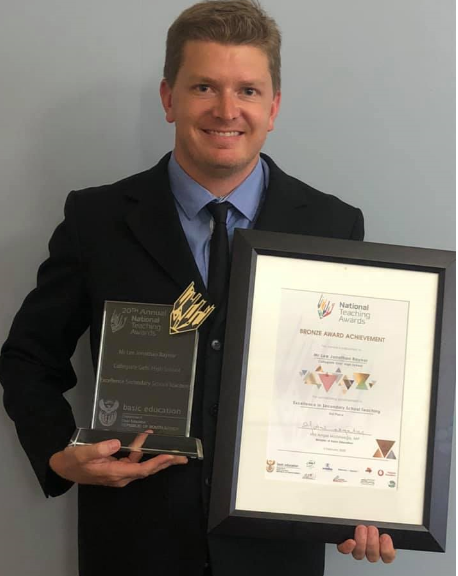
Teacher Of The Week: Collegiate Girls’ High Educator Vying For Title Of Best Teacher In Africa

A Port Elizabeth teacher is flying Nelson Mandela Bay’s flag high after being selected as one of only two teachers to represent SA at the African Union in Ethiopia in September, vying for the title of best teacher in Africa and the $10,000 [R167,000] which comes with it.

Lee Raynor presented at the national leg of the National Teaching Awards competition earlier in 2020 and was subsequently chosen by the department of basic education to be one of two teachers to represent SA, with the other teacher hailing from Limpopo.

The Collegiate Girls’ High history teacher, water polo and hockey coach won the Excellence in Secondary School Teaching award in the Eastern Cape leg of the rigorous competition in 2019, which honours teachers who go out of their way to improve education in the province.

The former Oakhill School and Knysna High teacher said he was grateful for the opportunity.

“Just to be nominated is such a highlight for me [as] I believe that teachers all over SA, and the world for that matter, are doing our best to educate the next generation.”

The 35-year-old said he hoped his nomination would inspire other teachers to continue to grow and to develop their teaching skills.

“I also hope that it will motivate some more of the next generation to become teachers, as teaching is such a wonderful opportunity to influence others.”

He said his lucky charm had been working alongside some incredible teachers throughout his career, who had inspired, motivated and pushed him to continue to improve his teaching.

“I work very closely with and teach alongside Mrs Heather Shaw at Collegiate and I am so grateful for her flexibility in putting up with my nonsense sometimes and being prepared to try my sometimes crazy ideas if they will benefit the girls of the college.

“I think the best teachers are those who willingly share their ideas, plans and tools with their colleagues.

“I have found that whenever I have done this, I have learnt so much in return and gained some incredible ideas from other teachers.”

The father of three said among his adventurous ideas was making notes that had QR code [for storing URLs] scanners to allow pupils to watch informative videos using a smartphone from the comfort of their own homes.

“Don’t be afraid to try new ideas, new teaching strategies, new technologies in class. Even if they don’t work out, at least you are growing as a teacher and your classroom will not become stale.”

On teaching during the pandemic, Raynor said teachers were far more stressed now than they usually were.

“As our schools reopen, children from all walks of life, all different home environments and so on arrive at school, a school which unfortunately is sometimes the only stable area of the child’s life.

“The children and society at large need us teachers now more than ever. It is a time for teachers to be strong and to be brave, to stand up and be counted. However, we also need to balance that with wisdom. If we follow the precautions and uphold the standards we will get through this together.

“This year is going to be a long and an even more tiring than usual one for all teachers, but each of us can play a small part in helping the recovery effort in this wonderful country we get to call home, even if it is just a generous smile at a child or a gracious word to a colleague feeling overwhelmed,” he said.

(SOURCE: DAILY DISPATCH)

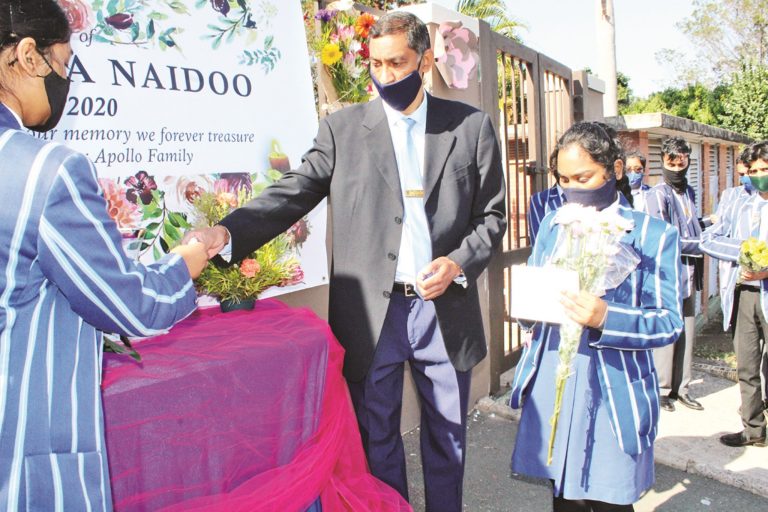
Chatsworth School Honours Popular Teacher Who Succumbed To COVID-19

THE coronavirus pandemic continues to claim lives in Chatsworth- the country’s largest Indian township.

The statistics include the death of a couple- a female teacher died soon after her husband – and also many other proactive residents- among them, doctors, businessmen and women, pastors and educationist-turned-environmentalist campaigner, HB Singh.

These men and women lost their lives amid the worst socio economic impact in 50 years. The latest COVID-19 victim was Suraya Naidoo of Apollo Secondary.

The school held a memorial service last Thursday to pay homage to the dedicated and seasoned teacher. The South African flag was hoisted and pupils sang the national anthem in honour of Naidoo.

Paying tribute to Naidoo, who was on ventilation in hospital after testing positive for the virus, principal of the school, Selvan Moodley expressed his shock and sadness over her untimely death.

Naidoo, 57, had been fighting for her life since she and her husband tested positive for the virus. She was cremated on Wednesday.

Moodley said, “Mrs Suraya Naidoo joined the staff of Apollo Secondary School in 1990 and spent almost 31 years teaching at the school until her untimely death. She taught geography and tourism to grade 10 to 12 pupils.”

He shared that it is difficult to quantify the loss that is felt at Apollo Secondary.

“Suraya was an icon, who inspired everyone around her. She has touched the lives of generations of pupils and staff members alike. She contributed immensely towards shaping the rich heritage that Apollo is renowned for. Her dedication, passion, loyalty and consummate professionalism are some of the qualities that defined her. While we grieve the loss of our beloved teacher and colleague, we must also celebrate the life of this remarkable individual,” said Moodley.

“From our despair, we should take comfort knowing that Apollo was blessed to have this awesome lady at this institution for 31 years. Of the thousands of schools that Suraya could have been placed at, through divine intervention, we had the privilege of sharing her life with us. For that, we are eternally blessed. Rest in peace, our dear sister.”

Many residents, at the same time, are defiantly challenging this deadly disease with impunity and bravado by refusing to wear masks, not sanitizing their hands and not adhering to the call for social distancing as health minister, Dr Zweli Lawrence Mkhize warned of a second wave of coronavirus cases during a visit to ‘infection-high’ KwaZulu Natal, last week.

Experts from RK Khan Hospital continue to warn that a cure for the latest outbreak of a global virus is some months away and people have to abide by social distancing and personal protective equipment protocols.

(SOURCE: Chatsworth Rising Sun)

USA: Thousands Of Students, Staff Sent Home Nationwide As COVID Snarls School Reopenings

0

THE United States attempt to return children to the classroom this fall has turned into a slow-motion train wreck, with at least 2,400 students and staff either infected with COVID-19 or self-isolating because of exposure, and the vast majority of large school districts opting to go online this summer amid rising cases of the virus.

President Donald Trump and Education Secretary Betsy DeVos have mostly waved off the situation unraveling this week in states like Georgia, Alabama, Indiana and Tennessee, where schools opened their doors after a months-long hiatus due to the pandemic — only to quickly backtrack as soon as infections popped back up.

Trump and DeVos have demanded that schools stay open full-time and threatened to pull federal funding if the institutions fail to do so. At a White House event this week, DeVos made no mention of the crisis in Georgia and elsewhere and said families shouldn’t be held “captive to other people’s fears or agendas.”

DeVos has “consistently said the decision to reopen should be made at the local level, and some schools may need to temporarily remain virtual based on local public health situation,” Angela Morabito, a spokesperson for the Education Department, told ABC News late Thursday in an emailed response to questions about the recent school closures.

“She’s also, for the last 30 years maintained that parents and families need options when it comes to the child’s education and that has never been more evident than now,” Morabito wrote. “Parents need to have access to safe, in-person options as well as distant or remote learning options if that is what is best for their family. The key word here is safe.”

But what is “safe” is not at all clear to most school officials and at the heart of a bitter debate unfolding just months ahead of the presidential election.

There is universal agreement that in-person instruction is superior to online classes and particularly vital for at-risk students. But local officials warn of complicating factors: Crowded hallways, opposition to masks, dilapidated buildings with windows sealed shut and reluctant staff.

“There was no way for us to socially distance our children and follow other guidelines” with in-person instruction five days a week, said Helena Miller, chair of the Rock Hill school board in the red state of South Carolina.

Schools in neighboring states this week seemed to make the same point as they struggled to stay open within days or weeks of reopening — many students without masks and walking in crowded hallways. Georgia’s Cherokee County — which was hit the hardest — reported that nearly 1,200 students and staff were self-isolating after known exposures.

There were other schools too. A community college in Mississippi told 300 of its students to quarantine after nine positive cases were confirmed, along with students in Gulfport and Corinth districts. Indiana schools were also hit with an estimated 500 students in quarantine across several districts, as administrators expressed concern that there would not be enough staff available to continue instruction.

“Unfortunately, we are in a situation where parents seem to be sending their child/children to school even when they are symptomatic or possibly even when they, as parents, have been tested and are awaiting the results, later to find out they are positive,” wrote Reece Mann, the superintendent of Delaware Community School Corporation in Muncie, Indiana, in an email to parents, according to The Associated Press.

There’s no federal standard on when it’s considered safe to reopen schools, although the White House and the Centers for Disease Control and Prevention have released various documents suggesting “phased” reopenings and advising that kids and staff wear masks and keep students six feet apart.

As a result, most schools have become hyper-focused on their own local virus data, with some looking to the World Health Organization’s recommendation that fewer than 5% of an area’s daily tests must turn out positive for 14 days before schools in the area can reopen. As of Friday, only 17 states meet that criteria, according to a tracker by Johns Hopkins University.

“We pay absolutely no attention to what the White House has to say on this and neither do most big city school districts,” said Michael Casserly, the executive director of the Council of Great City Schools, a coalition of the nation’s largest urban public school systems.

Dr. Anthony Fauci, the nation’s top infectious disease expert, suggested communities look at the number of new COVID-19 cases in a given week for every 100,000 people. If the rise in new cases is higher than 10%, it should be cause for serious concern.

If “you’re in a red zone, I think you really better be careful,” he said Thursday in a livestreamed discussion sponsored by Walter Reed National Military Medical Center.

Miller, in South Carolina, said her board anguished for months before finally deciding on offering parents a “hybrid” option, starting Sept. 8. The option allows parents to choose in-person instruction for their kids two days a week — a move that cuts down the number of kids in a school at one time to allow for social distancing.

The hybrid model has been sharply criticized by DeVos when it was initially adopted earlier this summer by a Virginia school district. At the same time, DeVos has argued that a national plan for schools isn’t needed because schools are run by local officials.

“There’s not a national superintendent, nor should there be, therefore there’s not a national plan for reopening,” she said last month.

Many parents agree with DeVos and want to at least try to move ahead with in-person classes as much as possible.

“I definitely still say, ‘Give this a shot.’ I think there is a way to do this in person,” Carlo Wheaton, the parent of a junior at Woodstock High School in Georgia, told WSB-TV in Atlanta after the school announced it had to close temporarily after 14 people tested positive for the virus and 15 more were waiting for their test results.

Dan Domenech, executive director of AASA, the School Superintendents Association, said one solution is money. His group estimates that schools need $490 per student — an estimated $200 billion nationwide for the 54 million students attending school in the U.S. — to allow for schools to reopen safely.

The money could be used to improve ventilation and expand classrooms to allow instructors to teach their students while socially distanced.

Trump announced Wednesday that he plans to provide 125 million masks for students. Domenech said he’d take it but it’s a drop in the bucket for schools.

“We see what’s happening in Washington: nothing,” Domench said.

Miller said at her local school board presidential politics and White House events aren’t part of the equation, and that she’s leaning on her local health department and governor’s office to figure out what to do when there is no playbook.

“There are no right answers,” she said.

(SOURCE: ABCNEWS)

COVID-19: This Is What Worries Young People The Most

0

IT’S often said viruses don’t discriminate. But how the COVID-19 pandemic affects you varies greatly depending on many factors – in particular, when you were born. The young may be far less likely to become seriously ill or die, but that doesn’t make them immune from the damaging consequences of this unprecedented disease.

Their greatest concerns are the toll the pandemic is taking on their mental health, employment prospects and education, according to a global survey of 15- to 24-year-olds conducted by the OECD.

The biggest concerns among young people.

One in four people will experience mental illness in their lives, costing the global economy an estimated $6 trillion by 2030.

Mental ill-health is the leading cause of disability and poor life outcomes in young people aged 10–24 years, contributing up to 45% of the overall burden of disease in this age-group. Yet globally, young people have the worst access to youth mental health care within the lifespan and across all the stages of illness (particularly during the early stages).

In response, the Forum has launched a global dialogue series to discuss the ideas, tools and architecture in which public and private stakeholders can build an ecosystem for health promotion and disease management on mental health.

One of the current key priorities is to support global efforts toward mental health outcomes – promoting key recommendations toward achieving the global targets on mental health, such as the WHO Knowledge-Action-Portal and the Countdown Global Mental Health

Predictions of an upcoming mental health crisis have been made since the start of the pandemic, with so many people cut off from their usual support networks just as they experience greater stress and anxiety. Eighty-percent of respondents to a survey of young people in the UK for the mental health charity Young Minds said coronavirus had made their mental health worse. Isolation and loneliness have been exacerbated by school closures and restrictions on socializing during lockdowns. At the same time, overwhelmed health systems have struggled to maintain mental health services.

But while mental health was the primary worry overall, the survey also demonstrates significant differences in the concerns of young people living in OECD countries, which tend to be wealthier, and those in non-OECD countries.

Outside the OECD, employment and disposable income were the leading concerns. Even before the pandemic, young people were three times more likely to be unemployed, with one in five not in education, employment or training (NEET). Those with jobs were more likely to be employed in the gig economy – as of 2016, three in four young workers were in informal employment, without the protections enjoyed by older workers in more secure jobs.

Since the pandemic struck, many of those jobs have been lost – perhaps for good. Younger people in Europe are twice as likely to be in jobs at risk as older workers. Some economists estimate two out of every five jobs lost will never return.

The first global pandemic in more than 100 years, COVID-19 has spread throughout the world at an unprecedented speed. At the time of writing, 4.5 million cases have been confirmed and more than 300,000 people have died due to the virus.

As countries seek to recover, some of the more long-term economic, business, environmental, societal and technological challenges and opportunities are just beginning to become visible.

To help all stakeholders – communities, governments, businesses and individuals understand the emerging risks and follow-on effects generated by the impact of the coronavirus pandemic, the World Economic Forum, in collaboration with Marsh and McLennan and Zurich Insurance Group, has launched its COVID-19 Risks Outlook: A Preliminary Mapping and its Implications – a companion for decision-makers, building on the Forum’s annual Global Risks Report.

The report reveals that the economic impact of COVID-19 is dominating companies’ risks perceptions.

Companies are invited to join the Forum’s work to help manage the identified emerging risks of COVID-19 across industries to shape a better future. Read the full COVID-19 Risks Outlook: A Preliminary Mapping and its Implications report here, and our impact story with further information.

A hostile job market, combined with the disruptions to education that have impacted more than 1 billion students, could cause long-term damage to the prospects of the young. The World Bank has warned that the pandemic could cost this generation $10 trillion in lost income over their lifetimes without determined and coordinated action from governments.

(SOURCE: World Economic Forum)

Science & Technology: Digital Transformation’s Impact on Businesses Within South Africa

DIGITAL transformation is changing the ways businesses operate throughout the world. New technologies like cloud computing, artificial intelligence (AI), machine learning, and predictive analytics, already have had a profound impact on the world’s economies and continue to disrupt industries.

Recognising this potential, government strategies today are emphasizing the role of digital in accelerating economic diversification, promoting sustainability and ensuring citizen happiness.

Digitalization has been identified as a pillar that will support the future digital economies on the continent.

By placing new digital and ICT transformation programs at the heart of their national plans and through collaborations with leaders and entrepreneurs committed to building a better future, governments across the region are already leading the way in securing a viable future for their citizens while also raising their national competitiveness profile at a global level.

Within South Africa, The National Development Plan 2030 (NDP) published in 2012 emphasizes how ICT will underpin the development of a connected information society and a vibrant knowledge economy that is more inclusive and prosperous.

Similarly, the Government of Morocco introduced the Morocco Digital 2020 strategy, a set of policies and reforms which promote the effective use of and access to technology in various sectors to position the country as a digital economy.

Nigeria has also taken significant steps to drive economic transformation, sustainability and future skills development through technology.

Businesses reaping the benefits of 4IR

Digitisation spurs the development of new industries as in the case of e-commerce, mobile financial services, IoT, and cloud computing.

These contribute to national GDP in multiple ways while also promoting growth of allied industries such as logistics, infrastructure, and payments. These opportunities are not only limited to the ICT industry, but also disrupts traditional industries to unlock speed, lower costs, and ensure higher quality.

While many businesses are fuelled by competition and adopting new and disrupted forms of technology, many organisations are still using legacy IT and have shied away from digital transformation. Digital transformation essentially involves a fundamental change in how an enterprise uses its technology, its workforce and business processes to improve its performance and value to customers. 

While businesses can gain massive value opportunities in these areas, companies undertaking these efforts quickly learn that the technology in digital transformation is often the easiest part of the change. Development gains from digital transformation are not automatic and can result in new divides and widen inequalities.

Building internet infrastructure and digital skills

A major obstacle to the development of internet infrastructure within Africa is a lack of experienced network engineers. Without these engineers, national internet investment, policy and regulatory decisions may lack the technical foundation that will ensure an open, affordable, scalable internet.

If South Africa had the required mass of network engineers who are able to shape the future of network infrastructure at both a local and national level, businesses and organisations would be able to unlock their full potential and fully utilize Fourth Industrial Revolution (4IR) technologies, like the Internet of Things (IoT), artificial intelligence, blockchain technology and big data.

Knowledge building and future-ready curricula 

Apart from access to affordable connectivity and devices, there is also a need to digitally upskill people to operate or work with the advanced and/or emerging technology in 4IR.

Investments in human development and digital skills are necessary to build a pipeline of future talent that can embrace this dynamic and increasingly digitised environment.

This will require a massive educational overhaul that addresses basic education backlogs at all levels, from basic to tertiary education.

The World Economic Forum has highlighted the importance of African educators to design future-ready curricula that accelerate the acquisition of digital and STEM skills to match the way people will work.

African governments, with the help of private sector stakeholders, have an opportunity to develop tailored approaches to understanding the region’s evolving skills base and emerging jobs scenarios. The need for schooling and re-tooling of the African labour force to find occupations less susceptible to automation, needs more recognition.

To take advantage of what 4IR has to offer business, governments must be able to develop, attract and retain the skills and capabilities.

Ministries of Education need to re-think how skills can be obtained.

Governments and communities need to take a fresh look at how they develop emerging technology skills and knowledge.

Where SA can grow 

South Africa can become a technology hub within the region, by applying new technologies in various sectors where it has a traditional advantage over its neighbours.

These include mining, agriculture and financial services.

A successful example of this would be South Africa’s Mining Sector, which has been transformed with the incorporation of sensors and devices into equipment and machinery within an IoT network allowing for the speedier analysis of data and increased efficiency.

Winning in the digital economy requires a combination of technical understanding, pioneering leadership, and a sense of vision and determination to encourage an ecosystem of innovation. Leaders who engage with these possibilities today could be reshaping the economy of 2030 for the greater good.

(SOURCE: ITNEWSAFRICA)

Lockdown Level 2: Too Little Too Late Mr President, Says Opposition Parties

0

CHARLES MOLELE

UNDER immense pressure to reopen the economy to avoid further economic damage, President Cyril Ramaphosa announced on Saturday night that his government would ease the hard lockdown to alert Level 2 as from midnight on Monday.

This follows consultations with provincial and local government, including sound advice from health experts and scientists, he said.

In a televised address, Ramaphosa said government would now lift the ban on alcohol and tobacco products and further allow restaurants and taverns across South Africa to return to normal business, subject to strict hygiene regulations.

While movement around provinces would be allowed under Level 2, restrictions on international travel remained in place, he said.

Ramaphosa said it has been an immensely difficult five months, and the pandemic has taken a heavy toll – on the health of South Africans, on families and communities, on the public health system, on the economy and on people’s everyday lives.

He said the country has made progress in the fight against COVID-19 and that all indications are that South Africa had reached the peak of COVID-19 infections.

He said a fall in the infection rates, as well as people recovering, were ‘significantly reducing the pressure on our health facilities’, but he cautioned that cases could easily surge if people fail to maintain vigilance.

Over the last three weeks, said Ramaphosa, the number of new confirmed cases has dropped from a peak of over 12,000 a day to an average over the past week of around 5,000 a day.

“The recovery rate from coronavirus has risen from 48% at the time of my last address and now stands at 80%,” he said.

“The cumulative number of cases in our country remains extremely high at 583,653. However, the number of active cases is declining every day, and now stands at around 105,000. The virus appears to have peaked in several provinces, including the Western Cape, Eastern Cape, Gauteng and possibly in KwaZulu-Natal.”

DA interim leader John Steenhuisen slammed Ramaphosa’s address, saying the damage to the economy has been done and millions of jobs have already been lost.

He said Ramaphosa’s address was nothing but a capitulation to the real power in the ANC, who desperately wanted to cling to the “new normal” they have created for SA these past 5 months.

The decision to extend the State of Disaster by must be regarded with the utmost suspicion, he said.

“The only thing the lockdown achieved was the devastation of our economy and the loss of millions of jobs. And that is what President Ramaphosa and his government must take responsibility for,” said Ramaphosa.

“The President admitted this evening that the models used to justify shutting down the economy were wrong. This is not something he can casually mention and walk away from. If they paralysed our economy for five months based on wrong information, heads must roll right at the top.”

Ernst Roets, Head of Policy and Action at AfriForum, said corruption, in particular theft of money earmarked for relief because of the COVID-19 pandemic, has not been dealt with.

In a statement, AfriForum said the President had been warned by the country and the world’s experts to act differently but he “succumbed to pressure from his corrupt comrades and could not resist the temptation to hold on to power in an irrational manner”.

“Now to thank the president for relaxing the lockdown measures would be like a prisoner thanking his kidnapper when he is set free. We are not suffering from Stockholm syndrome,” said Roets.

He said in the coming weeks, AfriForum will publish a plan containing practical steps the government could take to empower the private sector to repair the damage caused by the lockdown.

He said the organisation is also working on a comprehensive strategy for self-management amounting to minorities assuming responsibility for their own future and taking practical action to acquire greater control over their own affairs.

The Economic Freedom Fighters (EFF), on the other hand, said in a statement Saturday that they rejected the relaxation of lockdown regulations in the midst of the Coronavirus pandemic, and warned that it was a mistake that could lead to a great loss of life.

The EFF said that “Cyril Ramaphosa in collaboration with the Health Department has conspired to manipulate” the data to “rationalise the reopening of the economy at the cost of lives”.

Political analyst William Mervyn-Gumede slammed Ramaphosa’s address, saying adopting a one-size fits all approach to the fight against COVID-19 pandemic was counter-productive.

Gumede said vulnerable areas, or provinces identified as epicentres of coronavirus such as Western Cape, KwaZulu Natal, Eastern Cape and Gauteng, should have been kept under hard lockdown o curb the spread of the pandemic.

He also slammed government for failing to properly use the R500 billion loan guarantee scheme to assist small businesses, hardest hit by the pandemic.

In his speech, Ramaphosa argued that on Thursday, he convened all the social partners in NEDLAC, namely government, labour, business and community.

“We are now working together on an urgent economic recovery programme that places the protection and creation of employment at its centre,” he said.

“We will be making announcements on the outcome of this work in the next few weeks. We will use this moment not only to return South Africa to where it was before, but to transform our country to a more equal, more just and more dynamic economy.”

(COMPILED BY INSIDE EDUCATION STAFF)

CORONA UPDATE| President Cyril Ramaphosa To Address The Nation Tonight

0

PRESIDENT Cyril Ramaphosa is expected to address the nation on Saturday at 8pm on developments around the country’s risk-adjusted strategy to manage the spread of COVID-19.

His address follows meetings with the National Coronavirus Command Council, the President’s Coordinating Council and Cabinet.

The address will be broadcast live on television and radio and will be streamed live on a range of online platforms.