Home Blog Page 386

OPINION: Professorships Must Be Earned

0

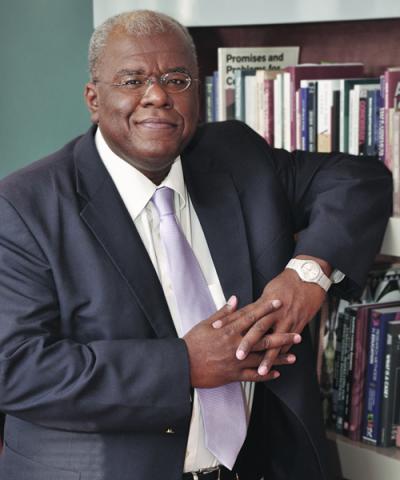
JONATHAN JANSEN

THERE is a fraud we seldom talk about. It concerns the way in which the title “professor” is attached to people without any claim on this highest achievement in the academic profession.

Yes, it is an achievement. It starts with the hard work of obtaining a research or professional degree called a doctorate (mainly a PhD).

That itself takes years of study, often combining field research in distant places and difficult theoretical labour with countless revisions and then a searching final examination involving four or more assessors from around the world.

You don’t just collect the PhD.

But that is only the start, for then you have to produce years of scholarship involving peer-reviewed articles in leading journals as well as books (in the non-science fields).

That is not enough, though, for you then have to successfully supervise masters and especially doctoral students as part of your portfolio of academic works.

That collection of scholarly works, including evidence of outstanding teaching and approval of your peers, qualifies you to be considered an associate professor and, with more research of international standard, you become a candidate for (full) professor.

Not in South Africa.

The number of people appointed to professorship these days amounts to academic fraud.

Sometimes it is an effort to increase the number of black professors because of political pressure; even some of our top universities are beginning to fold under this pressure.

By the way, the Afrikaans universities once did the same thing under the pressure of Afrikaner nationalism.

I know, because as dean and as vice-chancellor I had to deal with the consequences of such fraud perpetrated over many years.

Now, black nationalists (coloured, Indian, African) have been doing exactly the same thing for the same reasons.

Strangely, some of the main beneficiaries of this complete disregard for academic standards are white colleagues with honours and masters degrees but with activist credentials.

The field of education is one of the main disaster areas for such promotion.

In a strange way, this fraudulent practice reinforces the poor image of education as a profession and parallels the decline in scholastic standards in schools and universities.

Such contempt for standards in higher education is something one sees also in senior appointments in the ministry and Department of Higher Education.

Think in recent years of the people charged with senior responsibility for higher education – men and women with no experience of higher education as senior academics or high-level administrators.

These are the people who must talk to vice-chancellors about credentialling, quality assurance and academic planning.

But these are political operators with no understanding of the complexities of higher education.

It’s like appointing a minister of health with an engineering degree.

The message? Competence does not matter and standards are irrelevant.

Yes, there are honorary professorships, but these are almost always senior academics who have already attained the position of professor.

Then there is the visiting professor (which, personally, I disapprove of) for an accomplished professional from the corporate world who delivers teaching during a semester and then relinquishes the temporary title.

There is also something called adjunct professor, which applies to high accomplished scholars who meet some of the criteria above (such as the PhD and publications) but whose real achievements have been in a clinical field (such as surgery) or a professional vocation such as journalism or policy analysis; even then, in a good university there are strict peer review criteria for such appointments. Those are exceptions.

Most professorships are achievements at the pinnacle of a career, and we must defend that standard.

When somebody shows up on a stage or on television and is introduced as “professor”, somebody needs to ask: what exactly do you profess?

That would put the skids under these pretenders.

Strangely, we are less tolerant as a society of people who fraudulently use the title of “doctor”.

Lives have been ruined by fake doctors, but not by fake professors.

True, in America, a professor is usually an academic appointment at a university, but few get to that point at a serious institution without satisfying several of the criteria mentioned earlier.

But that is not a South African tradition, where a junior lecturer becomes a lecturer, then senior lecturer and then an “Aspro” (associate professor) and then “Prof”.

That said, people who insist on being called “professor” are usually insecure.

A true professor of any standing would allow her or his academic work to speak for itself; the considerable and substantive achievements of such a person would confirm the gravitas of the position.

But if we continue to hand out professorships like toffee apples, we should not expect society to value our universities and those who strive within them.

(SOURCE: HERALDLIVE)

Africa: Time to Face It! The Old Education System Is Obsolete and Irrelevant

0

WALE AKINYEMI

WITH a lot of disruption taking place, what is the workplace of the future going to look like?

Different conversations are being had on certificates versus capabilities. What is the future of the university degree as we know it? What of work hours in a world where people are more focused on deliverables than on time spent in the office? What of job titles in a world where people have opted for titles such as director of first impressions instead of a receptionist, director of chaos instead of a service technician, and even a chief getting-stuff -done officer instead of CEO?

The launch of the Google career certificate programme could be a major nail in the coffin of conventional education and college degrees. It is basically a series of short-term trainings in specific skills to help people get high paying jobs. This bypasses the entire college system and could be one of the greatest threats to an outdated education system.

Fatima Al Fihiri, the woman recognised by the Guinness Book of World Records as the founder of the world’s first degree-awarding university in 859AD (the Al Kaourine University in Fez, Morocco) was not a graduate. Neither were the instructors in many of the early institutions. The primary way of passing knowledge down was through mentorship and apprenticeship.

If this was the original model, where then did the present variety start, where people whose only knowledge of a subject is theoretical are charged with training others? Ancient sages documented their knowledge in books, which were intended to work with — not replace — mentorship and apprenticeship.

Books, unfortunately, gave rise to the intellectuals veering away from philosophical discussion and thought leadership to other disciplines for which they had no practical experience. This is why it is possible to have a business instructor who has never started a business before training people for business.

In this dynamic era, knowledge is being increased daily. When society grows faster than academia, gaps will emerge. The content, context and delivery of what is being taught are problems making the knowledge time-barred. The golden age of the industrial era has been overtaken by the information era.

The world is filled with people who have become experts through watching videos on social media platforms. This is the future and it is already here.

In the past half-century, everything has changed except the classroom and concept of schooling. This is why many of the innovators of today had to drop out of a system that was steeped in traditions of the past.

A system that even regulates how fast you are permitted to learn can’t be trusted to take us into the future. Things that can be learned in three years of apprenticeship take many years of different levels of education. This will not be sustainable with the generation raised on the Internet. That teacher still glorifying their 10-year-old degree, is truly in a bad place. Many studies show that a degree’s relevance does not go beyond five years.

This is the thinking behind the Street University (www.thestreetuniversity.com) where learners and mentors can meet without the containment of the middleman – the school.

(SOURCE: EAST AFRICAN)

EFF Calls Off Protests, Clicks To Award Scholarships To Rural Girls Orphaned By Aids

0

CHARLES MOLELE

Clicks has agreed to donate over 50 000 sanitary towels and award five scholarships to black female students to pursue pharmaceutical qualifications in 2021.

This comes after a ‘robust’ and ‘constructive’ meeting with members of the EFF on Thursday.

Clicks, South Africa’s leading pharmacy, health and beauty retailer, agreed with EFF leaders that the hair advertisement posted on its social media was offensive and racist.

In a joint statement, Clicks expressed its remorse to all South Africans, black women in particular, for the racist Tresemmé advert it published on its websites.

The EFF said it had made it clear during the constructive and robust discussion that an apology alone was not enough.

“The EFF made it clear that the days of apologies and sorry are over — and that there must be consequences for racism. In light of the above, the EFF and Clicks have put the matter in question to rest. The EFF calls off protest action at all Clicks stores with immediate effect. Clicks can now resume normal operations,” the party said in a statement.

Following the meeting, the EFF and Clicks agreed on the following:

  • Clicks expresses its remorse to all South Africans, black women in particular, for the racist Tresemme SA advert it published on the website;
  • Clicks will withdraw all Tresemme SA products from all its stores and replace them with locally produced products;
  • Clicks will also donate a minimum of 50 00 sanitary towels rural and informal settlements identified by the EFF;
  • Clicks will award a scholarship to five students to pursue pharmaceutical qualifications in the next academic year (2021). All five must be black, rural, African female and orphaned by HIV and Aids;
  • The EFF will work with law enforcement agencies to ensure that agent provocateurs involved in the vandalism of Clicks stores are brought to book.

(COMPILED BY INSIDE POLITICS STAFF)

If Universities Won’t Prepare Africa’s Young For The Future, Afia Amanfo’s Studentshub Will

WHILE teaching high school students in a rural community in Ghana, Afia Bobia Amanfo came into a deeper realisation of the failings of her country’s educational system. It needed a curriculum overhaul, and of course, more funding. But of greater concern to her was the fact that students were being prepared to take up non-existent white collar jobs after school.

As one not inclined to waiting on the government to solve all of the country’s socioeconomic and systemic shortcomings, Amanfo believed strongly that the students could use some role models: people who looked like them, possibly intimate with their struggles and who could pass on practical knowledge and guidance on career development and success. 

“By providing a little mentorship to these students, I could see how a lot of them could develop bigger dreams and actually make something amazing out of their lives,” she says.

“That really inspired me to start Studentshub Ghana (Studentshubgh).”

Amanfo’s education lies in the social sciences but startups and entrepreneurship, she was enthusiastic about. There was also her passion for education and she had envisioned finding more ways to contribute to the sector more sustainably. Technology was never in the cards regarding this path. 

Amanfo says the technology part was accidental. Shortly after launch, she had to move to France and was seeking ways to keep the organisation running remotely. At this time, activities were physically taking place in Ghana.

“I learnt how to develop a website on my own,” she says, and quickly learnt how to match mentors to mentees as well as organise her team from France. 

The team comprises her partner, Melinda Akoto, whom she met through a group of entrepreneurs and describes as very dedicated partner and totally sold on the vision, two staff members who were employed after going through one of the programs as well as over 30 volunteer staff. 

Studentshubgh is a digital platform connecting young students with mentors, opportunities, and the training they need to build successful careers across various fields. The platform is targeted at university students who demonstrate the willingness to learn and have access to the internet which she agrees disenfranchises a large percentage of this demography. 

It caters to the needs of these students through two main broad components: trainings/mentorships, and educational resources including blog posts, articles etcetera. 

The organisation has four training programs: the flagship African Future Leaders Fellowship (AFLF) which, in its third year, receives applications from students in more than 24 African countries; Study Abroad program for students who want to continue schooling internationally and the Career Development program which trains students from non-tech backgrounds on digital skills that will be useful to them while building their careers. 

“Students in social sciences or the arts are often lost in the tech department,” Amanfo says.

“They do not know the tech skills that are really important to them.” 

The AFLF program is run annually, and this year, from over 2,000 applications, only 50 students were selected to participate. The cohort size is small, Amanfo explains, to allow for close interaction between facilitators/mentors and students. During the 8-week cohort, students undergo a 6-module course program where they learn various concepts including purpose and vision building, career development, entrepreneurship, and financial literacy. These, the program believes, will give students a holistic indoctrination of what it takes to build a career or a business after school. 

“The idea of the program is to be very practical and help them develop toolkits that they can use afterwards, “ she says.

“They develop a career toolkit, a 5-6 year financial plan, they work in groups to ideate on some challenges their countries face and undergo digital skills training.”

The modules are run by facilitators who have frequent discussions and interactive sessions with the students. During the career development module, they work one-on-one with mentors to develop their toolkits among other things. 

AFLF is free to attend while the other programmes are paid for. Amanfo and her partner started with a lot of self funding and small grants are also coming in handy. However, after participating in an incubator programme earlier in the year at Billions for Bridges where she now works as a business development manager, Amanfo and her team are restructuring the hub to drive more revenue growth to become more sustainable. 

The coronavirus pandemic has brought on some urgency around the work Studentshubgh does. Like many African countries, Ghana was unprepared to switch academic programmes online and adoption was somewhat slow in the early months of the lockdown and school closures. Asides students who are taking final year examinations, schools remain closed in Ghana. 

This did accelerate the opportunity to reach more students and Amanfo says the period has also presented the chance to rethink, redesign and prepare the organisation for the post-pandemic era.  

With roles that bring together her passions in entrepreneurship and education, technology has just become this very important vehicle through which they are being implemented.

“I feel really lucky that I get to do the kind of work which combines all my passions,” she says.

“I feel really lucky to do what I do and there’s so much more that we are preparing ourselves to do.”

Amanfo admits that she was slow to get into entrepreneurship because, as a shy person, the visibility and effervescent personality she felt that she needed to train and speak to people regularly was daunting. 

“I like to stay in the background. That slowed me down a bit. 

“If there’s anything I could redo about the journey so far, it would be to have started earlier and to start with more speed.”

Nonetheless, seeing students who have gone through the AFLF program doing amazing things and imbibing the solution-minded approach the organisation preaches is a win. One alumni from Liberia has launched a community organisation educating rural communities around the pandemic as well as working to impact student accommodation in the country.  

One major challenge that has come with running the organisation in the last three years has been scaling. 

“We want to establish the hub as a strong organisation capable of scaling and growing the work that we do,” Amanfo says.

“Finding the right model for this growth is something that we’ve been working on a lot and I think we are getting there.”

“Also developing our platform was  a long journey for us. I’m the main tech person at the hub and it is challenging at times but I’ve learnt to consult with other tech people to better understand some of what we want to create.

The lack of accessible and cheap internet across Africa, which is particularly limiting because the hub’s direct market are university students with little disposable incomes, is also challenging. Now, the hub is considering offline alternatives and other such resources that do not require 100% access to the internet all the time.

At the core of Amanfo’s work is the urgent question about what to do with the huge human capital present in the continent by way of its increasing youth population. 

“Africa has a huge population which is a big advantage but also a big problem if we don’t train students to become innovators or self-starters,” she stresses.

“I know not everyone can be an entrepreneur but I’m always pushing the students that we work with, that they need to be solution-minded” because there is no shortage of issues that need solving on the continent and the most successful businesses have been born out of solving problems on a viable scale. 

(SOURCE: TechCabal)

Times Higher Education Ranks NWU Among Top Six Universities In South Africa

The latest rankings of world universities by Times Higher Education (THE) are another feather in the cap for the North-West University (NWU). The NWU has had consistent good showings in rankings by various international ranking agencies this year. This ranking places the university among the top six (6) universities in South Africa.

THE announced its rankings for 2021 on Wednesday, 2 September. It is only the second year that the NWU has participated in the THE World University Rankings. Globally, the NWU is ranked between 501 and 600 out of more than 1 500 universities across 93 countries and regions that were evaluated for the 2021 rankings.

The THE University Rankings are considered to be the largest and most diverse university rankings to date. They consider research-intensive universities across all their core missions, which include teaching, research, knowledge transfer and international outlook.

According to THE, it uses 13 carefully calibrated performance indicators to provide the most comprehensive and balanced comparisons that are trusted by students, academics, university leaders, industry and governments.

THE groups performance indicators into five areas: teaching (the learning environment); research (volume, income and reputation); citations (research influence); international outlook (staff, students and research); and industry income (knowledge transfer).

Like last year, the NWU achieved its top position in the area of citations. The university is ranked among the top five (5) universities in South Africa in the area of citations. THE explains that the citations show how much each university is contributing to the sum of human knowledge. It is therefore an indicator that the value of the NWU’s research is recognised in the global scholarly community.

For more information about the 2021 World University Rankings, visit https://www.timeshighereducation.com/world-university-rankings/2021/world-ranking#!/page/0/length/25/sort_by/rank/sort_order/asc/cols/stats.

This announcement is another building block in the NWU’s ranking excellence this year. The THE has also ranked the NWU among the top five (5) in its Emerging Economies University Rankings, which were released in February. Overall, the NWU was placed in position 109 out of the 533 universities from 47 countries. Apart from the NWU, nine other South African universities were also ranked.

It was also the first time the NWU was featured in the THE Young University Rankings, which were announced in June.

The NWU has continued to climb the rankings ladder after laying good foundations in previous years, celebrating achievements in 2018 and 2019 as well.

In addition to THE’s rankings, the NWU also received favourable rankings by the Centre for World University Rankings (CWUR) and the Academic Ranking of World Universities in June and July 2020 respectively.

Prof Dan Kgwadi, vice-chancellor and principal of the NWU, says the latest good showing in international rankings reaffirms the NWU’s commitment to quality education and its dedication to be an internationally recognised university in Africa, distinguished for engaged scholarship, social responsiveness and an ethic of care.

“Although the rankings are not at the top of our priority list, we welcome and celebrate the recognition of the good work done by our staff and students. I thank all our staff and students for their contribution in ensuring that the NWU lives up to its purpose to excel in innovative teaching-learning and cutting-edge research that benefits society.”

(Source: NWU)

Video: Two KZN Pupils Suspended Over Bullying And Assault

0

THE KwaZulu Natal provincial department of education has suspended two learners at Mathole High School in Mahlabathini, south-west of Nongoma, over a bullying incident that went viral on social media.

In the video, the two suspended learners were captured assaulting a hapless learner, dragging her on the ground and kicking her.

After the video surfaced on Twitter, many concerned South Africans called for the provincial education MEC Kwazi Mshengu to take urgent action against the two learners.

“The School Governing Body has been directed to finalize the disciplinary process within 7 working days as stipulated in the South African Schools Act,” said Mshengu.

The provincial education department said the victim and others who were involved are receiving professional therapy from the Department of Social Development.

The department also called South Africans not to further distribute the video on social platforms to protect the dignity of the victim.

“Further circulation will only serve to inflict more harm to the dignity of the victim for the rest of her life,” added the Department.

The victim is being assisted by the Legal Services Unit to open a case with the police.

The department said the Legal Services Unit will contact social media platforms’ administrators with the aim to remove and block the circulation of the video. 

(COMPILED BY INSIDE EDUCATION STAFF)

A 26-year-old Is First Woman To Win Royal Academy of Engineering’s Africa Prize For Innovation

A 26-year-old from Ivory Coast has won the 2020 Royal Academy of Engineering’s Africa Prize for Engineering Innovation. Charlette N’Guessan is the first woman to win the award, which could revolutionize cyber security and help curb identity fraud on the continent.

N’Guessan and her team won the £25,000 award (about $33,000) for BACE API, a digital verification system that uses Artificial Intelligence and facial recognition to verify the identities of Africans remotely and in real time.

BACE API works by matching the live photo of a user to the image on their documents such as passports or ID card, N’Guessan said.

For websites and online applications that have BACE API integrated in them, users will be verified via their webcam to establish their identity.

“For the person trying to submit their application, we ask them to switch on their camera to make sure the person behind the camera is real, and not a robot.

“We are able to capture the face of the person live and match their image with the one on the existing document the person submitted,” she explained.

BACE API can be integrated into already existing applications and systems for identity verification and is targeted at mostly financial institutions on the continent, N’Guessan told CNN.

N’Guessan and her team won the Africa Prize for Innovation in a virtual award ceremony on September 3 where the Africa Prize judges and a live audience voted in their favor, the Royal Academy of Engineering said in a statement.

“We are very proud to have Charlette N’Guessan and her team win this award,” said Rebecca Enonchong, an entrepreneur from Cameroon entrepreneur and Africa Prize judge in the statement.

“It is essential to have technologies like facial recognition based on African communities, and we are confident their innovative technology will have far reaching benefits for the continent.”

N’Guessan, who is the CEO and co-founder of Ghana-based software company, BACE Group, told CNN that the idea came about while she was studying at the Meltwater Entrepreneurial School of Technology (MEST) in Accra, Ghana’s capital city.

While there, she worked with a team of four and it was during one of their research projects in 2018 they decided to create BACE API, and later a software company.

“We talked to tech entrepreneurs. That’s when we noticed that there is a huge problem with cyber security with online services and businesses,” she said.

N’Guessan said their research found that many financial institutions in the west African country deal with identity fraud, estimating that they spend up to $400 million dollars yearly to identify their customers.

“We decided to make our contribution as software engineers and data scientists by building a solution that can be useful for this market,” N’Guessan added.

Before the winner was announced on September 3, N’Guessan and other entrepreneurs shortlisted for the Africa Prize received eight months of training from experts across the world and her team was paired with an AI specialist who helped with improvements to their system.

N’Guessan’s interest in technology started at a young age. Growing up in Ivory Coast, west Africa, she was encouraged to focus on science and technology subjects by her father, a mathematics professor.

“He inspired my choice for studying STEM. I was actually really good in science-related courses. After high school, I went on to study software engineering at university,” she said.

Now running her own technology company, she told CNN that winning the Africa Prize for Engineering Innovation has helped to boost her confidence as a CEO leading a technical team of men.

The Academy was founded in 1976 and has been running the award to reward engineering innovation in Africa since 2014.

Globally, the technology industry is growing, but women led startups are in short supply with only 22% founded by at least one woman, according to a report in Disrupt Africa.

Data specific to Africa is hard to come by but some studies suggest that only 9% of startups on the continent have women founders.

N’Guessan says she hopes that her achievement will motivate more women to consider careers in tech.

“I will be happy if people are inspired by my story, being the first woman to win the Africa Africa Prize for Engineering Innovation and by my work as a woman in tech,” she said.

(SOURCE: CNN)

SASCO Demands Establishment Of A Student Bank, Expansion Of NSFAS

NYAKALLO TEFU

THE South African Students Congress has called on President Cyril Ramaphosa to establish a student bank to offer grants to entrepreneurs and facilitate loan schemes to struggling students, substantially guaranteed by government but with some of the risk shared by the banks.

The ANC-aligned student movement celebrated its 29th year anniversary at the weekend. 

SASCO’s president Bamanye Matiwane said a student bank would make life easier for students as it would understand financial obligations and pressures experienced by students.

“We want a student bank that can assist students but not take from students. A student bank that understands that before getting NSFAS, you do not have anything as a student. We want a student bank that can assist students but not take from students,” said Matiwane. 

SASCO also called on government to change the criteria for students qualifying for the National Students Financial Aid Scheme (NSFAS).

“We demand the increase of the NFSAFS threshold from 350 000 to 600 000 per annum we demand the dissolution of councils of historically disadvantaged universities that have failed to transform the institutions of higher learning we demand the speedy appointment of the NFSAS board we demand the speedy delivery of laptops to all children of leaders from working-class backgrounds transformation of TVET colleges to be institutions of choice,” said Matiwane.

Currently, only students whose household annual income is below R350,000 per annum are eligible for NSFAS funding.

However, SASCO is demanding that any SA student whose household income is below R600 000 a year qualifies for government-sponsored funding through NSFAS.

As students were expected to study from home during the lockdown, Minister Blade Nzimande had announced that some students would receive laptops via NSFAS, however, not all students have received them.

“We demand the speedy delivery of laptops to all disadvantaged students,” said Matiwane. 

With regards to the NSFAS, SASCO called for the urgent appointment of the board. 

Nzimande in July called for the public to nominate candidates to join the NSFAS board.

The board must consist of 18 members, 13 of which must be appointed by the Minister, including the Chairperson, four co-opted by the board and one, the Executive Officer of the NSFAS.

Nominations were closed last month and the public awaits the appointment of the new board.

In his address to SASCO celebrations on Sunday, Ramaphosa called on the youth to step up because the ANC needs to have highly-educated people who can achieve the vision of a prosperous and inclusive society..

“We need young people who are conscience, whose level of consciousness is at a very high-level conscience of the task at hand and who will participate both in the conceptualisation and implementation of our program of fundamental socio-economic transformation. SASCO also has an immense role to play in the creation of conscience and mobilised citizenry on which the success of the national democratic revolution is dependent,” said Ramaphosa.

COSATU send a message of support to SASCO, saying the student movement should continue to fight for financial access for poor students and to decisively advance the campaign for the scrapping of historical debt of particularly young workers, that has relegated a majority of them into a permanent debt trap.

“This organisation continues to be at the heart of the struggle for justice and equality as shown by their role during the #FeesMustFall campaign. While waging this important campaign about the access and the funding of higher education; SASCO also proved to be reliable allies of workers by also championing the insourcing of outsourced services, therefore, pushing the federation’s campaign for the creation of decent work in higher education institutions,” COSATU said in a statement.

(COMPILED BY INSIDE EDUCATION STAFF)

DBE, Equal Education Alarmed By ‘Devastating’, Increasing Number Of School Dropout Projections For 2020

0

NYAKALLO TEFU

THE Department of Basic Education is concerned about the high-rate of school dropout projections anticipated for 2020 following the outbreak of the coronavirus earlier this year.

The school dropout projections were presented to Parliament’s Portfolio Committee on Basic Education by DBE Deputy Minister Reginah Mhaule and Director-General Mathanzima Mweli.

The presentation by basic education department showed projected dropouts in KwaZulu Natal, by far the largest province in the country in terms of numbers, could be around 38 541 children in Grade 7 and 18 708 in Grade 12.

Limpopo has the lowest projections on dropouts, sitting at 87 for Grade 7 and 60 for Grade 12. 

The Western Cape has a projected percentage dropout rate of between 5 and 15% for Grade 7.

This would be between 4 600 and 13 900 of its 90 000 pupils in Grade 7.

 The department said it was especially concerned about KwaZulu Natal where they project dropouts.

As much as the figures are alarming, Mweli said that this does not necessarily mean that all these children are not getting an education.

“What we usually encourage provinces to do is to take the numbers of those who attend school, and then link it to the numbers of those who are at home, with comorbidities who are doing virtual learning, and those at home for home education and then the variation between all those then gives you a sense of the projection of the dropout rate,” said Mweli.

According to Equal Education’s Co-Head of Research, Roné McFarlane, many parents are worried about the spread of the virus.

“Parent members in the Western Cape shared their concerns about their children’s safety from Covid-19, especially in schools where basic safety measures were not in place,” says McFarlane.

McFarlane says: “Before Covid-19 we were already faced with a situation where over the years 2014 to 2018, around 50 per cent of all 22 to 25-year-olds didn’t have a matric qualification.”

While many learners are happy to be back at school, they are bracing themselves for heavy workloads.

“The pressure is especially acute for matric learners, some of whom we know have dropped out as a result,” explains McFarlane.

“It is crucial that government launches a concerted effort to contact learners who are at risk of dropping out and encourage them to return to school or continue learning from home with the support of the school.”

(COMPILED BY INSIDE EDUCATION STAFF)

Over 60% Of Unemployed Youths Leave School Without A Matric Pass

0

Over 60% of unemployed young people in South Africa have dropped out of school without a matric pass or certificate, according to a revised draft of the National Youth Policy 2020-2030.

The revised draft youth policy has also shown that a driving factor in the unemployability of most of the youth in South Africa was that millions left school without obtaining a matric certificate.

Spearheaded by the Presidency-based Ministry for Women, Youth and Persons with Disabilities, the draft NYP was intended to determine interventions needed for youth over the next decade.

“Large numbers of learners are dropping out of secondary school without obtaining the National Senior Certificate or Grade 12, a Further Education and Training or Adult Based Education and Training certificate,” read the published draft.

“About 60% of South Africa’s youth have either left school before matric or have failed their matric exam, and are left without any kind of recognised educational qualification. Over time only a small proportion complete Grade 12 and pursue post-secondary education and training to acquire intermediary and professional skills.

“In 2011, only 31% of young people completed their matric,” it said.

According to the draft report, South Africa’s high rate of youth unemployment is largely attributed to the skills shortage in this age group.

In 2011, only 31 percent of young people completed their matric (Grade 12) education.

The 2013 General Household Survey estimates that 983 698 students were enrolled at higher education institutions (universities and universities of technology) in 2013.

Almost two-thirds (66.4 percent) of these students were black, 22.3 percent were white; 6.7 percent were coloured and 4.7 percent were Indian or Asian.

According to the New Growth Path, the main challenges hampering young people from meaningfully participating in the mainstream economy are joblessness, poverty and inequality.

If not addressed, the socio-economic effects of this situation will be dire, including increased crime, a poorly performing economy, extreme joblessness and poverty, and increased potential for political instability.

Against this backdrop, the NYP 2020 places employment creation at the centre of all youth development interventions.

The draft NYP said just about 52% of 24-year-olds in South Africa have completed Grade 12 to date, which was “low compared to 70% in most developing countries”.

It stressed that a multifaceted approach was needed to reach out to the millions without the matric certificate.

“These large numbers of young people who exited the education system prematurely possess no professional or technical skills, making them effectively unemployable, hence about 60% of unemployed youth aged below 35 years have never worked.

“Without a targeted intervention, they will remain excluded from the economy,” said the NYP.

It said while the basic education system should reduce drop-out rates, interventions were needed to provide the matricless with skills and a “second chance” to pass matric.

“Diverse skills training opportunities and financial support for young people with low scholarly abilities and from low and middle-income households is needed,” said the NYP.

The matric-less youth should be drawn to matric second chance programmes and supported, it said.

“The Department of Basic Education, in partnership with private providers, should support learners who need a second chance to pass matric. Matric rewrite projects should be supported and publicised so that young people are aware that they can obtain qualifications through community colleges and adult education training centres. The Department of Higher Education and Training should provide young people who have left school with the opportunity to complete their education to enable them to compete in the open labour market.”

(COMPILED INSIDE EDUCATION STAFF)