THERE ARE not many Tuks athletes who at 15 can boast of having rubbed shoulders with two of the legends of international sport. Kagiso Ledwaba can.
The TuksSport Grade 10-learner had the honour of being a ball girl when Roger Federer played Rafael Nadal in Cape Town earlier this year.
Even though she does not believe in hero-worshipping, she was impressed.
It is, after all, not every day you get to be only metres away when two maestros display their remarkable skills.
The fact that Federer got to get the better of Nadal made the evening even that little bit more special to her.
“As far as I am concerned, Federer is one of the best. He has got that ability to make playing winners look oh so easy. But it is about more than that. You can’t help but be overwhelmed by the compelling aura around Federer.”
The Tuks tennis player certainly left Cape Town being more motivated. According to her dad, Geoph, for the week afterwards, one of the main conversation topics in their house was tennis or to be more precise how to go about playing more winners more often.
Tennis is sort of a family thing for the Ledwaba’s. At 54 years dad, Geoph, still plays a mean game. Up to recently, he ranked as one of the ten best in the country in his age group. His eldest son, Khutso, went to study in the USA on a tennis bursary.
Kagiso’s passion for the game got kindled by watching her dad and brother play. It did not take too long before she took to the court armed with a racket as well.
Who would win if dad and daughter would seriously faceoff on the court? There is no clear answer. It depends on who gets asked. Kagiso believes that on a good day, she can beat her dad, while he is confident that experience counts for more than youthful exuberance.
The one thing, however, dad has emphasised from a young age to his daughter is that being on the court is not about winning or losing. It is about playing the game and enjoying it.
It is advice that stood the Tuks tennis player to good stead over the last year. When she was still under-14, it looked like she could do no wrong. A definite highlight was winning an under-18 tournament in Limpopo. At the time she also ranked in the top ten in her age group.
Unfortunately, she got sidelined for quite some time. First, it was through a back injury and then by appendicitis. As she got back into the swing of things again, the Covid-19 pandemic happened, which meant more time away from the courts. It is knowing the joys that come with playing tennis that prevents her from being discouraged.
TuksTennis’s head coach, Prince Madema, does not doubt that Ledwaba has the making to become a true champion.
“What excites me is Kagiso’s potential. She is one of those players who motivate me as a coach to walk the extra mile. The most important for now is to work on her fitness and discipline. Hopefully, before long, she will get to play some matches again. That will help me to see on which facets of her technique we need to work on. I also need to prepare her for the challenges she is going to face when playing International Tennis Federation Tournaments.”
Yesterday, the country celebrated Women’s Day. This occasion marks the anniversary of the day in 1956 when 20,000 women marched to the Union Buildings – a great sea of womankind speaking many languages, from different places and of all races. They were united in their demand for an end to the dreaded pass laws and for their right to live in freedom.
The status and position of women in South Africa today is vastly different to that faced by our mothers and grandmothers in 1956. We have come a long way in realising a South Africa that is non-racial, non-sexist, democratic, prosperous and free.
There has been real progress in improving the lives of South African women in the economy, in the political sphere and in public life.
At the same time, we know there is so much further we still have to go. Women still face discrimination, harassment and violence, and bear the greatest brunt of poverty.
If we are to truly realise the promise of our Constitution we have to tackle the economic and financial exclusion that makes women more vulnerable to abuse and violence.
Let us be the generation that ends the oppression of women in all its forms, in our lifetime. The brave generation of 1956 marched for us all. We owe it to them, to ourselves and to future generations to not betray this noble legacy. https://t.co/03wZLull1a#StaySafepic.twitter.com/jQt8vTiQZ7
— Cyril Ramaphosa 🇿🇦 #StaySafe (@CyrilRamaphosa) August 10, 2020
We have joined a ground-breaking campaign that links us to global efforts to achieve gender equality by 2030. Generation Equality is an ambitious and transformative agenda to end discrimination and violence against women and for their equal participation in political, social and economic life.
As part of this campaign, we have joined two ‘Action Coalitions’, one for economic justice and rights and another against gender-based violence. Both of these themes are critical to our own national agenda.
Eleven months since the Emergency Response Action Plan to combat gender-based violence and femicide was implemented we have made progress in expanding support and care to survivors, and progress is being made in legal reforms to afford them greater protection.
This month we begin the implementation of the National Strategic Plan to combat gender-based violence and femicide.
A key aspect of the plan is on ensuring greater women’s financial inclusion.
This is because economic inequality and social inequality are interconnected. The economic status of women in South Africa makes them more vulnerable to abuse. We must therefore scale up up support for women to enable them to become financially independent.
We have made a number of commitments under Generation Equality that will be given effect to through the National Strategic Plan.
Firstly, we are going to drive women’s economic inclusion through public procurement.
We have set the target of ensuring that at least 40% of goods and services procured by public entities are sourced from women-owned businesses.
Secondly, we are going to scale up support for women-owned SMMEs and for women who work in the informal sector or are unemployed. This will include engagement with the financial sector to make financial services accessible and affordable for women.
Thirdly, we want to ensure more women have access to productive assets such as land.
It is essential that women are beneficiaries of the accelerate land reform programme.
It is significant that of the R75 million in COVID-19 relief earmarked for farming input vouchers 53% of the beneficiaries will be rural women.
We must ensure that women subsistence and small-scale farmers continue to receive support beyond the pandemic.
Fourthly, we want to ensure that women are protected from gender-based violence in the workplace. In this regard, we will be working at a national and regional level towards the ratification of the ILO Convention on Violence and Harassment in the Workplace.
It is said that freedom is not given, but taken.
The emancipation of women is only words on paper unless it is matched by commitment from all sectors of society.
As we prepare for the reconstruction of our economy in the wake of the coronavirus pandemic, we have said that we cannot simply return to where we were before the outbreak of the virus. We must build a fundamentally different economy which, among other things, substantially improves the material position of women.
This means that our investment in infrastructure must support not only the development of local industry, but also women-owned businesses. It must deliberately create employment opportunities for women in all stages of planning, financing, building and maintaining infrastructure. By the same measures, as we scale up our public employment programmes, we must ensure that young women in particular are identified as participants. In addition to an income, these programmes will provide them with an opportunity to acquire some of the skills and experience necessary to enter the mainstream economy.
As much as it is government’s responsibility to provide economic opportunities for women and create an enabling framework for advancing gender equality, everyone in society needs to play their part.
Businesses must support women-owned enterprises in the procurement of goods and services. They should employ more women and appoint more women to management positions.
This is all the more important considering that the private sector’s record on gender-representation at management level lags behind that of the public sector. This is an issue that is repeatedly raised in engagements I have had with a number of women’s business organisations. By equal measure, we must eliminate gender disparities in pay for men and women, and give effect to the principle of equal pay for equal work contained in the Employment Equity Act.
Women must also be protected from harassment and discrimination in the workplace. It is up to transport operators, university administrators, school governing bodies and religious organisations to create conditions for women and girls to travel, study and worship in safety.
We must forge ahead with our efforts to eradicate chauvinism, sexism and patriarchy. It is these attitudes that enable the oppression of women.
It is up to us – both men and women – to affirm that a woman’s value, position and opinions are no less than that of a man. It is up to us as parents and grandparents to treat and raise our sons and our daughters the same.
It is up to us as men to reject and speak out against gender-based violence wherever we see it, even if it is against our friends, fathers or brothers.
Let us be the generation that ends the oppression of women in all its forms, in our lifetime. The brave generation of 1956 marched for us all. We owe it to them, to ourselves and to future generations to not betray this noble legacy.
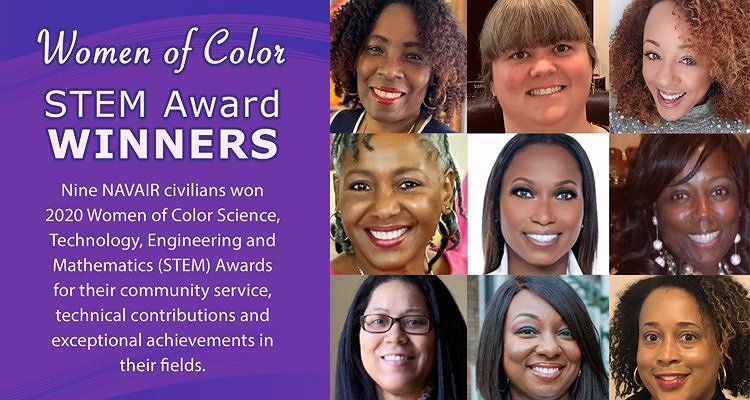
NINE NAVAIR civilians won 2020 Women of Color Science, Technology, Engineering, and Mathematics (STEM) Awards for their community service, technical contributions, and exceptional achievements in their fields.
The Women of Color STEM Awards serve to recognize the exemplary women, racial and ethnic minority STEM employees, and their mentors or champions from NAVAIR, Commander, Fleet Readiness Center, the Department of Defense, other government agencies and Fortune 500 companies, for their achievements.
Below is a list of the winners and their accomplishments. The winners are scheduled to be recognized formally at an awards ceremony Oct. 8-10 in Detroit.
Priscilla Ford, Community Service in Government Award
Ford, a 33-year career electronics engineer based out of Fleet Readiness Center Southwest, is being recognized for her community outreach as president of the Mercury San Diego Youth Track & Field Team, which she also helped establish. Under her leadership, the team grew from 20 to 120 student athletes and has become the largest youth track team in San Diego County.
Inspired by the student athletes, Ford became a certified track and field official so she can officiate at track events and better mentor the athletes, many of whom come from low socio-economic backgrounds, are adopted or in foster care or have been exposed to trauma.
Ford says she loves encouraging young people to strengthen their bodies and minds and make positive choices.
“Never give up on your dreams,” she said, “because you, too, have the mental fortitude, critical thinking skills and discipline to be just as great, if not better, than anyone else in the field.”
Adrienne Somerville, President’s Award
Somerville’s 26-year career has been filled with many accomplishments. She currently works as Commander, Fleet Readiness Centers’ (FRC) Acquisition Group head, leading all the acquisition and business management processes for FRC industrial maintenance, repair and overhaul operations.
In the face of nationally focused readiness challenges, Somerville explored innovative acquisition and contracting solutions and employed her negotiation skills to support mission-critical needs, save money and deliver high-quality products and services for the Navy. Her contractual, program, logistics and acquisition contributions enabled key reform efforts to address the repair turnaround times of aviation assets at the FRCs for the warfighters.
“I always aspired to work in a career field, focused on people, that would enable me to advance by delivering results that would have significant lasting impacts, while collaborating with diverse groups of people, with a wide variety of experiences,” Somerville, based out of Patuxent River, said. “Career fields offered by the Navy afforded me that opportunity. Today, it is an honor to live out one of my career aspirations to serve the artisans and the fleet.”
She previously worked as the V-22 Program production contracting officer, where she acquired V-22 Osprey aircraft for the Marines and Air Force. From there, she worked on the staff of NAVAIR’s assistant commander for contracts and then served as NAVAIR’s community/talent management program manager, developing the “NAVAIR Career Guidebook” and the accompanying mobile application — the command’s first.
Somerville described it as “an epic moment in my career, due to its [the mobile application’s] ability to touch the lives of so many current and future workforce members.”
For those aspiring to follow in her footsteps, Somerville advises being collaborative, not competitive.
“There are such attainable individual, managerial and organizational gains when we collectively work to address challenges with a winning team spirit,” she said.
Additionally, she suggests employees be willing to invest in a cause that benefits someone else or some other group, from which they have nothing to gain. “This is how you ascend in your career as a servant leader who leaves a legacy,” she said.
Trena Jackson, Outstanding Technical Contribution in Government Award
Jackson, an operations research analyst from the Air Systems Group (ASG), Logistics Department, Readiness Analysis Branch, in Patuxent River, has 25 years of experience applying her expertise and technical knowledge to solve difficult logistics issues affecting fleet readiness.
Specifically, Jackson developed and implemented the buffer management tool, which helps the fleet create an efficient and effective maintenance schedule by matching the correct repair parts and scheduling the right corresponding amounts of maintenance to incoming components. The tool is unique in its ability to conduct workload planning and has been adopted by all 53 Navy and Marine Corps intermediate-level maintenance/supply facilities.
Jackson compared her work to putting together a puzzle, something she likes to do in her spare time.
“It brings me joy when I can develop a program or process that supports the fleet and answers the questions,” Jackson said. “Most of my projects come from a need with unknown requirements, and I have the ability to bring that need to life by asking the right questions and developing a program or process that can answer that need.”
Tanaya Bondon, Technology Rising Star Award
Bondon, the lead avionics systems engineer for the Marine Air-to-Ground Taskforce Unmanned Expeditionary Program within the Multi-Mission Tactical Unmanned Air Systems Program Office in Patuxent River, is being recognized for her ability to take technical concepts and develop them into potential solutions for the fleet.
Bondon played a key technical and leadership role in the success of a -program office prize challenge competition — a first for NAVAIR — that provided critical requirements data in support of a Marine Corps rapid acquisition effort to obtain more unmanned aerial vehicles for the fleet. Bondon designed a scoring rubric that gave the judges a standardized, effective and efficient tool with which to judge the contestants and also helped evaluate the entries.
Her engineering acumen, ability to adapt to changing requirements and team dynamics, and positive attitude are all why she is considered a “Rising Star.”
Michele Cofield-Clay, Grace Henderson, Margelyn Massey, Gloria Smith and Veronica Wesson, Technology All-Star Awards
Technology All-Stars are women with 15 or more years in the workforce who have demonstrated excellence in their workplace or communities.
Cofield-Clay, an electronics engineer based out of Patuxent River, used her engineering expertise to help install a new system in a short amount of time to the warfighter.
“Integration was the major challenge at the time, due to the differences between each platform,” she said. She helped identify the design commonality that allowed system integration across all platforms, working alongside all branches of the military.
“It was challenging and stressful, but I learned so much about working with other platforms and service branches,” she said.
Cofield-Clay didn’t always want to be an engineer; she originally wanted to be a fashion designer, until she realized the different career possibilities within STEM.
“The STEM field is so broad, and there is so much that you can do.I was motivated by all the possibilities that I could pursue.After that, I never looked back,” she said.
Henderson, an operations research analyst in Patuxent River, said she has always loved math.
“I knew from a young age that I wanted to work with numbers,” she said. “I had never heard of the cost analysis field before working at NAVAIR, but during a rotation assignment with the Cost Department, I discovered that I loved this work.”
Henderson also loves mentoring and training junior employees.
“There is a level of satisfaction that I feel in sharing my knowledge and experience with other analysts and seeing them blossom in their careers,” she said. She advises new employees to take advantage of every opportunity they can to broaden their knowledge base and gain a better understanding of the bigger picture and their role in it.
As a supervisor for more than 14 years, Massey also encourages new employees to learn, ask questions, take advantage of training and workshops, and join professional organizations and NAVAIR’s diversity advisory teams.
“Always be willing to learn and seek out opportunities to experience something new,” Massey said.
She took her own advice when she started her career as a logistics engineer. She most recently served as the assistant program manager for logistics for communications and mission systems within Air Combat Electronics, where she supervised eight employees.
“I had no knowledge of the field of logistics, but it turned out to be the best fit for someone with an industrial engineering degree,” she said. “I chose industrial engineering, because it deals with improving the working environment and quality of the work produced, which is mainly what logistics is all about.”
One of her proudest accomplishments included serving as the H-1 upgrade deputy assistant program manager for logistics, where she spearheaded the successful completion of the Integrated Logistics Assessment for the Low Rate Initial Production (LRIP). As a result, the program received Acquisition Logistics Support Certification to proceed to LRIP. She also managed a logistics budget of more than $6 million.
Smith, also from the ASG, Logistics Department, Readiness Analysis Branch, has worked as an operations research analyst for more than 18 years. She is recognized in part for her volunteer efforts in the community. Smith’s community outreach efforts include working with young mothers to provide financial education and assistance; conducting health, wellness and coaching/mentoring sessions; and tutoring and assisting with the college application process. “Do not give up,” Smith says.
That’s a lesson Wesson knows well, as her career path took her on a long journey to her current job as a program analyst.
“I ended up in my current field after doing a few things that never quite felt like a perfect fit,” Wesson said. “After learning in those positions and thinking of my areas of strength, I realized that I would like a career that allowed me to combine a little bit of them all.”
Wesson supports Strike Planning and Execution Systems on the Program Integration Cell and Air Wing Ship Integration teams. She has been with the Naval Air Warfare Center Aircraft Division for seven years. In addition to her duties at the program office, Wesson serves as the national lead (East Coast) for NAVAIR’s African-American Pipelines Advisory Team.“The STEM field is so vast, you can always find your path,” Wesson said. “Don’t worry so much about what you want to do; learn about your strengths and interests. There are many ways to incorporate them both into your work, and that will help you enjoy and feel fulfilled by what you’re doing.”
FROM Reasonable Doubt to 4:44 mogul and rapper Jay-Z has always used music as a vessel to drop lessons and the Brooklyn native will continue to do that through his Roc Nation imprint.
According to Billboard, his entertainment agency has joined forces with Long Island University Brooklyn for the creation of a school.
The school—dubbed Roc Nation School of Music, Sports & Entertainment—will offer courses that are at the intersection of music, sports management and entrepreneurship.
The programs being curated by the institution will include lectures from an array of leaders across different industries.
Students will also be aligned with internships which will allow them to garner hands-on experience and ultimately be an integral part of cultivating a foundation for success.
Roc Nation partners w/ Long Island University to launch Roc Nation School of Music, Sports & Entertainment
Cognizant of the barriers to education faced by students from underserved communities, the school will offer scholarships for 25 percent of the incoming freshman class.
“Our proximity in and around New York City’s epicenter of music and sports clearly positions us to offer unparalleled experiential learning and access to professional opportunities that will launch students to success,” Dr. Kimberly Cline, who serves as President of LIU, said in a statement.
“We look forward to joining with Roc Nation to offer an unprecedented educational resource that opens up the entertainment and sports world to a new and eager generation.”
To drive community impact, the school will launch a music and sports management-focused summer camp for youth ages 10 through 18. Desiree Perez, CEO of Roc Nation, says the initiative was designed to invest in the futures of New York City youth and will be instrumental in cultivating a solid pipeline of talent.
LOS ANGELES, CALIFORNIA – JANUARY 25: Jay-Z attends 2020 Roc Nation THE BRUNCH on January 25, 2020 in Los Angeles, California. (Photo by Kevin Mazur/Getty Images for Roc Nation)
The Roc Nation School of Music, Sports & Entertainment is slated to launch during Fall 2021.
Efforts like the one being led by Roc Nation are needed, especially when it comes to closing the music education gap for youth. According to Brookings, the lack of support surrounding arts programs for youth has disproportionately impacted students from historically underserved communities.
Executive Dean of Nelson Mandela University’s Faculty of Health Science, Professor Lungile Pepeta, died on Friday from COVID-related complications, vice-chancellor Professor Sibongile Muthwa confirmed in a statement.
He was on a ventilator at the Life St George’s Hospital.
“As a renown Paediatric Cardiologist, he had extensive experience in working with key stakeholders in the health and higher education sector, provincially, nationally, continentally and beyond. More recently, he helped spearhead the University’s response to COVID-19 within the institution, in communities and society at large, working with healthcare professionals, and education, business and political leadership,” said Muthwa.
“His passing is not only a great loss to the University, which is gearing up to launch its medical school, but to the Nelson Mandela Bay Metro, Eastern Cape and country. Professor Pepeta joined the University on 1 January 2017 as the vision for establishing a medical school that offers an alternative educational model towards meeting the country’s growing need for health professionals was gaining momentum.”
Pepeta was a renowned paediatric cardiologist and, more recently, had helped spearhead the response to Covid-19.
He had been at the helm of the CMS since June 2020 following the death of former chairperson Dr Clarence Mini who also succumbed to the virus.
Pepeta had been a member of the council since November 2017.
He was raised, studied and spent the bulk of his career in the Eastern Cape.
Pepeta was also the former head of the paediatric department and paediatric cardiology at Port Elizabeth Hospital.
Eastern Cape Premier Oscar Mabuyane said he was shocked by his death.
In a recent conversation between the two, Pepeta had indicated he was recovering well and looking forward to returning to his family and work to save lives.
He was part of a 15-member panel of experts advising the provincial government on Covid-19.
Mabuyane said it was because of people like Pepeta that they were able to transform the containment of the virus, which contributed to the 92% recovery rate and reduction of active cases in the province.
Nelson Mandela University’s vice-chancellor, Professor Sibongile Muthwa, said Pepeta had joined the institution on 1 January 2017.
This was at a time when the vision for establishing a medical school, which offered an alternative educational model towards meeting the country’s growing need for health professionals, was gaining momentum.
The university is now gearing up to launch its own medical school, the establishment of which was a personal goal of Pepeta’s.
The CMS said it was devastated.
“Ever-smiling, Prof Pepeta was a passionate and committed patriot who poured his life to the service of others through his chosen profession.
“A health worker par excellence, Prof Pepeta specialised in paediatric cardiology, introducing a non-invasive surgery to correct heart defects in children,” it said in a statement.
It offered its condolences to his family, especially his wife, Dr Vuyo Pepeta.
GERTRUDE Phirimana has always loved being a teacher to an extent that she used to imitate her teachers by sharing good learning experiences with other learners in the playgrounds.
She enjoys seeing learners display independent thinking skills especially when they think out of the box when investigating mathematical rules and formulae through her guidance.
Her major challenge has been overcrowded classes and this makes it difficult to give all the learners individual attention.
She tries to keep all learners engaged at all times by giving them different tasks and problems to solve as individuals and as groups.
She also does extra classes to add more teaching time for Mathematics.
Ndlovu is a results-driven individual in everything she does.
She strives for best learner performance and uses all available resources for networking provincially, nationally and internationally with other maths teachers through available programmes.
She intends to further her studies for the betterment and widening of her Maths knowledge.
ON this Women’s Day, I greet you, the inheritors of the noble legacy of the women of 1956. Sixty-four years ago, our mothers, daughters, sisters and grandmothers stood defiant and proud, united in their demand to live in freedom.
They stood not for themselves alone, but for the rights of the generations of women yet to come.
This day provides all of us with an opportunity to reflect on the road we have travelled since then.
As a country, we have much to be proud of.
We have made gains in advancing women’s rights, in broadening women’s access to education, in the provision of health care and social support to women, and in improving their participation in the economy and decision-making.
At the same time, we know that the lived reality for millions of South African women is very different to the promise contained in our Constitution.
We know that millions of South African women still live in conditions of poverty and unemployment. They face discrimination and violence.
To give effect to our commitment to the upliftment of women, South Africa has joined Generation Equality, a global campaign to achieve gender equality by 2030.
As part of this campaign, we are part of two Action Coalitions, one on economic justice and rights and another on gender-based violence and femicide.
These Action Coalitions mobilise governments, civil society and the private sector for collective action.
They give us an opportunity to work with other world leaders to achieve real change in the lives of women across the globe.
As we mark Women’s Day this year, South Africa is in the grip of two pandemics – the coronavirus pandemic and the scourge of gender-based violence and femicide.
Ever more women and children are being abused and losing their lives at the hands of men.
It cannot be that this Women’s Day is drenched in the tears of families who have lost their sisters, daughters and mothers to violence perpetrated by men.
This cannot continue.
We can no longer as a nation ignore the deafening cries of women and children for protection, for help and for justice.
It has been eleven months since I addressed a joint sitting of Parliament to announce an Emergency Response Action Plan to combat gender-based violence and Femicide.
Since then we have taken concrete actions to provide greater support and care to survivors of gender-based violence.
We have increased the number of shelters and care centres for survivors and improved the capacity of our police to deal with crimes of gender-based violence.
We have made important progress in reforming our laws to give greater protection to survivors of domestic and sexual violence.
We now also have a National Strategic Plan, which among other things aims to promote women’s economic inclusion.
One of the most important ways to reduce the vulnerability of women to gender-based violence is to enable them to become financially independent.
With the launch of Generation Equality and with the implementation of the National Strategic Plan we have a unique opportunity to refashion our society and the lives of the women of South Africa.
We have an opportunity to build a country in which women’s right to dignity, security, safety and protection is non-negotiable.
It requires bold and measurable actions by government, civil society, the private sector and all actors for meaningful change.
Today we commit to a new social compact with the women of this country informed by our collective commitment to gender equality.
This will be driven by bold actions.
The first action is to expand the access of women to economic opportunity.
We will do this, among other things, by setting aside 40% of public procurement for women-owned businesses.
We now expect national departments to monitor and report on how many women have participated in each public procurement process.
They will have to develop clear plans on how they will broaden women’s participation over the next 12 months.
As Chair of the African Union we will also be working on policy guidelines to help member states, on our continent, develop similar interventions.
The second action is to support women who operate small or micro businesses, including in the informal sector.
Lack of access to financial services and digital identification limits their ability to conduct business.
Under Generation Equality, we will be supporting AU member states in their drive to adopt digital IDs.
We will engage the financial sector to strengthen efforts to make financial services accessible and affordable for women in South Africa.
The third action is to speed up the process of giving women access to productive assets such as land.
We will ensure that our own land reform process favours all historically disadvantaged people – including women – in getting land and the means to farm it.
Of the R75 million in COVID-19 relief earmarked for farming input vouchers, 53% of the beneficiaries will be rural women.
We must ensure that women subsistence and small-scale farmers continue to receive support beyond the lockdown.
At the same time, we will be calling on AU member states to put policies in place to increase women’s ownership of land to 30%.
Our fourth action is to ensure that women are safe from gender-based violence in the workplace.
Through Generation Equality, we will work at a national and regional levels towards the ratification of the ILO Convention on Violence and Harassment in the Workplace.
The urgency of achieving gender equality has never been greater than now.
The coronavirus has left none of us untouched.
But it is those who already face economic insecurity, poverty, discrimination and exclusion who have been hardest hit.
To support the fight against gender-based violence, the Solidarity Fund has approved a R17 million project to expand sheltering services and support the network of Thuthuzela Care Centres.
A portion of this funding will also go towards capacitating the GBV Command Centre.
To ensure women are not made more vulnerable during the lockdown, we have put mechanisms in place not just for social support, but also to help women-owned businesses.
Of the 12.6 million people who received social grants during the month of June, 10.5 million or 83 percent were women aged 16 years and older.
As of this week about 1.4 million South African women have received the Special COVID-19 Social Relief of Distress grant.
The food parcels distributed through the Department of Social Development and the Solidarity Fund have reached just over 1 million families, among them women-headed households.
In the second round of food relief the Fund will distribute this month in the form of vouchers, some 40 to 50 percent of the target beneficiaries will be women.
COVID-19 relief is also being provided to women-owned SMMEs through our development finance institutions.
For example, of the total number of SMMEs benefiting from the Debt Relief Finance Scheme, 33% are women-owned businesses.
The Industrial Development Corporation has also directed a significant portion of its funding approvals to supporting youth and women-empowered businesses.
We have prioritised black-owned and women-owned businesses in the procurement of personal protective equipment.
There have been a number of success stories of women either starting businesses to produce personal protective equipment or modifying existing business operations.
We are deeply concerned about the corruption that has marred our national effort to make PPEs accessible to our hardworking health workers.
We expect the law enforcement agencies to find the culprits and ensure they face the full might of the law.
This pandemic has demonstrated our ability to support the greater economic participation of women in real terms.
This good work must not end when the pandemic is over.
We must maintain the momentum.
The generation of 1956 mobilised, organised and stood firm in their demands for their rights to be respected.
The women who in the recent past have taken to the streets demanding an end to gender-based violence and femicide carry forward the flame of that struggle.
Under Generation Equality, we want to see women’s full empowerment achieved by this generation, within a generation.
This is our responsibility as a nation.
If we each play our part, we can make this happen.
The time for talk is over. The time for action is now.
I wish all the women of South Africa a happy Women’s Day.
HEROES come in capes but not this one – she comes adorned in a dress! She is none other than Dr Imogen Mashazi, the City Manager of Ekurhuleni Metropolitan Council.
Despite her powerful position the feisty, hard-working and self-driven Dr Mashazi has no airs and graces about her.
She has agreed to our interview, on-line via Microsoft Teams, but is quick to add that she is only giving us 10 minutes of her time as she has other matters to attend to.
“After all,” she adds, “I don’t like the media. Zweli (Dlamini) – Chief Specialist Media Relations and spokesperson in her office – will give you all the other things that he has written about me.”
However, twenty minutes later, the accommodative and very passionate Dr Mashazi is freely chatting away about her life. From her days as a nursing sister in Soweto, then her move to Ekurhuleni where she joined the city as deputy director health services and welfare.
She rose up the ranks by not only burning the midnight candle – today she holds a DLitt et Phil (Nursing Science) Degree – but has also made sure that she leaves footprints in the sand everywhere she has been.
So, it came as no surprise when last month (July 23rd) the Soweto born and bred mother of three, scooped the award for Public Sector Leader at this year’s first Virtual Top Empowerment Awards.
The City of Ekurhuleni won the award for Public Service category.
The awards, launched 19 years ago, celebrate the country’s leaders in transformation and empowerment.
The platform provides exposure among empowered industry players, honouring those who’ve displayed innovative leadership and made a significant impact on the communities in which they operate as well as society at large.
Both these achievements are no mean feat and Dr Mashazi is the first to acknowledge that.
“The strangest thing is that I was not even aware that I had been nominated until someone called to congratulate me. I had no clue what they were talking about and asked them to forward me the info,” she relates.
“The win came as a surprise to be honest. If it was not for my personal assistant (Linda Naicker) I would not have won. Linda decided to nominate me behind my back probably because she knew that I would have said no as I am media shy.”
“Nonetheless, I am quite excited for the fact that at least one is recognised for the type of work one is doing especially as a woman empowering other women.”
Ekurhuleni’s Head of Department: City Planning, Palesa Tsita, says the award couldn’t have gone to a more deserving candidate.
Tsita should know, after all, she is living proof of Dr Mashazi’s determination and drive to see more and more women empowered in the city.
Dr Mashazi appointed her to the position in June last year.
“What I love about her is that she is tough and decisive and is not threatened by women like her but instead embraces and mentors them to ensure that they reach their full potential,” says Tsita.
Naledi Modibedi, Head of Department Human Resources, concurs.
She, like Tsita, was appointed by Dr Mashazi into her position three years ago.
“What I love about the CM is that she is the kind of boss that will give you space to do your stuff. If you mess up though she will give it to you there and then. But, with her somehow you know that it is not personal.”
“She speaks her mind and moves on and has no time to be holding a grudge. She personifies professionalism and perfection and expects it from all around her,” she adds.
Under her leadership, from her days as Chief Operation Officer, the city has achieved an unqualified audit with a clean audit on financial statements;
Zero unauthorised expenditure;
Zero fruitless and wasteful expenditure;
Irregular expenditure has decreased from R215 million in the previous financial year to R5 million in the 2018/19 financial year;
Collection rate stood at 91 percent.
She is described by those who know her as a no-nonsense woman who knows her story and expects the same from those around her especially women.
Dr Mashazi is passionate about women empowerment and does not only talk the talk but she walks the talk.
In 2017, she was instrumental in introducing The Women in Uniform Community Safety Project, aimed at ensuring that more women are appointed into meaningful positions in the workplace hence the appointments of the likes of Tsita and Modibedi and many others.
She says: “Remember I’ve been in the system for 20 years and as I worked my way up the ranks from my days as executive director of health and social development, I noticed that it was mostly men who were appointed into the senior and decision making positions like your HODs and managers.
“So, when I was appointed City Manager in 2016, I told myself that I wanted to change the status quo.”
In 2017, she made it clear that her intention was to see female employees at EMPD and DEMS prosper academically and career-wise.
She explains that she did this because she understood that their field of work is male dominated and that despite them doing the same work with their male counterparts, they still have to double their efforts to be recognized.
“I did thisbecause as a woman I had experienced some of the things and decided that as the first female CM of the City, I have to do something. Gone are the days when women have to experience gender discrimination in society and the workplace. Together we must prove that we are equal to our male counterparts one way or the other,” she explains.
Dr Mashazi, a married mother of three, is a team player who always acknowledges the support of others whether be it at home or work.
She says when she took the decision to have female HODs in the city, the Council obliged and today nine of the city’s 23 HODs are female.
Meanwhile, more than 400 women have been absorbed as traffic wardens.
While in the area of disaster management, two new female divisional heads have been appointed and now more dominate the space with a figure of 110 females compared to 63 male counterparts.
“We’ve also witnessed great progress in promotions in the EMPD with a number of women occupying senior positions such as deputy director, chief superintendent, superintendents and inspectors. Quite a huge achievement I must add.
“All these appointments and promotions have seen a number of ladies prioritising their studies to enable themselves to be considered for senior positions. Today we are in the company of women with MBAs, Honours, BTech Degrees and Diplomas.
“We are now steadily moving into the Fourth Industrial Revolution and therefore we must equip ourselves with the necessary skills to navigate our way out of any situation that comes with this revolution. Who knows maybe among you we have someone who will invent the most innovative way to fight crime and deal with disasters,” she recently told guests at the city’s 20th anniversary of it becoming a conglomerate.
Asked if women can have it all, Dr Mashazi believes yes, but is quick to add, she needs all the support from her family.
She credits her husband of 30 years for the reason why she has been able to succeed at work.
“If it wasn’t for him I doubt I would have even been able to take up some of these positions like this one of City Manager because it is demanding and we spend hours at work.
She adds that in earlier days, when the kids were small – now the first born is 30 years while her set of twins is 23 years of age – her mother-in-law, who has since passed on, played a great role.
“My husband took the kids to school. I was blessed in the sense that I’ve never had to take time off to rush my kids to a doctor or something because my mother-in-law was there for me,” she adds.
Her parting words to women this women’s month is that they need to go to school and work hard so that the system can recognise their efforts.
“Your work must speak for you don’t wait to get favours from people. When I joined the system as a public servant, my aim was to change the lives of the people of Ekurhuleni and I believe I did that. From my days as the director of health to my current position, my work speaks for itself from our TB cure rate which was at its lowest but by the time I left it was sitting at about 89 percent. We were among the first to buy ARVs for our patients and built world-class clinics for our townships.
“As the city we have changed the life styles of our citizens and continue to do so. My passion to empower women all these things will be the legacy I leave behind.”
THE arrival in South Africa of 575 medical students who have been trained in Cuba since 2014, further confirms, if necessary, the excellence of relations between both nations.
In effect, according to Reynaldo Denis de Armas, head of Cuba’s medical collaboration, he told Prensa Latina that these young medical students, who returned this month on two charter flights, are really example of Nelson Mandela-Fidel Castro bilateral cooperation program signed in 1996.
Such a program, according to the Cuban ambassador in Pretoria, Rodolfo Benítez Verson, is a reflection of historical and special friendship and cooperation relations between Cuba and South Africa.
The United Nations rightly considers these relations as a global reference for true South-South Cooperation, he recalled.
Thanks to this program, adds Benítez Verson, over 1.500 young South Africans have already graduated as doctors (after studying in Cuba), and over 700 will get their degree this year.
It will be the largest doctor graduation in the entire history of South Africa, he highlighted.
These students will be sent to the Universities of Pretoria, KwaZulu Natal, Free State, Limpopo, Cape Town, as well as those of Sefako Makgatho (from Gauteng), Stellenbosh (Western Cape), Witwatersrand (Johannesburg), and Walter Sisulu (Eastern Cape).
Once sixth term of their career at these centers has finished, a group of professors and rectors of the Cuban Ministry of Public Health will travel to South Africa to take their state exam.
TWO French medical Professors Camille Locht of the French National Institute of Health and Medical Research (INSERM) and the head of intensive medicine at Cochin Hospital in France Prof Jean-Paul Mira stirred Africa’s hornet’s nests.
This happened in early April when they were speaking about the BCG-tuberculosis vaccine ability to treat COVID-19 on France TV channel LCI.
The two researchers ended up noting that testing of the much-anticipated vaccine should be conducted in Africa.
The video clip made headlines in the continent and a compressed cameo version went viral with extensive shares on cross-social media platforms Facebook, Twitter and WhatsApp.
Then the reactions started to stream in. Dr Tedros Adhanom Ghebreyesus the World Health Organisation Director General who was a former Ethiopian health and foreign minister termed the French doctors sentiments as “racist remarks”.
Dr Ghebreyesus went on to state that: “Africa cannot and will not be a testing ground for any vaccine. We will follow all the rules to test all vaccines or therapeutics all over the world using exactly the same rule whether it’s in Europe, Africa or wherever.”
Dr. Adhanom was not the only one to chime in.
World Health Org DG @DrTedros brands French scientists saying Coronavirus vaccine should be trialled in Africa, as racist. Adds that Africa will not be a testing ground & that this ‘colonial hangover’ needs to stop pic.twitter.com/ryi8GcG0Gg
The head of the Addis Ababa, Ethiopia, based African Centre for Disease Control and Prevention (ACDC) Dr. John Nkengasong also took great exception with the French physicians.
“The Africa Centers for Disease Control and Prevention (Africa CDC) strongly condemns the very disgusting comments made by Professors Jean-Paul Mira and Camille Locht on French Television on using Africans for testing a tuberculosis vaccine in clinical trials to see if it is protective against COVID-19.” Dr. Nkengasong said.
“These racist and condescending comments must be condemned by all decent human beings.”
Dr Nkengasong went on to insist that, “Africa CDC will continue to collaborate with the World Health Organization (WHO) to ensure that only ethically and scientifically sound clinical trials for vaccines and therapies will be conducted in Africa, using exactly the same standards and principles as those employed elsewhere in the world.”
To cool off the heat that their remarks had generated INSERM lab where Professor Locht works issued a statement.
“Clinical trials to test the BCGs vaccine efficacy against COVID-19 are underway or about to start in European countries (Netherland, France, Germany and Spain) and in Australia.”
The INSERM press release noted and went on to add: “There is currently a discussion around launching a study in Africa but if it is done, it will be done alongside these other studies. Africa must not be forgotten or excluded from research on COVID-19 because this pandemic is global.”
However, this was too little too late.
As he dismissed the two French medics, Dr Nkengasong waxed lyrical of the enhanced capacities of African bio-medical researchers.
The Addis Ababa-based top African medic highlighted some key pointers of Africa’s recent vaccine successes when he noted.
“Professors Mira and Locht have no lessons to teach Africa on the conduct of scientifically sound clinical trials. Africans have extremely capable world-renowned scientists who have played critical leadership roles in conducting clinical trials that have benefited the continent and beyond. Some examples include the leadership of African scientists in conducting an effective Ebola Virus Disease ring vaccine trial in West Africa in 2014, which proved a game changer in ending the outbreak,” Dr. Nkengasong said.
“Similarly, last year, experts from the Democratic Republic of Congo, alongside international collaborators, successfully carried out a clinical trial of Mab 114 monoclonal antibody therapy for Ebola Virus Disease.”
It is Dr Nkengasong’s final admission on Ebola that reveals much more about clinical vaccine trials in Africa.
Even though majority of those who railed against the two French physicians saw it as a racist ploy, the reality is that Africa has been a hot bed of vaccine clinical trials for decades now and Dr. Nkengasong just revealed the tip of an iceberg regarding Africa’s place in the global vaccines agenda.
According to the Global Vaccine Alliance (GAVI) presently there are over 148 corona virus vaccines candidates in development and 17 of them are already on phase two and three human trials across the globe including Africa. CureVac, Moderna, BioNtech, University of Oxford, CanSino, Sinovac Biotech, Merck & Co, Novavax, Gilead, Pfizer, GSK and Sanofi are among the leading firms with promising vaccine candidates.
"The best vaccine in the world won't work if it isn't used," @JohnsHopkinsIH professor Ruth Karron tells @DrJoshS.
"We should be planning now for what we'll need to put in place to deliver the vaccine."
— Public Health On Call (@PublicHealthPod) July 31, 2020
“When candidate vaccines make it to human clinical trials, they first go through phase 1 trials primarily to test the vaccines’ safety, determine dosages and identify any potential side-effects in a small number of people.” GAVI says.
“Phase two trials further explore safety and start to investigate efficacy on larger groups. The final stage Phase three trials which few vaccines ever make it to are much larger involving thousands or tens of thousands of people to confirmand assess the effectiveness of the vaccine and test whether there are any rare side-effects that only show up in large groups.”
In the last 10 years, vaccine trials on drugs for malaria, rotavirus, Ebola, Zika, Nipah virus, pneumonia and a host of other dangerous infectious diseases have all been conducted in Africa.
Sadly, even though vaccines have been trialed and tested in Africa there are no African biotech or pharmaceutical firms and labs involved in the current vaccine development competition.
That there is an intense international race and scramble to find a vaccine is not in doubt. In fact it has turned out to be a war like operation with the major powers deploying their militaries to synchronise their quests for a vaccine.
In early July the US Senate confirmed four-star General Gustave Perna as the Chief Operating Officer of “Operation Warp Speed” which the US’ historic operation to accelerate the development, manufacturing and distribution of Corona virus vaccine by early next year. In China Major General Chen Wei, a People’s Liberation Army (PLA) immunologist well known for her groundbreaking discoveries of vaccines for SARS and Ebola is currently leading China’s advanced COVID-19 vaccine hunt.
In March the world witnessed a Germany-US vaccine tiff when CureVac, a German bio-tech company rejected a proposal by US President Donald Trump to purchase exclusive rights to a promising coronavirus vaccine developed by the firm.
This rejection elicited a tough stance by the German federal government, which gave itself powers to veto any takeover bid by foreign firms over its two leading vaccine developers namely CureVac and BioNtech.
BioNtech is collaborating with Pfizer Laboratories and they expect to secure regulatory approvals for their vaccine by end of October this year. In June, the German government sweetened its veto deal by buying some 23 per cent stake in CureVac for a sum of $337.4mn.
The European Union on its part has set aside some $6.9bn to ensure fair distribution of vaccines within the EU bloc boundaries.
The German biotech firms seems to have attracted intense interest as in late July GlaxoSmithKline announced that it will spend $163.67mn to purchase some 10 per cent stake of CureVac with special interests in vaccines to treat and prevent infectious diseases.
An effective and safe #vaccine against the virus is our best bet to achieve a permanent solution to the COVID-19 pandemic. The Commission has presented a European strategy to accelerate the development, manufacturing and deployment of safe and effective vaccines against COVID-19. pic.twitter.com/oY8JPNgoAD
This was not the only basket where GSK had invested its funds and resources.
Earlier in April, GSK and French pharmaceutical giant Sanofi had announced that they had signed a letter of intent to collaborate in the development of an adjuvant vaccine for COVID-19.
It is significant to note that during the 2014 Ebola Virus Disease (EVD) outbreak in Guinea, Sierra Leone and Liberia, which claimed over 10,000 lives in West Africa a host of Ebola vaccines candidates were trialed in 10 African countries.
Subsequently a number were approved and Africa’s role as a bystander in the vaccine development was acknowledged.
The continent remains a laboratory owning no patent rights on numerous vaccines developed in Africa’s soil.
According to WHO records between October 2014 and April 2015 EVD vaccine trials were conducted by different pharmaceutical companies in Mali, Gabon, Kenya, Uganda, Tanzania, Cameroon, Ghana, Mali, Nigeria, Senegal, Guinea-Conakry, Liberia and Sierra Leone.
The vaccine candidate drugs included VSV-EBOV which trialed in Liberia, Guinea and Sierra Leone by Newlink Genetics and Merck Vaccines of the US.
The same drug was in March 2015 also being tested in Guinea Conakry by MSF, WHO and the Guinean government.
At the same time the Guinea Conakry trials were being conducted ChAd3-ZEBOV was being tested in Cameroon, Ghana, Mali, and Liberia by GSK and PHAC.
As of May 2018 the WHO Vaccine Tracker notes that MSF Epicenter was testing vaccines on Pneumococcal infections, the University of Oxford was testing on Ebola and Marburg.
Others who tested their vaccine candidates in the said period included Johnsons and Johnson, Bavarian Nordic, Oxford University among others.
Some of these vaccines tested for Ebola are now becoming more useful in combating COVID-19 as trial results have indicated.
Indeed the world breathed a sigh of relief in early May when the US National Institutes of Health proclaimed that an Ebola vaccine candidate Remdesivir was accelerating recovery of COVID-19.
Remdesivir which is manufactured by the US based Gilead Sciences Inc. had previously been tested in Africa.
That same month of May saw Gilead Sciences signing non-exclusive licensing pacts with five generic drug makers based in India and Pakistan namely Cipla, Ferozsons Laboratories, Hetero Labs, Jubilant Life Sciences and Mylan to help supply Remdesivir in 127 countries.
The five licensed companies are free to set their own prices for the Remdesivir generics they produce and the licenses signed will remain royalty-free until another vaccine other than Remdesivir or the WHO declares the end of the COVID-19 pandemic.
Interestingly, while Africa has provided perfect venue for vaccine trials in sites like Manhica, Mozambique, Kilifi in Kenya, Lambarene in Gabon, Bioko Island in Equatorial Guinea, Bagamoyo in Tanzania, Luapula in Zambia and Haut-Katanga in DRC among other trial sites it has no major player in the form of a vaccine maker or drug manufacturer in the current global vaccine race.
The pharmaceutical and biotechnology entities currently leading in the hunt for a COVID-19 vaccine are drawn from US, UK, France, China, Russia (all of them coincidentally Permanent Members of the UN Security Council), Germany and South Korea.
In late May, the US-based Novavax bought Praha Vaccines, a unit of Cyrus Poonawalla Group, which owns the Serum Institute of India (SII).
This acquisition was made just as Novavax embarked on its Phase one trials on its vaccine candidate NVX-CoV2373 that was its lead SARS-CoV-2 candidate currently underway in Australia.
The preliminary immunogenicity and safety data was expected in late July and Phase 2 trials will be conducted in multiple locations across the world.
The vaccine is based on “proprietary recombinant nanoparticle technology”.
Apart from Novavax, which is a US-based biotechnology company, specializing in next-generation vaccines for infectious diseases, GSK had also announced in May that it intended to produce a billion doses of COVID-19 pandemic vaccine adjuvant in 2021.
To this end, GSK has formed scientific partners in Europe, China and the Americas. GSK manufacturing sites are in UK, US, Canada and Europe.
“We believe that more than one vaccine will be needed to address this global pandemic and we are working partners around the world to do so,” Roger Connor President of GSK Vaccine says.
“We believe that our innovative pandemic adjuvant technology has the potential to help improve the efficacy and scale up of multiple COVID-19 vaccines.”
In the same week Novavax made its move, another US vaccine maker Merck & Co intensified its coronavirus vaccine race by buying Austrian drug maker Themis Bioscience.
Both Merck and Themis now have two vaccine candidates on trial.
Themis together with Institut Pasteur had used a technology that was based on a modified measles virus to combat COVID-19.
The second vaccine trial is derived from Merck’s Ebola vaccine candidate.
That there were interesting almost coincidental developments around vaccine development in May is no longer in doubt.
Still in late May, Astra-Zeneca and Oxford University recruited 10,000 adults and children for the second and third phase trials of their coronavirus vaccine candidate AZD1222.
Encouraged by the initial trial results the US government pledged some $1.2bn for a third of the first billion doses of AZD1222.
AstraZeneca had also signed a £65.5mn deal to manufacture 30 million doses and deliver 100million doses in total to the UK government.
Other vaccine manufacturers such as Moderna with its SARS-Cov-2 vaccine mRNA-1273, Johnson and Johnson, Sanofi, Merck among others are currently ramping up their vaccines production capacity with several “at-risk investments” aiming for the production of 1 billion vaccines by 2021 should their respective candidates get the go ahead.
A significant strand ties most of these vaccine manufacturers. It is the Coalition for Epidemic Preparedness Innovations (CEPI), which was founded by the Wellcome Trust and the Bill and Melinda Gates Foundation in Davos in 2017 and is now headquartered in Oslo, Norway.
CEPI is funding Novavax, University of London, CureVac, Inovio Pharmaceuticals, Moderna and University of Queensland among others.
“Investing in vaccine development now is an investment in the future health of all our societies,” Richard Hatchett, the CEO of CEPI says.
“An urgent global, concerted effort is now needed to raise the money required to advance the development of COVID-19 vaccines.”
While African and Latin American governments through their own state-led medical research institutions have been deeply involved in most of these vaccines trials in agreements that are rarely public and favouring the pharmaceuticals it is clear Africa, Caribbean and Latin American are missing in action in the mega-bucks of vaccine development.
COMPANIES AND COUNTRIES LEADING IN THE CORONAVIRUS VACCINE TRIALS|
People’s Liberation Army (Academy of Military Sciences/Walvax Biotech)
Shenzhen Geno Immune Medical Institute – Lentiviral Vector Vaccines
Anzhui ZhifeiLongcom Biopharmaceutical and Institute of Microbiology – Chinese Academy of Sciences.
GERMANY
CureVac
BioNtech
Max Planck Institute
US
Moderna
Inovio Pharmaceuticals
Dynavax
Pfizer
Johnson and Johnson
Gilead
Arcturus Therapeutics
UK
GSK
University of London
Astra-Zeneca
Imperial College
FRANCE
Intitut Hospitalo-Universtiaire
Sanofi
Pasteur Institut
RUSSIA
R-Pharm
Gamaleya Research institute
SOUTH KOREA
Genexine Consortium
WANJOHI KABUKURU is a multiple award-winning international media trainer, editor and journalist, with a specialty in environmental journalism. Over the last 20 years his articles have been published in top-notch publications such as New African, African Business, Seychelles News Agency, African Banker, Radio France International (RFI), Inter Press Service (IPS), Diplomat East Africa, BBC Focus on Africa, Mail & Guardian, Africa Renewal and 100Reporters among other numerous publications. He is the current editor and head of the Indian Ocean Observatory Media Unit. He is also a correspondent for the UN’s Africa Renewal.
(COMPILED BY INSIDE EDUCATION CORRESPONDENT IN NAIROBI, KENYA)