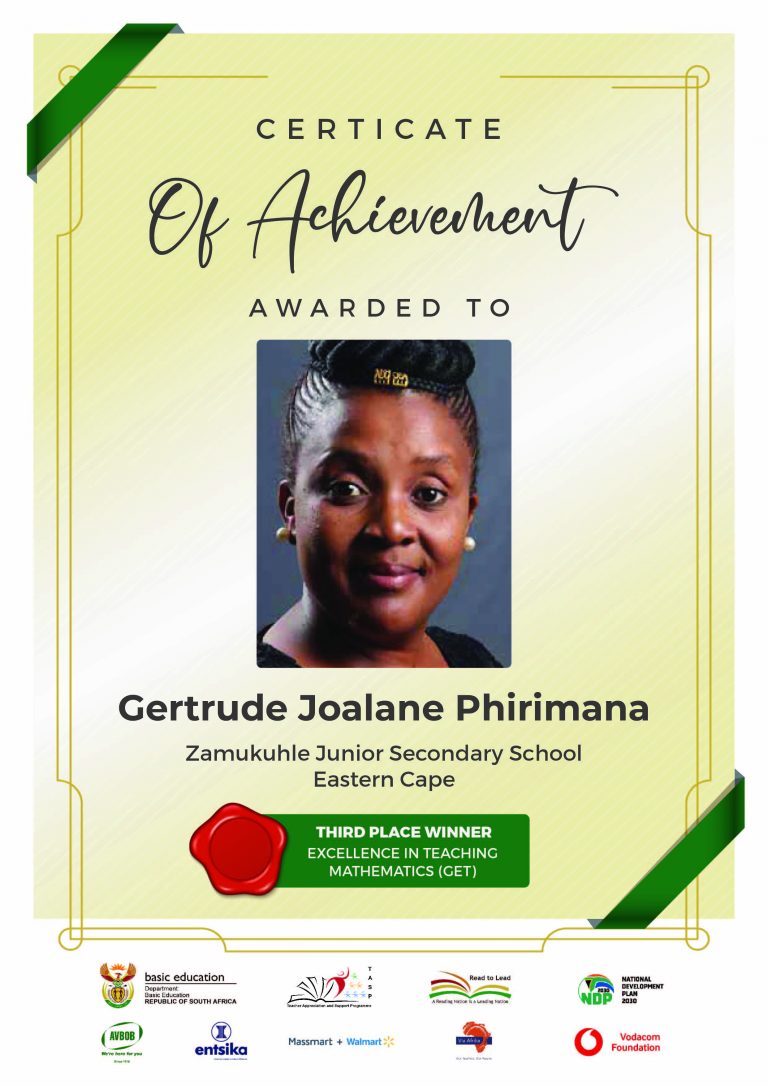
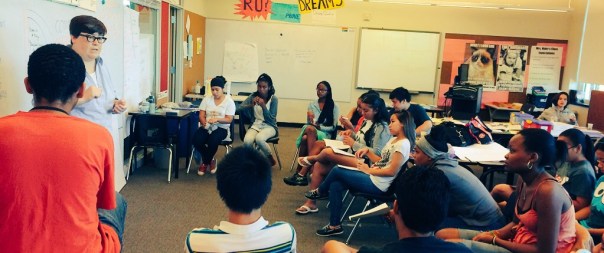
GERTRUDE Phirimana has always loved being a teacher to an extent that she used to imitate her teachers by sharing good learning experiences with other learners in the playgrounds.
She enjoys seeing learners display independent thinking skills especially when they think out of the box when investigating mathematical rules and formulae through her guidance.
Her major challenge has been overcrowded classes and this makes it difficult to give all the learners individual attention.
She tries to keep all learners engaged at all times by giving them different tasks and problems to solve as individuals and as groups.
She also does extra classes to add more teaching time for Mathematics.
Ndlovu is a results-driven individual in everything she does.
She strives for best learner performance and uses all available resources for networking provincially, nationally and internationally with other maths teachers through available programmes.
She intends to further her studies for the betterment and widening of her Maths knowledge.
ON this Women’s Day, I greet you, the inheritors of the noble legacy of the women of 1956. Sixty-four years ago, our mothers, daughters, sisters and grandmothers stood defiant and proud, united in their demand to live in freedom.
They stood not for themselves alone, but for the rights of the generations of women yet to come.
This day provides all of us with an opportunity to reflect on the road we have travelled since then.
As a country, we have much to be proud of.
We have made gains in advancing women’s rights, in broadening women’s access to education, in the provision of health care and social support to women, and in improving their participation in the economy and decision-making.
At the same time, we know that the lived reality for millions of South African women is very different to the promise contained in our Constitution.
We know that millions of South African women still live in conditions of poverty and unemployment. They face discrimination and violence.
To give effect to our commitment to the upliftment of women, South Africa has joined Generation Equality, a global campaign to achieve gender equality by 2030.
As part of this campaign, we are part of two Action Coalitions, one on economic justice and rights and another on gender-based violence and femicide.
These Action Coalitions mobilise governments, civil society and the private sector for collective action.
They give us an opportunity to work with other world leaders to achieve real change in the lives of women across the globe.
As we mark Women’s Day this year, South Africa is in the grip of two pandemics – the coronavirus pandemic and the scourge of gender-based violence and femicide.
Ever more women and children are being abused and losing their lives at the hands of men.
It cannot be that this Women’s Day is drenched in the tears of families who have lost their sisters, daughters and mothers to violence perpetrated by men.
This cannot continue.
We can no longer as a nation ignore the deafening cries of women and children for protection, for help and for justice.
It has been eleven months since I addressed a joint sitting of Parliament to announce an Emergency Response Action Plan to combat gender-based violence and Femicide.
Since then we have taken concrete actions to provide greater support and care to survivors of gender-based violence.
We have increased the number of shelters and care centres for survivors and improved the capacity of our police to deal with crimes of gender-based violence.
We have made important progress in reforming our laws to give greater protection to survivors of domestic and sexual violence.
We now also have a National Strategic Plan, which among other things aims to promote women’s economic inclusion.
One of the most important ways to reduce the vulnerability of women to gender-based violence is to enable them to become financially independent.
With the launch of Generation Equality and with the implementation of the National Strategic Plan we have a unique opportunity to refashion our society and the lives of the women of South Africa.
We have an opportunity to build a country in which women’s right to dignity, security, safety and protection is non-negotiable.
It requires bold and measurable actions by government, civil society, the private sector and all actors for meaningful change.
Today we commit to a new social compact with the women of this country informed by our collective commitment to gender equality.
This will be driven by bold actions.
The first action is to expand the access of women to economic opportunity.
We will do this, among other things, by setting aside 40% of public procurement for women-owned businesses.
We now expect national departments to monitor and report on how many women have participated in each public procurement process.
They will have to develop clear plans on how they will broaden women’s participation over the next 12 months.
As Chair of the African Union we will also be working on policy guidelines to help member states, on our continent, develop similar interventions.
The second action is to support women who operate small or micro businesses, including in the informal sector.
Lack of access to financial services and digital identification limits their ability to conduct business.
Under Generation Equality, we will be supporting AU member states in their drive to adopt digital IDs.
We will engage the financial sector to strengthen efforts to make financial services accessible and affordable for women in South Africa.
The third action is to speed up the process of giving women access to productive assets such as land.
We will ensure that our own land reform process favours all historically disadvantaged people – including women – in getting land and the means to farm it.
Of the R75 million in COVID-19 relief earmarked for farming input vouchers, 53% of the beneficiaries will be rural women.
We must ensure that women subsistence and small-scale farmers continue to receive support beyond the lockdown.
At the same time, we will be calling on AU member states to put policies in place to increase women’s ownership of land to 30%.
Our fourth action is to ensure that women are safe from gender-based violence in the workplace.
Through Generation Equality, we will work at a national and regional levels towards the ratification of the ILO Convention on Violence and Harassment in the Workplace.
The urgency of achieving gender equality has never been greater than now.
The coronavirus has left none of us untouched.
But it is those who already face economic insecurity, poverty, discrimination and exclusion who have been hardest hit.
To support the fight against gender-based violence, the Solidarity Fund has approved a R17 million project to expand sheltering services and support the network of Thuthuzela Care Centres.
A portion of this funding will also go towards capacitating the GBV Command Centre.
To ensure women are not made more vulnerable during the lockdown, we have put mechanisms in place not just for social support, but also to help women-owned businesses.
Of the 12.6 million people who received social grants during the month of June, 10.5 million or 83 percent were women aged 16 years and older.
As of this week about 1.4 million South African women have received the Special COVID-19 Social Relief of Distress grant.
The food parcels distributed through the Department of Social Development and the Solidarity Fund have reached just over 1 million families, among them women-headed households.
In the second round of food relief the Fund will distribute this month in the form of vouchers, some 40 to 50 percent of the target beneficiaries will be women.
COVID-19 relief is also being provided to women-owned SMMEs through our development finance institutions.
For example, of the total number of SMMEs benefiting from the Debt Relief Finance Scheme, 33% are women-owned businesses.
The Industrial Development Corporation has also directed a significant portion of its funding approvals to supporting youth and women-empowered businesses.
We have prioritised black-owned and women-owned businesses in the procurement of personal protective equipment.
There have been a number of success stories of women either starting businesses to produce personal protective equipment or modifying existing business operations.
We are deeply concerned about the corruption that has marred our national effort to make PPEs accessible to our hardworking health workers.
We expect the law enforcement agencies to find the culprits and ensure they face the full might of the law.
This pandemic has demonstrated our ability to support the greater economic participation of women in real terms.
This good work must not end when the pandemic is over.
We must maintain the momentum.
The generation of 1956 mobilised, organised and stood firm in their demands for their rights to be respected.
The women who in the recent past have taken to the streets demanding an end to gender-based violence and femicide carry forward the flame of that struggle.
Under Generation Equality, we want to see women’s full empowerment achieved by this generation, within a generation.
This is our responsibility as a nation.
If we each play our part, we can make this happen.
The time for talk is over. The time for action is now.
I wish all the women of South Africa a happy Women’s Day.
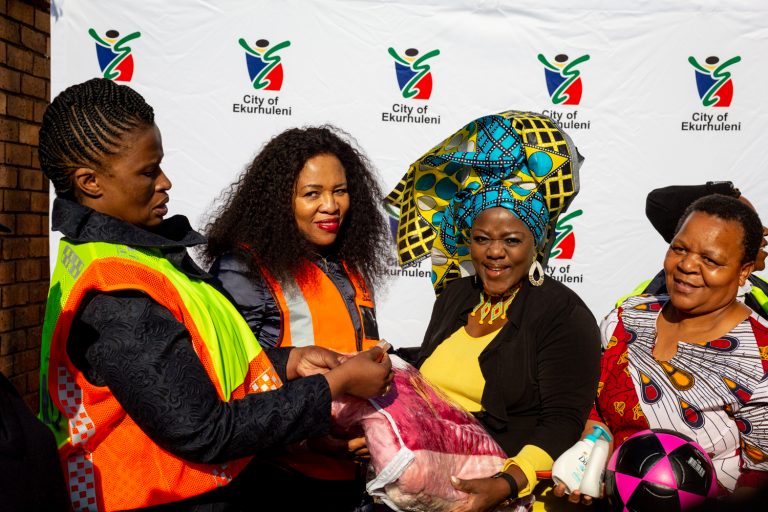
HEROES come in capes but not this one – she comes adorned in a dress! She is none other than Dr Imogen Mashazi, the City Manager of Ekurhuleni Metropolitan Council.
Despite her powerful position the feisty, hard-working and self-driven Dr Mashazi has no airs and graces about her.
She has agreed to our interview, on-line via Microsoft Teams, but is quick to add that she is only giving us 10 minutes of her time as she has other matters to attend to.
“After all,” she adds, “I don’t like the media. Zweli (Dlamini) – Chief Specialist Media Relations and spokesperson in her office – will give you all the other things that he has written about me.”
However, twenty minutes later, the accommodative and very passionate Dr Mashazi is freely chatting away about her life. From her days as a nursing sister in Soweto, then her move to Ekurhuleni where she joined the city as deputy director health services and welfare.
She rose up the ranks by not only burning the midnight candle – today she holds a DLitt et Phil (Nursing Science) Degree – but has also made sure that she leaves footprints in the sand everywhere she has been.
So, it came as no surprise when last month (July 23rd) the Soweto born and bred mother of three, scooped the award for Public Sector Leader at this year’s first Virtual Top Empowerment Awards.
The City of Ekurhuleni won the award for Public Service category.
The awards, launched 19 years ago, celebrate the country’s leaders in transformation and empowerment.
The platform provides exposure among empowered industry players, honouring those who’ve displayed innovative leadership and made a significant impact on the communities in which they operate as well as society at large.
Both these achievements are no mean feat and Dr Mashazi is the first to acknowledge that.
“The strangest thing is that I was not even aware that I had been nominated until someone called to congratulate me. I had no clue what they were talking about and asked them to forward me the info,” she relates.
“The win came as a surprise to be honest. If it was not for my personal assistant (Linda Naicker) I would not have won. Linda decided to nominate me behind my back probably because she knew that I would have said no as I am media shy.”
“Nonetheless, I am quite excited for the fact that at least one is recognised for the type of work one is doing especially as a woman empowering other women.”
Ekurhuleni’s Head of Department: City Planning, Palesa Tsita, says the award couldn’t have gone to a more deserving candidate.
Tsita should know, after all, she is living proof of Dr Mashazi’s determination and drive to see more and more women empowered in the city.
Dr Mashazi appointed her to the position in June last year.
“What I love about her is that she is tough and decisive and is not threatened by women like her but instead embraces and mentors them to ensure that they reach their full potential,” says Tsita.
Naledi Modibedi, Head of Department Human Resources, concurs.
She, like Tsita, was appointed by Dr Mashazi into her position three years ago.
“What I love about the CM is that she is the kind of boss that will give you space to do your stuff. If you mess up though she will give it to you there and then. But, with her somehow you know that it is not personal.”
“She speaks her mind and moves on and has no time to be holding a grudge. She personifies professionalism and perfection and expects it from all around her,” she adds.
Under her leadership, from her days as Chief Operation Officer, the city has achieved an unqualified audit with a clean audit on financial statements;
Zero unauthorised expenditure;
Zero fruitless and wasteful expenditure;
Irregular expenditure has decreased from R215 million in the previous financial year to R5 million in the 2018/19 financial year;
Collection rate stood at 91 percent.
She is described by those who know her as a no-nonsense woman who knows her story and expects the same from those around her especially women.
Dr Mashazi is passionate about women empowerment and does not only talk the talk but she walks the talk.
In 2017, she was instrumental in introducing The Women in Uniform Community Safety Project, aimed at ensuring that more women are appointed into meaningful positions in the workplace hence the appointments of the likes of Tsita and Modibedi and many others.
She says: “Remember I’ve been in the system for 20 years and as I worked my way up the ranks from my days as executive director of health and social development, I noticed that it was mostly men who were appointed into the senior and decision making positions like your HODs and managers.
“So, when I was appointed City Manager in 2016, I told myself that I wanted to change the status quo.”
In 2017, she made it clear that her intention was to see female employees at EMPD and DEMS prosper academically and career-wise.
She explains that she did this because she understood that their field of work is male dominated and that despite them doing the same work with their male counterparts, they still have to double their efforts to be recognized.
“I did thisbecause as a woman I had experienced some of the things and decided that as the first female CM of the City, I have to do something. Gone are the days when women have to experience gender discrimination in society and the workplace. Together we must prove that we are equal to our male counterparts one way or the other,” she explains.
Dr Mashazi, a married mother of three, is a team player who always acknowledges the support of others whether be it at home or work.
She says when she took the decision to have female HODs in the city, the Council obliged and today nine of the city’s 23 HODs are female.
Meanwhile, more than 400 women have been absorbed as traffic wardens.
While in the area of disaster management, two new female divisional heads have been appointed and now more dominate the space with a figure of 110 females compared to 63 male counterparts.
“We’ve also witnessed great progress in promotions in the EMPD with a number of women occupying senior positions such as deputy director, chief superintendent, superintendents and inspectors. Quite a huge achievement I must add.
“All these appointments and promotions have seen a number of ladies prioritising their studies to enable themselves to be considered for senior positions. Today we are in the company of women with MBAs, Honours, BTech Degrees and Diplomas.
“We are now steadily moving into the Fourth Industrial Revolution and therefore we must equip ourselves with the necessary skills to navigate our way out of any situation that comes with this revolution. Who knows maybe among you we have someone who will invent the most innovative way to fight crime and deal with disasters,” she recently told guests at the city’s 20th anniversary of it becoming a conglomerate.
Asked if women can have it all, Dr Mashazi believes yes, but is quick to add, she needs all the support from her family.
She credits her husband of 30 years for the reason why she has been able to succeed at work.
“If it wasn’t for him I doubt I would have even been able to take up some of these positions like this one of City Manager because it is demanding and we spend hours at work.
She adds that in earlier days, when the kids were small – now the first born is 30 years while her set of twins is 23 years of age – her mother-in-law, who has since passed on, played a great role.
“My husband took the kids to school. I was blessed in the sense that I’ve never had to take time off to rush my kids to a doctor or something because my mother-in-law was there for me,” she adds.
Her parting words to women this women’s month is that they need to go to school and work hard so that the system can recognise their efforts.
“Your work must speak for you don’t wait to get favours from people. When I joined the system as a public servant, my aim was to change the lives of the people of Ekurhuleni and I believe I did that. From my days as the director of health to my current position, my work speaks for itself from our TB cure rate which was at its lowest but by the time I left it was sitting at about 89 percent. We were among the first to buy ARVs for our patients and built world-class clinics for our townships.
“As the city we have changed the life styles of our citizens and continue to do so. My passion to empower women all these things will be the legacy I leave behind.”
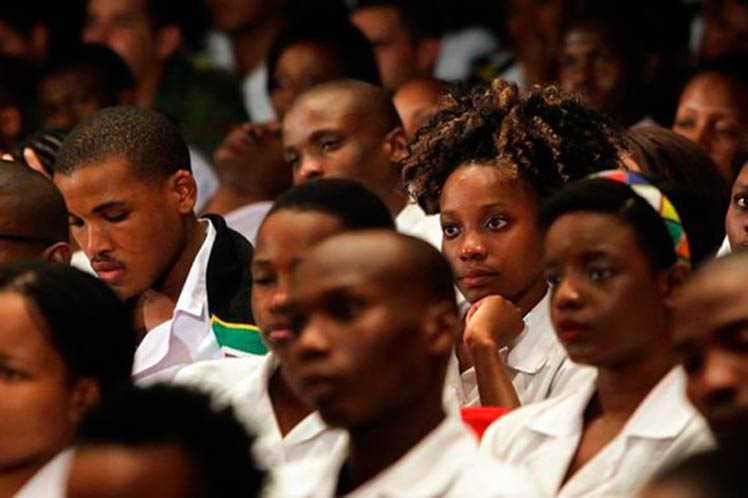
THE arrival in South Africa of 575 medical students who have been trained in Cuba since 2014, further confirms, if necessary, the excellence of relations between both nations.
In effect, according to Reynaldo Denis de Armas, head of Cuba’s medical collaboration, he told Prensa Latina that these young medical students, who returned this month on two charter flights, are really example of Nelson Mandela-Fidel Castro bilateral cooperation program signed in 1996.
Such a program, according to the Cuban ambassador in Pretoria, Rodolfo Benítez Verson, is a reflection of historical and special friendship and cooperation relations between Cuba and South Africa.
The United Nations rightly considers these relations as a global reference for true South-South Cooperation, he recalled.
Thanks to this program, adds Benítez Verson, over 1.500 young South Africans have already graduated as doctors (after studying in Cuba), and over 700 will get their degree this year.
It will be the largest doctor graduation in the entire history of South Africa, he highlighted.
These students will be sent to the Universities of Pretoria, KwaZulu Natal, Free State, Limpopo, Cape Town, as well as those of Sefako Makgatho (from Gauteng), Stellenbosh (Western Cape), Witwatersrand (Johannesburg), and Walter Sisulu (Eastern Cape).
Once sixth term of their career at these centers has finished, a group of professors and rectors of the Cuban Ministry of Public Health will travel to South Africa to take their state exam.
TWO French medical Professors Camille Locht of the French National Institute of Health and Medical Research (INSERM) and the head of intensive medicine at Cochin Hospital in France Prof Jean-Paul Mira stirred Africa’s hornet’s nests.
This happened in early April when they were speaking about the BCG-tuberculosis vaccine ability to treat COVID-19 on France TV channel LCI.
The two researchers ended up noting that testing of the much-anticipated vaccine should be conducted in Africa.
The video clip made headlines in the continent and a compressed cameo version went viral with extensive shares on cross-social media platforms Facebook, Twitter and WhatsApp.
Then the reactions started to stream in. Dr Tedros Adhanom Ghebreyesus the World Health Organisation Director General who was a former Ethiopian health and foreign minister termed the French doctors sentiments as “racist remarks”.
Dr Ghebreyesus went on to state that: “Africa cannot and will not be a testing ground for any vaccine. We will follow all the rules to test all vaccines or therapeutics all over the world using exactly the same rule whether it’s in Europe, Africa or wherever.”
Dr. Adhanom was not the only one to chime in.
World Health Org DG @DrTedros brands French scientists saying Coronavirus vaccine should be trialled in Africa, as racist. Adds that Africa will not be a testing ground & that this ‘colonial hangover’ needs to stop pic.twitter.com/ryi8GcG0Gg
The head of the Addis Ababa, Ethiopia, based African Centre for Disease Control and Prevention (ACDC) Dr. John Nkengasong also took great exception with the French physicians.
“The Africa Centers for Disease Control and Prevention (Africa CDC) strongly condemns the very disgusting comments made by Professors Jean-Paul Mira and Camille Locht on French Television on using Africans for testing a tuberculosis vaccine in clinical trials to see if it is protective against COVID-19.” Dr. Nkengasong said.
“These racist and condescending comments must be condemned by all decent human beings.”
Dr Nkengasong went on to insist that, “Africa CDC will continue to collaborate with the World Health Organization (WHO) to ensure that only ethically and scientifically sound clinical trials for vaccines and therapies will be conducted in Africa, using exactly the same standards and principles as those employed elsewhere in the world.”
To cool off the heat that their remarks had generated INSERM lab where Professor Locht works issued a statement.
“Clinical trials to test the BCGs vaccine efficacy against COVID-19 are underway or about to start in European countries (Netherland, France, Germany and Spain) and in Australia.”
The INSERM press release noted and went on to add: “There is currently a discussion around launching a study in Africa but if it is done, it will be done alongside these other studies. Africa must not be forgotten or excluded from research on COVID-19 because this pandemic is global.”
However, this was too little too late.
As he dismissed the two French medics, Dr Nkengasong waxed lyrical of the enhanced capacities of African bio-medical researchers.
The Addis Ababa-based top African medic highlighted some key pointers of Africa’s recent vaccine successes when he noted.
“Professors Mira and Locht have no lessons to teach Africa on the conduct of scientifically sound clinical trials. Africans have extremely capable world-renowned scientists who have played critical leadership roles in conducting clinical trials that have benefited the continent and beyond. Some examples include the leadership of African scientists in conducting an effective Ebola Virus Disease ring vaccine trial in West Africa in 2014, which proved a game changer in ending the outbreak,” Dr. Nkengasong said.
“Similarly, last year, experts from the Democratic Republic of Congo, alongside international collaborators, successfully carried out a clinical trial of Mab 114 monoclonal antibody therapy for Ebola Virus Disease.”
It is Dr Nkengasong’s final admission on Ebola that reveals much more about clinical vaccine trials in Africa.
Even though majority of those who railed against the two French physicians saw it as a racist ploy, the reality is that Africa has been a hot bed of vaccine clinical trials for decades now and Dr. Nkengasong just revealed the tip of an iceberg regarding Africa’s place in the global vaccines agenda.
According to the Global Vaccine Alliance (GAVI) presently there are over 148 corona virus vaccines candidates in development and 17 of them are already on phase two and three human trials across the globe including Africa. CureVac, Moderna, BioNtech, University of Oxford, CanSino, Sinovac Biotech, Merck & Co, Novavax, Gilead, Pfizer, GSK and Sanofi are among the leading firms with promising vaccine candidates.
"The best vaccine in the world won't work if it isn't used," @JohnsHopkinsIH professor Ruth Karron tells @DrJoshS.
"We should be planning now for what we'll need to put in place to deliver the vaccine."
— Public Health On Call (@PublicHealthPod) July 31, 2020
“When candidate vaccines make it to human clinical trials, they first go through phase 1 trials primarily to test the vaccines’ safety, determine dosages and identify any potential side-effects in a small number of people.” GAVI says.
“Phase two trials further explore safety and start to investigate efficacy on larger groups. The final stage Phase three trials which few vaccines ever make it to are much larger involving thousands or tens of thousands of people to confirmand assess the effectiveness of the vaccine and test whether there are any rare side-effects that only show up in large groups.”
In the last 10 years, vaccine trials on drugs for malaria, rotavirus, Ebola, Zika, Nipah virus, pneumonia and a host of other dangerous infectious diseases have all been conducted in Africa.
Sadly, even though vaccines have been trialed and tested in Africa there are no African biotech or pharmaceutical firms and labs involved in the current vaccine development competition.
That there is an intense international race and scramble to find a vaccine is not in doubt. In fact it has turned out to be a war like operation with the major powers deploying their militaries to synchronise their quests for a vaccine.
In early July the US Senate confirmed four-star General Gustave Perna as the Chief Operating Officer of “Operation Warp Speed” which the US’ historic operation to accelerate the development, manufacturing and distribution of Corona virus vaccine by early next year. In China Major General Chen Wei, a People’s Liberation Army (PLA) immunologist well known for her groundbreaking discoveries of vaccines for SARS and Ebola is currently leading China’s advanced COVID-19 vaccine hunt.
In March the world witnessed a Germany-US vaccine tiff when CureVac, a German bio-tech company rejected a proposal by US President Donald Trump to purchase exclusive rights to a promising coronavirus vaccine developed by the firm.
This rejection elicited a tough stance by the German federal government, which gave itself powers to veto any takeover bid by foreign firms over its two leading vaccine developers namely CureVac and BioNtech.
BioNtech is collaborating with Pfizer Laboratories and they expect to secure regulatory approvals for their vaccine by end of October this year. In June, the German government sweetened its veto deal by buying some 23 per cent stake in CureVac for a sum of $337.4mn.
The European Union on its part has set aside some $6.9bn to ensure fair distribution of vaccines within the EU bloc boundaries.
The German biotech firms seems to have attracted intense interest as in late July GlaxoSmithKline announced that it will spend $163.67mn to purchase some 10 per cent stake of CureVac with special interests in vaccines to treat and prevent infectious diseases.
An effective and safe #vaccine against the virus is our best bet to achieve a permanent solution to the COVID-19 pandemic. The Commission has presented a European strategy to accelerate the development, manufacturing and deployment of safe and effective vaccines against COVID-19. pic.twitter.com/oY8JPNgoAD
This was not the only basket where GSK had invested its funds and resources.
Earlier in April, GSK and French pharmaceutical giant Sanofi had announced that they had signed a letter of intent to collaborate in the development of an adjuvant vaccine for COVID-19.
It is significant to note that during the 2014 Ebola Virus Disease (EVD) outbreak in Guinea, Sierra Leone and Liberia, which claimed over 10,000 lives in West Africa a host of Ebola vaccines candidates were trialed in 10 African countries.
Subsequently a number were approved and Africa’s role as a bystander in the vaccine development was acknowledged.
The continent remains a laboratory owning no patent rights on numerous vaccines developed in Africa’s soil.
According to WHO records between October 2014 and April 2015 EVD vaccine trials were conducted by different pharmaceutical companies in Mali, Gabon, Kenya, Uganda, Tanzania, Cameroon, Ghana, Mali, Nigeria, Senegal, Guinea-Conakry, Liberia and Sierra Leone.
The vaccine candidate drugs included VSV-EBOV which trialed in Liberia, Guinea and Sierra Leone by Newlink Genetics and Merck Vaccines of the US.
The same drug was in March 2015 also being tested in Guinea Conakry by MSF, WHO and the Guinean government.
At the same time the Guinea Conakry trials were being conducted ChAd3-ZEBOV was being tested in Cameroon, Ghana, Mali, and Liberia by GSK and PHAC.
As of May 2018 the WHO Vaccine Tracker notes that MSF Epicenter was testing vaccines on Pneumococcal infections, the University of Oxford was testing on Ebola and Marburg.
Others who tested their vaccine candidates in the said period included Johnsons and Johnson, Bavarian Nordic, Oxford University among others.
Some of these vaccines tested for Ebola are now becoming more useful in combating COVID-19 as trial results have indicated.
Indeed the world breathed a sigh of relief in early May when the US National Institutes of Health proclaimed that an Ebola vaccine candidate Remdesivir was accelerating recovery of COVID-19.
Remdesivir which is manufactured by the US based Gilead Sciences Inc. had previously been tested in Africa.
That same month of May saw Gilead Sciences signing non-exclusive licensing pacts with five generic drug makers based in India and Pakistan namely Cipla, Ferozsons Laboratories, Hetero Labs, Jubilant Life Sciences and Mylan to help supply Remdesivir in 127 countries.
The five licensed companies are free to set their own prices for the Remdesivir generics they produce and the licenses signed will remain royalty-free until another vaccine other than Remdesivir or the WHO declares the end of the COVID-19 pandemic.
Interestingly, while Africa has provided perfect venue for vaccine trials in sites like Manhica, Mozambique, Kilifi in Kenya, Lambarene in Gabon, Bioko Island in Equatorial Guinea, Bagamoyo in Tanzania, Luapula in Zambia and Haut-Katanga in DRC among other trial sites it has no major player in the form of a vaccine maker or drug manufacturer in the current global vaccine race.
The pharmaceutical and biotechnology entities currently leading in the hunt for a COVID-19 vaccine are drawn from US, UK, France, China, Russia (all of them coincidentally Permanent Members of the UN Security Council), Germany and South Korea.
In late May, the US-based Novavax bought Praha Vaccines, a unit of Cyrus Poonawalla Group, which owns the Serum Institute of India (SII).
This acquisition was made just as Novavax embarked on its Phase one trials on its vaccine candidate NVX-CoV2373 that was its lead SARS-CoV-2 candidate currently underway in Australia.
The preliminary immunogenicity and safety data was expected in late July and Phase 2 trials will be conducted in multiple locations across the world.
The vaccine is based on “proprietary recombinant nanoparticle technology”.
Apart from Novavax, which is a US-based biotechnology company, specializing in next-generation vaccines for infectious diseases, GSK had also announced in May that it intended to produce a billion doses of COVID-19 pandemic vaccine adjuvant in 2021.
To this end, GSK has formed scientific partners in Europe, China and the Americas. GSK manufacturing sites are in UK, US, Canada and Europe.
“We believe that more than one vaccine will be needed to address this global pandemic and we are working partners around the world to do so,” Roger Connor President of GSK Vaccine says.
“We believe that our innovative pandemic adjuvant technology has the potential to help improve the efficacy and scale up of multiple COVID-19 vaccines.”
In the same week Novavax made its move, another US vaccine maker Merck & Co intensified its coronavirus vaccine race by buying Austrian drug maker Themis Bioscience.
Both Merck and Themis now have two vaccine candidates on trial.
Themis together with Institut Pasteur had used a technology that was based on a modified measles virus to combat COVID-19.
The second vaccine trial is derived from Merck’s Ebola vaccine candidate.
That there were interesting almost coincidental developments around vaccine development in May is no longer in doubt.
Still in late May, Astra-Zeneca and Oxford University recruited 10,000 adults and children for the second and third phase trials of their coronavirus vaccine candidate AZD1222.
Encouraged by the initial trial results the US government pledged some $1.2bn for a third of the first billion doses of AZD1222.
AstraZeneca had also signed a £65.5mn deal to manufacture 30 million doses and deliver 100million doses in total to the UK government.
Other vaccine manufacturers such as Moderna with its SARS-Cov-2 vaccine mRNA-1273, Johnson and Johnson, Sanofi, Merck among others are currently ramping up their vaccines production capacity with several “at-risk investments” aiming for the production of 1 billion vaccines by 2021 should their respective candidates get the go ahead.
A significant strand ties most of these vaccine manufacturers. It is the Coalition for Epidemic Preparedness Innovations (CEPI), which was founded by the Wellcome Trust and the Bill and Melinda Gates Foundation in Davos in 2017 and is now headquartered in Oslo, Norway.
CEPI is funding Novavax, University of London, CureVac, Inovio Pharmaceuticals, Moderna and University of Queensland among others.
“Investing in vaccine development now is an investment in the future health of all our societies,” Richard Hatchett, the CEO of CEPI says.
“An urgent global, concerted effort is now needed to raise the money required to advance the development of COVID-19 vaccines.”
While African and Latin American governments through their own state-led medical research institutions have been deeply involved in most of these vaccines trials in agreements that are rarely public and favouring the pharmaceuticals it is clear Africa, Caribbean and Latin American are missing in action in the mega-bucks of vaccine development.
COMPANIES AND COUNTRIES LEADING IN THE CORONAVIRUS VACCINE TRIALS|
People’s Liberation Army (Academy of Military Sciences/Walvax Biotech)
Shenzhen Geno Immune Medical Institute – Lentiviral Vector Vaccines
Anzhui ZhifeiLongcom Biopharmaceutical and Institute of Microbiology – Chinese Academy of Sciences.
GERMANY
CureVac
BioNtech
Max Planck Institute
US
Moderna
Inovio Pharmaceuticals
Dynavax
Pfizer
Johnson and Johnson
Gilead
Arcturus Therapeutics
UK
GSK
University of London
Astra-Zeneca
Imperial College
FRANCE
Intitut Hospitalo-Universtiaire
Sanofi
Pasteur Institut
RUSSIA
R-Pharm
Gamaleya Research institute
SOUTH KOREA
Genexine Consortium
WANJOHI KABUKURU is a multiple award-winning international media trainer, editor and journalist, with a specialty in environmental journalism. Over the last 20 years his articles have been published in top-notch publications such as New African, African Business, Seychelles News Agency, African Banker, Radio France International (RFI), Inter Press Service (IPS), Diplomat East Africa, BBC Focus on Africa, Mail & Guardian, Africa Renewal and 100Reporters among other numerous publications. He is the current editor and head of the Indian Ocean Observatory Media Unit. He is also a correspondent for the UN’s Africa Renewal.
(COMPILED BY INSIDE EDUCATION CORRESPONDENT IN NAIROBI, KENYA)
WHAT long-lasting changes to South Africa’s higher education sector has the pandemic brought? And how will these affect the way universities deliver teaching and research?
Mamokgethi Phakeng, University of Cape Town: University teaching will draw from various methods that range between fully face-to-face and fully online. Long before COVID-19, the University of Cape Town recognised the need to prepare students for a digitally mediated world. For example, by the beginning of this year about 60% of UCT lecturers had chosen to record their lectures.
COVID-19 fast-tracked this process as we launched emergency remote teaching.
Many of our academics say they will never again teach in the same way as before. The new way puts the needs of students with barriers to learning at the forefront. It helps us design good learning experiences and reconsider methods of assessment. Students can revisit online course material, ask questions and get personal support, in and out-of-normal teaching hours. It’s especially helpful to students who are second-language English speakers or who have a disability.
Lecturers have found how easy it is to engage with students in a WhatsApp group. There are challenges, of course, such as how we can conduct assessment for some invigilated exams, and in data access and electricity provision for some students at home. We are surveying students and academics to monitor their experiences and review lessons for the future.
Tawana Kupe, University of Pretoria: The reliance on face-to-face or contact teaching was under question because of the rise of digital technologies that were slowly disrupting it. For a number of reasons, higher education institutions were taking their time. Some lacked capital. There was also the issue of students’ lack of access.
A return to purely contact learning is not going to be possible. People have experienced something that seems more relevant to a future marked by increasing digitisation. Universities will now need more resources allowing them to move with greater speed in changing to hybrid or blended teaching and learning. When it comes to research, the use of simulations will increase, as will the use of technologies that can gather research data.
Adam Habib, University of the Witwatersrand: I believe we are going to see a stronger shift to a blended learning model. Anecdotal evidence is showing that our students are performing better in the online environment than face-to-face. This suggests we need to re-imagine how we test and assess our students’ capabilities. Obviously certain degrees still require face-to-face learning but this can also be re-imagined.
The shift to online also means we are going to see the digital divide in our country grow sharper unless we are able to develop public-private partnerships to assist. Government will also need to adjust its thinking about how we achieve this financially and in terms of curriculum changes.
Do universities have the human and financial capacity to respond to these long lasting changes?
Mamokgethi Phakeng: New ways of teaching can release human capacity by allowing lecturers to manage their course loads more easily. And if they make it possible to increase the number of students who can enrol in certain courses, then they could bring more income to the institution, to help finance human capacity or infrastructure development.
Of course, there will always be courses that require students to work collaboratively, or to have access to labs, and those courses remain available. Other universities are now beginning to use the extensive resources we’ve developed under Creative Commons licences, to benefit the sector during the pandemic.
Tawana Kupe: Most universities do not have the human and financial capacity to respond to these changes given that they have not been adequately funded for decades. Many face an existential crisis if governments do not include them in the stimulus packages meant to reverse the impact of COVID-19.
The training of staff who manage the information technology infrastructure and academic staff who teach and do research is critical for a successful transition from contact teaching to hybrid teaching. Innovative and creative ways to fund the transitions will have to be developed. They should include partnerships and collaborations among universities and with governments, the private sector and international donors.
Adam Habib: Many academics and professional staff have been able to adjust fairly quickly to the new online mode of teaching. This has been under discussion for some time now. I do not believe we will have a human capacity issue. The real issue will remain how to finance higher education. There is going to be a significant financial challenge both as a result of subsidy cuts (given state finances) and the inability of students to pay fees (because of the economic crisis).
In South Africa, we will also see a growing “missing middle” cohort as a result of job losses. Providing financial support to these students is going to be more important now than ever.
Are South African universities unique in facing these long lasting changes? What can they learn from other universities?
Mamokgethi Phakeng: Universities around the world are re-examining how they teach, do research and serve their students, staff and alumni.
Digital technology has opened up ways for people and institutions around the world to discuss and collaborate on problems that are universal. COVID-19 is demonstrating that across the globe we are facing the same problems, so we need to work together to find solutions.
Tawana Kupe: No, South African universities are not unique. What South African universities can learn is how to navigate changes in modes of teaching, learning and research from those universities that are ahead in adopting hybrid or blended modes.
Adam Habib: South African universities have similar problems to other institutions across the world. The big distinction with South Africa is that we are undertaking these activities in the midst of deep inequalities.
This means that we have much to teach the world on how to engage in blended learning in unequal contexts and how to assist poor people in this regard.
BASIC Education Minister Angie Motshekga says some of the school work for some grades will be carried over to 2021 following disruptions brought about by the outbreak of the coronavirus pandemic.
Motshekga said it could take three years for schools to recover from work missed in the 2020 academic year.
“In 2021, when the Grade 3 learners start we will start with Grade 2 work which we had removed from the curriculum,” said Motshekga.
She said this year’s curriculum will only see 70% of the syllabus completed by December.
“The catch-up programme might run for about three years; we don’t think we will finish the work of 2020/2021 in 2021, this is why I say it’s going to be a three-year programme to see if we can clock back what we have lost,” said Motshekga.
Motshekga said Grade 7 learners are expected to return next week Monday and the rest of the grades will be phased in from 24 August.
She said government cannot cancel the academic year because it will put pressure on the one million Grade R learners who will be registered into the 2021 academic system.
However, she added, Grade 12 learners are expected to complete the syllabus in order to make space for other learners to be entered into the education system in 2021.
“We need Grade 12s to move to allow space for the grade 1s, just to get the system to breathe,” said Motshekga.
THE world is facing a “generational catastrophe” because of school closures during the coronavirus pandemic, UN Secretary-General Antonio Guterres warned Tuesday.
“Getting students back into schools and learning institutions as safely as possible must be a top priority,” once local transmission of Covid-19 is under control, he added.
Guterres said that in mid-July, schools were closed in more than 160 countries, affecting over 1 billion students, while at least 40 million children worldwide have missed out on education in their critical pre-school year.
“We already faced a learning crisis before the pandemic,” the Secretary-General said.
“Now we face a generational catastrophe that could waste untold human potential, undermine decades of progress, and exacerbate entrenched inequalities.”
The knock-on effects on child nutrition, child marriage and gender equality, among others, are “deeply concerning,” he warned.
“The Covid-19 pandemic has led to the largest disruption of education ever,” Guterres said in a video message as he launched the “Save our Future” campaign with education partners and United Nations agencies.
The campaign calls for action to reopen schools, prioritize education in financing decisions, target those who are hardest to reach, and focus on creative and innovative ways of teaching.
“Despite the delivery of lessons by television, radio and online, and the best efforts of teachers and parents, many students remain out of reach,” he said.
Learners with disabilities, those in minority or disadvantaged communities, displaced and refugee students, and those in remote areas are at highest risk of being left behind, Guterres warned.
“And even for those who can access distance learning, success depends on their living conditions,” Guterres said. “Parents, especially women, have been forced to assume heavy care burdens in the home.”
More than 250 million school-age children were out of school prior to the coronavirus outbreak, he said, with only a quarter of secondary school children in developing countries leaving school with basic skills.
Countries around the world are now grappling with how to safely reopen schools amid the coronavirus pandemic — and whether to reopen at all.
Two new studies, released in The Lancet Child & Adolescent Health on Monday, turn a spotlight on strategies that could be key in bringing children back to the classroom: Scaled-up testing for cases, effective tracing of the contacts of those who test positive, and isolation of those who test positive or have symptoms.
Researchers in Britain found that schools could reopen safely provided sufficient contact tracing is in place.
And a team in Australia found that even though schools remained open in New South Wales between late January and early April, children and teachers did not contribute significantly to the spread of Covid-19 — because good contact tracing and control strategies were in place.
The British study uses a model to estimate how much testing and contact tracing would be needed to prevent a second wave of Covid-19 following the reopening of schools this September.
It suggests that, depending on the scenario, between 59% and 87% of symptomatic people in the community would need to get tested at some point during their infection, their contacts would need to be traced and those with illness would need to be isolated in order to prevent an epidemic rebound.
But “without sufficient coverage of a test-trace-isolation strategy, the UK risks a serious second epidemic peak” in December or February, researchers warned.
“We are at a defining moment for the world’s children and young people,” Guterres said Tuesday.
“The decisions that governments and partners take now will have lasting impact on hundreds of millions of young people, and on the development prospects of countries for decades to come.”
“We have a generational opportunity to reimagine education,” the UN Secretary-General added.
“We can take a leap towards forward-looking systems that deliver quality education for all.”
THE Congress of South African Students has vowed to make private schools ungovernable should they remain open in the coming weeks.
The student body said on Tuesday it was a travesty of justice that while pupils in public schools are languishing at home, the ‘rich kids’ remain unaffected.
“What we are seeing here is inequality at it best. We cannot allow a situation where the majority black and poor learners are the only ones who have to suffer. This is not their own making. Learners must be treated the same regardless of which school they attend public or private,” said Jabulisa Mchunu, COSAS provincial chairperson speaking to Inside Education.
Mchunu said COSAS has lobbied other student formations such as the South African Students Congress to also join in the fight to shut down private schools.
“We are lobbying Sasco because they are our allies and together we form part of the progress youth alliance under the ANC banner. But we invite other student groups as well to assist us in pushing this campaign as we aim to picket in every private school that remains open. Besides, the lives of pupils in private schools also matters, so this attempt is also meant to protect them as well,” explained Mchunu.
Following public pressure and fears that the COVID-19 wave might spiral out of control amid the flu season, President Cyril Ramaphosa announced closure of schools, except for Grade 12.
All other grades are expected to be phased in from August 24.
Grade 5 pupils are also expected back at school next week.
The unprecedented closure only affected public schools while private institutions would make their own determination whether to remain open or closed.
These schools are, however, divided on the matter with some remaining open while others have opted for remote learning instead.
Responding to the threats by COSAS, Mandla Mthembu, chairperson of the National Alliance of Independent Schools Association (NAISA) said parents of pupils in private institutions were paying too much to allow it to go to waste.
“Parents pay a lot of money so that their kids can access quality education. They must get value for their money and we hope that police will acts swiftly and arrest anybody who disturbs teaching and learning,” said Mthembu.
Meanwhile, there were no major incidents reported in KZN as matric pupils returned after a short break.
Nolwazo Chiya, a governing body member at Menzi High School, said it was agreed that pupils would commence classes at 7am as an attempt to catch up on lost time.
Menzi High School is one of the best performing schools in the province boasting a consecutive 100% matric pass rate.
“We do not want our pass rate to dwindle so we’re now resorting to this measure,” she told Inside Education.
According to the new revised academic calendar, schools will close on December 15 for grade R to 11.
Unlike the previous years, matric results will now be released next year on February 23.
THE global pandemic has thrust many sectors into turmoil as nationwide lockdowns have been implemented globally. In South Africa, one sector that is experiencing considerable challenge and concern is education.
While inclusive education has always been an apex priority of our country, now more than ever, teachers in South Africa need the skills, knowledge and attitudes to teach inclusively in diverse classrooms and communities. On 6 August 2020, the Teaching For All project will host a virtual event for university students to discuss inclusive education in South Africa.
“Through this event, we want to engage with the next generation of school teachers on inclusive education issues and advocate for inclusive education in the system by discussing the roles, responsibilities, opportunities and challenges that teachers will face in a post Covid-19 environment,” says Joanne Newton, Programme Manager: Teaching for All.
Teaching for All is an ambitious material and teacher development project that sees teachers as key change agents and provides them with the tools to teach inclusively in diverse classrooms; thus contributing to a reduction of children being excluded from education
Inclusive education recognises that all children have the ability to learn and the right to quality education to enable them to reach their full potential. In South Africa, despite the substantial gains made in education since 1994, many children continue to be marginalised due to a web of interrelated barriers, which make them vulnerable to educational, social and economic exclusion. Some are denied access, while many pass through the school system, or drop out, without receiving a quality education.
Keynote speaker, Professor Nareadi Phasha, who is a Professor of Inclusive Education at the University of South Africa (UNISA), believes that inclusive education plays a vital role in South Africa’s education sector.
“Previous research has found that teachers have a negative attitude towards pupils with disabilities and we need to ensure that we prepare South Africa’s future students for the fourth industrial revolution and to adapt their teaching practices for diverse classrooms,” she says.
Working with partners and key stakeholders, the Teaching for All project has developed teacher training modules and materials for Bachelor of Education and Postgraduate Certificate in Education programmes. Ten South African universities are currently delivering the training, with the implementation being monitored and evaluated by the Centre for International Education at Cape Peninsula University of Technology. South African Council for Educators (SACE)-endorsed inclusive education in-service programmes are under development for delivery to Provincial Education Departments.
The success of Teaching for All relies on multi-sector partnerships committed to providing quality education for all learners: British Council, the Department of Basic Education, Department of Higher Education and Training, the University of South Africa and MIET AFRICA. The project is funded by the European Union.
The virtual event will be live streamed through the British Council’s YouTube Channel.