Home Blog Page 392

The Case for Reopening Schools: The Harm From Lost Instruction Outweighs The COVID-19 Risks.

SUBMISSIONS OF PRIVATE SCHOOLS TO THE MINISTER OF BASIC EDUCATION REGARDING THE MAINTENANCE OF LEARNING AND TEACHING DURING COVID-19 PANDEMIC DESPITE OPPOSITION BY LEADING FIVE TEACHER UNIONS IN SOUTH AFRICA|

SOUTH AFRICAN WALDORF FEDERATION

The Federation of Waldorf Schools in Southern Africa has 16 member schools. 4 schools are low fee under R300 per month, 1 school is a low fee special needs school, 5 schools are mid fee schools and the remaining schools are well resourced schools. Thus we represent all sectors of our society. All our schools have opened and are strictly following all the regulations and protocols required to combat COVID and ensure the safety of all teachers and Children in our communities. Our low fee schools are subsidized.

In total out of 3400 learners we have had 5 infections, all of which have been traced back to sources not from within the school. Out of 350 educators 4 have tested positive also not from within the school. Schools have been deep cleaned and apart from 1 school that closed for a short period all schools have continued unaffected. Children were already in Isolation due to family circumstances, so no classes have been disrupted due to learner exposure.

All our schools have engaged in a hybrid of online/ Remote and physical learning and have staggered the attendance of our classes. 50% of learns are back at school at a given point with an average of 85 to 90 percent attendance. Thus our teachers are dual teaching. Where children do not have access to online learning Watts App and resource packs are being used.

ACCELERATED EDUCATION ENTERPRISES (AEE) ASSOCIATION     

The Accelerated Education Enterprises (AEE) Association, a custodian of the Accelerated Christian Education (ACE) Curriculum, has 650 Schools in South Africa (Primary and Secondary/ High Schools) and has 1600 Home Schools using the ACE Curriculum. 100% of our schools are open and all our Home Schools have been running even during lockdown because it is parents assisting their children at home with learning. We have Online Programmes which support our blended learning approach. To date we have had less than 10 cases of COVID 19 reported from our schools. It all the cases it has been staff members who got the virus outside of the school. SoP as provided by DBE were followed in each case. No child has had COVID 19 in all our schools.

We support the position of the Department of Basic Education (DBE) to keep the schools open. There is no evidence to support the claim that children are in danger of contracting COVID 19 in Schools. Children are better supervised in schools and have the best care and in certain circumstances even safer than being at home when there is no one to supervise them.

ASSOCIATION OF CHRISTIAN SCHOOLS INTERNATIONAL (ACSI)

The Association of Christian Schools International (ACSI) has a membership of 109 Independent Christian Schools in South Africa. We currently have 105 of our schools open and fully functioning (different grades on different days and the like) and only 4 of our schools, which are stand-alone ECD centres that have not fully opened. We have had 13 Covid-19 cases reported from our schools across the country. These cases are mostly of teachers/parents that have contracted the virus from outside the schooling environment. Some of these schools had to close to be disinfected, but all of them have reopened successfully and without any other issues due to their strict adherence of the Covid-19 protocols and procedures.

Our schools have been operating with a 60-95% attendance register of learners, depending on what level of Online/blended learner they can also administer. There has however also been a harsh financial knock that the schools have taken, staff salaries have been reduced, in some instances up to 50% salary cuts and also only receiving at most 80% of schools fees in the best of situations. For the most part, there has been a drop of, on average, 40% of schools fees paid in.

ANGLICAN BOARD OF EDUCATION SA

The Anglican Board of Education represents 350 schools in Southern Africa, 110 schools in South Africa both independent and public schools (these are old mission schools that are now funded by the government but are on Church land).

All the schools are open and ABE supports the call to remain open because schools are good for children and remain safe places. The attendance at school varies between 50% to 90% depending on access to online learning and the grade. There is higher attendance in matric. The infection rate in schools is very low (0.2%) and the infection has been traced to contact outside the school. Schools have closed to do proper cleaning and sanitizing of certain areas of the school if a case is reported. 

ASSOCIATION OF MUSLIM SCHOOLS

All 84 schools belonging to the Association of Muslim Schools in the nine provinces have reopened. The schools have all complied with the Covid 19 Standard Operating Procedures and have reported attendance ranging from 50% in the lower grades to over 85% in the Grade 12 and FET classes. Most schools are using a version of the reengineered time tabling schedules recommended by the DBE, with the popular choice being the alternate day model supplemented by online learning.

The incidence of Covid 19 infections varies from province to province but the trend appears to be that the source of infections is not from within the school but from home or community contact.

As with independent schools across the country, our member schools have also been severely affected by the economic downturn and the main casualties at this stage are staff who have had to take salary cuts of between 40% and 50%.

AMS supports the call for schools to remain open during this period with the proviso that individual schools need to be allowed flexibility and discretion according to their individual circumstances. 

SOUTH AFRICAN MONTESSORI ASSOCIATION

The South African Montessori Association has 189 members, of which 92% have successfully opened and phased in children from 18 June to date. Our Montessori schools serve both underprivileged and privileged communities.

SAMA has had three reported cases of COVID from our members, all of whom were parents who had contracted the infection from their workplaces and were in no way related to the schools. Regardless, the schools continue to follow the strict Health protocols and have been commended by the local Health authorities for the manner in which they have handled the situation.

We have had the most positive and uplifting feedback from our schools. The children have flourished since being able to return to school. Many schools reported that they visibly noticed the negative effect of school closure on the child’s emotional well-being and their physical development, particularly their gross motor and emotional development. This was soon remedied within two weeks of the children being back at school.

Most schools have had between 50% and 80% of children who have returned to school, with the remainder choosing to work online. However, the online learning pales in comparison to what the learners achieve in the classroom.

SAMA schools have been also very badly affected financially by school closures in the first phase of the lockdown. If

CATHOLIC INSTITUTE OF EDUCATION

Short report on Catholic Independent Schools 

There are 95 Catholic independent schools of which 39 are Pre-school to Grade 12 and the rest a mixture of primary and high schools. 

  • 3585 teachers
  • 53000 learners
  • 79% of leaners are black and 25 % Catholic.
  • 37 of these are no or lo fee schools.

Only one school has not opened due to intimidation.

COVID compliance is excellent although the costs of decontamination are becoming a challenge for low fee schools. CIE supplied PPE to no and low fee schools after raising funds. Schools have managed cases well – we do not actual figures but most schools have been affected but have closed and opened after decontamination.

While some schools report almost 100% attendance of learners, the average attendance is 80%. In Gauteng this has dropped as the numbers of COVID19 cases has risen, with schools with online capacity using a mixture of online and face-to-face, and one school using online for the most of the school (Grade R -11) online but Grade 12s at school. .

Teacher attendance varies due to those with comorbidities, testing positive or going into isolation, although these are preparing lessons or where possible teaching online.

While it is difficult to give are the actual numbers of cases. These have risen in Gauteng with several teachers and learners testing positive. All cases have come from outside the school.

Schools in townships have not faced any protests to date except the orphanage in Bronkhorstspruit which had to close the school portion because of intimidation. Soweto schools were warned on Thursday of COSAS action which did not materialise.

SOUTH AFRICAN BOARD OF JEWISH EDUCATION

The South African Board of Jewish Education (SABJE) has taken a decision to move all their schools in Gauteng to an online platform as a precautionary measure as per advice given to them by their medical consultants and concerns raised. This is in no way suggesting that schools must be closed. They have the resources and the infrastructure to provide online learning to all their students. The main concern has been about the need to protect teachers and to reduce the stress and anxiety levels some of them have had to deal with in the past months.  This is only for their Gauteng schools in the interim period. The decision will be reviewed when circumstances change and new advice is received from their medical practitioner consultants.

Lesufi Calls For End Of IEB Exams To Allow For Equal Access To The Country’s Opportunities

0

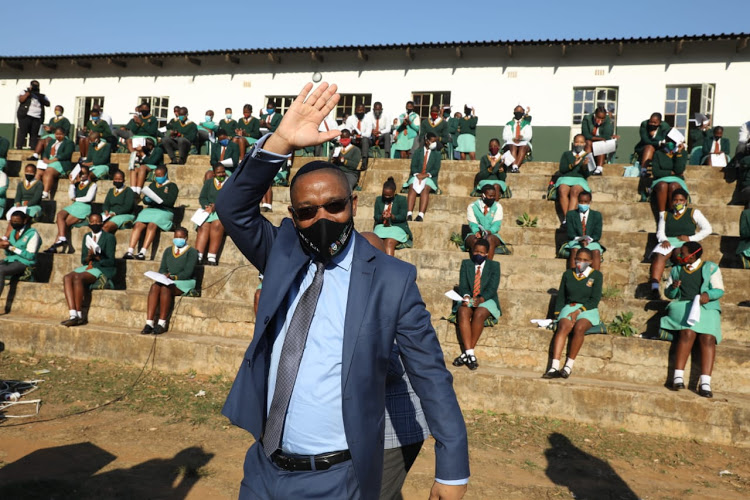
In recent months, Gauteng Education MEC Panyaza Lesufi has called for the scrapping of the Independent Examinations Board (IEB) tests and for the establishment of a single body to ensure that all pupils are prepared and assessed on the same standard.

Last week, Lesui reiterated his call for the cancellation of different examinations for public and private schools, saying South Africa doesn’t need two systems – the National Senior Certificate (NSC) and the Independent Examinations Board (IEB) – in one country.

This comes after President Cyril Ramaphosa announced the closure of public schools for four weeks, starting from July 27 and reopening on August 24.

Lesufi took to Twitter on Thursday night, reiterating his call that the IEB and NSC learners should write the same exams because there is no difference.

“All our learners attend the same universities or higher education institutions regardless of whether they wrote IEB or NSC. Actually, they go to the same workplaces,” said Lesufi.

“Both IEB and NSC are adjudicated by the same body called  @UmalusiSA and the pass mark is the same. They also follow the same curriculum.”

He said the rationale for this proposal was to ensure that all learners write similar examinations monitored by a single national examination body.

“Currently‚ there is virtually little difference between the curriculum offered by public and independent schools. Secondly‚ both systems use similar criteria to assess a pass or a fail in the National Senior Certificate. Furthermore‚ all learners compete for jobs and careers in the national and global economy and are also competing for spaces in one single higher education system‚” he said

He added: “We want to argue that the policy conference must open up this debate. We are not saying we are right, and other people might say the current way is correct. But if you look at the posture and the character of these two exams, it gives an impression that the IEB is a difficult one for the rich and the National Senior Certificate is the weaker one for the poor. If we are going to have that kind of mentality, I don’t think it projects the country well.”

“Our argument is that it is not possible to have one examination that is independently monitored, so that those that are fearing that if we combine them the standard will go down, they must be assured that it’s not government that is running it but it is an independent body. But this will also assist all of us to share quality among the entire system and that’s the debate we want to open up.”

Three Senior KZN Education Officials Suspended Over R129mn Schools’ Sanitary Towels Project

THREE senior of officials of and a service provider to the KwaZulu-Natal (KZN) education department have been suspended following an investigation into a tender worth R129.8 million.

This was announced by MEC of education Kwazi Mshengu at a media briefing on Thursday.

It is alleged officials mismanaged the implementation of a project aimed at distributing sanitary towels to indigent girl-learners at the majority of the province’s schools between 2016 and 2017.

“It was revealed that an excess of 2,702,065 packs of sanitary towels were not needed,” said Mshengu.

Mshengu said his department initiated the sanitary towel provision programme to improve the school attendance of girl-children as well as improve their performance.

The forensic investigation found there was an oversupply of more than two million sanitary pads; 388 650 packs of sanitary pads were not delivered to the district offices and head office; another 64 269 packs were not delivered to schools; and that these packs cost more than R4-million.

The department launched the project in 2016 and R20-million was set aside for selected schools in quintiles one to four.

The intention was to supply learners in grades four to 12.

Mshengu said that in April 2017 the department approved the purchase of 953 122 packs of pads at a cost of more than R54-million; in August 2017, a second order for the same number of learners at the same cost was approved.

Between 2016 and 2017, the department spent R129 799 654 on sanitary towels.

(Compiled by Inside Education staff

School Closures: Interests Of Children Last On The List Of Priorities In Capitulation To Unions

DEBBIE SCHAFER

IT IS WITH deep disappointment that we note the decision of the national Cabinet to once again close schools for a whole month. The arguments from governing body associations, NGOs and medical specialists highlighting the positives of children being at school and the negatives of not being at school, have been swept aside on a wave of political expediency.

It is, plainly and simply, capitulation to teacher unions, and an attempt, once again, to bring every province down to the lowest common denominator because ANC-run provinces have not used the lockdown period to adequately prepare their health systems, and have decades of neglect in fixing their school infrastructure. 

We supported having a break for two weeks on the basis that many of our teachers and learners have been working during the lockdown, it has been an anxious time putting new processes in place, and there is no real holiday provided in the current calendar for the rest of the year.  This should be a complete break for people to rest and anxiety levels to dissipate.

But an additional four weeks is going to cause immeasurable damage to our children and our economy.

People who continue calling for schools to shut down clearly either do not understand the implications on the system and the children, or do not care. 

Research has shown that the negative effects of closing schools are profound.

The first and most obvious impact is on educational outcomes. Studies of previous epidemics and disasters which resulted in school closures have shown that learners remain behind schedule on learning for years to come. Keeping learners engaged during school closures is difficult, and we are likely to see a regression from prior learning levels as a result. Dropout rates also increase during protracted school closures, and the impact is greatest on the enrolment of girls according to a number of international organisations.

Both the World Bank and UNESCO have highlighted the unequal nature of educational impacts. Children whose parents have the resources to provide internet access and continuous parental supervision will be able to continue their learning during closures, but learners without access to these resources will fall further and further behind. Instead of closing the education quality gap, school closures will actively increase it.

Secondly, closure has a serious impact on the nutrition of vulnerable children. An estimated 2.5 million children in South Africa experienced hunger before the Covid-19 pandemic and lockdown, and experts are warning of a rapid increase in hunger as a result of both the job losses and the closure of schools due to the pandemic. Surveys by Stats SA, the Human Sciences Research Council and Ask Afrika revealed sharp increases in hunger due to the lockdown.  Whilst schools will continue with the feeding programme, in line with the recent court order, it is highly unlikely that all learners who need it will be able to get to school to collect food, especially in very rural communities.

Child safety is also put at risk by school closures. The economy is open while schools are closed – meaning that parents who are not teachers have to go to work. Parents of millions of children who would otherwise be safely at school must now scramble to find someone to care for their children so that they can go to work. The reality is that many of these children will have to stay home alone, and health experts are already reporting the terrible consequences in terms of injury or death of unsupervised children.

Healthcare and other essential workers have voiced their disappointment at the calls by teachers to close schools. Their children must stay at home alone instead of going to school, adding yet more stress and anxiety to the workers at highest risk of becoming infected.

The mental health of our children is also deteriorating. Recent international studies have confirmed that school closures increase the occurrence of psychological stress and depression in children, while UNESCO has warned that the social isolation children will experience as a result of school closures will affect their social development. Children are at greater risk of abuse during school closures, without the normal reporting channels that schools provide.

There are future negative consequences for our children as well. The Brookings Institution estimated that school closures of just four months will cost students (and the economy) in the United States an estimated $2.5 trillion in lost future earnings. One study suggested lost learning time due to a disaster can cause children to earn 15% less in every year of their adult lives. Lost earnings is not simply an issue of money – earnings are directly related to health, food security, safety and general wellbeing.

These consequences vastly outweigh the risk to learners and staff of schools being open. I recently outlined the facts of Covid-19 cases at schools: we are not seeing mass spreading of the virus at schools, and we do not have evidence of a greater risk to adults or children at school relative to other places. So the decision to close schools for another protracted period is not based on science or the facts.

The same government that has allowed taxis to operate at 100% capacity where people can sit right next to each other for up to 200km, deems it necessary to close schools again, where learners and teachers sit suitably spaced with proper protocols in place. 

In addition, the DBE has fought – and won – three court cases where people or organisations have sought to close schools, by justifying their decision to open them because, when taking into account the negative effects of closing schools on children, it is better to keep them open. 

It is clear that this is the height of irrationality, and not backed up by the facts.

I believe that this decision is going to cost South Africa dearly in the future, and it is once again the poor who are going to suffer the most.

Debbie Schäfer is the MEC of Education in the Western Cape

Policy Options To Crack The Mother Tongue Versus English Riddle In South African Schools

NOMPUMELELO MOHOHLWANE

INTERNATIONALLY, education theory favours mother-tongue instruction and recommends that schooling should begin in the language the child knows best, often their mother tongue.

Even with limited studies in Africa, evidence in Botswana, Tanzania, Ethiopia, Kenya and South Africa supports this.

In South Africa mother-tongue instruction is maintained until the third year in most schools. The language of teaching and learning changes to English from Grade 4 and then mother tongue is taught as a subject rather than used as the language of instruction.

However, the Language in Education Policy allows schools to extend the years of mother-tongue instruction until Grade 6. This shows an inconsistency between the language policy and the schooling experience.

Implementation and education researchers have been calling for the extension of mother-tongue instruction beyond the current status quo in line with the policy. But parents seem to be requesting an even earlier transition to English.

When asked which language should be the main language of instruction in the first three years of school, respondents have increasingly favoured English in the South African Social Attitudes Survey.

In 2003 the response was 55% in favour of English, but this increased to 65% in 2018. This is incompatible with the demographics of South Africa. In the last census less than 10% of the population identified English as their home language.

This article discusses three policy options drawn from my research on language in education in South Africa. I’ll outline what’s necessary to implement these options and what can be done to make progress in policy and society.

Policy options

The first policy option is maintaining the status quo and teaching in the various African mother tongues while also introducing English, and then transitioning to English from Grade 4.

This is the most supported policy option in terms of teacher and learner resources.

The curriculum statements – which set out what should be taught and when – are available in mother tongue only until Grade 3.

These are an important teacher resource used across the country. In addition, the educational culture of this option has been established.

But there are gaps which show that this option still needs further investment.

Firstly, few university courses adequately equip teachers with the skills of successfully teaching home languages. Secondly, the education system needs to develop reading materials for successful home-language teaching. Efforts towards this are already underway but more resources and additional investments from universities, publishers, linguists and education specialists are needed.

The second policy option would be to delay moving to English as a medium of instruction until Grade 6, in line with the language policy. This option builds on the first.

Similarly, it would also need material development for reading.

But in addition, it would require the development and reviewing of previous science, geography and maths textbooks into South Africa’s 11 official languages in line with the current curriculum for Grade 4 through to Grade 6. This assumes that academic and scientific terminology exists across all 11 languages to aid textbook revisions or development.

A third policy option would be to take African languages further than Grade 6 and strengthen the path to enable tertiary education in African languages. That would mean strengthened African language teaching and learning to create an environment where African languages are not only used as a bridge to English.

They would become languages of society, education and formal work while the role of English to learn science, geography and other subjects in later grades would still recognised.

Creating an educational environment geared to offer all levels of schooling in African languages over time would require the most extensive effort. But the initiative by some schools in Eastern Cape to start offering Grade 12 in isiXhosa and Sesotho show that this is feasible.

Next steps

African languages warrant the pursuit of all of the three policy options in a careful and well planned manner with clear, well-articulated, staggered implementation.

This would recognise and strengthen education as it currently is, while creating a path to a different policy direction.

Whichever option is pursued, there’s a need for language policy implementation in education with greater cognisance of the relationship between education and the economy. It’s not just a technocratic issue about writing the right policy.

Language is a societal issue. It requires a recognition of multilingualism as a lucrative resource for South Africa, not just in identity and culture but also economically.

ABOUT THE AUTHOR|

Nompumelelo Mohohlwane receives funding from the National Research Foundation, through the University of Stellenbosch as part of her PhD funding. She is also a non-resident fellow for the Center for Global Development. She does not receive any funding for this. Nompumelelo also works for the Department of Basic Education in the Research Coordination, Monitoring and Evaluation section.

(Source: The Conversation)

Innovative, Future-focused Educator Landeka Diamond from Western Cape Is Our Teacher Of The Week

CLASSROOM CORNER|

Teacher of the Week

Teacher: Landeka Diamond

School: Westlake Primary School, Westlake, Western Cape

SCHOOL teacher, Landeka Diamond, from Westlake Primary School, Western Cape, has presented papers at international conferences and intends to continue serving and impacting education one learner at a time despite the contextual hindrances.

Diamond, winner of the 2019 National Teaching Award for Excellence in Primary School Leadership, is the eighth generation of teachers in her family.

She chose teaching to contribute to the economic upliftment of the area where she was raised.

She is motivated by her passion to make a difference in the lives of learners and this resonates with her philosophy of lifelong learning.

She succeeds in her work because she has strong collaboration and communication skills which enable her to work with community leaders and different stakeholders.

Resources at the no-fee school she teaches are scarce and this has encouraged her to embark on aggressive marketing of the school to seek and find partnerships that assist in solutions to the challenges they face.

Diamond has managed to unify a school with learners who speak 15 different home languages from all over Africa.

The school ensures that learners are developed holistically and has introduced partnerships that assist the learners to be globally orientated.

She also models the expected behaviour, creates opportunities for growth within the school and nationally provides platforms for development of education managers in her capacity as the EMASA National Deputy President.

Diamond has a Master’s Degree in Education Administration, Planning and Social Policy and develops education managers in her capacity as deputy chairperson of the Education Management Association of South Africa.

She is currently also involved in other organisations, such as Spirit of Africa, the American Embassy and the British Council, to assist with the hosting of international audiences from all over the world so that there can be engagement on matters of educational interest, whilst providing insight on the South African education system.

Diamond leads by example and is an innovative and future-focused leader and manager who is a worthy nominee for this coveted award.

(Compiled by Inside Education staff)

KZN Coaches Urge Swimmers To Swim And Stay Trim

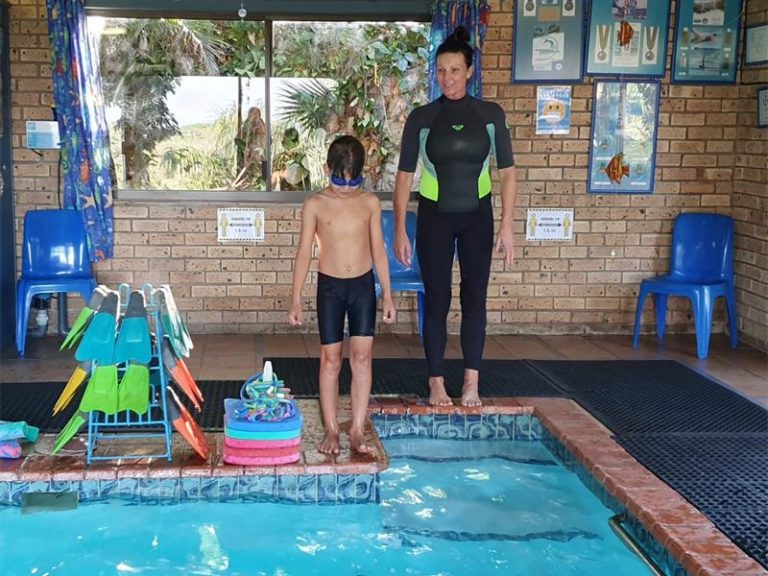
A NUMBER of coaches from Learn to Swim (LTS) and other competitive swim schools on the South Coast have noticed with concern the impact lockdown has had on some of their students.

While they are thrilled to be back in the water, they’ve seen that some are unfit, with others showing alarming evidence of perhaps too much snacking. Not being able to exercise or train is partly to blame for this, as is too much screen time.

KZNA accredited swim schools in the Ugu district which have opened include Margate Swimming Club, Bondi’s Swim School, Blue Ocean Aquatics, Little Dolphins Swim School and Super Shark Swim School.

Gerhard Labuschagne, chairman of Ugu Aquatics and vice-president of KZN Aquatics, is also the owner of Margate Swimming School.

He said that to ensure the safety of staff and swimmers, strict protocols have been put in place by KZN Aquatics and Swim SA.

He encouraged support for swimming and local clubs as he felt it was unlikely many other sports would be permitted to resume this year. Swimming however, he said, stood a good chance.

The coaches are pleased to see increasing numbers of swimmers return, at all levels, but have emphasised that it’s so much more than just about swimming.

“Why do we fight to get the students back in the water? It’s not just for the business. We coach because we save lives one at a time and because of our passion for the sport,” said Edward Holden-Smith of Super Shark Swim School.

“The coaches want to help young athletes develop natural discipline, dedication, leadership, persistence and resilience,” he said.

He added that, sadly, there were cases in South Africa where children had drowned during lockdown.

“Learning to swim is not only a sport but an educational process and life skill that reduces the chance of drowning by 80 percent,” he said.

He pointed out that learning to swim also opened doors to various water sports, such as competitive swimming, scuba diving, spear fishing, water polo and underwater hockey.

Mandy Koegelenberg of Blue Ocean Aquatics said that as a competitive coach, the most important thing now was not to push too hard early on because athletes can pick up injuries, which is the last thing they need after four months of no swimming.

“We are going to get back into training slowly and concentrate on drills, slow and correct swimming, getting balance, and most importantly, getting the ‘feel’ of the water again,” she said.

Thea Thomas of Little Dolphins Swim School said the ‘little ones’ are running through the door in excitement to get back into the pool.

“When I ask them to get out after the lesson, they give me many excuses,” she said.

“Children need to exercise and it is now safe for them to do so, especially with the protocol we have to observe. Parents are anxious and we respect their fear. We keep our protocol and sanitation in place and along with small classes we will survive this, and we will get back to where we were before.”

Dietician Natalie Quinn advised youngsters to avoid spicy, fatty and sugary food before swimming, as well as anything with caffeine in it, and to focus on eating wholegrain cereals, yoghurt, fruit and wholegrain sandwiches – with protein filling – at appropriate times before getting into the pool.

(Source: South Coast Herald)

How Is This Rwandan Building A Brighter Future For Girls? Solar Kits!

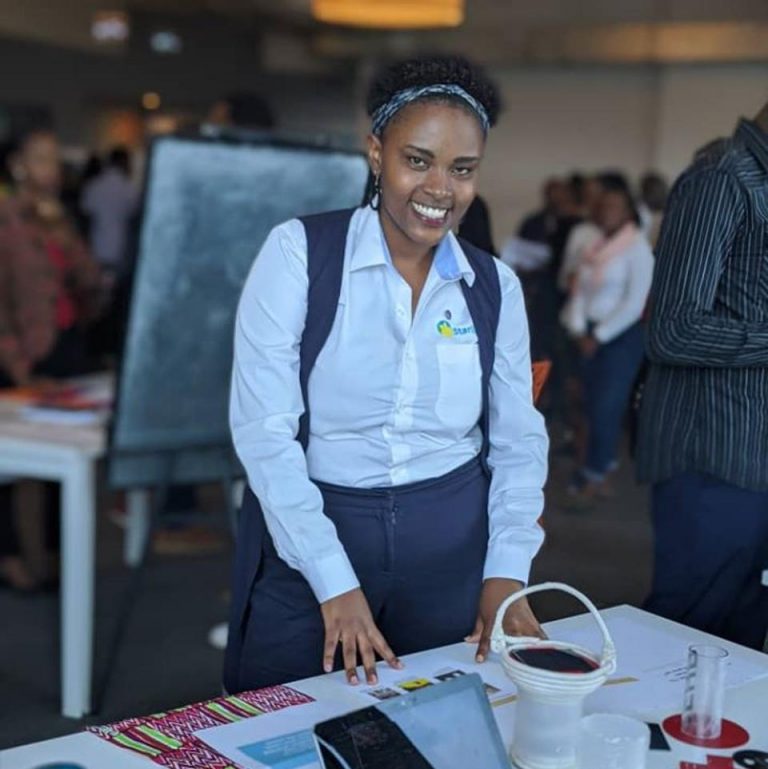
ALICE Mukashyaka was involved with research in a refugee community in her native Rwanda, now she is co-founder of edtech social enterprise Starlight, which is using solar lamp kits and other projects to help teach young people –especially girls– how to pursue a career in STEM.

“Currently, at Starlight, we are designing a ‘build your own’ solar lantern kit to introduce young students to basic electronics in a fun, creative manner, and to provide households with a clean energy light source,” Mukashyaka said.

Mukashyaka was born and raised in a modest rural household in Rwanda without access to electricity and other basic needs, but she grew up as a very curious child.

“I would listen to a person speaking on the radio and break it to see if I can meet the person who is speaking from the radio,” she said,” I would always be in trouble with my mother because I broke something.”

Mukashyaka says she studied electrical engineering and met co-founder Ariane Umuringa and they started Starlight together. 

Meeting girls in a refugee camp also helped fuel her passion for STEM education.

“I was involved in the research work​ with the refugee community in Rwanda, I heard many voices of young girls who are mistreated, by both parents and their communities because they are girls,” she said, “I saw the girls who lost the hope of pursuing STEM careers and I believe that this is my turn to raise my voice.”

Mukashyaka says Starlight inspires girls to pursue STEM careers and offer hands-on STEM learning to spark their creativity and imagination.​

“The special thing about our work is that we care about sustainable lifestyles,” she said, “The educational products that we use are powered by renewable energy and are eco-friendly and we incorporate STEM and life skills which are important for the young girls’ journey.”

Mukashyaka says Starlight is creating a holistic STEM learning program for the students through STEM careers, role models, life skills and practical hands-on projects.

“Recently one of the girls we engaged in our last projects asked me, ‘Alice -you are an engineer, I wasn’t sure if girls could pursue these careers?’ And I said, ‘Yes, you can!'”

Mukashyaka says that girl decided to pursue engineering and asked for tips on how to get there.

“It made me so happy that I could be an example for her,” Mukashyaka said, “This is one simple example but STEM is the future and girls need to be engaged especially those from vulnerable communities.” 

Mukashyaka said government policies in Rwanda aim to change an agrarian society into a sophisticated knowledge-based economy, putting into action five-year “National ICT Plans” to attract foreign investment. 

She says the Rwanda doesn’t have enough students pursuing STEM education and careers, particulary amongst the 83% of the population who live in the rural areas.

“With 49% of the population under the age of 14, science in the classroom often relies too much on textbooks, rote memorization and does not include interactive, fun, engaging projects that encourage the future work-force to view science and engineering as careers or opportunities for exploration, innovation and positive changemaking in their communities,” she said.

Mukashyaka is part of 300 young changemakers in the latest cohort of the Women Deliver Young Leaders Program. Since 2010, 1,000 young advocates from 148 countries have been identified and supported by Women Deliver, an NGO championing gender equality and the health and rights of girls and women.

Another in that cohort is 22-year-old Ester Borges Santos. She and her colleagues at Brazillian NGO Minas Programam created a welcoming, inclusive virtual study group on gender, race, and technology.

Another example of a black female entrepreneur helping young women in STEM is Mbali Hlongwane from South Africa.

Pink Codrs Africa, which she founded, grew out of a series of networking events for female software developers aiming to build a strong network of female software developers in South Africa, bringing together industry software developers, women in technology businesses and STEM students.

(Source: Forbes)

DA Goes To Court To Challenge Government’s Decision To Close Schools

THE Democratic Alliance is going to court to challenge President Cyril Ramaphosa’s decision to close schools, saying it was not in the best interest of South Africa’s 14 million school learners.

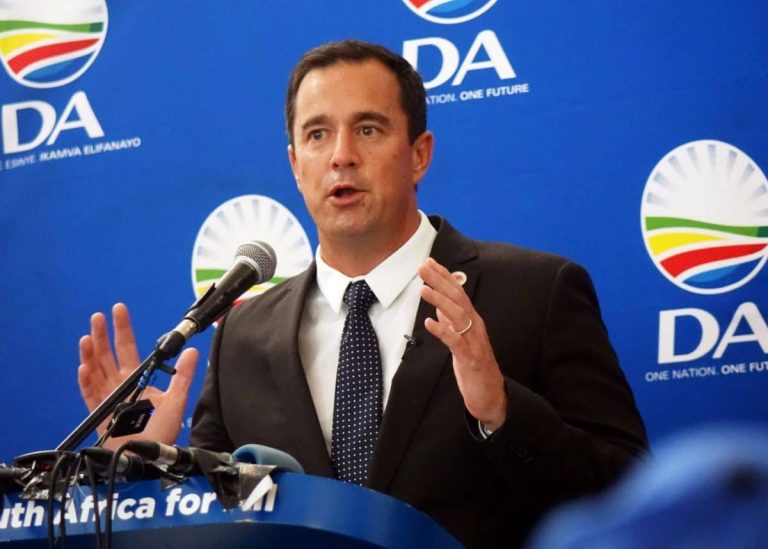
The party’s interim leader John Steenhuisen confirmed this on Friday while responding to an announcement made by President Cyril Ramaphosa after he ordered learners and teachers at public schools to remain at home from Monday until 24 August, with the exception of matrics and grade 7s who will return sooner.

“We strongly oppose the decision to close public schools for four weeks,” said Steenhuisen.

“We will be approaching the courts on the basis that this decision is politically rather than scientifically motivated and not in the best interests of SA’s 14 million school children.”

Steenhuisen said all the available evidence indicates that schools do not expose learners and staff to higher levels of risk than other places.

According to Steenhuisen, not a single learner death has been reported to the Western Cape Education Department and COVID-19 mortality among the province’s teachers, at 0.07%, is not higher than for other essential workers.

“The decision to close schools is rather a result of the ANC capitulating to all-powerful teachers’ unions, in particular SADTU, who do not have the best interests of learners at heart,” said Steenhuisen.

“Our position remains that those parents who choose to keep their children out of school should be allowed to do so. Staff members who choose to stay home must accept a salary cut.”

“We will not let children become another political football in the ANC’s game to entrench their power and access to state resources in the face of dwindling popular support. In the Western Cape there is no evidence of mass virus spreading at schools.”

(Compiled by Inside Education staff)

Kampala International University (KIU) Appoints Makerere’s Professor Mahmood Mamdani As New Chancellor

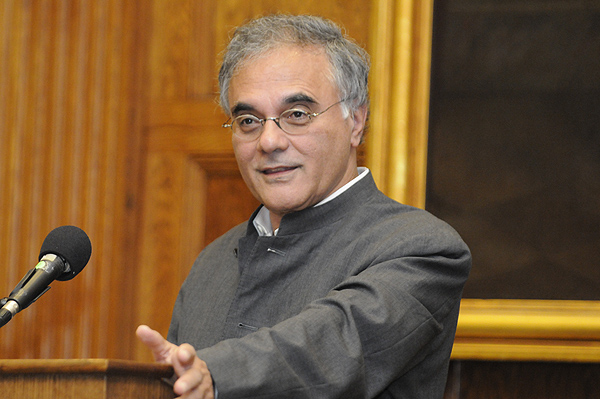
PROFESSOR Mahmood Mamdani, a leading Ugandan academic, author, and political commentator has been announced as the Kampala International University’s (KIU) new Chancellor.

Mamdani who is also the director of the Makerere Institute of Social Research (MISR), a Herbert Lehman Professor of Government at the School Government at the School of International and Public Affairs at Columbia University and the Professor of Anthropology, Political Science and African Studies at Columbia University replaces Prof. JM Sebuwufu who has completed his tenure.

Mamdani specialises in the study of African and international politics, colonialism and post-colonialism, and the politics of knowledge production.

His works explore the intersection between politics and culture, a comparative study of colonialism since 1452, the history of civil war and genocide in Africa, the Cold War and the War on Terror, and the history and theory of human rights.

His current research “takes as its point of departure his 1996 book, Citizen and Subject: Contemporary Africa and the Legacy of Colonialism.

He is married to Mira Nair, a film director and producer who he met in Kampala, Uganda, in 1989 when Nair was researching for her film, Mississippi Masala.

(Source: PML Daily)