Home Blog Page 396

Frustrations And Despair: Parents Share Their Biggest Back-To-School Concerns for 2020

MANY South African parents are supporting calls for the closure of schools amid the rising coronavirus infections.

They are reluctant to allow their children back into schools, saying current disinfection efforts by government are not enough to convince them it is safe.

One parent refusing to send his child back to school said President Cyril Ramaphosa’s administration has yet to make protective gear (PPE) available for all children.

Currently, SA is struggling to contain the virus, which has infected more than 364 328, with more than 5 033 deaths. 

Inside Education spoke to several parents about their fears and concerns|

NONTSOKOLO MHLOTSHANA: Free State

Nontsokolo Mhlotshana will not risk sending her two children, one in Grade R and another in Grade 8, back to school just yet.

“The school year should have been cancelled. Until we as parents can be guaranteed safety for our children,” says the mother from Botshabelo in the Free State.

“I can’t stay home for safety reasons and take my child back to the streets.  As a mother my first job is to protect my children, no, and I have no intention of taking them back to school anytime soon,” she says.

“I feel like the minister is inconsiderate and makes her decision based on what she wants to achieve and not the safety of our children. If COVID-19 is a pandemic, why should our children go back to school? Am not happy by this decision and the fact that the minister does not want to hear our plea as parents, means she doesn’t care.”

JOHN MASHIANE: Limpopo

John Mashiane, a father of two boys of school-going age, was almost shaking at the thought of his 15-year-old son, Tshepo Mashiane, who is in Grade 8 at Mosepedi High School in Lebowakgomo, Limpopo, going back to school.

The ongoing debate on whether children should stay at home or return to school during the COVID-19 pandemic outbreak has left Mashiane in a state of fear.

“These schools must just close. There is no way that our children can survive in those old ragged schools. It’s cold there and this thing [COVID-19] excels in winter. Why can’t they listen to us?” Mashiane asked.

His seven year old son, who goes to Hwelereng Primary School, throws a tantrum every morning because his parents do not want him to go to school.

“He doesn’t understand. He wants to go to school to play. That’s why I want him to remain home he cries,” adds Mashiane.

KHULISO MUSUBI: Limpopo

Limpopo mother Khuliso Musubi has decided that she won’t allow her eight-year-old son to go back to school.

“He’s currently doing Grade 2. I feel like he doesn’t understand or will be able to follow the rules of social distancing especially in the transport taking them to school, washing hands, as I know even at home we have a problem of having to remind him every time,” says Musubi, whose son attends Mungomani Primary in Nzhelele, Limpopo.

She feels that teachers won’t be able to manage or look out for every child and putting on a mask the whole day for the little lad would be a challenge.

She also fears that if her son contracts covid-19 he may infect his 60 year old caregiver with dire consequences.

“I have choose to save his life and of his grandmother; I know the foundation phase is important in his life but if it means he has to repeat the grade next year its ok than to lose him.”

NELISWA CHEMANE: KwaZulu Natal

For Neliswa Chemane, deciding whether to send her 12-year-old daughter back to school was met with mixed emotions. Her daughter is in Grade 7 and she believes this was a critical phase in her education life and will determine her future. 

“At the moment I’m undecided because I feel if she doesn’t attend classes she won’t be able to achieve good marks. I had planned to apply for high school scholarships in some of the prestige schools in the province. So this confusion going on will certainly affect her chances of attaining the scholarship,” said Chemane, whose daughter attends the Siyabonga Senior Secondary in Durban’s Ilovu Township, KwaZulu-Natal.

She said the distressing and disturbing situation had also been compounded by the mere fact that her daughter is asthmatic and she fears sending her to school will render her vulnerable to COVID-19.    

“So we are now exploring the home schooling method. But the system itself poses challenges because there is no clear process from the provincial department of Basic Education as to what process to follow in order to apply for home schooling,” she added.

CHRISTINE BAME: Gauteng

Christine Bame is the mother of Thato Bame 17 year old Grade 12 learner at Westridge High School, and Kgotatso Bame Grade 2 at Spark School.

“Honestly I’m not comfortable at all with the whole thing. This virus is spreading so fast and right now lot of teachers are reporting that they are positive. You as my child might assure me that you grown-up and that you will be able to adhere to the rules (Washing hands, sanitizing and wearing your mask all the time) but reality is when you see your friends, you’ll gonna hug and kiss. I would rather my child repeat a grade than me having to bury my child.

I would opt for home schooling I don’t mind buying data for my child to get home work or even attend a class online daily… he government officials have meetings online not parliament but schools are open.”

“We need to apply our minds on some situations… I feel Angie has failed our educators. I am not happy with at all with not just you, but every child out there going to school, I would advise them to consider online tutoring for those that can afford or even assist learners with computers and data that is strictly to be used for attending classes online. The union needs to stand up for our learners and I strongly support them with their recent protect against teachers and schools opening and dying due to COVID-19 while nothing is being done.”

(Reporting by Inside Education staff)

Tug-of-war Looms Over Immediate Shutdown Of Classrooms

INSIDE EDUCATION DEBATE|

Top unionists divided over calls to close schools

MANDLA MTHEMBU: AGAINST CLOSURE OF SCHOOLS

THE National Alliance of Independent Schools Associations (NAISA) is in favour of schools continuing to open as planned. Our reasons for this are the many risks attached to children not attending school. It must be noted that NAISA serves a broad spectrum of independent schools Associations and some of these Associations serve both Independent and public schools.

As a result, NAISA is aware of the challenges facing both these sectors (Public and Independent).

The costs of school closures are well documented with research from around the world. The scientific research on the effect of COVID-19 on children is also well documented especially the fact that it has a negligible impact on children’s physical health if at all.

We acknowledge the high level of teacher anxiety and stress during this time but are concerned that these may overshadow the best interests of the child.

Children’s well-being, protection and education are at grave risk from COVID-19.

Parents/caregivers who need to return to work need safe places for children, who without school, might be left alone at home further exposed to risks of exposure to COVID-19, abuse and neglect.

Social issues faced by children during lockdown are increased hunger leading to malnutrition – the major strides made by the National School Feeding scheme did much to alleviate this.

We cannot afford for this to be lost.

Furthermore, the recent NICRAM research has highlighted the dire food issues facing South Africa.

School meals assist in providing some food for children who are going hungry at home because many parents are either unemployed or have reduced income.

Other risks include children being abused both physically, psychologically, and/or sexually by family or community members, being exposed to gender-based violence and the results of parental/caregiver substance abuse, i.e. drunkenness (alcohol abuse).

During lockdown children are known to experience loneliness, depression and to turn to substance abuse themselves, misbehaviour as well as the overuse of social media.

The latter can hamper face-to-face communication and further create social problems.

A health issue related to school closure is the break in immunisation.

Immunisation usually takes place at school.

This can lead to further outbreaks of diseases prevented by immunisation.

Resource and Facilities issues include the lack of water, toilet facilities and PPE material running out (i.e. sanitisers) and not replaced at some public schools. This has hampered reopening in some cases.

The limited classroom space for social distancing, the numbers in grades and the small classrooms mitigate against social distancing – in fact, it is an impossibility for some schools.

How can schools reopen with these challenges?

This may need a different approach in overcrowded schools.

Catching up on academic learning is essential.

The gap between the well to do and poor schools in our education system has been exacerbated by the fact that the well to do schools are able to provide online learning and resources.

The rural and under-privileged schools have not been able to provide online learning because of the lack of resources for such and, leaving these learners further compromised, possibly not able to catch up at all this year.

We must acknowledge that some teachers at these schools have used social media (i.e. WhatsApp and Facebook) to keep contact and to encourage learning but that has not been effective.

While platooning has been suggested for schools to overcome the crowing mentioned above this further reduces time on task.

Matric Students Preparation for the final NSC examination is also in danger of being derailed by any closure of schools.

We cannot afford to lose the academic year as this would have a cascading impact on the entire value chain and throughput in the education system impacting even tertiary institutions’ ability to accommodate new intakes next year.

There is a lost at stake for matric learners writing the high stakes examination at the end of this year when you consider the investment already made by parents and the Department of Basic Education in this academic year.

The whole year would almost become “a fruitless expenditure” for lack of a better description.

URGENT MATTER: The Return of foreign learners to South Africa – Mostly Matric Students

ISASA has around 1 179 learners from countries outside of South Africa (SA). These learners need to return to SA urgently. Majority of these are matric learners who need to prepare for and write the matric examination. The challenge is that currently borders are closed.

ISASA has been in contact with the Departments of Health and Home Affairs since 12 June 2020 trying to seek guidance on the return of these learners to SA and on quarantine procedures to be followed.

Parents of these children have stated that they are uncomfortable with their children being quarantined at facilities unknown to them and would like schools to quarantine them.

We were told by the Department of Health (DoH) that schools that can quarantine learners may do so at their own boarding facilities. All our affected member schools have set up quarantine facilities at their boarding houses or nearby accommodation.

These schools have been waiting for the DoH to inspect these facilities and give them approval.

ISASA has submitted to the DoH names of the learners outside of SA, together with all the relevant information required.

On 14 July 2020 we received an email saying it would be advisable for ISASA to engage directly with the Department of Basic Education on this matter of bringing these learners back.

We appeal to the Minister to assist in facilitation of these learners back.

As indicated above, schools have quarantine facilities ready to receive these learners.

All these issues require focused planned psychosocial support mechanisms especially for school leadership who bear the brunt of the COVID-19 challenges and requirements.

Financial Constraints are being experienced by both independent and public schools, especially the public schools with governing body posts for teachers and support staff, i.e. Model C schools.

Unlike public school teachers both independent school teachers and SGB teachers are paid from school fees.

Many parents stopped paying fees as soon as schools closed placing independent schools in a precarious position.

School fee payment are currently at an average of between 25% depending on the Schools’ quintile category.

Salary cuts and retrenchment of teachers: The middle and low fee independent schools have had to cut teachers’ salaries as well as retrench staff at a time when teachers are more needed than ever.

This is not the case for public school teachers who continue to enjoy the full benefits whether at work or not.

Unfortunately, it is not the case for independent schools teachers who have had to come face to face with unemployment and increasing the unemployment /UIF line in our country.

School Subsidies – It is vital that subsidised independent schools receive their subsidies timeously as there are no funds to which schools can apply to for COVID-19 relief. It is important to assist these independent schools to source COVID-19 relief funding.

COVID-19 Special Relief Fund for Schools – We are of the view that Government could explore the setting up of a COVID-19 Relief Fund for Independent Schools that are struggling and qualify in terms of prescribed criteria to receive such a bail out from government. Such a fund could take the form of what has been done for the Taxi Industry or SMMEs who have had over a billion rand each set aside for COVID 19 relief funding.

Possible closure of Independent Schools – Independent schools are most grateful that they were able to deviate in the opening of the schools as some parents then paid fees but not as much as is needed. There is a very real danger of independent schools closing leaving the state to pick up even more learners.

We are seriously concerned that the focus on schools in the pandemic landscape is masking the reality of non-compliance in society generally.

ABOUT THE AUTHOR|

(Mandla Mthembu is the Chairperson of the NATIONAL ALLIANCE OF INDEPENDENT SCHOOLS ASSOCIATIONS)

COVID-19 Is An Opportunity For South Africa To Review And Strengthen Remote Online Training Capacity

THEBE MABANGA

THE latest consultations between the Department of Basic Education and teacher unions over whether schooling should continue and in what form was always going to be contentious.

The call by unions for schools to be closed is both commendable and understandable. But a question that has to be raised now is whether this crisis should not have been used as an opportunity to introduce minimal contact, remote learning and teaching in South Africa’s public schools.

The sad reality is that the time for exploring this method may have been lost. Public schools closed in the middle of March when the National State of Disaster was declared, even before the National Lockdown.

During April, the government’s scientific advice already indicated that the peak of infections may be reached around August and from that point the option of remote teaching until at least September should have been looked into.

The first problem appears to be that the urge to reopen schools is less about the provision of education than it is about control. It is pressure transmitted from the economic sectors to open factories.

This requires children to return to the classroom for parents to go back to their factory and domestic worker jobs, which requires children to be in a classroom at least for a part of the day.

For if the primary concern was the delivery education, a solution would have at the very least, have been thoroughly investigated. Independent schools have largely carried on teaching and learning through online learning, which is a techno-centric education delivery method that would be hard to replicate in a public schooling system with 30 000 schools catering for 12.5 million children across a diverse range of income levels.

But schools the world over are having to adapt to alternatives methods of delivery beyond COVID-19.

Remote learning may be a permanent feature of schooling as disruptions may be caused by localized factors such as inclement weather, strikes load shedding or temporary closure of a school in order to fix infrastructure.

COVID-19 requires everyone to be adaptable.

What needs be explored for a public schooling system is to have minimal contact remote learning where guardians and elder learners can come to school once a week, with health protocols in place, to drop off work and pick up newly prepared work packs for learners to complete at home.

There can be scheduled, half-hour consultation sessions with teachers for individuals or small groups.

These can then be complemented by low cost technological solutions such as WhatsApp on a basic smartphone.

The Department of Basic Education would have to carry the cost of this rollout using reprioritised spending in the supplementary budget.

Some private sectors companies already provide education resources for free, including no data cost.

These can be scaled up and replicated to district or provinces where they are not currently available. There are many obstacles to the delivery of this solution, including the absence of an elder with a capability to supervise schoolwork in some households or absence of a person to make the weekly trip to fetch and collect work form school.

Some people may cite distance to and from school in cases where learners use subsidized scholar transport under normal circumstances.

But the provision of quality education, whether public or private, is a function of resources. But it is also about the dedication from teachers, learners, and parents.

What COVID-19 may force us into is a shift in the degree of responsibility between each of these and parents have to shoulder an increased proportion of that responsibility.

The delivery method may also work better for affluent suburb public schools as well as township schools within in densely populated areas.

It might not work so well in urban areas or rural schools.

But the first step to begin with is to assess in which district is the model viable and where it is not.

The model can be implemented where circumstances permit and refined where there are delivery gaps, but there will be general progress in schooling.

If the two parties cannot reach an agreement on remote teaching and learning then the question reportedly posed by the minister of whether teachers should continue to be paid becomes a fair and pertinent ones since other civil servants, from health workers, police, social services and even clerks in government offices that offer non-core functions are working at a risk of exposure.

Teachers may be right to call for schools to close, but they have to offer solutions if they are to continue to enjoy their livelihood.

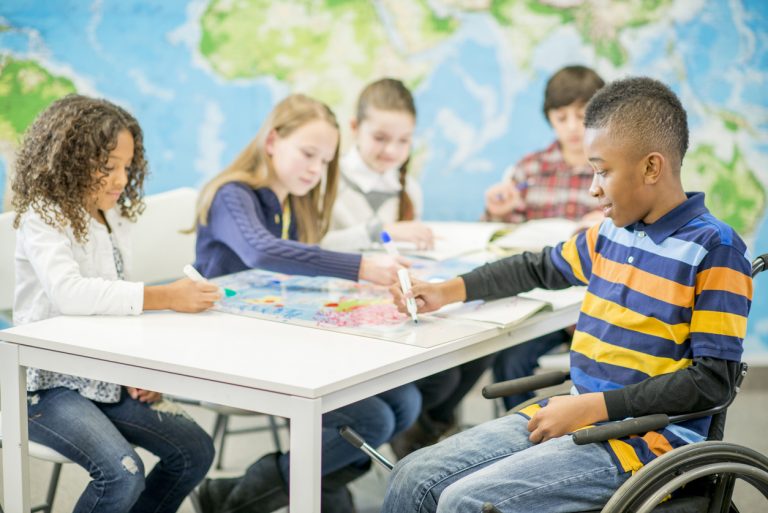
South Africa: More Than 600 000 Children With Disabilities Must Be Part of Nation Building

THE Human Rights Watch estimates that 600 000 South African children with disabilities were not at school last year, an indictment on our society which needs every child to participate in nation building, University of Cape Town (UCT) Vice-Chancellor Professor Mamokgethi Phakeng said.

Phakeng was delivering the introductory address on the first of the two-day Teaching Empowerment for Disability Inclusion (TEDI) symposium webinar. This was held virtually on 15 and 16 July.

The TEDI project in the Division of Disability Studies in the Department of Health and Rehabilitation Sciences, in the Faculty of Health Sciences, is a partnership with Christoffel-Blindenmission (CBM) and co-funded by the European Union (EU). Associate Professor Judith McKenzie is head of the division and TEDI’s principal investigator. The project works in close partnership with the universities of the Witwatersrand, Johannesburg and Pretoria; national and provincial education departments; special schools; and NGOs.

The webinar brought together teachers, disability activists, parents, government, academia and representatives of the EU and CBM. Among the participants was new UCT Council member Marlene le Roux, an advocate for disability rights.

Protests all about inclusion

Recent protests around the world, such as Black Lives Matter, were all about inclusion, Phakeng added, “disrupting old systemic attitudes and dismantling prejudices”.

“They’re about including people who have been marginalised in one way or another. Inclusivity means opening up minds and hearts across society, to bring lasting transformation to the ways we relate to each other.”

She said that TEDI worked to achieve the same goals for children born with disabilities and that the country’s poor record in achieving this was out of line with the United Nations Convention on the Rights of Persons with Disabilities, as well as our Constitution and the goals of the Education White Paper on Special Needs Education: Building an Inclusive Education and Training System.

Figures from the Department of Basic Education show that 24.6% of people with disabilities aged 20 and above had either no schooling or only some form of primary schooling, Phakeng said.

“Like all children, they need education,” she continued, citing the United Nations Educational, Scientific and Cultural Organization’s 2020 Global Education Monitoring Report. This states that children with disabilities are particularly at risk of exclusion from education.

“To help children with disabilities interact with society and culture, teachers and parents need to be empowered.”

“To help children with disabilities interact with society and culture, teachers and parents need to be empowered to help them live and grow in schools and the wider community,” said Phakeng.

Education focused on inclusivity

Phakeng was a teacher herself and knows the importance of inclusivity in education. She began her career in the Department of Education and Training as a mathematics subject advisor and developed in-service training programmes with senior primary mathematics teachers. She also taught mathematics in high school. In 2008 she co-chaired a study on mathematics and language diversity, commissioned by the International Commission on Mathematical Instruction, and was the first black South African researcher to do so.

To ensure their resources are widely available, TEDI has developed short, face-to-face courses and accompanying massive open online courses (MOOCs) for educators, focusing on: disability studies in education; the education and care of learners with severe to profound intellectual disabilities; teaching learners with visual impairment; and teaching learners who are deaf or hard of hearing.

“And in South Africa, enrolments for these MOOCs had surged since the onset of COVID-19.”

Phakeng said these online courses had reached more than 8 700 people in countries as diverse as the United States, India, Canada, the Philippines, the United Kingdom, Australia, Mexico, the United Arab Emirates, Egypt, Singapore and Russia. And in South Africa, enrolments for these MOOCs had surged since the onset of COVID-19.

Accredited research unit

The vice-chancellor said that UCT would continue their work in the field through an accredited research unit, Including Disability Education in Africa (IDEA). This will provide in-depth analysis of TEDI’s data on teacher empowerment, disability inclusion, and the overall landscape of teacher education to support disability inclusion.

IDEA will also conduct comparative studies of inclusive education in the global south, largely driven by research students from other African countries, building capacity across the continent.

Following on, Dr Moses Simelane, chief director (curriculum implementation and monitoring) in the Department of Basic Education, said the department had been guided by Sustainable Development Goal 4. This provided strategic direction for education systems around the world, aiming at inclusive and equitable quality education and lifelong opportunities for all.

In South Africa, this means developing teachers in the use of inclusive practices and ensuring they’re able to provide differentiated approaches to education that include children with disabilities.

“At basic education [level] we need to develop an inclusive education system that will contribute towards the development of skills, knowledge and practices for individuals with special education needs.”

The department had worked closely with McKenzie and her team over the years to develop a teacher education programme that would empower our teachers to accommodate diverse learners in the classroom. This included special care centres for learners with severe to profound intellectual disability.

Simelane said that UCT’s MOOCs had been invaluable in helping teachers and caregivers around the country access resources during the COVID-19 pandemic.

The aim, he said, was to ensure that no child is left behind.

(Source: UCT)

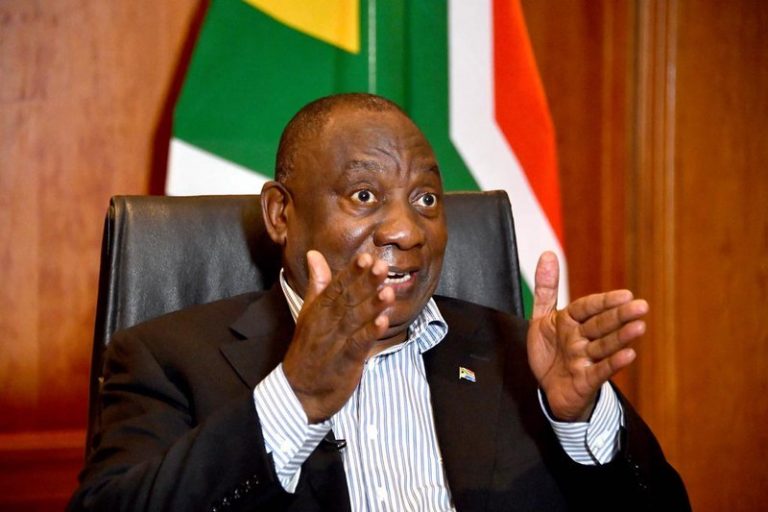
COVID-19: There Is A Silver Lining To This Dark Cloud, Says Ramaphosa

CYRIL RAMAPHOSA

THE old saying that ‘necessity is the mother of invention’ comes to mind when I think about the resilience and ingenuity shown by South Africans during the past three months.
 
This ingenuity is being demonstrated by young entrepreneurs as our country is battling the spread of the coronavirus that has brought about fundamental changes to our way of life and doing business.
 
As a number of social partners, including government, business, trade unions, community based organisations, economists and political parties, are involved in crafting a new vision for a post-COVID-19 dispensation, a new breed of young entrepreneurs are seizing the opportunities that are opening up as we seek to deal with a new normal in our lives.
 
The coronavirus is a dark cloud that is hanging over the lives of South Africans and the economic fortunes of our country. South Africa is not alone. Many countries are experiencing harsh economic challenges. Like many countries, we have responded through an economic and social assistance package, worth R500 billion. But we also know that we need to evolve a clear vision and strategic plan that will help us chart our way beyond the impact of COVID-19.
 
This vision and strategic plan will of necessity have to be a durable and effective social compact among social partners.
 
As much as COVID-19 hangs over our country, there is a silver lining to this dark cloud. As much as we have to face enormous difficulties and challenges, such as rising unemployment and poverty, there are a number of opportunities that we need to look out for to undo the harsh consequences of coronavirus.
 
There are a number of South Africans who are searching for the silver lining.
 
I am very pleased at the combination of foresight, creativity and business acumen displayed by a number of young South Africans who are coming up with home-grown solutions to the contemporary challenges we face.
 
Some have started small business ventures because of personal circumstances, like losing their jobs. Others who were previously unemployed have seized the opportunity provided by the pandemic to create their own income.
 
The story of Cloudy Deliveries in Langa, Cape Town, is testimony to the power of a good idea. A group of youth run a bicycle delivery service ferrying goods from the shops to the homes of residents in the township. During the lockdown, they have focused their operations on doing shopping for the elderly who have been encouraged to remain at home. They earn an income and at the same time provide a much-needed service to the community.
 
Then there is 28-year-old Election Xitsakiso Baloyi from Mankweng in Limpopo, whose pizza-making hobby turned into a fully-fledged business after his family started posting pictures of his creations on social media. With the lockdown preventing people from eating out, he got an avalanche of queries from community members asking if he was selling his pizzas.
 
Now his business, Rabbit’s Pizza, started with his savings of just R1,000 and the baking pans in his kitchen, employs nine other young people and delivers not just in Mankweng but also in nearby Nwamitwa and Giyani. He says he plans to open new outlets in other rural communities in the near future, and to employ more young people in his area who are without work.
 
To meet the increasing demand for personal protective equipment, a number of small businesses have been established to manufacture masks, visors and face-shields to supply to businesses and communities.
 
Ponani Shikweni, 32, from Alexandra township in Gauteng has repurposed her linen manufacturing business to produce face masks. She now employs 35 people, most of whom are under 25. She produces more than 1,000 masks a day to order. Her business has already distributed over 20,000 cloth masks for free to residents of Alexandra.
 
To keep the nation’s spirits up during the lockdown, our country’s young artists and musicians have taken their talents online, resulting in new business opportunities. One such artist is 18-year-old Judy Jay, a DJ and rising star from Sekhukhune. Her watch parties during the lockdown have attracted the attention of major local and international radio stations, enabling her to promote and grow her brand.
 
The creative and enterprising spirit of these and many more young people that has been brought to the fore during the pandemic must be harnessed and supported.
 
Even in our darkest hour, we must look to these green shoots of renewal. They are the silver lining to the dark COVID-19 cloud
 
Our economic recovery cannot wait until the coronavirus pandemic is over. It needs to start now.
 
One of the defining developments during the lockdown was how businesses in the townships and rural areas came into their own as people were not able to travel around much. In more ways than one, small and medium enterprises in the townships and rural areas have been able to keep our people supplied with the daily necessities. This demonstrates the resilience of small and medium enterprises during a period of great distress in our country. The capacity and ability of these SMMEs shot to the fore.
 
We have seen in this pandemic how dependent urban areas are on informal food systems, and how important the informal sector is to livelihoods across the country. We have seen the grave inequalities in access to health care, to savings and even to information and connectivity.
 
To enable these businesses to thrive we must tackle the barriers to entrepreneurship.
 
The concentration of markets and capital in large firms limits the potential of small businesses. Then there is spatial inequality, which concentrates poverty in particular parts of our cities, towns and villages. Entrepreneurs in these areas find it difficult to raise the funds to launch and grow businesses and are often far away from the markets where they can sell their products.
 
It is not enough simply to urge individuals to take advantage of opportunities or to encourage an entrepreneurial spirit among our youth. We need instead to deliberately build township and rural economies.
 
As part of our effort to build a new economy out of this pandemic, we must create the conditions that will enable every individual to thrive in a society that supports, nurtures and helps them to succeed.
 
Small businesses present the greatest growth opportunity for our economy and are a major source of job creation. In such challenging times, when many have lost their jobs and the unemployed have found it even harder to eke out an existence, we must act with renewed urgency to support these businesses.
 
When it comes to the township and rural economy, this means providing access to finance for entrepreneurs and the self-employed. We have made great progress in extending support to 1,000 youth-owned businesses since the State of the Nation Address in February. We will reach this target by International Youth Day on 12 August, despite the delays caused by the lockdown.
 
It also means expanding access to affordable and high-speed broadband internet, and supporting new technologies – including successful aggregation platforms like SweepSouth or Kandua – which link small businesses to demand.
 
It means backing areas of opportunity such as in early childhood development, the food economy and the green economy.
 
During the lockdown, we have extended support to SMMEs in the form of loans, grants and debt restructuring. The COVID-19 UIF Relief Scheme has now disbursed R26 billion to more than 6 million workers across all types of business. The R200 billion loan guarantee scheme is being adjusted to make it easier for applicants to receive funding quickly.
 
Through the work of the Department of Small Business Development and its agencies, the Presidential Youth Employment Intervention and other initiatives, we are placing the township and rural economy at the centre of our reconstruction effort.
 
Whether it is a vendor selling their wares at a taxi rank, a small internet cafe providing vital services like connectivity and printing, or home industries and mobile wagons selling food, these businesses are a lifeline to both urban and rural communities. They are a means of livelihood for their owners and more often than not employ others from the same community.
 
Through the Township Entrepreneurship Fund we aim to support township businesses with skills development and access to markets and infrastructure. Although its launch has been delayed by the lockdown, we will put it front and centre as we now begin the arduous task of rebuilding our economy.
 
International experience has shown that a country that invests in and supports small businesses stimulates economic activity and increases opportunities for self-employment. This is our path to growth.
 
The many innovative businesses that have been started during this pandemic have showcased the potential of our people and our young people in particular.
 
It is our duty as government, business and society as a whole to lend our full support to them on their journey towards self-sufficiency and financial sustainability – both to protect the jobs we have and to replace those we have lost.
 
At the same time, this is a rallying cry to other young people out there to take the great leap of faith into self-employment. The best businesses come from good ideas that respond to a community need.
 
The experiences of these young people show the importance of not letting a good opportunity go to waste; more so when there is a need for what you have to offer.
 
I call on young people, especially in townships, to take advantage of the opportunities on offer to guide them along the path towards entrepreneurship.
 
The conditions may not be ideal. The circumstances may not be perfect. But now is as good a time as ever to start. And you can be assured of our full support.

China’s Top University Sacks President Xi Jinping’s Critic

CHINA’s top university has sacked a law professor, who is a staunch critic of the ruling Chinese Communist Party leadership including the constitutional amendment facilitating indefinite tenure for President Xi Jinping by scrapping the two-term limit.

Xu Zhangrun, an outspoken Chinese law professor of the Tsinghua University, has been formally notified of his removal on Saturday, Hong Kong-based South China Morning Post reported on Sunday.

The Tsinghua University, whose famous alumni include President Xi, has been listed as China’s number one university by the Times Higher Education World University Rankings.

The notification, dated on Wednesday, was sent to Xu by courier, the report said quoting a friend who requested anonymity for fear of retribution.

The Tsinghua University, where 57-year-old Xu worked for 20 years, said it took the decision after a meeting on July 10.

Xu, a prominent legal scholar, is one of the very few academics to have publicly challenged the Communist Party of China (CPC) leadership in recent years in a number of essays published online in China and overseas.

“We have verified that Xu Zhangrun has published many essays since July 2018 and it is a serious violation of the ’10 standards of professional conduct for teachers in tertiary institutes in the new era’,” the notification read.

The guidelines, issued by the Ministry of Education in 2018, said teachers would be fired or punished if they said or did anything that undermines the authority of the CPC or violated the directions and policies of the party.

Earlier this month, Xu was taken away by Chengdu police from his Beijing home. His wife was later informed that he was arrested for soliciting prostitutes while travelling to the capital of Sichuan province, a claim dismissed by Xu’s friends as an attempt to discredit him.

Xu was released last Sunday and he returned home after six days of detention.

In July 2108, Xu published his first criticism of the CPC leadership, which included one of the few public statements opposing the removal of presidential term limits, which allows Xi Jinping to stay in the post after 2023.

Xi, 67, who is also the head of the CPC and the military, is currently in his second term.

All of Xi’s predecessors, except party founder Mao Zedong abided by the two-five-year term norm aimed at preventing the perpetuation of one leader rule of the CPC and the country.

The five-year term norm was removed in 2018 by the National People’s Congress (NPC), China’s Parliament, paving the way for a possible lifelong tenure for Xi at the helm.

Xu was suspended from teaching by Tsinghua in 2019, but he continued to write essays critical of the party leadership.

In February and May, Xu published two lengthy articles, openly criticising the CPC leadership for mishandling the coronavirus.

Using satire and a mixture of modern and classical Chinese, Xu lamented how the country was isolated and how the public were gagged by fear and big data surveillance, the Post report said.

He also published a number of shorter essays criticising the Chinese government in recent months.

The university told Xu that if he wanted to appeal against the sacking, he would have to go to the Ministry of Education and the Beijing Education Commission.

(Source: The Indian Express)

International Research Collaborations: How Can We Shift The Power Towards Africa?

The higher education sector globally has been disrupted by the COVID-19 pandemic. Academics have been discussing various aspects of the disruptions in a series of webinars organised by the University of Cape Town. One area of particular interest is how the pandemic could affect international research collaborations. The Conversation Africa’s Nontobeko Mtshali asked panellists to share their views.

Could COVID-19 change the power dynamics between African and foreign institutions when it comes to research collaboration?

Salome Maswime: There have been many successful global research collaborations. But there’s a long history of unequal partnerships and research collaborations between African institutions and research institutions from developed countries. African researchers have often described unequal power dynamics. These have been fuelled by what can be described as a top-down approach, a sense of tokenism. There’s a sense that research agendas are driven by interests of collaborating centres instead of the needs of the communities involved.

One big change is that, prior to COVID-19, collaborators could travel to conduct research. But implementation is now dependent on the full buy-in of the local institution.

The pandemic has also compelled us to look for African solutions for Africa, and to ensure that we don’t miss out on the opportunity to be part of important discoveries like vaccines and drug treatments.

Rifat Atun: COVID-19 will likely affect the power relationship between African and foreign institutions. To date this power relationship has been hugely imbalanced. It’s been in favour of research institutions from high-income countries at the expense of African researchers and institutions.

The COVID-19 pandemic has clearly revealed that research undertaken in African countries – and subsequent policies related to COVID-19 – are critical not just for Africa but for the world. What’s also apparent is the importance of local contexts in relation to the behaviour of the epidemic and responses to different policies. This has shown how necessary it is to have locally generated research led by researchers who understand local contexts.

The speed of the epidemic has made it imperative to quickly develop local capacity in Africa to lead and undertake research – and reduce dependence.

One adverse consequence of the COVID-19 pandemic is the economic crisis that has followed. This is likely to lead to reduced research funding for health. Another adverse effect is the greater national focus on self-sufficiency. It could risk undermining international collaborations.

Kevin Marsh: It could contribute to a change that long predates the pandemic and which has been gathering pace.

Historically, we’re all aware of the imbalance in many such relationships. This reflects a structural consequence of colonialism, in terms of where money and scientific expertise and decision making were centred.

This has in fact begun to change markedly over the last few years. There are now many more researchers on the continent beginning to exercise their autonomy and leadership. The centre of gravity is changing in relation to defining African research priorities and funding.

Similarly, there are plenty of international collaborators who recognise and support these changes.

Other factors include the fact that, unlike Ebola, collaboration cannot involve a mass influx of collaborators from “outside”. Another is that there has been real synergy between continental organisations in setting priorities. These include the Africa Centres for Disease Control and Prevention, World Health Organisation Regional Office for Africa and the African Academy of Sciences.

How could things change?

Salome Maswime: This could lead to collaborations that are truly lateral with all collaborators involved from the design phase of the project to completion.

Often organisations with funding have the means to set up research sites and to employ research staff, with little buy-in and minimal engagement from the stakeholders in collaborating institutions. With virtual communication, there’s more transparency and more visibility. And no excuse for lack of representation.

The African community has also taken a keen interest in science, collaborations, equity and ethics with COVID-19. This could lead to more community engagement with research. It could also see greater effort at improving science communication. Curiosity about the safety of vaccines and drug trials, the risks in Africa and the credibility of the organisations involved are examples of how science has become a priority on the continent.

Rifat Atun: The change could be positive. It can empower African research institutions and enable the development of local research capacity that can design, implement and evaluate large research studies in Africa and beyond.

The new environment gives Africa the opportunity to lead local research and development using local capacity rather than being a “venue” for research for researchers from high-income countries who all too often take the credit for the studies. Africa must develop research and development capacity and transition to greater self-sufficiency in critical supplies of vaccines, medicines and health products.

Does COVID-19 open possibilities that didn’t exist before?

Salome Maswime: With the acceleration of virtual communication there’s been wider engagement locally and more South-South partnerships forming. Previously we’d rely on funding for meetings to engage on research projects. But more scientific groups are being formed virtually to respond to COVID-19 and local challenges.

There are also opportunities to increase research capacity and training through online education. Over the past eight weeks, hundreds of South Africans have attended live webinars run by Professor Mamokgethi Phakeng, the Vice-Chancellor of the University of Cape Town, on postgraduate research methods. This is a great example of an approach to research that inspires and empowers aspiring researchers.

After the pandemic we have an opportunity to form truly lateral partnerships driven by the needs of African communities.

Rifat Atun: There’s an opportunity to establish regional and continent-wide research networks to undertake research in Africa. There’s also the opportunity to be part of international and global studies and lead them.

Kevin Marsh: There is a sudden increase in funding – so in that sense the answer is yes. But more positively and importantly, we’re seeing that the response from the scientific community on the continent in taking leadership has been strong. So in many ways COVID-19 has revealed this rather than caused it.

(Source: The Conversation)

US: What Will High School Sports Look Like When They Resume?

0

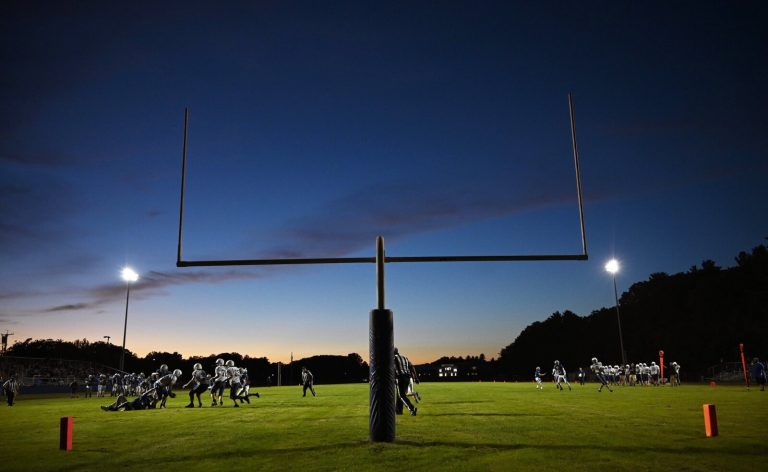
THE challenges, to be sure, are significant. But there are encouraging signs for the return of high school sports in Maine despite the coronavirus pandemic.

Maine has avoided the surge in COVID-19 cases currently sweeping the South and Southwest.

Hospitalizations across the state are low, and Maine has the lowest estimated virus reproduction rate in the country. Some parts of the state outside the more populated Cumberland and York counties have seen few positive cases.

On Friday, the Maine Department of Education outlined a plan that it hopes can get students and teachers back to school – or, in some cases, result in a hybrid mix of remote and in-person learning.

And, the Maine Principals’ Association said Friday it’s still planning for high school sports this fall, even in the wake of the University of Maine and other colleges in the state shutting down their athletic programs.

The MPA, which governs the state’s interscholastic activities, has introduced the early stages of a four-phase plan for resuming sports, beginning with in-person conditioning workouts in small groups in July.

But details for the third and fourth phases still have to be formulated.

The DOE’s county-by-county plan for reopening schools adds another layer of complexity to revamping what was always going to be an abnormal, at best, season this fall.

Based on interviews with educators and officials in Maine and other parts of the nation, and by looking at how other states are approaching the restart of high school sports, here are seven ways the impact of the pandemic is likely to be felt once interscholastic sports resume:

1. Administrators must prepare for COVID-19 infections.

Based on the Maine DOE’s red-yellow-green COVID risk assessment plan, if a county is designated “red,” then schools will be operating completely remotely. MPA Executive Director Mike Burnham said Friday that would mean no sports at all in those counties.

Regardless of the number of schools able to participate in high school sports this fall, there are likely to be disruptions because of COVID-19 infections. That’s already happened in one state.

Iowa plays high school baseball and softball during the summer, and opted to do so again this year with a delayed start. At least 25 baseball teams and 20 softball teams – roughly 7 percent of all teams – have had to cancel games because of players or coaches testing positive. As of Friday, 10 softball and 12 baseball teams had ended their season prematurely because of COVID cases, several of which were reported in the final week of the regular season. The state playoffs start this weekend.

“More and more schools are dropping out. The top-ranked (baseball) team in the state had to shut down this past week,” said Scott Garvis, the athletic director at Ankeny Centennial High. Garvis has been communicating with athletic directors and coaches in Maine throughout the summer via a series of Zoom meetings set up by Thornton Academy Athletic Director Gary Stevens, called the Pandemic Project.

“I always tell my coaches, we are one person, one case, away from being shut down,” Garvis said.

Maine, with a population of 1.3 million, is seeing a much lower incidence rate of new cases (a seven-day average of 18 per day) compared to Iowa (seven-day average of 419 new cases per day as of July 14 in a state of 3.15 million).

So perhaps team-wide quarantines will be rare in Maine.

To think it won’t happen at all is unrealistic, however.

When one case happens, be it in an academic or athletic setting, closures and quarantining will take place, said Yarmouth Schools Superintendent Andrew Dolloff in the Pandemic Project’s most recent conference call on Monday.

“I’m still waiting to see specific guidance, but I’m anticipating that if a person tests positive, it will mean a closing down of at least a school, or a district, for a specified amount of time – I’m hearing from two to five days – and the quarantining of those students,” Dolloff said.

2. Even with a green light, the season could be shorter.

On Thursday, New York state’s high school association announced it will delay the start of fall sports until Sept. 21, and also canceled regional and state championships. Vermont is also planning a later start. The MPA’s Burnham said Friday a later start is a possibility in Maine.

Even though the MPA approved in-person, conditioning-focused activities between coaches and players starting on July 6, school superintendents in southern Maine and several other areas of the state are not allowing those interactions before Aug. 3.

The MPA, the National Federation of State High School Associations (NFHS) and athletic directors in Maine are also emphasizing the need for going through a series of multi-week “phases” to ensure safety and conditioning of the athletes before competition begins.

For superintendents, the No. 1 goal is getting the academic year started. Sports are secondary. And, what they don’t want is to have a COVID outbreak during a preseason practice session, as happened in Lake Zurich, Illinois, a suburb of Chicago, where 36 confirmed cases were reported among participants in a high school sports camp.

“We’re wondering about the timing of athletics, of having kids coming back to participation in fall sports, ahead of when we start in-person education and how is that is going to impact us,” said Kevin Jordan, the superintendent of AOS 94, which includes Dexter High in Penobscot County. Jordan said many districts in Penobscot County are waiting until Aug. 6 to begin activities.

The MPA also has taken a cautious tack. Back in May, Dr. William Heinz, the chair of the MPA’s Sports Medicine Committee said, “Our approach from the MPA is that, we’re going to be more careful. We don’t care if someone looks back a year from now and says we were way too cautious. I’d rather have that than someone get sick and a whole team exposed.”

3. The closer the contact, the greater jeopardy for sports to be played.

Earlier this month, New Mexico’s governor ordered high school football and soccer to be played next spring instead of this fall. Virginia’s high school sports organization came out with three possible scenarios on Tuesday for rearranging sports seasons in 2020-21. None of them included football in the fall. Conversely, state athletic associations in Utah and Pennsylvania have declared they will go forward with their full, regular fall sports schedules.

Football’s larger roster sizes, close contact on every single play, and use of cramped, poorly ventilated locker rooms present problems.

 “I don’t see how you can do football and do true social distancing the way we understand now,” said Marshwood football coach Alex Rotsko.

The U.S. Centers of Disease Control, the NFHS, and several individual state organizations have outlined which sports carry the highest risk of transmission of the virus during competition. (The MPA has yet to establish its own risk-factor chart.) While there are slight variances, football is always in the high-risk category. The NFHS document goes through a three-phase approach to returning to play. Only in the third phase does it recommend “modified” practices for high-risk sports. There is no guidance for when games in those sports should begin.

It’s not just football that’s at risk this fall. Soccer and field hockey are also sports where opposing players are in close proximity to one another. And in those sports, the play is continuous, with players breathing heavily as they run up and down the field. Coronavirus has been shown to be predominantly spread by airborne respiratory droplets.

While clearly there are differences in travel, team demographics, and adult supervision between high school sports and college sports, it is hard to ignore the flurry of colleges suspending fall sports and stating an intent to try to play football and soccer in the spring of 2021.

4. Transportation challenges will be even greater.

There will be no more piling onto a school bus with both the varsity and JV soccer team – not with CDC recommendations that only 14 people should be on a standard bus.

Even before the pandemic, transportation could be a nightmare. Waynflete Athletic Director Ross Burdick said in the past he’s had to send buses to an opponent’s school so that a sub-varsity team could travel to Waynflete. Freeport AD Craig Sickels said having only three buses available for all after-school activities on a given day is the norm.

With COVID restrictions, Sickels is among many athletic directors who would support a switch to geography-based scheduling to reduce travel time. New York, in its recent announcement, is encouraging that strategy. At this point, the MPA is not endorsing regional schedules, in part because of concern that it would be too hard for smaller, rural schools to find opponents.

Schools are going to have to rely on parents to help with transportation, or ask bus drivers to make multiple trips to one short-distance site if they intend to maintain full varsity and junior varsity programs. Getting more buses isn’t a realistic option.

“In rural Maine, we have a hard enough time finding bus drivers, and to find three or four more is a real challenge,” said Jordan, the superintendent in Dexter.

5. Restarting sports during a pandemic adds extra costs.

Athletic departments are going to need personal protective equipment and sanitizer to keep students, coaches and staff safe. They will need signage around every field telling people where they can and can’t sit. Garvis, the athletic director from Iowa, says he’s needed extra game personnel to enforce the rules. It’s all going to cost money.

Gov. Janet Mills announced Friday that $165 million in federal Coronavirus Aid, Relief, and Economic Security Act funding that Maine has received will be designated for schools. The funding for schools is in addition to $44 million Maine already received to directly reimburse districts for coronavirus-related expenses. But Mills said more funding will be needed to fund all the safety requirements.

Jessica Hopgood, the certified athletic trainer for Sanford High, said she’s already ordered $3,000 worth of face masks, sanitizer and touchless sanitizer dispensers. She’s not sure how long that will last. What she hasn’t yet ordered, because she’s unsure she can afford to, are typical supplies like athletic tape.

Another potential cost could be hiring more coaches (if they can be found), or at least supervisory personnel, to allow small groups of players to work out separately during the season – especially if athletic programs want to maintain sub-varsity programs.

Why is that important? Garvis, the AD in Iowa, had to quarantine two of his sub-varsity baseball teams during the season. The only reason his varsity team wasn’t forced to also quarantine is because from the outset, Garvis kept teams isolated from one another.

Spectators wear masks while sitting socially distanced in their own lawn chairs during a travel-team basketball game at XL Sports World in Saco in June. Ben McCanna/Staff Photographer

6. Fans, the few that will be allowed at games, will have to adapt.

The Mills’ administration announced Friday that virtually all students and staff will be required to wear face masks when schools reopen. Coaches and players will wear masks when on the sidelines or benches – and fans are likely to be required to do the same, particularly for indoor events.

It’s also likely that attendance limits will have to be set. Maine has a 50-person limit on gatherings through at least the end of August. If that continues through the fall, what would a playoff game look and feel like?

Asked what advice he would offer to athletic directors, Dolloff said ADs need to start thinking about how they will monitor and appease fans. “Will you offer streaming of the games? Will it be parents only (at games)? What about stepparents?” Dolloff said.

7. Then comes winter.

Even if players, coaches, parents and fans can get through the fall season, the winter sports season could be even more challenging. All winter sports except skiing are indoors. Mask wearing and social distancing will become more important, even though much of the allure and excitement around sports like basketball and hockey involve playing in front of large, vocal crowds, with rambunctious student cheering sections.

Maine, and the nation, could be in a very different place when it comes to the virus.

Dan Schuster is the director of educational services for the NFHS. He joined a Pandemic Project Zoom meeting to discuss the organization’s online professional development course called “COVID-19 for Coaches and Administrators.”

 “COVID is making the rules here. Let’s not forget that,” Schuster said. “We’re trying to play the best that we can. We want to get all this information to the coaches and administrators, but every piece of content in the course could change.”

Still, Schuster is optimistic that high school sports can adapt.

“We’re seeing a lot of these college sports cancel, but high school sports are unique. We are community-based and we think just because the colleges and universities are canceling, it doesn’t mean the high schools have to follow that,” Schuster said. “We have to do what the virus essentially allows us to do.”

(Compiled by Portland Press Herald)

The Importance Of STEM In Post-COVID-19 Efforts In The Republic Of Congo

ON March 28, the Republic of Congo’s government took some radical measures to limit the spread of the new COVID-19 (coronavirus), including the closure of primary, secondary, tertiary, and technical-vocational schools.

A few weeks later, the government decided to consider the results of the first two quarterly to decide whether school age pupils will validate their year in order to avoid a gap year.

Moreover, for those pupils in exam classes, the government decided to provide courses on national radio and television.

However, for the universities and technical-vocational schools, the status remained unchanged. And, up to now, there are unfortunately still closed.  

COVID-19 has pointed out the Congo’s inability to ensure that learning never stops due to weak resilience of our educational program.

Moreover, today, as we commemorate World Youth Skills Day, we celebrate the importance of equipping young Congolese and young Africans with resilient skills.

Those skills will allow them to secure decent work, employment, and entrepreneurship. In doing so, the Congo needs to adopt and leverage a multipronged approach influenced by technology, innovation, and collaboration.

Besides, distance learning within a focus on science, technology, engineering and mathematics (STEM) Education and technical and vocational education and training (TVET) is one of the approaches to implement in the recovery efforts in post-COVID-19.   

Since the beginning of the COVID-19, engineers like me have been on the front line to cope with the effects of the virus, from the manufacture of the hydro-alcoholic gel, face shields using 3D printing technology, and ventilators to the implementation of telework solution and retail mobile applications.

Even post-COVID-19, engineers will continue to play a significant role in helping the Congo rebuild its economy.

For instance, to battle the learning crisis and counteract the effects of school closure, engineers will have to design new learning platforms and applications.

Also, regarding TVET, engineers will have to innovate to provide virtual learning experience using technology like augmented reality, artificial intelligence, robotics, and automation.

When it comes to the economy, engineers will have to develop new applications to make the mobile money payment more accessible and allow diaspora to send remittances easily so we can tend to a cashless economy. 

Therefore, the Congo must make a STEM a priority in order to build a resilient country.

It will consist of reshaping our educational system and orienting it toward a skill-oriented educational system where young Congolese will be equipped with tools and skills needed to not only enter the job market but also prepare for the disruption of the future of work.

Learning must become a lifelong process.  

Nevertheless, access to technology and the internet could be an obstacle in the quest to achieve resilience.

That is why the country needs to bridge the digital divide by investing in digital infrastructure to provide access to affordable and reliable broadband.  

In conclusion, COVID-19 has brought the Congo into uncertain times, but the hope is not lost.

Young Congolese engineers, by their different actions during this pandemic, are transforming the different challenges they are facing into opportunities.

Equipping youth with STEM and TVET skills will help them support recovery efforts and prepare them to mitigate future shocks or pandemics better.

(Source: WorldBank.org)

Sports Fanatic Morné Kymdell Is Our Teacher Of The Week

CLASSROOM CORNER

Teacher of the Week

Teacher: Morné Kymdell

School: Die Afrikaanse Hoërskool, Kroonstad, Free State

Sports fanatic Morné Kymdell, from Die Afrikaanse Hoërskool in Kroonstad in the Free State chose teaching because he has always loved sharing knowledge and experiences.

To Kymdell, the main challenge is effective managing of time and the holistic development of the learner.

As a teacher, he plays different roles such as cricket coach, rugby coach and hostel father.

Kymdell sees education as an opportunity to grow and his teaching is characterised by innovation and creativity.

He plans to make a difference on a higher level.

The National Teachers Award (NTA) has given him the opportunity to show people of different backgrounds that the country is united and this attitude needs to be shared with the learners.

(Compiled by Inside Education staff)