Home Blog Page 399

DA, EFF Calls For No Increases In Property Rates, Salaries For City Of Joburg

0

THEBE MABANGA

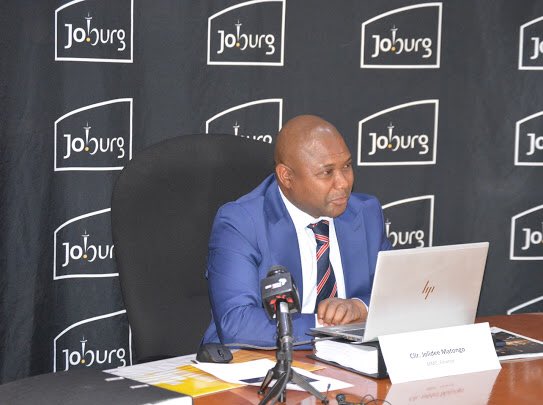
THE Democratic Alliance (DA) and the Economic Freedom Fighters (EFF) on Thursday called on the City of Johannesburg to scrap proposed increase in property rate and forgo any salary increases for employees and councillors as the city grapples with the COVID-19 pandemic.

This was revealed at the virtual council meeting held to consider the 2020/2021 budget for the City of Johannesburg.

The budget, property rates policy and Integrated Development plan were passed with 228 votes to the EFF’s 29 votes.

In response, the city lowered proposed tariff increases and threw the gauntlet to all other parties in council to agree to a freeze in salary increases.

Property rates increases were decreased from an initially proposed 4.9% to 4% while water tariff increases were lowered from 8.6% to 4.6% while electricity increases were also dropped. 

The city’s budget for the coming year will be R68.1 billion, which represents a 7% increase in revenue.

The EFF said the city’s budget was “absurd” under the current economic circumstance.

The R60.1 billion will go towards operational expenditure. 

The city said it will create jobs through cleaning programmes among a range of programmes that will see 15 people per ward to complement clean-up work and refuse removal from Pikitup.

The city also said it will spend R80 million on new Rea Vaya buses to ease congestion among a total of 15 expenditure items. 

The City of Joburg also announced that it will reinstate the free 6 kl of water to every household and will put R 400 million into the pockets of households through rebates and property tax credits. 

(Compiled by Inside Education staff)

EUSA Commends Educators In Phoenix, KZN, For Closing Down Schools Due To COVID-10 Concerns

NYAKALLO TEFU

THE Educators’ Union of South Africa has expressed support for the decision taken by the school governing bodies (SGBs) and principals of KwaZulu Natal’s Phoenix area not to allow Grade 6 and Grade 11 learners to return because the majority of schools were not COVID-19 compliant.

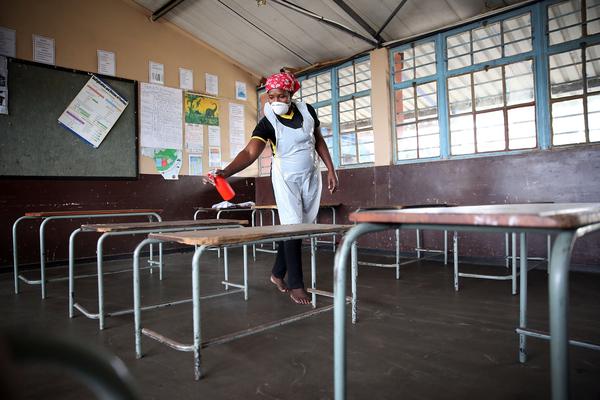
Learners at several schools in the Phoenix area were sent home on Monday because masks, sanitizers and water had not been delivered to their schools.

In a statement on Tuesday, EUSA commended the actions of the schools and principals in the Phoenix area, saying their action showed professionalism in their leadership and governance.

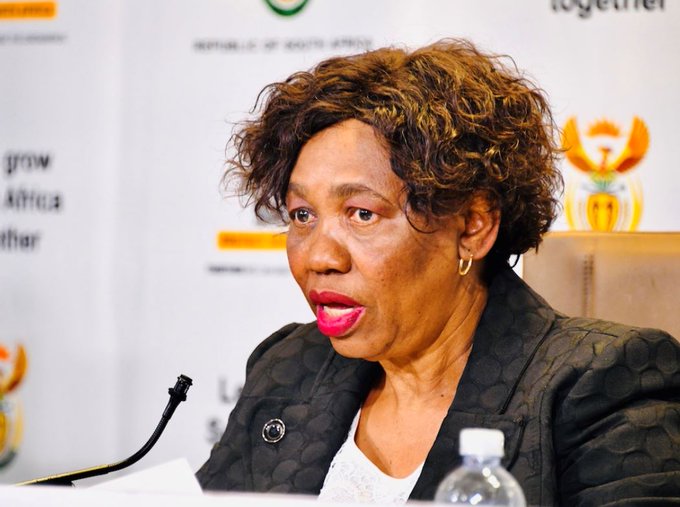
“It is vividly clear that both the Minister of Basic Education, Angelina Motshekga, and the MEC in the KZN Department of Education, Kwazi Mshengu, have no plans to act in the best interests of the teachers and learners, during this trying times of a deadly COVID-19 pandemic,” said EUSA President, Sicelo Bhengu.

The decision made by schools in Phoenix comes as the number of confirmed coronavirus cases continued to rise rapidly in South Africa.   

EUSA said it conducted a survey on Monday the 6th of July 2020 and can confirm that 65% of the schools in the province are without personal protective equipment and those that do are insufficient for all learners.  

“We remain steadfast in our initial position that schools shouldn’t have been reopened in the first place as this premature reopening of schools will definitely end in tears. We know that this improper  reopening of schools was not motivated by good intentions, instead it was propelled by the intentions of looting the public purse through unregulated tenders,” said Bhengu. 

(Compiled by Inside Education staff)

Plans To Reopen Some Schools In Limpopo Thrown Into Disarray Amid Water And Sanitation Chaos

MASHUDU SADIKE

WHILE some schools in Limpopo resumed to a smooth on Monday, most were left without toilets and running water.

About 500 000 learners were expected to resume their studies today after Basic Education Minister Angie Motshega announced last month.

At Mokgwibidu Primary school in Moletjie, gates remained closed because service providers had not delivered mobile toilets and water tanks had arrived but had no water.

Saviour Association of School Governing (SASGB) bodies chairperson, Caiphas Mashutla, who had been at the school, maintained that the resumption of schools was premature.

“There so many challenges including teachers who are over 60 and have chronic illnesses who are still expected to teach. It also does not make sense that children must attend schools once a week. When the child comes back they have forgotten what they learnt the previous week. It defeats the purpose. This is just a way of government to solicit tenders,” Mashutla said.

He said that today proved that schools should just be closed and government concede that the year was lost and start preparing for 2021.

A principal at Mphetsebe High school in Badimong, outside Mentz, John Rapudi also said after a meeting with parents last week the resumption of schools was well underway but was concerned with overcrowding when the other grades came back.

“PPEs have been delivered but we are going to have a problem when Grade 10s return as we will not be able to manage ‘social distancing’.

Congress of South African Students (COSAS) chairperson in the province, Ntwanano Ngobeni, said that the student movement had monitored five schools in Mopani and had found them to be in compliance but warned that those schools that only comply only for now because there would be monitoring by various institutions, would be monitored.

“These schools must not only do things properly because the schools are opening today. They must implement it everyday,” Ngobeni said.

Ngobeni said that after consulting their constituency they felt happy that everything was smooth sailing.

Limpopo Department of education spokesperson, Tidimalo Chuene said they were still waiting for reports from District Directors but they had not had any complaints by Monday.

(Compiled by Inside Education staff)

Teacher Unions Upset Over Motshekga’s Decision To Return 2.5 million Pupils Back To School

NYAKALLO TEFU

TEACHER unions, political parties and parents associations are at loggerheads with the Basic Education Minister Angie Motshekga for sending more grades to school.

The various organizations said on Monday that they were concerned with the return of these grades as some of the schools were still struggling with Grades 7 and 12.

This was in response to Sunday’s announcement by Motshekga and her department that more than 2.5 million learners from Grade R, Grade 6 and Garde 11 would return to schools on Monday.

In a statement issued, the SA Democratic Teachers Union (Sadtu) said this was a regrettable decision.

“We are extremely disappointed, because we would have loved to see the schools building resilience in teachers, learners and education support personnel before receiving more grades,” said Sadtu.

“That it is taxing the teachers to deal with the curriculum recovery whilst at the same time having to deal with the probability of becoming infected.”

Yet on Monday, the ANC Women’s League also slammed Motshekga’s decision to return more grades to school.

The women’s league said it was concerned over the phasing in of more grades and allowing schooling when the country was still struggling to contain the spread of the COVID-19 pandemic.

“We cannot turn a blind eye to the number of infections and deaths in our country. We are all aware of the infrastructure challenges in many schools across the country and conditions in such schools have been hazardous and posing health risks to learners long before corona emerged in our country. Therefore, as a country we cannot gamble with the lives of children, more especially the poor learners who are subjected to study in potentially unhygienic conditions,” the league said in a statement.

Meanwhile, the Progressive Organisations (teacher unions, worker unions and civil organizations ) in the Western Cape met at the weekend to assess the health and safety situation of learners, parents, teachers and support staff in the province.

The progressive organizations agreed that the Western Cape Province has become the epicentre of the deadly coronavirus in South Africa and things have now reached a crisis point.

“What we have also experienced is that this province is not ready to deal with this pandemic and our poor state of the public health care system in the Western Cape and in particular in the working class areas is a living example,” said the organization, whose membership includes COSATU, ANC Youth League, SADTU, COSAS, SA Communist Party and the Parents Against Opening of Schools.

“To date the Western Cape has recorded 66 195 cases, representing more than 50 percent of the total infections in South Africa. Most tragically, is the rate at which the virus is spreading in the working-class areas such as Ravensmead, Du Noon, Khayelitsha, Bishop Lavis, Nyanga and Mitchells Plain. South Africa is the most unequal society in the world.”

The formation said Grade 7 and Grade 12 learners can continue to go to be at school while Grade R to Grade to 11 students should remain at home until the virus curve flattens.

“This is the view of COSATU WC, SADTU (WC), NUPSAW ES WC, ANC YL, SACP WC, ANC WL, SANCO, SASCO and YCL. Parents against the opening of schools for learners, BLAC, SOS, Athlone Teachers’ Group and COSAS WC demand that all students stay away from school including Grade 7 and Grade 12 students until the virus curve flattens,” the formation said.

“We do not support the phasing in of other Grades into the system until the virus curve flattens. The Formation will monitor the ill-conceived plan to bring back grade 6, 11 and Grade R on Monday 6 July 2020 and will report non-compliance to the Department and Employment and Labour and the Human Rights Commission. The decision of the National Department of Basic Education ( NDBE ) to allow the phasing in of the other grades now will further compromise social distancing, constant sanitizing, and staffing challenges as there would be a need to reduce the class size and accommodation would not allow for this.”

Meanwhile, all private nursery schools, offering early childhood development may open their doors immediately if they have adequate safety measures in place.

This follows a judgment by Gauteng High Court Judge Hans Fabricius who overturned government’s regulations that these institutions remained closed under lockdown Level 3.

Trade union Solidarity, Bronkieland Nursery School in Bronkhorstspruit and an organisation called the Schools Support Centre turned to court on an urgent basis as there was uncertainty about when private pre-school centres could open.

(Compiled by Inside Education staff)

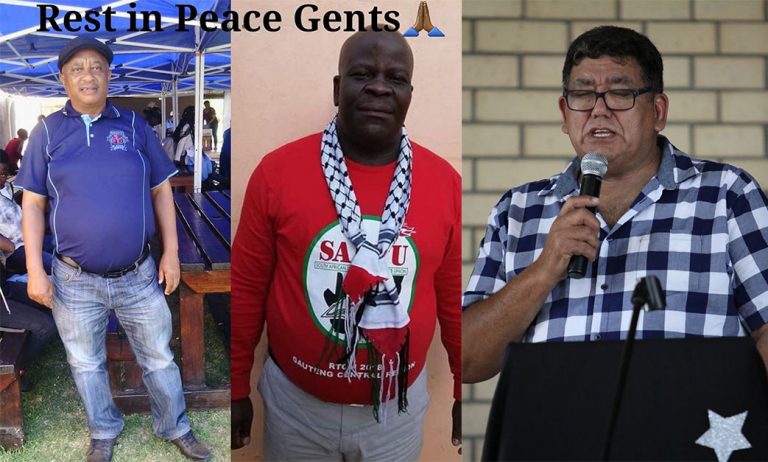
3 Of 11 Teachers Who Succumbed To COVID-19

NYAKALLO TEFU

GREGORY Klink was more than just a teacher to his learners and fellow educators. He was also a father figure who was loved, adored and cherished by all.  

Klink, a Grade 7 teacher at the Montevideo Primary School in Cape Town, died on Friday June 26 from COVID-19 related complications after testing positive three days earlier.

Shortly after his death, Montevideo Primary School shared a tribute to Klink on Facebook with several of his colleagues writing touching comments about him.

“Always smiling and laughing,” wrote one teacher.

“A great loss for Montevideo and a father figure to many,” wrote another.

Some teachers said Klink was ‘one of those people who everyone liked’.

He was “a much-loved and gifted member of staff”, another teacher said.

According to the school’s acting principal Craig Daniels, Klink went for his COVID-19 test on a Tuesday, received a positive result on Thursday, and on a Friday morning, sadly, passed away at his home surrounded by his wife, children and grandchildren.

“In the space of three days, Coronavirus became a reality at Montevideo Primary… Mr Klink went for his Covid-19 test on Tuesday, received a positive result on Thursday, and on Friday morning, sadly, passed away at home,” said Daniels.  

“Our educators are heart-broken, as I am sure many of our children are – past and present. Mr Klink was the grandfather that your child needed, he was the father that was missing from home, he was the mentor to our educators and he was the source of our spiritual guidance and motivation.”

The other two teachers featured were educators at Boikanyo Primary School in the Gauteng Province.

They also succumbed to the deadly virus.

According to Basic Education Minister Angie Motshekga, since the return of the Grade 7 and 12 learners on 08th June 2020, 2 740 teachers, of the total number of about 440 000 teachers, were infected by the virus.

In the same period, 1 260 learners were infected by the virus.

“We unfortunately lost the lives of eleven 11 teachers and 4 non-teaching staff in the Eastern Cape to the virus; as well as 3 learners, who are reported to have succumbed to COVID-19. The reports show that some of these teachers and learners could not have the opportunity of reporting back to school on school reopening,” said Motshekga in her tribute to the fallen teachers and learners.

“We convey our deepest condolences to the affected families. May their dear souls rest in eternal peace. Due to the infection rate, it is clear that we need to continue to work together to contain the transmission of the virus. As the basic education sector, we have to play our part together, with all our strategic stakeholders and partners.”

Teachers were not coping with the psychological stresses of working during the pandemic while their colleagues were dying, said founder of the Western Cape Teachers’ Forum Lee Hoffmann, who is a teacher and works for a teachers’ union.

“Our people are really not coping, because, on a weekly basis, we’re sharing news of one of our education sector workers that has passed on,” Hoffmann said.

“The sector is reeling at the loss of these educators.”

Hoffman created the Teachers’ Forum Facebook group in 2015 as a place for education workers to network. During the pandemic, it has become a place to share information, fears and to support one another, with a particular focus on the mental wellness of teachers.

“Psychosocial support is really important. You’ve got PPE in place and social distancing, but we’ve not addressed the issue of wellness enough, for both teachers and learners,” he said.

(Compiled by Inside Education staff)

KwaZulu-Natal: Uproar Over R11m COVID-19 School Tender

SANDILE MOTHA

AS KwaZulu-Natal welcomed a new cohort of leaners in a phased-in approach to rescue the 2020 academic year, it remains unclear whether they will be catered with the required protective gear.

A hostile business and radical economic transformation grouping calling itself Amadelanga Ngokubona told Inside Education this weekthat it will be taking to task the provincial department of education for allegedly awarding a R11 million  ‘dodgy’ tender to supply personal protective equipment in schools under eThekwini metro without following normal tendering process.

According to the formation, the tender is meant for supplying sanitizers and face masks to Grade 6 and Grade 11 pupils in the eThekwini education district.

“We are concerned that the tender was not advertised publicly for everyone to have a fair chance to bid. We just heard that it has been awarded. Amadelanga Ngokubona are also of a view that the contract could have been divided so that more companies could benefit,” said Sandakahle Magubane, speaking on behalf of the business formation.

Magubane added that the formation would be staging a picket in various office of the department of education to block the supply of the material to schools.

“We will ensure that sanitizers and masks destined for schools do not leave the offices. This we will do until we get the answers we want,” added Magubane.

He also said his organisation was concerned that Indian business people were getting preferential treatment when it comes to government contracts in KwaZulu Natal.

“We can’t have a situation where black people are continuously treated as second class citizens under a black government,” he said.

Kwazi Mthethwa, education spokesperson, said the department viewed the threat in serious light, saying differences should be resolved amicably instead of resorting to scare tactics.

He did not confirm nor deny that the tender was awarded.

“As a department we have been battling this problem of business forums who want to hold the department to ransom. The MEC has taken a decision not to give in to these threats by involving the department of community safety who will deal with any disruptions to teaching and learning,” said Mthethwa.

Last week, MEC for Education Kwazi Mshengu admitted that there was an unprecedented delay in the supply of personal protective equipment because of business formations who want a stake in the contracts to supply school.

He labelled the business forums as extortionists, saying the tendering process was transparent and that the groupings did not want to participate and now are resorting to ‘Mafia-style’ tactics.

Meanwhile, the phasing of Grade 6 and Grade 11 under the King Cetshwayo district municipality was reportedly disrupted as schools had to turn pupils away because of inadequate classes.

Nomafu Ngubane, school governing body’s chairperson of one of the affected schools, said there was no space to accommodate the new cohort of pupils as it had been occupied by matric pupils.

“In total, we have about 489 Grade 11 pupils and we had to use their classes to accommodate matric. So we decided to turn them away because mobile classrooms have not been delivered yet,” Ngubane told Inside Education.

Apart from this, the province has seen 306 teachers and 81 pupils being tested positive for COVID-19 since reopening schools a month ago.

The number includes the death of 4 teachers as result of the pandemic.

In terms of the overall COVID-19 infections in KwaZulu-Natal, eThekwini district tops the province with 7 666 infections.

The metro is followed closely by uMgungundlovu and iLembe district respectively.

(Compiled by Inside Education staff

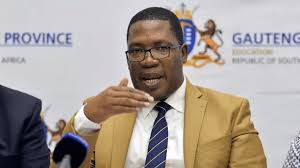
Lesufi: 519 Teachers, 151 Learners Tested Positive For COVID-19 In Gauteng

A TOTAL of 571 schools in Gauteng have been affected by the coronavirus since the reopening of schools last month, according to MEC for Education Panyaza Lesufi.

Lesufi added that a total of 519 teachers and 151 learners have also tested positive for COVID-19. 

He said the schools where the teachers and the pupils attended had since been disinfected and deep-cleaned as part of the measures to combat the spread of COVID-19 in Gauteng.

On July 6 in Gauteng, 124 911 learners in Grade R, 212 271 Grade 6 and 159 345 learners in Grade 11 returned to their classrooms. 

“Out of 172 113 public servants in Gauteng, 1 814 have tested positive since March, this includes public health workers and educators,” said Lesufi.

Lesufi said his department has developed an alternative day approach, where learners will rotate days in order to comply with the social distancing standards and protocols.

“In a secondary school, the Grade 12 learners will attend daily but the remaining grades in whatever combination would attend on alternate days,” said Lesufi. 

Lesufi said if the alternative day approach is used in a primary school, learners in the foundation phase [Grade R to Grade 3] will attend on one day and the remaining [Grade 4 to Grade 7] on the next day.

“If conducted on a combination basis, entire grades cutting across the phases would be requested to attend on one day and the remainder on the next,” said Lesufi.

The MEC said this approach would assist schools that were overcrowded and may also be used according to each school’s unique dynamics to facilitate physical distancing. 

Lesufi said all children remaining at home must be supported through a concrete and measurable programme run by schools.

“Reworked annual teaching plans will be packaged into 14 day learning activity packs (LAPS) for every 14 day learning cycle to be collected at school and signed off by a parent/legal guardian every 14 days,” said Lesufi.

Another set of learners will return to schools at the end of July as the country fights against the coronavirus pandemic.

(Compiled by Inside Education staff)

NWU: Impact Of COVID-19 On Elite Sports People

IT IS safe to say that everyone’s life has been influenced in some way or another by the stringent COVID-19 lockdown regulations. This includes the professional people who on a daily basis entertain us in the sports stadia – our sports people.

Over the past 10 weeks, Prof Pieter Kruger, director of the North-West University’s Institute of Psychology and Wellbeing and a renowned psychologist, has been working with a range of elite sports people in rugby, premiership football and professional golf, as well as a few Olympic athletes, who found themselves in the void that Covid-19 had created in the world of sport.

They were all faced with similar challenges, namely empty stadiums, no training, social distancing, and a range of out-of-the-ordinary circumstances. Like for most of us – besides the obvious challenges and concerns about the virus itself – it was an interesting and new experience to spend extended time at home with their loved ones. For sports people this also meant an interesting new routine of not running between appointments, no travelling across the world to compete, not being paced by specific training schedules, and suddenly working on a time frame that may be more suited to individual chronotypes (your sleep-wake preference). Unfortunately, most people very soon realised that it was not as great as they thought it would be.

“Not only were we forced into a geographically confined space (at home), but inevitably this also started having a significant impact on people’s emotions and behavioural patterns. Suddenly we started sleeping at different times, eating at different times, training at different times, spending more time with technology. We started moving significantly less. Apart from the obvious one intense bout of exercise per day which most sports people adhered to, the lockdown also prompted significant changes in our social patterns,” Prof Kruger says.

Under normal circumstances, people will go out to the movies or the theatre, meet up with friends for drinks, have people over for a barbeque or go out to play golf, cycle or participate in other outdoors activities to deal with stress. In the blink of an eye this all changed as these changes were forced upon us – with no exceptions.

“This significantly interfered with sports people’s ability to manage their stress and concerns, which in turn had a negative impact on some of them from a general mood perspective. A significant number of people found it very difficult to deal with these changes which led to several anxiety-related symptoms such as muscle tension, poor sleep quality, frustration and the inability to control their mood, relationship challenges, gastro-intestinal problems, concentration issues and even headaches. Some of them asked for help, some managed to get through this period by themselves, and some seemed to suffer in silence during this time. The level of uncertainty and helplessness unfortunately exacerbated this already challenging situation for most people.”

Luckily, things are slowly returning to a form of normal, with lockdown regulations having been relaxed, training resuming and the prospect of games slowly returning. It is hoped that this will help players to deal with and alleviate current symptoms, although the return to training and concerns about resuming highly competitive, intense games, will bring their own level of worry.

“It is imperative that players have a mental plan to approach this new transition phase to ensure that they can prepare themselves optimally (physically and mentally) to return to training and to play games again. It is hoped that franchises and unions will put the necessary support systems in place to help players during this new transition period and to ensure a smooth return to business as usual,” Prof Kruger concludes.

(Source: North West University)

India’s New Education Policy: A Better Report Card

JS RAIPUT

THE contours of a post-Corona world are emerging fast; so are the new challenges that every sector will have to face. With the novel virus upending nearly every aspect of our lives, an entirely new approach and innovative solutions would be needed to adapt to the “new normal.” Changes would take place in every sector but the importance of Sustainable Development Goals (SDGs) must gather greater human attention.

On January 1, 2016, the 17 SDGs of the 2030 UN Agenda for Sustainable Development — adopted by world leaders in September 2015 at the historic UN summit — came into force officially. The SDGs were conceived at the UN conference on sustainable development in Rio de Janeiro in 2012. Their objective was to produce a set of universal goals that meet urgent environmental, political and economic challenges faced by the world. The SDGs offer a blueprint to the world so as to achieve a better and more sustainable future for all. They seek to address challenges faced by nations across the world, including those related to poverty, inequality, climate change and the ultimate goal of peace and justice. But how and why did we arrive at SDGs?

The 20th century witnessed the end of the colonial era and the initiation of subsequent transition into another era — of progress and development — among the newly-liberated nations. Most of these countries were deficient in human resources, education, experience and expertise at every level. Several nations transplanted education systems that were established over the ruins of indigenous traditions of knowledge quest. The shortage of educated and skilled manpower emerged as a great impeder for internal experts to evolve indigenous ideology of progress and development. In most cases, the ideology of “progress” and “growth” was borrowed from the West and implemented under the active guidance of former rulers. Another contributing factor was the personal fascination of new rulers to all that was foreign, Western and modern. Exploitative, ethically weak and unprofessionally envisioned plans and programmes for development led to serious imbalances in social, economic and man-nature relationship. In India, Gandhi, Gram Swaraj, farmer, village, local artisan and production skills all were  ignored, leading to serious neglect of the agriculture sector. Consequences are before us.

The World War II and growing public opinion against wars and violence highlighted the need for international cooperation and collaboration among the nations. This led to the establishment of bodies such as the UN, UNESCO, UNICEF, WHO, UNSC and several others. There had to be some sort of partnership among nations on equal and dignified terms. This was the only way to tackle global issues and concerns. SDGs are one of the major outcomes of the global human response to tackle issues that concern everyone. Could a single nation ignore the plundering of natural resources by vested interests, resulting in irreversible damage, creating a dark future for the generations ahead?

Learning to live together in a village, region, nation and the globe is the only alternative. SDGs form a comprehensive global initiative that guarantees victory against all that impedes the human march towards a world full of peace, dignity and mutually respectful harmonious living. But this is possible only when poverty, hunger, ill-health and gender discrimination are discarded; when there is equality of opportunities, justice, work opportunity, decent working conditions for all. Human beings must learn to take due responsibility to protect the natural environment, flora and fauna and sea resources. They must be concerned about climate action.

SDGs can be achieved only on the sound base of sustainable and responsible consumption. All these — and a lot more — find a place in the list of SDGs. Universal education is the prime mover in each of the 17 goals. SDG 4 relates to educational goals. It aims to “ensure inclusive and equitable quality education and promote life-long learning opportunities for all.” Target 4.7 expects: “By 2030, ensure that all learners acquire the knowledge and skills needed to promote sustainable development, including, among others, through education for sustainable development and sustainable lifestyles, human rights, gender equality, promotion of a culture of peace and non-violence, global citizenship and appreciation of cultural diversity and of culture’s contribution to sustainable development.” It is also clearly mentioned that education will achieve its objectives and goals only when an adequate number of qualified, competent and inspired teachers are available.  “By 2030, substantially increase the supply of qualified teachers, including through international cooperation for teacher training in developing countries, especially least developed countries and small island developing states.” This is the biggest challenge that India’s New Education Policy must seriously respond to. No education policy can neglect these aspects.

By 1950-60, experts and scientists began issuing a warning that developmental activities — bereft of ethical, moral and social considerations — and oblivious to the damage they were inflicting on air, water, forests, species and the natural environment, could lead to irreparable damages to the very existence of human beings. The sensitive link between man and nature was being crushed under ever-increasing human greed, emerging out of materialistic acquisitions at the cost of spiritual pursuits. Gradually, the glitz of globalisation blinded humans to the extent that the very existence of planet earth is at stake. How long could the planet survive?

It became clearer that the only way to avoid destruction was to create global awareness, let people understand that their future was being compromised and that it could be prevented only through an attitudinal transformation. It was realised that the most crucial and urgent step would be to universalise elementary education. It just cannot be routine education and has to be much more than that. It has to be comprehensive education, one that achieves attitudinal transformation, offers the right skills and knowledge and at the same time ensures internalisation of human values that includes man’s responsibility to restore and sustain the man-nature mutuality.

For the first time, it was globally acknowledged that the wanton depletion of natural resources without replenishment — as was already evident globally in environmental pollution, deforestation, climate change, depletion of the ozone layer, desertification and so many other visible signs — must be checked and damage repaired. Development is essential but the survival of the planet deserves primacy. Hence, development has to be “sustainable.” Its basis would be indigenous knowledge, cultural comprehension and skills to utilise new knowledge from every source in the changing context. It has to be “rooted to culture and committed to progress.”

Human beings never had problems with nature so long as they respected the “give and take” relationship between man and nature. How this could be achieved was not unknown.  Indian scriptures have discussed that in great detail. Nature was equated to gods. This had a scientific basis, articulated in a manner that would be easily comprehended by people at every stage. Unfortunately, various aberrations and disturbances resulted in the snapping of ties between the people and their cultural heritage. Alien rulers left no stone unturned to destroy natural resources of their “colonies” and augment their own coffers.

Global poverty is the creation of the materialistic pursuits and exploitative tendencies bereft of human values, compassion, fellow feeling and lack of respect for nature. As the disastrous consequences became evident, concerns grew and serious international deliberations followed. Take the example of the Stockholm conference on environment in 1972, the UN conferences on water and desertification in 1977, the Rio conference of 2012 and the climate change conference of 2015 among others. Expediting universal education emerged very prominently in each one of these every time. The World Conference on Education for All, held in Jomtien in March 1990, was a watershed for education. The objective was to universalise education within a decade. Although this could not be achieved, the purpose of expediting educational access to all was significantly achieved.   

The World Education Forum of 2000 came out with the Dakar Declaration, where 164 countries resolved to achieve Education For All by 2015.  Indian achievements in EFA have been lauded, particularly for the fact that its population has more than trebled after independence. But we are very near the target in access and retention. Our previous efforts and achievements, coupled with determined new initiatives, have made India fully ready to achieve the SDGs by 2030. Our focus in the days to come must be on quality, gender equality, skill acquisition and above all, on “learning to learn.” If one has to observe a paradigm shift in one particular sector, it would be education, worldwide. India’s New Education Policy can expedite the march towards sustainable development and self-sufficiency.

(The writer works in education and social cohesion)

South Africa: Legislation Amendment To Harmonise Science and Technology Operations

THE South African Ministry of Science and Technology in November 2018 introduced the Science and Technology Laws Amendment Bill to the National Assembly.

The Bill seeks to amend the Scientific Research Council Act of 1988, the Academy of Science of South Africa Act of 2001, the Human Sciences Research Council Act of 2008, the Technology Innovation Agency Act of 2008, and the South African National Space Agency Act of 2008, so as to harmonise the processes for the termination of the membership of Boards or Councils of the entities established by these Acts.

The Bill has since gained support from the National Assembly in February 2020, the National Council of Provinces in July 2020, and is now awaiting Presidential assent.

If assented to by President Cyril Ramaphosa, the legislation will unify the operations of agencies under the space and tech ministry, to give a more holistic approach to their services.

The Bill also gives more autonomy to some agencies, especially the South African Space Agency, by allowing it to conduct business outside the country with more ease than ever through several amendments to the National Space Agency Act, 2008.

According to the amendment: “47 The following section is hereby inserted in the South African National Space Agency Act, 2008, after section 5: ‘Performance of functions outside Republic 5A. (1) The Agency may, subject to legislation and other formal agreements regarding international cooperation and in order to achieve its objectives, perform any function in any territory outside the Republic. (2) This Act must, as far as it can be applied with the necessary changes, apply in connection with the performance by the Agency of its functions under subsection (1) as if the territory in which it so performs its functions were part of the Republic’’.

The amendment also touches on the now unified management system of the agency through the following introductions: “Clause 49 seeks to amend section 8 by providing for the Minister to consult with the Board before terminating the term of office of a member of the Board for any valid reason. It also provides for the resignation of the Board members to be made in writing to the Minister. Clause 50 seeks to amend section 10 by providing that a member of the Board or a member of a committee of the Board who is not in the full-time employ of the State must be paid remuneration and allowances as determined by the National Treasury”. 

“Clause 51 seeks to amend section 11 by clarifying the issue of the status of decisions of the Board that were adopted under certain circumstances. Clause 52 seeks to amend section 12 by providing that the members of the Board must disclose annually any interest that may compromise the performance of the functions of the Board. Clause 53 seeks to amend section 13 by providing for the chairperson of the Board to designate a chairperson for any of its committees. Clause 54 amends section 13A in the same way as described in clause 21 above. Clause 55 seeks to amend section 14 by providing for the Board to consult with the Minister before appointing the Chief Executive Officer of the Space Agency. It also provides for a limitation of the term of office of the Chief Executive Officer.” 

“Clause 56 seeks to amend section 15 by providing for the determination of the conditions of employment of the employees of the Space Agency by the Board. It also provides for the Chief Executive Officer of the Space Agency to second employees of the Space Agency and for the Board to determine the conditions of secondment of those employees. Clause 57 seeks to amend section 18 of the South African National Space Agency Act by providing for the delegation by the Board of its powers”.

“Clause 58 seeks to prohibit the liquidation of the Space Agency than in accordance with an Act of Parliament”, empowering the space agency to exist in perpetual succession, unless by an act of Parliament.

(Source: Space In Africa)