SOUTH African students are bad at maths compared to other countries. This is clear from results of South African learners in the International Mathematics and Science Study. The results show that South Africa’s performance is far from competitive in relation to other countries.
To try and understand the reasons for this poor performance, I did a qualitative case study focusing on a year-long post graduate course taken by aspiring teachers. I focused particularly on a Post Graduate Certificate in Education with a maths focus offered by one of the country’s university of technologies.
I looked at three key themes – the curriculum and its delivery, partnerships during delivery and policy influencing delivery. My research findings show that the success of the Post Graduate Certificate in Education in preparing maths teachers is not without concern and its delivery, in the case study context, needs rethinking.
My findings underscore earlier research that has suggested that a shortage of competent and confident qualified mathematics teachers is a key contributing factor to the low maths performance of South African school children.
Constraints
The one-year Post Graduate Certificate in Education offered at South African universities is a key qualification for aspiring teachers. This is taken after completing a diploma or degree in other fields such as engineering, business and hospitality. It offers an opportunity to university graduates to become a professionally qualified teacher in one-year instead of pursuing a career in industry.
My research highlights the constraints identified by students and lecturers of the post graduate certificate programme, in particular as it relates to the teaching of maths.
The first constraint I identified involved inadequate support structures as well as information, communication and technology infrastructure to meaningfully support the ever-increasing numbers of students taking up the course. The numbers have grown exponentially – from 10 in 1994 to 100 in 2014 and then 207 in 2015. In short, the university has been expected to do more with less.
The second constraint I identified was a potential over reliance on using Bachelors in Education content designed to be delivered over four years. This was evident from the statements from lecturers clarifying how they identify and select content to present during lectures.
This is a constraint as the four year Bachelors in Education content is not always suitable for the Post Graduate Certificate in Education context. This indicates a need to develop context specific content to make the best of the one-year post graduate certificate.
The third constraint was a limited partnership to develop professional learning communities. These should ideally involve lecturers and students, university representatives evaluating students during compulsory classroom teaching periods and the teachers in schools hosting students.
The main reason for this constraint appeared to be that most lecturers were part-time as the course was offered in the afternoon or evening. This meant that lecturers and students had limited time to engage. This affected the outcomes and the quality of the course.
Another outcome from the lack of engagement between the part-time lecturers was that lecturers duplicated content offered in other programme modules. Students and graduates noted this as one of their main concerns. Unnecessary duplication is a major problem because the post graduate certificate programme has a limited time-frame of just one year.
The fourth and final constraint was a lack of oversight over university policy stipulations linked to the delivery and assessment of the post graduate qualification.
For example, university policy stipulates that an assessment plan, programme and calendar must be provided to students. Such a document wasn’t provided to students as noted during interviews. Policy also stipulates that students must re-do practical teaching if they miss more than five days during the study period. One student noted that he was absent for a whole week during this period and no one noticed. He was awarded a pass for practical teaching.
My research found that lecturers didn’t follow all the university’s policies. This suggested that they weren’t being monitored by the relevant authorities. This lack of oversight by the university is clearly a major problem.
Next steps
I conclude from my findings that, to become confident and competent maths teachers, graduates who have passed the Post Graduate Certificate in Education need further development and support. If this isn’t provided, South Africa is unlikely to see an improvement in the performance of its school children.
Jacques Verster: Doctoral candidate Centre for International Teacher Education, Cape Peninsula University of Technology.
BLACKFACE, dark makeup worn by a performer in a caricature of the appearance of a Black person, is now widely considered unacceptable in mainstream American culture — but that wasn’t always the case.
William & Mary professor Chinua Thelwell explores its history in the United States and abroad in his new book “Exporting Jim Crow: Blackface Minstrelsy in South Africa and Beyond.”
The topic is in the news again recently, as companies review branding that stems from minstrelsy for product lines such as Aunt Jemima and Uncle Ben’s.
“Blackface minstrel shows portrayed enslaved Black people as happy and content,” Thelwell said. “Aunt Jemima and Uncle Ben’s products sell a similar patronizing fantasy of smiling Black servant characters. Such products traffic nostalgia for American slavery and do not reflect the values of multi-racial democracy. These products should have been renamed or removed years ago.”
Thelwell and his family have fought against American racism and Jim Crow segregation for generations, and it helped guide Thelwell down a career path that led him to William & Mary as an associate professor of Africana studies and history.
“I have dedicated my professional career to the struggle for multi-racial democracy,” Thelwell said. “I’m proud to be part of an intergenerational movement for racial equality in the United States and abroad.”
That struggle was communicated in the recent PBS documentary series, “Asian Americans,” which included accounts of Thelwell’s grandfather and other relatives being banished to Japanese internment camps during World War II despite being American citizens.
“In many ways, the story of Japanese internment is a story of intergenerational trauma,” Thelwell said. “For my family, the trauma has become very public because of this documentary. Still, I’m proud because the documentary tells a story about the intergenerational activism of a Japanese American family.”
Thelwell spoke to W&M News recently about his book.
When did you decide to study blackface minstrelsy and why?
Blackface minstrelsy is a racist genre of performance that began in the United States and was exported abroad. I first became interested in this topic when taking a history class as an undergraduate student. I learned that Commodore Matthew Perry, the United States naval officer who used gunboat diplomacy to force Japan into a trading agreement in 1853, brought blackface minstrelsy to Japan. Some of his crew members were amateur performers and they presented a blackface minstrel show during their stay. This history immediately resonated with me because I had always wondered about how these kinds of racist images got to Japan. I also thought to myself: “Where else did these minstrel troupes go?” Later, in graduate school, I learned that South Africa has an interesting and relatively understudied history regarding blackface minstrelsy.
What can we learn from your book?
My book is about America’s cultural imprint on the world. I have had opportunities to travel to countries in Africa, Asia, Europe, South America and the Caribbean and have always been fascinated by the large amount of American music that is played on the radio. Popular music is one of the most enduring cultural exports of the United States. My book demonstrates that this tradition of exporting American popular music to the world began with the blackface minstrel shows of the 1830s and 40s. Indeed, racist minstrel shows are part of America’s cultural legacy in the international arena.
We Americans need to acknowledge this history. Racist images and ideas that began in our country influenced the ways in which people thought about race in other countries. As such, those of us who are interested in advancing anti-racist perspectives must be ready to move beyond the boundaries of the United States. In short, we have to do more to challenge racism in the United States and abroad.
What is new?
“Exporting Jim Crow”provides an introduction to blackface minstrelsy in the global arena. There are other scholarly sources on this topic. However, the book covers more cities and countries than any other source. In order to describe how blackface minstrel shows got to South Africa, I use primary and secondary sources to trace the transatlantic and transpacific touring circuits of the mid-19thcentury. These circuits linked San Francisco and New York to Honolulu, Melbourne, Sydney, Calcutta, Bombay, Durban, Cape Town and London among several other urban centers. “Exporting Jim Crow”is the most expansive study on transnational blackface, covering more locations than any other work of scholarship.
What progress do you think America has made in condemning blackface in mainstream culture?
Regarding traditional blackface imagery, there has been much progress. Before the 1960s, blackface imagery appeared in many Hollywood movies and cartoons. However, during the 1960s, civil rights movement activists lobbied against blackface in mainstream media forums. By the late 1960s, traditional blackface imagery became taboo in mainstream media in the United States. Today, in rare moments when blackface shows up on mainstream TV shows or movies in the United States, it has to be a self-aware commentary on blackface to be considered acceptable. Rather than ridiculing Black people, as it did in the past, self-aware blackface today is often used to make jokes about people who foolishly decide to put on blackface.
Is America influencing other countries in the effort to eliminate these racist behaviors and images?
Yes, most definitely. Many American citizens understand the ugly history of blackface minstrel shows. And when we see these images in other countries, we can speak out. High-speed internet has really changed the global public discussion regarding blackface. Blackface images can travel across national borders even more quickly today than they did in the past. At the same time, anti-blackface critique also circulates more quickly. When people in other countries put on blackface, they are more likely to face immediate international criticism.
AT ONE point during the global Covid-19 pandemic, 1.6 billion young people in 161 countries were out of school – close to 80% of the world’s enrolled students. This has spurred a significant surge in using technology to deliver education – with mixed results for students.
Many establishments were ill-prepared for the changes needed to make learning online a good experience for students. The question now is whether the Covid-19 crisis will result in a more permanent shift to online education delivery, and can this be sustained in Africa?
Africa has the world’s fastest-growing youth population. Yet, there is a stark undersupply of quality, affordable higher education across the continent. Current tertiary enrolment rates across Africa stand at roughly 8% – well below the global average of 32%.
Four years ago, CDC invested in UNICAF, Africa’s largest online university. This was underpinned by the belief that online education has the potential to increase access to higher education by making it cheaper, more flexible and more relevant and therefore opening up opportunities for higher education for a wider set of students.
As of May 2020, UNICAF has offered bachelor, master’s and PhD degrees to almost 30,000 students across every country in Africa through either a fully online or a blended learning format from its campuses in Malawi and Zambia. Students can get affordable degrees accredited from globally recognised British, American, European, and African universities.
We found that overall, UNICAF fulfils its promise to provide a more affordable and flexible higher education. Its degree programmes are explicitly designed to allow people to keep working while studying. A large part of UNICAF’s student base is therefore made up of older students (aged between 25 and 39) returning to education. Of the students surveyed, 86% worked while studying. UNICAF students pay $4,000 on average for a postgraduate degree, in small monthly payments. This is significantly cheaper than any standard postgraduate degree available in most countries, particularly Nigeria and Kenya. Student satisfaction is high.
Critical to improving access to online higher education in Africa is the need to improve connectivity across the continent. A stable internet connection remains difficult to access for the majority of Africans, especially those living outside the hubs of Nairobi, Lagos or Johannesburg. Additionally, many Africans leave secondary education without the necessary digital skills to take advantage of online programmes. Connectivity is low in most countries and data prices across Africa are amongst the highest in the world. Across Africa only 18% of households had access to the internet in 2019. The majority of Africans use the internet on their mobile, and whilst cost is still prohibitively high for many, phones and data bundles are getting cheaper year on year.
Overall, trends are pointing in the right direction and we predict that online and blended higher education will grow significantly over the next decade. To accelerate this even further, we propose the following solutions:
Joint efforts between governments and connectivity providers are needed to address a lack of connectivity. CDC investee company, Liquid Telecom, for example, is working with local governments and has already connected over 6,000 schools and higher education institutions to broadband and is working to improve digital skills of ICT teachers in secondary schools.
Edtech companies in Africa should embrace cutting-edge thinking to deliver learning more efficiently and effectively. Many developments in technology and changes in the global approach to teaching are not yet used at scale in Africa. This includes: collaborative and project-based learning, mobile-friendly learning platforms, adaptive and personalised learning, improved automated assessment methodologies and technologies.
Online education companies should continue to engage with the continent’s forward-thinking employers and integrate 21st century skills into their offering. If the learning experience as well as the learning goals are transparent and attractive to employers, it’s easier for them to support their workforce to engage in continued learning (full-time or part-time). Companies such as Liquid Telecom (together with Microsoft), ALX and Andela have significantly pushed the agenda around learning job-relevant tech skills.
Partnerships between public universities and edtech companies can help to accelerate adoption of online teaching. There is a need for African universities (public and private) to develop online offerings. UNICAF’s recent partnerships in Zimbabwe and Rwanda underline its commitment to helping take public institutions online.
Innovative financing solutions to bridge the affordability gap must increase. Student loans, and, in particular income share agreements, will be an important part of education take-up in Africa, whether for new or existing universities. Innovative financing will further require collaboration between public regulators and private companies.
Ultimately, what matters most is the impact that further education has on a student’s life and career. In general, this is hard to measure. Establishing a robust methodology for measuring impact on a student’s career, and following through on data capture, is therefore critical. Last year, CDC published an Education Impact Framework, to stimulate debate in this area.
Even before COVID-19, there was already high growth and adoption in education technology, with global edtech investments reaching $18.66 billion in 2019 and the overall market for online education projected to reach $350 billion by 2025. We see significant opportunity to boost online education in Africa and help increase access to higher education.
The City of Ekurhuleni tabled a R46.6 billion budget on Thursday amid COVID-19 pandemic and a negative economic outlook. Inside Education spoke to Member of the Mayoral Committee for Finance and Economic Development Nkosindiphile Xhakaza and the city’s youngest Chief Financial Officer, Kagiso Lerutla.
THE Council of the University of the Witwatersrand on Thursday announced the appointment of Professor Zeblon Vilakazi as the new Vice-Chancellor and Principal of the University from 1 January 2021.
He takes the reins from Professor Adam Habib, who leaves Wits at the end of the year to lead the School of Oriental and African Studies in London.
Vilakazi is the current Vice-Principal and Deputy Vice-Chancellor for Research and Postgraduate Studies at Wits.
Under his leadership, Wits’ research output has more than doubled, with the University increasingly producing more research with impact.
He is widely published (325 papers) and highly cited with an h-index of 70.
“Professor Zeblon Vilakazi is the epitome of a world-class researcher who is globally recognised for his scientific work, and for his contribution towards developing higher education in Africa. He is a truly talented individual who is an inspiring exemplar for all Africans,” says Mr Isaac Shongwe, Chairperson of the Wits Council, the highest decision-making body of the University. “We are confident that Professor Vilakazi will ably lead Wits to its centenary in 2022 and beyond, steward a new vision for the academy, and reinvigorate the academic project in a higher education context that is rapidly changing,” said the university council in a statement.
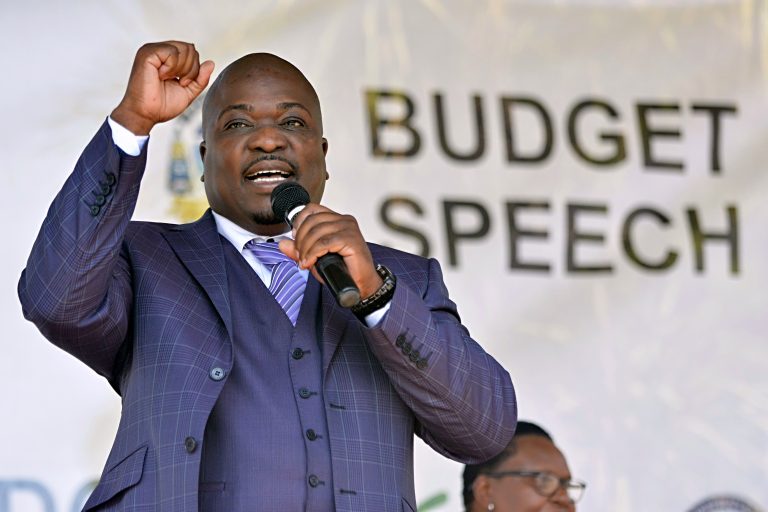
AS THE City of Ekurhuleni Finance and Economic Development Mayoral Committee Member (MMC) Nkosindiphile Xhakaza delivered his 2020 budget speech to a masked audience spaced widely apart in the legislature with several of his colleagues looking on via Microsoft Teams, the moment could not have been more aptly described than the words chosen by the MMC himself: “We have a new normal”.
COVID-19, Xhakaza said, “has had major health, economic and social effects on every human being from here in Ekurhuleni throughout the rest of the world”.
Not least of all for the man in charge of the city’s coffers, those effects have made themselves felt on the city’s finances.
The impact of the lockdown has resulted in a drastic reduction of revenue collection, an increase in accounts disputes, and requests for new payment arrangements and extensions, among others, said Xhakaza.
In addition, the city anticipates a leap in the number of indigent applications due to projected job losses and salary adjustments.
The overall impact? A R1.2 billion revenue loss for the city in the current financial year.
Already strained municipal revenues have taken a further knock, with the MMC stating that the current grant system will not provide municipalities with the financial allocation needed in order to confront the service delivery challenges confronting them. The city needs funds. But, says the MMC, so does its residents.
We are suspending interest on current arrear debt accrued from 1 April 2020 for a period of six months; There will be payment extensions; Debt payment can be arranged; There shall be no Pre-termination and final notice fees;#CoEbudget2020#CoEWorkspic.twitter.com/kvflJee8Xm
— CITY OF EKURHULENI (@City_Ekurhuleni) June 25, 2020
Softening the blow from the pandemic
So, despite its revenue woes, the city has taken the decision to keep the municipality charges that it has control over, unchanged for the upcoming financial year. This means that assessment rates, sundry tariffs, refuse removal, burial and cemetery costs and municipal bus services will see no cost increases.
Tariffs that are not under the control of the city will, however, be hiked up: the water tariff will climb by 15%, sanitation will likely see an 11% increase, and the city will purchase electricity from Eskom at a 6.9% increase; however, the city will only pass on an increase of 6.23% to the consumer. “This means the city will absorb the difference,” said the MMC.
The city has also put a raft of other relief measures in place for its residents, including payment programmes for those who have lost income due to COVID-19; no interest charged for municipal bills that are in arrears for the six months surrounding the COVID-19 period, and payment incentives for residents to pay outstanding debts, with the city saying in some cases that it will provide discounts to those wishing to square off their debts.
“Ours is to alleviate the pressure, hence we have announced no increases in terms of the property rates,” said Xhakaza in an interview following the budget speech.
“This is to give people an opportunity to come back; to look at turning around their production activities, and to contribute positively to the entire production chain.”
There were painful pay-offs in order to stay within budget though; for example, the city adjusted its medium-term capital expenditure budget of R7.4-billion in the current financial year to R4.9-billion for 2020/21: “a move that has massive impact on the City’s infrastructure delivery programme,” said the MMC.
The city’s Chief Financial Officer Kagiso Lerutla said that they lost about R1-billion in offering this reprieve to residents.
“It means certain capex projects will be deferred, but we thought that in this point in time it’s very important to make sure that the residents are able to service those rates,” he said in an interview after the speech. “It doesn’t make sense to put an increase when you know that it is an artificial increase, because in light of the current economic conditions it’s very difficult for any person to service their current obligations.”
Mayor Mzwandile Masina earlier this year announced that Ekurhuleni was inventing the future through the city’s mega-investment projects such as the Botanical Gardens, Formula 1 Racecourse, Ekurhuleni International Convention Centre and Disney Africa.
The City’s MTREF budget is R149.8 billion, and R46.6 billion is allocated for the 2020/21 financial year. The budget for the 2020/21 financial year is funded as follows: Revenue generated internally – R37.4 billion; Grants – R7.3 billion; Borrowings – R1.97 billion#CoEbudget2020pic.twitter.com/duLsoBEEmt
— CITY OF EKURHULENI (@City_Ekurhuleni) June 25, 2020
‘We do not spend money we don’t have’
In the wake of the national treasury’s supplementary budget speech, which outlined that the nation’s debt to GDP ratio is expected to rise to 81.1% in the current financial year, the MMC emphasized the city’s desire to avoid similar debt afflictions.
“It must be emphasised that this government will not spend money it does not have, and increasing the level of indebtedness will simply make us vulnerable and threaten our transformation agenda,” said Xhakaza. “Reducing the overall burden of debt to release more resources for development remains our key objective.”
The city will use the almost R37-billion revenue generated internally and the R4.8-billion it receives in grants from the national treasury in order to find its operational expenditure.
Xhakaza highlighted that there would be “no borrowings to fund Opex (operational expenditure).”
The administration has embarked on a wide internal cost-cutting mission to try and balance its books.
“Our approach is to say we want to save jobs for our own employees, but importantly we must also continue to deliver services,” said the MMC after the speech.
In order to drive down costs, “we must look at other issues that are not directly linked to service delivery, issues like travelling, issues like catering … telephone calls or stationery costs; just to ensure that we don’t pass those costs to communities.”
These accounting decisions take place against the city’s boasted back-to-back clean audit findings issued by the Auditor-General.
“We continue to maintain an unqualified audit opinion,” said Xhakaza.
This means “that the quality of information that we report out there is reliable: our communities, the investors, the business communities can look at that information and say indeed this city is reporting according to the set standards, it’s transparent and there’s no hiding of any information.”
The City received R22 million EPWP grant funding to enable the creation of work opportunities in the municipality, and this yielded 7 086 work opportunities. pic.twitter.com/lHB7WjjU2Q
— CITY OF EKURHULENI (@City_Ekurhuleni) June 25, 2020
Spending priorities
Despite a rein-in on finances, the city will continue to spend in the areas of its priority. First up on that list is its social package, which will increase from R3.8-billion to R4.1-billion for the upcoming financial year.
The package offers things such as free refuse removal, the first 100kWh of electricity free every month and the first 9kilolitres of water and sewage free, to indigent residents.
Other spending highlights earmarked for 2020/21 include:
R116.6-million in the next financial year is allocated to economic development projects such as the Reiger Park Enterprise Hub; the Ekurhuleni Fresh Produce Market; the Katlehong Automotive Hub and the Labore Industrial Park.
R206-million will be spent on wastewater treatment and plant upgrades, with a further R470.1-million allocated to the upkeep of the water network and clearing sewer blockages.
R503.7-million towards electrifying and maintaining electricity and lights infrastructure in the city
R562-million towards roads refurbishment
R274.3 million on projects such as the development and upgrading of cemeteries and the rehabilitation of the Boksburg Lake
R243-million towards Enterprise Resource Planning, which ensures data integrity for the city; and
R270 million towards repairing and maintaining the city’s ICT infrastructure.
Lastly, the MMC highlighted that despite the current tightness of the budget, the city’s mega-investment “dreams” are still on the cards: things such as the Botanical Gardens, Formula 1 Racecourse, the Zoo, Ekurhuleni International Convention Centre and Disney Africa.
“Once realised, Ekurhuleni will never be the same,” said Xhakaza.
“Nigerian billionaire businessman Aliko Dangote captures this moment factually when he says, “’If you do not have ambition you should not be alive.’”
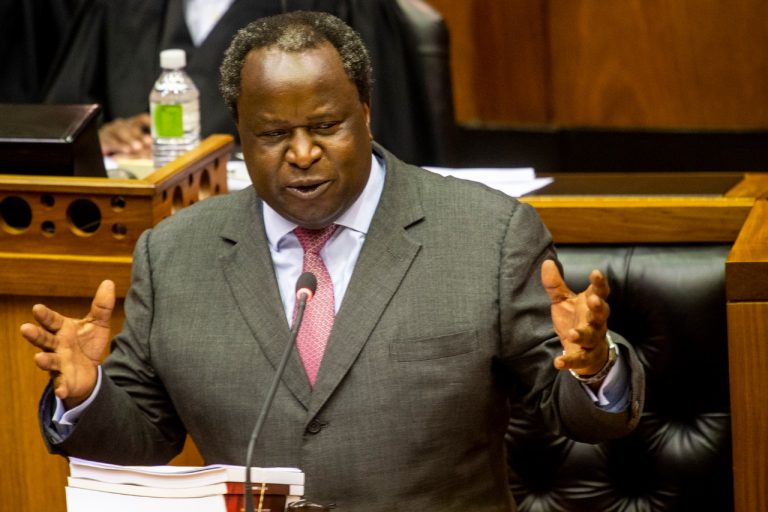
THE BREVITY of Finance Minister Tito Mboweni’s Wednesday supplementary budget speech gives insight into the amount of fiscal wiggle room he currently has at his disposal: very, very little.
The national debt to the GDP ratio has risen by over 15 percentage points since the last estimate, from 65.6% to 81.8%; South Africa’s unemployment rate tipped 30% in the first three months of the year; tax collection is disastrously low; and the Gross Domestic Product is expected to contract by 7.2% this year.
That constitutes the largest contraction in almost 90 years, and it could be significantly greater, depending on the effects of Covid-19.
It’s safe to say that Mboweni is between a rock and many, many hard places.
THE DEBT AND TAX CRISES|
Gross tax revenue collected during the first two months of 2020/21 was R142-billion, compared to treasury’s initial forecast of R177.3-billion.
As a consequence, gross tax revenue for the current fiscal year is revised down from R1.43-trillion to R1.12-trillion.
“That means that we expect to miss our tax target for this year by over R300-billion,” said Mboweni.
Thanks to these low collection figures, extra government spending around COVID-19, and a massive economic slowdown, South Africa’s debt level has seen a steep, unexpected increase.
Current forecasts are that it will reach close to R4-trillion this year, or 81.8% of our GDP.
“Debt is our weakness,” said the minister in his speech.
“We have accumulated far too much debt; this downturn will add more. This year, out of every rand that we pay in tax, 21 cents goes to paying the interest on our past debts. This indebtedness condemns us to ever higher interest rates.”
While acknowledging the current debt hole, Mboweni said that the government would need to borrow more in order to stay functional.
“Without external support, these borrowings will almost entirely consume all of our annual domestic saving, leaving no scope for investment or borrowing by anyone else,” said Mboweni.
“For this reason, we need to access new sources of funding. Government intends to borrow about US$7-billion from international finance institutions to support the pandemic response. We must make no mistake, these are still borrowings. They are not a source of revenue. They must be paid back.”
However, he did not give any updates on the roughly R4-billion loan that he previously indicated was up for grabs by the International Monetary Fund loan, or the funding that the country planned to apply for from the World Bank.
In addition, we don’t know many details about the US$-1billion loan that has been approved by the New Development Bank (formerly known as the BRICS bank).
The government has come under fire from the likes of the Economic Freedom Fighters (EFF) for considering such funding.
“The IMF and World Bank loans come with restrictive conditions, which will deprive South Africa of its fiscal and monetary policy in the future,” said the EFF in an April statement.
However, many analysts have said that the country has little choice other than to accept the funding on offer.
Finance Minister Tito Mboweni
COVID-19 SPENDING|
While trying desperately to shore up debts, the government has had no choice but to spend significant amounts of money dealing with the health, social and economic implications of the COVID-19 virus.
The supplementary budget puts aside R21.5-billion for COVID-related spending on things such as hospital beds and testing; an additional R25.5-billion for a Special Relief of Distress grant for the poor; and R23-billion has already been paid out by the Unemployment Insurance Fund (UIF) to employees affected by COVID-related company closures.
R19.6-billion will be added to the existing R6-billion put aside this year for the Presidential Youth Employment Intervention, rolled out earlier this year.
The Economic Support Package sets aside R100-billion “for a multi-year, comprehensive response to our jobs emergency,” said the minister.
In addition, R200-billion has been set aside for the COVID-19 loan guarantees scheme.
Overall, the government’s COVID-19 fiscal package identifies R500-billion in economic relief, “one of the largest economic response packages in the developing world”, said the minister.
The budget details say this includes R190 billion in main budget spending – of which R145 billion is allocated immediately – to protect lives and support livelihoods, R70 billion in tax policy measures and a R200 billion loan guarantee scheme to support short-term economic activity.
“In addition, the Reserve Bank has reduced interest rates and provided additional support to the bond market, financial-sector regulations have been eased to support the flow of credit to households and businesses, and commercial banks have introduced temporary payment holidays,” reads the detail.
Finance Minister Tito Mboweni enters Parliament to deliver his 2020 budget
SOUTH AFRICAN PUBLIC REMAINS HUNGRY FOR DETAILS|
February’s 2020 budget speech faced an already very tough economic climate, and yet did well to address many of the hot potatoes faced by the Treasury at the time.
Whilst it must be conceded that the economic circumstances have spiralled significantly since then, it’s difficult not to compare how comparatively little this supplementary speech did to address many of the bugbears of the electorate.
The annual budget speech made bold assertions around slashing the public wage bill by R160.2-billion over the next three years, but this topic was almost a non-item on Wednesday’s agenda. Mboweni hinted at the political deadlock the government faces with the unions, and said that labour minister Zenzo Mchunu is negotiating with labour partners to find a balanced solution that sets compensation at an appropriate, affordable and fair level. “We wish him well,” said Mboweni; the simplicity of the statement belying the enormous complexity of the task.
With Eskom hinting earlier this week that load-shedding could be back on the cards, and the current restructuring of the power utility lumbering under R43-billion in debt, South Africans were looking forward to more details about expenditure here, but received little. “Provisional allocations to Eskom were made on the understanding that Government’s Electricity Roadmap would be implemented. Progress is slow,” said the Minister.
“Eskom will need to show progress in meeting the milestones as laid down in the Roadmap. This is non‐negotiable.”
The ongoing question about South African Airways continues to hang in the air as well. In fact, there was very little mention of state-owned entities overall, other than an announcement that the government would be allocating R3-billion to recapitalise the Land Bank.
“This Bank holds 29% of South Africa’s agricultural debt,” said the Minister. “The National Treasury is supporting the Land Bank find a solution to its default and craft a long‐term restructuring plan.”
One arguably bold undertaking was made by the minister, likely in an effort to appease ratings agencies and foreign investors.
The minister stated that the government undertakes to stabilise the debt to GDP ratio at 87.4% by 2023/24.
When the South African debt-to-GDP ratio hovered around 60%, analysts highlighted that the main issue was not that South Africa’s debt to GDP ratio was unacceptably high – being comparable with some other emerging markets – but that there was no demonstrable pathway to drive down the debt over the medium term.
The minister’s announcement curtailed some analysts’ speculations that it could continue to rise every year over the decade.
Investec’s chief economist Annabel Bishop said, however, that this would not be enough to put the country into positive ratings territory.
“While South Africa projecting a peaking, and hence stabilisation of debt is positive, it will not be enough to avoid South Africa being pushed into the single B credit rating categories over the course of the next few years, with 87.4% still a huge figure for an emerging market’s government debt, and one which does not tally with debt sustainability.”
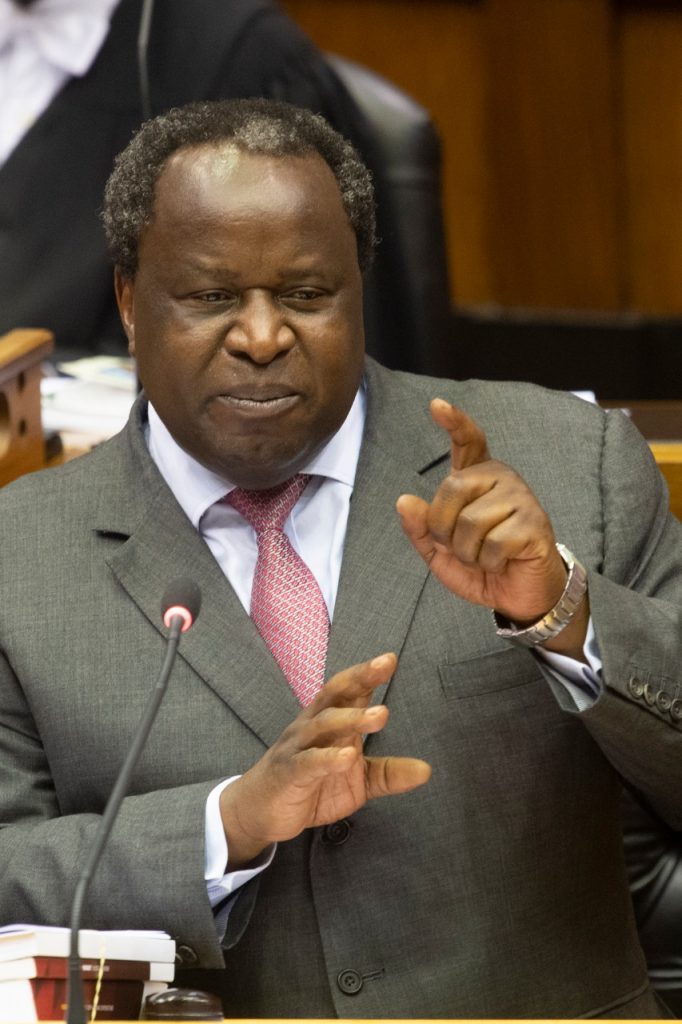
Caught between a rock and a hard place: Finance Minister Tito Mboweni
AN OMEN OF THINGS TO COME?
The minister did not mince his words in spelling out the ominousness of South Africa’s current situation. In particular, he warned about the devastating effect of a sovereign debt crisis.
“The results are devastating,” said the minister.
“We are still some way from that. But if we do not act now, we will shortly get there.”
Mboweni said that, in order to avoid this, the Medium-Term Expenditure Framework process will be guided by the principles of zero‐based budgeting.
“This means that we will try to reduce all expenditure that we thought we can no longer afford,” he said.
“After all, we are not as rich as we were ten years ago.”
His words may be an effort to prepare the public for some very tough news in the budgets to follow.
Yolandi Esterhuizen, tax practitioner and Compliance Manager at Sage Africa & Middle East, said that tax increases are likely to follow.
These would have been complex to implement in the middle of a tax year, she said, so “it’s not surprising that we did not hear anything today for that reason. However, tax increases are necessary to stabilise debt, and we are likely to see an increase in personal income taxes announced in the February 2021 budget speech.”
CRITICS CLIMB IN|
Political opponents have been highly critical of Mboweni’s speech.
The Democratic Alliance’s federal leader John Steenhuisen tweeted that it was a “speech that could have been a WhatsApp.”
Founder of The People’s Dialogue Herman Mashaba said that it was “an insult to the South African people, who are enduring the hardships of declining household income.”
In Mashaba’s opinion, the Minister’s greatest failure “lies in the unwillingness to make the necessary budget cuts within government to reduce the need for international loans and allow for real measures to stimulate our economy.”
Mashaba said that in his former role of mayor of Johannesburg, “we were able to cut-back on non-essential expenditure to the tune of R2 billion. These funds were re-directed towards infrastructure and pro-poor priorities. If this can be done in Johannesburg, it can be done nationally with vastly larger sums being freed up.”
THE CORONAVIRUS pandemic is profoundly impacting the future of 600 million children in South Asia, UNICEF warned in a report.
The UN agency called on governments to take immediate action to protect millions of children and families in the region.
“The COVID-19 pandemic is unraveling decades of health, education and other advances for children across South Asia, and governments must take urgent action to prevent millions of families from slipping back into poverty,” said the report.
It said immunization, nutrition, and other vital health services have been severely disrupted, potentially threatening the lives of up to 459,000 children and mothers over the next six months.
A UNICEF survey in Sri Lanka showed that 30% of families have reduced their food consumption, while some of the poorest families in Bangladesh are unable to afford three meals a day.
With schools closed, more than 430 million children have had to rely on remote learning, which has only partially filled the gap since many households – especially in rural areas – have no electricity, let alone internet access.
There are concerns that some disadvantaged students may join the nearly 32 million children who were already out of school before COVID-19 struck, UNICEF warned.
Pakistan
In Pakistan, the COVID-19 pandemic has also hurt the long-running campaign to eradicate polio, as house-to-house immunization campaigns had to be suspended due to lockdown measures.
Pakistan and Afghanistan are the only two countries where polio is still endemic, according to the UN.
“The direct risk to children from the virus is much less than that from the disruption to routine health services,” said Paul Ruttner, UNICEF’s health advisor for South Asia.
“It is crucial that childbirth, child health, and nutrition services remain available for families during the time of COVID-19.”
India
Malnutrition is a grim fact of life for children in South Asia, with over 56 million children in the region experiencing stunted growth.
Of these, 40 million children live in India alone; another 20 million children under the age of five are suffering from wasting [low weight or height] and more than half of Indian women aged between 15 and 49 years are anemic.
According to the UNICEF report, up to 300,000 children could die in India due to disruption in life-saving immunization activities and an increase in child wasting over the next six months.
In India, it said, school closures have impacted 247 million children enrolled in elementary and secondary education, and 28 million children attending pre-school education in Anganwadi centers [government child care centers in rural areas].
This is in addition to the more than six million girls and boys who were already out of school prior to the COVID-19 crisis, the report added.
“The most vulnerable families need to be protected by shock-absorbent social protection schemes that can help them access healthcare, schooling for children, and afford nutrition and other essential services,” said Dr. Yasmin Ali Haque, UNICEF representative in India.
“These can only be ensured by a firm commitment from the governments and all stakeholders coming together to reimagine a better world for every child.
Bangladesh
UNICEF expressed concerns over the possible transmission of coronavirus among Rohingya children in Bangladesh.
“Despite all the work being done by UNICEF and partners to maintain services in [Rohingya refugee] camps and to reach them with information about how to protect themselves against COVID-19, they [Rohingya refugees] are still fearful,” said UNICEF Regional Director for South Asia Jean Gough.
He said a survey among Rohingya children showed that 64% feared to get infected and 48% were distressed because their child protection and learning centers were closed.
“And 39 percent fear they would die of COVID-19,” he added.
At present, there are around 500,000 Rohingya children in Bangladesh’s southern district of Cox’s Bazar, which is home to over 1.2 million Rohingya refugees who fled the 2017 military crackdown in Myanmar.
THE South African Democratic Teachers Union (SADTU) in the Western Cape has reiterated its call for no-bail for perpetrators of rape and femicide following the killings of two learners in the province.
This follows the rape and murder of 17-year old Amahle Quku, a Grade 11 learner at Sinethemba High School in Phillipi, last weekend.
Her body was found dumped, naked and bruised in the early hours of Saturday June 20.
Seven-year-old Raynecia Kotjie of Belhar, a Grade 1 learner at Belhar Primary School, was also murdered at the weekend in the Western Cape.
“It is indeed sad that as we are engaged in a war against COVID -19 to save lives, men in South Africa have declared war on women and children of South Africa, causing immeasurable pain to families, friends and the school community at large. It cannot be correct that fear and anxiety should be part and parcel of the everyday lives of girls and women in South Africa”, said the union in a statement.
This week, learners from Quku’s school took to the streets to protest against the brutal murder of their fellow learner, calling for justice to be served.
“As the Union we vow to pursue a relentless battle to eradicate this scourge of GBV in our schools and communities and we call upon the Department of Justice to leave no stone unturned in ensuring that the perpetrators are brought to book and justice is served for Amahle, Raynecia and all other victims of these horrendous crimes”, said the union.
BASIC Education Minister Angie Motshekga is racing to control the coronavirus outbreak at schools in the Eastern Cape after 204 learners and hostel assistants tested positive at Makaula Secondary School in KwaBhaca, providing government with the biggest challenge since the reopening of schools in June.
While Motshekga is fanning out over the boarding school premises and hostels and visiting surrounding neighbourhoods to question residents on whether they’ve been in contact with anyone who’s visited the school, the South African Democratic Teachers Union has called on the Department of Education to shut down all schools in the Eastern Cape as a precautionary measure.
“We call upon our Eastern Cape department of education to close the schools with immediate effect until the department is ready, as life matters to most of us,” the teachers’ union wrote in the letter signed by its provincial secretary, Chris Mdingi.
“There are perpetual challenges of ablution facilities, personal protection equipment [PPE], water supply and water tanks and non-availability of health officials as promised.”
SADTU said it was concerned about the shortage of personal protection equipment (PPEs) and water supply at various schools in the Eastern Cape.
In a letter, Mdingi said SADTU is demanding the following at schools in the Eastern Cape:
That Grade 12 final exam question papers be reviewed in the light of the circumstances;
That pupils and teachers start receiving the psychosocial support promised by the department; and
That reliable thermometers are made available at all schools.
On Tuesday evening, Motshekga confirmed that indeed 204 learners and hostel assistants were infected at the school, adding that the department was working together with the Eastern Cape’s Department of Health to support the learners, educators and parents affected by the coronavirus.
Motshekga urged members of the community around KwaBhaca to desist from visiting schools as that also increased the risk for more infections.
“We will continue to work hard in schools to make sure that we protect our learners, teachers and employees within schools. It is important to work together to ensure that we beat the virus,” she said, adding that the department is working hard to make sure that all schools are COVID-19 compliant before it can receive learners.
“What is also important is to ensure that even during schools hours and beyond we stick to the basic requirements of wearing the mask, sanitize, wash hands and keep physical distancing.”
Motshekga said the confirmed COVID-19 cases were picked up as a result of the stringent measures put in place in all schools to contain the spread of the coronavirus.
Eastern Cape health spokesperson Sizwe Kupelo said the department has deployed a team of doctors and tracers to the Makaula Secondary School.
Kupelo also said Department of Health was looking into possibly converting the hostel into an isolation facility as another measure of preventing the further spread of the coronavirus.
“This is so that those who came into contact with the 204 people who have tested positive can be traced, screened and tested so that we stop the spread of the virus. A team of clinicians have been sent to the school to ascertain if the hostel meets the Department’s minimum standards for quarantine and isolation facilities, which include, but not limited to lighting, well ventilated rooms and sanitation services,” said Kupelo.
“Those that have tested positive are in isolation within the Alfred Nzo District Municipal area. Initially 24 learners tested positive last week with 180 others, which include hostel assistants testing positive this week. We would like to call on everyone to continue adhering to the lockdown regulations by practicing good personal hygiene by washing their hands with soap and water or sanitiser regularly, keeping at least a 1.2 metre distance between them and other people, wearing mask at all times when out in public and if possible, stay at home.”
The reopening of schools in the Eastern Cape has been dealt with mixed reaction from unions, parents and educational NGOs.
The bone of contention has been complying with COVID-19 safety precautions that include the constant washing of hands, donning of face masks and social distancing as the nature of schooling environment is open to cluster outbreaks of the virus.
Motshekga was intensely criticised for allowing the resumption of teaching and learning amid the Covid-19 pandemic.
Arrival at the VW Manufacturing Plant in the Eastern Cape to open a 3 300 bed capacity field hospital. pic.twitter.com/gRMtFX4XM6
The Eastern Cape has the second number of confirmed COVID-19 cases in the country behind the Western Cape.
Health Minister Dr Zweli Mkhize, who attended the opening of a field hospital in the province on Tuesday, said the country is moving into a devastating storm with regards to the COVID-19 pandemic.
“Our testing strategy has enabled us to complete over 1.2 million tests in just under four months. We’ve been able to implement a strategy to effectively deal with each area. We’ll focus on the Eastern Cape and Gauteng after moving from the Western Cape, prioritising the elderly, the vulnerable and those with symptoms,” said Mkhize at the VW Manufacturing Plant in the Eastern Cape to open a 3 300 bed capacity field hospital.
“We then resolved to embark on what is called the differentiated approach. Now that we have reduced the restrictions and started opening up, we are seeing that the numbers have started to increase. We are moving towards a devastating, decimating storm. There was no way we could keep a perpetual lockdown forever.”