Home Blog Page 403

Nzimande Accused Of Influencing Appointment of His Former Office Administrator At NSFAS

0

NYAKALLO TEFU

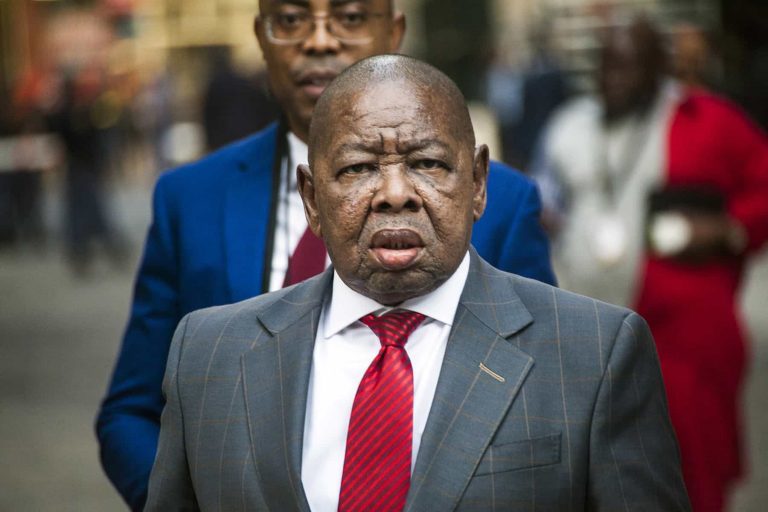
HIGHER Education Minister Blade Nzimande is facing damning allegations that he influenced the appointment of his former chief of staff, Sibongile Ncwabe, as chief corporate services at the National Student Fund Aid Scheme.

Ncwabe, who is also said to be Nzimande’s former office administrator, was appointed with effect from June 11, according to an internal memo at the NSFAS leaked to the media.

The matter is currently at the public protector’s office after a concerned staffer laid a complaint, saying concerned staffers at NSFAS wanted Ncwabe’s appointment to be declared illegal and set aside.

The Higher Education Department has denied allegations Nzimande influenced the appointment of Ncwabe at the NSFAS.

Higher Education spokesperson Ishmael Mnisi issued a statement on Sunday saying that Nzimande does not run the day-to-day activities, nor does he have a direct influence into its Human Resources sourcing decisions of NSFAS.

“Therefore, the Minister does not deal with the recruitment or sourcing of personnel for NSFAS or any of the entities falling under his Ministry,” said Mnisi in a statement.

The department added that ‘NSFAS was managed, governed and administered by a capable administrator, Dr Randall Carolissen, who makes such decisions without any undue influence of the Minister’.

“Again as said publicly, Minister Nzimande is pleased with the progress reported by the Administrator in dealing with gross looting and curbing acts of corruption and maladministration at the NSFAS, thereby setting NSFAS in its correct trajectory to granting bursaries to the children of the poor and the working class families in our country,” the department said.

“Minister Nzimande and the Administrator remain steadfast to fight all forms of corruption and maladministration as perpetuated by some of the implicated employees who are currently under disciplinary hearings and others who are still been investigated. Investigations will still continue to unravel any other acts that might have been identified to undermine NSFAS.”

The department said allegations the minister follows the NSFAS having initiated some disciplinary processes to some employees following the discovery of some wrongdoing and financial misconduct by these employees.

It further said that the work of NSFAS administrator to deal with reported acts of corruption, maladministration and incompetence is well documented in the 2018/19 audit outcomes and the Annual Report in which we have referred you previously to familiarise yourself with its content.

 “The work of NSFAS Administrator to deal with reported acts of corruption, maladministration and incompetence is well documented in the 2018/19 audit outcomes and the Annual Report in which we have referred you previously to familiarise yourself with its content”, said the department.

On Friday, Nzimande briefed MPs during a virtual sitting of Parliament’s Portfolio Committee on Higher Education, Science and Technology about the IT systems at NSFAS.

Nzimande said a R100 million information technology (IT) system the National Student Financial Aid Scheme (Nsfas) started using around 2013, was found to be inadequate four years later.

This IT system and several other administration and business operating inefficiencies will form part of an investigation by a Ministerial Task Team reviewing Nsfas business processes.

Nzimande also told parliament that salaries of university vice chancellors needed to be investigated.

Nzimande said he was not happy about the pay gap between the highest and the lowest paid employees at tertiary institutions.

He said the higher education committee raised the issue with him last year and he had since written to the Council for Higher Education.

“It has been a matter of concern to myself, by the way, the salary gap of your highest paid and your lowest paid employee at our universities and the gap between senior management and academics for instance,” he said.

“There is no real correlation between the size of the institution and the salaries of vice chancellors or even the nature of the institution and their salaries. So that would have to be looked into.”

(Compiled by Inside Education staff)

Western Cape Education Department Offers New Subsidy To Schools To Support Water Sustainability

THE Western Cape Education Department is offering voluntary subsidies available to schools that want to play their part in ensuring a sustainable and secure water future for the Western Cape, by installing smart water meters.

 Debbie Schäfer, MEC of Education in the Western Cape, said these devices will help schools manage their water usage better and assist in resolving problems with water infrastructure speedily.

“Maintaining a stable water supply has never been more important. We have seen the challenges that a lack of water has created across the country at a time when washing hands frequently and cleaning surfaces regularly are essential to stop the spread of the coronavirus,” said Schäfer.

“We have already undertaken a successful pilot project by installing water meters at 350 schools. Millions of litres of water (and thousands of rands) have been saved by our schools through the installation of meters, maintenance of water infrastructure and behaviour change amongst staff and learners.”

According to Schäfer, the water monitoring devices also generate notifications when problems that would normally go undetected occur – like burst pipes or leaks. 

The provincial education department’s subsidy will cover the installation costs for the water monitoring devices (capped) per school and the monthly service fees (capped and renewable annually, subject to conditions met), for an agreed period.

Schools will be required to enter directly into a service contract with a water metering supplier that is able to meet certain technical conditions.

“Information on how to register interest in the subsidies, and to check if a school meets the required technical conditions, has been sent to schools over the past week,” she said.

“Saving water is everyone’s responsibility – be it at school, home or work. It was not too long ago that our province suffered one of the worst droughts in decades. Just as we are working together to tackle Covid-19, we must together maintain our commitment to conserving our most precious resource: water.”

The provision of water and sanitation to schools in order to curb the spread of the coronavirus outbreak has been one of the biggest challenges in South Africa.  

Over 3 500 schools, mainly in rural areas, remain closed due to lack of sufficient water provision and sanitation facilities.

(Compiled by Inside Education staff)

Opinion: Human Rights, World-Making, And Living Under COVID-19 In South Africa

WHAT ARE our human rights in the COVID-19 crisis – not which rights do we have, but what are they as social institutions, what are they supposed to do for us? How do rights assist us in world-making? What kind of worlds can they make?

Thomas Hobbes uses rights to justify a strong unitary state. His main problem was how to ensure peace and order – in the current crisis perhaps how to prevent the spread of the virus and ensure our safety and freedom from infection.

Hobbes is concerned about the ‘state of nature’, with no authority, no unity, and no foundational principles: a state of total disorder where “the life of man (sic) [is] solitary, brutish, and short”.

For Hobbes, anyone with reason will seek to get out of this state of disorder by giving up all rights to the state so that it can create and maintain peace and order – pledging complete, permanent obedience in return for peace and order. In his view, the sovereign has the monopoly to make laws and to enforce them.

Human rights here are a justification for the exercise of absolute state power: we hand over our rights so that the state may protect us from chaos.

What our rights are, what they entitle us to, and what should be done to advance them – world-making – is handed over to the state. We become passive recipients of state rule.

John Locke also starts with the state of nature – not a state of chaos and danger, but one of orderly relations in the form of natural law. For him, humans are born equal and have natural rights to life, liberty, and property. Humans in Locke’s state of nature are not concerned with their safety and security against chaos but are driven by individual interest. Hence, we place our rights in trust with the state to protect our individual interests in the context of the individual rights of others.

We may revolt against the state if it does not protect our individual rights.  Individual freedom and property are central, and individuals create worlds motivated by self-interest. Living in this world is not about sharing it with others, but about protecting and enjoying it for the self.

Jean-Jacques Rousseau sees the social contract as a means of creating equality and collective self-government. The natural freedom of the state of nature has been lost and civil society is enchained.

It is only by giving up the natural right to freedom that the social contract can be made possible. At stake here is not individual autonomy or private interest, but general constraint of the common interest.

The social contract here is an association where persons unite while remaining free, enabling association based on the common good. He introduces the general will as a way of overcoming decision-making based on individual interest: laws of the state must reflect a concrete community ethos.

Rousseau underscores the importance of the state and its law upholding the common interest, not by authoritarian rule but through popular sovereignty.

Here, members of a community work together to create a world that reflects a sense of common good. Living and the good life means a life where everyone shares and has equal stakes in the governance and enjoyment of the world.

In more contemporary transformative understandings, human rights require us to talk about and decide together about what is good for all of us, how we can best live together. The overriding concern is what kind of world do we, as a people, want to construct and maintain?

As Jennifer Nedelsky (2011), for example, will have it – once a right has been identified, the conversation starts, not ends. This alternative to a classic liberal understanding of rights is to regard it as relational rather than boundary-like structures. It allows individual interests to overlap and sometimes even conflict with one another, but not in a model of stronger rights trumping weaker ones.

This third understanding of rights and how it regulates our relationship with others is closely aligned to the predominant understanding of rights in our Constitution.

Its emphasis on state accountability, transparency in decision-making, engaged democracy, and the boundedness of state power clearly eschews Hobbesian absolute state power that is ostensibly exercised in the interest of us all.

Its embrace of substantive equality, of rights to food, water, housing, education, and health care and of demands for redress of past injustices, show a concern not only for individual interest, but for fashioning ways of living better together.

Its insistence that rights may only be limited for a public purpose, the achievement of which the limitation is rationally related, and the importance of which is proportionate to its impact on individual rights, shows a concern not only for the public good, but also for engendering conversation about what that public good entails and how best to achieve it.

Despite this, human rights in the COVID-19 crisis have mostly been asserted in either Hobbesian or Lockean terms. We hear of human rights in government’s angry response to criticism of the National Coronavirus Command Council, that its decisions should not be questioned and need not be transparent as they are taken in order to protect all our rights to life and health – i.e., we have ‘given up’ our rights so that we may be ‘protected’ from death and disorder.

Hobbes also appears in the skop, skiet en donder of our police and defence force’s enforcement of regulations under lockdown. Again, the idea seems to be that we have given up our rights to the freedom and security of the person and freedom from state violence in return for being protected against the ravages of the virus.

Locke’s notion of individual freedom haunts complaints about the limitations placed on, for example, individuals’ freedom of movement, freedom of association, freedom to trade – the threats by big business to disregard lockdown rules and to commence operations because the lockdown breaches their rights to individual freedom and ‘freedom to transact’.

Despite vague calls for the articulation of a ‘new social compact’ or a ‘new economic vision’, we have not seen real alternatives to the understandings of Hobbes and Locke referred to above. 

Calls for a new social compact and new economic vision have not been made on the basis of rights, or any normative basis, but rather explicitly on so-called ‘non-ideological’ terms, with an emphasis on efficiency and ‘what will work’.

Perhaps, to end, in this lack is where opportunity – bound to lurk in any crisis – is also found in this crisis. Crisis is, after all, at the root of critique. 

The collective shock to our systems may just re-alert us to the need to continuously assert our rights, but not without the necessary critical reflection.

We should assert our rights against the wanton exercise of state power and even against other people if they do us harm, but in ways that invite conversation about what is good for all of us and how we can not only build better worlds and live better, but build them better and live better together.  

Opinion article by Prof Karin van Marle, Department of Public Law, Faculty of Law, and Prof Danie Brand, Director: Free State Centre for Human Rights 

What Steps Should Morocco Take to Lead Africa in Health Technology?

“AFRICAN TECH” is no longer a myth.Two-hundred-thirty-four African start-ups raised $2 billion in 2019 across all stages, from seed to growth. There has thus been a real vertical acceleration of African Tech.

But the acceleration is also horizontal, and extends beyond the three traditional champions (Nigeria, Kenya, South Africa), with Egypt also becoming a major player. In 2019, 85% of funds ($1.72 billion) went to the three destinations, and another $211 million to Egypt.

Yet, the dynamics of start-up creation in Morocco are still weak compared to the aforementioned geographies.

The total financing of Moroccan companies active in digital technology, all sectors combined, over 2019 reached $7 million, compared to $3.9 million in 2017.

This contrast can be explained by the lack of support and financing for Moroccan start-ups, especially in their seed phase.

Some winning strategies for Morocco over the next three to five years would be to focus on new high-growth technologies that address medium-income markets in Africa and to experiment with new methods to address unmet social needs such as those in the health sector. Moreover, there is a particular value in developing sectors where growth contributes directly to job creation.

Build the foundations of Morocco’s leadership in health technology

The health technology sector is growing and mobilizing significant financial capital.

According to the Partech Analysis 2020, Africa’s health technology sector attracted a total of $189 million in 2019, a 969% increase compared to 2018. This represents 9.3% of the total funding dedicated to start-ups, all sectors combined, operating in Africa.

For Morocco to become the African leader in health technology, it would have to increase the share of research and development (R&D) in Gross Domestic Product (GDP) and structure and/or consolidate its three ecosystems: Technological (research and development), entrepreneurial, and financial (venture capital market in particular).

It is essential to federate the three innovation ecosystems and create synergy between their respective actions. For instance, Morocco could strengthen synergy between academia (and research centers) and the entrepreneurial ecosystem and speed up access to finance.

Increase R&D investments and focus on biotechnology, information technology, and science

African countries allocate less than 1% of their respective gross domestic product to research and development. Morocco is no exception. South Africa and Kenya, who lead the continent in terms of R&D to GDP ratio, only dedicate 0.8%, according to World Bank Data. In comparison, the average of R&D share of GDP in OECD countries is 2.4%.

In the biomedical field in particular, research in data processing and artificial intelligence is relatively inexpensive.

Moreover, time to market technological output of this research is relatively short.

This underlines the importance of widening the footprint of information technology and sciences within national universities in order to increase the pool of talents specializing in such advanced technologies.

In the biomedical area, university research centers are compatible with the insertion of incubators. The main mission of incubators is to examine new ideas by researcher-entrepreneurs in order to help transform the best proposals with added value for the community into business projects (and/or start-ups).

On the other hand, accelerators, which can be private or public, are involved at a later stage of the development process and are responsible for helping emerging companies raise funds to accelerate growth and “exit.”

This public-private partnership strategy requires an increase in the budget allocated to research and a cultural shift within universities and research centers, placing innovation and entrepreneurship at the heart of the ecosystem.

Nurture and sustain the entrepreneurial ecosystem

Entrepreneurship is recognized as an efficient vehicle for innovation and economic development. However, sustaining the entrepreneurial ecosystem remains a major challenge in most developing countries.

The vitality of such an ecosystem rests on fundamental foundations: Process simplification (e.g. creation of a moral entity), risk mitigation (for both the business and entrepreneur), and business growth optimization. These foundations rest on four pillars: Legislation, taxation, finance, and emulation and mentoring.

From a legal standpoint, simplification of regulations and processes and cost-minimization are paramount to encourage the spark of new businesses.

With regard to taxation, emerging companies should benefit from a simple, transparent, and advantageous taxation system with low wage costs and reduced and fixed income tax rates. These would provide start-ups with greater freedom in capital management, increase visibility over expenses, and therefore enable better budget planning.

Nn optimized and transparent taxation system would initially limit the need for capital. Nevertheless, it is vital for entrepreneurs to be able to benefit from seed investment programs from either the public or private sectors (banks or venture capital companies) or both.

Finally, fostering exchange and collaboration between peers, providing mentorship, and offering supporting systems with shared resources at lower costs (e.g. co-working spaces, calculation servers, training, and access to legal and financial accounting services) are all in-kind benefits which would help sustain the entrepreneurial ecosystem and foster its performance.

Develop the capital-risk market

The venture capital market is less developed in Morocco than in South Africa, sub-Saharan Africa, or Egypt. This translates into longer wait times for project financing for entrepreneurs and sometimes delays unfortunately lead projects into the “valley of death.”

The question is: How can Morocco mitigate this morbid phenomenon and shorten timelines for access to financial capital? How can Morocco enhance the pool of companies at the seed stage? Wouldn’t the secret lie in a strategy of strong profitability for those investors who chose to fund emerging companies at a very early stage (seed, A-series)?

The first step would be to create an environment conducive to attracting capital through regulations’ reforms or tax incentives favoring venture capital investment.

For instance, part of the available national capital (institutional and private) should be redirected towards biotechnology and health technology sectors, particularly those based on machine learning and artificial intelligence. In order to lift barriers to international investment, thresholds for exemptions or minimizations should be revisited in order to avoid double taxation.

Developing the venture capital market fuels economic growth and promotes job creation. It is estimated that just under 40% of new jobs created in the United States in the last 40 years were created by venture capital-backed firms. 

US and China as examples

In China, where a venture capital market has been developing over the past 15 years, it is estimated that privately financed companies specializing in this type of investment have created 10 million new jobs. In the United States, venture capital investments totalled $72 billion for more than 5,000 operations in 2018. In China, these amounted to $71 billion for more than 2,800 operations in 2018, and in 2018 in Europe, $18 billion was invested in 2,500 operations.

Beyond the absolute number of transactions closed per year, the key performance indicators should be measured as a percentage of seed or “A” series transactions because that is the biggest gap in the Moroccan market.

By contrast, investment in Africa at the seed stage and A series is becoming well established. This involved 206 transactions, a 57% year-on-year increase, and a total of $620 million, a 116% year-on-year increase in 2019, according to the Partech 2020 report.

Will Morocco succeed in capturing its fair share of this growth in seed and A-series investments?

Overall, there are several reasons to believe that the impact of venture capital will become more significant. One example is the growth in technology financing posted by Moroccan companies between 2017 and 2019, increased from  $3.9 million in 2017 to $7 million in 2019. One thing is certain: technology hubs, seed funds, business angels, and accelerators will remain the key drivers of such a transformative economic model in the foreseen future.

Conclusion

The success of these strategies is closely linked to the following three conditions: the magnitude of budget allocated to research and development, human capital investment and countrywide digital infrastructure, and the performance of the venture capital market.

Morocco should seize the opportunity offered by Africa’s dynamic technology market and the worldwide venture capital plebiscite for African solutions to innovate and develop Moroccan technology services, for both the national and international markets.

The kingdom should also capitalize on the common linguistic traits it shares with Middle Eastern countries to open new emerging markets for its future technology products and to attract regional investors.

ABOUT THE AUTHORS|

Dr. Kaouthar Lbiati is a physician, specialist in international health policy (London School of Economics Alumni), Advisor to the Moroccan Institute of Strategic Intelligence (IMIS) and member of the strategic board of the American pharmaceutical company “Cytovia Therapeutics” specialized in cell therapies and cancer.

Dr. Tariq Daouda holds a Bachelor’s degree in Mathematics and Computer Science, a Master’s degree in Machine Learning from the Université de Montréal and a PhD in Bioinformatics from the Université de Montréal. His doctoral thesis focused on the application of AI to the study of the adaptive immune system. Dr. Daouda is currently a postdoctoral researcher at Harvard Medical School.

Mind Sports South Africa Gives Backing To Esports Schools Partnership

MIND SPORTS South Africa (MSSA) has backed the Memorandum of Understanding (MoU) signed this month between the International Esports Federation (IESF) and the International School Sport Federation (ISF).

The deal aims to promote healthy living among high school students who play esports games.

A new IESF initiative entitled Run to Play is part of the collaboration, and sees children rewarded with being allowed to play esports once they have run for one kilometre.

Whoever runs the fastest is allowed to play first.

MSSA says it is the oldest national federation for esports in the world after being formed in 1985, as well as the first national body to promote esports at school level.

An official esports league for students began in 2010 and has since grown in popularity.

“The MoU signed by IESF and ISF is a clear indication that MSSA is on the correct path,” said MSSA President Amanda Pakade.

“The MoU too shows that esports is well and truly, through IESF, being more-and-more accepted as a fully accredited sport.”

All schools in South Africa will now be encouraged to become active participants in esports, MSSA said.

Other mind sport disciplines, such as board games, are also governed by the MSSA.

(Source: Insidethegames.biz)

Veteran Educator Kesval Govender From Woolhope Secondary School in Eastern Cape Is Our Teach Of The Week

CLASSROOM CORNER

Teacher of the Week

Teacher: Kesval Govender

School: Woolhope Secondary School, Port Elizabeth, Eastern Cape

KESVAL GOVENDER from Woolhope Secondary School in the Eastern Cape says he was forced to be a teacher by the financial dif­ficulties that his parents experienced.

He has grown to love teaching and as a people’s person, he loves working with and encouraging the development of young people’s potential whether in academics, sport, arts and culture.

He derives pleasure when he receives past learners who return to school to share their successes post school life.

The major challenge is the popularity of the school that usual­ly results in overcrowding. To solve this challenge he uses spe­cial rooms and has asked the local education district office to supply the school with five prefabricated classrooms to place these learners.

He feels that his commitment to transformation has contrib­uted to his success as a principal.

During his tenure as the school princi­pal, he put in place programs, measures and policies that have transformed Woolhope Secondary School, from a former In­dian-only school to a truly South African school that embraces diversity in all aspects.

He regards his participation in the National Teachers Awards (NTA) as a highlight of his career. It is an affirmation of his contributions to education in the Nelson Mandela District and Eastern Cape at large.

He plans to continue working with NGOs in the education sector.

Woolhope Secondary School, situated in Malabar, Port Elizabeth, opened its doors for quality education on 19 January 1971. 451 learners of Indian origin enrolled on that first day.

The staff consisted of just 22 and today, Woolhope is a thriving and truly a non-racial, multi-cultural school with a learner population of 971 and a staff complement of 42.

Where as it started with a learner base that was purely Indian (as per the apartheid laws of the that time). Today it is truly a modern South African School, with learners coming from all parts of the city and from all ethnic backgrounds.

(Compiled by Inside Education staff)

UCT: It’s Time To Rethink The Global University

THE PANDEMIC has disrupted higher education international activities and the financial models on which universities increasingly depend. But the previous model was already problematic, contributing to global warming and benefitting rich universities more than poor. The University of Cape Town (UCT) is hosting a series of virtual events that will seize the moment to rethink global collaborations for a sustainable and equitable planet.

The COVID-19 pandemic has brought vividly to the fore both the perils of globalised higher education and the critical need for universities to work together across borders to solve threats to humanity such as this.

The current model of the globalisation of higher education, which requires executives, academics and students to travel in large numbers, has already posed a serious challenge to sustainability and exacerbates inequalities in higher education given the costs involved – particularly for universities in developing countries.

The coronavirus pandemic is posing an urgent further challenge to that model, and UCT believes that this disruption to our global patterns of behaviour should be seized as an opportunity for reinvention.

What can we do differently, and what can we not afford to lose?

“If we don’t step into our discomfort zone, we’ll stay in the same place while the world changes around us.”

Unleashing the new global university is a series of virtual events in which UCT invites innovative, international and local speakers to have challenging conversations that help us reimagine the internationalisation of higher education.

Rethinking a model on which so many universities depend will not be easy, says UCT Vice-Chancellor, Professor Mamokgethi Phakeng, who initiated and will host the series of events.

“If we don’t step into our discomfort zone,” says Phakeng, “we’ll stay in the same place while the world changes around us. We need to disrupt ourselves so that we can lead the way, rather than follow wherever the change takes us.”

The first event, on 29 June, will focus on the future of conferences and international meetings. Most of us will by now have attended virtual versions of large international gatherings that were intended to be physical get-togethers.

Should we consider this to be the future of conferences? What are the gains and losses of online conferences, workshops and consortium meetings? How can conferences be reinvented?

Dr Katye Altieri, lecturer in oceanography at UCT and one of the Vice-Chancellor’s 2030 Future Leaders, recently attended an extremely large virtual conference and says it was a great experience.

“Having attended the online European Geosciences Union General Assembly 2020, with 26 000 earth scientists from 134 countries, it is easy to imagine continuing online conferences beyond COVID-19,” she explains.

“I was planning to travel to Vienna for the conference, but no-one else from my research group was attending, as it’s too costly. All of my postgraduate students attended the virtual conference for at least one session, and many for the whole week, and they really benefitted from the online session interactions.”

Apart from the expense and the travel time involved, traditional, physical conferences are not always scintillating experiences.

Esther Ngumbi, assistant professor of entomology and African American studies, University of Illinois at Urbana-Champaign, is one academic who has argued for a complete rethink.

“Every month, scientists gather at conferences around the world,” she wrote in Wired in March this year, in an article entitled ‘Science conferences are stuck in the Dark Ages’.

“Their topics range…, but they are equally dull, dated and drill like,” she says.

These conferences are critical for academic success, but for decades, she argues, “the room has been the same: four walls, a podium and a projector.”

Ngumbi is one of the speakers of the first UCT event, each of them engaging with a counterpart in a conversation that is primed to push boundaries and look for innovative solutions.

The other participants are Phil Baty, chief knowledge officer of Times Higher Education, Isabel Casimiro, president of the Council for the Development of Social Science Research in Africa (CODESRIA), and Katye Altieri, lecturer in oceanography at UCT.

“The open flow of ideas and talent across borders is the lifeblood of great scholarship and will be the key to addressing some of the world’s shared grand challenges, such as the current pandemic, and looming disasters, such as global heating,” says Baty.

“But the long-standing and deep-seated inequalities in global scholarship, between the elite and usually rich universities of the global north and those in the global south, are often exacerbated by restrictions of movement, driven by deliberately hostile visa and immigration regimes. 

“The rise of the virtual conference should help smash structural inequalities in global scholarship.”

“I really hope that improvements to remote-access, digital events can help break down these inequalities and help support a new era of equal partnership and exchange, and help show the world the extraordinary power of universities when their academics share and collaborate.”

Conversation 2: African-led collaborations

The second event, on 13 July, will focus on whether or not the disruption to the current higher education model can bring about a shift in the centre of gravity in international collaborations and help us to reimagine a different approach that empowers African institutions to take the lead in collaborative projects and partnerships both within and outside the continent.

Future topics include undergraduate mobility and postgraduate international experiences.

(Source: UCT)

People Living With Diabetes Could Develop ‘Severe’ COVID-19

0

EVIDENCE slowly emerging in South Africa suggests that people living with diabetes (PLWD), as well as those with an elevated body mass index (BMI), are likely to experience a more “severe and complicated” course of COVID-19.

This according to Associate Professor Joel Dave, head of the Division of Endocrinology at the University of Cape Town’s (UCT) Department of Medicine.

Diabetes is said to be one of the leading comorbidities (the presence of one or more conditions occurring with a primary medical condition) of COVID-19, alongside an elevated BMI, hypertension and HIV.

UCT News caught up with Dave who unpacked this subject further.

Niémah Davids (ND): Are PLWD more at risk of SARS-CoV-2 infection?

Joel Dave (JD): There is currently no evidence to suggest that PLWD or people with an elevated BMI are at greater risk of being infected with [severe acute respiratory syndrome coronavirus] SARS-CoV-2.

However, there is evidence from other countries and increasing evidence from South Africa indicating that, when infected with SARS CoV-2, PLWD and those with an elevated BMI are more likely to develop a severe and complicated form of COVID-19. 

The exact reason for this is not yet known. But it’s presumed to be because PLWD often have an elevated BMI, are older, have other associated comorbidities (such as hypertension, heart disease, kidney disease) and often have a dysfunctional immune system, placing them at risk of more severe infections.

ND: Are we seeing more PLWD admitted to hospital with COVID-19 in South Africa?

JD: Preliminary data from the Western Cape shows that PLWD who are diagnosed with COVID-19 are more likely to require admission to a hospital and to an intensive care unit. 

At least 30% of all [COVID-19] admissions in people over 50 years old are PLWD. In addition, this data also shows that 53% of people who die from COVID-19 are PLWD. The good news is that it appears that PLWD who have well-controlled diabetes suffer less severely with COVID-19 and are less at risk of death from COVID-19 than PLWD who have poorly controlled diabetes. It is therefore imperative that PLWD strive for good diabetes control.  

ND: How do you recommend PLWD and obesity, who also have COVID-19, manage the two?

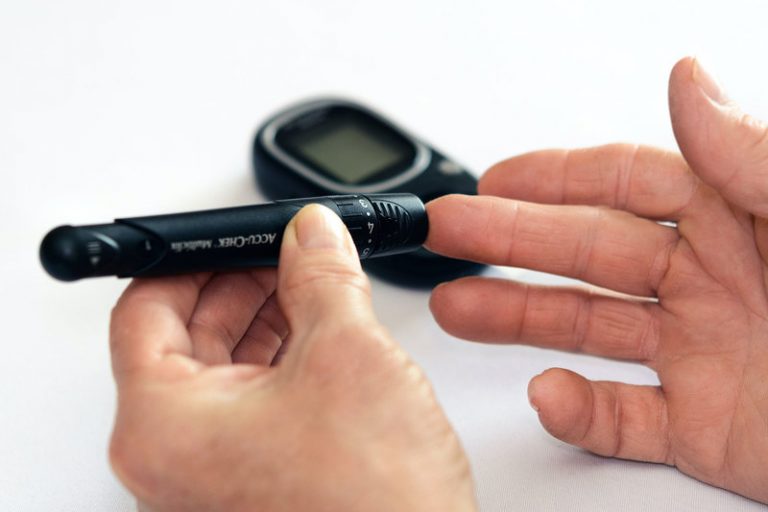
JD: PLWD who have mild COVID-19 can usually be managed at home. It’s important that they continue their usual medication, but with more frequent monitoring of their finger prick blood glucose levels. By doing this, PLWD can ensure that their diabetes remains controlled. They should also adhere to the recommended lifestyle measures and activities that promote good diabetes control and weight loss, if required.

In addition, PLWD should maintain regular telephonic contact with their healthcare providers who will help adjust their medication if necessary and advise whether they need to seek further medical care.

PLWD who develop shortness of breath, vomiting or uncontrolled glucose levels should urgently contact their healthcare provider, as they will likely require admission to hospital.

ND: What are some of the precautionary measures PLWD can take against getting infected with SARS-CoV-2?

JD: Even though PLWD and those with an elevated BMI are not at greater risk of SARS-CoV-2 infection, it is essential that they continue to self-isolate as much as is reasonably possible, especially if they are over 50 years old. If they do need to be exposed to other people, it is critical that they are meticulous with the recommended preventative measures, such as wearing masks, maintaining a two-metre social distance, practising frequent hand hygiene and not touching their faces. 

Nobel Laureate Malala Yousafzai Celebrates Completion Of Degree At Oxford University

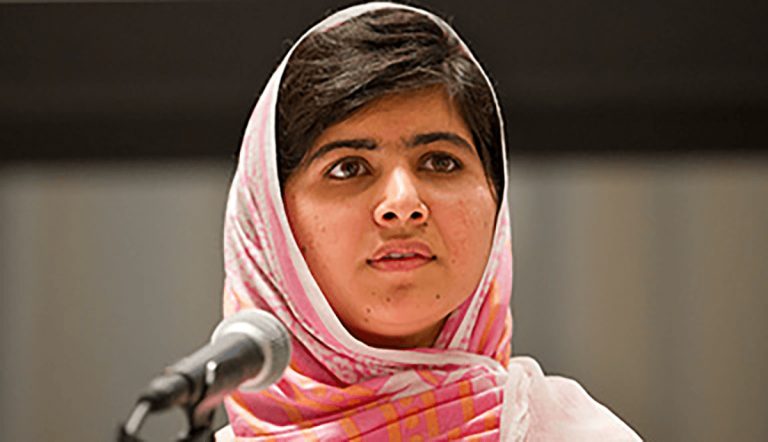
NOBEL Laureate Malala Yousafzai completed her degree in Philosophy, Political Science and Economic at Oxford University here on Saturday.

Malala Yousafzai, 22, was quite happy over completion of her degree at one of the world-class universities. She celebrated her happiness with her family. Mala who is followed by 1.6 million followers is symbol of courage and knowledge for millions and millions of girls across the globe.

Taking to Twitter, she also shared development with her fans and friends, saying that: “Hard to express my joy and gratitude right now as I completed my Philosophy, politics and Economics degree at Oxford.

“I don’t know what’s ahead. For now, it will be Netflix, reading and sleep,” she said.

In the picture, she shared on Twitter, Malala was sitting in the middle of her father and mother and was smiling on her success while a big cake was lying there in front of her to celebrate success. Two boys were also present there and one of them made sign of victory on the occasion.

Malala Yousafzai who was hit by the Taliban just for going to school and continuing education in Swat district in 2012, and she was taken to UK for her treatment followed by World-wide fame due to her courage and bravery for education.

(Source: Pakistan Point News)

Oxford College Recommends Removal Of Cecil Rhodes Statue

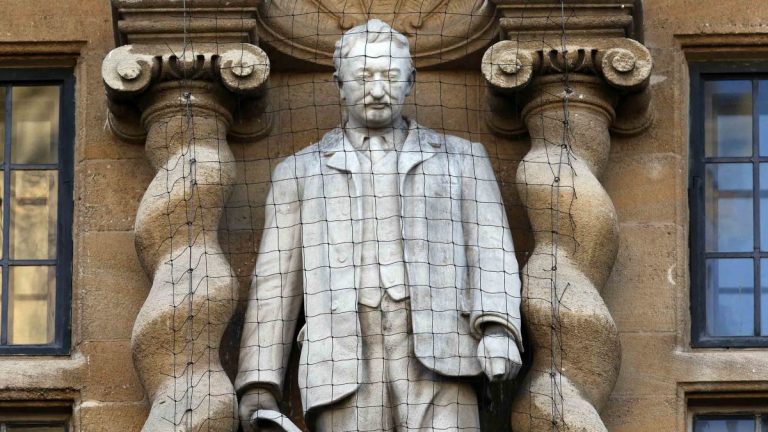
THE GOVERNING body of Oxford University”s Oriel College on Wednesday recommended the removal of a statue of Victorian imperialist Cecil Rhodes that has long been the target of protests — though it won”t be taken down immediately.

The college”s governors said they had “voted to launch an independent Commission of Inquiry into the key issues surrounding the Rhodes statue.”

In a statement, Oriel College”s governing body, made up of faculty, said they had “expressed their wish to remove the statue of Cecil Rhodes” and a plaque to him, adding that “this is what they intend to convey to the Independent Commission of Inquiry.”

Rhodes made a fortune in the late 19th century from gold and diamond mines where miners labored in brutal conditions. He was an education benefactor whose legacy includes Oxford University”s prestigious Rhodes scholarships, which have been awarded to international students for over a century.

Famous Rhodes scholars include former U.S. President Bill Clinton and feminist writer Naomi Wolf.

His statue was removed from the University of Cape Town in South Africa in 2015 after students led a “Rhodes Must Fall” campaign.

A similar campaign has sought the removal of his statue in Oxford. The movement had gained new momentum since the death of George Floyd spurred anti-racism protests worldwide and a renewed debate on colonialism and its legacy in Britain.

Other historical monuments and statues around the world, honoring figures from Christopher Columbus to Belgium”s King Leopold II, have since become flash points in protests.

Earlier this month, Black Lives Matter protesters pulled down a controversial statue of 17th-century slave trader Edward Colston in the English city of Bristol and threw it into the harbor. Colston was prominently involved in England”s slaving company, the Royal African Company, which transported tens of thousands of Africans across the Atlantic Ocean.

Oriel”s governors said the new commission would include people from academia, education policy, law, politics and journalism. The commission aims to look into how to improve access to black and ethnic minority students and faculty, and review “how the college”s 21st-century commitment to diversity can sit more easily with its past.” The Rhodes statue will stay up until the inquiry finishes its work later this year.

In a statement, the Rhodes Must Fall campaign group said it welcomed Oriel College”s intention to take down the statue, but demanded a stronger commitment to follow it through.

“This is a potentially epoch-defining moment for our institution, the University of Oxford. We can, potentially, offer a powerful example of the decolonial project in higher education in the U.K. and beyond,” the group said.

(Source: AP)