Home Blog Page 404

People Living With Diabetes Could Develop ‘Severe’ COVID-19

0

EVIDENCE slowly emerging in South Africa suggests that people living with diabetes (PLWD), as well as those with an elevated body mass index (BMI), are likely to experience a more “severe and complicated” course of COVID-19.

This according to Associate Professor Joel Dave, head of the Division of Endocrinology at the University of Cape Town’s (UCT) Department of Medicine.

Diabetes is said to be one of the leading comorbidities (the presence of one or more conditions occurring with a primary medical condition) of COVID-19, alongside an elevated BMI, hypertension and HIV.

UCT News caught up with Dave who unpacked this subject further.

Niémah Davids (ND): Are PLWD more at risk of SARS-CoV-2 infection?

Joel Dave (JD): There is currently no evidence to suggest that PLWD or people with an elevated BMI are at greater risk of being infected with [severe acute respiratory syndrome coronavirus] SARS-CoV-2.

However, there is evidence from other countries and increasing evidence from South Africa indicating that, when infected with SARS CoV-2, PLWD and those with an elevated BMI are more likely to develop a severe and complicated form of COVID-19. 

The exact reason for this is not yet known. But it’s presumed to be because PLWD often have an elevated BMI, are older, have other associated comorbidities (such as hypertension, heart disease, kidney disease) and often have a dysfunctional immune system, placing them at risk of more severe infections.

ND: Are we seeing more PLWD admitted to hospital with COVID-19 in South Africa?

JD: Preliminary data from the Western Cape shows that PLWD who are diagnosed with COVID-19 are more likely to require admission to a hospital and to an intensive care unit. 

At least 30% of all [COVID-19] admissions in people over 50 years old are PLWD. In addition, this data also shows that 53% of people who die from COVID-19 are PLWD. The good news is that it appears that PLWD who have well-controlled diabetes suffer less severely with COVID-19 and are less at risk of death from COVID-19 than PLWD who have poorly controlled diabetes. It is therefore imperative that PLWD strive for good diabetes control.  

ND: How do you recommend PLWD and obesity, who also have COVID-19, manage the two?

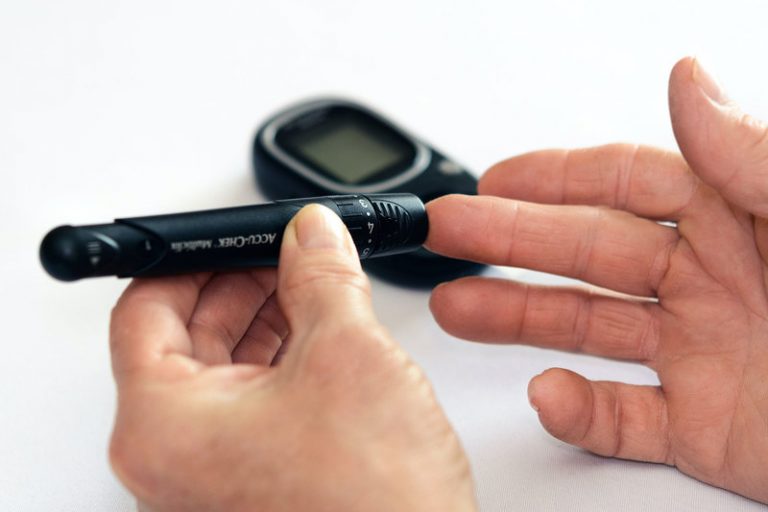
JD: PLWD who have mild COVID-19 can usually be managed at home. It’s important that they continue their usual medication, but with more frequent monitoring of their finger prick blood glucose levels. By doing this, PLWD can ensure that their diabetes remains controlled. They should also adhere to the recommended lifestyle measures and activities that promote good diabetes control and weight loss, if required.

In addition, PLWD should maintain regular telephonic contact with their healthcare providers who will help adjust their medication if necessary and advise whether they need to seek further medical care.

PLWD who develop shortness of breath, vomiting or uncontrolled glucose levels should urgently contact their healthcare provider, as they will likely require admission to hospital.

ND: What are some of the precautionary measures PLWD can take against getting infected with SARS-CoV-2?

JD: Even though PLWD and those with an elevated BMI are not at greater risk of SARS-CoV-2 infection, it is essential that they continue to self-isolate as much as is reasonably possible, especially if they are over 50 years old. If they do need to be exposed to other people, it is critical that they are meticulous with the recommended preventative measures, such as wearing masks, maintaining a two-metre social distance, practising frequent hand hygiene and not touching their faces. 

Nobel Laureate Malala Yousafzai Celebrates Completion Of Degree At Oxford University

NOBEL Laureate Malala Yousafzai completed her degree in Philosophy, Political Science and Economic at Oxford University here on Saturday.

Malala Yousafzai, 22, was quite happy over completion of her degree at one of the world-class universities. She celebrated her happiness with her family. Mala who is followed by 1.6 million followers is symbol of courage and knowledge for millions and millions of girls across the globe.

Taking to Twitter, she also shared development with her fans and friends, saying that: “Hard to express my joy and gratitude right now as I completed my Philosophy, politics and Economics degree at Oxford.

“I don’t know what’s ahead. For now, it will be Netflix, reading and sleep,” she said.

In the picture, she shared on Twitter, Malala was sitting in the middle of her father and mother and was smiling on her success while a big cake was lying there in front of her to celebrate success. Two boys were also present there and one of them made sign of victory on the occasion.

Malala Yousafzai who was hit by the Taliban just for going to school and continuing education in Swat district in 2012, and she was taken to UK for her treatment followed by World-wide fame due to her courage and bravery for education.

(Source: Pakistan Point News)

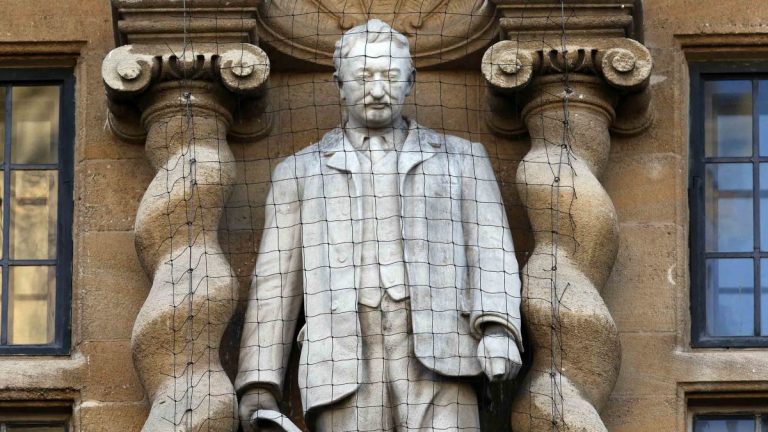
Oxford College Recommends Removal Of Cecil Rhodes Statue

THE GOVERNING body of Oxford University”s Oriel College on Wednesday recommended the removal of a statue of Victorian imperialist Cecil Rhodes that has long been the target of protests — though it won”t be taken down immediately.

The college”s governors said they had “voted to launch an independent Commission of Inquiry into the key issues surrounding the Rhodes statue.”

In a statement, Oriel College”s governing body, made up of faculty, said they had “expressed their wish to remove the statue of Cecil Rhodes” and a plaque to him, adding that “this is what they intend to convey to the Independent Commission of Inquiry.”

Rhodes made a fortune in the late 19th century from gold and diamond mines where miners labored in brutal conditions. He was an education benefactor whose legacy includes Oxford University”s prestigious Rhodes scholarships, which have been awarded to international students for over a century.

Famous Rhodes scholars include former U.S. President Bill Clinton and feminist writer Naomi Wolf.

His statue was removed from the University of Cape Town in South Africa in 2015 after students led a “Rhodes Must Fall” campaign.

A similar campaign has sought the removal of his statue in Oxford. The movement had gained new momentum since the death of George Floyd spurred anti-racism protests worldwide and a renewed debate on colonialism and its legacy in Britain.

Other historical monuments and statues around the world, honoring figures from Christopher Columbus to Belgium”s King Leopold II, have since become flash points in protests.

Earlier this month, Black Lives Matter protesters pulled down a controversial statue of 17th-century slave trader Edward Colston in the English city of Bristol and threw it into the harbor. Colston was prominently involved in England”s slaving company, the Royal African Company, which transported tens of thousands of Africans across the Atlantic Ocean.

Oriel”s governors said the new commission would include people from academia, education policy, law, politics and journalism. The commission aims to look into how to improve access to black and ethnic minority students and faculty, and review “how the college”s 21st-century commitment to diversity can sit more easily with its past.” The Rhodes statue will stay up until the inquiry finishes its work later this year.

In a statement, the Rhodes Must Fall campaign group said it welcomed Oriel College”s intention to take down the statue, but demanded a stronger commitment to follow it through.

“This is a potentially epoch-defining moment for our institution, the University of Oxford. We can, potentially, offer a powerful example of the decolonial project in higher education in the U.K. and beyond,” the group said.

(Source: AP)

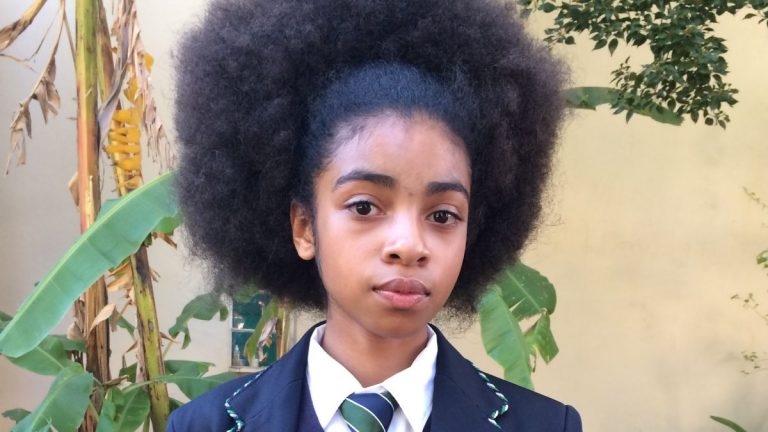
Pupils From Pretoria High School for Girls Stage Protest Against Racism

NYAKALLO TEFU

PUPILS from the Pretoria Girls High School on Thursday protested against racism and inequality.

Pupils at the school say their concerns from 2016 have not been addressed.

In an interview with ENCA, one of the student leaders who was part of the protests in 2016, Zulaikha Patel, said the school continues to silence black voices.

The learners are calling for the school to change its discriminatory systems if they support #BlackLivesMatter movement. https://twitter.com/MmuiWabatho/status/1273584630252408839?s=20

In August 2016, pupils at the school protested against an instruction given to black students to straighten their hair, saying it discriminated against them.

Boys From Various Gauteng Schools Combine Efforts To Tackle Critical Issues Like Climate Change, Xenophobia and Gender-Based Violence

HEADS and deputy heads of boys’ schools around Gauteng are currently combining efforts to run the BoysForAction programme.

The programme was formed this year by Daanyaal Ballim who is the deputy head boy of St John’s College and Wanagwa Peter Nyasulu who is executive head of Student Wellness at St Stithians College.

Daanyaal said the programme has transcended their competitive nature and united the boys.

He said the top nine boys’ schools St John’s College, St Stithians Boys College, King Edward’s School, Parktown Boys, Jeppe High School for Boys, St Alban’s College, St Benedict’s College, St David’s Marist Inanda and Pretoria Boys are all part of the initiative.

The deputy head boy said BoysForAction is all about taking action, “It is a boys’ schools driven initiative aimed at tackling social issues faced by the country by educating, creating awareness and fundraising. It is multifaceted as it deals with all kinds of social issues, be it xenophobia, gender-based violence, climate change (natural disaster) and more.”

Daanyaal added that being cognisant of the position of privileged schools they are in, they want to use that privilege, resources and social influence for the greater good.

“Furthermore, we recognised a lack of continuation of projects by leadership bodies within our schools resulting in no meaningful progress being made. Therefore, BoysForAction aims to lay the foundation in which succeeding year groups can build upon and grow initiatives within our communities.”

The boys also recognised the lack of cohesion between boys’ schools which they saw as an untapped opportunity and resource of change. They saw the mass impact they could have on communities due to sharing of ideas form the schools which are a part of BoysForActionRecent as it is, the programme has played a massive role during this time of crisis.

To pick one example out of their many active works; through a social media challenge, BoysForAction raised R4 710 for Islamic Relief SA and the Solidarity Fund. BoysForAction will also join efforts with Parktown High School for Girls in collecting warm clothes for girls in need this winter.

The committees will gladly accept clothes for boys and girls from residents.

Daanyaal said, “We hope that BoysForAction will become a consistent tool for change in our communities which will allow the youth to help those around them.”

(Source: RosebankKillarneyGazette)

Western Cape Education Department Condemns Use Of Indemnity Forms At Provincial Schools

NYAKALLO TEFU

THE WESTERN Cape Education Department has condemned the use of indemnity forms by some schools across the province before admitting learners in their premises.

Some parents have alerted the provincial education department that their children have been given indemnity forms that required to be signed and handed in before returning back to school.

“A number of parents have reported to us that they have been asked by schools to sign an indemnity form before their child is allowed to return to class. The WCED does not support the use of such forms, and indemnity forms do not remove legal responsibility from the Department,” said Schafer in a statement.

“Parents DO NOT have to sign such forms, and their children may not be refused entry to school if they do not sign. Any parent that has been asked to sign such a form should contact their district office immediately.”

Schäfer said her department does not support such forms, adding that indemnity forms do not remove legal responsibility from the department.

Schools in the Western Cape have been open for two weeks now and Schafer has thanked parents, staff and learners for cooperating.

(Compiled by Inside Education staff)

African Children Remain Under Siege From COVID-19: UNICEF

CHILDREN in Africa remain confronted by a host of threats due to the COVID-19 pandemic, the United Nations Children’s Fund (UNICEF) said on Tuesday in commemorating Day of the African Child.

The direct and secondary impacts of the virus threaten to unravel the gains made for the poorest children across Africa, UNICEF said in a statement emailed to Xinhua.

While wealthier children are able to continue learning online, barely one in five households in Eastern and Southern Africa have internet access, according to UNICEF.

Eighty-four percent of the rural population – where the bulk of African learners reside – have no electricity, meaning online learning is not an option, said UNICEF.

Up to 16 million children in Africa are no longer accessing critical daily meals at school while violence is increasing, and more African children will fall into poverty, UNICEF said.

Prior to COVID-19, it was estimated that around three out of every four children in Africa are affected by multi-dimensional poverty. These children are deprived of the most basic things in life, like access to sufficient food and clean drinking water, going to school, being able to get medical help, sleeping in adequate shelter, going to the bathroom in a safe place, or living in an environment free of physical and emotional abuse.

The economic fallout of the COVID-19 pandemic could push up to 86 million more children into household poverty by the end of 2020, two thirds of these in Africa, according to analysis released by Save the Children and UNICEF.

Only 16 percent of children in Africa are covered by social protection programs, making it impossible for families to withstand financial shocks caused by COVID-19 and furthering the cycle of intergenerational poverty, said UNICEF.

While the challenges are immense, UNICEF said it is collectively achieving significant regional results, including 71 million people reached with messaging on COVID-19 prevention and how to access services, 10.8 million children supported with distance/home-based learning, more than two million people reached with hand-wash supplies and two million children and women reached with essential healthcare services in UNICEF-supported facilities.

(Source: Xinhua Agency)

ConCourt Declares It Unconstitutional For A Private School To Terminate Parents’ Contract Without Proper Justification

NYAKALLO TEFU

THE CONSTITUTIONAL Court has declared that it is unconstitutional for a private school to terminate a parent’s contract without proper justification, including affording the parents an opportunity to make representations on what the impact would be on the children.

This was the ruling of the Constitutional Court on Wednesday following a dispute between the Pridwin Preparatory School in Johannesburg and the parents of two pupils.

The ConCourt said that the decision by Pridwin Preparatory School to cancel the Parent Contract was constitutionally invalid, in that it breached the constitutional rights of the applicants’ children. 

Each party was ordered to pay its own costs in the ConCourt, the High Court and the Supreme Court of Appeal.

“Constitution is circumscribed. It does not extend to a positive duty to continue providing education at the private institution. But, once an independent school provides basic education, it is then required to ensure that the right to basic education of children attending the independent school is not negatively infringed,” said the ConCourt judges.

“That will occur, for instance, where no independent opportunity to be heard is afforded before a decision is made to discontinue that education. Pridwin had a negative duty not to impair and diminish the children’s rights to a basic education. In addition, there should be no interference with the rights already enjoyed by the children, except where there is proper justification for that interference.”

Equal Education, successfully admitted as amicus curiae when the case was heard in the Johannesburg High Court, was represented by the Equal Education Law Centre in the matter.

EE said in a statement that the ruling would not only affect elite private schools, but also had consequences for the rights of pupils who attended low-fee independent schools. 

“Open-ended contract termination clauses between parents and schools did not ensure the right of education of pupils was protected, which therefore did not ensure the pupils best interests were taken into account,” said EE.

Pridwin Preparatory School cancelled the two contracts between itself and the parents on June 30 2016.

The parents then applied to the Johannesburg High Court for the cancellation of the contracts to be set aside.

In 2017, the High Court dismissed the parents’ case.

The Supreme Court of Appeal (SCA) also dismissed the applicants’ appeal in 2018.

The parents then lodged an application for leave to appeal in the Constitutional Court.

The parents argued that the decision to terminate the Parent Contracts was unreasonable, procedurally unfair, did not have regard to the children’s best interests and impermissibly impaired the children’s rights to basic education.

(Compiled by Inside Education staff)

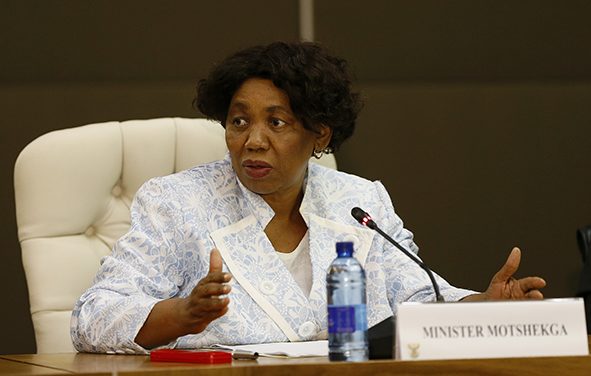
EUSA Calls For Basic Education Minister Angie Motshekga’s Sacking

NYAKALLO TEFU

THE Educators Union of South Africa (EUSA) has called for Basic Education Minister Angie Motshekga to be sacked.

The 27 000-members teachers’ union led a march on march on Youth Day at the Union Buildings calling for President Cyril Ramahosa to sack the minister following her decision to reopen schools despite reported number of COVID-19 infections in more than 150 schools.

EUSA’s founder and leader Kabelo Mahlobogwane said teachers and administrators are dying at South African schools while Motshekga is sending more learners and teachers to school next month.

“We are saying we are not opposed to the continuation of education but education must happen in a manner that it doesn’t endanger the lives of teachers and learners,” said Mahlobogwane.

Grade 7 and 12 learners returned to school on June 8 but over 150 schools have since closed due owing to the number of positive COVID-19 cases.

“It’s going to be more grades. In August more grades are going in, regardless of the fact that even water and toilets have not been delivered in schools”, said Mahlobogwane.

Last week the teachers’ union lost a court bid to order Motshekga to halt the government’s plans to reopen schools for Grade 7 and Grade 12.

(Compiled by Inside Education staff)

Beijing Shuts Schools to Stem Virus as Cases Spread Beyond City

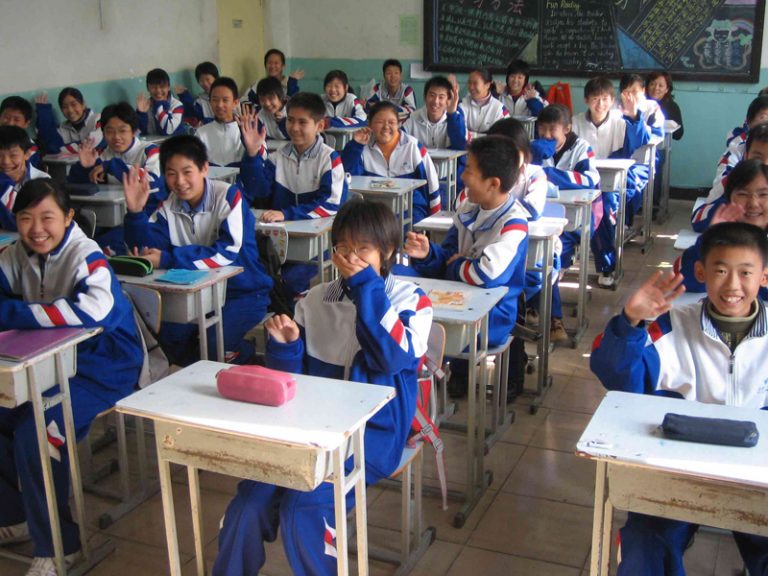
BEIJING has ordered all schools to close in an escalation of containment measures as it struggles to halt a new coronavirus outbreak which has already spread to neighboring provinces.

The Chinese capital on Tuesday lifted its emergency response to level two and said that people will have to be tested for the virus before being allowed to leave the city.

The total reported number of infections has reached 106, according to the National Health Commission, while cases linked to the Beijing cluster have already been reported in two provinces in China’s northern region.

While the decision to close schools and limit people leaving signals the severity of the growing crisis, officials have so far taken a more targeted approach towards the latest outbreak compared to similar resurgences in Wuhan and in the country’s northeast region. The stakes are higher in Beijing, where the country’s business and political elite reside, and an aggressive lockdown risks undoing China’s economic re-opening and nascent moves to restart travel with other countries.

Beijing has restricted movement only in areas where new cases have been found. While taxis and cars from ride-hailing apps have been banned from leaving Beijing and passenger buses from some cities in nearby provinces have been halted, trains and most other forms of transport to and from Beijing remain open.

The costs of imposing an across-the-board shutdown are too high as Beijing’s population is much larger than that of Wuhan, said Yanzhong Huang, professor at the Center for Global Health Studies of Seton Hall University.

“A city-wide lockdown in Beijing would not only reverse the process of economic and social reopening, a key policy objective of the party, but also undermine considerably the government’s own narrative on the success of its anti Covid-19 campaign,” Huang said. “The social, economic, and political pain might be way too high to justify a city-wide lockdown.”

Beijing on Tuesday closed another food market located near the financial district after a case linked to the original cluster was discovered. Eleven other food markets have been shuttered and almost 300 others sanitized, while nearly 30 housing compounds have been put under lockdown, local officials said.

Housing compounds and companies are collecting information from their residents or workers on whether they have been to or had contact with anyone who has been to Xinfadi, the fruit and vegetable market where the new cluster was first discovered. It supplies around 80% of the city’s farm produce and tens of thousands of people pass through daily.

With mass testing and contract tracing underway, the next few days will be crucial in deciding whether to reinstate the strict measures in place during the height of China’s epidemic, when workplaces and restaurants were shut and social gatherings were banned.

The city of more than 20 million has said it can test over 90,000 people a day. It tested more than 70,000 on Sunday.

“Beijing’s reported cases in the next three days will determine where the epidemic is going,” Wu Zunyou, chief epidemiologist with China’s Centers for Disease Control and Prevention, told state television on Monday night. Those who have contracted the virus should display symptoms in around two days and if cases aren’t surging by then, it’s safe to say the outbreak has basically stabilized, said Wu.

“There’s no obvious sign of family clusters, or cross-infection between patients,” he said.

Zeng Guang, a senior expert with the National Health Commission, said he sees a high chance of a “mild second wave” when the number of infections increases in the next couple days before the spread is contained.

“But even if the virus spreads across China and lockdowns have to be implemented, Beijing will not be the second Wuhan,” he said.

(Source: Bloomberg)