Home Blog Page 406

World’s Poorest Children Are Missing Out On Vital Early Education, Campaigners Warn

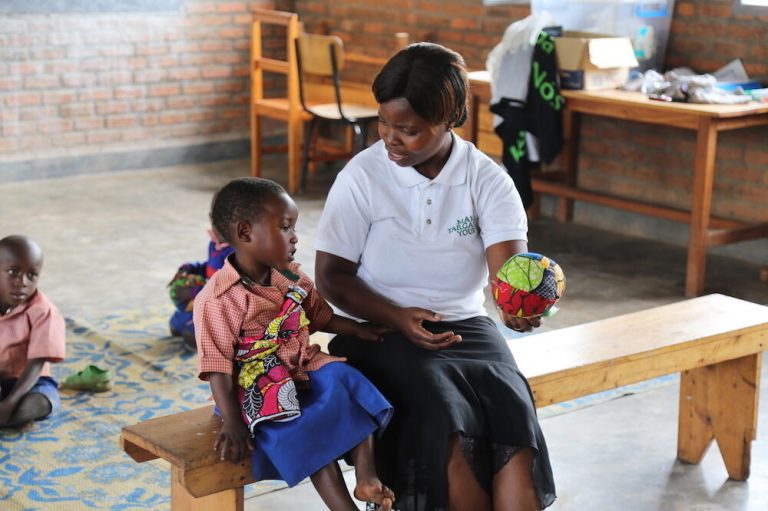
SOME of the world’s poorest children are missing out on vital education in the first few years of their lives because of a woeful lack of investment, a global children’s charity warns today.

A commitment to devote just 10% of education budgets to the early years would reap quick dividends, placing millions more children around the world into pre-primary education, according to Theirworld.

Only one in four children aged three to five attend some form of pre-school education in sub-Saharan, West and Central Africa, falling to less than 2% for the poorest children in Cameroon, the Central African Republic and the Democratic Republic of Congo.

This compares to 94% in the UK or other rich countries.

Research shows that 90% of a child’s brain development takes place before a child turns five, yet education for the under-fives is chronically underfunded, especially in the world’s poorest countries.

In a typical year, governments spend 6.6% of their education budgets on early childhood education, falling to 3% in poorer regions. Countries that provide international aid for education contribute less than one per cent of education aid to pre-primary education.

The Global Partnership for Education (GPE), one of the major funds for education in lower-income countries, held a board meeting as it builds its strategy through 2025.

The decisions made this year will determine how billions of dollars in education financing will be spent.

Theirworld is urging GPE to recognize the 10% target for early childhood education in its new funding strategy. It also wants all national sector plans to include early education.

Hundreds of people from more than 75 countries across the globe have added their name to the charity’s campaign to get the GPE to increase investment in early years education.

Justin van Fleet, President of Theirworld, said:“Every child has a right to a quality and inclusive education, starting with good quality preschools, playgroups or nurseries. So it is a tragedy that around the world 175 million children are denied this right because of a chronic lack of funding in early years education.”

“Countries have already agreed to the Sustainable Development Goals so it’s important to acknowledge the costs to achieve them. It’s time for governments, donors and international agencies to prioritise quality early childhood education – and we’re calling for at least 10% of education budgets to be dedicated to the education of young children. The youngest children are just learning to speak – so we need to speak up for them. And the GPE board members have a unique opportunity to lead on this issue.”

(Source: TheirWorld)

Makhura: COVID-19 Pandemic Gaining Momentum in Gauteng

NYAKALLO TEFU

PREMIER David Makhura says he is deeply concerned that the first wave of the coronavirus is still infecting masses of people in Gauteng, with at least 758 new cases recorded per day.

Makhura was speaking during a weekly media update on COVID-19 pandemic following a meeting of the Gauteng Provincial Command Council this week.

 “Over the past seven days, the number of new cases has doubled. Hospital admissions are increasing. Twenty more people have succumbed to COVID-19. The pandemic is gaining momentum. We must face this reality head-on and mobilise all resources and energy to save lives,” said Makhura.

The province has over 7,000 COVID-19 infections with 57 deaths.

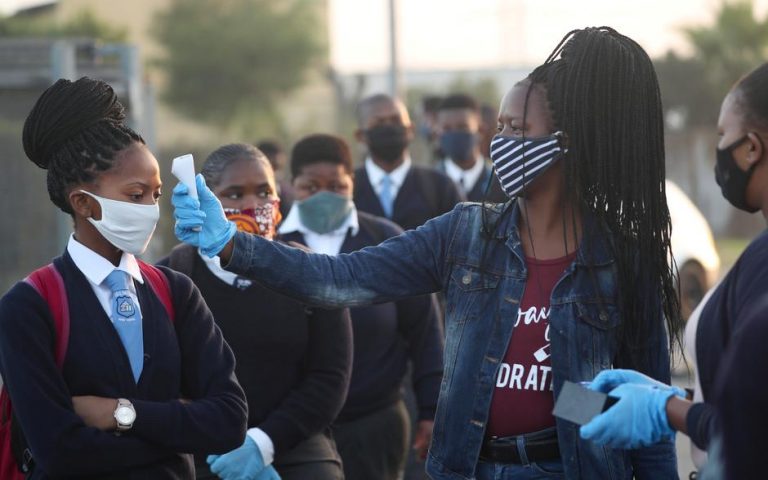
Makhura said so far 7.4 million people have been screened in the province while 338 211 have been tested.

He said he was particularly concerned by the infection rate in the City of Johannesburg and the City of Tshwane metros.  

City of Johannesburg is currently on 3 906 confirmed cases while City of Tshwane has recorded 1 071 cases.

Makhura said since Level 3 lockdown, the number of trauma cases have also increased, adding that as the flu season approaches, the number of people needing healthcare will increase dramatically.

“The province has embarked on a massive flu immunisation programme targeting pregnant women, the elderly, those with chronic illnesses and health workers”, said Makhura.

Since March, 335 Gauteng public servants have tested positive for coronavirus after the province tested 172 113 workers, including public health workers and school teachers.

“Like all other patients, affected staff and their family members are receiving care and treatment in line with the World Health Organization (WHO) protocols”, said Makhura.

Makhura said he was looking forward to a meeting with Health Minister Zweli Mkhize next week to ask for reinforcements and further support in order to strengthen response. 

(Compiled by Inside Education staff)

Professor N’Dri Thérèse Assié-Lumumba Joins UNESCO Forum On World After COVID-19

COVID-19 may help us “think of a new turning point” in overturning established power structures and compelling people to reconsider borders, N’Dri Thérèse Assié-Lumumba, professor of Africana studies in the College of Arts and Sciences, said May 13 during a United Nations online forum.

The United Nations Educational, Scientific and Cultural Organization (UNESCO) invited Assié-Lumumba, along with women leaders and scholars from around the world, to contribute her perspective and expertise to “UNESCO Online Forum: Imagining the World After.”

“The coronavirus didn’t apply for a visa to travel across the globe,” Assié-Lumumba said in a nine-minute video. “We need to rethink the idea of borders, the idea of separation, and think instead of how we can come together as one human family, as a community.”

Even the world’s most powerful countries, economies and militaries have been humbled by the virus, she said, opening an opportunity for scientists, policymakers and citizens to redirect resources to improve human experiences. She said she hopes new systems of education emerging after COVID-19 will include previously marginalized voices and focus on the unity of humanity.

Assié-Lumumba chairs the scientific advisory committee of UNESCO’s intergovernmental Management of Social Transformations (MOST) program.

(Reporting by Kate Blackwood, Cornell Chronicles)

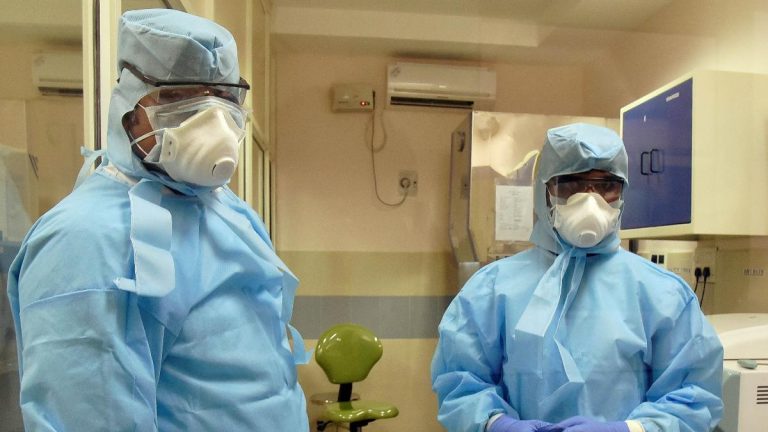
COVID-19: 15 Schools In Western Cape Closed After 98 Teachers Tested Positive

NYAKALLO TEFU

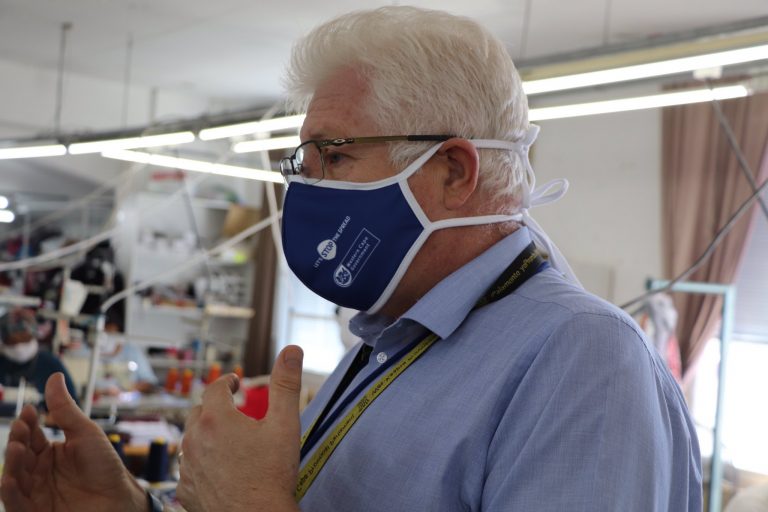
WESTERN Cape MEC for Education Debbie Schafer has confirmed that 98 teachers have tested positive for the coronavirus, leading to early closure of 15 schools in the province, officially declared South Africa’s epicenter of the COVID-19 pandemic.

“The names of the schools and teachers will not be publicised because once word gets out, principals who are already busy, are swamped with questions and visits”, said Schafer.

Schafer said her department stood by its decision to reopen schools, regardless of the number of positive cases detected at different schools in the province in recent days.

She said a lot of work went into making sure schools were ready to reopen under safe conditions.

“When a case of COVID-19 is detected at a school, it will be closed, cleaned and only reopened when they receive a certificate to do so,” said Schafer.

The coronavirus has taken its toll on schools in the Western Cape, having infected more than 1,000 children and almost 100 teachers in the province, authorities said on Thursday.

Almost 1,800 children and 98 teachers have been infected in the Western Cape, leading to the closure of at least 20 schools this week, the provincial government said.

Of the cases involving children, 1,537 cases were reported before the schools were reopened, according to the provincial department of education.

South Africa reopened schools for grade 7 and grade 12 on June 8 following a suspension of almost three months.

“We have followed top medical advice in supporting the decision to reopen schools safely in this province,” Western Cape Governor Allan Winde said at a digital press conference.

“I fully understand that parents are worried about the COVID-19 pandemic and how the reopening of schools might impact their child’s well-being,” Winde said.

According to data provided by the Western Cape Department of Health, as of June 5, there had been a total of 1,787 cases of COVID-19 in people under the age of 20, representing roughly six percent of all cases at the time.

Of these 1,787 infections, five children have died, accounting for 0.3 percent of all confirmed cases of those infected under the age of 20.

The data, however, does show that children are at a significantly lower risk than adults, Winde said, adding that in fact, those at highest risk are residents over the age off 55 and those with underlying health conditions such as diabetes and hypertension.

“The reality is that the virus is going to be around with us for some time, possibly another year at least,” said Winde.

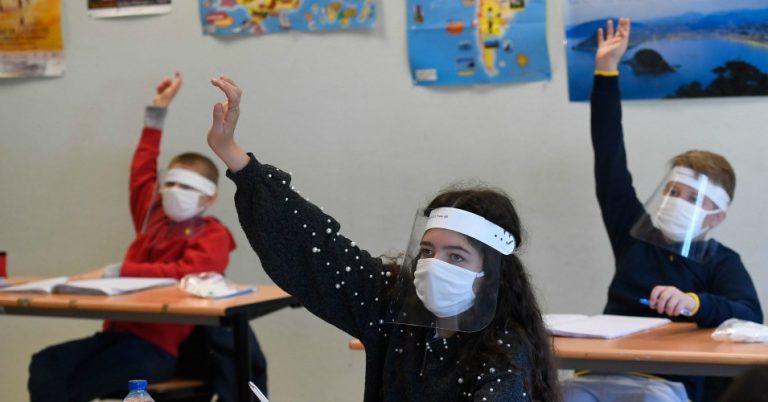
“We must adjust to the ‘new normal’ of COVID-19, by making sure that we reopen our schools in a way that reduces the risk and ensures the safety of our learners and staff,” said Winde.

It is for this reason that the Western Cape government has spent 280 million rand (about 16.8 million U.S. dollars) on masks and cleaning materials thus far, Winde said.

The South African Paediatric Association has supported the phased reopening of schools based on medical evidence that children are less likely to get sick and if infected, have milder disease, are unlikely to die from the virus, and are probably less infectious than adults.

The Western Cape has remained the epicenter of the virus in the country, recording 36,279 confirmed cases and 891 deaths as of Wednesday, in comparison with 55,421 cases and 1,210 deaths nationally.

(Additional reporting by news agencies)

29 Eastern Cape Schools Closed Due To COVID-19 Cases

NYAKALLO TEFU

THE EASTERN CAPE Department of Education has confirmed that 29 schools were closed on Wednesday after some teachers, pupils and supporting staff tested positive for COVID-19.

The department said it is currently investigating 48 other schools for possible infections.

According to the department, 31 of the schools were in the Buffalo City Metro, which incorporating East London, King William’s Town, the Eastern Cape capital Bhisho and surrounding rural settlements.

“After advice from the health department on who needs to isolate and cleaning has been done, schooling can resume,” the department said in a statement.

The department has meanwhile called for calm among staff, pupils and parents, saying all necessary steps would be taken to ensure that schools are cleaned and are checked regularly for possible cases of COVID-19.

“Through our preparation and round-the-clock monitoring, we hope to keep it this way. We aim to save the academic year, while preserving lives,” the department said.

(Compiled by Inside Education staff)

Teachers Union Warns Safely Reopening US Schools During ‘Triple Crisis’ Could Cost $116.5 Billion

A LEADING U.S. teachers union warned Wednesday that safely reopening K-12 public schools this fall in the midst of the coronavirus pandemic will require an estimated $116.5 billion federal investment—and that’s on top of the funding needed to address budget cuts that have cost local education systems over 750,000 jobs.

The American Federation of Teachers (AFT) issued the warning in a report entitled Reopening Schools During a Time of Triple Crisis: Financial Implications (pdf), published just hours before a U.S. Senate Health, Education, Pensions, and Labor Committee (HELP) hearing entitled “Going Back to School Safely.”

“This is a five-alarm fire,” declared AFT president Randi Weingarten in a statement.

Weingarten explained the importance of returning to classrooms for children, parents, educators, and the economy—then warned that “if schools can’t get the money they need to safely reopen, then they won’t reopen, period.”

“America is facing a triple crisis: a health pandemic, a racial justice crisis, and an economic crisis—and they’re all interrelated,” she said. “Public schools are centers of their communities and essential to repairing our nation’s fraying social fabric. And the economy won’t recover fully unless school buildings reopen.”

AFT’s new report follows a flexible and science-based blueprint on reopening that the union released in late April as well as online polls conducted in May for USA Today that showed both K-12 teachers and parents of school-aged children worry about what a return to in-person learning will mean for safety and education.

The union’s estimate for how much it will cost to safely reopen accounts for adding instructional, health, custodial, and cleaning staff; buying supplies, including personal protective equipment; enabling more distance learning; resuming before- and after-school care; making transportation safer; meeting children’s social and emotional needs; and providing additional academic support to students.

The $116.5 billion “does not include some additional costs that we could not estimate, especially for facility retrofits,” the report notes.

“Such retrofits include no-touch faucets and doors, hand-washing stations, upgrades to ventilation systems, signage, and reconfiguration of classrooms and other spaces. We believe the cost of these would be another several billion but cannot make a more specific estimate.”

Weingarten expressed frustration with the Republican-controlled Senate and President Donald Trump for refusing to seriously engage with the Health and Economic Recovery Omnibus Emergency Solutions (HEROES) Act, or H.R. 6800, which was introduced and passed by House Democrats in May.

“These numbers show the sheer scale of the effort required,” Weingarten said of AFT’s analysis, “and the fact that neither the Senate nor the president has begun any negotiations on the HEROES Act is astounding to us. America’s teachers are sending an SOS because we know that if we don’t return to face-to-face learning, a generation of students will be added to the coronavirus casualty list.”

The newest round of coronavirus-relief funding passed by the House of Representatives last month includes $100 billion for both K-12 and higher education.

But Senate Republicans have no plans to consider the $3 trillion legislation, which they call “a liberal wish list.” Senate Majority Leader Mitch McConnell, Kentucky Republican, has said any additional relief package will be smaller than the $2 trillion package signed into law in late March.

Citing over 750,000 recently lost public education jobs, the AFT report says that “the HEROES Act would help states address these and other potential teacher and support staff job losses by supplying $57.9 billion directly to school districts to offset revenue losses and costs related to the pandemic.”

The union analysis found that the HEROES Act funding “is enough money to save and restore 633,000 jobs in public schools nationally, in addition to paying for all the materials and supplies that these workers and their students would typically use.”

The report says the legislation could save or restore the jobs of an estimated 316,365 teachers, 74,739 teaching assistants, and 241,896 other education personnel.

The AFT estimate of the cost of safely reopening “is the second to surface this week” and the result of a “more severe analysis,” according to U.S. News & World Report.

Earlier this week, AASA, the School Superintendents Association, and the Association of School Business Officials International, said that in order to adhere to the Centers for Disease Control and Prevention’s safety recommendations for reopening, school districts will be forced to spend nearly $2 million per district that they hadn’t budgeted for—a cost so prohibitive that some are now scrapping plans for in-person classes entirely this fall.

Even if the large majority of schools do reopen in the fall, some teachers and students likely won’t be there. The USA Today polling from May found that nearly six in 10 parents would consider not sending their children back and one in five educators likely would not return. That figure was one in four among teachers 55 and older.

The U.S. has nearly two million confirmed Covid-19 cases and has seen over 112,000 deaths. Dr. Anthony Fauci, director of the National Institute of Allergy and Infectious Diseases, told a healthcare conference Tuesday that the pandemic has turned out to be his “worst nightmare” and warned that “it isn’t over yet.”

(Source: Common Dreams)

Two Gauteng Department Of Health Staffers Test Positive For Covid-19

NYAKALLO TEFU

TWO SENIOR OFFICIALS from the Gauteng Department of Health have tested positive for COVID-19.

The Gauteng Department of Health said the two officials – spokesperson Kwara Kekana and stakeholder relations manager Julius Maputla – were currently in self isolation.

“The Office of the MEC [Dr Bandile Masuku] has a public duty to declare positive cases as part of the drive to fight against stigma and ignorance surrounding COVID-19, as well as to promote transparency,” said the MEC’s spokesperson, Philani Mhlungu.

Both the Gauteng Health provincial Central Office and the Disaster Management Centre have been disinfected.

Following her infection, Kekana took to social media platform Twitter to share the news about her COVID-19 test results and self-isolation:

“Once more, we wish to confirm that so far, Masuku, who has to date tested five times, as well as the remainder of the officials in his office remain negative in terms of confirmed test results”, said Mhlungu.

(Compiled by Inside Politics staff)

Gauteng Department Of Education Mourns Death Of Two Teachers In Ekurhuleni

NYAKALLO TEFU

TWO TEACHERS from Thuto Lesedi Secondary School in Vosloorus in Ekurhuleni have died in separate incidents, Gauteng Department of Education has confirmed.

According to the department, a 63-year-old acting principal collapsed while the 58-year-old teacher is alleged to have experienced severe complications and later died in her sleep at home.

Gauteng Education MEC Panyaza Lesufi has expressed shock and sadness at the death of the two educators from the same school. 

“This is a huge loss for the school and the education sector in a difficult period. We would like to convey our sincere condolences to both families and the school community. We pray for their strength during this time of grief,” said Lesufi.

(Compiled by Inside Education staff)

High Court Dismisses EUSA’s Urgent Application To Close Schools

NYAKALLO TEFU

THE NORTH Gauteng High Court in Pretoria has dismissed an urgent application by the Educators Union of South Africa to close schools.

EUSA launched an urgent bid to overturn the decision by Basic Education Minister Angie Motshekga to reopen schools but the high court in Pretoria found that the teacher union’s application contained material flaws which led to the dismissal of the case. 

If EUSA succeeded with its application over 26,000 public and independent schools would have had to close again. The union represents over 26 000 teachers in South Africa.

The teachers’ union argued before Judge Makhubele that the decision to reopen schools amid the COVID-19 pandemic posed a risk to pupils and teachers.

Commenting on the court judgment, Basic Education spokesperson Elijah Mhlanga said EUSA’s application to prevent the reopening of schools was a waste of time.

Solidarity, party to EUSA’s lawsuit, welcomed the ruling. 
 
“This ruling is a victory for learners and teachers, given that this victory promotes their access to education and the right to work,” Dr Dirk Hermann, Solidarity chief executive said.
 
“It remains regrettable that, apart from this application, efforts are still being made to bring the school programme to a halt. Solidarity and Solidarity’s Schools Support Centre (SSC) will take all possible legal avenues to ensure that the school programme can continue.”

(Compiled by Inside Education staff)

What Will Higher Education In Africa Look Like After COVID-19?

THE coronavirus pandemic has exposed the unpreparedness of many higher education institutions in Africa to migrate online. When the virus first hit the continent, many African governments were scrambling to figure out how best to handle the myriad of challenges it would pose on the socio-economic growth of their countries.

Many African governments have had to temporarily close educational institutions in an attempt to contain the spread of COVID-19 in their respective countries. Egypt was the first African country to report a case of COVID19.

Since then, Africa has recorded more than 88,000 cases with 2832 deaths and 33898 recoveries.The closures of schools and universities is said to have impacted over 70% of the world’s population.

Nevertheless, recent developments indicate a recognition that education has experienced a significant shift.

The leadership and managers of higher education institutions across Africa have become fully aware that empowering students to prepare for a future where pandemics such as COVID-19 and other disruptions might become a part of our daily lives also means embracing change in learning and teaching. What does this mean, and is this the right time to start?

The state of higher education in the COVID-19 era

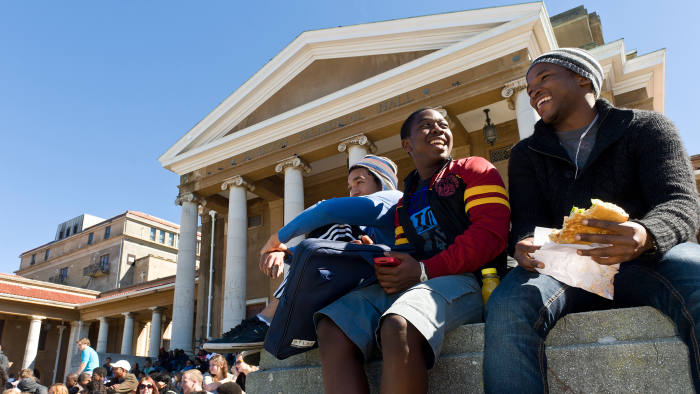
Now may be an excellent time for higher education institutions in Africa to rethink what the future of education would look like and take practical steps towards adopting a blended learning approach in education to improve access and equity. Several universities across Africa, including the ones in countries such as Egypt, Ghana, South Africa, and Rwanda among others have moved some of their programmes to online platforms and partnered with Telco’s to zero-rate these platforms. In some instances, these universities have made data packages and laptops available to some students to improve access.

Currently, with an estimated 1 650 higher education institutions in Africa and access for the relevant age group currently at 5%, Africa is said to have the lowest regional average in the world, about one-fifth of the global average of about 25%.

However, despite the efforts to ensure smooth teaching and learning via migration to online platforms, students continue to face several challenges.

According to UNESCO, 89% of students in sub-Saharan Africa do not have access to household computers and 82% lack internet access. This means that these online classes cannot cater for all students.

Despite these challenges with access, we have seen some innovation in circumventing the bandwidth challenges. These include pre-recorded lectures on these zero-rated e-learning platforms, among others.

Revitalizing higher education

It is clear that technological innovations such as content management systems (CMS), learning management systems (LMS), and internet use has become a part of the DNA of higher education in Africa.

These innovations, like COVID-19, have come to disrupt teaching and learning pedagogies.

Here are three ways in which higher education institutions are revitalizing education in Africa.

Blended and modular learning

COVID-19 has shown that the most powerful and positive impact on education is the digital transformation of the educational sector. The agility of many institutions and governments, especially to quickly move learning modules online and to dedicated mass media channels is admirable.

Course and programme development by university faculty are also in need of an overhaul. Lecturers and faculty are leveraging on content available online from other institutions to complement their own like never before. Students who could previously not afford the cost associated with in-person sessions would now have access to full modules for programmes online and at a reduced cost. In some cases, with a few face-to-face sessions over the programme duration.

Customized experience

Another great opportunity that comes with the digital transformation is the opportunity for customized learning. Students will benefit from customization by developing their curriculum to suit their career aspirations through data-driven suggestions from the learning management systems. Currently, some MOOCs can suggest what classes students should take depending on previously taken courses and performance. Students with intellectual disabilities will also benefit from such an opportunity.

High quality educators

Educators all over the continent have been compelled by current circumstances to use digital tools efficiently to deliver their courses. This era allows educators to join online professional learning communities to pursue in-service career training to stay in touch with the trends, share tips and best practices to achieve the goal of an evolved and high-quality standard of education. Instructors can invite colleague educators from another university to deliver a guest lecture to their students.

In order to make education more meaningful to all students, we must make education more accessible and less expensive. Education should be a right and not a privilege.

(Source: The European Sting)