Home Blog Page 407

Day One: Mixed Emotions As Alexandra Township Learners Return To School

As part of back to school this week, Inside Education went on a visit to Bovet Primary School in Alexandra Township, north of Johannesburg, where learners were both anxious and excited to return after spending two months at home due to COVID-19 lockdown.

NYAKALLO TEFU

THERE WAS raw emotion, fear and loathing among learners and teachers when Bovet Primary School, located in the sprawling township of Alexandra, north of Johannesburg, reopened its doors on Monday June 8.

To the multitudes, going back to school was suffused with happy emotions as they reunited with friends and teachers last seen two months ago when President Cyril Ramaphosa imposed a nationwide lockdown due to the outbreak of the coronavirus outbreak.

Let me tell you one thing; life at schools will no longer be the same for these learners and their teachers, perhaps for generations to come.

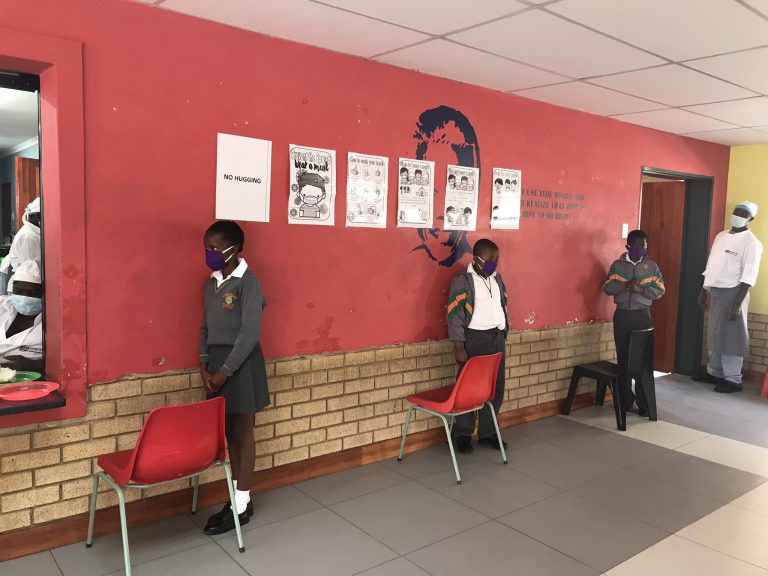
Entering the school premises, I was struck by COVID-19 related safety measures in place, with signs everywhere like “Social Distancing”, “Do Not Remove Your Mask”, “Stay In line, You Are Too Close To Each Other”.

This is what the first day of schooling at Bovet Primary School post-Level 5 lockdown looked like.

After two months of school closures, what usually resembled a joyous day where children hugged each other and played together when they returned to schools, resembled an army garrison during a time of war.

It is no longer a matter of conjecture that this will now be the ‘new norm’ for the ‘Lockdown-Drill Generation’ and those who will come after them.

Walking inside different classrooms at the school, the first thing every learner did was to get hand-sanitized and undergo checks to monitor if they had a cloth mask on.

The MEC for Economic Development Morakane Mosupyoe visited the school on Monday to assess its state of readiness.

When they saw her, one of the learners put his hand up and complained about being strangled by his cloth mask. “Madam, this mask really hurts my ears. I feel like it is too small,” he said as he reached for his cloth mask’s ear guard.

Mosupyoe’s visit included a brief tour to different classrooms, including the school’s kitchen where learners’ food was being prepared by neatly dressed professional chefs.

As you walked in, you witnessed how the floors were taped and how chairs had been re-arranged a meter away from each other to observe social distancing protocols.

“I am happy with how the kitchen is set up and how clean it is, this means our children’s health is a priority,” said Mosupyoe.

Bovet Primary School is also responsible for providing food to the majority of the learners who have for the past two months depended on their parents to make ends meet during the lockdown.

During lunchtime, learners left their classrooms for the school kitchen in a formation, practicing social distancing protocols as dictated by the COVID-19 Gauteng Youth Brigade and teachers.

As they stood behind one another close to a water tap, one of the staff members at the school came with a bottle of liquid soap, pouring a drop on each learner’s palm.

One by one the learners walked to the tap to wash their hands, and when they were done, the COVID-19 Gauteng Youth Brigade members ticked their names off the register before proceeding to the kitchen to receive their daily rations.

Excited, one of the learners said, “I am so excited to be back at school after a long period at home,” as he walked away to enjoy his food in relative peace.

Mosupyoe said the school was ready and safe to continue with the 2020 academic year.

“Today was induction for Bovet Primary School and I am happy with the progress of the school,” said Mosupyoe.

Of the 2 089 schools in Gauteng, only 2 078 reopened on Monday June 8.

Mosupyoe observed that at Bovet Primary School, some of the toilets were not working.

She promised that the toilets would be fixed by the end of the first day of schooling.

“We need to come together not only to address the immediate educational consequences of this unprecedented crisis, but to build up the longer-term resilience of education systems,” she said.

Basic Education Minister Angie Motshekga said schools that were not ready to receive learners would also be fixed by end of the week.

“The golden rule is, there will be no school that will resume if not ready to do so. For the remaining 5% or so learners, alternative measures have been developed by different districts, such as temporarily using neighbouring schools, using underutilised spaces in boarding schools and putting other learners in camps.”

COVID-19: Mmusi Maimane On Why Schools Are Not Ready To Open

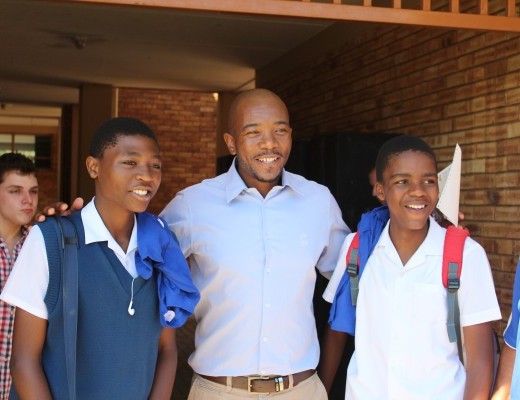
MMUSI MAIMANE

WHILE MANY may know me as a political figure in South Africa, I am also a father and an uncle, and I have been very concerned about the rush to reopen schools during an escalation of the COVID-19 pandemic in South Africa.

At the time of writing this we are now facing the following COVID-19 statistics in the country, 48 285 identified cases and 998 deaths. The curve is not flattening and on the 7th of June alone 2 312 new cases were reported.

At the time of writing this, we are facing winter head-on. It is the season where respiratory diseases spread the most. This is the context in which the schools were reopened by the Department of Basic Education.

This is something that I had spoken out publicly against and even approached the Constitutional Court on an urgent basis about. It turns out my fears were not exaggerated.

Just on the first day we heard different reports which raised significant red flags about our readiness. Mpumalanga Premier Refilwe Mtshweni-Tsipane expressed shock at the lack of readiness of schools in her province. 66 staff members from 55 different schools tested positive for COVID-19 in the Western Cape.

The Emfuleni mayor Gift Moerane was shocked to find that certain schools have no water. Over 100 schools in the KwaZulu Natal province were not reopened along with the others because they do not have any water supply at all. These reports were just the tip of an iceberg when it comes to the state of our schools.

They are indicators that we need to walk with utmost caution along the path to reopening, not rush where angels fear to tread. These are not just my concerns I have been joined by over 190 000 parents, learners and concerned citizens who are worried about the rushed reopening of schools.

They have added their voices to mine by signing a petition which asked the government for restraint and adequate preparation. There are thousands more who feel afraid, angry and concerned that government is acting in a manner that will turn our schools into hotspots and community epicentres.

We have approached this education matter as if we are in an ordinary time, facing an ordinary disruption. In ordinary times, it is indeed important that every learner finishes the academic year, that schools remain open and that our children stay in school. This year however is not an ordinary academic year, by any stretch of the imagination.

While it is important to reopen schools, that move must be made in schools that are safe, sanitary and equal. The rush to complete the academic calendar must not supersede the lives of students, staff and communities.

At all times it is critical that we uphold the constitutional standard when it comes to all affairs that affect our children. Section 28 (2) of the Constitution states that “a child’s best interests are of paramount importance in every matter concerning the child”. 

This is why we as the One South Africa Movement have called for a delay in the reopening until we can be sure that schools are COVID-19 safe. We are not calling for a closure until a vaccine is found, we are advocating for certain bare minimums to be met. This is neither unreasonable nor unjustifiable. 

Our 10-point “Roadmap to Reopening” is as follows: 

  1. Mandatory COVID-19 testing for each teacher, support staff member and learner.
  2. Testing teachers and all school support staff for underlying health conditions which compromise immunity.
  3. Daily temperature checks for all people entering the school grounds.
  4. Safe and adequately ventilated transport for learners.
  5. Water supply and functional bathrooms for students.
  6. Adequate personal protective equipment (PPE).
  7. Weekly disinfection of classrooms.
  8. Implementation of a rotational class schedule to reduce class sizes.
  9. Implementation of rotational and supervised break times
  10. Awareness posters on COVID-19 to be displayed in all schools.

It is no secret that our schools are in a critical state, they are unsafe, unsanitary and unequal. Who can forget the tragic loss of life when five-year-old Michael Komape drowned in a pit latrine. Over the last 26 years we have all witnessed as a nation an education department that failed to deliver to the extent that they had to be taken to court to deliver on the bare minimums.

They have been taken to court for the existence of mud schools, they have been taken to court for the existence of lack of toilets, they have been taken to court for failing to deliver textbooks, they have been taken to court for failing to provide safe learner transport. 

An honest assessment of our schools shows that we need to properly address these long festering problems. COVID-19 did not create them, but it did make impossible to move forward without addressing them. It’s clear that a coordinated inter-ministerial plan to fix our schools will take longer than the time that minister Angie Motshekga anticipated. We need three months of focused intervention.

This decision is not just about the learner, it is about our educators too, many of them have underlying high risk comorbidities, diabetes, hypertension, chronic obstructive pulmonary disease, to mention but a few.

The average age of a teacher is 43, and 34% percent of our teachers are over the age of 50. It is imperative that teachers be tested for underlying conditions before they are exposed to the school environment. 450 000 tests have to be conducted on underlying conditions as well as COVID-19 itself. Screening alone is not going to be sufficient. 

The prioritization of “completing the academic year” cannot supersede or override the necessity for our schools to be safe, sanitary and equal.

We need to stop this dangerous path of action before we lose control. Let’s truly and adequately prepare our schools for the return of students.

  • This article was written by Mmusi Maimane, Leader and Founder of One South Africa Movement

Over 500 000 Learners Left In The Dark As SA’s Schools Reopen

Reporting by NYAKALLO TEFU, SANDILE MOTHA, SHALATI NKHWASHU and MASHUDU SADIKE

MORE THAN 520 000 learners in South Africa were unable to go to school on Monday June 8 due to severe shortages of personal protective equipment (PPE), clean running water, cloth masks, soap and chlorine-based disinfectants.

This comes after Basic Education’s Director General Mathanzima Hubert Mweli said that only 95% schools were ready to accept learners after receiving personal protective equipment (PPE) and deemed to have met COVID-19 health standards

The Congress of the South African Student led the charge on Monday, saying the students’ movement was extremely distressed and outraged that hundreds of thousands of learners were left in the dark, adding that they will unfortunately find it difficult to catch up with the 2020 School Curriculum.

“The reality is that not all schools are ready to receive learners. We are concerned that the Department of Basic Education is not treating all schools equally. There are schools that have all their necessary measures put in place but there are also schools that don’t have proper water and sanitation, and those schools are mostly in rural areas,” said COSAS provincial leader Ntobeko Ndlovu.

“Schools that are in towns have all their safety measures in place. Schools with no water and sanitation are our biggest concern. Those that don’t have transport and have children who travel long distances to get to school … We are not happy that other schools have been excluded. All schools must be ready at the same time. We do support the reopening of schools but this must be done at the same time so no learner is left behind when completing the syllabus.”

School learners at Bovet Primary School in Alexandra, Johannesburg

In Gauteng, the provincial Department of Education said it recorded 85% attendance of learners and educators while only 11 schools were deemed not to be ready to open.

The remaining schools, according to departmental spokesperson Steve Mabona did not open mainly due to infrastructure issues, which are currently being addressed.

“Any issues at our schools which in any way would impact on the safety of our staff and learners are being managed. We are using alternative measures including temporary relocation of learners to neighbouring schools where we cannot immediately resolve the challenges,” said Mabona.

“We had several incidents of break-ins and vandalism over the weekend including up to last night. This has impacted on the PPEs, Including scanners for screening, and other resources we had allocated to schools accordingly.”

Mabona said Gauteng has recorded 39 COVID-19 positive cases from 38 schools.

In KwaZulu Natal, school governing body members prevented learner and teachers from entering school premises, saying they were excluded from the planning and the strategy to reopen schools for learning and teaching on Monday.

In King Cetshwayo district, three schools couldn’t open following shutdown as SGB’s protested outside.

One of the affected schools in the district was the Iswelihle Secondary, a school located in the rural village of Enseleni, near Richards Bay.

According to chairperson of the school governing body, Mntomuhle Msomi, the SGB decided to protest outside the school after being ignored by the provincial department of education.

“We are concerned because the school has no sanitizers or protective equipment and there is no plan and strategy on how this will be executed. Our concern is the safety of pupils because teachers have money and they can buy their own safety gear. But parents cannot afford,” said Msomi.

While several schools in KwaZulu -Natal commenced with the 2020 academic programme following the outbreak of COVID-19, more than 100 schools in the province remain shut.

The number includes those that were vandalised, had no access to water and adequate sanitation.

Rural and far-flung district municipalities such as Zululand, uMkhanyakude and UGu remain severely affected by the lack of health and safety requirements.

The South African Democratic Teachers Union’s provincial secretary Nomarashiya Caluza said the teacher union anticipated that this would happen.

“If we continue at this pace, it means many pupils would be left behind on the curriculum. The department said some schools will be supplied with mobile classrooms, but the big problem here is the provision of water and sanitation,” Caluza told Inside Education.

At 2.8 million, KwaZulu Natal has the highest number of pupils enrolled in its education system.

National Teachers Union president Allen Thompson said they had instructed their union members to stay away from schools that had not observed safety precautions.

“We told our members to boycott schools where health and safety regulations have not been observed. These include failure to provide PPEs and sanitizers. These are what we call non-negotiables,” said Thompson.

The reopening of schools in KwaZulu Natal takes place against the backdrop of the mysterious disappearance of a consignment of PPE.

The equipment apparently disappeared en route to circuit offices and schools.

“The disappearance of these PPE makes the preparations for the reopening in schools an elusive goal. Their replacement of these PPE will cost the department millions of rand, the money of which the department does not have,” said KwaZulu Natal MEC for Education Kwazi Mshengu.

Mshengu announced on Sunday that the SA National Defence Force (SANDF) had also been roped in to assist with water supply to far-flung schools.

Mshengu confirmed this week that the PPE has since been recovered after his department an investigation.

Learners practice social distancing at Bovet Primary School in Alexandra, Johannesburg

In Limpopo, learning and teaching got off to a slow start on Monday, with the Saviour Association of School Governing Bodies(SASGB) maintaining that the province was not ready to resume with schooling.

“We say schools should have not been opened as yet because we are not ready because water tanks and mobile toilets are not delivered at some schools and people are not trained as yet,” said Caiphus Mashutla, chairperson of the SASGB.

One parent, George Mashele, said he and his family were deeply concerned about the safety of learners at unsafe schools.

“We can’t put on hold the future of our children but yes, we are scared of the pandemic. We are avoiding a generation of uneducated children by allowing our children to go back to the classroom in the midst of the pandemic, we also love them,” he said.

The MEC of Economic Development in Limpopo, Thabo Mokone, who had been visiting the schools to lend support as part of the provincial command council, said that government would engage parents of learners that were not present at school on Monday.

“Obviously parents and children are still anxious but we are just bringing confidence to them that everything is on track. Some will start coming along as time goes,” said Mokone.

In the Western Cape, provincial Department of Education spokesperson Bronagh Hammond said a total of 11 Western Cape schools were closed on Friday due to COVID-19 concerns, but were expected to reopen this week.

“Last week 55 schools reported new employee cases of COVID-19. This affected 66 employees. In each case, the necessary cleaning must take place,” said Hammond.

“Whenever an employee or learner tests positive or is exposed to someone who has tested positive, the necessary protocols are followed. These protocols can be found in WCED Guideline L: Managing Covid-19 cases in schools. Schools have been provided guidelines on cleaning, as well as, what to do when there is a positive case of Covid-19 in a school or if someone has been in contact with a positive case of Covid-19.”

Hammond said R61 million in security costs was provided to 470 schools – up until 11 May 2020.

“As of the same time there had been 100 incidents reported incidents of burglary and vandalism since the school holiday period began on 20 March 2020,” said Hammond.  

“The majority have been in the Cape Winelands District, followed by the Metro Central and West Coast District. Many of the items stolen are those that are outside of the school building but within the perimeter of the school such as fencing and garden tools or sporting equipment. Other items include electricity cables, computer equipment, security gates and kitchen equipment. Costs of all damages are still to be determined, but they are certainly adding.”

 (Compiled by Inside Education staff)

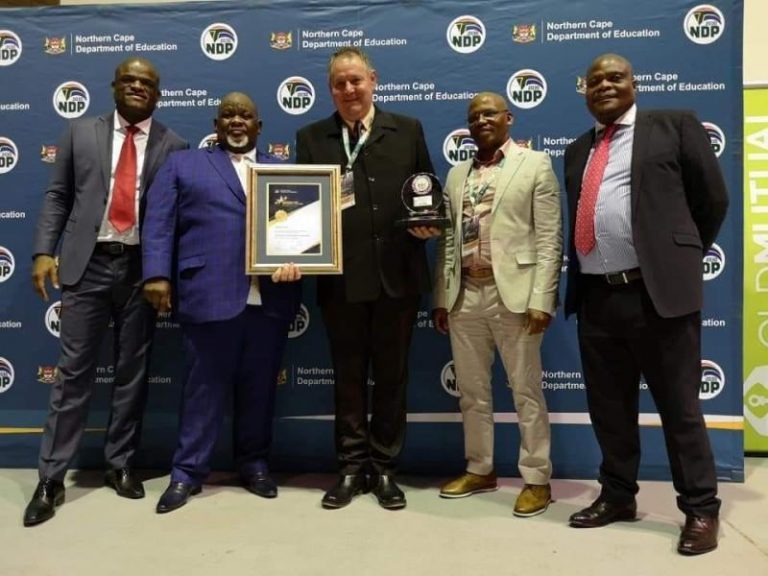
Our Teacher Of The Week Is Noel Venter From The Northern Cape

CLASSROOM MANAGEMENT

Teacher of the Week

Teacher: Noël Venter

School: Andalusia Primary School, Jankempdorp, Northern Cape

SCHOOL teacher Noël Venter from Andalusia Primary School in the North­ern Cape chose teaching as a career to help learners who are subjected to social issues such as drug abuse, alcoholism and violence at home.

He wanted to create a safe haven for them at school and during his 31 years of teaching has assisted many learners to overcome their challenges.

He enjoys the time he spends in class teaching and the inter­action with them during coaching sessions.

He is also passion­ate about staff development.

His school, which is in a rural town, is challenged by poverty, crime, drug and alcohol abuse and severe sexual behaviour.

He has managed to get the community and other stakeholders involved.

Venter’s vast experience has led him to represent the dis­trict and province in several forums and has presented papers at provincial and international conferences.

His plans for the future entail developing his school as a cen­tre of excellence.

(Compiled by Inside Education staff)

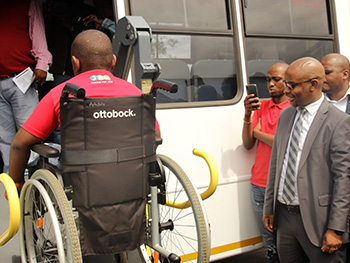
Section 27: KwaZulu Natal Children With Disabilities Left Behind By Learner Transport Policy

NYAKALLO TEFU

Human rights organization, Section27, has expressed concerns about the KwaZulu Natal Education Department’s draft learner transport policy, saying it is inadequate for learners with disabilities.

This comes after the Pietermaritzburg High Court instructed the KZN Department of Education in April to release a draft scholar transport policy for public comment.

Last week, Section27 submitted its comments on the Draft Learner Transport Policy.  

According to the KZN Draft Learner Transport Policy, all transport processes involved from planning to implementation must take cognisance of the needs of learners with disabilities and that in the implementation of the scholar transport programme, priority will be given to learners with disabilities.

“The draft policy does not make provision for, or even mention of, the principles of universal design and accessibility in mainstream learner transport facilities”, said Section27 in a statement.

“Whilst this was an important victory, the Draft Policy nevertheless lacks in some key respects necessary to ensure that learner transport in KwaZulu-Natal is adequately inclusive to learners with disabilities”, said the NGO, arguing that the plan must take into account the variety of needs of learners with disabilities.

“Some learners require quarterly long-distance transport, others require daily short-distance transport, and others require wheelchair ramps or door-to-door drop-offs or even special seating.”

The organization further said that the draft policy does not make provision for the use of mainstream transport facilities for learners with disabilities attending mainstream schools.

One of the proposed policy positions of the department is that a pupil who goes to a public school and travels a minimum distance of 3km to the nearest appropriate school qualifies for transport.

However, Section27 said for learners with disabilities, this may need to be relaxed, depending on individual factors such as limitation in mobility, safety, and socio-economic circumstance of the learner.

In November 2017, Equal Education, represented by the Equal Education Law Centre, secured a court order from the Pietermaritzburg High Court, which forced the provincial education department to produce a policy for the provision of transport to schools for learners across KwaZulu-Natal.

Equal Education has since called on the department to amend the contents of the document to, among others, develop a long-term plan to address funding issues, clearly stipulate the different responsibilities of the department and provincial transport department, and set clear and explicit time frames throughout the draft policy.

 Section27 said the general structure of the draft policy runs counter to the requirement for inclusive education.

“It explicitly divides the provision of transport into two completely separate categories – transport for learners at ordinary public schools for which KZN DoT is largely responsible, and transport for learners at special schools, for which KZN DoE is largely responsible”, said Section27.

It added that this may perpetuate the barrier faced by learners with disabilities who are, in all other respects, able to attend mainstream schools.

(Compiled by Inside Education

Space Technology Is Helping Conservation Efforts Better Inform Development In Africa

SARAH JEVING

AT THE BALULE Nature Reserve in South Africa, rangers were using decades-old maps to track down poachers. They patrolled the entire 155-square-mile reserve — with limited success. Over half of Nigeria’s urban residents live in slum settlements. But on many digital maps, they do not exist.

One project is looking to harness data imagery to fill these gaps and drive inclusion for these communities.

Then in 2014, the reserve recruited consultant Tom Snitch, who brought in satellite imagery of the park — outlining features such as game trails and watering holes. It was the first time these rangers saw an overhead view of the park they patrol every day.

The rangers stuck colored pins onto the map to mark the spots where they had found a dead elephant, rhino, or lion.

They identified clusters of pins — all within about 520 feet of a couple roads outside the reserve. It became clear the poachers were driving on the road outside the park’s fence, looking in to spot the animals.

They would then wait until nightfall, hop the fence, and kill the animals.

In response, the reserve instructed its rangers to focus on patrolling the road. When they found animals within 520 feet of the road at the end of the day, they would try to encourage them back into the bush.

“Almost immediately, the poaching stopped,” Snitch said. “This was not a great intellectual leap of mathematics. … What they needed to do is use satellite imagery to reduce the amount of space they needed to cover.”

This is just one of the ways that satellites are being used to support conservation efforts on the African continent. 

Beyond poaching, space technology can also be used to identify deforestation and grassland degradation, as well as to better inform wildfire management — helping to protect wildlife and the communities that depend on these animals for tourism revenue and to support their livelihoods.

Habitat loss is the leading threat to wildlife in Africa, as agriculture, infrastructure projects, and resource extraction jeopardize habitats and animal migration corridors. It is also the main threat to 85% of endangered or threatened species globally.

Conservation efforts and supporting livelihoods

Kenya is a popular destination for nature-based tourism, which helps employ communities and fund conservation efforts.

“Wildlife is important to Kenya and the Kenyan economy — it’s very, very critical in terms of driving Kenya’s economy and improving people’s livelihoods,” said Yussuf Wato, wildlife expert for WWF Kenya.

But in addition to the threat of poaching, the country’s wildlife is facing habitat loss and degradation, among other significant challenges, as the growing population of humans competes for the same land and resources.

“Most of the species that we are managing are reducing in numbers,” Wato said.

In 2015, the World Wide Fund for Nature and its partners started putting GPS satellite tracking devices on elephants in Kenya to help understand their behaviors and prevent poaching. Currently, 10 elephants are collared in the country, and the organization is doing the same in Cameroon, Gabon, and Tanzania.

The collars allow WWF to identify elephants’ locations and the park to allocate more rangers to those areas.

Alerts can also be issued when elephants are killed or approach communities — helping rangers prevent retaliatory killings if the animals destroy property or hurt people.

“The conservation of our environment … is critical to national development, enhancing human well-being, and sustaining the country’s economy.”

By identifying where elephants spend their time, researchers can determine landscape highlights — such as water or certain plants — that draw in the animals. Local officials can use this data to select areas for land reserves, helping retain biodiversity and conserve the elephants’ habitat.

WWF also works with communities in areas that are frequented by elephants to put up fences around their crops, grow plants the animals do not like to eat, and set up beekeeping operations, helping to keep the elephants away.

But the collaring process is not easy. It is a huge, expensive operation, requiring a helicopter to sedate the animal from above and a veterinarian to assist. One collar alone can cost up to $10,000, but together with the collaring process and monitoring for the item’s three-year life span, this can reach up to $30,000, Wato said.

WWF is now partnering with Wageningen University in the Netherlands and the Kenya Wildlife Service on a project for collaring antelopes to better understand how the animals react when poachers are nearby. The antelopes could act as a harbinger, alerting to the presence of poachers, so that conservationists do not have to collar endangered species.

A park in South Africa has also provided rangers with GPS tracking devices so they can document signs of poachers — footprints, cigarettes, and cloth tied to fences — while they are patrolling, Snitch said. This can then be used to identify where the poachers are frequenting.

Deforestation and grassland degradation

In Tanzania, The Nature Conservancy, or TNC, is monitoring forest loss in the Greater Mahale ecosystem and Lake Tanganyika water basin with satellite imagery, comparing it with historical photos. This information is verified on the ground, helping identify the drivers of forest loss. Communities are then consulted on forest management plans, according to Anne Trainor, remote-sensing expert at TNC.

It found that the forest cover loss in the Lake Tanganyika basin declined about 26% over the past three decades, and forest loss in the Greater Mahale ecosystem declined about 10% during that time, according to a 2018 report from TNC. East Africa is estimated to have lost nearly 15 million acres of forest between 2000 and 2012 for reasons including timber harvesting and agriculture. These forests absorb carbon and play a key role in preventing climate change.

In collaboration with the University of York, TNC also uses satellite imagery in Tanzania to identify grassland degradation, which has a negative impact on wildlife populations and pastoralist communities that the ecosystem supports. The imagery helps identify invasive species that can make the land not grazeable for livestock and can crowd out biodiversity. When livestock does not have access to adequate grassland, the income of pastoralist communities can be harmed.

Between 2015 and 2018, TNC used satellite imagery to map the entire country of Zambia, in partnership with the government, to identify where animals such as giraffes and hippos congregate and create a species distribution model. Satellite imagery was overlaid with aerial surveys from planes to identify the animals.

This assists in understanding the environmental features that these animals are drawn to and predicting areas where they are likely to go. Jean Kapata, Zambia’s minister of lands and natural resources, said in a report on the project that the government would use the map to identify areas that are critical to conserve and to evaluate future development plans, within the context of the need to protect these areas.

“The conservation of our environment and its natural resources is critical to national development, enhancing human well-being, and sustaining the country’s economy while maintaining ecosystem integrity and resilience,” she wrote.

Using data from MODIS — an instrument that sits on a satellite with a tool to detect temperature change — TNC has also worked in the country’s Kafue National Park, one of the largest parks in Africa, to better understand the ways that the forest burns and the routes it takes while burning. According to McRee Anderson, director of the interior highland and fire program at TNC, this informs strategies around early, controlled burning, which helps prevent widespread, uncontrollable fires that can damage the park’s biodiversity and the animals’ habitat.

Increasing accessibility

Satellite data is becoming simpler to use and more accessible for the conservation community, TNC’s Trainor said.

One tool making this easier is Google Earth Engine, a cloud-based platform for satellite imagery and geospatial datasets with analysis capabilities. Through this platform, it is possible to write computer code to calculate vegetation from satellite data, among other tasks. The data is then processed in the cloud.

A decade ago, before the platform was launched, much of this data had to be downloaded and processed on a personal computer with proprietary software, meaning someone would need software and an expensive computer with high levels of computing capacity.

“It’s made remote sensing in the conservation world so much easier because you don’t need these huge machines,” Trainor said, adding that now freely available and accessible remote-sensing datasets such as Landsat, MODIS, and Sentinel are increasingly being used in the conservation world.

Even so, there is still a relatively steep learning curve to interpret this data. But there are more training resources available to build capacity, such as online courses.

“Every remote-sensing map is a model, and models are an estimation of reality. They are not actual reality,” Trainor said. “Every map has assumptions to them. They’re very powerful, as long as those assumptions are understood.”

(Author: Sara Jerving is Devex’s East Africa Correspondent based in Nairobi)

Limpopo: The Real State Of Our Derelict, Dilapidated and Dangerous Schools In Pictures

Traditional leader NS Netshimbupfe inspects one of the classes whose roofs was blown away by strong winds during lessons. Photo: Lucas Ledwaba/Mukurukuru Media

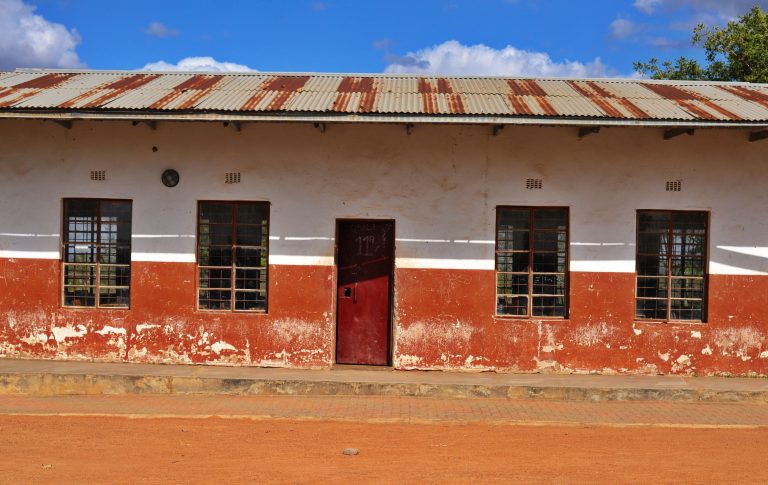
ON THE EVE of schools reopening in South Africa, award-winning journalist and author LUCAS LEDWABA captured these powerful images of a dilapidated, derelict and dangerous school in Limpopo that may find it difficult to comply with COVID-19 requirements.

Below is an interview he had with Chief Nthumeni Mukhwevho of Thondoni Village, Limpopo.

“I am Chief Nthumeni Mukhwevho from Thondoni village. This school [Netshimbupfe Secondary School] falls within the Thondoni village. With regards to the school, you can see the situation, this school has become old and dilapidated. This school was built a long time ago, in 1975 with the maswoli bricks (bricks that are made from mixing water and soil and then get to be burnt fire and cement).”

There school has an erratic supply of water which is delivered by a council truck. Its boreholes have run dry. Photo: Lucas Ledwaba/Mukurukuru Media

“This school as you look at it, it is not in a good condition. When children are around, they are not safe. Ceilings, walls or corrugated iron roof (zincs) might fall on them as you can see just by walking past that it has cracks. Since the media is here, we are pleading with you guys to try and speak to the government including the department that deals with infrastructures on our behalf so that they can come and inspect the school.”

The girls toilet is located in a bushy area where learners once spotted a python. The school’s management fears for learners’s safety. Photo: Lucas Ledwaba/Mukurukuru Media

“As you look at this school, it no longer has a lot of learners because they run away when they see the cracks and the roofs that have become damaged. The principal has already notified the department but still, nothing is being done. We don’t know what to do. At least back then it was easier because each household would pop out R50 and the money would be collected to build a school. Is the government perhaps battling to deliver services to us and want us to go back into the olden ways of doing things?”

One of the long drop toilets used by girl learners at Netshimbupfe Secondary School is on the verge of collapse. The toilets have no doors and offer no privacy to learners. Photo: Lucas Ledwaba/Mukurukuru Media
Community leaders are appealing for assistance to renovate the school which they say has lost learners to other areas far away due to its condition. Photo: Lucas Ledwaba/Mukurukuru Media
The boys toilet at Netshimbupfe secondary school in the Vuwani district of Limpopo poses a health risk to learners. Photo: Lucas Ledwaba/Mukurukuru Media

(Compiled by Inside Education staff)

Oxford University’s COVID-19 Vaccine: Next Steps Towards Broad And Equitable Global Access

THE UNIVERSITY of Oxford, in partnership with AstraZeneca, has taken the next steps in its commitment to broad and equitable global access to Oxford’s COVID-19 vaccine, following landmark agreements with the Coalition for Epidemic Preparedness Innovations (CEPI), Gavi the Vaccine Alliance, and the Serum Institute of India (SII).

AstraZeneca has reached a $750m agreement with CEPI and Gavi to support the manufacturing, procurement and distribution of 300 million doses of the vaccine, with delivery starting by the end of the year.

In addition, the university and industry partnership reached a licensing agreement with SII to supply one billion doses for low-and-middle-income countries, with a commitment to provide 400 million before the end of 2020.

Together, the agreements mark the latest commitments to enable global access to the vaccine, including to low-and-middle-income countries, beyond the company’s recent partnerships with the UK and US.

AstraZeneca is building a number of supply chains in parallel across the world to support global access at no profit during the pandemic and has so far secured manufacturing capacity for two billion doses of the vaccine.

The agreement with CEPI and Gavi also represents the first advanced market commitment through the Access to COVID-19 Tools (ACT) Accelerator, a global mechanism co-chaired by the Bill & Melinda Gates Foundation and the World Health Organisation (WHO).

The mechanism will work to ensure the fair allocation and distribution of the vaccine across the world including in low-and-middle-income nations. CEPI will lead development and manufacturing and Gavi will lead the procurement within the global mechanism.

Professor Adrian Hill, Director of the Jenner Institute at the University of Oxford said: “We are delighted to see this major agreement with global industry partners which brings to fruition the goal of Oxford University and AstraZeneca to help ensure very large scale fair and equitable COVID-19 vaccine provision in low to middle income countries around the world. We are deeply grateful to all those collaborating with unprecedented urgency to make this goal possible.”

Pascal Soriot, Chief Executive Officer, AstraZeneca, said: “We are working tirelessly to honour our commitment to ensure broad and equitable access to Oxford’s vaccine across the globe and at no profit. Today marks an important step in helping us supply hundreds of millions of people around the world, including to those in countries with the lowest means. I am deeply grateful for everyone’s commitment to this cause and for their work in bringing this together in such a short time.”

Dr Richard Hatchett, Chief Executive Officer, CEPI, said: “AstraZeneca and our other industry partners have a critical role to play in rapidly developing safe and effective vaccines and manufacturing the billions of doses needed to put a permanent end to the COVID-19 pandemic. AstraZeneca is admirably committed to equitable global access for this vaccine, and this partnership demonstrates how the COVID-19 Vaccine Global Access Facility will bring the private, public and third sectors together to make COVID-19 vaccines available to those who need them most, for the benefit of all.”

Dr Seth Berkley, Chief Executive Officer, Gavi, said: “Today we have seen tremendous willingness from donor governments to support equitable access, particularly to developing countries– and it is incredibly heartening to see the private sector join in this effort. We encourage other vaccine manufacturers to work with us towards the shared global goal of finding solutions for this unprecedented pandemic.”  

Adar Poonawalla, Chief Executive Officer, SII, said: “Serum Institute of India is delighted to partner with AstraZeneca in bringing this vaccine to India as well as low-and-middle-income countries. Over the past 50 years SII has built significant capability in vaccine manufacturing and supply globally. We will work closely with AstraZeneca to ensure fair and equitable distribution of the vaccine in these countries.”

AstraZeneca recently agreed to supply 400 million doses to the US and UK after reaching a licence agreement with Oxford University for its recombinant adenovirus vaccine.

Oxford University recently announced the start of a Phase II/III trial of the vaccine in about 10,000 adult volunteers with other late-stage trials due to begin in a number of countries around the world.

(Source: Oxford University News)

COVID-19: Don’t Be Alarmed. Be Prepared, Says Ramaphosa

MOST PEOPLE will have noticed that the number of confirmed cases of coronavirus in South Africa has been rising fast. More than a half of all cases since the start of the outbreak were recorded in the last two weeks.
 
During the course of this coming week, we can expect that the total number of cases will pass the 50,000 mark. Sadly, we are also likely to record the 1,000th death from this devastating disease.
 
Like many South Africans, I too have been worried as I watch these figures keep rising. While these numbers are broadly in line with what the various models had projected, there is a big difference between looking at a graph on a piece of paper and seeing real people becoming infected, some getting ill and some dying.
 
We can draw some comfort from the knowledge that the nation-wide lockdown  in achieving the objective we had of delaying the spread of the virus and that it gave us time to prepare our health facilities and interventions for the expected spike in infections.
 
The lockdown was not only necessary but it has also given us all time to adjust to living with the virus. Various surveys show that South Africans have come to know a lot about the virus and are taking the necessary precautions to prevent its spread. I have been pleased to realise that a high percentage of South Africans wash their hands regularly, avoid contact with other people and wear face masks whenever they go out in public. I should however say that social distancing in public places is still a major challenge for us. We need to focus our attention on ensuring that we adhere to social distancing practices because it is through close contact between people that the virus will be spread.
 
It is pleasing to realise that businesses, government departments, schools and other institutions have used this time to get themselves ready for a gradual return to more-or-less normal activity. They have been putting stringent health protocols in place, thoroughly cleaning and sanitising their premises and are ensuring that people are regularly screened for COVID-19 symptoms. This is all necessary to ensure that we save lives and protect livelihoods.
 
Last Friday, I spent the day in Cape Town to get a better sense of the work that is being done to manage the disease there. The Western Cape is the epicentre of coronavirus infections in South Africa, with around two-thirds of all confirmed cases.
 
I was impressed by the preparations the Western Cape is making to contain infections and to ensure that there are enough beds, staff and medical supplies to accommodate the rapidly increasing number of people needing hospitalisation. They are increasing the number of beds by setting up field hospitals, including at the Cape Town International Convention Centre.
 
Yet, even with the preparations they have made, they will need more bed capacity as the disease reaches its peak. They need help from outside the province, including additional funding and health personnel.
 
This provides the clearest evidence yet that we are correct to treat coronavirus as a national disaster. We must mobilise and deploy all the necessary resources we have in the country. We need an integrated strategy that brings together the national, provincial and local spheres of government.
 
After the Western Cape, the Eastern Cape is the province with the fastest-growing proportion of people infected. And we know that some of the infections in the province were the result of people travelling from the Western Cape. What this tells us is that no part of the country is an island and that all South Africans, no matter where they live, need to remain vigilant and prepared. It is for this reason also that people are not permitted to travel between provinces while the country is at alert level 3, except under specific circumstances and with the necessary permits.
 
As we watch the number of infections rise further – probably far faster than most of us imagined – we should be concerned, but not alarmed. That is because we have the ability, as individuals, communities and as a country, to limit the impact of the disease on our people.
 
As we have shown, we can slow the spread of the disease, and we should continue to take all measures possible to continue to flatten the infection curve. Most importantly, we must  be prepared to reduce the number of deaths by implementing the necessary health measures.
 
Working with our social partners, we in government are working hard to prepare for the increase of infections. We have been buying personal protection equipment from across the world and supporting local companies to produce them here. We have been improving the infrastructure in hospitals and  setting up temporary hospitals and finding more beds for COVID-19 patients. We have deployed tens of thousands of community health workers to detect cases in areas where people live. We are intensifying the programme of screening, testing, contact tracing and, where necessary, isolation.
 
Although we have made progress, we still need to do much more in the coming weeks to meet the expected demand.
 
You can also do much to prepare as individuals and families. Already many have made the effort to learn as much as they can about the disease, how to identify the symptoms and how to avoid getting infected or infecting others. Many people have thought about how they can go to school or work safely, and how they can change their shopping behaviour or how they worship to minimise the risk of infection.
 
Each household should look at how they can protect elderly people and those with underlying conditions, such as diabetes, hypertension, cancer, TB or HIV. Do plan for the possibility that someone in the family may become infected and whether you will be able to isolate them from family members until they are better. If not, find out where the closest government quarantine site is. You should also plan ahead for what to do if someone gets sick.
 
Over the coming weeks, as we watch the coronavirus infections continue to rise, we must remember that we are not helpless.
 
And we should remember one simple, but fundamental, message: Don’t be alarmed. Be prepared

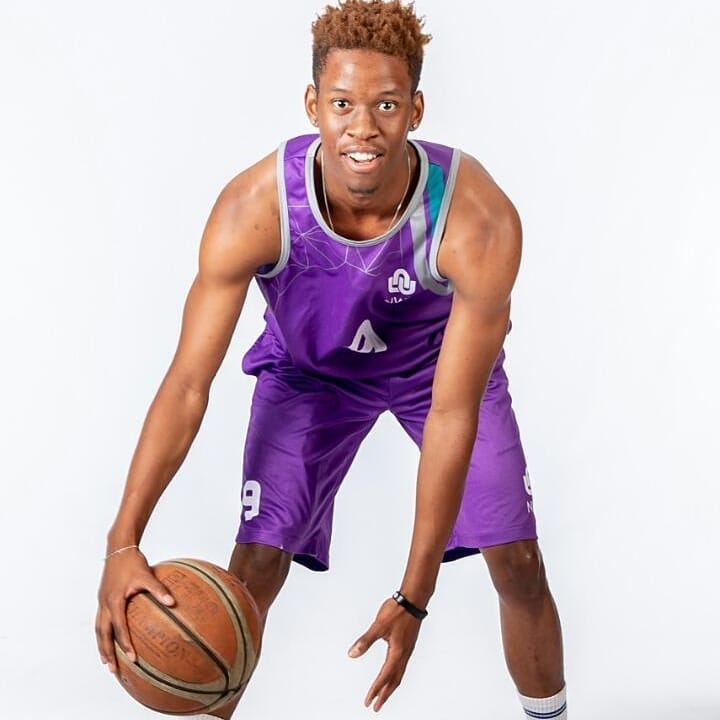
Turn It Up For NWU Basketball Star Itumeleng Radiokana

SCORING POINTS, hitting teammates with the perfect pass and being an all-round contributor are just some of the characteristics of a top point guard in basketball. It would be safe to say that the NWU basketball chairperson and captain, Itumeleng Radiokana, fits these qualities and the sport of basketball like a glove.

Since Grade 5, basketball has been a perfect fit for Radiokana, who has been in love with the game filled with lay-ups, dribbles and crossovers.

The NWU captain and starting-point guard has guided his team to two league titles in the last three years and was named in the all-star team every year.

“My best memory with the NWU was when the team won the league and I was named an all-star for the first time in my career at university level. My goal is to push basketball to a high-performance sport at the NWU. If the sport had more support from the school, I believe nothing would stop it from making a major contribution towards the image of SA Basketball like Wits and UJ,” he stated.

Growing up, Radiokana and his father shared a love for the game, which has created legends like Michael Jordan, Shaquille O’Neal and Ray Allen in the NBA.

“I was a kid with many athletic talents; I like to believe I still am. In Grade 5, my father pushed me to try basketball. He would en-courage me to watch the sport and, from there, I started developing a deep love for the game,” remembers Radiokana, who went to King Edward VII School for Boys.

According to him, there is a lot of potential for basketball’s growth on campus.

He says the amount of interest has grown exponentially each year.

“It has grown to the point that the women have two teams and the men three – from one team each previously,” he elucidates.

Besides basketball, Radiokana also takes time out to strategise academically.

He is currently doing his second qualification, 2nd year in Sports Coaching and Human Movement Sciences.

Radiokana also has big dreams of making it in the top leagues in the world, to follow in the footsteps of his role models, Lebron James and the Greek Freak, Giannis Antetokounmpo.

“The best thing about basketball is the amount of creativity it takes to play. Being able to express who you are when you are on the court is nothing short of amazing. I wouldn’t mind playing in SA, but I plan to go overseas and see what I can do where basketball is not a Cinderella sport, but the main bread-and-butter.”

(Source: The Herald Potchefstroom)