Home Blog Page 408

Over 95% COVID-19 Compliant Schools Ready to Receive Learners on Monday – Basic Education Minister

CHARLES MOLELE and NYAKALLO TEFU

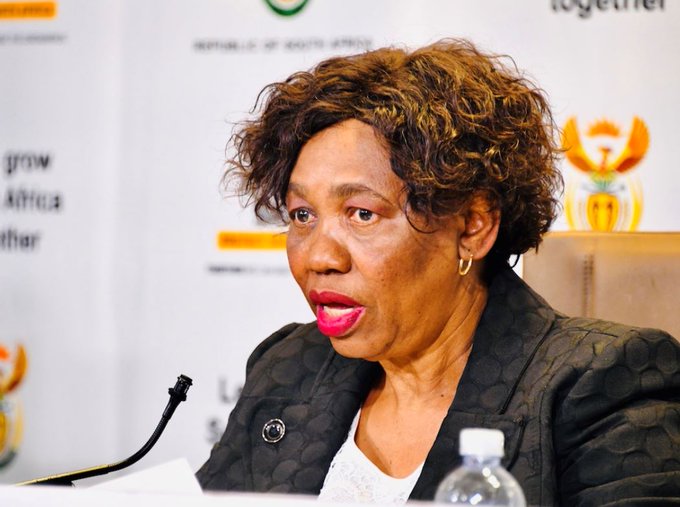
OVER 95% of schools are COVID-19 compliant and ready to open their doors for teaching and learning on Monday June 8, Basic Education Angie Motshekga said on Sunday evening.

Motshekga, addressing a media briefing on the state of readiness of schools, said Grade 7 and Grade 12 can return to schools because the majority of them have received necessary Personal Protective Equipment and were deep-cleaned.

This comes after teachers’ unions said on Sunday that they are willing to work with government to begin the phased reopening of schools as long as it can be done safely, amid concerns about a renewed coronavirus outbreak.

“We can now say with confidence that about 95% of our schools have been ably provided with the COVID-19 related imperatives,” said Motshekga.

Motshekga said Grade 7 and Grade 12 learners will be the first to return to school on Monday in a phased approach.

“Provinces should mop-up the outstanding deliveries of Personal Protective Equipment, as well as the outstanding provision of water and sanitation to the schools,” she said.

“The ongoing cleaning of schools should be accelerated and finalized within the week of 01 June 2020 and provinces should finalise the training of screeners, cleaners and volunteers for the national school nutrition programme (NSNP).”

Motshekga insisted that no school would be allowed to open without meeting necessary COVID-19 requirements.

“The golden rule is, there will be no school that will resume, if not ready to do so,” said Motshekga.

“We have since published the Directions in terms of the Regulations under the Disaster Management Act, 2002 – regarding the reopening of schools, and measures to address, prevent and combat the spread of the Corona Virus in the Basic Education Sector.” 

“The Directions, as amended on 01 June 2020, do cater for deviations to the extent necessary, to be applicable to small schools, special schools, as well as independent and private schools.  They also cater for instances where parents may choose to keep their children at home fearing that their children could be infected by the COVID-19; or schools may not be ready to resume schooling.”

The MECs of Education from all nine provinces also backed Motshekga’s plan to reopen schools on Monday despite experiencing a few COVID-19 hurdles, which includes lack of water and delays in the delivery of PPEs at certain schools.

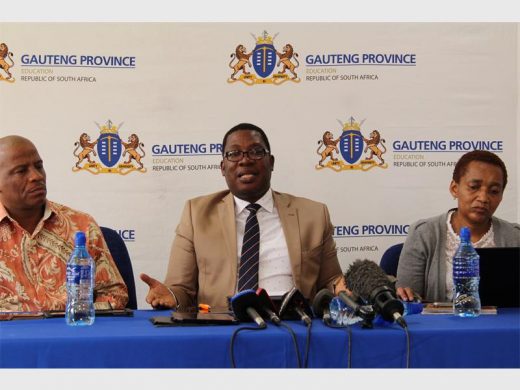
Gauteng MEC Panyaza Lesufi said 14 schools were not ready to open on June 8. He added that at 30 schools (26 public and 4 private schools), teachers and learners have tested positive for COVID-19 and so those schools will not open.

 Lesufi also said 1800 young people have been trained to assist quintile 1 – 3 schools with COVID19 related activities.

Mpumalanga MEC of Education Bonakele Majuba said the province was ready to receive learners on June 8. Majuba said, on the other hand, 43 schools are not ready to open in Mpumalanga because water tanks have not yet delivered.

KwaZulu Natal MEC Kwazi Mshengu said 104 schools in the province were not ready to open on Monday.

(Compiled by Inside Education staff)

Schools Reopening Breakthrough As SA’s Five Teacher Unions Back June 8 Return

CHARLES MOLELE

FIVE TEACHER unions have cautiously come out in support of government plans to start the phased reopening of schools on Monday June 8 following a recent clash between the unions and Basic Education Minister Angie Motshekga.

The five teacher unions (SADTU, NAPTOSA, SAOU, NATU, PEU), together with the school governing body associations (SGBs) said on Sunday that they met with Motshekga, the Director General, nine MECs of Education, Heads of department (HODs) and others, and they support the move to partially reopen schools.

In a statement, the unions and SGB associations said they noted the overall school readiness at 94% and cautiously welcome the progress.

However, they insisted that there is a clear understanding that no school that is not COVID-19 compliant may open.

“We wish to emphasize that the meeting was open, frank and in a positive collaborative spirit that sought to join forces in combating a threat that affects not only everyone involved in education but also the future development of our country as a whole,” the unions said in a statement.

“The Unions and SGB Associations heard of the progress made towards compliance. With the overall school readiness said to be 94%, the unions and SGB Associations consequently support the call to re-open schools on 08th June 2020 with the clear understanding that no school may open that is not COVID-19 compliant. It should be stated that three out of the nine provinces were still experiencing challenges with regard to the delivery of water tanks which will make the resumption of learning and teaching impossible unless alternative measures are taken to ensure that all learners receive education.”

Almost a week ago, Motshekga revealed plans to let the first children back to school at the start of June.

The move would apply to Grade 7 and Grade 12 pupils but it faced backlash from teaching unions, parents and SGB associations.

However on Sunday, the unions and SGB associations said they backed the government’s plans.

“We are particularly thankful for the extent of PPEs deliveries, the improvement in the number of completed water supply projects and the delivery and improvement of toilet facilities,” they said in a statement.

“This improvement came as a result of the constant emphasis by the U ions and SGB associations that water and sanitation are the non-negotiables in the fight against the spread of the virus.”

“We remain committed to the principle that all schools must be COVID-19 compliant and ready to open together. We will closely monitor the promise to complete the outstanding water deliveries, toilets, and additional classes.”

(Compiled by Inside Education staff)

UCT Launches Probe Into An Offensive, Racially Tinged Research Paper About Alleged Limitations Of Black Academics

THE EXECUTIVE management of the University of Cape Town has distanced itself from an offensive research paper by a professor which asks why black students in South Africa are less likely to consider studying biological sciences. The academic research paper, penned by UCT professor Nicoli Natrass, is entitled “Why are black South African students less likely to consider studying biological sciences?,” and appeared in the South African Journal of Science at the end of May.

The UCT executive said it was concerned that the paper has methodological and conceptual flaws that raise questions about the standard and ethics of research at UCT.

The executive said in a statement that it distances itself from the content of the paper and has launched an investigation into the matter.

“The paper is constructed on unexamined assumptions about what black people think, feel, aspire to and are capable of. The commentary by Professor Natrass offers an example of research that is unable to examine the historical and ideological roots of academic disciplines and that is equally unaware of the role that power differentials have in closing or opening possibilities and choices in the life of individuals and communities,” the university executive said.

“The paper is offensive to black students at UCT; black people in general and to any academic who understands that the quality of research is inextricably linked to its ethical grounding.”

The university said it viewed the incident as yet another opportunity to renew its resolve to foster a university culture that is aligned with UCT values and that is sensitive, inclusive and free of racial prejudices.

“UCT welcomes rigorous and respectful debate on all issues pertaining to transformation. We endorse the right of critical review and response to published academic work, including in this case, commentaries, and the right of reply in these academic forums. We affirm our commitment to dealing with any instances of racism, sexism, discrimination of any sort or any unethical behaviour.”

(Compiled by Inside Education staff)

Lesufi Confident Gauteng Schools Ready To Reopen On Monday Despite A Few COVID-19 Hurdles

NYAKALLO TEFU

GAUTENG MEC for Education Panyaza Lesufi said on Friday the majority of schools in the province have received Personal Protective Equipment ahead of schools reopening on June 8.

Lesufi said despite his confidence with the state of readiness in the province, 53 schools in Gauteng were not ready to reopen due to water and sanitation issues.

He said, however, his department has made alternative plans for learners and staff from these schools.

At the 53 schools which will not reopen yet on Monday, 27 are in the Sedibeng area, 8 in Johannesburg South, 7 in Gauteng West, 1 in Ekurhuleni South, 1 in Gauteng East.

Lesufi said only three schools have been vandalized and cannot reopen yet.

“Until we can fix the issues at these schools they will remain closed and learners will be provided will alternative measures,” said Lesufi.  

With learners set to be using different modes of transportation to go to school, the MEC said the registration of drivers who take learners to school will continue after reopening.

“Private and subsidised operators will all have to register through the Department of Transport and we will provide relevant support on the basis of their registration”, said Lesufi.

So far, he said, government has contracted 212 service providers operating with 2 500 commissioned buses.

Lesufi said 1 800 Youth Brigades have been deployed, two pe quintile.

“50% of schools have 2 allocated youth, the department is working on training more every week as we aim to have 7000 Youth Brigades in total,” said Lesufi.

Lesufi said one learner and 11 educators have tested positive for COVID-19 in the province.

“Some schools were closed and decontaminated and reopened after a few days, but some remain closed,” said Lesufi.

He assured parents and staff that any school which is considered unsafe will be immediately shut down. 

(Compiled by Inside Education staff)

In Repurposing Education, Leave No Student – Or University – Behind

KAREN MCGREGOR

IMPROVING ACCESS to higher education is not only about opening doors to more people, says Professor Mpine Makoe, director of open distance e-learning at the University of South Africa. In thinking beyond COVID-19, universities should also strive for greater inclusivity, equity and quality – especially in countries where there is a development backlog.

Higher education after the pandemic should not leave any student behind, agreed presenters at a webinar on 27 May hosted by the Alliance for African Partnership, a consortium of 11 universities in Africa and Michigan State University in the United States.

It should also not leave any university behind, said Professor Tawana Kupe, vice-chancellor of the University of Pretoria. To achieve this, there need to be new forms of support. For instance, in e-learning, Makoe pointed out, student support should be embedded in course resources as it has been in ‘traditional’ distance education, as well as in university units.

“Dialogue #3 – Educational access at higher education institutions in the age of COVID-19” was the third in a six-part dialogue series on universities and COVID-19. University World News – Africa is one of the partners.

Access challenges

Opening the webinar, moderator Professor Paul Zeleza, vice-chancellor of the United States International University-Africa in Kenya, said that in terms of access, there were three major COVID-inspired challenges facing governments, international and inter-governmental agencies, and institutions.

“First, slowing and stopping the spread of the pandemic. Second, how best to mitigate the extensive and damaging effects of the pandemic in the immediate and short term. Third, how to ensure survival and growth after the pandemic.”

The impact of COVID-19 in terms of educational access can also be seen in three ways.

First, said Zeleza, is institutional capacities to manage the crisis. Many universities have faced a chronic lack of infrastructure to deliver e-learning resources, under-preparedness among students and staff, and gaps in their access to computers and the internet.

Second, when educational institutions reopen, what will their level of preparedness be to continue mitigation efforts in terms of social distancing and other health measures?

A third issue is ensuring quality and equity. Faculty and students must be trained in the optimal use of online teaching and learning. “There is a need to implement remote learning platforms that optimise reach and equity, and promote targeted outreach to disadvantaged groups.” Also, curricula must be adapted to enhance the feasibility and effectiveness of remote learning. “A final issue is integrity of assessment and examinations.”

Regarding recruitment and enrolment, COVID-19 has wreaked havoc.

Devastated economies will erode the capacity of governments to fund universities, and of (especially poorer) families to pay student tuition and living costs. How can universities leverage more aid for needy students? In many countries, school and university entrance exams have been postponed, shrinking the pipeline of available students.

Many universities have seen their international student market dry up. Some have sought overseas partners where students can temporarily enrol; some are trying to make online education delivery work better for students overseas; and others are working to create a sense of community for international students, such as via supportive alumni networks.

Intriguingly, Zeleza suggests this might be a good moment for African universities to close the gap between outbound and inbound international students. According to UNESCO, Africa counts for 10.35% of the world’s outbound students who totalled 5.3 million in 2017, against 4.26% of inbound students. Can some Africans who are planning to go abroad be tempted to study in local universities?

Guiding principles

Professor Makoe told the webinar that three principles guide her approach. First, education is a fundamental human right, without which many people are unable to reach their potential. Second, education is a public good, not a commodity. “It is something that all of us need access to.” Third, education ensures equitable access to life opportunities.

The University of South Africa, or UNISA, was founded as an examining body and became a dedicated teaching university in 1946. It is Africa’s largest distance university, with more than 400,000 students across the continent and the world.

UNISA has enabled access because it is a distance learning university, and has supported inclusivity and flexibility. Anybody can study anything, anywhere and whenever they like.

COVID-19 poses threats to access, Makoe said. For instance, it has forced many people to stay home – including 1.6 billion children and youth. As a result, there will have been losses in learning and increased drop-out rates are likely going forward. Further, progress towards the Sustainable Development Goals will be reversed.

Since COVID-19 lockdowns, online education has provided a stop-gap solution. But it has starkly highlighted the challenges of the digital divide, which has excluded many people from participating in education during the pandemic, especially in developing contexts.

Critical for support

As much as ‘contact’ universities have wanted learning to continue online, most have not had the skills and competencies to do so effectively. “Online learning requires structures, systems and resources to support it. These are completely different from face-to-face systems,” said Makoe, who is also the director of the African Council for Distance Education.

Infrastructure is crucial for online education, as are different types of education technology. UNISA draws on different technology combinations to widen access to different types of students. For instance, some students with limited internet access use a USB packed with course materials. “They work offline, and only go online when they upload info and when they work in the materials.” Mobile learning is critical, as many Africans have access to it.

Support for students is also critical. UNISA students study on their own. “Therefore, support must be integrated into the programme itself; it is not separate entity,” said Makoe.

“Students have to be supported cognitively within the study material, they have to be supported emotionally, they also have to be supported administratively. All these different types of support are integrated within the learning materials.”

In early March, Makoe launched a pilot initiative that has helped some 300 school teachers with the transition online, for instance introducing them to open educational resources and mobile learning, study groups and ways of using the online space for teaching.

“It’s a short programme but the idea is to introduce teachers to the concept of what online learning means and how different it is,” said Makoe. “And we make sure that we include issues of accessibility, inclusivity, equity and connectivity.”

As universities have planned for and responded to the coronavirus crisis, they have also had to plan for post-COVID.

“We should strive for an education system that is inclusive, equitable and accessible, and that enables parity of participation,” she concluded.

“As we are rethinking education beyond COVID-19, colleagues, we need to come to an understanding that it should not exclude anyone.” By developing study materials for the lowest common denominator, it is possible to pick up students who are struggling and support them to achieve the level they need. That is what equity is all about.

(Source: University World News)

Constitutional Court Dismisses Bid By Mmusi Maimane’s OSAM To Stop School Reopening On Monday

THE CONSTITUTIONAL Court on Friday dismissed with costs an application by Mmusi Maimane’s One South Africa Movement party to stop the reopening of schools on Monday. In an order made on Friday, the Constitutional Court said it had considered the application for direct access to the court on an urgent basis.

“It has concluded that [One South Africa Movement] has not made out a case for direct access and thus the application should be dismissed as it is not in the interests of justice to hear it at this stage,”  the ConCourt said.

In an urgent application to the Concourt, Maimane’s party challenged the government’s decision to reopen schools on June 8, citing poor infrastructure, school overcrowding, staff shortages and sanitation as some of the reasons not to reopen schools.

Reacting to the court verdict on Friday, Maimane said: “It must be clear that the Concourt did not consider the merits of our case or pronounce on such. The court only considered whether it was the appropriate body to adjudicate the case from inception. The merits of our case stand.”

“We maintain that schools are not ready to safely reopen, and doing so will put in danger the lives of students, teachers and support staff as COVID-19 infections continue to rise. We cannot risk allowing our country’s places of learning to become petri dishes for increases in infections which may undo the value of the national lockdown.”

(Compiled by Inside Education staff)

Schools Reopening: Government Asks For More Time To Respond To Mmusi Maimane’s Constitutional Court Challenge

THE GOVERNMENT has asked for more time before filing a responding affidavit to the One South Africa Movement’s challenge to the reopening of schools by Basic Education Minister Angie Motshekga. The One South Africa Movement leader Mmusi Maimane filed court papers this week to challenge the decision by government and the Department of Basic of Basic Education to re-open schools on June 8.

Government legal representatives have asked to respond by Monday, according to Maimane’s lawyers.

Responses by government in the matter were due on Wednesday.

Maimane has requested the Constitutional Court to intervene after the government failed to respond to his letter asking for an explanation on the move to reopen schools.

“It’s not a matter of choice between staying at home and be uneducated or go to school and risk contracting a virus that could kill them. It is actually that we must guarantee the safety of every learner and only the Constitutional Court can give us that because clearly the Department of Basic Education cannot do that,” said Maimane.

Maimane said he has asked the court to play a supervisory role in the process of reopening schools.

In the founding affidavit to the Constitutional Court, Maimane challenged the government’s decision to reopen schools.

In the affidavit, Maimane highlighted poor infrastructure, school overcrowding, staff shortages, sanitation and public transport as the motivation behind his application.

He also argued for a supervisory relief for Level 4 regulations to be restored.

“We seek to invoke the court’s wide remedial powers by seeking structural or supervisory relief stipulating stringent conditions, without which the respondents may not implement any of the Level 3 measures and/or more specifically the reopening of schools for a period of 60 days, during which the constitutional breaches may be cured. In the supervening period and in order to avoid a vacuum, the Level 4 regulations must be restored,” Maimane argued.

(Compiled by Inside Education staff)

U.S. Schools Lay Off Hundreds Of Thousands Of Teachers, Setting Up Lasting Harm To Kids

LATE last month, San Diego high school teacher Jessica Macias put aside her worries about her future, psyched herself up and launched into an enthusiastic lesson via video feed to her class on the theory of knowledge. Macias, a 26-year-old English teacher, had attended Castle Park High School herself as a student. While delivering that lecture, she said, she was “pushing to the back of my head” that she’d soon be unemployed.

Macias, along with 204 other teachers in San Diego’s Sweetwater Union High School District, will lose her job when the school year ends June 5.

The night before the class, she said in an interview, “I couldn’t sleep because I was thinking about not having a job.”

Macias will join the staggering number of public school personnel across the United States who have lost their jobs in the wake of school closures amid the Covid-19 pandemic. In April alone, 469,000 public school district personnel nationally lost their jobs, including kindergarten through twelfth-grade teachers and other school employees, a Labor Department economist told Reuters.

That is more than the nearly 300,000 total during the entire 2008 Great Recession, according to a 2014 paper by three university economists financed by the Russell Sage Foundation. The number of public school teachers hasn’t recovered from that shakeout, reaching near-2008 levels only in 2019.

Multiple school district administrators, public officials and teaching experts have warned that the current school personnel job loss will last for years, hurting the education of a generation of American students. It also could be a drag on economic recovery, for one thing because school districts are big employers.

The Labor Department reported on May 8 that 20.5 million non-farm workers lost jobs in April, including 980,000 government workers. Of those, 801,000 were local government employees. Although the Labor Department report does not break out the number, 469,000 of the 801,000 local government workers were K-12 public school teachers and other school personnel, the department economist told Reuters.

BIG BLOW TO POOR AREAS

School districts in poor areas face the most punishing blows. A Brookings Institution paper in April predicted that education layoffs “would come at the worst possible time for high-poverty schools, as even more students fall into poverty and need more from schools as their parents and guardians lose their own jobs.”

Low-income districts are particularly troubled because of plunging revenue amid the Covid-19 recession. Districts rely for revenue on local property taxes and state subsidies. Poorer districts, where property tax revenue is low, rely on states for most of their income. With states hit hard by falling income and sales taxes, aid to school districts is dwindling in many places.

The job losses at public K-12 schools are bigger and coming faster than experts anticipated. Michael Griffith, a senior researcher at the Learning Policy Institute, says “we’re looking at record cuts in teaching positions.”

In addition, many librarians – who now perform a variety of essential classroom functions – are expected to be let go. So may college advisors and the aides who work with developmentally and physically disabled students.

Many teachers and administrators are predicting class sizes will double with fewer teachers on the payroll. Some say the teacher losses will be felt in other ways.

Robert Hull, chief executive of the National Association of State Boards of Education, which represents states’ interests, told Reuters most class sizes actually will shrink when schools reopen. That is because of COVID-19 and the need for social distancing. One adaptation will be to have students come to school, on a staggered basis, only on certain days of the week, and possibly receive video instruction other days. He predicted that some of these changes would be permanent.

DEMOCRATS SEEK AID BILL

A bill passed recently by the Democratic Party-controlled U.S. House of Representatives would provide $13.5 billion in aid to K-12 public schools. Republicans, who control the Senate, oppose the bill as written. Its fate hangs in the balance as school teachers and administrators hope for the bailout.

April was an especially cruel month for education. The Labor Department report said that in addition to the 469,000 K-12 personnel, state-run colleges and universities laid off 176,000 professors and other employees. Private schools, including well-known colleges and universities and K-12 private schools, were down by 457,000.

On average, 80% of public K-12 school budgets go to salaries and benefits, according to data from the Learning Policy Institute, leaving little besides employees to cut.

Susanna Loeb, a professor of education at Brown University, said she believes most of the 469,000 laid off in April were non-teacher personnel, as districts tend to fire teachers last. But anecdotal evidence from interviews and press reports suggests that the toll includes significant numbers of teachers.

The Paterson, New Jersey, school district is laying off 243 teachers. The school board of Rochester, New York, has authorized laying off up to 198 teachers. The Napa school district in California’s Napa Valley has voted for 145 teacher layoffs. Many small districts are laying off proportionately large numbers of teachers.

Like schools across the country, San Diego’s Sweetwater already had severe financial problems before Covid-19 hit. Sweetwater Superintendent Karen Janney did not respond to attempts to reach her for comment.

English teacher Macias is out of luck. Because she had been a teacher there for only four years, her lack of seniority put her on the chopping block. There would be no reprieve even though she taught challenging classes, including baccalaureate degree courses required by European universities. She says she hasn’t yet seen any other openings in California.

“One of my biggest dreams was to teach at Castle Park,” Macias says.

(Source: REUTERS)

Two Girls’ Lockdown Learning Underlines South Africa’s Educational Divide

WHEN Zinzi Lerefolo was sent home from her fee-paying girls’ school in a leafy Johannesburg suburb in March, her family set up a virtual classroom that allowed her to continue studying uninterrupted. The 13-year-old has access to the internet and her school has the means to provide online teaching during the coronavirus lockdown.

For Phuti Ngoetjana, 14, it has been a different story.

Her state school has no resources to make the leap to cyberspace, and even if it did her family could not afford the data to access lessons in the one-room brick home in the east Johannesburg township of Tembisa where she lives.

The contrast between the black girls’ education during the pandemic has played out the world over.

In South Africa, it is especially acute and sensitive.

Although elite schools that were open only to white South Africans under apartheid are now integrated, most black pupils can’t afford them, and the country has struggled to bridge huge inequalities 26 years after the fall of white minority rule.

The country remains one of the world’s most economically divided, with the top 10% of households owning 71% of the wealth, according to World Bank data from 2018.

As schools prepare to partially re-open from Monday, the educational gap risks widening, and government ministers, teachers’ unions and parents are worried.

Those institutions built under apartheid in predominantly black townships and rural areas are the least well equipped to cope with the pandemic, with poor internet access, crowded classrooms and sparse amenities.

“COVID-19 has exposed the divide,” said Lerefolo’s father Simon, now a church pastor who escaped the townships to a top university in 1994 and who was able to pay for an elite education for his daughter.

“And it’s got us thinking: what have we done, us who are privileged, to reduce this divide?”

WHEN TO RE-OPEN?

Schools were supposed to have resumed this week, but some teachers and unions argued it was not safe to do so until the government did more to ensure employees were safe from COVID-19.

Government officials have countered that a generation of school children risks losing a key part of their education, and the future opportunities it brings, even though the virus affects them far less than the sick and elderly.

In Western Cape, the opposition Democratic Alliance, which unlike the governing party is not beholden to unions, has defied orders from Basic Education Minister Angie Motshekga to delay opening for the last grades of primary and secondary school.

That’s despite the province accounting for two thirds of the country’s coronavirus cases.

Western Cape education chief Debbie Schafer said that schools there had taken the necessary precautions and she would not wait for another week to start. They re-opened on June 3.

An education department spokesman did not respond to a request for comment on this article.

South Africa’s education system has left millions of children without basic skills.

Literacy tests carried out by the International Association for the Evaluation of Educational Achievement in 2016 found that 78% of South African pupils could not read for meaning by the age of 9 or 10, compared with 64% in Morocco and 4% in the United States.

Of 100 students who start school, 40-50 will pass their final high school exam, and 14 will go to university, Amnesty International said in a report in February.

“We still have … two South Africas living side by side,” said Nic Spaull, an education expert at Stellenbosch University in Western Cape province. “The two schooling systems have de-racialised, but you still have two systems.”

Under lockdown, these inequalities are being enlarged by disparities in digital access.

International Telecommunication Union data shows just 22% of households have a computer in South Africa, while 60% have internet access.

Since the end of apartheid, the governing African National Congress has brought electricity and piped water to millions and slashed poverty by a third.

Education has also improved: in the two decades since 1994, the number of black university graduates quadrupled to 48,600, Spaull said.

But for the poorest, the situation remains dire, which he put down in part to a failure to improve the quality of teachers – many of whom were themselves a product of apartheid education.

‘I’M NOT CONNECTED’

Zinzi Lerefolo has used the dining room in her spacious family home to attend classes held via videolink and do homework handed out using social media.

 “It wasn’t really an issue going online,” she told Reuters, taking a break in her lounge with a view of the pool outside, before positioning her phone for a virtual art class.

About 35 km (20 miles) away, Ngoetjana sat in her parents’ single room – where they rest, eat, wash clothes and dishes – trying to study. Noise from traffic and people talking outside was ceaseless.

“The teachers didn’t give us any homework during this lockdown,” she said, looking up from her maths exercises. “I haven’t learned much because I’m not connected online.”

Most black South Africans depend on cash-strapped free schools like hers.

Under the former apartheid system, they were designed to provide only limited education: their role was to prepare black children for lower-paid jobs and keep them subservient to whites.

But the all-race democracy introduced in 1994 was supposed to change that.

Whether Ngoetjana’s school resumes on Monday, when classes are meant to restart for the crucial last years of primary and secondary school, is unclear.

Teachers’ unions are adamant they will not go back until all schools are equipped with masks, hand washing facilities and sanitiser.

That is a tall order given that, according to Spaull, more than a quarter of schools don’t have running water.

Many rural schools lack bathrooms – they use outdoor pit latrines instead. Dozens of school buildings were also vandalised or burned during the lockdown.

“The consequences are huge,” said Zama Mthunzi, of the Equal Education activist group. “Learners might not end up finishing or going to university … They’re going to be left behind very badly.”

Unlike Lerefolo, the fortunes of Ngoetjana’s father, Julius, have not changed much since apartheid ended. He said in some ways his daughter’s school reminded him of his: 60 kids jammed in a classroom making learning challenging.

“Things have improved but not enough,” he said.

(Source: REUTERS)

Dedicated Dozen Wits University Top Researchers Nominated For Science Oscars

TWELVE Wits scientists across disciplines have been nominated for NSTF-South 32 Research Awards, known as the ‘Science Oscars’, and eight are finalists. The annual National Science and Technology Forum (NSTF) Awards, sponsored by South 32, recognise excellence and outstanding contributions to science, engineering and technology (SET) and innovation in South Africa. They are the largest, most comprehensive and sought-after national awards of their kind in South Africa.

Previously the awards were made at a glittering gala dinner. However, due to the Covid-19 pandemic, the 2020 awards will take place online on 30 July 2020.

The Wits scientists nominated represent schools and disciplines across the University, including: Biomedical Engineering; Geosciences; Chemical Engineering; Pharmaceutical Chemistry; Physiotherapy; Analytical Chemistry; Public Health; Microbiology; and Evolutionary Studies.

The 12 are nominated in categories including lifetime achievement; researcher and emerging researcher; management; engineering research capacity development; water research; data for research; special annual theme; and communications. 

Of the 12, eight have been short-listed as finalists. A finalist is a nominee who, in the opinion of the adjudication panel, is considered eligible for the award. This means that the nominee has made a significantly outstanding contribution to science, engineering and technology (SET) and innovation in South Africa and qualifies to be considered as a potential winner.

Durrheim and Ramsay are finalists in the Lifetime Award category; Chimuka is a finalist in the Innovation Award: Corporate Organisation category; Kinnaird in the Management Award category; Rey is a finalist in two categories: Lifetime Award and the Special Annual Theme Award: Plant Health; Du Toit Lee Shong in the Emerging Researcher category; Collinson in the Data for Research category; and Henshilwood in the Communications category. 

Nominations for excellence in science, engineering and technology

Prof. Rayond Durrheim, School of Geosciences; Prof. Andrew Forbes in Physics; Michèle Ramsay, Professor of Human Genetics and Director of the Sidney Brenner Institute of Molecular Bioscience; and Prof. Chrissie Rey, in Microbiology are nominated in the Lifetime category.

Commenting on his nomination, Durrheim said: “The Earth is my laboratory – it is an awesome and beautiful planet, and we need to work even harder to keep it so.”

Forbes said, “For me, it is important to know that what you do makes a difference”, while Ramsay commented, “We did not dream thirty years ago that we would ever be able to sequence whole genomes and at an affordable price”.

Rey, who is also nominated in the 2020 Special Annual Theme Award for research and development and innovation in Plant Health, says: “I would like to thank the NSTF for the recognition of my contribution to plant pathology, in particular efforts to find solutions to combat plant virus diseases through applied biotechnology innovations.”

Prof. Michael Olawale Daramola, formerly in the School of Chemical Engineering at Wits, is nominated in the category TW Kambule and NSTF Award Researcher category and also in the Engineering Research Capacity Development Award. Daramola’s primary research focus is chemical and bioprocess engineering, focusing on nanomaterials and bioresource engineering.

Witsies nominated in the TW Kambule Emerging Researcher category include Associate Professor Lisa C du Toit in Pharmaceutical Chemistry. She is a Senior Researcher in the Wits Advanced Drug Delivery Platform Research Unit.

“As an emerging female researcher, it is my goal to proudly represent Wits in the field of Pharmaceutical Sciences. In South Africa and Africa as a whole, there is an urgent need to enhance the drug delivery and tissue engineering market,” says Du Toit.

Benita Olivier, Personal Professor and Research and Postgraduate Coordinator in the Physiotherapy Department in the School of Therapeutic Sciences and the Research Director in the Wits Institute for Sports and Health, is also nominated in this category. She says, “I am shaped through many interactions with and contributions from others who I crossed paths with. Each of us have the ability to change the world … together”.

Associate Professor Judith Kinnaird is nominated for the Management Award. Kinnaird is Director of the Economic Geology Research Unit and Co-Director of the Department of Science and Innovation Centre of Excellence for the Study of Mineral and Energy Deposits in the School of Geosciences.

“I have just tried to do my job to the best of my ability but I am delighted and honoured to be shortlisted for this award,” she says. Kinnaird was named a finalist in this category on 2 June.

Professor and Research Group Leader in Environmental Analytical Chemistry, Luke Chimuka is nominated for the NSTF Water Research Commission Award and also in the Innovation: Corporate Organisation category. “Open mindedness and being focused is an important aspect in research related activities,” says Chimuka, who is a finalist in the Innovation Award: Corporate Organisation category.

Mr Abdul-Khaaliq Mohammed, Lecturer in the School of Electrical and Information Engineering is also nominated in the Innovation Award Corporate Organisation. “I am honoured to be nominated and I hope that this will somehow lead to the successful commercialisation our bionic prosthetic hand so we can assist South African amputees as soon as possible,” says Mohammed.

For their work in the field of researching public health in rural areas using the South African Population Research Infrastructure Network (SAPRIN), co-directors Prof. Mark Collinson and Dr Kobus Herbst are nominated for the Data for Research award.

Collinson says, “Building a national research infrastructure requires a sense of public service in the development of infrastructure and science, hence we are nominated as a team, and doing academic work that uses and advances the infrastructure, and in that sense the research focus is more personal.”

Christopher Henshilwood, Distinguished Professor and Chair of the South African Department of Science and Innovation/National Research Foundation Research Chair Initiative in Modern Human Origins, Evolutionary Studies Institute at Wits is nominated for the Communication Award.

“This is a group nomination for an exhibition at the Iziko SA Museum in Cape Town showing the unique archaeological discoveries that have been made at three Middle Stone Age archaeological sites in the southern Cape,” says Henshilwood. “The exhibition, titled Origins of Early Sapiens Behaviour: Mother Africa – Welcome Home showcases more than 30 years of archaeological research.”

Dr Robin Drennan, Director: Research Development at Wits, says: “Research-focused universities, more than most organisations, rely entirely on the talent of their members to achieve great things. Thus, when 12 great Witsies are nominated as finalists in as prestigious an award programme as the NSTF, we all feel very proud. Getting to this stage is no simple matter – it represents many years, often a lifetime, of work and scholarly endeavor. We salute all the finalists and particularly those from Wits.”

(Source: Wits University News)