Home Blog Page 410

Three Mothers Suing UK government Over ‘Little Or No Education’ For Their Children

THREE MOTHERS are considering suing the Government over school closures – amid claims they may have breached children’s human rights and pupil’s are being ‘treated like they’re germs’. The women have also written to the Secretary of State Gavin Williamson to ask whether the ‘long term physical and mental welfare’ of pupils has been considered, and to raise concerns about social distancing.

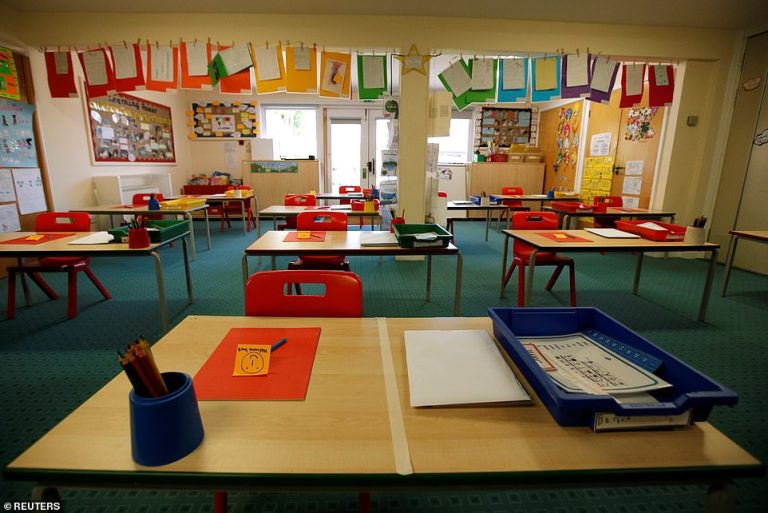
Campaigner Christine Brett, who has two children, said: ‘These are healthy children who have been quarantined for 12 weeks – they shouldn’t be treated like they’re germs, disinfected on entry and separated on to individual tables.’ 

‘Us and Them’ campaign group founders Molly Kingsley, 41, Liz Morris, 46, and Mrs Brett, 48, all from Cambridgeshire, have one child each returning to school and another still stuck at home.

They claim ‘overwhelming evidence’ that lockdown is having a devastating impact on children’s wellbeing may have been overlooked. They also fear draconian social distancing rules, planned for when schools return, could cause long-term mental damage to children.

Schools are set to return today for the first time since March 20 – after being closed down because of the coronavirus – but an estimated one million of the two million children eligible to return are expected to stay away from this morning and parents who shun open schools will not face any fines.

Ministers are trying to reassure parents it is safe. The majority of primaries are expected to open to reception, year 1 and year 6 from today, despite fierce opposition from the National Education Union. At the 11th hour, the union again attempted to scupper openings, claiming they should be delayed until June 15 to protect youngsters and teachers.

Some councils, many of them Labour-run, have also blocked re-opening for now.

The three mothers launched the ‘Us for Them’ campaign on behalf of parents who say they were made to feel like pariahs by admitting they disagreed with children being kept at home because of Covid-19.

The wellbeing of children must be taken into account in the government’s decision-making, they say.

The scientific advisory group, known as Sage, said the risk of children catching the virus while back at school was ‘very, very small, but it is not zero’. It also found there was not a higher risk to teachers of being infected compared to other adults going back to work.

The mothers’ group, which was formed when they met online, is also arguing against extreme social distancing rules, such as toddlers being banned from playing with soft toys, which could be implemented when children return.

Such measures may contravene the UN Convention on the Rights of the Child (UNCRC), which states the best interests of the child must be the primary consideration, they say.

Almost 2,000 parents and teachers who previously feared speaking out in support of a return have rallied behind the campaign.

Many parents are now too scared to admit they want to send their children back to school after unions opposed the reopening of classrooms next week, according to Mrs Kingsley.

The group has been ‘deluged’ with messages from parents, teachers, and even psychologists thanking them for their bravery in starting the campaign, she said.

The former lawyer, who has two daughters aged three and six, said: ‘We’ve had so many private messages of support – from parents who have felt unable to speak out on their school WhatsApp groups or Facebook groups for fear of a backlash.’ 

The lobbying group has written an open letter to the Education Secretary asking to know what investigations were done into the impact on children’s mental and physical welfare when guidance was drawn up.

They also ask why views of parents and experts on children’s welfare appear not to have been considered.

The letter adds: ‘We absolutely recognise the challenges for Government at this time but your policies cannot – morally or legally – subordinate the welfare of children to other interests.’ 

They have instructed a team of lawyers – including a leading human rights QC – to examine whether the government’s actions so far and the distancing proposals may have been unlawful.

Mrs Kingsley said: ‘If it transpires that the Government has failed to take into account the welfare of children, as a primary consideration, we are prepared to take legal action.’ 

Mrs Brett, a health economist, said: ‘The unions represent the best interests of the teachers, and that’s their job, but who’s representing the best interests of the children?

‘The risk of transmission between children is minimal, according to the experts, whereas the risk of the damage to their wellbeing is high.

‘Parents have very much been led and frightened by the risk of the virus. But this fear is stopping them from being rational about what this is going to look like for their children going back to school.

‘These are healthy children who have been quarantined for 12 weeks – they shouldn’t be treated like they’re germs, disinfected on entry and separated on to individual tables.

‘Most of us would see that as a punishment, but they haven’t done anything wrong. How is that going to make them feel?,’ she added.

Mrs Brett is also a children’s yoga teacher.

The mums regard the social distancing rules, planned for when schools and nurseries re-open, as draconian.

Mrs Brett said: ‘Children are social beings and it’s really worrying that instead of going back to a supportive environment where they can actually recover from what’s happened, they’re going to be further damaged.’

A Department for Education spokesperson said: ‘Throughout the COVID-19 pandemic our decisions have been based on the best scientific and medical advice, with the welfare of children and staff at the heart of all considerations.

‘We have placed significant emphasis on mental health and wellbeing in our planning framework for the wider opening of schools, and have provided advice for parents and carers on looking after children’s mental health during the outbreak.

‘We have also provided over £100 million to boost remote education, including providing devices to those children who need it most while working with partners to look at what additional measures may be required to ensure every child has the support they need to deal with the impact of coronavirus on their education.’

(Source: The Daily Mail/UK)
University of Venda Launches Voices Unite Project for Students and Youth Digital Active Citizenry

NYAKALLO TEFU

 THE UNIVERSITY of Venda has joined forces with In On Africa United (IOA) in the creation of a digital platform called Voices Unite, a ground-breaking student engagement platform and national research study focusing on young people in South Africa. It is a project of “In On Africa (IOA) Proprietary Limited” and was initiated in response to the need for youth to become more empowered in decision-making for a better tomorrow.

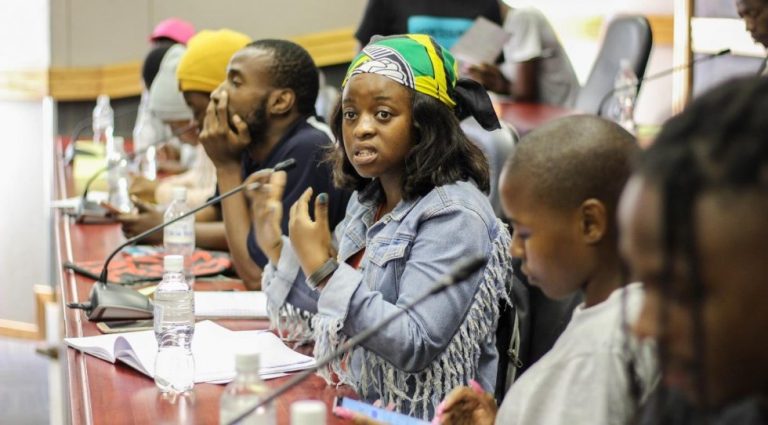
A group of delegates from Voices Unite visited the University of Venda to introduce students to this digital platform, where they can share their views and ideas about priority topics that could influence policy and decision-making at institutional, cooperate, non-profit and governmental levels.

The Voices Unite team was led by the CEO of In On Africa who visited the University of Venda to introduce the project to students. The Voices Unite is a digital platform for young people to share their views and ideas about priority topics that could influence policy and decision-making at institutional, cooperate, non-profit and governmental levels.

The platform would be the largest youth-focused digital research survey targeting youth from ages 18-34.

The collaboration will allow universities to have access to student’s perceptions and views that could influence decision making.

The presentation was followed by interactive session with students. Students shared their views on the presentation and the Voices Unite initiative, while facilitating decision to evidence-based interventions and ensure that students converse their needs better.

In a statement, the university says Voices Unite was initiated in response to the need for youth to become more empowered in decision-making for a better tomorrow.

“It is anticipated that the platform will address key challenges faced by youth such as unemployment, state of education and social issues and bringing transformation”, said the University in a statement.

The University together with Nobuhle Hlangoti (Head of Voices Unite) and Elizabeth Chinanga (Head of Partnership) hosted a group of students to test the digital platform.

Students shared their views on the presentation and the Voices Unite initiative, while facilitating decision to evidence-based interventions and ensure that students converse their needs better.

The University says the platform is set to reach 2+ million post-school students including a minimum sub-sample of 1000 unemployed youth.

(Compiled by Inside Education staff)

Elite Boys’ Schools Still Shape South Africa’s National Cricket Team

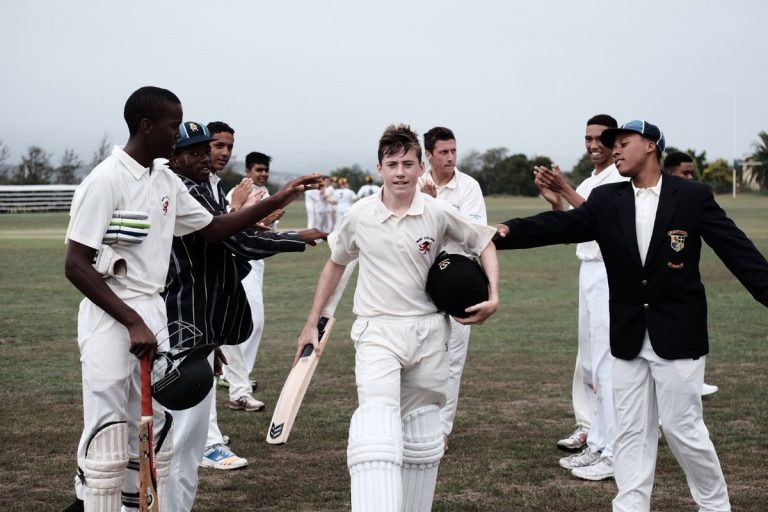
TO MAINTAIN a strong national cricket side, the building blocks have to be laid at school level to meet the required standards when schoolboy cricket players develop and transcend to provincial and national levels. In South Africa, the legacy of apartheid segregation is still prevalent in many sports. Race, class and the historical neglect of black schools continues to play a part.

It’s in this context that I conducted research into how many of South Africa’s national men’s cricketers attended boys-only schools. There are very few boys-only schools in South African townships (rural or lower-income areas in South Africa). And many public (government) boys-only schools are regarded as elite.

The question I set out to address was whether these elite schools were incidental to the players’ success, or a significant contributing factor.

It was necessary to go back to the dawn of democracy in the country and to investigate the feeder system of South African cricket – school level cricket – to test whether male cricketers have a better opportunity to play for South Africa if they attended a private or boys-only school. I included those who had played in tests, one-day internationals (ODIs) and T20 matches.

The study found that a very high number – 65% of the 119 players who represented South Africa at world cups between 1992 and 2019 – came from boys-only schools. And 24 out of 26 of the captains of the national schools side attended boys-only schools.

All of the black African cricketers who have played for South Africa came through the boys-only schooling system – whether state-run or private.

Promising black South African cricketers are placed in schools that were exclusively white under apartheid. The legacy of privilege in these institutions remains, giving young players access to the finest training and facilities.

South Africa’s national cricketers come from fewer than 50 schools, out of approximately 6,000 high schools in the country. This means that thousands of schools are unable to produce cricket stars on a similar level. The reasons aren’t hard to find, and include the absence of basic infrastructure – such as toilets and running water – as well as facilities for sport. There are few coaches and there’s no enduring sporting culture.

What the big match selections tell us

Out of the 119 cricket players who represented South Africa at world cups between 1992 and 2019, 78 attended a boys-only school, which is 65% of the group. Similarly, 61.4% of South African test cricket players in that period had attended a boys-only school. In ODI cricket, it comes in at 59%.

In T20 cricket between 2005 and 2019, 53.7% attended a boys-only school, against 46.3% who attended co-ed public schools.

Between 1994 and 2019, 24 out of 26 captains of the national schools side attended boys-only schools. This suggests that co-ed public schools have not been the optimal or preferred feeder system to produce South African school cricket captains.

The table below outlines the number of players in each category that have played for South Africa in tests, ODIs, ODI world cups, T20s as well as South African Schools cricket. This study has allocated school categories to 461 players (including duplicate players who also played for South Africa in more than one match format). Boys-only schools are the most common and significant (273 out of the 461 players) compared to the other categories.

The country’s top batsmen came – overwhelmingly – from boys-only schools. In the case of bowlers, a number came from co-ed schools, although stars such as Kagiso Rabada and Lungi Ngidi attended boys-only schools.

To sum it all up

The study shows that boys-only schools are a key contributing factor to playing men’s cricket at the highest level in South Africa.

Other factors at play include individual talent, the number of pupils in a school and coaching standards. Given South Africa’s history, race and class play a role. Not one player from a rural or township area went on to play for South Africa (unless they were migrated into a boys-only or private school from grade 8 onwards).

The research shows that elite, boys-only schools remain the preferred and optimal feeder system to cricket being played at the highest level in South Africa. These schools seem to be keeping South African youth cricket intact.

Unless the race and class imbalances are addressed, minimal change will occur. This, in turn, will continue to undermine South Africa’s transformation agenda and its goal to include a number of players of colour in a national team.

The study shows how a privileged schooling environment in early life, particularly in boys-only schools, can make the difference in a sustainable cricketing career. Studies such as these should inform the strategies that could be implemented by South African cricket development to identify and nurture talented players

(Source: The Conversation and was written by Habib Noorbhai Senior Lecturer & Sports Scientist, University of Johannesburg)

Our Teacher Of The Week Is Ian Luke Le Roux From Emil Weder Secondary School, Western Cape

CLASSROOM MANAGEMENT

Teacher of the Week

TEACHER: Ian Luke Le Roux

SCHOOL: Emil Wider Senior Secondary School, Genadendal, Western Cape

Ian Luke Le Roux decided from an early age to excel academically to escape the trappings of an underprivileged background. He chose teaching as a career to assist those who came from similar circumstances.  

Le Roux, a teacher from Emil Weder Senior Secondary, Western Cape says he chose teaching to inspire, motivate and to create critical thinkers who, despite their circumstances or geographical location, believe in their abilities and strive to learn.

For him there is nothing more rewarding than seeing previously struggling learners prosper.

The area he comes from is faced with various socio-economic issues such as substance abuse, high rate of teenage pregnancy, insufficient nutrition, learners who suffer from a poor self-esteem that result in poor results. These societal challenges have a ripple effect on the learners’ academic achievements as well as their personal development.

To mitigate these challenges, Le Roux approaches the learners in a holistic manner by first trying to break down the barriers creating the low self-esteem, and then gradually exposing them to short term success.

He sees a better South Africa through the perseverance and small role he is playing.

Through the values that were instilled by his parents and his optimistic outlook on life, he has managed to set high standards expects the same from the learners.

(Compiled by Inside Education staff)

No School Should Re-open Until All Necessary Precautions Are In Place – Ramaphosa

CYRIL RAMAPHOSA

After 65 days of a nation-wide lockdown, the country is today starting a new phase in its fight against the coronavirus. Many economic and social activities are restarting, including a phased resumption of schooling.

We have said that we are taking a gradual approach, guided by the advice of our scientists and led by the realities on the ground and consultations with stakeholders.

In the last few weeks, as we have prepared to return to school, we have had extensive and detailed discussions with all role-players in the education sphere. These have guided our approach to this complex and challenging task

 
Now, in the last few days, several of these stakeholders – including teachers and parents – have expressed concern about the state of readiness in many schools. We have heard them, we welcome their contributions and are taking steps to address their concerns as well as proposals.
 
It is understandable that many parents and caregivers have mixed emotions at this time about the reopening of schools. There is relief that children will be able to resume their education after a prolonged absence from classrooms and lecture halls. Young people are eager to be in school again and to see friends and teachers.
 
But there is also apprehension on the part of parents, educators and learners themselves.
 
Parents want reassurance that the necessary precautions should be in place to adequately protect learners. The safety of our youngest citizens from a health and physical perspective is not negotiable. It is our foremost priority.
 
As we prepare for the gradual re-opening of our schools and places of higher learning, education authorities have been hard at work putting the necessary health and safety measures in place. That documentation regarding standard operating procedures have been provided to all schools. These standard operating procedures cover issues like training and orientation of screeners, timetable realignment and configuring classrooms to meet social distancing requirements.
 
We are continuing with the process of delivering personal protective equipment and ensuring the availability of water and sanitation services. Learning, once it commences, will take place under strict conditions with a correctly limited number of learners and students.
 
As parents, teachers, governing bodies and government, we are in agreement that no school should re-open until all the necessary precautions are in place. There needs to be transparency about the level of preparedness of each of the schools. Everyone who is a key role player, be they a parent, a school governing body member, a teacher or a government official should be able to have the correct information about the state of preparedness of each school. It is our collective responsibility to ensure that the learning environment is safe.
 
I want to salute parents and caregivers, in particular, for the role they have played over the last two months. With schools closed, they have had to take greater daily responsibility for the education and development of their children. Many parents and caregivers have had to assist learners with their schoolwork at home, no doubt gaining a keen appreciation of the hard work being done by our teachers every day.

Once the lockdown is lifted and more learners return to school, we parents should continue to play a more active role in the education of our children, whether it is through joining school governing bodies, volunteering our services at schools or other forms of assistance. Parents can join in volunteering to clean schools, establishing vegetable gardens or being part of neighbourhood school safety committees. This can turn the schools into real, meaningful “community schools”.
 
Though we may feel anxious and fearful as our sons and daughters leave our care, we must draw courage from the fact that every effort is being made to protect them.
 
As parents, you have entrusted us with the welfare and safety of your children. It is a responsibility we do not take lightly. In the days and weeks to come, we will be closely monitoring the return to school.
 
If we follow the protocols and maintain all precautions – as parents, educators, communities and learners – we will effectively minimise the risk posed by the coronavirus.
 
Ultimately it is both our personal actions and our collective efforts that will keep our children safe. Whatever we do next, we need to do together.

(This is an edited version of President Cyril Ramaphosa’s column)

Schools Reopening Chaos and Rancour As Motshekga Opts For Postponement

CHARLES MOLELE

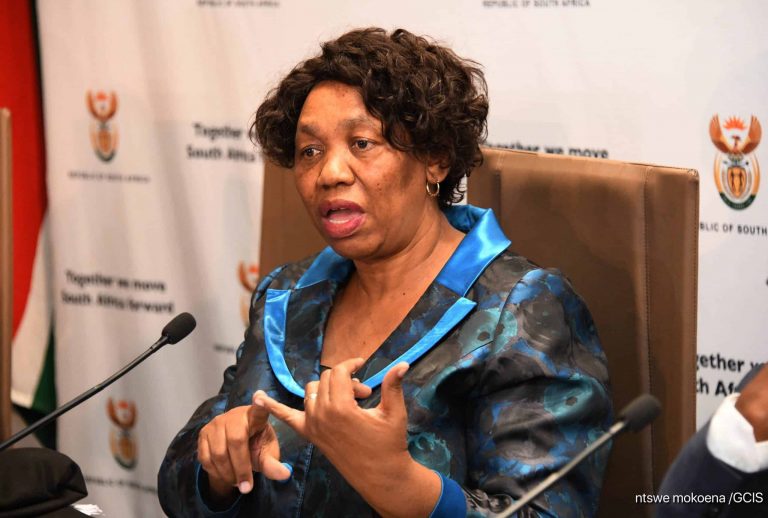
BASIC EDUCATION Minister Angie Motshekga’s controversial plan to reopen schools on Monday for Grade 7 and Grade 12 learners has tumbled into chaos and rancour after her department’s decision to postpone the reopening to June 8 amid growing concerns by teacher unions, parents and civil society organizations.

The postponement of the reopening of schools follows meetings with the Council of Education Minister (CEM) on Saturday to assess the state of readiness for the reopening of schools, where the Heads of Education Departments Committee (HEDCOM) also presented its technical report.

The CEM also received a report from the Consortium of service providers coordinated by the National Education Collaboration Trust on the External Evaluation and Monitoring of the state of readiness.

The Rand Water, as an Implementing Agent delivering water to 3,500 schools, also presented its report.

“All three reports converged on the fact that a substantial number of schools would not be ready for the reopening tomorrow (Monday, 1 June), albeit tremendous progress had been made by most provinces, which overall reflected 80% state of readiness,” the department said on Sunday.

“CEM was concerned that, in some provinces personal protective equipment for learners in particular, had not been received; and some schools had not been made ready for the arrival of teachers and learners.”


The date on which all learners have to report back to school, is the 08 June 2020, said the department.

“The CEM then took decisions, which have since been shared with teacher unions, school governing body associations, independent schools’ associations, the SA Human Rights Commission, Principals Association, South African National Association for Specialized Education, and other stakeholders,” it said in a statement. 

“Meetings have taken place, since yesterday and today, in which we shared the outcome of the reports and the proposed course of action. CEM took informed decisions to have schools to continue to reopen on 01 June 2020, but with School Management Teams, Teachers and Non-Teaching Staff only arriving to prepare for the arrival of learners.” 

The department said provincial and district officials should ensure that health, safety, and social distancing requirements, are strictly adhered to when teachers arrive. 

It also said this whole coming week must be used for the proper orientation and training of teachers, the mopping and ramping of all supply chain matters, and final touches to the readiness of each facility for the arrival of learners.

“We have however received reports that indicate that some learners in boarding schools have already arrived,” said the department.

“We urge the schools to continue with orientation of the learners in terms of the health and safety procedures that should be in place. The Department held meetings with the association representing independent schools yesterday and today and it was agreed on how they should proceed regarding the reopening of their schools.”

Motshekga’s phased reopening plan of schools lacks the support of teacher unions, parents, school governing bodies (SGBs) and civil society organizations to reopen classrooms due to her department’s failure to deliver non-negotiables on time.

According to teacher unions, these non-negotiables included among others, the fumigation and disinfection of schools, proper school infrastructure in the form of proper toilet facilities, observance of social distancing inside the classrooms and on court yards, reduction of class sizes, provision of soap, sanitizers and masks, screening of learners, teachers and support personnel, and social distancing in the transportation of learners to and from schools.

(Compiled by Inside Education staff)

Unions Tell Teachers To Defy Basic Education, Stay Away From School On June 1

SOUTH AFRICAN teachers’ unions and governing associations urged their staff on Friday to defy a government order to return to school next week, saying schools did not yet have protective equipment (PPE) to keep educators and pupils safe.

Africa’s most industrialised state will re-open its economy on June 1, after two months of lockdown that deepened a recession and left millions jobless. President Cyril Ramaphosa imposed it to prevent a COVID-19 epidemic on the kind of scale that has devastated Western nations.

The country has more than 27,000 confirmed cases but only 577 deaths from COVID-19, the respiratory disease caused by the new coronavirus.

Basic Education Minister Angie Motshekga said last week schools would re-open, but only for grades 7 and 12, the last years of primary and secondary school, respectively.

“The education system … is not ready for the re-opening of schools. If the PPE (protective equipment such as masks and hand sanitiser) have not been delivered by now, chances are slim that all schools will have them on Monday,” the joint statement said.

“We therefore call on all schools … not to re-open until the non-negotiables have been delivered.”

Motshekga has urged the teachers unions not to obstruct those who want to go back to school.

On Monday, South Africa’s economy will mostly return to full capacity, as it moves to “level three” lockdown, lifting a curfew, a restriction on outdoor exercise and a ban on alcohol sales, and partly reopening schools.

Many of South Africa’s government schools are in poor shape, especially in rural areas, and analysts say a quarter of them have no running water – making hand-washing nearly impossible.

South Africa’s state-run Human Rights Commission on Friday also urged the government to reconsider its decision to start opening schools until they are better prepared.

(News Agencies)

South Africa Has Virus Testing Backlog Of Nearly 100, 000

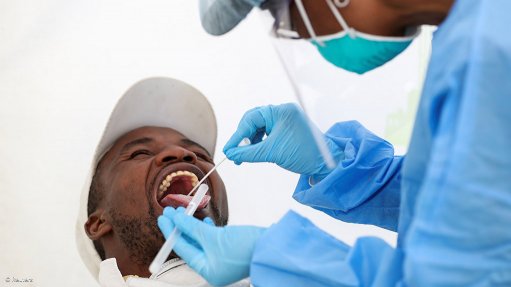
SOUTH AFRICA says it has a backlog of nearly 100,000 unprocessed tests for the coronavirus, a striking example of the painful shortage of testing kits and reagents across Africa as cases steadily rise.

“This challenge is caused by the limited availability of test kits globally,” the health ministry said in a statement overnight, putting the backlog at 96,480 as of Monday. Priority is given to processing tests from patients admitted to hospitals and health workers, it said.

South Africa has conducted more tests for the virus than any other country in Africa – more than 655,000 – and has the most confirmed cases with 27,403.

One of the latest to die of COVID-19 in South Africa was a National Health Laboratory Services employee. “We understand this tragedy will certainly test you,” the ministry said in a message to her colleagues, adding that the government is committed to providing proper protective gear.

That, too, faces shortages across Africa. More than 3,400 health workers on the continent had been infected as of a week ago, according to the World Health Organization.

The shortages, especially in testing materials, have jolted African authorities into facing uncomfortable truths: Richer countries are elbowing them out in the race to obtain crucial supplies, and the continent relies almost entirely on imports for drugs and other medical items.

“We have to have Made in Africa products,” the director of the Africa Centers for Disease Control and Prevention, John Nkengasong, told reporters Thursday. “We cannot keep importing basic things.”

He and others, including the WHO’s Ethiopian director-general, have raised the cry for fair access, including for any vaccine or treatment that emerges.

“Dozens of countries have imposed export controls on medical supplies and equipment,” scores of South African and other health and activist groups said in an open letter to Group of 20 leaders last month.

Complicating matters are global powers like the United States and China promoting aid to African countries during the pandemic as part of efforts to win support on the continent. But that aid doesn’t always show up.

President Trump on May 21 said “we just sent 1,000” ventilators to Nigeria, but the country’s information minister, Lai Mohammed, told reporters Thursday that “to the best of my knowledge they have not arrived. When they do arrive, it will be made public.”

But the testing shortages are especially frustrating for African health officials, who have been praised for swiftly expanding testing capability for the virus continentwide, from just two countries in February.

“Low levels of testing might be artificially lowering apparent infection rates,” The Lancet said in a new editorial noting Africa’s quick response but also the challenges that lie ahead.

Across Africa slightly under 2 million tests for the virus have been conducted, Nkengasong said, far below the target of testing 13 million people – or 1 percent of the continent’s population of 1.3 billion.

Nigeria, Africa’s most populous country with some 200 million people, has one of the lowest coronavirus testing rates in the world with 286 tests per million people. More than 58,000 tests for the virus have been conducted, according to the country’s Center for Disease Control. Nearly 9,000 cases have been confirmed while worries grow about undetected spread of the virus in the north.

In Ethiopia, Africa’s second most populous country with some 110 million people, the health ministry says more than 96,000 tests have been conducted. More than 830 cases have been confirmed.

As of mid-May, Chad had carried out 105 tests per million people and Mali had tested just 173 per million, compared to some 38,000 tests per million in the United States, the International Rescue Committee said last week.

By the end of this week 2.5 million tests will have been distributed to Africa’s 54 countries, the Africa CDC’s Nkengasong said.

Despite the shortages, “I’m optimistic that in the next two to three weeks it will be very different,” he said, without giving details.

So far African nations have relied on tests donated by the Jack Ma Foundation, sourced via partners including the WHO and procured via a newly created platform that pools African countries’ purchasing efforts on the international market.

Meanwhile, efforts at domestic production of testing materials have begun in South Africa, Morocco, Senegal and Kenya, the Africa CDC has said, with plans to have those countries aid each other in evaluating the products.

“Africa is a continent that needs its own internal capacity to produce diagnostic kits,” South African Health Minister Zweli Mkhize told reporters on Thursday.

 “We need several millions of these kits.”

(Source: AP)

Teamwork Keeps Brazilian Children Learning During COVID-19

DENIS MIZNE

When COVID-19 forced school closures across Brazil, we quickly hit on four core priorities for our approach. For all of us around the world committed to education, it is good to take stock of these as we continue our responses, get ready for children’s return to school and plan for longer-term resilience:

  • Above all, we need to be collaborative. When aligned around shared priorities, strategy and division of labor, the work of the third sector, government, teachers and other players goes further, faster. It is also important to leverage news media as part of the partnership, making sure that information about resources for teaching and learning have a high profile.
  • We need to adjust the curriculum. In our response, we made it a priority to quickly trim down lessons. Content needs to be grounded in what can realistically be accomplished through distance learning. We can’t expect the complete curriculum to be covered. A revised curriculum should focus on the most critical elements for returning successfully to school.
  • We need a spectrum of delivery formats. We all know the Internet is a great way to teach. But we also know that its reach is limited. So, delivering lessons by broadcast and even print is critical. For our foundation, supporting broadcast initiatives has been a vital strategy. The crisis has taught us we need to do even more.
  • Consolidation of teaching and learning tools makes a difference. Just as we needed to respond quickly to the crisis, so did teachers and students. To do so, they had to find the right resources. Putting those resources all in one place made that easier and faster for them.

While there are many lessons to be learned and many factors that lead to success, these fundamentals helped us drive our response and will continue to do so. 

The learning crisis in Brazil

Almost 40 million children attend public schools in Brazil, an enrollment that is higher than the population of most of the world’s countries. Fully half already face learning poverty, which the World Bank defines as being unable to read and understand a simple text by age 10. Unsurprisingly, most of the kids that suffer from this learning crisis are from historically marginalized communities — Afro-Brazilians, indigenous, rural, and poor.

Like most countries across the world, ours is grappling with the unprecedented dilemma of millions of children suddenly out of school at one time.

While it’s urgent everywhere to keep students learning, the stakes are even higher in countries like Brazil, where extreme inequality reigns.

A unified, focused response

Since the first confirmed case of the coronavirus in Brazil on February 25, 2020, we in the third sector and our partners began huddling together to reduce the immense harm we feared it would cause. The Lemann Foundation, which has been working to guarantee quality public education in Brazil for almost two decades, was fortunate to have partnerships in place.

The consortium has launched a variety of free high-quality learning and teaching tools:

  • Aprendendo Sempre (Always Learning) is the one-stop portal that consolidates all the materials structured by the consortium. It offers access to high-quality educational resources that had been previously scattered across various platforms. Bringing them all together helped many respond more quickly, making this an important underlying investment. There is content for both teachers and students.
  • Focus map gives teachers and other content creators a refined set of priorities. When students are learning remotely, we know they are not getting a full education. So, Focus Map emphasizes the core learnings most essential to pave the way for a successful return to school. They were created by Reuna Institute, one of the Lemann Foundation’s grantees.
  • AprendiZap provides lesson plans, content, and exercises directly through the most popular app in Brazil, WhatsApp. Leveraging the free messaging service for remote learning was critical because it offers unlimited minutes. This factor was crucial because while most Brazilians have access to an Internet-connected device, they do not have unlimited data plans. More than 60,000 students have already learned through the platform.
  • YoutubeEdu is being used to push out weekly video playlists that adhere to Brazil’s National Learning Standards. Curation ensures that the learning materials are aligned with the national curriculum.
  • Support for teachers is being provided by Nova Escola, one of Lemann Foundation grantees, through a partnership with Facebook. More than two million educators across Brazil now have access to free continuing education to help them leverage digital tools required for remote learning.

(The CEO of Lemann Foundation, Denis Mizne is a member of GPE’s External Experts Group for the development of GPE’s new Strategic Plan 2021-2025.)

Unions Call On KZN Teachers Not To Go Back To School Yet

NYAKALLO TEFU

TEACHER unions announced on Friday that schools in KwaZulu Natal were not ready to receive teachers and learners under the COVID-19 related protocols.  

In a joint statement, the South African Democratic Teachers Union (SADTU), National Teachers Union (NATU), National Professional Teachers’ Organization of South Africa (NAPTOSA), South African Teachers Union (SAOU) and Professional Educators Union (PEU) said they were disappointed with the management of the closures and the re-opening of schools in KwaZulu Natal.

“The Department in the province (KZN) has failed to show leadership nor give guidance to their employees during this particularly trying time. Employees in the sector have been left to their own devices and received no support from the Department”, said the unions.

Teachers in the province were set to return on Thursday May 28, however, the unions advised its members not to return.

“We advise our members in the Province NOT to report to schools on 28 May 2020 because schools are not ready to receive them under the COVID-19 related protocols”, said the unions.

Unions said the department has not been communicating with its members appropriately and therefore cannot expect them to return to schools without the correct information.

“We must be consistent, education in this Province will commence when all schools are ready to receive learners and teachers safely,” said the unions.

Schools across the country have been hard at work as learners and teachers are expected to return to school on Monday, however, on Thursday Basic Education Minister Angie Motshekga announced that schools can take an extra week if they are not ready by Monday.

“I am not expecting delays of three months, I am expecting of only a week,” said Motshekga.

The unions said few water tanks delivered in the poor and rural schools were not installed for use hence no water could be loaded adding that some thermometers delivered of poor quality and cannot be utilized as they do not have batteries.

“There is no uniformity and no explanation about what is given to schools. This represents the disdain with which the department has elected to treat some of our schools,” said the unions