Home Blog Page 411

In Healthcare Work, African Immigrants Feel Brunt Of COVID-19

JOEY PETERS

IT STARTED a month ago for Lenis Oenga with coughing and wheezing. Oenga, who works as a licensed practical nurse at an assisted living center in Elk River, knew she had been exposed to COVID-19 after tending to two residents earlier in the week who were infected with the disease.

After the coughing and wheezing came a high fever, and then body aches. One morning as Oenga rose, she realized she couldn’t smell the soap she used to wash her hands or taste the toothpaste she used to brush her teeth. Just to make sure she lost her senses of smell and taste, Oenga chewed on garlic. Nothing. 

At her worst, about one week into experiencing symptoms and a few days after testing positive for COVID-19, Oenga was coughing so hard and so frequently that she could not talk to her husband, who was caring for her, or her three daughters, with whom she spoke using Facetime to avoid infecting them. One day, she was so weak she passed out three times while trying to use the bathroom. 

“The first time I passed out, I got up to go to the bathroom and then I fell on the bedroom floor,” Oenga said.

“My husband came and helped me; put me on the bed.”

After an hour, she sat up on her bed. “Just from a lying position to a sitting position, I passed out again.”  She made it to the bathroom the third time, but passed out after she got there. 

In the past two months, COVID-19 has ravaged Minnesota’s long-term care facilities, particularly in the Twin Cities, accounting for some 80 percent of statewide deaths related to the virus, according to state numbers. 

While much public attention has been focused on residents — many of them elderly and with existing conditions that put them at high risk — less has been paid to the workers who spend their days attending them. Like Oenga, who is originally from Kenya, many of these workers on the frontlines of long-term care centers in the Twin Cities are African immigrants. 

It’s a point that Lyna Nyamwaya, a nurse until recently, said she has stressed in recent talks with public officials. Nyamwaya is president of the African Nurses Network, which she founded in 2016 to raise the visibility of the state’s African immigrants health care workers. The group includes about 200 local African immigrant healthcare workers among its membership. 

“My concern is, yes, we care about the residents,” Nyamwaya, who is originally from Kenya, said. “But who’s speaking for the caregivers?” 

They’re getting sick, too. Earlier this month, Minnesota Health Commissioner Jan Malcolm cited statistics indicating that while black congregate health care workers make 19 percent of the industry’s workforce in Minnesota, they account for 43 percent of that workforce infected with the virus—the highest of any racial group. By contrast, white congregate care workers made up 74 percent of the workforce, but just 38 percent of workers infected with the virus.

Many of these black workers, Malcolm said, are African immigrants.

Nyamwaya said the state’s numbers reflect the reality on the ground. They include workers in recent COVID-19 hotspots like St. Therese of New Hope, where more than 50 residents have died, and North Ridge Health and Rehab, where more than 40 residents have died.

Nyamwaya said she knows at least 10 African immigrant nursing assistants who’ve gotten sick with COVID-19; Oenga said she knows at least 15 African immigrant friends who’ve been infected, including a resident at a long-term care center who died. Like the rest of the population, Nyamwaya and Oenga have heard of their friends’ symptoms ranging from nothing to severe. 

“They’re affected, they’re infected, they’re infecting their families,” Nyamwaya said of the healthcare workers. “Some have been hospitalized, some are recovering, some are sick as I speak with you.”

Before contracting the virus, Oenga, 38, said she had no preexisting health conditions that would make her more vulnerable to a severe infection. Now one month after first experiencing symptoms, Oenga is still bedridden but hopeful that the worst is behind her. 

On the Friday before Memorial Day, she felt good enough to go outside of the house briefly with her kids. “We kept our distance,” she said. “I had a mask on.” 

African immigrant care workers who spoke with Sahan Journal cite various reasons why so many are getting sick. Many African immigrants work on the frontlines, directly caring for patients and residents, which increases the danger they’ll be exposed. Many also work more than one job and transfer shifts from one care facility to the next, sometimes during the same day. Some have obligations to support extended families in their home countries and don’t have paid sick days.

Edwin Bogonko, a doctor of internal medicine at St. Francis Regional Medical Center in Shakopee, said healthcare jobs like nursing assistants, residential nurses and LPNs appeal to African immigrants because they often already have experience working in healthcare, and there’s an existing community of immigrants working in the field here.

Nursing assistant positions are the most entry-level, averaging $32,000 a year in the state, according to the federal Bureau of Labor Statistics. LPN salaries average $45,000 while RNs average $78,000. 

“People tend to gravitate to careers where they feel accepted and accommodated,” said Bogonko, who also is originally from Kenya. 

They’re also often breadwinners, for not just their immediate family, but also extended family. Oenga, for example, said she’s supporting her father, who lives in Kenya and is pushing 90. Bogonko said situations like these are common.

“There is a lot of financial pressure as a person who has managed to get out of the environment of very little,” Bogonko said. “What this translates to is a tendency for a lot of immigrants to work nonstop.”

This situation can push African immigrants to work multiple jobs in multiple long-term care centers. In the age of COVID-19, this translates to a higher risk of being infected with and spreading the virus “not because of a fault of [their] own, but because of survival,” Bogonko said.

“What ends up happening is, a lot of them are trying to make ends meet, they work in multiple places, in the process they not only multiply the risks to themselves, but they also multiply the risk of passing COVID-19 specifically from one setting to another,” he said.

It’s also common for both wage-earners in a family to work in healthcare. Oenga’s husband is a nurse at a local hospital and cares directly for COVID-19 patients.

Oenga said her husband took two and a half weeks off of work to care for her when the virus was at its worst. He periodically brought in food for her and checked on her, all the while wearing an N95 mask and doing his best to protect himself. Oenga got paid sick leave for two-and-a-half weeks; she said her husband did not receive paid leave for his time helping her.

So far, Oenga’s husband and three daughters, aged 7, 9 and 13, have been able to avoid getting sick, for which she’s thankful.

She recently celebrated the birthdays of her two oldest daughters over Facetime while being quarantined in her bedroom. “I can hear them in the house but I cannot see them,” she said. ‘It’s a hard one, but it could be worse.”

Other long-term care workers who spoke to Sahan Journal pointed to an initial lack of testing and personal protective equipment at nursing homes during the first month of the pandemic. In early May, Gov. Tim Walz announced a “five-point battle plan” to curb the virus at long-term care centers, including significantly increased testing of residents and care workers for the virus and increased personal protective equipment. 

James, an African immigrant who works as a nursing supervisor at a Brooklyn Park facility, said his workplace employs many nurses on an on-call basis. These on-call nurses have a greater chance of infection, James said, because they can’t afford to take days off. He did not want his last name or the name of his workplace published for fear of retribution.

At James’ workplace, he said 30 percent of residents have been infected with the virus, but two-thirds of them have recovered.

“That’s very promising,” he said of the recovery rate. “The worry is, what’s next?” 

Nurses and workers at his facility are soon going to test for the virus as a part of the state’s five-point plan, he said. He’s worried that nurses may be afraid to get tested because they worry that testing positive will cause them to miss a paycheck.

“Many nursing home workers are asymptomatic carriers,” James said. “I’ve never had symptoms. I could be spreading it around and have no clue.” 

James said he sympathizes with employers who may worry that mass testing of their employees will leave their facilities understaffed. 

“You could understand why it’s going to be a disaster if all the nursing home employees are at home,” he said. “People could die from lack of care, not just coronavirus. It’s unfortunate, but that’s the reality.” 

Jamie Gulley, president of Services Employees International Union Healthcare Minnesota, which represents workers at nursing homes across the state, said his union did not yet have hard evidence as to why the virus was infecting black care workers so disproportionately. 

Gulley said the virus has so far affected fewer nursing homes outstate than in the Twin Cities metro area, where the workforce is more diverse. He also stressed that just 30 percent of nursing homes workforces in the state are unionized and argued they have less bargaining power to demand workplace safety. 

In a month or two, the virus may make its way across the state, Gulley said, and infection numbers might “even out” in rural areas. The current numbers might just be a “snapshot in time,” he said. 

However it plays out, Oenga is worried that African immigrants feeling the brunt of the disease will remain invisible through the crisis.

“Yes. I go to work, I get a check to pay my bills, but at the same time my heart is at peace knowing that I took care of these people,” she said. “But when we get sick … it feels like, apart from my husband and my kids, I’m fighting this all by myself.”

“We have our families, we have people we take care of, we take care of each other in the community, we put our lives at risk,” she said. “But to be honest with you, it’s like our efforts are not appreciated. I don’t think there’s anyone that is seeing us.”

(Source: SAHAN JOURNAL)
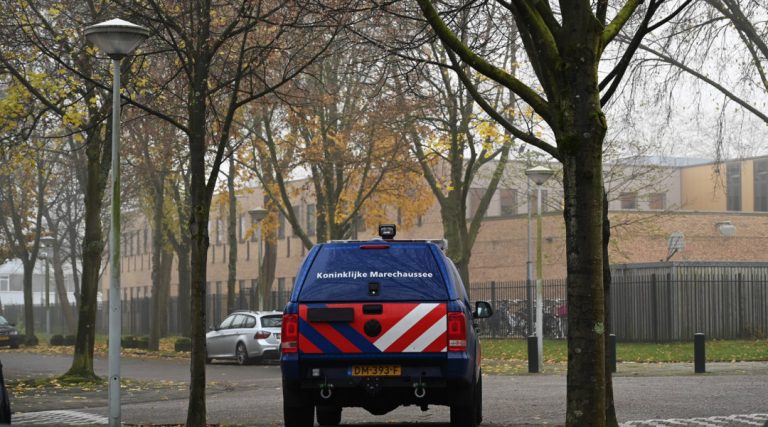
Jewish Schools Have Reopened In The Netherlands, But Some Worry That Their Security Is Compromised

THE DUTCH government’s decision to reopen the country’s schools came none too soon for Channa Feige, a mother of nine who teaches Torah at a Jewish elementary school here.

“It was very cozy and full of togetherness, but it was also tough,” Feige, 44, said of the two-month shutdown of schools in the Netherlands.

“It’s good to be returning to normal.”

The reopening this month — one of the first such moves by any European government – brought her relief from supervising her own children’s education under lockdown. It also let her return to her cherished colleagues at Cheider, a prestigious institution favored by the city’s most strictly observant Jews.

But the new normal at Jewish schools here is not what it was before the shutdown. Social distancing and other coronavirus protocols have introduced dramatic changes that are likely to recur elsewhere, including in the United States and United Kingdom, when Jewish schools reopen there. 

Furthermore, in Europe, where Jewish schools are guarded with thick gates and security guards, the new precautions being implemented in the Netherlands point to a new and specific problem: Should the buildings’ gates be left open in an effort to minimize COVID-19 exposure, or does that compromise security to a dangerous extent?

Big changes: Plastic protectors, fewer hours and more

At Cheider, whose elementary division reopened partially on May 11, teachers are now separated from students by plastic sheets that hang from the ceiling and divide the classrooms.

“It’s difficult, you can’t walk around and the pupils can’t show you their notebook, for example, unless they press it up to the sheet,” Feige said. “It’s almost unworkable.”

All of the Netherlands’ Jewish schools are located within the space of two blocks in Buitenveldert, a southern and leafy neighborhood of Amsterdam with large 1970s residential buildings that are sandwiched between the Amsterdam Woods and the Amstel Park.

This capital city’s two elementary schools — Cheider, which has 110 students, and Rosj Pina, with 270 students — have significantly slashed classroom hours for students. (The high school, Maimonides, has yet to reopen.) The cut, mandated by the Education Ministry, is designed to halve the number of students staying in one classroom at any given time in order to better observe social distancing and curb the spread of COVID-19.

Parents also are not allowed to enter schools. Instead, faculty members greet the younger students and escort them into the classroom.

At Rosj Pina, a time-slot system was required to coordinate parent and child traffic. But even at half capacity, pickup and drop-off times have had to be extended.

“When we looked at the space we have, we understood we needed to make changes to how children come in and leave,” said Jacqueline Brecher, the head of Rosj Pina. “There was just no way of keeping social distancing without those changes that take up a lot of time and effort.”

The security issue

Security around Rosj Pina has changed in several ways, including some the school has declined to discuss, citing the safety of its students and faculty.

In the days immediately after the reopening, Rosj Pina’s main gate, a fortified metal grill that is normally closed, was kept ajar, presumably so that its surfaces would not be touched. Cheider also opened its gates.

Following the change, the streets where the two schools are located were closed for traffic during pickups and drop-offs as guards secured the entrance.

Feige said she’s confident that the new security arrangements provide the necessary safety. But Herman Loonstein, Cheider’s board chairman, conceded that “the need to prevent infection has added a layer of complexity to the need to provide security to Jewish institutions.”

Robust security at schools and other Jewish institutions across Europe has been in place since a spate of terrorist attacks over the past couple of decades. In 2012, an Islamist killed four people — three children and a rabbi — at a Jewish school in Toulouse, France. Last year, police in Germany arrested an armed man whom witnesses said had tried to enter a synagogue in the city of Halle.

Kept at bay thanks to a newly installed reinforced door, he killed two people at a nearby kebab restaurant.

Ophir Revach, the CEO of the European Jewish Congress’ Security and Crisis Center, wasn’t thrilled to hear of the change in the portal policy of Amsterdam’s Jewish schools.

“I don’t know the specifics in Amsterdam but to us, an open gate, an open door, that’s not an option,” he said.

This tension is manifesting itself elsewhere in Europe, too. In Italy, the government allowed synagogues to reopen on the condition that they keep their doors open to improve airflow, said Milo Hasbani, the president of the Jewish Community of Milan. 

“For us, this is a problem,” he said.

In Amsterdam, the changes in security arrangements haven’t been convenient for teachers, parents and the neighborhood’s residents, but they work, Brecher said. 

“Right now, as things stand, I feel we can provide a safe environment,” she said.

Brecher, who has worked as Rosj Pina’s director for a year and a half, is worried about the Dutch government’s decision to bring schools back — including the Jewish ones, which are public but mostly run by Jewish community members — to normal capacity on June 8.

“I feel less comfortable about the return to full capacity because we don’t have a lot of information on what this means in terms of risks,” she said. “But we’re preparing for it nonetheless.”

The emotions of returning

Children at Rosj Pina are still getting used to their return to school, Brecher said.

“They were kind of timid and quiet in the first week back, which is pretty unusual for our kids,” she said. “Now they’re already beginning to act more lively, but there’s some adjusting to the insecurity around the whole situation.”

All of the Netherlands’ schools began giving interactive online lessons on Zoom and Microsoft Teams within days of the shutdown, lending out tablets and laptops to families that needed them. Outside the Jewish education system, many other schools in the Netherlands took two to three weeks to produce short, non-interactive videos for homebound students.

All parent-teacher meetings, teacher staff meetings and some classes continue to take place online at Dutch schools to reduce the chances of infection.

“Our kids didn’t have the attention span to sit through all the virtual classes that Rosj Pina offered,” said Ruti Dankner, a mother of two elementary-age children from Israel who settled in the Netherlands two years ago. “We gave them a pass on some stuff.”

Her 9-year-old daughter, Dorit, said she’s fine with her part-time attendance at Rosj Pina.

“I wanted school to begin because I missed my friends. It’s great that it’s back,” she said. “But there’s no need for more hours at school. The way it is works great for me.”

(Source: Jewish Telegraphic Agency)

Motshekga: Northern Cape Schools To Get Extra Week To Prepare For Reopening on June 8

NYAKALLO TEFU

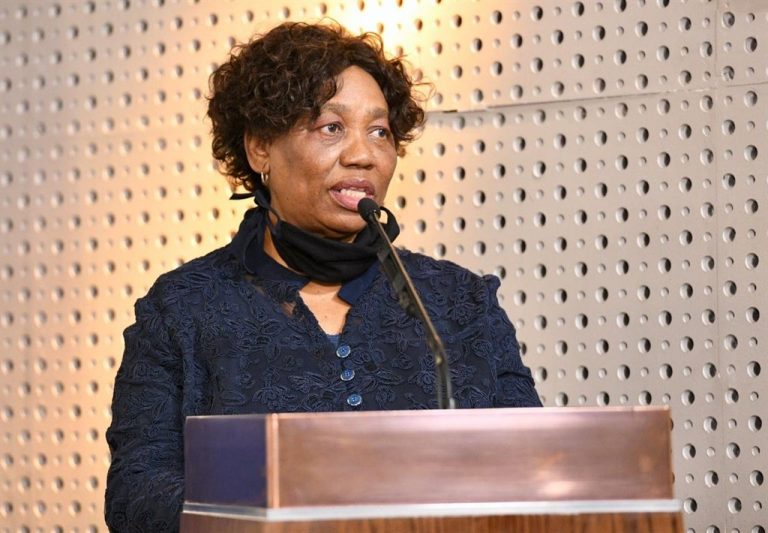
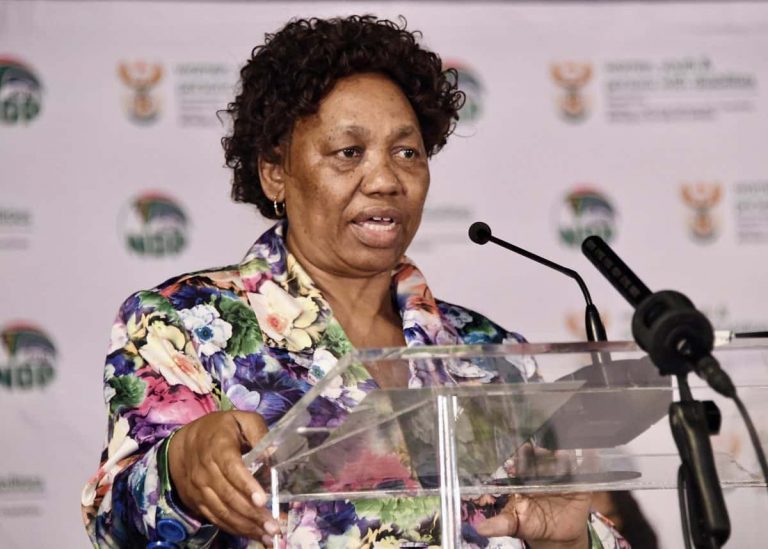
BASIC EDUCATION Minister Angie Motshekga said on Thursday schools which are not ready to reopen by June 1 have been given another extra week to prepare. Schools are expected to reopen in a phased approach from June 1, starting with Grade 7 and Grade 12 learners.

“I am not expecting delays of three months. I am expecting of only a week”, said Motshekga.

Motshekga said provinces like the Northern Cape have reported that some of their Personal Protective Equipment (PPE) will not arrive on June 1 and have therefore asked to reopen on 8 June 2020.

Some schools in the Northern Cape still do not have water taps and those that were reported, were not replaced. In the John Taolo Gaetsewe District, of the 173 schools, about 30 were vandalised and no repairs have taken place.

According to teacher unions and civil society organizations, about 3 500 schools countrywide still have no adequate water.

“They have asked for a week and that is okay as long as they make up for lost time”, said Motshekga.

She said her first priority is the safety of learners and teachers.

 “Schools have indicated that the first day of school for learners will be used to ease them back into a school day, which will include an induction, however no teaching will take place”, said Motshekga.

Motshekga visited several schools in Gauteng on Thursday to check the state of readiness for the schools to reopen on 1 June.

“I am comfortable that the countdown is happening and that there is action towards the reopening of schools”, said Motshekga.  

Motshekga said the schools she visited on Thursday are ready to start with the academic calendar on Monday.

During the National Assembly’s first hybrid sitting on Wednesday, Motshekga said she understands parents are anxious but said no one will be forced to go to school, but “your anxiety should not prevent other parents’ children” from going to school.

She said her department’s first priority is that schools do not become centres of COVID-19 infections, therefore there are strict protocols and no school will operate if all is not in place.

“PPEs will be provided to all learners and educators as soon as schools are open as all procurement took place in every province, however the costs will be known by provinces and not the national department,” said Motshekga.

#NOTINMYNAMESA Calls On Angie Motshekga To Halt Her ‘Reckless’ Plans To Reopen Schools Or Face Legal Action

NYAKALLO TEFU

THE SOCIAL justice movement Not In My Name South Africa (NIMNSA) has threatened to take Basic Education Minister Angie Motshekga to court if she goes ahead with her controversial plan to reopen schools on Monday next week.

The movement presented a memorandum of demands to the Department of Basic Education on Wednesday, subject to a response within a limited number of days.

It said failure to do comply with their demands to halt the reopening of schools will result in an unprecedented legal action supported by a coalition of student bodies and civil rights organizations.

 “Schools are designed to be highly interactive environments which mimic high risk activities” said NIMNSA.

NIMNSA argues that there is no scientific evidence to support the hasty decision taken by National Coronavirus Command Council to reopen schools on June 1.

“We are cognizant of the measures the department claims it has taken, some of which implicate them in corrupt PPE agreements, however we immensely believe that the department and the NCC are gambling with children’s lives”, said the group in a statement.

Last week, Motshekga announced that schools will reopen on June 1 in a phased approach where only Grades 7s and Grade 12s would be allowed to return for now.

“Reopening of schools is premature and done with haste considering that all credible indicators suggest that infections have not yet peaked, with over 22 000 cases and rising,” said NIMNSA.

This week, various provincial departments of education have been preparing for the reopening of schools, and receiving Personal Protective Equipment, masks and sanitizers.

Unfazed By Criticism From Teacher Unions, Motshekga Confirms Schools Were On Track To Begin Phased Reopening on June 1

NYAKALLO TEFU

Basic Education Minister Angie Motshekga notified the Council of Education Ministers on Monday that preparations for the reopening of schools on June 1 for Grade 7 and 12 were on track.

Motshekga said that this week would be dedicated to mopping up and finalizing all outstanding matters before learners return to school.

She said CEM has agreed that provinces should intensify the preparation towards 1 June reopening of schools.

“Having adopted the “just-in-time” approach, the focus would be to ensure that all health and safety requirements are prioritized,” she said.

These includes learner transport, water provision, basic hygiene and sanitation, psycho-social support and the recruitment and appointment of screeners and cleaners.

 Last week, CEM decided that School Management Teams (SMTs) and teachers would return to school as from May 25 to finalise preparations ahead of the school reopening on 1 June 2020 for Grade 7 and 12.

CEM noted that even though some schools had not yet received their safety material, progress in the cleaning of schools and deliveries of PPEs was taking place.

Provinces were continuing to send evidence of the work being done, according to the CEM.  

CEM agreed that by Thursday morning the final report would be received and would indicate further progress made and identify other challenges that needed attention.

However, on Monday, Inside Education reported that over 65% of teachers, including principals and school management teams, did not show up at schools on 25 May 2020, following calls by teachers’ unions to stay away over coronavirus fears and lack of personal protective equipment in provinces.

CEM has also agreed that by Thursday this week the final report would be received and would indicate further progress made and identify other challenges that needed attention.

While work is being done, the CEM said it was also disturbed by the vandalism which was continuing to happen across the country.

In KwaZulu-Natal two schools were broken into and the entire consignment was stolen.

In Soweto two people were allegedly killed by members of the community after attempting to break into a school where deliveries of COVID-19 essentials had just been made.

“We appeal to members of the community not to take the law into their own hands. Communities must protect schools against vandalism but must ensure at all times that violence does not occur.  We request that the community should rather work with the police to bring suspected perpetrators to justice, “said Motshekga.  

(Compiled by Inside Education staff)

NSFAS Students Urged To Use Allowances To Purchase Laptops – Parliament

THE select committee on education and technology has urged students who are receiving financial aid from the National Student Financial Aid and Scheme (NSFAS) to use their learning material allowances to buy electronic devices such as laptops and tablets.

“Many students, who still have not bought laptops must do so, especially those who have been paid the annual teaching assistance allowance of R5 200, to buy gadgets that will facilitate their learning during this challenging time,” said Elleck Nchabeleng, Chairperson of the Select Committee on Education and Technology, Sports, Arts and Culture.

Nchabeleng said the parliamentary committee is satisfied with the proficiency and efficiency with which the NSFAS administrator, Dr Randall Carolissen, has run the entity even during the COVID-19 distraction.


Nchabeleng added that the intervention would enhance the work of the administrator and improve the service to poor students.

“Commendable work to stabilise the student financial aid scheme is being realised, and that has been demonstrated by how allowances are being distributed to students,” said Nchabeleng.  

(Compiled by Inside Education staff)

ZWELI MKHIZE & GLENDA GRAY ROW: Freedom of Speech Should Underpin Science Advisement To Government

South Africa (SA) is Africa’s science heavyweight, leading the continent in scientific output, and ranks in the top 40 globally in research productivity. Not surprisingly, SA’s scientific and academic communities have become deeply involved in the country’s response to Covid-19.

Such involvement has included, among others, clinical trials for drug therapies and vaccines, data analysis tracking the evolution of the pandemic, provision of critical advisory support to government policy making on Covid-19 and on the trade-offs between strategies to manage the pandemic and the economic consequences thereof.

This inevitably has led to the participation of many of the country’s academics in ministerial advisory committees.

The most significant of these committees has been Zweli Mkhize’s Ministerial Advisory Committee (MAC) on Covid-19, which involves leading biomedical scientists.

Such participation exemplifies the notion of science solidarity and participatory democracy.

The country’s robust science system owes its success, in part, to academic freedom, a hard-fought right that is enshrined in SA’s Constitution.

SA’s response to Covid-19 has been swift and science based, and merits praise.

This is particularly important to highlight and single out, as so many other governments around the world have not grounded their response to the pandemic inscience and evidence.

But this praiseworthy scientific response to the pandemic has been tarnished in recent days.

The train of events began when the President of the South African Medical Research Council (MRC), Glenda Gray, a member of MAC, criticised aspects of the government’s Covid-19 lockdown strategy in a media interview on 16 March 2020.

While the MRC President later clarified that her criticism was focused on the rationality of particular regulations passed in accordance with the country’s Disaster Management Act, and not the lockdown itself, the damage was done.

The Minister of Health responded with a sharp, but fair, public rebuke, which is his right.

Scientists and academics can, of course, be challenged by public officials and politicians, as long as this is done as part of a rational,critical engagement.

It could be also argued that, given the seniority of her office, the MRC President should have engaged government officials and the Minister, prior to articulating her concerns publicly.

This was highlighted by the Minister, and his public response wast herefore broadly interpreted to be a firm but fair expression of public engagement and accountability.

However, the follow-up action on the part of Anban Pillay, the acting Director-General (DG) of the National Department of Health (DoH), crossed the line.

Essentially, the acting DG wrote to the Chairperson of the MRC Board on 21 May 2020, alleging that the MRC President had made “a number of false allegations against government”, which the DoH “consider as very serious”.

Noting that the “MRC is an entity of the National Department of Health”, the acting DG urged the Board to investigate “the conduct of the President on this matter given the harm it has caused to South Africa’s Covid response”.

Such a move is vindictive, disproportionate and reflects an intolerance to criticism. There is a fundamental difference between holding someone accountable and conducting a witch-hunt.

If one were cynical, it could be argued that the DG’s action is a choreographed chess move to precipitate the MRC President’s removal.

Such an intervention amounts to executive interference in the governance of the MRC. The complaint to the MRC Chair is calculated to shame and intimidate the MRC President.

It also has the effect, by extension, to silence other MAC members, or at least constrain the nature of their public commentary. Such actions echo the bullying of scientists in the US under the Trump administration and represent a dangerous threat to critical thought, scientific autonomy and freedom of speech in SA.

It merits strong censure. In his letter to the Chair of the MRC Board, the acting DG claimed that the MRC is an “entity of the National Department of Health”.

This is incorrect.

While the MRC is part of an ensemble of public health institutions, it is not simply an organ of state.

There is a distinction between state institutions and public institutions, and the Minister and DG’s authority is relatively constrained in relation toa public institution.

It is worth noting that health is a key portfolio of cabinet, and, as is the case with other ministries, its existence as a dedicated, self-standing ministry is the prerogative of the country’s President.

Section 91 of SA’s Constitution empowers the country’s President to appoint cabinet members.

Following SA’s elections in May 2019, upon assuming office, the country’s President, Cyril Ramaphosa, merged 10 ministries into five.

The President does not require parliamentary approval for such a reconfiguration. The President could, if he so wished, have merged the health and social welfare portfolios, as is the case in other settings, such as Tanzania and the Gambia, or subsumed health under the home affairs portfolio, as is the case in Switzerland.

Such is his executive prerogative.

On the other hand, the President has no such unfettered prerogative with regard to the MRC, which is a creature of Parliament, not the Executive, and is governed by its own statute, and neither do his cabinet members have this authority.

While the Minister of Health is currently the accountable minister of the MRC Act, his powers in this regard are not unfettered, but restricted to what is outlined in the Act.

Neither the Minister of Health, nor his DG, has authority over the MRC President or the management of affairs of the MRC.

Section 6(1) of the MRC Act vests such authority in the MRC’s Board.

The MRC President is a member of the MRC Board by virtue of her office.

The Minister of Health has the authority to appoint two Board members, and, with the concurrence of the Board, may at any time discharge a member of the Board from office if he is of the opinion that such a member is incompetent to fulfil her/his duties or is guilty of misconduct.

The Minister may then, subject to the provisions of the Act, appoint a person in that vacant position for the unexpired period of the discharged person’s term of office.

However, while the MRC President is a Board member, the hats the incumbent wears as a Board member and CEO/President, are distinct.

The Minister has no authority in law to discharge the holder of the MRC Presidency.

The MRC Act only empowers the Board to appoint another person to the position of MRC President if the MRC President is absent or unable to carry out his/her duties, or the MRC President resigns.

While the Minister may request that the MRC Board Chair convene a special meeting of the Board, the Chair is not obliged to do so, with the Act affording the Board Chair sole discretion with regard to time and place for the convening of such meeting.

The DG also has no authority in law to convene a special meeting or to direct the Chair of the Board to do so.

Procedural protocols aside, critical commentary on matters such as government’s Covid-19 containment strategy is in the public interest. Such action does not bring the MRC into disrepute, and accordingly, is not ground for an “investigation” or disciplinary offence.

This is especially true if the comments are made in a personal capacity and not on behalf of an organisation. The Board should not be baited or intimidated by health officials into believing so.

Our argument does not change now that the Board of the MRC has issued a formal response on the matter. In its response to the acting DG, dated 22 May 2020, the Board distanced itself from the MRC President’s statements and affirmed its support of the Minister of Health and the Ministerial Advisory Committee in responding to COVID-19.

This is legitimate and within their governance authority.But, of concern, is that the MRC Board then proceeded to strip the MRC President and other MRC staff of their right to interface with the media until all issues relating to the public comments made by the MRC President were resolved.

In doing so, the MRC Board has become complicit in squashing freedom of expression.

The Board also confirmed that it would commission an investigation to guide it in determining the nature of the damage done to the MRC and the national Covid-19 response as a result of the MRC President’s comments.

In so doing, the Board, too, has crossed a line. It would have been more appropriate for the Board to have acted purely on political principles and within its governance mandate, rather than in a sycophantic manner aimed at political appeasement.

One exemplar of such a principled approach is the statement issued by the Academy of Sciences of South Africa, which, while not necessarily supporting Prof. Gray’s comments, nevertheless stood firm on the principle of academic freedom.

In his letter to the Chair of the MRC Board, the acting DG noted that he had … “also received calls from persons regarding Prof Gray’s conduct at the MRC on other matters which I will share with once I receive more details from them”.

Such comments are deeply concerning. The actions of the DG can be interpreted as calculated to not only cast aspersions on the character of the MRC President, but also to unconstitutionally dig dirt on her on unrelated matters and use this as a means of intimidation.

This is untenable.

If DoH officials have previously received complaints about the incumbent of the MRC Presidency, they should have acted thereon.

They cannot now use these unrelated complaints as a means to impair the incumbent’s reputation and thereby silence or remove her from office.

This would constitute inappropriate behaviour unbefitting of a state office bearer such as a DG, and could warrant investigation by the Public Service Commission, and/or the Office of the Public Protector.

The Minister of Health should demonstrate his commitment to freedom of expression by distancing himself from his DG’s actions, and directing the DG to withdraw his complaint.

If health officials continue to interfere in the affairs of the MRC, the Minister should instruct his officials to withdraw.

If the Minister is himself implicated,then the State President should intervene.

While the administration of the MRC Act is currently assigned to the Minister of Health, this assignment is not sacrosanct.

In terms of the MRC Act, the State President may, by proclamation in the Government Gazette, assign the administration of the MRC Act to any Minister.

Section 91 of the country’s Constitution also empowers the President, by proclamation, to transfer to a member of the Cabinet the administration of any legislation entrusted to another member; or any power or function entrusted by legislation to another member.

Statutory science councils, such as the Council for Scientific and Industrial Research and the Human Sciences Research Council, and the Academy of Sciences of South Africa, which is a statutory science advisory body, are politically accountable to the Minister of Science and Innovation.

The President also has the discretion to assign the MRC to the Science and Innovation Ministry.

This should be considered if the MRC or its Board faces undue pressure or continued interference from health officials.

But none of this is necessary if health officials behave with the necessary measuredness and decorum required of them as state officials.

We are in the middle of a pandemic and all hands are required on deck.

Rationality and common sense must prevail. Governance concerns aside, the acting DG’s actions towards the MRC President also raise concerns about academic freedom and freedom of expression, which are constitutionally enshrined rights in SA.

An attack on the office of the MRC President today could embolden errant officials to attack other science leaders and academics tomorrow.

The experience of the US under the Trump administration has seen science leaders sidelined or dismissed if they demonstrate dissent. This must never be tolerated here.

If we don’t speak out on principle, and early and strongly against administrative interference in public science councils, we risk going down a governance slippery slope from which recovery will be challenging. 

Our scientists should never be faced with the binary choice of ‘you’re either with us or against us’. SA scientists have a proud history of questioning government policies.

Such critiques stimulate debate and move the country forward. In the aftermath of the MRC President critiquing the country’s regulations, the MAC Chair, Salim Abdool Karim, who was himself involved in bruising battles with health officials during the Mbeki Presidency, and who preceded Gray as MRC President, went on the record to state: “Differences of opinion within the MAC are not only important, but are fundamental to arriving at the best advice. Many different views are encouraged in the MAC. These differences ensure that all points of view are considered and that a variety of opinions are presented … Further, members of the MAC are welcome to share their personal views, both in MAC meetings and publicly.”

We welcome the comments of the country’s President, who in a televised address to the nation on 24 May 2020, noted: “We appreciate the diverse and sometimes challenging views of the scientists and health professionals in our country, which stimulate public debate and enrich our response.”

Health officials and the MRC Board would be wise to heed this sage advice.

It is unlikely that MAC’s terms of reference require loyalty and secrecy, and prohibit dissent. To dispel any mis-impression that they do, MAC’s full terms of reference should be published, in the interests of transparency.

If Gray is not qualified to speak on lockdown regulations, as the DG argued, the Minister of Health should populate the MAC with multidisciplinary expertise who are qualified to speak on such issues.

This will necessitate the involvement of experts from academia outside of the biomedical sciences, and statutory bodies such as the Council for Scientific and Industrial Research, the Human Sciences Research Council and the Academy of Sciences of South Africa.

Notwithstanding the concerns raised above, the Minister of Health’s management of the country’s Covid-19 pandemic, to date, is laudable. However, his DG’s actions with regard to Gray – proxy action or not – are short-sighted. Perceived victimisation of the MRC President will lead to a backlash from the scientific community, including the resignations of fellow MAC members, in protest and solidarity.

It will also cost the MRC Board its credibility and undermine the institution. This should be avoided at all costs. The country needs unity and solidarity now, more than ever.

The acting DG needs to unconditionally withdraw the complaint he lodged against the MRC President with the MRC Board, as a matter of urgency.

Conclusions

SA is facing a rapidly escalating public health crisis. Its people are being asked to place enormous trust in the country’s elected officials and the scientists who advise them.

A fallout between the two,or perceived reprisals on the part of one against the other, could irrevocably erode such trust and faith.

The country needs level heads in this time of crisis.

Officials in the Health Ministry need to put their wounded pride behind them, and members of MAC need to be more sensitive and sensible about how they engage in the public domain. If both camps do not do so as a matter of urgency, the cost will be public trust and confidence.

We cannot afford such collateral damage at this critical juncture in our fight against the Covid-19 pandemic. The government has repeatedly stressed that its primary goal in managing the pandemic is to save lives.

But it needn’t kill speech to save lives.

Jerome Amir Singh, Centre for the AIDS Programme of Research in South Africa (CAPRISA), University of KwaZulu-Natal, Durban, South Africa; and Dalla LanaSchool of Public Health, University of Toronto, Canadasinghj9@ukzn.ac.za; Adam Habib, Office of the Executive Management, University of the Witwatersrand, Johannesburg, South Africa; Jonathan Jansen, Faculty of Education, Stellenbosch University, South Africa

 – This article was originally published by the South African Medical Journal on 26 May 2020. Click here to access the article: http://www.samj.org.za/index.php/samj/article/view/12954/9255

Covid-19 Lockdown: Wits Prepares For The Return of Final-Year Students in June

NYAKALLO TEFU

THE University of the Witwatersrand announced on Tuesday that students will return to campus in a phased approach as from June 8. This follows government’s decision on Sunday to ease the nationwide lockdown to alert Level 3 in a desperate attempt to open the economy to full capacity.

President Cyril Ramaphosa announced that final year students and other groups of students would be allowed to return to public universities from the first week of June provided that all the requisite preparations were in place and that no more than one third of the total university community returned.

In a statement issued on Monday, Wits University senior executive management team said it has developed a schedule for the planned return of final year students – including other groups – and staff at Level 3.

“Senior executives and managers will refine the plan and will advise on Friday, which student groups should return to campus from 8 June 2020,” said university in a statement.

The university management said in the next two weeks, their facilities will be cleaned to ensure that students and staff return to a safe environment.

 “The next two weeks will be used to also make sure that all the requisite screening, cleaning, sanitizing and personal protection equipment is in place before members of the community return to campus.”

For now, students are being urged to continue working from home. 

Cows Take Over Classrooms Ahead Of School’s Opening

SANDILE MOTHA

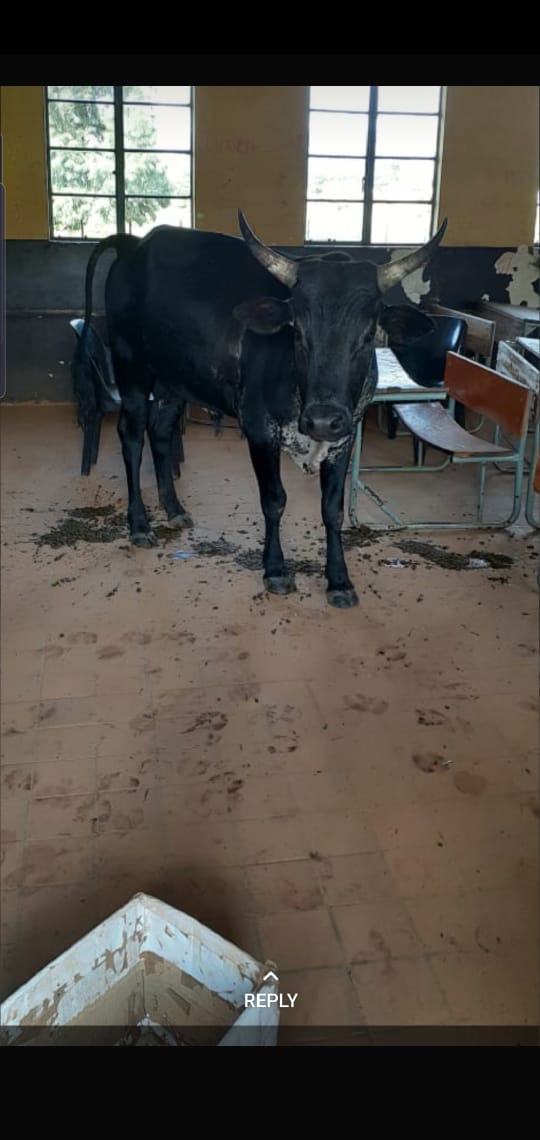
FRUSTRATED school principals in northern KwaZulu Natal have revealed that they have not received any stock from the department and that instead cattle have turned classrooms into their safe refuge. In some of the images in possession of Inside Education, cow dung can been seen in some classes as livestock roam the school yard all day long.

The images also depict broken desks and dilapidated ablution facilities.

“As I speak to you classes have not been cleaned or disinfected, we have not received anything. I communicate regularly with the district responsible, the only response I get is that they are organising transport to deliver the supplies,” said one disgruntled principal.

His anguish was corroborated by another principal who told Inside Educationthat his school has no water supply or proper toilets.

“Our case is worse because we do not have reliable water supply. We have a single water tank to cater for about 600 learners and the truck which supplies us with water only comes once a week. Health and sanitation is our concern because the only toilet we have is shared by teachers. Other mobile toilets for learner’s use have filled up and has not been emptied since last year,” he lamented.

SADTU provincial secretary NomaRussia Caluza said less than 20 schools in KwaZulu-Natal stands ready to reopen for the 2020 academic intervention programme and the majority of them are schools previously classified as Model C.

“We did our own research and consulted our leaders in different districts and we arrived at a conclusion that schools are not ready to accept teachers and leaners. Water tanks have not been delivered to schools where they don’t have any water supply. Besides this, protective equipment is not sufficient and disinfectants and other crucial supplies have not been delivered, said Caluza.

Caluza said the process can take up to a month to complete as there must be an audit and verification process to match the items delivered versus the ratio of teachers and leaners at a school. 

On Sunday, KwaZulu -Natal Premier Sihle Zikalala announced a U-turn on the provinces’ initial plan to reopen schools for all academic staff which was scheduled for Monday this week.

This sudden change of heart, Zikalala said, was as a result of a delay in the delivery of the supplies such as sanitizers and protective clothing from the districts to schools.

He said the provincial cabinet had instead resolved that academic staff will go back to schools on Thursday this week.

Last week, Basic Education Minister Angie Motshekga announced the reopening of schools from June 1 as the country enters level 3 lockdown ease off.

Motshega’s call came after the National Corona Virus Command Council and cabinet gave green light for the systematic reopening of schools.

Motshekga insisted that safety and health protocols will be prioritised. Matric pupils and those in Grade 7 were given priority as the first cohort of pupils to receive attention. 

Chaos At Schools As Teachers Stay Away

NYAKALLO TEFU, MASHUDU SADIKE, LUCAS LEDWABA, SANDILE MOTHA AND THEBE MABANGA

Over 65% of teachers, including principals and school management teams, did not show up at schools on Monday following calls by teachers’ unions to stay away over coronavirus fears and lack of personal protective equipment in provinces.

According to Muguena Maluleke, the General Secretary of the South African Democratic Teachers’ Union, the majority of teachers stayed away because the Department of Basic Education failed to deliver personal protective equipment (PPEs) at various provinces across the country, saying it’s too risky for everyone and could cause a spike in infections.

“In brief I can say due to the fact that schools have not been cleaned and that there was no delivery of materials, not all schools have really had a good attendance,” said Maluleke.

 “What we are seeing is a situation where the departmental officials and the minister do not believe that the virus is still around, that is why they are not taking the issue of the safety and health of the workers and learners seriously.”

Maluleke said the majority of teachers in provinces simply did not pitch because it is not yet safe to do so.

“In Limpopo no one attended because the schools are not cleaned. In Gauteng only principals and not the SMT’s, in certain instances we went to schools and found that the schools were not cleaned. In North West if there is attendance, it’s very few schools,” said Maluleke.  

“In KZN no school is working, they are just delivering material at schools. The department has hired some trucks to deliver those materials to schools. In the Eastern Cape, principals are there but not all schools to receive PPEs. In the Free State the same.”

SADTU, the biggest union in the education and public service sector, also said it was unlikely that schools will be ready to accept learners on the 1st of June.

The decision not to report for duty comes after Basic Education Minister Angie Motshekga announced last week that teachers would start returning from 25 May, meaning they will have a week to prepare before the first learners arrive back at schools on the 1st of June.

The move by Motshekga has since drawn the ire of teachers’ unions, parents associations and civil society organizations.

The unions, parents associations and civil society organizations say they are unconvinced by Motshekga’s plan to re-open schools because it is simply not safe and feasible to implement at this stage.

The coronavirus outbreak forced President Cyril Ramaphosa to close all schools on March 18 as part of government measures to contain the spread of COVID-19.

NAPTOSA’s President Basil Manuel said many schools in the country have not been sanitized and their members were unable to receive PPEs as promised by the minister.

“We are not happy because in fact some of our members have been sitting and waiting the entire day at the school and nothing has arrived, they can’t even go in because some schools have not been sanitized,” said Manuel.

“The North West Province seems to have done a lot more today than they have ever done.  KwaZulu Natal seems to be moving but at a slow pace. The Eastern Cape and Free State is covering a large section but still far from completion. The Northern Cape is battling to get out its starting blocks. When it comes to Gauteng the vast majority of schools have their PPEs but there are a lot of schools that haven’t been cleaned yet, same applies to the Western Cape.”

National Teachers Union president Allen Thompson said they have told their members not to return to work on Monday.

“What is important to note is that in KwaZulu Natal they have postponed the return of teachers until Thursday this week. In other provinces they have postponed indefinitely, like Mpumalanga. There is an official circular that has been released that says teacher must stay at home until further notice,” said Thompson.  

“COVID-19 is exposing the problems that educators a faced with throughout their schooling system.  Some schools don’t have windows or doors. There was no proper delivery of hygiene and sanitation material. In Gauteng, we visited almost 52 schools at the weekend and the majority of schools where the hygiene and sanitation material were delivered you find that they were not enough.”

State of readiness in provinces as of Monday 25 May 2020

KWAZULU NATAL PROVINCE

Less than 20 schools in KwaZulu -Natal stand ready to reopen for the 2020 academic intervention programme and the majority of them are schools previously classified as Model C.

This is a shocking revelation by the South African Democratic Teachers Union (Sadtu) recapping on the school’s state of readiness where teaching and learning is expected to resume next week after a two months forced closure. 

“We did our own research and consulted our leaders in different districts and we arrived at a conclusion that schools are not ready to accept teachers and leaners. Water tanks have not been delivered to schools where they don’t have any water supply. Besides this, protective equipment is not sufficient and disinfectants and other crucial supplies have not been delivered,” said Sadtu provincial secretary NomaRussia Caluza.

Caluza said the process can take up to a month to complete as there must be an audit and verification process to match the items delivered against the ratio of teachers and leaners at a school. 

On Sunday, KwaZulu -Natal Premier Sihle Zikalala announced a u-turn on the provinces’s initial plan to reopen schools for all academic staff which was scheduled for Monday this week. This sudden change of heart, Zikalala said, was as a result of a delay in the delivery of the supplies such as sanitisers and protective clothing from the districts to schools. He said the provincial cabinet had instead resolved that academic staff will go back to schools on Thursday this week.

Caluza however said this plan was impractical as only 20 schools were ready.

“We will monitor and make our own assessment before pronouncing whether to go back to school or not. The schools who stand ready are less than 20 in the province and they used their own money to purchase the required supplies. These schools are former Model C schools, other schools are far from ready,” added Caluza.

Caluza’s call was also supported by another teacher union, the National Teachers Union (Natu) who said they had encouraged their members never to set foot in schools where health and safety protocols has not been implemented.

LIMPOPO PROVINCE

Limpopo school principals have been left frustrated on Monday following disorder in the government’s delivery of PPE’s ahead of the school’s reopening, after being temporarily closed for nearly two months due to the COVID-19 virus.

Feedback on the ground has painted a bleak picture for the resumption of schools as PPE’s availability suggested massive challenges for the province which has had headmasters across the province in a panic.

By 10 am this morning Masebudi High School, Bokamoso High and Phoshoko Primary in Seshego, outside Polokwane, had still not received all the PPEs required for the resumption of schooling in contrast of the government’s promise to have delivered by Monday morning.

Almost 40 000 teachers are expected to  resume work in Limpopo following Motshekga’s announcement last week.

School management teams that include principals were set to resume their duties to prepare for the teachers arrival tomorrow, but spent most of the morning waiting for the arrival of PPEs when they were eventually informed to receive PPE’s from Capricorn High School in town.

“This must be the worst welcome back to school ever. The Department looks to be in disarray across the province. I’ve been told there is no school that has received all the PPEs required. How am I to explain that to the teachers and the Unions who have to come back to work tomorrow?” said one principal, who preferred to stay anonymous.

SADTU has made it clear that if PPEs were not delivered by Monday teachers would not be reporting for duty.

 “In our view, the province is not ready for the re-opening of schools. We will gather evidence regarding the state of readiness by the department. The province will develop a non-negotiable check-list on a daily basis and if we satisfied we will release the teachers to go to work,” Said Sadtu Limpopo in a statement.

Spokesperson for the Limpopo Department of Education, Tidimalo Chuene said while the department understood their concerns the department was doing its best to get the classes ready for the resumption of schooling.

“All is in order so far as the PPEs we have been expecting have arrived and will be delivered to the schools, Teaches should be ready to return to school tomorrow,” Chuene said.

GAUTENG PROVINCE

Lyndhurst primary school was one of the schools Inside Education passed by on Monday morning, where staff could be seen sitting in a circle, adhering to social distancing regulations while having a meeting.

Gauteng MEC for Education Panyaza Lesufi on Monday visited Bryanston High School in Johannesburg to check the state of readiness at the school.

“The school must receive Personal Protective Equipment first and then they can invite teachers to come back, so they might come back today or even tomorrow”, said Lesufi.

Lesufi said there are teacher unions who are advising their members not to report for duty if there are no PPEs.

 “What is encouraging is that we have met all of them, we have agreed on a process and where they are encouraging their members not to come, we do not think it is a serious matter because a it is due to PPE’s and that will be dealt with,” said Lesufi.

Lesufi said the school was not yet open for contact teaching and learning but all learners will be accommodated.

“If there are parents who want to home school their children, we are making that provision for them, we have shifted the closing date for applications for home schooling to September 2020”, said Lesufi.

He added that parents will be offered assistant in how to go about with home schooling.

Thabo Nyoni, a principal at Phulong Secondary School in Kwa Thema, says he has started receiving PPEs and is awaiting decontamination services. The equipment he has received includes masks, soaps and sanitizers, thermometer and is currently sufficient for management.

Nyoni is expecting delivery for staff in the next few days before two masks each for learners are delivered before the end of the month.  Of five schools visited or contacted by Inside Education, two have been contaminated over the weekend and started receiving equipment while two more have taken delivery of equipment. Only one had not received equipment or deep cleaned upon being contacted on Monday mid morning.