Home Blog Page 412

UFS And UP Data Scientists Use Accurate Data To Fight COVID-19 Pandemic

NYAKALLO TEFU

DATA scientist and research coordinator at the University of the Free State (UFS), in collaboration with his supervisor at the University of Pretoria (UP), are at the forefront of the fight against the virus with accurate data and analysis.

This comes as scientists and researches attempt to figure out how to win the fight against the spread of the coronavirus pandemic.

Herkulaas Combrink of the Centre for Teaching and Learning at the UFS and PhD candidate in Computer Science at the UP, said accurate data is important to prevent widespread panic and sensationalism during a global disaster such as the current pandemic.

“I along with colleagues have been able to progress significantly in terms of evidence-based tools to assist provincial and national decision-makers during these turbulent times”, said Combrink.

The team of colleagues include the World Health Organization, the Centers for Disease Control and Prevention in the USA, the provincial office of the Centers for Disease Control and Prevention, provincial clinicians, and the Free State Department of Health led by Dr David Motau.

Combrink says the project they are currently working on includes a provincial database for screening and monitoring and a data pipeline and assembly of hospital information flow, liaised with the NICD, Vodacom, and the different district managers to ensure that the pipeline occurs in a timely manner.

It further includes the digitized paper-based capturing tools for rapid data capturing and processing, incorporated state-of-the-art visualization tools to action data into useful information for decision-makers in certain areas and provided both provincial and national projections, stress testing different scenarios using a variety of statistical, computational, and/or machine-learning approaches to add to the already existing projections of the Council for Scientific and Industrial Research (CSIR).

“It does come at a cost, though, in that we have worked continuously since the lockdown, dedicating all our time and efforts to the department from all over to ensure that we are not part of some of the global statistics we have seen,” said Combrink.

Britain Divided Over Reopening Schools As Virus Rules Ease

DAVID WAUGH is putting down barrier tape and spraying yellow lines on the ground outside the main door of his school near Manchester.

Waugh, who oversees five schools in northwestern England, already has painted yellow arrows to ensure that children follow a one-way path around the building when they return next month from an extended break due to the coronavirus pandemic.

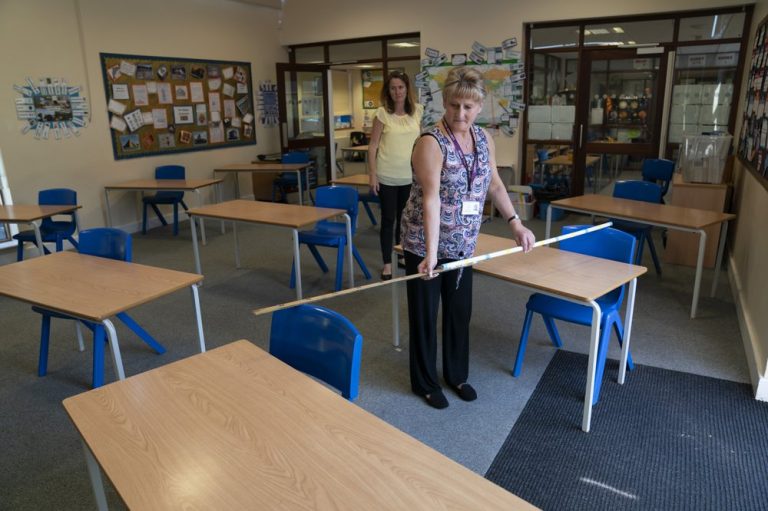
Soft furniture and play equipment have been cordoned off, and desks have been spread apart. Waugh has stocked up on 7,500 face masks, hundreds of pairs of gloves, hand sanitizer and other supplies.

“The government says we don’t need them, but I certainly couldn’t have risked not having them,” he said. “It’s the unknown, the utter unknown. We’re taking baby steps forward at the moment, trying to win the hearts and minds of parents and teachers.”

Since March 20, the coronavirus has forced British schools to close to all but a small number of key workers’ children and those under social care. The government wants children to start returning to primary schools in stages from June 1.

Those going back first include the youngest — ages four to six. Daycare providers also have been told to start welcoming back babies and toddlers from June.

The reopening has divided the country and faced vehement opposition from teachers unions, which say it’s too risky for everyone and could cause a spike in infections. Dozens of local authorities have refused to follow the reopening timetable. Scotland and Northern Ireland, which have their own governments, are not opening schools until August at the earliest.

Worried parents are texting each other the same question: “Are you sending your kid back?”

Justine Roberts, who founded parenting website Mumsnet, said the decision to send the youngest children back first is “causing bafflement and some anger, and a suspicion that decisions are being driven by the need to get people back to work.”

Teachers union NASUWT cited a poll of 29,000 members that suggested only five percent think the plan is safe. Other unions have told members not to engage with planning for an early June opening.

Mary Bousted, joint leader of the National Education Union, said the plan is “simply not safe, it is not fair, it is not feasible.”

Unions say they are unconvinced by the scientific evidence on the topic published by the government. They also want the tracking and tracing system for those infected to be in place first.

Charlotte Smith, whose 14-year-old son is unaffected by the plan, joined a small protest of the reopening Thursday in Manchester. She didn’t believe administrators have thought through how to work out social distancing “that isn’t damaging to kids.”

“There’s absolutely no way I would want my kid to go into an environment that’s psychologically damaging for them,” she said. “We need to rethink education and we can’t do that in two weeks.”

In its guidance to schools, the Education Department said face masks are not recommended in schools, and acknowledged that young children can’t be expected to keep the two-meter (six-foot) social-distancing guidelines. It said class sizes should be halved and limited to a maximum of 15, and that children should be separated into the same small groups.

Waugh’s school group, the True Learning Partnership in Cheshire, is doing that and more.

He is planning to split students into “mini school” zones, each with separate entrances, daily timetables and play areas. Meals will be delivered to classrooms. Teachers’ desks will be two-meter “exclusion zones” ringed off with tape. Even the cutlery will be assigned to separate groups.

It’s “more than feasible” to make schools safe, he said, even if it’s a “logistical nightmare.”

English schools will be following those in Denmark, Germany, France and elsewhere that are easing restrictions. Proponents say the effect of being away from the classroom has been felt keenly by the most disadvantaged families.

A report from the Institute for Fiscal Studies said school closures will almost certainly increase educational inequality. Wealthier children are spending 30 percent more time on home learning during lockdown — about 5.8 hours a day — than those in poorer families and have access to better resources like online tutors, it found.

Working parents, too, are increasingly frustrated about working from home with children. Sarah Hesz, a mother of three, says that after considering the risks, she plans to send her five-year-old back to school next month.

“People are so torn, worried and confused about what is best,” said Hesz, who works for a childcare app. “There is a massive part of me that want my kids to be learning again, to be with their friends again. At the moment, it’s just impossible. I can’t home school my kids and work.”

But it’s a tough sell for many, and one key concern is the risk of infection from children to adults. The confusion was highlighted when the doctors union, the British Medical Association, first backed teachers who oppose a June 1 reopening, only to change its stance days later.

The BMA said Wednesday that while there was growing evidence that the virus risk to children is extremely small, there is conflicting evidence about the likelihood of children spreading it to others.

“A zero-risk approach is not possible,” it concluded. “This is about ‘safe’ being an acceptable level of risk.”

Jonathan Van-Tam, the deputy chief medical officer for England, acknowledged that data on how infectious children are is “pretty sparse.”

“There are significant welfare and wellbeing issues for children who are out [of school] months and months on end. It’s delicate and difficult, and I accept that,” he said.

Jane Cooper, who teaches older children at Lostock Hall Primary School, said she was looking forward to seeing her pupils again. She knows the new normal won’t be easy, especially for younger children who want to cuddle or hold hands.

“We can’t really sit next to children and teach them as we normally do, it’s not as hands-on teaching,” she said, adding that her students “will understand it, but the little ones won’t be able to, and that’s a bit sad really.”

(Source: Associated Press)

Top Limpopo Researchers Nominated for the National Science and Technology Forum Awards

NYAKALLO TEFU

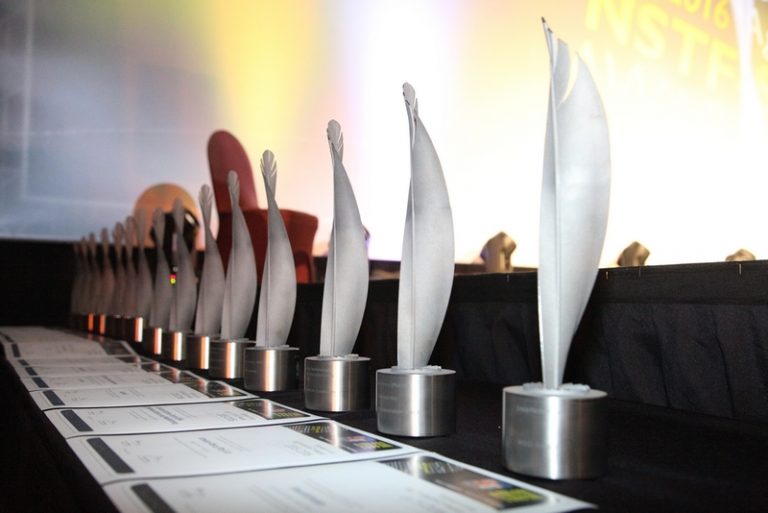
Three researchers are flying the University of Limpopo’s flag high after they were nominated for this year’s National Science and Technology Forum (NSTF) Awards, for their commendable research, development and innovation.

The NSTF awards were established in 1998 as a collaborative effort to recognize outstanding contributions to science, engineering and technology (SET) and innovation by SET-related professionals and organizations in South Africa.

Prof Kingsley Ayisi, director of the Risk and Vulnerability Science Centre has been nominated in the NSTF-Lewis Foundation Green Economy Award category, for achieving biodiversity conservation environmental sustainability and a greener economy over the past 5 to 10 years.

Prof Salome Mamokome Mahlo, head of Ethno-medicinal Plants Laboratory in the Department of Biodiversity (Botany) has been nominated for the TW Kambule-NSTF Award in three categories: Researcher, Data for Researcher, and Special Annual Theme, for finding innovative solutions to plant health challenges, including Indigenous Knowledge Systems (IKS), directed towards South Africa’s sustainable development.

Prof Johannes Maree, Professor of Water and Sanitation has been nominated for the Lifetime Award, for the successful development and diffusion of new or improved products, treatment processes and management strategies of water and sanitation issues for at least fifteen years.

The awards also recognize experienced scientists, engineers, innovators, science communicators, engineering capacity builders, organizational managers and leaders as well as data and research managers.

The awards are expected to take place later this year.

Education Post-COVID-19: Customised Blended Learning is Urgently Needed

PROFESSOR WERNER OLIVIER

Many well-meaning education benefactors and commentators in South Africa have expressed that in the light of the COVID-19 pandemic online self-guided learning could solve some of the current teaching problems and address the educational backlog. What learners need, the reasoning goes, is to get free internet access to educational support materials on offer online.

Nothing could be further from the truth.

In fact, self-guided online learning is doomed to fail. Research shows an exceptionally high drop-out rate – even in developed countries. Learners simply have no incentive to keep at their studies without peer pressure, a teacher at hand or a structured learning environment.

In South Africa in particular, with socio-economic disparities and related problems, the drop-out rate would be even higher.

More so in key subjects like mathematics and physical science where prior knowledge, conceptual understanding and self-motivation to succeed are critical.

Self-guided online learning is doomed to fail. Research shows an exceptionally high drop-out rate – even in developed countries. Learners simply have no incentive to keep at their studies without peer pressure, a teacher at hand or a structured learning environment

The only answer, in the country’s unequal teaching environment, is a customised version of blended learning. Blended learning integrates computer-assisted online activities with traditional face-to-face teaching (chalk-and-talk).

When used by a trained teacher, this approach can add valuable new dimensions to the learning process. It can allow learners to work at their own pace and teachers to fill content gaps.

Blended learning in South Africa

In many developed countries, blended learning is a well-established practice. It has enabled these countries to adapt to the demands of the current pandemic. Digital remote learning and teaching is backed up by dependable infrastructure and skilled, motivated teachers.

By contrast, the differences between South African schools have been thrown into sharp relief. The binary system of a privileged minority of schools and the rest remains, despite the political changes more than 25 years ago.

More than 80% of public schools are under-resourced. They are ill-equipped to respond to the teaching and learning challenges of the 21st century – let alone the latest demands of the pandemic.

The current lockdown has suddenly compelled teachers to adopt predominantly online, blended learning teaching practices. But nearly 90% of all households in South Africa are still without access to the internet at home. Very few schools had adapted to blended learning before lockdown and few schools would be able to adopt it during the lockdown. Therefore the schools that had fewer resources and skills will fall even further behind.

This is especially disappointing since the current cohort of pupils (born after 2000) have long expressed their preference for a blended learning model. Even the recent recognition by the South African government that science, technology, engineering and mathematics are important in the Fourth Industrial Revolution has had little effect on the skills development of teachers, infrastructure or modernisation of resources in schools.

Therefore, in the South African context, mainstream blended learning is not the complete answer. We need to go beyond blended learning.

Customised blended learning model

Since 2002, the Govan Mbeki Mathematics Development Centre in Nelson Mandela University in Port Elizabeth has wrestled with these challenges.

The bad news is that there’s no way to make the teaching and learning of maths and science easy. But we’ve developed a number of interventions that have lifted the twin burdens of poor training and lack of infrastructure from the shoulders of teachers. Skills development linked to the use of user-friendly and interactive digital resources has allowed teachers to focus on attaining a high quality of teaching with subsequent learning successes.

Over the past decade, the centre has experimented with various combinations of online and offline self-directed teaching methods. It has worked specifically on blended learning for mathematics and physical sciences in secondary schools.

The greatest success has been a blended learning system that uses a combination of online and offline interactive resources with pre-installed apps that are aligned with the South African school curriculum. These can be used as a guide for teaching, home-schooling, after-school study and tutoring. We call it techno-blended learning: a structured approach, using mostly offline apps in an integrated way, with the full participation of a trained or experienced adult mentor or guide.
One of the centre’s more recent interventions is a mini personal computer called the GammaTutor™. This’s an offline device pre-loaded with interactive learning material. These resources have been specifically designed for South African school conditions.

The GammaTutor™ software package is primarily intended for teachers: when plugged into any data projector, a TV or digital screen, it doubles as a flexible maths and science teaching assistant in the classroom and a learner support resource for after school hours. It fits in the palm of a hand, requires no data and is navigated by the click of a mouse. Its small size makes the device easy to keep safe and to take where it’s needed.

What needs to be done

It’s well known that major educational challenges exist in schools as a result of the country’s multi-language society – particularly in the teaching and learning of mathematics. The GammaTutor™ application offers mathematics concept explanations in eight indigenous languages.

The device covers the full curriculum for high school maths and physical sciences, presented in video, PDF or animated PowerPoint format – along with glossaries, exam revision support, translations from English into indigenous languages and many additional teaching support materials. It can be used for interactive teaching online and remotely.

The response from teachers, learners and stakeholders to this approach of teaching and learning has been overwhelmingly positive. Where these interventions have been applied, in pilot schools in the Eastern Cape province, the results have been gratifying. Marks have improved significantly and successful learners have been able to progress to university.

The new urgency for remote teaching caused by the COVID-19 pandemic has created an opportunity for the country to adopt policies to accelerate blending learning practices among teachers and learners. The Govan Mbeki Mathematics Development Centre offers lessons learned through more than a decade of research.

(Werner Olivier, Professor in Mathematics and Director: Govan Mbeki Mathematics Development Centre, Nelson Mandela University)

(Source: The Conversation)

Gauteng’s Top Science Teacher Moreki Mosuane Adds Cool To Learning And Teaching

CLASSROOM CORNER

Teacher of the Week: Moreki Ancell Mosuane

School: Lufhereng Secondary School, Doornkop, Gauteng Province

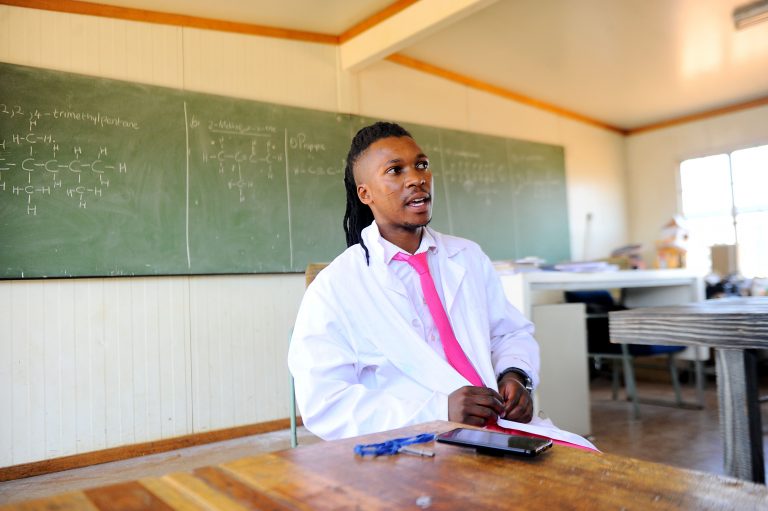
Moreki Ancell Mosuane, a Natural Sciences school teacher, did not intend to become a teacher but had a change of heart in 2011 when he received funding from the Department of Basic Education.

“It was during my first year of training when I discovered that I had a hidden passion for teaching,” said Mosuane, who won the excellence in teaching natural sciences award at Gauteng’s National Teachers Awards in October.

That took him back to the days where he used to take a role of a teacher when the educator was not in class.

He enjoys teaching the subject because it sparks curiosity and the content always changes due to new discoveries and inventions.

“I cannot wait to see some of the learners graduating and pursuing their careers even as Natural Science specialists.”

Being in a rural area and working in an extremely poor community where the majority of learners are faced with harsh socio-economic circumstances is one of the barriers at its own.

Therefore as a teacher he plays multiple roles while teaching in class.

“I am not only a teacher but a part time counsellor, guardian and a parent.”

With the high number of learners at his school, he is always prepared to adapt and treat all the learners according to their needs.

“It is therefore important to be an empathetic listener so that learners can communicate freely and it makes them to learn with ease.”

He believes that all teachers are sufficiently trained and are experts in their respective subjects.

However teachers are subjected and assigned from the different working conditions and circumstances.

“I had problems and challenges but with the suitable strategies and solutions to solve them and create a positive, conducive learning and teaching environment.”

Complementing his participation in the NTAs, Mosuane believes that it is always good to see your hard work being recognised and acknowledged.

This will encouraged him to work even harder and inspire others to join the teaching sector.

He plans to be an ambassador of the NTA and encourage other teachers to participate in the program.

“I have seen the impact it does on teachers’ ethics and the standards of our profession.”

Advocate Mojanku Gumbi Appointed University of Venda’s First Female Chancellor

NYAKALLO TEFU

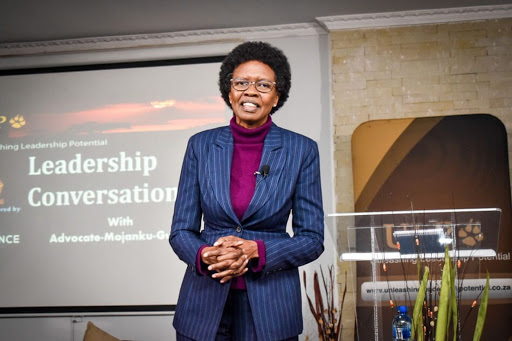
THE University of Venda has appointed Advocate Mojankunyane Gumbi as its new chancellor effective until 31 December 2024.

The University’s Vice-Chancellor and Principal, Dr Bernard Nthambeleni said Gumbi joins the university at the right time, when it is shifting towards a new strategic direction which is intended to position the university for impact and relevance.

Gumbi takes over from former Deputy President of South Africa, Kgalema Motlanthe, who has served two terms in the position.

Dr Nthambeleni said in a statement that the university is grateful for the first time to have a female chancellor.

“We look forward to her leadership and guidance in the years to come. Her engagement with the University will certainly stand us in good stead,” said Dr Nthambeleni.

Gumbi is the founder of Mojanku Gumbi Advisory Services, a Johannesburg-based business advisory firm that maintains a strategic partnership with the Washington-based Albright Stonebridge Group.

“It is an honour to have a woman with the stature of Adv Gumbi at the helm of UNIVEN. We look forward to her leadership and guidance in the years to come. Her engagement with the University will certainly stand us in good stead,” said Dr Nthambeleni.

Gumbi holds Law degrees from the South African Universities of the North (now University of Limpopo), and Witwatersrand, and a certificate in Trial Advocacy from the University of Texas in Austin.

She was a Special Advisor to the former South African President, Thabo Mbeki from 1999 to 2008. From 1994 to 1999, she was an Advisor to then Deputy President Mbeki in the Mandela administration.

During this time, she spearheaded South Africa’s economic diplomacy, ensuring a global presence for South African companies. She was involved in peace-making initiatives in the Democratic Republic of the Congo, Cote d’Ivoire, Comoros, Sudan, Lesotho, Somalia, Zimbabwe, Iran and the Middle East.

Gumbi also advised on domestic policy issues including the reform of the local healthcare industry, the expansion of South African industry to the rest of Africa and the world, banking and mining sector reforms

Balancing Swimming and University Lectures: SA Sports Star of the Year Tatjana Schoenmaker Speaks

MASEGO PANYANE

TATJANA Schoenmaker is better known as a pro athlete. She is the winner of the South African Sports Star of the Year and South African Sportswoman of the Year in 2019, silver medallist in the 200m breaststroke at the World Championships in Korea in 2019, two-time gold medallist in the 100m as well as 200m breaststroke at the World Student Games in Napoli, Italy, and two more gold medals at the 2019 Tokyo World Cup in the 100m and 200m breaststroke.

What is perhaps lesser known about the 23-year-old swimming sensation is that she has just completed her BCom (Financial Sciences) degree at the University of Pretoria (UP), becoming one of 11 000 UP students who graduated in a virtual ceremony last month. In between conquering the world one pool at a time, Schoenmaker said her studies helped her remain grounded.

“It definitely helped because mentally it ‘balanced’ me in terms of swimming and studying. In other words, while I enjoy focusing on swimming, it also focused my mind on studying, which in turn switched off my mind from swimming. The University and Faculty of Economic and Management Sciences personnel were not only very supportive when I missed tests or exams by allowing me to write them on different dates, but they also assisted me to extend my year because I was away for swimming competitions quite often. So, it definitely contributed to my success in respect to graduating as well as swimming,” Schoenmaker said.

She is one of the thousands of new UP graduates that have had to celebrate the completion of their studies online, instead of attending a traditional graduation ceremony. To mark the occasion, Schoenmaker shared images of herself in graduation attire with her parents. In a fun tribute to her sporting career, underneath the attire Schoenmaker was dressed in a swimming costume.

One of the things the swimmer readily admits is that excelling in the pool and the lecture halls of Tuks came with her having to do a balancing act of sorts, something that would not have been possible without passion and motivation. Quizzed on what motivates her and keeps her striving for more, she said the ability to do what she loves came out tops, every time.

“Being able to do what I love – every single day. My love for swimming makes me want to get up every morning and go to training. It’s like my second home. Being fortunate enough to travel the world doing what I love, seeing new places and meeting new people and sports heroes, motivates me a lot,” she said.

Closely linked to this, she said, is understanding that the secret to success is being passionate about what you do. Especially when trying to build a career.

“First and foremost: passion. You need to have passion for what you are doing; whether it is swimming or studying. If you have a passion for what you are doing and it makes you happy, you most likely will succeed. Likewise, you need to have the necessary discipline: it takes a lot to push yourself, not just in the pool, but also academically when you ever so often have to study until late at night and still get to training the following morning. Finally, you also need to have a sense of timing. For example, when you take off a few hours to relax, you need to put in the same hours to catch up.” 

One of the things she had to sacrifice during her successful sports and academic careers was the complete student life experience. Schoenmaker said it had made her seem inhuman to some around her, but it was a sacrifice she was prepared to make. One, it also seems, she has no regrets about.

“If I could live the past four years over again, I would choose to do precisely the same. I have had some fantastic experiences and met incredible people,” she said.

With the COVID-19 pandemic sweeping through the world, the Tokyo Olympic Games have been postponed and this is one of the arenas that Schoenmaker had hoped to dazzle in. She is, like most South Africans, at home, taking the lockdown period one day at a time. As for what the future holds for her, she’s still pondering that.

“I would love to compete in the Olympic Games and be part of this amazing experience. It’s scary to think that, 23 years on, your childhood dreams are finally coming true! With regard to studying, I’m taking this year off to contemplate if there is something that I would like to carry on studying in terms of a postgraduate qualification… and in the process also get to know myself,” she said.

To current and future UP students, Schoenmaker said: “Enjoy it! Persevere! Sure, at times it will be tough, but at the end of the day it will be worth it. Anyone can do it…and at Tuks the staff is always willing to help out. While I’m doing well in my swimming, I’m also fortunate enough and grateful to say that I have a degree to fall back on; so if my swimming doesn’t work out for me, I always have my BCom to help me out,” she said.

Africa Day: From A Pre-colonial To A COVID-19 Post- University

DR MUNYARADZI MUSHONGA

As we virtually celebrate Africa Month in 2020, it is worth reflecting on the journey of the African university as a reminder of where we are coming from, where we are today, and where we are going.

The emergence and development of university education in Africa can be conceptualised in four distinct phases, namely the pre-colonial university (before 1900), the colonial university (1900-c.1960), the developmental (post-colonial) university (1961-c.1980), and the market (entrepreneurial)/crisis-era university (1980-present).

If we follow this scheme, with the Coronavirus and COVID-19 in our midst, the African university is entering the fifth phase. Just a week into the pandemic, African universities were already experimenting with various online learning and teaching approaches to keep the academic programme afloat, away from the walled university. 

Higher education on the African continent long antedates the establishment of Western-style universities in the 19th century and is traceable to the 3rd century BC.

The oldest university still in existence is Al-Azhar in Egypt, founded in 969 AD. It is regarded as one of the leading Islamic HE institutions in the world today.

Not only did the idea of higher learning begin in Africa, but the spread of universities into “Western Europe was mainly through the traffic of knowledge and ideas that flowed across the Strait of Gibraltar from North Africa” (Tisani, 2005:2). 

Colonial universities were a product of the European colonisation of Africa and most of these emerged after the Second World War.

Their mandate was to reorient European colonies through the idea of ‘colonial development’ as well as to “cultivate and sustain indigenous elites” moulded along European traditions; elites that would be crucial in maintaining links with the former colonial powers after the departure of the physical empire from Africa (Munene, 2010:400).

Thus, colonial universities were among the major instruments and vehicles of cultural westernisation and assimilation, bent on removing the hard disk of previous African knowledge and memory, and downloading into it a software of European memory.

Today, the continent remains dominated by universities shaped by the logics of colonialism. It is this resilient colonial university that decoloniality seeks to disrupt and to plant in its place an African university steeped in epistemologies of the Global South. 

Following the retreat of the physical empire, African states established development-orientated universities. It was readily accepted that HE was capable of contributing to the social, cultural, and economic development of Africa.

As such, many universities were initially generously funded and supported by the state. However, this commitment only lasted for about a decade or so.

The ‘independence’ university was overly concerned with first – ‘Africanising’ the public service, and second – with the anti-colonialist aspiration of taking over and ‘Africanising’ positions within the institution.

The more nationalism turned into a state project, the more pressure there was on the developmentalist university to implement a state-determined and state-driven agenda, and the more this happened, “the more critical thought was taken as subversive of the national project” (Mamdani, 2008).

Resultantly, the university lost its original mandate and the international policy environment did not help matters, as the World Bank and the International Monetary Fund suggested that ‘Africa did not need university education’ and called for the privatisation of public universities. 

The fate of the ‘developmental university’ was sealed in 1990 when the World Conference on Education for All prioritised elementary education. The increasing frustration with the perceived failure of the ‘developmental university’ on the one hand, and changed Western priorities and the inevitable influence of Western aid and Western academic organisations on the other hand, gave rise to the market (entrepreneurial)/crisis-era university.

Since the structural adjustment programmes of the 1980s, many African universities have been under pressure to liberalise, following the retreat of the state in the provision of education. This led to various forms of disputes and contestations (#FeesMustFall is one of them) – contestations centred on the meaning, purpose, and mission of an African university (Zeleza and Olukoshi, 2004:1) in a fast decolonising yet liberalising environment. 

Today, with the Coronavirus and COVID-19 in our midst, one thing is certain – the pandemic will have a lasting impact on all national institutions, the African university included. It is not possible to predict the kind of university that might emerge both during and beyond the pandemic. However, the following questions might help us imagine such a university.

What kind of university do we have (now/today)? What kind of university do we want? What kind of university do we need? What kind of university can we afford? These are transhistorical questions that have informed all previous versions of the university. Clearly, the COVID-19 pandemic is sure to give birth to another crisis-era university.

While such a university will be dictated by the prevailing socio-economic and socio-political ideologies and landscapes shaped by the pandemic, we should also refuse to allow the pandemic to define such a university for us. The COVID-19 pandemic should only be used as a stage for a ‘great leap’ forward. The pandemic offers the African university a fresh start.

Yet, we must, as some Kovsies have already cautioned, guard against the temptation to respond to crises in particularist and isolationist fashions. It is time to overcome. It is time to unite. It is time to grab the bull by the horns. It is time for Africa’s place in the sun. #ONEAFRICA.  

(This article was written by Dr Munyaradzi Mushonga, Programme Director: Africa Studies, Centre for Gender and Africa Studies at the University of the Free State)

Solutions To Africa’s Problems Reside Within Africa Itself

0

CYRIL RAMAPHOSA

TODAY marks 57 years since the leaders of 32 independent African nations met in Addis Ababa to establish the Organisation of African Unity (OAU), the precursor to the African Union.
 
The preamble of the OAU charter is a rousing call to unity, cross-cultural understanding and solidarity. Like the Universal Declaration of Human Rights, the UN Charter and the South African Constitution, it affirms the inalienable right of all people to control their own destiny.
 
We mark Africa Day this year just over three months since the first case of coronavirus on the continent was confirmed.

This pandemic has been a stark reminder that regardless of whether we are born into wealth or indigence, we are all mortal, and can succumb to disease.
 
As countries around the world battle to turn the tide against the pandemic, Africa has taken firm control of its destiny, by developing a clear strategy and raising financial resources from its member states.
 
The African response to the coronavirus pandemic has received widespread praise. Despite the multitude of resource challenges they face, African countries have come together in remarkable ways, united by a common purpose.
 
The countries of the Global South are more vulnerable to the impacts of COVID-19 because of low levels of development, insufficient resources and weak health systems.
 
Countries ranking low on human development indices, many of which are in Africa, are less capable to manage the fallout of a global health emergency of this kind on their own.
 
Yet at the same time, some of the very health challenges African countries have wrestled with for decades have given us a clear understanding of what needs to be done, and how to do it.
 
The unprecedented nature of the pandemic caught many countries both unaware and unprepared. Much of what we witnessed in the early days of the outbreak was governments in western countries struggling with containment because so much about the virus was unknown. It was not something the world has experienced for over a century.

African countries have been able to use their experience in managing outbreaks of malaria, cholera, HIV, TB and hemorrhagic viruses like Ebola and Lassa. Our understanding of communicable diseases and how to manage them has put us in good stead when it comes to coronavirus.
African governments have been swift and proactive in implementing measures to flatten the coronavirus curve.

By early May, 43 African countries had full border closures, 53 had closed institutions of learning, 54 had limited public gatherings, 26 had instituted the compulsory use of face masks, 32 had instituted night-time curfews and 18 had imposed nation-wide lockdowns.

The African Union developed a comprehensive Joint Continental Strategy to guide cooperation between member states and set up a COVID-19 Response Fund. A number of countries, including South Africa, have rolled out massive food relief and social assistance measures to support the vulnerable during this time.

Although there have been severe shortcomings and constraints, such as the shortage of personal protective equipment, testing kits and ventilators, there have also been stories of excellence and intercontinental collaboration.

One such example is the work of the African Centres for Disease Control (ACDC) and prevention, a world-class institution with capabilities for disease surveillance and intelligence and health emergency preparedness and response.

African countries have scaled up their respective capacities for screening, testing and isolating. In April, the AU and the ACDC launched the Partnership to Accelerate COVID-19 Testing to strengthen testing capacity in vulnerable countries, with the aim of testing 10 million people over the next six months.

Through this partnership warehousing and distribution hubs are being set up across the continent to distribute medical supplies. The aim is to pool the procurement of diagnostics and other medical commodities.

The deployment of community health workers to do screening, testing, contact tracing and case management is happening in many African countries, and draws heavily on our experience with HIV and TB.

African nations have also joined the race to produce test kits, with Senegal in an advanced stage of developing a low-cost testing kit.

At lease 25 African countries have registered clinical trials for possible COVID-19 treatments, including for the BCG vaccine, hydroxychloroquine, antiretrovirals and Remdesivir, and as part of the global Solidarity clinical trials.

Whether it is in repurposing health protocols used with other infectious disease outbreaks, rapidly deploying health care workers to communities, or in launching mobile COVID-19 testing labs to improve national testing capacities, Africa is working proactively to overcome this global threat.

Though it is clear we will continue to rely on the support of the international community and international financial institutions to bolster the existing continental effort and build economic resilience, African countries are holding their own.

This Africa Day we are reminded once again that the solutions to Africa’s problems, be they overcoming disease or eradicating poverty and underdevelopment, reside within Africa itself.

Although the coronavirus pandemic is not an African problem alone, we have shown ourselves capable of agility and ingenuity. The work being done to defeat the coronavirus is evidence of a continent determined to leverage its strengths and capabilities to resolve its own challenges.

This is the premise on which the Organisation of African Unity was founded and it continues to guide and inspire us as we strive to build a better life for all of Africa’s people.

Wherever you may be at this time, I wish you a happy Africa Day.

Ramaphosa Endorses Re-Opening of Schools Amid COVID-19 Fears

NYAKALLO TEFU

President Cyril Ramaphosa has expressed his full support for the Department of Basic Education’s decision to re-open schools in June.

This comes after Basic Education Minister Angie Motshekga announced last week that schools will reopen in a phased approach, starting with the Grade 7s and Grade 12s. 

“The school calendar will be revised and the curriculum will be trimmed so that we can still recover the 2020 academic year”, said Ramaphosa. 

Ramaphosa said parents concerned about sending their children to school have the choice of not letting them return to school if they so wish.

“It is understandable that there is some concern about the reopening of schools, and I must stress that no parent will be forced to send their child to school if they are worried about safety”, said Ramaphosa.

He added that all public universities are expected to implement remote teaching and learning strategies to ensure that all students are given a fair opportunity to complete the 2020 academic year. 

“With the start of alert level 3, no more than a third of the student population will be allowed to return to campuses on condition that they can be safely accommodated”, said Ramaphosa.

Ramaphosa has asked parents and the country at large to work together and follow precautions to ensure the safety of children who are returning to school during alert level 3.