Home Blog Page 413

Blade Nzimande Unveils Plans For Re-Opening of Tertiary Institutions

CHARLES MOLELE

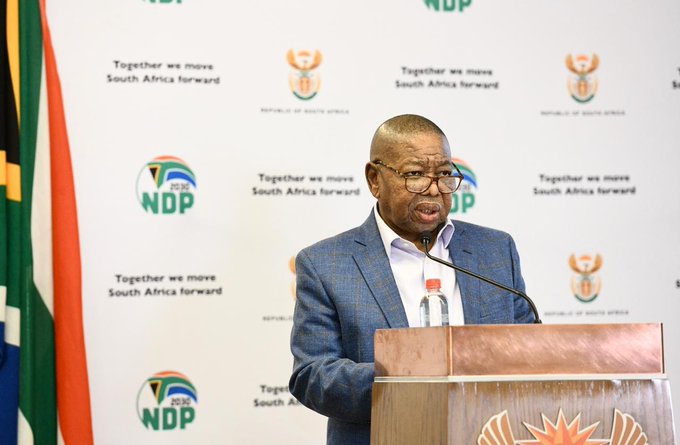
HIGHER Education Minister Blade Nzimande said on Saturday that re-opening of institutions of higher learning will take place in phases informed by different levels of the COVID-19 lockdown.

Addressing a media briefing in Pretoria, Nzimande his ministry will publish national directives on the broad parameters and conditions under which each institution must plan for the controlled resumption of all forms and levels of academic activity to complete the 2020 academic year.

He said the sector was committed to resume academic activities in line with the national risk-adjusted strategy.

“This includes putting remote learning systems in place as well as planning the gradual return to various campuses during various phases of the risk-adjusted strategy,” said Nzimande.

He said under level 4, the department allowed for the controlled return of final year students in programmes requiring clinical training.

“Medical students have been returning to clinical training platforms from 11 May and other final students in other programmes requiring clinical training will begin returning from 1 June 2020. Under level 3, a maximum of 33% of the student population will be allowed to return to campuses and residences on condition that they can be safely accommodated and supported in line with the health and safety protocols as directed by the department.” 

He said should Level 3 be announced to begin on 15 June, then students would be recalled to start two to three weeks thereafter.

In other words, a period of two to three weeks will be given to allow students to travel back to their campuses.

“Under level 2, a maximum of 66% of the student population will return to campus for teaching, learning and assessment in line with the set criteria. Under level 1, it is expected that 100% of the student population should return to campus. We are therefore going to require the strictest enforcement of physical distancing and health protocols,” he added. 

Nzimande also announced that a tentative academic calendar was put together for the return of students at TVET colleges.

“A campus-based approach will be applied where colleges are affected by different lockdown levels. Campuses located in districts that remain in lockdown level 4 will remain closed and students will be supported using multi-modal remote learning approaches. Each of these colleges will therefore develop a detailed remote learning support plan and share it with students as well as post it on the college website,” he said.

“Several colleges have already developed learning materials both for TV and radio broadcasts which are shared through the DHET website. These initiatives will continue beyond the return of students to campuses.  Furthermore, all students who will not have returned to campuses in June and July will also be supported remotely until they return to campus according to the phase-in process. Colleges are using textbooks, e-Guides, past question papers, and uploaded YouTube videos to assist students. These are supported through bulk text messages from colleges and WhatsApp groups set up by lecturers.”

Nzimande also said National Student Financial Aid Scheme (NSFAS) remained fully operational and continued to disburse allowances to all NSFAS beneficiaries.

He added that NSFAS students, including those from the Funza Lushaka, will receive free data for three months starting on 1 June. 

“I am pleased to announce that we have successfully negotiated with all mobile network operators very favourable rates for our NSFAS students, including the Funza Lushaka students who will receive 10GB daytime and 20GB night-time data for three (3) months, starting from 1 June till end of August, as subsidised by government,” said Nzimande

“I want to repeat what I said in my previous statement that NSFAS and the Funza Lushaka students must ensure that they register their cell-phone numbers with their respective institutions. We advise that during this period, they must also not change their sim-cards so as to enable network operators, through their institutions, to load data to their devices. I just want to emphasise that this data that needy students will receive must be used for dedicated online educational platforms for teaching and learning as approved by institutions.”

He added: “I therefore would like to acknowledge and thank all the network operators (MTN, Telkom, Vodacom and Cell C) who have been working with us to ensure that we deliver on this important intervention. We have also made free digital content available specifically to our TVET College students through our DHET website, the National Open Learning System (NOLS) of our Department, institutional websites and other sites, where students can find digital materials which will assist them in their learning and preparation for exams.”

He said for TVET Colleges a tentative academic calendar has been drawn up pending any new announcements on the different levels of the lockdown by the President.

In terms of the tentative calendar the following return dates apply:

NATED Trimester (ENGINEERING) students

  • N6 & N3: 10 June
  • N5 & N2: 15 June
  • N4 & N1: 22 June

NATED Semester (BUSINESS STUDIES) students

  • N6: 25 June
  • N5: 29 June
  • N4: 06 July

NC(V) students

  • Level 4:   13 July
  • Level 3:   20 July
  • Level 2:   27 July

Zweli Mkhize: Why Glenda Gray’s COVID-19 Claims Are Wrong and Factually Incorrect

ZWELI MKHIZE

In the past week, my office has been inundated with media requests for comments regarding Prof Glenda Gray’s public utterances on government’s decision relating to the lockdown.

The article referred to has some of the utterances that have been directly attributed to Prof Gray, as follows:

  • “We are seeing children with malnutrition for the first time (at Chris Hani Baragwanath Academic Hospital). We have not seen malnutrition for decades and so we are seeing it for the first time in the hospital”
  • “…but the de-escalation, month on month, to various levels is nonsensical and unscientific.
  • “We believe, as scientists, that we give and are giving the government good advice and why they decided not to take the advice or engage readily with the scientists is unknown. Why have experts if you don’t care what they think?”
  • “This strategy is not based on science and is completely unmeasured. It’s almost as if someone is sucking regulations out of their thumb and implementing rubbish, quite frankly.”
  • “We punish children and kick them out of school and we deny them education. For what? Where is the scientific evidence for that?”

For the benefit of the public, it is important to mention that the Ministerial Advisory Committees are not unusual within the Department of Health. The National Health Act makes provision that advisory or technical committees may be appointed as may be necessary to achieve the health objectives as provided for in the act and its regulations.

As it stands, the department continues to benefit from experts who are specialised in various fields of health through their participation in different Ministerial Advisory Committees. To illustrate this point, these are some of the committees that are in place: the Ministerial Advisory Group on Immunisation, the Ministerial Advisory Committee on Organ Transplant, the Ministerial Advisory Committee on Health Pricing, the Ministerial Advisory Committee on Prevention and Control of Cancer and the Ministerial Advisory Committee on NHI.

Over the years, the role of the advisory committees has proven to be useful in providing support to the Health Ministry by offering advice on various matters in line with their terms of reference. These advices are presented to the Minister who considers them. Thereafter the minister may elect to engage other stakeholders or departmental officials on such advice for further research or input. This advice is then accepted or rejected based on the holistic view that the minister will consider as the Member of the Executive responsible for Health.

This has not been any different with the Ministerial Advisory Committee on Covid-19. This committee was appointed on the 26th March 2020. The terms of reference are very specific: “the MAC on Covid-19 is an advisory committee and does not have delegated powers to act on behalf of, or to commit the minister or Government to any actions”. They further state that “each member will act with the highest professional and ethical standard at all times”.

It is important to highlight that to date, the MAC on Covid-19 has provided the Ministry of Health with 50 advisories. Also, all these advisories presented have been accepted. The minister has utilised these in the implementation of the Department of Health’s response to Covid-19. These advisories have also been included in presentations to various stakeholders and more importantly, the National Coronavirus Command Council (NCCC), chaired by President Ramaphosa. Throughout this period, the NCCC has welcomed these presentations. In fact, the president has consistently acknowledged and commended the scientific data made available by the Department of Health through the MAC. This data is taken into account as part of broader consultations and inputs from other departments, different provinces and various stakeholders including business and labour.

I have seen it fit to give this detailed background in order to highlight that at no point has the Department of Health or government as a whole ignored and not responded to the advice of the Ministerial Advisory Committee on Covid-19. The statement made by Prof Glenda Gray is at the least devoid of the truth. Having read the article, I have been taken aback by the obvious inaccuracies it contains which have in my view, caused unnecessary sensationalism and doubt on the work and effort of the government in dealing with Covid-19.

We will keep emphasising this, as government we do not claim have it all figured out when it comes to Covid-19. No country does. The president has constantly and correctly stated that we are in uncharted waters. But we are committed to doing everything in our powers to protect the lives of our citizen.

I must pause to mention that I have also been stunned by media queries on why I appointed Prof Abdool Karim as chairperson of the Covid-19 and “sidelined” Prof Glenda Gray. Save to state the obvious that such appointments are a prerogative of the minister, I find such a question disingenuous as there is nothing that disqualifies Prof Abdool Karim to chair this MAC. In this regard, I continue to urge members of the media that during this period we must be made to respond to issues of substance and not matters that seem to want to sow division within the Covid-19 MAC and cause mischief.

It is therefore important to publicly place on record that Prof Glenda Gray made factually incorrect and unfounded statements:

FALSE: “We are seeing children with malnutrition for the first time (at Chris Hani Baragwanath Academic Hospital). We have not seen malnutrition for decades and so we are seeing it for the first time in the hospital

FACTS/RESPONSE: There has been a reduction in the number of cases of malnutrition that have been seen at Chris Hani Baragwanath Academic Hospital POPD and the total admissions during the month of March and April 2020, when compared to the previous 4 years. To illustrate this, in April 2019 there were 2 885 patients seen and 500 admissions.

However, in April 2020 there were 834 patients seen and 146 admissions. I have been advised by the department’s officials that at a subsequent Covid-19 MAC meeting, Prof Velaphi, the Head of Paediatrics at the hospital, raised this concern and asked why Prof Gray would mislead the public by giving inaccurate information. In response, Prof Gray merely stated that she had relied on what she had heard from “other colleagues”. However, these colleagues were not disclosed. This emphasises the warning we have been to the media and public not to just rely on anecdotal evidence. This ends up causing unnecessary anxiety to our citizens.

FALSE: “We believe, as scientists, that we give and are giving the government good advice and why they decided not to take the advice or engage readily with the scientists is unknown. Why have experts if you don’t care what they think?”

FACTS/RESPONSE: Since the establishment of the MAC, 50 advisories have been given to the Minister of Health, all of which have been accepted. Ironically, last week Prof Gray, as chairperson of the Research Subcommittee was part of the team that was preparing an advisory to the Ministry of Health in relation to the lockdown. This advisory had not been submitted to the Minister of Health when Prof Gray elected to speak to the media. There was a platform that had been created but this was overlooked even before making input through the Department of Health channels. She elected to do so through the media.

FALSE: “This strategy is not based on science and is completely unmeasured. It’s almost as if someone is sucking regulations out of their thumb and implementing rubbish, quite frankly.”

FACTS/RESPONSE: There are existing structures in government that have taken into account various factors, including scientific, socio economic, etc. The comment that government thumb sucks its decision not only undermines the joint work and effort that the NCCC, cabinet and government as a whole has been engaged in. But it is also unprofessional and unbecoming conduct from a member of the MAC who has direct access to the Ministry and the Department. In my view it undermines and brings into disrepute the institution that Prof. Gray works for which is an entity of the Department of Health, the MRC.

FALSE: “We punish children and kick them out of school and we deny them education. For what? Where is the scientific evidence for that?”

FACTS/RESPONSE: The Department of Basic Education has been engaged in various consultations with its stakeholders on the correct approach to take in the process of opening schools. The minister has also presented the Department’s strategy in the correct forums and is exercising her executive powers based on information and evidence before her to recommend to government on how to proceed. It can never be Prof Gray’s place to make such comments without being aware of the details, the advice and the process the Department of Basic education has followed.

Divergent views by scientists are healthy and welcome. The MAC provides this platform for robust engagement of these top scientists who are leaders of various respectable institutions and organisations.

However I must urge all those who are contributing to the thought process and science behind the decisions ultimately undertaken by Government to desist from potentially destructive behaviour and continue to engage constructively with government as they are mandated.

As head of the Medical Research Council, Prof Gray has access to the minister and the Department but never once raised this matter directly with ourselves, yet she has never failed to raise other issues of concern beforehand.

It must be understood that regulations are influenced by inputs from the public and her views would have been considered had she made submission in a normal way when public comments were called for. It is exactly for this reason that government has been bold enough to even make amendments to some regulations based on public inputs. However, Prof Glenda Gray chose not to use this platform.

We may not always agree but we will listen and consider input brought to us. We have said that government will not fight this pandemic alone. We need partners in our society to assist us with advice and even mobilising social behaviour in order to manage the spread of this virus. It is for this reason that we appreciate various social partners who have pledged their support to this cause. We will continue to work together until we conquer this coronavirus battle.

(Dr Zweli Mkhize is Health Minister of South Africa)

Why More Must Be Done To Fight Bogus COVID-19 Cure Claims

0

CHIMARAOKE ISUGBARA and MARY O. OBIYAN

Fake and bogus cure claims are a longstanding, but neglected public health problem. Throughout recorded history, plagues have inspired anxiety and desperation. Time and again, this public nervousness has proved a fertile ground for false cures and claimants to thrive. In this sense, recent claims of COVID-19 cures and antidotes are no exception.

During the Spanish flu, cure claims generated a false sense of safety that drove hundreds to defy closures and isolation. In the US, scores of bogus remedies alleging to cure the flu were sold under upbeat labels that undermined preventive action. One ad boasted:

When Vick’s VapoRub is applied over the throat and chest, the medicated vapors loosen the phlegm, open the air passages and stimulate the mucus membrane to throw off the germs.

Fake and bogus cures caused the death of many as HIV swept around the world. In Nigeria, for instance, as early as the 1990s, Jeremiah Abalaka, a surgeon with fringe training in immunology, startled the world with his HIV cure claim. Many of the HIV patients who flocked to his private clinic reportedly died, including dozens of soldiers referred for treatment by the Nigerian government.

More recently, during both the Ebola and SARS epidemics, fake cure claims also circulated freely, with lethal consequences. For example, salt solution, snake venom, vitamin C, Nano Silver and some herbs were all touted as cures for Ebola. At least two people died in Nigeria and about 20 more were hospitalised after drinking excessive amounts of salt solution to prevent Ebola infection.

Sadly, history is repeating itself in the context of COVID-19. False claims range from US president Donald Trump’s touting of anti-malaria drug hydroxychloroquine as a miracle cure to Madagascar’s herbal “cure” promoted by President Andry Rajoelina.

In Ghana, a Pentecostal pastor launched and sold “Coronavirus Oil”, telling a packed church that it was effective against COVID-19. An American pastor also recently directed viewers to buy Optivida Silver Solution to prevent COVID-19. Its promoter had falsely claimed that the product was government-approved and has the ability to kill every pathogen it has ever been tested on, including SARS and HIV.

With growing global anxiety, many people are easy targets for cure scams and hucksters. Victims of fake cure claims are often among the world’s poorest and most vulnerable. Fighting these cure claims is integral to containing the COVID-19 pandemic.

Authorities across the world are working hard to ensure that correct information and messages on the pandemic reach everybody. But there is room to do more.

Why we must act now

Cure claims are dangerous. They delay treatment-seeking and promote reckless behaviour that may result in deaths. At least 300 Iranians have died from methanol poisoning after consuming alcohol to prevent COVID-19. Hours after Trump declared hydroxychloroquine as a miracle cure for COVID-19, people overdosed on it in Africa and Asia. In Arizona, a man died after reportedly treating himself with a COVID-19 home therapy derived from the same anti-malarial drug that the US president touted as a wonder drug.

Health literacy – the ability of patients to read, comprehend and act on medical instructions – remains weak in many contexts. Several millions of health-seekers around the world rely on informal or inexpert sources for their health information needs. Hard-to-reach and vulnerable groups and communities must be targeted through bespoke health promotion strategies.

Online and traditional media offer immense potential to intensify public health education. They must maintain vigilance on COVID-19 cure scams and claimants as they emerge in diverse forms and places. However, merely identifying bogus COVID-19 cure claims or alerting the public about them is no longer enough.

Targeted seizure and destruction of unproven cures can deliver important results. In 2015, a global crackdown by Interpol seized nearly 21 million fake and illegal drugs, including fake cancer “cures”.

Governments must also implement community health outreach programmes that communicate clearly and accurately. Such programmes should have fit-for-purpose feedback systems to enable lay persons in multiple contexts to raise concerns, ask questions and swiftly receive answers. One size will not fit all at this time. Part of the success recorded in Nigeria during the Ebola outbreak has been attributed to the use of different media, including government-sponsored TV and radio messages, town-criers, social media campaigns, and experts to communicate health information to its citizens.

Countries and national health bodies must integrate traditional healers, faith leaders and community principals in their COVID-19 response strategies. Several studies have documented proven strategies for effectively engaging lay and faith healers to offer correct support and information on epidemics. This is the time to bring these strategies to scale.

Robust mechanisms for holding scam COVID-19 cure claimants and hucksters accountable are also urgently needed. Currently, few countries have such mechanisms. But a good precedent exists in Australia, where a “healing church” that touted a bleach-based solution as a COVID-19 cure has been fined more than $150,000. Politicians and other thought leaders must also realise that their utterances and actions during this pandemic will have far-reaching health, social and economic consequences.

(Source: The Conversation)

Cops Nab More Suspected School Burglars

INSIDE EDUCATION REPORTER

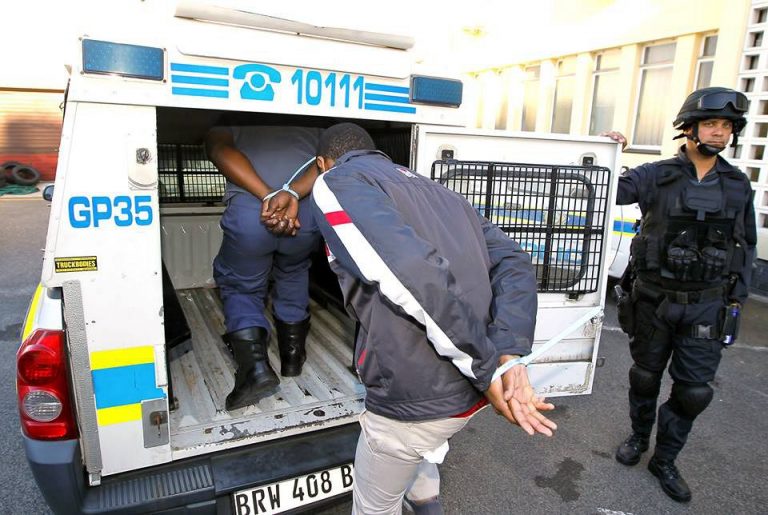
Limpopo police have made a breakthrough in the housebreaking cases that have seen more than 1 500 schools burgled countrywide during the covid-19 lockdown with the arrest of two more suspects. Thohoyandou police on Friday arrested two men aged 22 and 27 and recovered five laptops and two WiFi rooters suspected to have been stolen during burglaries recently committed at local schools in the Thohoyandou policing area.


Minister of Basic Education Angie Motshekga said this week a total of 1 577 schools were broken into around the country since the start of the lockdown.

She said 463 of the schools are in KwaZulu-Natal and 336 in Gauteng.

“This is truly a disturbing trend that will set us back in our efforts of trying to get back the academic programme. We appeal to members of the public to help the police bring the perpetrators to justice,” she said.


Limpopo police spokesman Brigadier Motlafela Mojapelo said community members alerted police about the presence of two men who were in possession of suspected stolen property in the Thohoyandou CBD. He police reacted swiftly and pounced on the suspects.

“One of the suspects was found in possession of four laptops and the other was possessing two WiFi rooters and one laptop,” said Mojapelo.


He said preliminary police investigations have revealed that the recovered items were linked to  burglary incidents at Tshishonga primary school and Mphaphuli secondary school.


He said the two suspects will appear before the Thohoyandou Magistrates’ court soon. Mojapelo said  two other suspects arrested for the same crime, Rose Vurangu aged 23 and Shadukani Mabila aged 26, were denied bail by the Thohoyandou magistrates’ court after appearing for possession of computers and laptops that are also suspected to be linked with a burglary incident at Tshishonga Primary School.

Their cases were remanded to 03 June 2020 for formal bail application.
Police investigations into the suspects’ possible link to burglary incidents that were committed at various schools, especially in the Thohoyandou area, are continuing.

Africa Month: The Continent Must Unite Around The Cardinal Values of Ubuntu

DR MARINKIE MADIOPE

In IsiZulu, there is a saying that goes, ‘indlela inbuzwa kwa ba phambili’, which can be loosely translated into, ‘direction is asked for, from those who’ve walked the path’. According to the illustrious Credo Mutwa, in his seminal masterpiece, Indaba my Children, 

“these are the stories that old men and old women tell to boys and girls seated with open mouths around the spark-wreathed fires in the centres of the villages in the dark forests and on the aloe-scented plains of Africa. Under the gaze of the laughing stars the Old One sits, his kaross wrapped around his age-blasted shoulders, staring with rheumy eyes at the semi-circle of eager expectant faces before him – faces of those who have taken but a few steps along the dark and uncertain footpath called Life – faces of the ones yet oblivious to the pain of life’s bitter scourges – faces yet unmarked by furrows of bitterness, ill-health and anger – the fresh, pure, open faces of…children. The fire dances in the middle of the round clay fireplace like a virgin revelling in the simple joy of being alive. It devours the dry twigs and logs that a little girl is constantly feeding it, leaving nothing but glowing ashes. It mocks the silent sky with a redly luminous column of smoke against its starry face and by sending up short-lived stars of its own”|

As the birthplace of humankind, the motherland, homeland, and ancestral origin of everyone on the planet, Africa is a blessed, special, and beautiful continent. It is an expansive abode of rich diversity, striking complexities and ornate nuances and peculiarities, both in its people and in its biomes.

With approximately 2 100 languages spoken by more than 3 000 ethnic groups in our population of just over 1,3 billion individuals spread across 55 countries, Africa is culturally, philosophically, and linguistically a very wealthy land.Our shared, priceless heritage is littered with shining examples of the excellence, resilience, ingenuity, fortitude of character, strength, spirit, and love of our people. We have adapted to desertification, unshackled ourselves from slavery, replenished ourselves from years of famine, battled deadly viral diseases, nursed ourselves out of internecine conflicts, liberated ourselves from colonial oppression, and together, through it all, held fast the inherited role we collectively hold as custodians of humanity.

As Enock Maregesi spiritedly states:“We are the children of Nelson Mandela; we are the children of Kwame Nkrumah; we are the children of Haile Selassie; we are the children of Samora Machel; we are the children of Robert Mugabe; we are the children of Patrice Lumumba; we are the children of Julius Kambarage Nyerere. We know who we are!”

And in this reverent knowledge of who we are, where we come from and what we have experienced to bring us to this present day where we celebrate our languages, our customs, our traditions, our ethnicities, our similarities and differences, our uniqueness, our Africa, and by virtue of that, our Africanness, we not only remember, but resonate with the heart-stirring words of Dr Kwame Nkrumah, “I am not African because I was born in Africa, but because Africa was born in me!”

We are grateful for the providence with which our continent has been virtuously spared from the unprecedented eventualities that have become synonymous with the leap year of 2020. The onset of the global lockdowns following the declaration of COVID-19 as a pandemic, averted a situation that could have escalated into a third world war; decreased the worldwide carbon emissions and pollution drastically; and served as a clarion call to unite humanity in the common goal of the preservation of human life. In spite of the hardships that came with re-adjusting our focus back to self-sufficiency, self-preservation through social distancing, and redefining what we term as essential, all of humankind has joined in remembering. Remembering how to do for self, remembering to care for those in need, remembering to cherish and respect the planet, and most importantly, remembering their African ancestry.

As we dutifully charter forth through the eternal passage of time, continuously evolving in conscious intelligence, consistently preserving human existence and steadily riding the throes of modernisation by globalisation, we invite all of humankind to take heed of our guidance, and ask for direction from those who have walked the path before. Let us illuminate the way forward for our planet by using the knowledge and ways that have been laboriously and painstakingly preserved for us by our forebearers though centuries of oppression, apartheid, discrimination, and derogation. 

We overcome. We inspire. We rise. We adapt. We thrive. It is our legacy to steer humankind back home, back to basics, back to mother earth. The historic events that have marked the first half of 2020 have highlighted to the world the inescapable importance of the cardinal African values of Ubuntu and a sustainable co-existence with nature. 

No, we are not African because we are born in Africa, we are Africans because Africa is born within us. Let us construct for the world a new model of being, a model of old, a model of nature, a model of our African nature.

On this Africa Day, go forth African child, and remember your sacred duty. Live your glorious destiny. Show the way for the rest of humanity. Mayibue!!!

(Dr Marinkie Madiope is the Principal of the South Campus of the University of the Free State)

Coronavirus: Gauteng Education Allocates R15 000 To Schools For Deep Cleaning Ahead of Re-Opening In June

NYAKALLO TEFU

GAUTENG EDUCATION Department has allocated R15 000 each to 1 752 schools which have been deemed to have the capacity to undertake the cleaning themselves when the schools re-open in June.

“We are transferring R15 432 to schools for the appointment of local capacity to clean the schools. All schools will provide proof or a certificate to confirm that cleaning and disinfection was done based on a checklist, including copies of the invoices,” said the provincial MEC for Education Panyaza Lesufi.

Lesufi was briefing the media about preparations for the reopening of schools in the province.

He said the province has received a donation from Bidvest to assist with the 577 schools that have been deemed not to have the capacity to undertake the cleaning themselves.

“In partnership with Bidvest, Bidvest is cleaning and disinfecting the 577 Schools and will provide sanitiser dispensers for all the 1 253 matric classrooms. This has started on the 20 May 2020,” said Lesufi.

Lesufi said teachers above the age of 55 have been asked to disclose any health issues in order for them not to pose a risk to learners when they return to school.

“We are creating a pool of new teachers, for now 50 posts have been reserved for the substitution of personnel affected by COVID-19 as well as 1047 vacant PS posts on Perusal,” he said.  

He said a total of 7000 youth interns are being recruited to support COVID-19 management in schools and offices.

“To provide and assist with additional admin capacity for additional work for COVID-19 management a number of youth brigades, 4 per school,” said Lesufi.

Putting focus on the transportation for learners, Lesufi said there are currently 212 service providers operating with 2 500 commissioned.

Lesufi said the department will be increasing the number with additional 1000 buses in order for them to comply with social distancing.

“Government funded learner transport will sit at 3 500 on the road by the time pupils return to school in June’, said Lesufi.

He added that parents who opt for their children to use private transport will have the responsibility to ensure that social distancing regulations are adhered to. He says his department is still collecting data on how many private vehicles and lift clubs there are in the province that transports learners.

“The Gauteng Department of Education is responsible for transporting around 160 000 learners as part of its poverty alleviation programmes”, said Lesufi.

The department is putting measures to enforce social distancing in transit as well as compliance with good hygiene practices to contain and prevent the spread of the COVID-19 virus amongst learners in transit.  

Lesufi said the measures include the disinfection and sanitization of buses as well as introducing the 70% occupancy rule on a single trip.

In order for schools to have control over any situation that may happen regarding the health of learners or staff, clinics will be linked to schools to be available especially in case of emergencies.

“Each schools must be linked to a professional nurse at the nearest PHC facility who should ensure that learners who require testing, management or referral receive these services”, said Lesufi.


Lesufi said the department is currently ensuring that schools with water issues, 67 at the moment, will be sorted out by the time learners return to school in June.

All schools are expected to have port of entry and exit, with the MEC saying all other gates must be closed.

“The closed entry points must contain signage indicating the entry point is closed and directions to the open entry point”, said Lesufi.

As schools reopen on 1 June 2020, there will be no visitors allowed unless they have permission from the department.

COVID-19: How To Ensure Continuity Of Education In Africa

THE COVID-19 pandemic has drastically hit the world since its outbreak in late 2019 with a lot of infections and death. Africa is no exception. The affected countries are facing enormous difficulties and have put in place measures to contain its spread. Education has been one of the most impacted sectors affected by the COVID-19.

A worldwide pandemic with regional impacts

According to latest data made available by UNESCO, 1.57 billion learners worldwide (91.4% of the world’s student population) are affected by schools and university closures, due to measures to stop the spread of COVID-19. In addition to facing an unprecedented health crisis, the World is also facing a learning crisis due to disruptions in Education caused by these schools and universities closures

In Africa, many governments have adopted nation – wide school closures which has affected millions of learners at all the school levels (pre-primary, primary, secondary through to university).

Added to the number of out of school children estimated at 250 million children, who were out of school before the Covid-19 outbreak.

According to UNESCO, these school closures are impacting over 90% of the world’s student population. Within the continent, only Burundi continues to open its schools, while Madagascar has chosen to close schools in certain localities only. The consequence of these measures is that millions of pupils were sent home. In Nigeria, the most populous country in Africa, more than 39 million pupils are affected and in smaller countries like The Gambia, nearly 600,000 students are at a standstill.

Distance learning: opportunities and challenges in the continent

In a bid to mitigate the short and longer term impact of school closures on learners and ensure continued learning, many countries have adopted distance learning mechanisms with the guidance/support of UNESCO, depending on the country’s infrastructure, connectivity and accessibility of Internet to the majority of the population.

The Global Partnership for Education has also come in handy to provide 250 Million additional resources to countries to support their COVID-19 Education response plan.

In Senegal, for example, where access to the Internet is limited, distance learning becomes hypothetical. The distance learning courses are not accessible to the majority of the learners.

In some countries like Cote d’Ivoire, the focus is mainly on the exam classes.

Some private schools use Whats App to inform parents of the exercises to be done. Again, this cannot be applied everywhere.

For some of the children from public schools in many countries across Africa, no learning at all is taking place. This is mainly the case of children living in remote rural areas that do not have access to Internet, TV and sometimes not even a radio.

In Eswatini, since February, the Government started virtual learning/ teaching using radio, TV and online uploads although it had its limitations. Other countries have not yet started distance learning programmes, as they are still in the process of preparing pedagogical material for the online courses.

In that case, the role of parents to provide oversight and ensure that the children effectively learn is critical. But how many parents have the capacity to do that? This has a potential to widen the inequalities and also affect negatively the quality of learning.

What should be done?

In this context, ANCEFA calls upon governments to:

  1. Ensure that any COVID-19 response Plan is inclusive of the Education needs of all learners, including the most disadvantaged children and the children with disabilities. All distance learning TV programmes should be available in sign language and paper versions.
  2. Ensure that the girl child receives special attention, as the pandemic diversely affects boys and girls, the latter being likely to be submitted to domestic chores, early marriage and early pregnancies, abuse and violence.
  3. Establish family support and accompaniment mechanisms to maintain learning at home and reduce domestic violence against children and women.
  4. Protect funding allocated to the Education system and increase sustainable funding to maintain the Right to Education for all learners.
  5. Engage innovative methods of sustaining learning for the students through new technology,
  6. electronic and digital media, and other creative approaches adaptable to the local context, such as community radio programmes on Education.
  7. Where some countries are planning school reopening, ensure that safety of learners and teachers is the priority, and the preparedness of the education systems is adequate in consultation with all stakeholders to ensure that learners and teachers are not at risk.

ANCEFA further wishes to urge African governments to prioritise EDUCATION in the country Covid-19 response across the continent – and with the support of Education stakeholders take appropriate measures that protect the safety of learners and teachers, families and communities and enhance sustainable learning for all learners.

(Source: Mame Codou Dieng, ANCEFA)

Two-Day-Old Baby Becomes South Africa’s Youngest Coronavirus Victim – Health Minister

CHARLES MOLELE

A TWO-DAY-OLD baby is believed to be the youngest person to die from coronavirus in South Africa.  The infant was among 27 people who are the latest to have died after testing positive for the virus, bringing the total number of national deaths in the country to 339, according to Health Minister Zweli Mkhize.

The minister confirmed in a statement issued on Wednesday evening that the two-day-old baby was the country’s first neonatal mortality-related to coronavirus.

“Sadly we have recorded the first neonatal mortality related to COVID-19- this was a 2 day old baby that was born prematurely and therefore had lung difficulties which required ventilation support immediately after birth,” said Mkhize.

“The mother had tested positive for COVID-19 and the child subsequently tested positive for COVID-19 as well. It is important to appreciate the complexities of the underlying condition of prematurity. We extend a special word of comfort to the mother of this child and salute the neonatologists, nurses and all allied and technical personnel who had the difficult task of caring for the neonate to the end.”

As of Wednesday, the total number of confirmed COVID-19 cases in South Africa is 18 003.

According to Mkhize, a total of 505 861 tests have been conducted with 18 252 done in the last 24 hour cycle.

There are currently 8 950 recoveries in the country.

“We are also devastated to have registered the death of a health care worker in the Western Cape. When COVID-19 claims the lives of the very people who are the bedrock of the national response, we feel the loss in so many ways,” said Mkhize.

“I want to send a special tribute to the health care workers who continue to serve with honour and compassion, despite the real risks they face in the frontline. My heart goes out to the family, colleagues and loved ones of this compatriot: we salute her for the contribution she has made to the fight against COVID-19. We wish to express our condolences to all the loved,” said Mkhize.

(Compiled by Inside Politics staff)

Teachers Will Not Return To School If It Is Not Safe To Do So – Unions Tell Motshekga

NYAKALLO TEFU

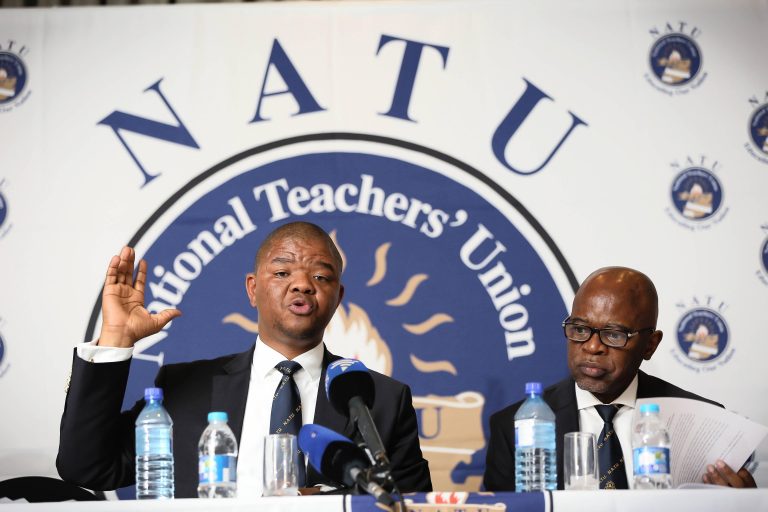
Teachers’ unions on Wednesday threatened to withdraw more than 300 00 teachers from schools if the Department of Basic Education fails to deliver safety measures at schools on time, including water, masks and sanitizers. Despite assurances by Basic Education Minister Angie Motshekga that it’s all systems go on Tuesday evening, trade unions, which includes SADTU, NAPTOSA, NATU and SAOU, said in a joint statement on Wednesday that a baseline survey conducted by the unions has revealed that 90% of schools have not been cleaned or disinfected.

“We, however, wish to make it clear that if PPEs had not arrived at schools and the required cleaning had not taken place when teachers return on Monday, they are not to endanger their lives by entering such schools,” said the unions on Wednesday.

The baseline survey, which involved 9 365 respondents and 40% of schools, was completed online between 16th and 18th May.

“This survey was completed by Principals who are on the ground, and are the very army the country depends on to manage schools in conditions of safety when for example 79% of the respondents report that they have not received regulations on how to deal with health and safety issues, when 60% report that their circuit manager has not yet been in touch with the and when 92% of respondents report that offices have not yet been cleaned and sanitised, you know there is a problem.”

The teacher unions said the Minister cleverly deflected these real facts by stating that school readiness will progress smoothly.

“These glaring inaccuracies demonstrate the lack of human-centred leadership we require when dealing with difficult and complex decisions. The Education Unions have called for the non-negotiables to be met before the workers can report for duty and this is what must be the preoccupation of the department rather than coercing the stakeholders to agree to unrealistic dates,” the unions said.

The survey also reveals that more than 60% of schools in the Eastern Cape, and more than 40% of schools in the Free State, KwaZulu-Natal, Mpumalanga, Limpopo and the North West have reported not having adequate water.

It also reveals that 44% of schools that responded to the survey reported that they do not have adequate access to water for COVID-related washing.

The survey further reveals that non-delivery of water tanks is a big problem in the Eastern Cape, KwaZulu-Natal and Limpopo.

The unions said while South Africans were advised that soap and water are effective as a sustainable alternative, 94% of schools that responded to the survey report hand sanitizers have not been delivered to schools.

Sanitizers have been delivered to nearly 40% of schools in Western Cape, but little has been delivered on other provinces as at 18th May, the survey shows.

“84% of principals that responded to the survey report that they have not yet discussed safety procedures with the SGB. This is a crucial gap that requires attention at national and provincial levels as parental confidence is to re-opening of schools. 84% of principals that responded to the survey report that they have not yet discussed safety procedures with the SGB. This is a crucial gap that requires attention at national and provincial levels.”

Motshekga said on Tuesday evening that provincial reports showed that all schools were ready to return to class on June 1st.  

SADTU threatened to withdraw its members from schools if the Department does not comply with its non-negotiables, which includes the provision of Personal Protective Equipment (PPEs).

“We note the Ministers announcement with reservations due to the fact that the department has for years failed to deliver basic infrastructure for schools timeously, so we are going to be vigilant in monitoring the delivery of these non-negotiables that are in line with COVID-19 regulations”, said SADTU spokesperson Nomusa Cembi.

However, teacher unions welcomed Motshekga’s announcement that she will appoint an Independent Panel to monitor compliance on safety measures before the commencement of learning and teaching.

“We welcome the minister’s announcement that she’ll appoint an independent panel to check the veracity of these claims,” said NAPTOSA’s president Basil Manuel.
“We want our own data to be checked as well as that of the provinces. We cannot allow false information to get our teachers to school with potentially disastrous results.”

Shock As Motshekga Ploughs Ahead With Controversial Plan To Reopen Schools Despite Warnings

CHARLES MOLELE AND NYAKALLO TEFU

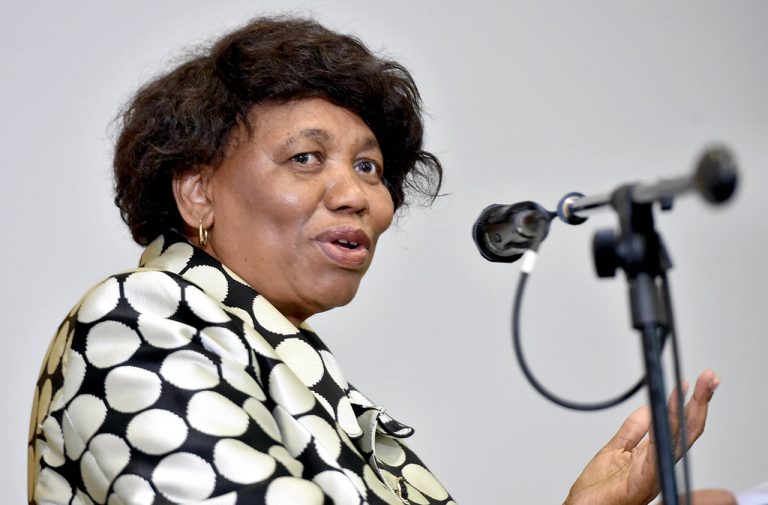
BASIC EDUCATION Minister Angie Motshekga has defended her Department’s hotly-contested decision to re-open schools in June, arguing that she followed rigorous research, scientific data and international best practice, including specific guidelines from the World Health Organization, UNESCO and UNICEF.

Addressing the media on Tuesday evening, Motshekga shrugged off concerns by hostile teachers’ unions and non-governmental organizations and presented her controversial plan to re-open schools after their sudden closures in March due to the coronavirus pandemic.

Motshekga, who was flanked by department officials including Deputy Minister Reginah Mhaule and Director-General Mathanzima Mweli, said her advice for children to return to school came from the three international bodies, who say that being out of school increased the risk of teenage pregnancies, sexual exploitation, child marriages, violence and other social maladies.

WHO, UNESCO and UNICEF also states in their guidelines that countries can only re-open schools if it was safe to do so and consistent with overall the country’s COVID-19 health response, with all reasonable measures taken to protect students, staff, teachers and their families.

“The bottom line is that schools are good for children. Schools give children structure and support. They can learn, see their friends, get free school meals and allow their parents to work and provide for them,” she said at media briefing.

Motshekga added that Cabinet and the National Coronavirus Council, chaired by President Cyril Ramaphosa, approved her plans to reopen schools on June 1st for Grade 7s and Grade 12s.

The minister said she also consulted widely and met with teacher unions and school governing associations (SGBs) together with the principals association to update them on her plans to re-open schools.

Motshekga argued that the longer marginalized children were out of school, the less likely they were to return.

“It is for this reason why the Department of Basic Education says it is necessary to re-open schools as soon as possible,” she said.

To state her case, Motshekga imputed UNICEF’s ‘framework for re-opening of schools’, which was compiled after global closures of schools in response to the COVID-19 pandemic: “Children from the poorest households are already almost five times more likely to be out of primary school than those from the richest. Being out of school also increases the risk of teenage pregnancy, sexual exploitation, child marriage, violence and other threats … These negative impacts will be significantly higher for marginalized children, such as those living in countries affected by conflict and other protracted crises, migrants, the forcibly displaced, minorities, children living with disabilities, and children in institutions.”

In recent weeks, Motshekga has been at loggerheads with teachers’ unions and NGOs in the education sector who exhorted her to delay the re-opening of schools under the current conditions, saying her decision was like sending children, school management teams and teachers to a ‘slaughterhouse’.

The unions and NGOs said it was incongruous for the minister and Government to order re-opening of schools while many lacked water and sanitation, proper toilets, sanitizers, disinfectants and masks, among other non-negotiables.

The unions and NGOs also criticized Motshekga war for failing to provide mobile toilets to schools to in order to replace pit latrines.

Section 27, Equal Education and the Equal Education Law Centre maintained on Tuesday evening that Motshekga has failed to fix South African schools for many years, adding there are still 3 700 schools with pit latrines as their only form of sanitation.

While Motshekga conceded to the slow provisioning of water and sanitation infrastructure to rural and urban public schools, she maintained that the delivery of the COVID-19 essentials such as sanitizers, masks, water and sanitation was being done ahead of the phased reopening of schools from June 1st.

As a matter of fact, she added, all food handlers at public schools would be supplied with the required personal protective equipment (PPEs).

These includes gloves, aprons and cloth mask.

She said her department has entered into an Implementation Protocol agreement with the Department of Human Settlements, Water and Sanitation and the Rand Water to provide water at various schools across the nine provinces.

Motshekga also added that Basic Education was working with Department of Transport to ensure that safety protocols were maintained.

“Everyone will have to sanitize their hands on entering a bus or any scholar transport and manage distance between learners in the bus, including compulsory wearing of masks throughout the school day.

Earlier, Motshekga urged parents to work closely with schools to ensure that learners with pre-existing illnesses are assisted.

She said schools will work with parents to obtain the information which once again needs to be treated with the utmost care.

Motshekga said concerned parents should feel free to declare any underlying health issues that their children had in order to ensure that no one was at risk when they go back to school.

“Learners will be screened daily when they enter the school premises”, said Motshekga.

She said children from special schools were also to be prioritized. “I want to emphasize that every child is important, and we have to deal with every child case by case when they return to school,” said Motshekga.

Parents worried about the risk of contamination can continue to home-school their children, she said.

Motshekga said parents had the right to keep their children at home but they should not deny them the right to education.

“SASSA allows children to be home-schooled, so parents can apply and register for your child because the law says every child has the right to education”, said Motshekga.

Last week, SMTs were set to return to schools, followed by teachers, but angry teachers’ unions advised their members not to return because the department did not meet their non-negotiables of providing Personal Protective Equipment (PPE).

(Compiled Inside Education staff)