Home Blog Page 414

70 Cases of COVID-19 at French Schools Days After Reopening

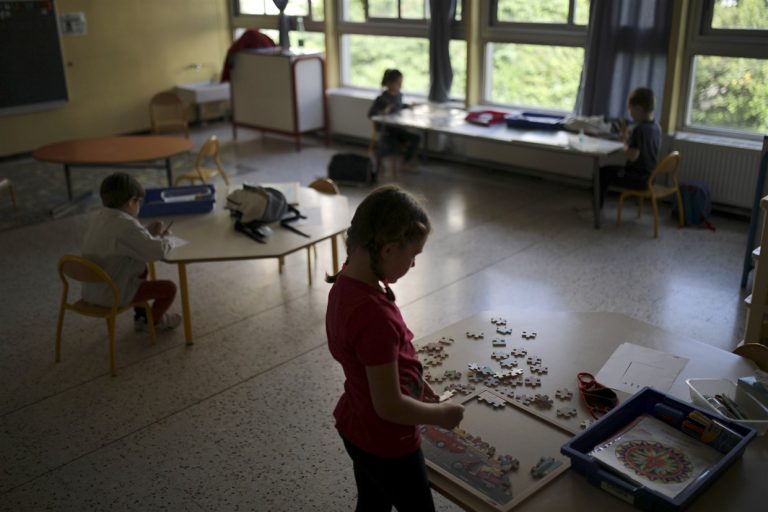
JUST ONE WEEK after a third of French schoolchildren went back to school in an easing of coronavirus lockdowns, a worrying flareup of about 70 COVID-19 cases has been linked to schools. Some lower grades were opened last week, and 150,000 more junior high students went back to the classroom Monday as further restrictions were loosened by the government. The move initially spelled relief: the end of homeschooling for hundreds of thousands of exhausted French parents, many of whom were also working from home.

But Education Minister Jean-Michel Blanquer sounded the alarm Monday, telling French radio RTL that the return has put some children in new danger of contamination. He said the affected schools are being closed immediately. French media reported that seven schools in northern France were closed.

The situation highlights the precarious situation the government finds itself in as it seeks both to reassure the public that the country is moving forward past the coronavirus and to react prudently to safeguard public health.

Blanquer did not specify whether the 70 cases of COVID-19 were among students or teachers.

Given that the incubation period for the virus is several days, Blanquer said, people are “likely” to have been infected before about 40,000 preschools and primary schools reopened last week, with classes capped at 15 students.

About 30 percent of children went back to school, Blanquer said. The government has allowed parents to keep children at home.

This week, France is reopening junior high schools in “green” regions less affected by the virus, which do not include Paris.

Although the idea of children’s being silent “super-spreaders” has been largely debunked in recent analyses, France last week recorded its first death of a child linked to Kawasaki disease, a mysterious inflammatory syndrome that some doctors say could be triggered by COVID-19.

The 9-year-old boy in Marseille was one of 125 children in France with the syndrome.

French authorities have reported at least 142,411 people infected with the coronavirus, with 28,108 deaths.

In neighboring Germany, schools have been slowly opening to various degrees for about two weeks now, subject to precautions.

No major outbreaks related to the reopenings have been reported, although there have been many individual cases. In Berlin’s Spandau neighborhood, a school was ordered temporarily closed over the weekend after it emerged that a teacher with COVID-19 had had contact with two elementary classes, an after-school care program and other teachers.

A teacher from another school in the area also tested positive but had contact with only a small number of children. They were ordered into quarantine, but the school has remained open, the newspaper BZ reported Monday. In the surrounding state of Brandenburg, two kindergartens were closed, and a fifth-grade class at an elementary school were quarantined.

(Source: Associated Press)

Schools To Reopen On June 1st – DBE Director General

NYAKALLO TEFU AND CHARLES MOLELE

The Department of Basic Education (DBE) is adamant that schools will be ready to re-open on June 1st despite fierce opposition by teachers’ unions and non-governmental organizations (NGOs) in the education sector. The teachers’ unions – SADTU, PEU, NAPTOSA, SAOU and NATU, claimed in a joint statement earlier that they were only told that three provinces – Western Cape, Gauteng and KwaZulu-Natal – out of nine were ready to reopen in June.

SADTU has previously threatened to withdraw 250 000 from unsafe schools if Basic Education Department failed to meet its non-negotiables, which include the provision of Personal Protective Equipment (PPE) for office-based personnel, school-based educators and education support personnel.

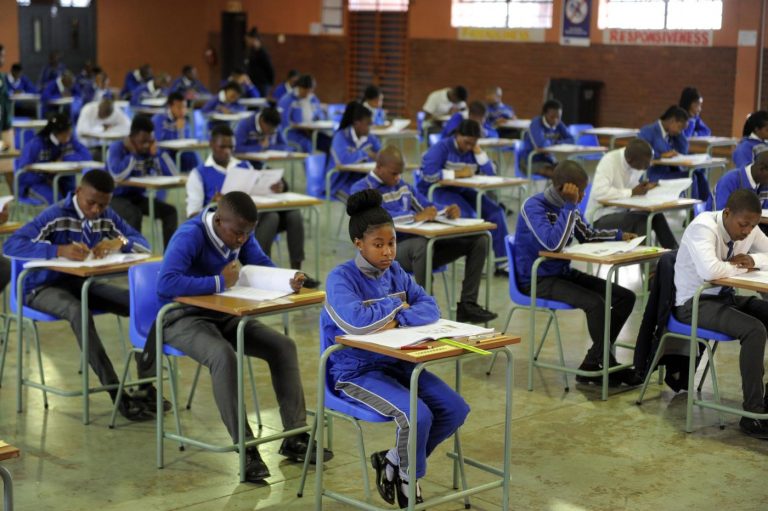
In an exclusive interview with Inside Education on Monday, Basic Education’s Director-General Mathanzima Mweli insisted it was all systems go, and that schools will re-open on June 1st under a phased approach, beginning with Grade 7 and Grade 12.

“It can’t be true that only three provinces are ready to re-open. As far as I am concerned all nine provinces are ready to open on June 1st,” Mweli told Inside Education.

“On May 25, all School Management Teams will return to work. They will be followed by learners on June 1. The schools are ready to re-open. They have been fumigated and disinfected. Personal Protective Equipment has been delivered. All school earners will eventually go to school as the National Coronavirus Council drops the lockdown levels.”

Basic Education Minister Angie Motshekga was expected to address the nation on Monday about the re-opening of schools following engagements with various stakeholders.

KwaZulu-Natal MEC of Education Kwazi Mshengu said on Monday that the province was ready to open by June.

“We have done this in order to allow the space for the deep cleaning and sanitisation of our schools which is part of the non-negotiables agreed to by all stakeholders in the sector,” said Mshengu.

Section 27 spokesperson Julia Chaskalson said civil society organisations are concerned that schools are not ready to be reopened, with reports coming in from a number of provinces that essential personal protective equipment (PPE) and infrastructure for sanitation have not yet been delivered, thus putting learners and school staff at risk.

Chaskalson said following guidelines for school opening set out by the World Health Organisation and the College of Medicine South Africa, SECTION27 field researchers were currently liaising with partner schools in various provinces to survey their readiness to reopen.

“As far as we are concerned schools are not yet ready to re-open because there are 4 000 schools without running water and proper sanitation. Given the backlog of infrastructure, it is highly impossible that the schools will re-open on the first of June,” said Chaskalson.

The Department of Basic Education has released several statements about the phased reopening of schools over the next few weeks.

SECTION27 said DBE should provide full details of the scientific evidence on which the department has relied on before re-opening of schools.

“It is anticipated that the Minister of Basic Education will brief the public on Monday, 18 May 2020 on the dates for the opening of schools and provide details of plans for the opening of schools. These plans must contain hygiene and physical distancing measures to ensure the safety of learners, teachers, and the wider school environment,” said Section 27.

“The measures ought to be informed by the latest available medical evidence.  Both the College of Medicine of South Africa and the World Health Organisation (WHO) have published recent guidelines for reducing transmission of COVID-19 in the school environment.”

SECTION27 said it is distributing these guidelines to inform parents, teachers, and learners of the available guidelines and to enable them to better assess measures adopted by the Department of Basic Education for reducing transmission of COVID-19 in the school environment.

“It has been over seven weeks since schools were first closed. While we understand that learners’ usual access to education has necessarily had to be impacted by the Covid-19 pandemic and subsequent lockdown, the DBE is still required to ensure that the limitation on the right to basic education is reasonable and justifiable in terms of the Constitution.”

National Teachers Union’s (NATU) president Allen Thompson said many provinces were still not ready for re-opening of schools because not all the non-negotiables are currently in place.

“Ten days ago most of the provinces were not ready and we even checked on the ground and could see that things were not ready,” said Thompson.  

“At some point the provinces that we had knowledge that they were ready was Gauteng and the Western Cape, but they were also intending to use teachers for screening of learners and intending to use ordinary staff members to do the cleaning in the school which is something we objected on. Gauteng was indicating that they had not received enough masks, which indicated that they were also not ready for their systems to take off. In the Western Cape, most of the schools that had been vandalized had not been fixed, which also show that they were not ready.”

President of NAPTOSA Basil Manuel said to the best of his knowledge there is no province that is completely ready to open in June.

“We do a morning survey where we test in the different districts what the level of readiness is, certainly in all the provinces excluding Gauteng and Western Cape we have had a virtual indication that they are not ready at all,” said Manuel.  

“In fact some provinces sent out letters yesterday to indicate that School Management Teams must not report for duty. In the Western Cape there are large swabs of districts that have indicated that they received the necessary stuff for them to be declared ready for the SMT’s to be there and start meeting. However, a number of schools in the Western Cape particularly in the Southern Cape have indicated that they received nothing. In Gauteng the province did not indicate what has been delivered, so people are all excited, yet this is not sufficient. In other provinces it is a battle as some districts have not been open. Some head offices have very skeletal staff. In our electronic survey, which ends this afternoon, it will give us a clear indication of the level of readiness in each province.”

Over 1 Million Meals Served By Western Cape’s Emergency School Feeding Scheme

NYAKALLO TEFU

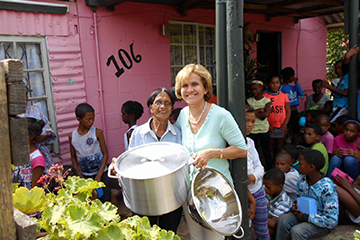
Over 1 million meals have been served to vulnerable and poor children by the Western Cape Education Department as part of its emergency school feeding programme. The programme came into effect after government shut down all national feeding schemes following the nationwide lockdown.

In a media statement, the provincial department of education said an average of 65 000 learners receive food on each of the two days a week that meals are served.

“We could not ignore the impact of the lockdown on the nutrition of school learners who rely on the programme, and we needed to find a way to support these learners,” said the department.

The emergency programme commenced in the first week of 6-10 April, providing takeaway meals for learners with additional funding from the Provincial Treasury.

Just last month, Inside Education reported that the Western Cape Department of Education came under fire following its decision to launch an R18 million feeding school programme in the province during the national lockdown period.

However, Western Cape Education Department MEC Debbie Schafer said the department is working with service providers to ensure that children who normally qualify for the national school feeding programme received their meals during the lockdown.

“The National School Nutrition Programme feeds about 483,000 of our poorer learners. We need to get to as many learners as possible in this very difficult time,” said Schafer.  

With additional funding from the Provincial Treasury for emergency feeding, WCED schools began to provide takeaway meals for learners through an emergency programme across the Province in the week of 6-10 April 2020.

The Department said since 6 April 2020, over 1.2 million meals have been served to learners (1 222 082 meals to be exact as of 12 May 2020).

The provincial education department thanked everyone involved in making the emergency feeding programme possible.

“This achievement lies solely on the shoulders of those who fought hard to get the programme up and running and those that were on the ground ensuring that meals were provided and safety protocols were in place,” she added.

I-HELP Liberia USA Rallies Support For Advancement Of STEM Education In Liberia

According to a dispatch from New York, the United States quoting I-Help Liberia USA Board, this year, Hunter College High School has reached out and partnered with other high schools in New York City to raise funds for the advancement of STEM education in Liberia. Despite the school year being cut short due to COVID-19, a donation drive was successfully held at Hunter as well as the Fiorello H. LaGuardia High School of Music & Art and Performing Arts.

Students from both schools donated clothes, books, and school supplies for Liberian schools. These materials were logged and totaled at around $5,950. The I-HELP Liberia Project aims to ship them later this year along with the supplies donated last year, which had a total value of $10,975.

The annual I-HELP Liberia Concert was also held at Hunter College High School earlier this year and it brought together high school performers from all over New York City to raise money and awareness.

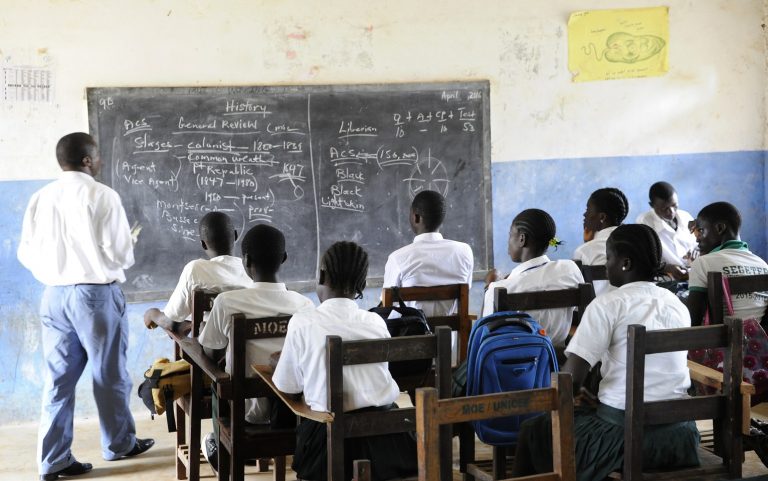
Although this year’s annual summer trip has been canceled because of the coronavirus, Hunter students have continued to support education in Liberia from home. After coordinating with the Liberian Ministry of Education, students Helen L., Victoria L., Aruna D., Sophia Li., and Clytie Q. have spearheaded an initiative to teach a group of Liberian teachers’ ways to supplement the 7th, 8th, and 9th-grade science curriculum.

The I-HELP Liberia Project is reimbursing the cost of data plans for these teachers so that they can participate. Meetings are currently held three times a week over Zoom, a video conferencing platform, to explore creative ways that teachers can connect their knowledge with real-world applications so students gain a deeper understanding of the material.

These workshops consist of quick, easy, and fun demonstrations that relate to what is being taught in the classroom. Hunter students aim to continue supporting Liberian education even from across the world.

(Source: GNN Liberia)

SADTU Slams North West Education Department’s Call For Teachers To Report For Duty This Week

NYAKALLO TEFU

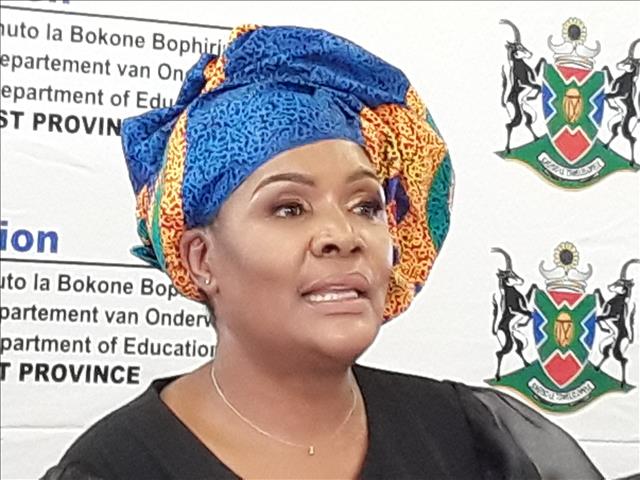
The SA Democratic Teachers’ Union has raised concerns about two circulars released by the North West Department of Education calling for school management teams (SMTs) to report for work this week without first consulting the union about its state of readiness. The teachers’ union said the department’s call for the SMT’s to report on Monday the 18th is premature because they have not taken into account all the safety precautions in compliance with the Occupational Health and Safety and the COVID – 19 regulations.

“As the union we are highly disappointed and disturbed by these contradicting circulars, which seeks to confuse and frustrate our members and with total disregard of the regulations as espoused in the Occupational Health and Safety Act. The Occupational Health and Safety Act states that No worker should enter the workplace before the workplace is thoroughly cleaned,” SADTU’s secretariat said in a statement.

SADTU said it rejected the two circulars asking teachers and school management teams to return to work this week.

“We strongly advise our members not to report to schools on the said date until the department demonstrate its state of readiness,” said SADTU.

“We have also noted the correspondence inviting “all employees to attend screening training” from Bojanala District and call on SADTU members not to attend that exercise which seeks to turn educators to screening personnel. We call on the department of Education in the province to give due respect to the School  Governing Bodies as legislated statutory bodies and desist from dictating to them and viewing them as “Cleaners” of schools. We stand firm that our members should not report for work until their safety is guaranteed.”

Meanwhile, the KwaZulu Natal Department of Education has announced plans to ‘deep clean’ all schools to ensure its readiness to reopen next month.

“The Department of Education will embarked on a rigorous sanitization, disinfection and deep cleaning of schools to prepare for the re-opening of schools”, said the department in a statement.  

To get the cleaning done, Principals of schools and School Governing bodies have been instructed to source the service of co-operatives for a three-month period for the process of disinfection, sanitization and deep cleansing of schools.

“Clean and disinfect bathrooms, classrooms, kitchens and staff offices and toilet surfaces at least once a day,” said the Department.

People who will be cleaning the schools are expected to wear utility gloves, masks and aprons to clean and disinfect.

The KwaZulu Natal Education Department has also shared the amount that will be spent on the cleaning of schools, which range from R150 per day for a small school with 9 classrooms to R300 per day for Mega schools with over 25 classrooms and hostels.

“Funds will be transferred to schools on the basis of proof of awards and invoices submitted to District officers”, said the Department.

(Compiled by Inside Education staff)

UCT Prepares Ground for Phased-in Approach Return To Campus

NYAKALLO TEFU

The University of Cape Town says three groups of students would be the first to return to campus in a phased-in approach as institutions find ways to bring back direct teaching and learning. The three groups include final year medical students, academically vulnerable students and those needing access to campus labs in order to complete their studies.

This was announced by Professor Loretta Feris during an online special assembly hosted by UCT Vice Chancellor Professor Mamokgethi Phakeng.

“In line with the government’s COVID-19 guidelines, the University of Cape Town (UCT) will follow a principled, four-phase approach to students’ return to campus”, said Feris.

UCT said Phase 1 will be for final-year medical students, this after Minister Blade Nzimande announced that final-year medical students needed to return to campus to access clinical platforms and complete their academic year.
“Conversations are ongoing about the return of other final-year Faculty of Health Sciences students,” said Feris.

The next phase, Phase 2, is for vulnerable students which is based on their ability to learn remotely under current conditions, among other considerations.

“We need to understand what vulnerability means in reference not only to a student’s ability to learn remotely because of issues such as connectivity, but also because of their socio-economic circumstances”, added Feris.

Phase 3 is for students who need to be on campus to complete the academic year, while Phase 4 is the return of all other students to campus, circumstances permitting.

Phakeng said the pandemic and lockdown have no doubt disrupted the academic programme, and the UCT leadership is mindful that this has led to staff and students feeling frustrated, uncertain and overwhelmed.

“Through this enormous challenge, staff continue to make extraordinary efforts in helping provide a steer for the institution”, said Phakeng.

During the online special assembly, the institution emphasized that they would ensure that the health of staff and students is a priority.

“We need to ensure we can continue practicing social distancing, which means that we can’t use all the beds in residences”, said Feris.

Cyril Ramaphosa: Every South African Has A Constitutional Right To Challenge Lockdown Regulations

0

CYRIL RAMAPHOSA

We often take our healthy and robust democracy for granted. Yet it is probably our greatest asset in our momentous struggle to overcome the coronavirus pandemic.
 
We have among the most politically-engaged citizenry in the world. A poll in 2018 by the Pew Research Center shows South Africans are strongly inclined to take political action about issues they feel most strongly about, such as health care, education, freedom of speech and corruption.
 
The poll confirms much that we already know about ourselves. We enjoy nothing more than robust engagement with our government and among ourselves on the burning issues of the day.

We have an active civil society ever ready to safeguard our fundamental freedoms and rights.
 
One of the triumphs of our democracy is that every South African believes the Constitution protects them and that the courts are a fair and impartial arbiter of their interests.
 
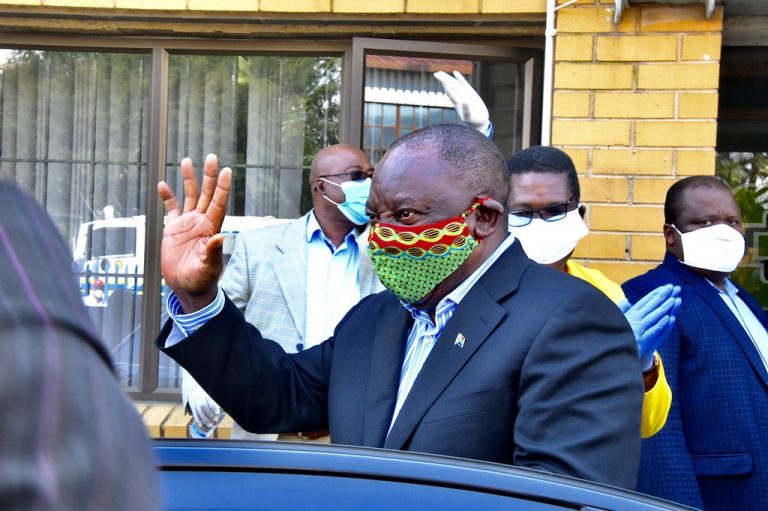
I got thinking on these matters during a recent visit to the Eastern Cape to assess the province’s coronavirus state of readiness.
 
I was asked by a journalist whether I was concerned at the pending litigation challenging certain provisions of the Disaster Management Act. This law is the basis for all the regulations promulgated under the national state of disaster we declared to combat coronavirus.
 
Since the start of this crisis, a number of people have exercised their right to approach the courts. The lockdown regulations were challenged in the very first week of the lockdown by a private citizen from Mpumalanga who wanted an exemption from the travel prohibition to attend a funeral.
 
In the 7 weeks that have followed, there have been legal challenges from a number of individuals, religious bodies, political parties, NGOs and from business organisations against one measure or more of the lockdown provisions they were unhappy with.

Some have succeeded in their legal challenges and some have not. Some had approached the courts on the basis of the urgency of their cases had their urgency arguments dismissed and others have found other avenues for the relief they sought. Others have subsequently withdrawn their applications following engagement with government.
 
While we would prefer to avoid the need for any legal action against government, we should accept that citizens who are unhappy with whatever action that government has decided on implementing have a right to approach our courts for any form of relief they seek. This is a normal tenet of a constitutional democracy and a perfectly acceptable practice in a country founded on the rule of law.
 
We have checks and balances in place to ensure that every aspect of governance is able to withstand constitutional scrutiny.

Where we are found wanting, we will be held to account by our courts and, above all, by our citizens. Besides our courts, our Chapter 9 institutions exist to advance the rights of citizens, as do the bodies tasked with oversight over the law enforcement agencies.
 
As I told the journalist, every South African has a right to approach the courts and even I, as President, could never stand in the way of anybody exercising that right.
 
There has been, and will continue to be, robust and strident critique of a number of aspects of our national response to coronavirus, from the data modelling and projections, to the economic effects of the lockdown, to the regulations.

As government we have neither called for such critique to be tempered or for it to be silenced.
 
To the contrary, criticism, where it is constructive, helps us to adapt and to move with agility in response to changing circumstances and conditions.

It enriches public debate and gives us all a broader understanding of the issues at play.
 
We have consistently maintained that we rely on scientific, economic and empirical data when it comes to making decisions and formulating regulations around our coronavirus response. To the greatest extent possible under these challenging circumstances, we aim for consultation and engagement. We want all South Africans to be part of this national effort. The voices of ordinary citizens must continue to be heard at a time as critical as this.
 
The coronavirus pandemic and the measures we have taken to combat it have taken a heavy toll on our people.

It has caused huge disruption and hardship. Although we can point to the progress we have made in delaying the transmission of the virus, there is still a long way to go.

The weeks and months ahead will be difficult and will demand much more from our people.
 
The pandemic will therefore continue to place an enormous strain on our society and our institutions. Even as we gradually open up the economy, the impact on people’s material conditions will be severe. For as long as this is the case, the potential for conflict, discord and dissatisfaction will remain.
 
As we navigate these turbulent waters, our Constitution is our most important guide and our most valued protection. Our robust democracy provides the strength and the resilience we need to overcome this deep crisis.
 
Just as government appreciates that most court applicants are motivated by the common good, so too should we recognise that the decisions taken by government are made in good faith and are meant to advance, and not to harm, the interests of South Africans.
 
Our foremost priority remains to save lives. Our every decision is informed by the need to advance the rights to life and dignity as set out in our Constitution.
 
We will continue to welcome different – even dissenting – viewpoints around our national coronavirus response. All viewpoints aid us and help us to work better and smarter.
 
The exercise of the fundamental freedoms of expression, association and speech is a barometer of the good health of our democracy. But much more than that, these rights are essential to the success of our national and collective struggle to overcome the coronavirus.

No Evidence ‘Madagascar Cure’ for COVID-19 Works, says WHO

0

The World Health Organization (WHO) has said that a herbal drink promoted by the president of Madagascar as a cure for covid-19 should be tested to see if it is effective.

The WHO has no evidence the drink works, according to the head of the group’s Africa office.

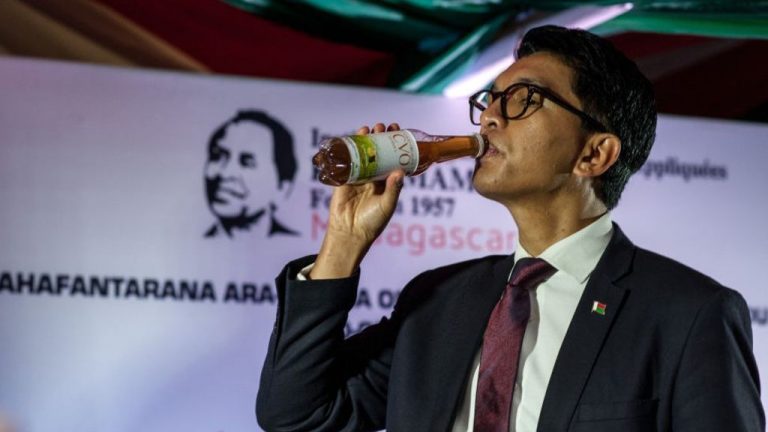
Madagascar’s president, Andry Rajoelina, this week defended the unproven Covid-Organics drink, which is reportedly made from Artemisia annua (sweet wormwood) and herbs, telling France 24 it was a “preventive and curative remedy” and “works really well”.

However, when Matshidiso Moeti at the WHO Regional Office for Africa was asked during a press conference yesterday whether the WHO had any data or evidence of its efficacy, she said: “No, we do not.”

She said the WHO’s director-general Tedros Adhanom Ghebreyesus would soon be speaking with Rajoelina about the purported remedy. Moeti said the WHO supported the use of traditional medicine in African healthcare systems but studies must be carried out to see if they work.

In the case of Covid-Organics, she said the WHO wanted to see an assessment of its efficacy, and that the work could be undertaken by Madagascan scientists. “We have offered to support the design of a study to look into this product.” The WHO is in discussions with the Madagascan government, she said.

She added: “We are not discouraging the use of a product, but would like to advise that it be tested.”

The drink was developed by the Malagasy Institute of Applied Research and launched by Rajoelina last month. Orders have since been dispatched to several other countries, including Equatorial Guinea, Guinea-Bissau, Niger and Tanzania.

While the WHO says it isn’t discouraging use of the herbal drink, it has paid for advertisements to appear alongside Google searches for Artemisia annua. The advertisements lead to a WHO page that says such medicinal plants should be tested for efficacy and negative side effects. “Africans deserve to use medicines tested to the same standards as people in the rest of the world,” a statement says.

Research is under way in Europe to assess the prospects of extracts of A. annua as a treatment against the new coronavirus, following initial work in China that showed promise.

The Malagasy Institute of Applied Research and the Madagascan government had not replied to requests for comment at time of publication.

(Source: New Scientist)

4IR: A Rapidly Changing World And The Need To Adapt Post COVID-19

PROFESSOR MAMOKGETHI PHAKENG

The COVID-19 pandemic has brought into sharp focus our rapidly changing world. It has been coming for some time. Back in July 2016 after I joined the University of Cape Town as Deputy Vice-Chancellor: Research and Internationalisation, I spoke at the launch of the university’s annual research report. I argued that in the coming decade we would face a world of uncertainty as well as rapid and profound change.

Four years later, here we are with COVID-19. And more challenges lie ahead, with economic problems, climate change, poverty and inequality, as well as the ethics of machine learning as we settle into the fourth industrial revolution, to name just a few. These challenges will test our solidarity and commitment but together we can overcome each one of them.

When I became Vice-Chancellor in 2018, I argued that for us as UCT to cope with this uncertain future, we would need three things: an unrelenting commitment to excellence, an exceptional focus on transformation, and the courage to do things differently to keep UCT sustainable.

I argued on that occasion that we must forever bury the notion that the global is somehow not African. The problems of Africa are the problems of the world and the problems of the world are the problems of Africa.

Gone are the days when people thought infectious diseases are an “African” problem. COVID-19 has wreaked havoc everywhere.

So we are in this together not just as UCT but as a nation and as the global community.

Higher education around the world is facing the same set of uncertainties that we are facing at UCT. And we continue to engage with higher education institutions here in South Africa, on the continent and elsewhere in the world. And leading institutions in the world that we collaborate with are facing the same issues.

At UCT, along with other South African institutions, we are aware that a return to normality – or a semblance of it – could take time. If at all. Of course, what we think is normal will probably never return completely. So while there is a lot of talk about recovery, my view is that perhaps what would be needed for us to do is not so much recovery but maybe adaptation.

This is a challenge and an opportunity we share with our students… This is an opportunity for all of us to rethink and reimagine how we learn and teach, how we do research and how we apply what we learn – recognising that our students will be working with us to build a new post-COVID world. 

To complete the academic year at UCT we are thinking of all of our students, including those whose environment is not suitable for learning, those living in poverty and those living with different kinds of disabilities. We are working together to meet the challenge.

And it is not easy at all. It is thanks to the help of faculties and professional, administrative and support services staff, including many different departments, that we have been able to ease the situation for most of our students. Nearly 21 000 undergraduate and postgraduate students completed our Student Access Survey to determine the resources they have available for remote learning. We have used this information to see how we can provide help to students who may need it. We are learning a lot though this process of remote learning and teaching, and these lessons should help all of us in Term Three and into the future.

We are monitoring student participation on Vula [internal UCT online learning platform], to identify those who might need extra help and to work with faculties to assist those students.

We have bought laptops and arranged to deliver them on loan to needy students. We are looking at ways to assist students who do not have online access, by sending them printed materials and flash drives. Our aim is to ensure that as many students as possible can continue learning while they are off campus, using whatever materials we can make available to them. We have assembled several working groups and we are using the COVID-19 UCT emergency fund to support this project.

We are providing prepaid data to all students, and we have also established agreements with all four major cellphone operators – Vodacom, MTN, Cell C and Telkom – to provide access at no charge to UCT websites that are key for online learning.

This new way of teaching and learning is stressful for all of us, but especially for students, who may feel isolated from their lecturers and tutors and from the camaraderie of fellow students. They may not have home environments where they can study effectively.

Many students I speak to see UCT as an escape: a peaceful physical space where they can focus on their studies. It’s a space they don’t necessarily have at home. So we have also created a plan to assist vulnerable students once the campus can reopen, with blended learning, combining online learning with face to face learning and tutorials. We will only see the success of that when campus can reopen.

Colleagues in the Centre for Innovation in Learning Technology (CILT) in the Centre for Higher Education Development have made it possible to develop online teaching materials in a very short time. CILT is continuing its webinar series with tools to help teaching staff to measure student engagement and to assess their performance in each course.

Even before lockdown, students were interacting with lecturers and tutors online and accessing course materials. We have been building up a bank of recorded lectures since 2018. I hope we can learn to use online teaching as a way to free teaching staff to engage more meaningfully with students on a personal level, because their influence as role models remains as important as ever.

UCT researchers and postgraduate students remain as active as possible, working remotely. Our researchers have been actively engaged with the National Department of Health, with the National Institute for Communicable Diseases as well as the Presidency, to support the government in response to COVID-19. These efforts include developing vaccine candidates, epidemiology studies, clinical research and developing low-cost personal protective equipment.

Experts across the university have been advising the government at provincial and national level as well as volunteering. Their work includes reaching out to the townships and working in local hospitals and clinics.

Many of our staff members would like to know when they could come back to campus. We will not rush to bring colleagues back to campus unless the government directs us to do so, and unless we know that it is safe to do so. When we do return, it will probably be in phases and we will make sure that there are mechanisms in place to ensure that staff members are safe.

We now plan to teach remotely for the second and third terms. The academic year is likely to extend well into December and to continue into February 2021. UCT’s current planning includes the possibility of pushing the start of the next academic year to March 2021. This plan is subject to change, however, depending on the government’s response to COVID-19. Our primary focus is to ensure that every student can complete the academic year successfully.

In the meantime, the cost of the lockdown including financial aid and items such as data and laptops for students, are mounting. I have pledged 20% of my salary for the next three months to the UCT COVID-19 emergency fund. This is in addition to the 10% of my salary that I already contribute to a UCT scholarship fund to support women postgrad students.

In March, at the beginning of the lockdown, our Chancellor, Dr Precious Moloi-Motsepe, announced a donation of R5 million by the Motsepe Foundation. And many of colleagues have also pledged their salaries and made substantial donations to the UCT COVID or to some of our entities such as the Baxter Theatre and to the Students’ Health and Welfare Centres Organisation (SHAWCO). I invite all members of the UCT community to pledge to the fund. Any amount is welcome, no matter how big or small.

Through our hard work, a new and stronger UCT is emerging out of this crisis. As a community we are demonstrating excellence, resilience and innovation.

(Mamokgethi Phakeng is Professor of Mathematics Education and Vice Chancellor of the University of Cape Town.)

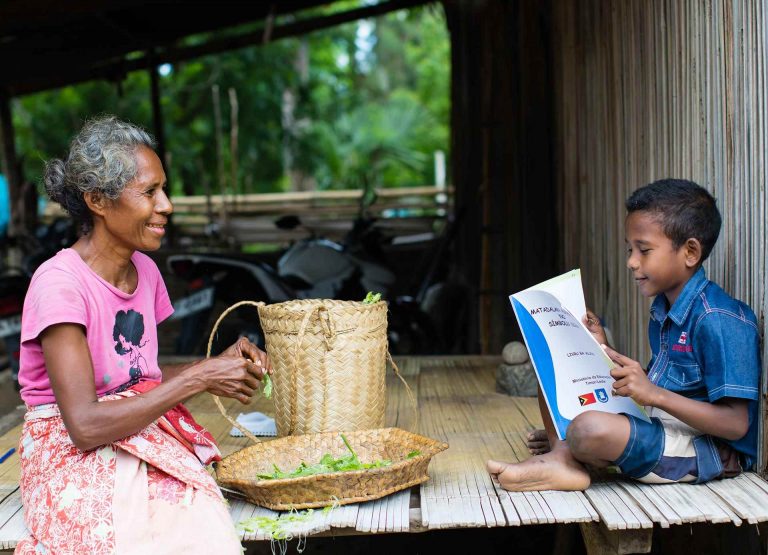
UNICEF: This Is How We Keep Children Learning, No Matter The Challenges

AMY PORRITT

No internet, no TV, no books, pens or paper? No worries. When schools closed in Australia’s near neighbour Timor-Leste as a precaution against the coronavirus pandemic, the Timorese Ministry of Education called on UNICEF to help find a way to keep students learning. For a small country with a population of 1.2 million, setting up distance learning to support all children, especially those in remote areas, was not an easy task.

While almost all families in Timor-Leste have a mobile phone, less than half have a TV, and only a quarter of people have access to radio. Likewise, internet access is predominately only available for those in urban cities, like the capital Dili or second largest city Baucau.

At home, many families in remote areas may also lack basic learning supplies, as well as a reliable supply of electricity for light or charging electronic devices, if they have them. 

“A lot of families in countries like Timor-Leste, the Solomon Islands or Papua New Guinea do not have any books in their houses, let alone pens and paper and resources that students can use to support their learning,” explains UNICEF Australia International Programs Manager, Alice Hall. 

So how do you help Timor-Leste’s 400,000 students keep learning, when many can’t even regularly access the internet? 

Within two weeks of school closures, UNICEF and the Ministry of Education launched the distance learning program Eskola Ba Uma, which translates as ‘School Goes Home’ in the national language of Tetun. 

Eskola Ba Uma provides learning materials across TV, radio, online, mobile phones and print, aiming to ensure all children can access education resources, no matter their circumstances.

The online part of the program, the Learning Passport, was designed with Microsoft and provides children remote access to their national school curriculum with child-friendly textbooks, storybooks, songs and videos. It also includes interactive quizzes to keep children engaged and test their progress. 

“It was initially designed for a refugee context, where children could carry it with them as evidence of their education progress,” explains Alice. 

“The Learning Passport is great for children because it is really interactive and it tracks children’s progress, creating a record of how they are progressing through their learning, even if they’re not in classrooms.” 

“When schools reopen, they will need to assess how much learning children have missed and this will be a really useful tool for that.”

UNICEF also launched an app version of the platform to allow students to download books and resources in advance while they are in internet range, so they can continue to study once at home, even if their community does not have regular access to the internet.

Soon the platform will offer skills training for adolescents and UNICEF has also partnered with a local telecom company with the aim to give 600,000 mobile phone users free access to the learning materials, without having to use their mobile data, which can be unaffordable. Parents and carers can also sign up for SMS text messages with advice and tips on how to support their children’s learning at home. 

“It’s incredible how quickly UNICEF field teams in so many countries have mobilised and come up with really innovative solutions,” says Alice. “They have instantly changed everything that they’re doing in order to keep children engaged and keep them learning.” 

“In Timor-Leste, they developed the television series within weeks. In Papua New Guinea (PNG) they reached 380,000 children within a few weeks of schools closing with radio broadcasts of lessons. And, in the Pacifc they’re getting storybooks and messages out to children, and managed to rapidly adapt these for the Pacific context – which is so important.”

It is hoped the new ways of delivering education in Timor-Leste and other countries will outlive the COVID-19 emergency, paving the way for more accessible education systems for remote communities. 

For many children in Asia Pacific countries, their primary school may be five or six kilometres away, and the journey may also involve river crossings. “It’s the reason a lot of children start school late. They are simply too small to travel those distances by themselves.”

Many must also move away from their community in order to access high school, which becomes financially unachievable for some families. 

Quality of education is also an issue. 

“Many schools in the Asia Pacific region have always had very limited access to learning materials,” explains Alice. 

“A lot of teachers are also operating in really remote and isolated communities, with limited access to continuous training and support, so quality of education in remote areas has also been a challenge in many countries.”


Alice says she hopes the new initiatives will go on to provide more resources for teachers in remote schools, and mean children who are unable to attend schools due to distance will have other options to start and keep learning. 

“There’s been a really exciting leapfrog of learning approaches in a lot of countries. These new approaches will have a huge impact on remote schools and how they can provide education in the future.”

(Source: UNICEF NEWS)