School teacher Genevieve Classen has always been a believer in the power of motivation and believes that “teaching is definitely my calling.”
Her passion for the subjects she teaches enables her to teach learners through dance, videos, models, technology and keep them focused using brain gym activities.
Whether it is on the sports field or in the classroom, she loves teaching real life skills and developing future leaders and world changers.
Teenage pregnancy, substance abuse and the fact that English is not spoken in the homes of many learners are just some of the challenges she faces.
“I have an open-door policy and keep communication channels open in a way that I have one-on-one meetings with learners to discuss challenges, arrange counselling and support”.
She also encourages subject related reading in class and provide interesting links for self-research.
She is a hardworking, dedicated teacher who uses out-of-the box strategies to engage her learners and spark an interest in Life Sciences.
She would like to specialize in mentoring educators and run her own school, but more importantly, never stop striving to make a difference in the community and the world around her.
Kenya Secondary Schools Sports Association (KSSSA) has put all options on the table to ensure co-curricular activities are held, including the East Africa secondary school games planned for December.
At the same time, Uganda Secondary Schools Sports Association Secretary Christopher Mugisha has said the country will change its qualification system to ensure the federation uses the shortest time possible to conclude the games which were disrupted by coronavirus.
KSSSA has asked Ministry of Education to ensure all sports events in the 2020 calendar are fulfilled when normalcy returns.
KSSSA chairman Peter Orero said all sports events in the calendar should be fulfilled when schools re-open to ensure all categories of learners are catered for.
BIG INDUSTRY
“We should not remove some events from our education calendar when normalcy returns because all over the world, talent is the biggest industries. It must be well taken care of,” Orero said in a terse message to the Ministry of Education not to exclude co-curricular activities from the school calendar when normalcy resumes.
Orero said KSSSA has consulted other members of Federation of East Africa Secondary Schools Sports Association (FEASSSA) and they were all in agreement that all options must be considered to ensure co-curricular activities are held even if it means using the shortest time possible.
“Sports is a big industry and one of the biggest income generating industries in Kenya. We adjust our schedules and play however short the time available is,” Orero said.
Orero, who is also the principal of Dagorreti High School in Nairobi County, said that KSSSA was happy that the government was fighting to control the spread of coronavirus. He expressed hope that secondary school games shall continue from where they were stopped when schools reopen.
“Most of the people driving Kenya’s economy are not leading academicians but people who do things in other sectors and co-curricular activities is one of them. Kenyan athletes, among them Eliud Kipchoge, David Rudisha, Victor Wanyama and Paul Bitok, pass through co-curricular activities in our schools system, and this gives them a good foundation,” Orero, who is also the treasurer of Kenya Basketball Federation, said.
He asked all students to follow health directives from the Ministry of Health so as to keep safe and to contain the spread of coronavirus so that they can return to school all fit.
The internet has changed our lives. Today, in light of the global COVID-19 pandemic, thousands of students have to study online, while workers whose jobs can be done remotely through the internet have taken to working from home. This “new normal”, as some are calling it, finds expression in the ways in which we are adapting our way of life to our current circumstances.
As we commemorate World Telecommunication and Information Society Day on 17 May, we remember that where we are now in terms of how we communicate is truly remarkable when you consider the day’s humble beginnings.
This day dates back to the signing of the First International Telegraph Convention on 17 May 1865, which marked the establishment of the International Telecommunication Union (ITU). Today, short text messages – updated and endless versions of the telegram – dominate our means of communication.
Communication is a basic human need, and the internet has connected and disconnected us with and from each other in many ways. Estonia was one of the first countries to describe access to the internet as a human right, in 2001.
Today, we can see the importance of access to the internet and how communication technologies are helping to plug all types of communities directly into the economy through e-commerce. But e-commerce in Africa is not anywhere near the scale of the western world’s e-economy. This is in part due to logistical problems, the geographic spacing of rural areas, and a lack of physical infrastructure like quality roads and transport systems to ensure efficiency. This growing digital divide is exacerbated by the inequality in our society, and needs to be addressed where the playing fields are levelled in terms of access.
The internet has in theory democratised many things, including information access, but there are structural and economic barriers in place which hamper access for some people. These barriers mirror the class, race and socio-economic hurdles we face as a society.
In Africa, we’ve been known to leapfrog technologies to bridge our digital divide. Mobile-first is an oft-repeated mantra because it is easier for people in Africa to be connected via their phones rather than via a laptop or desktop computer.
However, internet access remains a challenge across the continent.
In South Africa, data providers have been accused of exorbitant data bundle pricing when compared to other countries. This has proved to be a notable setback for many students at tertiary institutions, who either don’t have sufficient funds for data or do not have access to an internet-enabled device which would allow them to work from home and keep up with their class work.
The digital divide here again sees poorer students disadvantaged by a cost structure that makes bigger data bundles progressively cheaper by the gigabyte.
Poorer students who do not have larger amounts of disposable income can only buy smaller and more expensive bundles. This further disadvantages many poor, first-generation students who view formal tertiary education as a way out of poverty for their family and broader community.
However, in keeping with the social compact and social justice, more data providers have come to the table during the various crises generated by the COVID-19 pandemic. They have worked closely with universities to help make access more equitable by not charging data fees for the microsites where learning and research content will be placed.
This has helped considerably to lower the burden in terms of the financial impact of COVID-19 on teaching and learning, especially in lower-income households. At the University of Pretoria we’ve worked around the clock to get laptops to as many students as possible who needed them over the course of the past few weeks. Our hope is to ensure that the academic year can now proceed with minimal setbacks.
This day is meant to help raise awareness of the opportunities that the use of the internet and other information and communication technologies (ICT) can bring to societies and economies, as well as to bridge the digital divide. However, the events of the past few weeks have further highlighted the digital divide that still exists in our country. While great progress has been made and most people in South Africa have access to phones that have WhatsApp, there are still many who do not have smartphones or access to an internet connection. Much of the information they receive through WhatsApp might be hearsay or even fake news relating to COVID-19, a problem exacerbated by their lack of access to data for broader enquiry and to strengthen their ability to apply their own critical media literacies to be able to distinguish fake information from genuine information.
The COVID-19 pandemic has magnified the importance of ICT in national development. We are living through a very stressful and trying time; practising social distancing and obeying the rules of the lockdown makes us feel very much apart. But at the same time, access to the internet has helped us find new ways of connecting with each other for emotional support as well as the sharing of information and knowledge.
From the telegram to texts and Twitter posts, from newspapers to Netflix and YouTube, we’re now all connected, in various ways, for most of our day. While ICT is not where we would like it to be in our country, let us take a moment to reflect on how far we have come, and be encouraged to take an active role towards driving the global Connect 2030 Agenda in line with the United Nations’ Sustainable Development Goals. As a society we – and specifically our decision-makers – need to be proactive, future-oriented and put in place a communications policy and the necessary regulatory frameworks which prioritise affordable infrastructure for access and lowering the cost of data. We need to enable the release of spectrum necessary to expand e-commerce, encourage competition, and improve internet density. I urge businesses, industry players and academic institutions to continue to innovate and find solutions that will enable us to drive human progress and to bridge the digital divide in the future.
(Professor Tawana Kupe is Vice-Chancellor and Principal of the University of Pretoria. He is a professor of Media Studies and Literature. The article was originally published in the University of Pretoria news site)
TRACY WILLCHOWSKI, ADELLE PUSHPARATNAM AND ELAIN DING
As countries grapple with the impacts of the coronavirus (COVID-19) pandemic on learning loss, dropout rates, and inequity, they must simultaneously determine how to reopen schools safely. However, if countries move quickly to support continued learning, they can mitigate the damage and even turn recovery into acceleration. These policy responses provide an opportunity for education systems to not only recover, but not replicate the mistakes of the past. Countries now have an opportunity to build back better, and may consider the lessons from successful interventions, like Tusome, to build the basis for long-term improvements in ensuring students are equipped with the basic skills to succeed.
When it comes to education interventions, every policymaker is out to find the “holy grail:” a rigorously evaluated pilot, which improved student outcomesand is scalable. Kenya’s Tusome Early Grade Reading Activity embodies some of these qualities. A collaboration between Kenya’s Ministry of Education, and the United States Agency for International Development (USAID), and implemented by RTI International, the Tusome activity builds upon the interventions developed and piloted through the Primary Mathematics and Reading (PRIMR) initiative. Tusome includes “ingredients” that have been found to be most effective in improving student literacy outcomes, including: i) teacher professional development and reinforcement visits from coaches, ii) literacy textbooks given to students on a 1:1 student-to-textbook ratio, and iii) structured teacher guides that help teachers’ execute the lesson and are aligned to their students’ textbooks. These ingredients work together to create a culture of good practice and accountability – not only at a school level, but at a system level. Single ingredients, though, do not make the cake. Our team conducted a field visit to Tusome to learn more about the driving factors behind the success of the program. This success is predicated on the government’s willingness to enact reforms and innovate for change – here our top five lessons from the visit:
Use pilot results to build political capital for reform. To garner buy-in from the Ministry and instill government ownership during the PRIMR pilot, the RTI team arranged site visits with members from all levels of the Ministry to observe the pilot program in action. These visits, compounded with the positive results from the pilot, helped create ‘champions’ within the Ministry, securing the political backing needed to adopt Tusome and implement it at scale.
Create simple materials that are easy to implement. Teachers were given teachers’ guides with structured lesson plans aligned to the textbooks their students’ received, which helped improve their instruction and facilitate teacher buy-in from the start of the program. These guides follow a consistent instructional method (i.e. “I do, we do, you do”) and were designed to fit within a 30-minute lesson, making them straightforward and easy to follow. Lastly, the guides are lightweight and strongly bound, so that they can be used daily and transported frequently without falling apart.
Give coaches the time and resources needed to support teachers. Government pedagogical support officers, known as Curriculum Support Officers (CSOs), were given the time and resources to visit schools regularly, observe teachers’ lessons, and provide constructive feedback on their instructional practice. Previously, CSOs were primarily responsible for administrative tasks. The Ministry reallocated CSOs to technical activities to carry out these tasks so that CSOs could focus on supporting teachers. CSOs were also given a tablet with coaching materials and were supported by RTI education officers and county-level technical leaders. The CSOs observed teachers in the classroom and provided real-time feedback to teachers once a month. They also encouraged peer-based support among teachers, which created communities of learning. The RTI education officers and county-level education officers observed CSOs in their coaching sessions for teachers to help them improve the quality of their coaching and to transform their role squarely to instructional support.
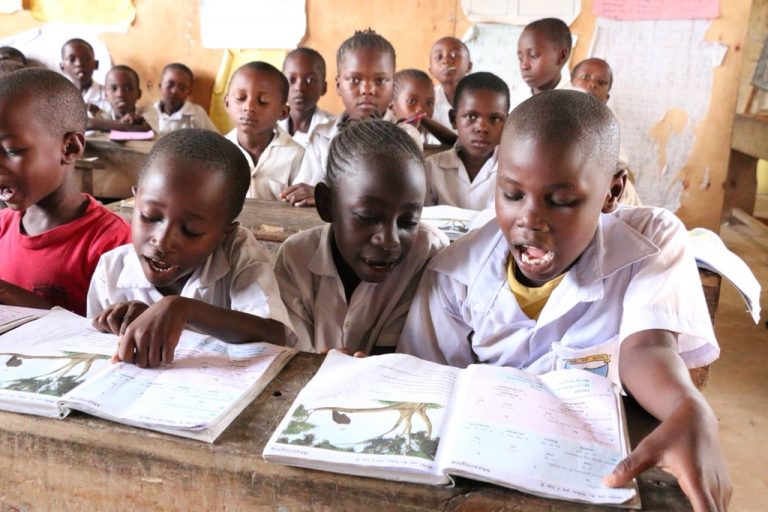
Give every child a high-quality, age-appropriate textbook. The Tusome program invested heavily to develop a set of high-quality, age-appropriate textbooks – and put them in the hands of every child. A complementary and closely linked set of Teacher’s Guides were also developed (for example, each lesson of the Teacher’s Guide has embedded in it a picture of the corresponding page in the student textbook).As part of their observations, the CSOs also checked to ensure that each child had a textbook, in hand, during class. CSOs also had access to buffer stocks when and if individual schools did not have sufficient books. This impressive feat was made possible by reforms that streamlined the procurement and distribution process. These efforts resulted in a 75% reduction in book costs and more efficient printing and distribution, making it possible to ensure the books actually made it into the hands of every student.
Use real-time data to monitor the quality of implementationand create a system of accountability – The CSO’s tablets not only contained coaching materials, they function as a means for CSOs to collect student assessment and teacher observational data. These tablets also enable policymakers to monitor whether coaches actually conduct their allocated visits. These data are automatically stored in a cloud-based platform that generates a monthly report, which policymakers use to monitor whether CSOs conduct classroom visits and provide travel reimbursements for those who do. This information affords policymakers the means to monitor variations in performance at the school and district level, which can then be used to improve teaching training and classroom teaching practices.
Alongside Tusome was the Ministry-led Early Grade Mathematics (PRIEDE) project. PRIEDE also scaled up an intervention piloted by the PRIMR initiative, but differed from Tusome in that it focused on early grade mathematics. PRIEDE also differed from Tusome in that it was rolled out without the support of an external implementing partner. Despite these differences, PRIEDE operated at the same scale as Tusome, and provided in-service training and regular pedagogical supervision and support to 60,000 teachers across the country, reaching 1.3 million pupils through improved classroom instruction, and benefiting 6 million pupils through the provision of improved early grade mathematics textbooks. Preliminary results of PRIEDE point to a 5% improvement in student numeracy proficiency from end line survey results (81.9%) compared to the midline results (76.6%).
PRIEDE had many of the same ‘ingredients’ as Tusome. Like Tusome, the PRIMR pilot was key for garnering political buy-in for PRIEDE. The intervention also utilized CSOs as a medium to deliver feedback and provided teachers with guides and complementary student textbooks. However, PRIEDE has not boasted as robust of effects on student learning as Tusome. There are several reasons that help account for this difference. First, Tusome hired staff trained by RTI to train and support CSOs alongside of government supervisors, whereas PRIEDE utilized Ministry staff only. Second, CSOs were reimbursed for conducting literacy classroom observations by Tusome, whereas the CSOs did not receive their reimbursements as consistently through PRIEDE. The challenges PRIEDE faced point to the need for implementation fidelity and a well-functioning mechanism for course correction in order to ensure that essential ingredients can work cohesively together.
How is the World Bank Learning from These Programs?
Tusome, like Sobral, presents a strong case for how a country can tackle learning poverty. These cases exemplify the success that is possible when teachers are equipped with the tools and support needed to effectively teach for literacy, when schools and children have access to age- and skill-appropriate texts, and when there is political and technical commitment to measure and set goals for learning. Interventions that include these components have been shown to improve literacy outcomes, and are at the core of the World Bank’s recently launched learning target and complementary Literacy Policy Package.
To accelerate student learning and eradicate learning poverty, the World Bank is developing the Coach program as part of the Literacy Policy Package. Coach is a forthcoming in-service teacher professional development program that aims to move away from a traditional focus on inputs (e.g. number of teachers trained, number of credit hours awarded) and focus on how coaches and other school leaders can provide evidence-based support to teachers. For a quick introduction to Coach, watch our recent Innovations to Transform Teaching event.
The COVID-19 crisis is amplifying the pre-existing global learning crisis, but presents also a unique opportunity for countries to learn from programs like Tusome and PRIEDE as they design their crisis-recovery strategies. Likewise, our goal is to not reinvent the wheel but learn from existing programs to inform how Coach can best support teachers.
If you know of a coaching program that: i) has helped to improve the way teachers’ teach and deliver existing content, ii) could inform our work on Coach, and iii) is willing share their experiences and/or materials, please reach out to us at coach@worldbank.org. By building on one another’s work, we’ll reach our goal of improved in-service teacher professional development and be better positioned to provide global public goods that can best serve in-service teacher professional development systems in low- and middle-income countries around the world.
Since the coronavirus lockdown began, members of the 700-year-old lower House of Commons have been able to join debates via videolink, and this week voted online for the first time.
The changes seem to have broadly worked, although it has changed the normal cut and thrust of debate, and the overall atmosphere.
“There are times when the government and opposition all benefit from being able to read the mood of members about a particular topic,” said John Angeli, director of parliamentary audio and video.
“I think the thing that’s most… dramatically demonstrated over the last few weeks is the absence of the mood of the House over a rather important issue.”
A few MPs struggled with the virtual ballot. Finance Minister Rishi Sunak accidentally voted against his own government’s agriculture bill, yet it mostly went as planned.
Jacob Rees-Mogg, the minister who deals with the House of Commons, complained that the ability of MPs to hold government to account has been constrained by the new technology.
“Debates are inevitably stilted; they lack interventions,” he told the chamber this week.
“I cannot think of any previous occasion when I have spoken for so long without receiving any interventions. I begin to fear that I am boring the house, and I can think of no greater sin.”
With the government planning for schools in England to start reopening from June 1, he said that parliament should also be ready to return in purely physical form next month.
“How can we hide away while schoolchildren are going back?” he asked.
The Commons introduced “hybrid” proceedings on April 21, allowing up to 50 of the total of 650 MPs to sit in the chamber at any one time, and another 120 to dial in.
Commons Speaker Lindsay Hoyle said safety would remain the priority, and social distancing must be maintained in the chamber and across parliament until public health advice changes.
Matthew Hamlyn, strategic director of the chamber’s business team, said the new way of managing daily business with videolink had turned parliament into a “giant TV studio”.
“You maybe have 60 (MPs) all over the country. All of you need to be prepped and checked and then cued in,” he added.
There have been teething troubles, including problems with audio, or MPs who fail to make the list for questions. Lack of spontaneity has been a complaint, he said.
But he added: “They’ve still been appreciative. There’s a general view that it’s not as good as the real thing but it’s much better than not doing it.”
The idea of a physical return of all MPs to Westminster in a few weeks time is controversial.
Many MPs believe that Prime Minister Boris Johnson’s decision to start easing lockdown measures across England is premature.
The devolved government in Scotland has been particularly critical as Britain’s death toll, at more than 33,000 the highest in Europe, is still rising by hundreds each day.
Valerie Vaz, from the main opposition Labour party, said she was “alarmed” at the parliament plans and suggested they contradicted the government’s current advice to work from home if you can.
“We want to be here in parliament, but we want to make sure that everyone is safe,” she said.
Robert Halfon, an MP in Johnson’s Conservative party, urged the government to keep virtual measures in place for those, like him, who were disabled and must continue to self-isolate.
“It is not a parliament for survival of the fittest, it’s a parliament for everybody,” he told The House political magazine.
Others suggest that parliament should use the opportunity to bring in long-term reform, particularly online voting for those unable to attend due to illness or parental leave.
Tommy Sheppard, an MP with the Scottish National Party (SNP), questioned why anyone would want to queue up to have their vote manually counted by a clerk when the online system had been shown to work.
Advocates of the old way “think they are defending the right to vote, but in fact they are making a fetish out of a 19th century tradition rather than a democratic principle”, he said.
Higher Education Minister Blade Nzimande has tabled the department’s risk-based plan to save the 2020 academic year at universities and TVET colleges.
Nzimande’s plan will see tertiary students resume classes via online learning as from June 1.
Nzimande updated Parliament’s portfolio committee on higher education on Thursday regarding preparations to rescue the tertiary academic year amid the COVID-19 pandemic.
“From 1 June 2020, all institutions to be offering forms of remote multimodal flexible teaching and learning which will be supported by approved resourced plans”, said Nzimande
The minister said the department was trying to assist all students to receive digital devices before end of the month.
“I am writing a letter to the minister of finance for permission to call for expression of interest as early as the end of next week for those who will be able to help with devices”, said Nzimande.
Following weeks of silence, Nzimande said his plans are not only to save the academic year but the lives of staff and the students during the fight against the coronavirus pandemic.
He also pointed out that the National Student Financial Aid students will all receive digital devices to assist them with online learning.
“All students registered with NSFAS will have access to necessary devices if they have not received through their institutions,” said Nzimande.
He said the higher education department has communicated with universities and colleges and by next week they will have sufficient information on the number of students in need of a digital device.
The department said the return of students to their various institutions will depend on the level of the lockdown that the country is on.
“Level 3 and 2 further phasing in of groups of students (undergraduate and postgraduate) based on national criteria to ensure controlled return, social distancing and other protocols to support student and staff health and safety”, added the department.
The department has also tabled the possible end of the academic year by 2021, depending on when the students will return to their various institution.
The department said only at Level 1 will universities and TVET colleges see the return of all students with social distancing and health protocols still in place.
During the briefing, the department said in their scenario planning, they have set aside 27 weeks of contact-based learning, which is only expected at level 1 of the lockdown regulations. However, groups would be split to ensure social distancing regulations.
The department also tabled its challenges in implementing online teaching and learning in universities.
Four areas were stated as main concerns: devices, data and connectivity for staff and students; Implementation of alternative flexible teaching and learning modalities; the phased-in return of students and staff and campus readiness; financial sustainability into the future.
Final year clinical training students have been the exception when it comes to resuming contact-based teaching and learning.
The Department said nine Institutions with medical schools are preparing to phase-in final year students in medical programs (MBChB).
Programmes at the University of Witwatersrand, University of Pretoria and Sefako Makgatho Health Sciences University resumed on 11 May 2020, while the University of Cape Town, University of Limpopo, University of KwaZulu Natal and University of Free State will commence on May 18.
The Covid-19 outbreak closed
universities and other tertiary education institutions in 175 countries and
communities, affecting over 220 million post-secondary students.
While some institutions moved their
classes to online and distance education platforms thanks to their pre-existing
experience, many others struggled.
In some countries, this lack of
preparedness resulted in delays in moving the courses online; in others,
governments have halted higher education completely for an indefinite period of
time.
In 2018, the UNESCO International
Institute for Educational Planning (IIEP-UNESCO) launched a project to help
guide countries identify policies and instruments that support flexible
learning pathways (FLP) in higher education.
The research included a stocktaking exercise of good practices in the field, an
international survey, and eight in-depth country case studies to analyse
factors for an effective implementation of flexible learning pathways. Many
lessons can be drawn for the current context, now that distance learning is a
key mode of education delivery, rather than just an add-on to face-to-face
learning.
India offered distance education as a
major alternative mode of delivery long before the arrival of Covid-19. The
country has more than 15 open universities and 110 Dual Mode Universities,
which provide education through distance modes.
For the period of Covid-19 outbreak,
the government has also allowed top 100 India’s HEIs to provide fully online
degrees. In addition, the government even integrated online learning in
the New
Education Policy currently under review.
One interesting practice India uses
to deliver distance learning is with the Study Webs of Active Learning for Young Aspiring Minds (SWAYAM)
platform which aims to provide access to Massive Open Online Courses (MOOCs)
and other e-learning content developed by various education providers.
An important aspect of MOOCs hosted
on the SWAYAM platform is their potential to receive recognition by higher
education institutions. Under current provisions, a student entering a higher
education study programme in a university can transfer up to 20 per cent of
credits from relevant online courses completed on SWAYAM – something that one
could imagine being a useful model for other countries to follow in current
circumstances.
As we are seeing in many countries
around the world, many students in rural areas are unable to access online
content, and television or radio broadcasting is often more effective. The
Indian government therefore created the SWAYAM Prabha programme,
which disseminates the audio-visual content developed as part of the
SWAYAM-hosted MOOCs through 32 educational TV channels. Within the current
context, such platforms can be accessed immediately so that learning continues
and is recognised when credits are issued at a later stage.
In Malaysia, the
Wawasan Open University (WoU), a private university established by a consortium
of Malaysian public universities, mainly delivers distance learning programmes
to non-traditional learners, such as working Malaysians who have not proceeded
to higher education after secondary education. In a context where most higher
education institutions have been forced to close, the pandemic has not
interrupted students’ learning thanks to the virtual learning platforms that
existed before the crisis: “We are, after all, an Open Distance Learning (ODL)
university!”, reported the Vice-Chancellor on the
universities’ webpage.
In Finland, a similarly
effective online system has been created. There, the national policy framework
emphasises equality and quality education for all and universities and
universities of applied sciences in the country offer Open Studies courses
that are open to everyone regardless of education and age. The courses are
offered by over twenty Finnish universities free of charge and can be
recognised in students’ degrees.
Quality assurance of online learning is
a challenge
Online distance learning is common in
many countries.
Findings from our international survey suggest that a majority of UNESCO member
states (78%) already had flexible modes of delivery of programmes prior to
Covid-19, even if the quality and validation of such delivery modes (e.g.,
through credit transfer or credit recognition of online courses) is not a
straightforward issue for many.
Evaluating students’ learning
acquired through distance learning has been a challenge for quality assurance,
however, regarded with scepticism by some quality assurance and accreditation
bodies, although it is likely that under the present circumstances these will
now disappear.
One good example to draw from on this
point comes from the Netherlands where the Accreditation Organisation of the
Netherlands and Flanders (NVAO) has published a memorandum on online and blended learning. This
memorandum includes the formal recognition of MOOCs by higher education
institutions. Another example comes from the USA, where the U.S. Department of
Education (USDE) issued a guidance document intended to
provide both institutions and accreditors with flexibility
regarding accrediting visits and for distance education.
There is no doubt that there are many challenges to implement and assure quality of online education.
In addition to issues of access and Internet connectivity, not all programmes can be supported by online technology, such as lab-based research programmes, for example.
And governments need to be aware of the inequalities that online learning can create as students from lower socio-economic strata find it more difficult to access to IT infrastructure and internet packages.
There should be a coordinated approach between governments, quality assurance agencies and higher education institutions that addresses not only available resources but also a broader vision of what flexibility of learning can provide.
Offering more flexible higher education in terms of delivery and pacing will be unavoidable if the Covid-19 crisis is going to be around for a while, and defining flexible quality standards for it will be indispensable as well.
(Source: Report from Global Education Monitoring Report (GEM Report))
Picking up the newspaper in recent weeks would have been difficult if you were an education minister. Not only would you have been scrambling to organize learning during school closures, but the funds to do it seemed to be under threat. In many countries, media reports suggest the slashing of education budgets to make room for emergency spending on the coronavirus (COVID-19) response.
The effects of the pandemic on government education budgets, while important, are not the only funding worries for ministers. Education systems face a triple funding shock, with COVID-19 expected to put significant strains on household and donor funding that will only add to its effects on government funding.
In our recent note, we look at the funding outlook over the next two years and examine the options countries have to fund education while coping with the health and economic shocks of COVID-19.
The outlook is uncertain, but forecasts show that government spending on education is likely to suffer as a consequence of the pandemic. Using IMF projections of economic growth and government spending, we have looked at the potential impact on education budgets. We focus on projecting spending per school-aged child, which provides a more useful picture than total spending on how the changes might affect education access and quality. Our most optimistic scenario shows that the pandemic could reduce planned increases in education spending in 2020 versus projections prior to the crisis. But our more pessimistic forecasts show that per-capita education spending could fall significantly in all regions, with middle-income countries seeing the largest drops.
While economic growth is predicted to rebound in 2021, education spending is likely to stagnate in most countries, and actually fall in some, as governments attempt to contain budget deficits brought about by COVID-19.
The second shock to education financing will come from families’ own spending. Parents in low- and middle-income countries will struggle to maintain the considerable resources they devote to their children’s education.
The livelihoods of many families have already been affected by the pandemic and are likely to be for some time to come.
The ILO expects working hours to decline by 7 percent in 2020, equivalent to the loss of at least 195 million jobs worldwide. The pandemic is expected to push 40-60 million more children into extreme poverty.
We know from past crises that income shocks are likely to lead to many children dropping out of school or not returning when schools reopen. In the Asian financial crisis of 1997-98, household education spending in Indonesia fell as much as 17 percent in rural areas, lowering school participation rates particularly for the poorest children.
The third shock is likely to come from external financing of education. Development assistance to the sector has only recently returned to levels seen before the 2008-09 financial crisis.
Since COVID-19 is expected to hit the economies of the major bilateral donors hard, they will find it challenging to maintain their overall levels of assistance. This will have the largest impact in low-income countries, where development assistance makes up around 12 percent of total education funding.
While these forecasts remain fluid, the deteriorating outlook underscores that it is urgent to mount an effective pandemic response that protects education and does not worsen a global learning crisis that preceded COVID-19. Resources will be needed to ensure that systems are prepared and learning can continue during school closures, as well as to accelerate progress once schools can safely reopen.
How can countries achieve this? It will depend in part on the pandemic’s fiscal impact. For countries that have sufficient fiscal space, the pandemic response in education can be funded through additional spending. For those with limited fiscal space, funds will need to come from existing budgets and by making better use of the resources they have.
Donors should protect education assistance and frontload their existing commitments to help finance the COVID-19 response. While many countries will face hard choices, it is critical to give priority to frontline education services so that current levels of access and standards of quality are protected.
The crisis also highlights the need to improve the coverage and quality of data on education finance, to be better able to monitor spending plans and assess whether resources are being used effectively. As of today, we don’t have any data on education spending for 2019 and information for only 56 countries for 2018. In many countries, while information on education budgets exists, it’s not publicly available or presented in a meaningful way.
Protecting education financing should be part of an effective pandemic response, so that countries face only a temporary setback to their progress toward providing good quality education opportunities to all.
Countries entered this crisis spending vastly different amounts on education.
On average, high-income countries were spending 43 times as much on the education of their primary school children as low-income countries. And while developing countries have invested a lot more in their education systems over the past 15 years, it is not enough to narrow gaps in education quality and attainment.
The lockdown has made it clear that remote learning is part of the future, and that it will require massive improvements in connectivity, education technology, the digital skills of teachers and many other related investments.
Ensuring that systems are better prepared to continue learning during school closures and can accelerate learning during the new normal will require even greater levels of investment.
Since today’s children will pay for the debts incurred to respond to the COVID-19 crisis, it only seems fair and sensible that all countries find ways to protect learning and their financing of education.
A media briefing to announce the Department of Basic
Education’s preparations towards the re-opening of schools has been postponed
until further notice.
Basic Education Minister Angie Motshekga was expected
to provide details that include the final dates and detailed plans, for the
phased approach to the possible reopening of schools.
The department on Thursday said she has now convened a special meeting
of the Council of Education Ministers to consider progress made towards the
reopening of schools.
On
Monday, Motshekga held a meeting with School Governing Bodies, education
teachers’ unions and the Council of Education Ministers after school management
teams workers did not report for duty.
Teachers’
unions said in a joint statement this week that no SMTs or teachers will report
for duty until the non-negotiables were addressed by basic education
department.
“We
agreed in our meeting on Monday that one week is needed to finalise all the
outstanding issues. So on Monday (18 May) we will reconvene to consider
progress made and then report to the public on the state of readiness. A lot of
work has happened and we are happy with the progress reported in the last
meeting but we need confirmation of deliveries that provinces were waiting for,”
said Motshekga.
This follows
the address by President Cyril Ramaphosa on Wednesday night, who announced that
the National COVID-19 Command Council was still engaged in consultations about easing
of lockdown regulations from Alert Level 4 to Alert Level 3.
Ramaphosa
announced on Wednesday that the country will drop Level 3 at the end of May,
adding that provinces – Western Cape, Gauteng, KwaZulu Natal and the Eastern
Cape – with increasingly high number of cases will remain on Alert Level
4.
Motshekga
said the delays in the deliverables were attributed to challenges with the
supplier of PPEs which resulted in the cancellation of contracts.
“Various
provinces had to find new suppliers to deliver the material this week, in the
meeting on Monday we will receive a full report which we can then share with
the public. We will also use the meeting to table President Cyril Ramaphosa’s
address which is also important for our planning purposes,” added
Motshekga.
The
Director-General of the Department of Basic Education, Mathanzima Mweli said
that the implementation of the basic education sector risk-based differentiated
approach in reopening schools would be assisted by Ramaphosa’s address.
“We will
convene a special meeting of the heads of education departments from all provinces
and the minister will meet with MECs on Monday to discuss the progress made.
Thereafter we will announce to public. Nobody has experience in managing a
crisis of this magnitude so we follow expert advice that is why we need to be
extremely careful how we proceed in every step,” said Mweli.
Last
month, Motshekga announced that teachers would return to work on May 18, saying
Grade 7 and 12 learners would return on June 1.
However, teachers’
unions said this will not happen until the DBE is able to convince the nation
that schools are ready and safe for both staff and learners.
Saturday Classes?
US Schools Mull Ways To Make Up Lost Time
Students returning from their unprecedented break from school could find
themselves making up lost time in summer classes, or in the evening or on
Saturdays. The new year could start as early as July in California. Maryland
could see school year-round. For some, lessons in the new school year may
simply begin where they left off. Administrators say everything is on the table
as they begin to think beyond the immediate needs of teaching through the pandemic to measuring and making up for lost
learning once the worst has passed.
When
students return to school after a lengthy pandemic-induced absence, the
consensus is they will have lost significant academic ground. Still unresolved
for governments and educators are the questions of how — or even whether —
teachers should try to make up for lost learning.
Some have
proposed holding evening or Saturday classes for students to catch up. A
Maryland senator has proposed school year-round. In California, the governor
has suggested the next school year could begin as soon as July.
But any
remediation plans will be complicated by social
distancing mandates that may require smaller class sizes and
budget cuts that appear imminent because of falling local and state revenues.
In surveys, many educators say the fall will be no time to pile on additional
schoolwork.
“First and foremost, we need to recognize that we have young people in
front of us who have gone through a traumatic experience,” said Andres
Perez, a Chula Vista, California, high school teacher who warns against moving
too fast to get back on track. “And right now, I think students and
teachers really want to make school something that feels meaningful, that
students are excited to go back to.”
Even
students in schools that managed to issue devices for video lessons and
assignments and transition to distance learning early on, using school-issued
devices for video lessons and assignments, will have lost out from shortened
sessions and limited interaction with teachers, experts say. The vast number of
students still without technology in early May and those who have all but
vanished from schools’ radars will have fallen even further behind.
The
effects of the lost learning could be felt for years.
“Even
though we were closed for the last two-and-a-half months of school, it will
take us literally — don’t fall out of your seat — it’ll take us a couple or
three years to get through this,” Alabama Education Superintendent Eric
Mackey told the Alabama Association of School Boards.
The
“summer slide” in which students typically lose some ground during
their break is expected to be far worse next fall, with projections by the
nonprofit Northwest Evaluation Association suggesting some students could be as
much as a year behind in math.
“Students
with worse educational opportunity will have worse outcomes and it occurs
fairly rapidly,” Andre Perry, a fellow at the Brookings Institution, said.
“A month away can have a dramatic impact on outcomes, so six months will
certainly show up in the classroom in the fall.”
U.S. Education Secretary Betsy DeVos has said she hopes
schools will test students in the fall to gauge where they are academically,
particularly because this spring’s standardized tests that might have provided
a barometer were canceled.
To catch
up, most teachers favor a business-as-usual approach, starting the next school
year where they normally would, while giving targeted help to students who need
it, according to an April survey of 5,500 teachers, administrators and
advocates by the nonprofit Collaborative for Student Success. Administrators
lean toward beginning the new year with April concepts, given where classroom
instruction abruptly ended in the current one.
“Teachers
always deal with this to some degree in their classrooms. There’s always going
to be a disparity between kids and their levels of ability and skills,”
said Jim Cowen, executive director of the Collaborative for Student Success.
“There will obviously be an additional barrier but it’s not new to
them.”
Still,
Cowen said, it’s important that schools are ready to respond to the disruption
likely worsening the country’s already troubling gaps in achievement affecting
students from minority and low-income families.
California Gov. Gavin Newsom said “that learning
loss is very real,” suggesting schoolchildren not wait for fall and
instead proposing a return to classrooms as soon as late July. The California
Federation of Teachers, while praising Newsom’s overall response to the crisis,
said in a statement the decision to reopen schools should be made at the local
level through collective bargaining with unions, once the number of infections
has declined and testing and safety measures are in place.
In
Maryland, state Sen. Paul Pinsky, a Democrat and chair of the state’s
Education, Health and Environmental Affairs Committee, wants his state to
consider year-round school comprising four quarters and seasonal breaks.
Adam
Mendelson, a spokesman for the 74,000-member Maryland State Education
Association teachers union, said the idea “clearly has major legislative,
budgetary, and other legal angles that would all need to be considered,
analyzed, and addressed as part of an inclusive policy conversation about what
is best for our students.”
Officials
in Cleveland, Ohio, have said the “multi-year recovery” may include a
shift toward a narrower but deeper curriculum focused on core skills. A
spokeswoman for South Dakota’s Department of Education, Mary Stadick Smith,
says local school boards may be considering the Saturday class proposal.
Superintendent
Shari Camhi of the Baldwin Union Free School District in New York’s Nassau
County said her focus is on retrofitting the gymnasium and renting party tents
to allow for social distancing. She is awaiting guidance from state officials
on whether her district can plan differently for older and younger students.
That would allow for a blend of in-person and online classes for students old
enough to be at home if their parents are working.
“For
those students who saw a loss, we will meet them where they are and work with
them and get them to where they need to be,” she said.