Home Blog Page 416

UCT Graduate School of Business Is Number One in South Africa

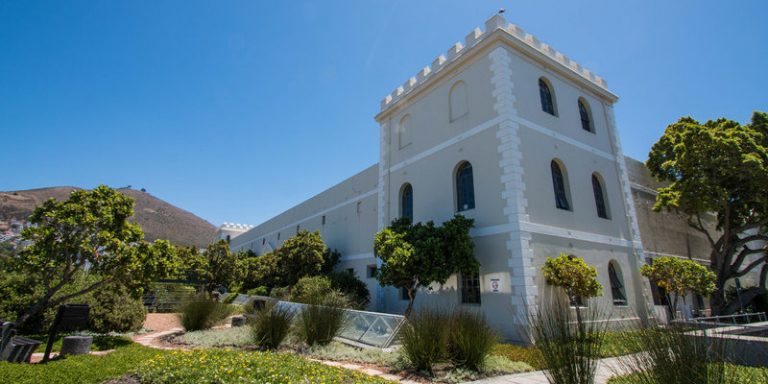
The UCT Graduate School of Business (UCT GSB) has been ranked 56 in the world and number one in South Africa for its customised executive education programmes by the latest Financial Times ranking – widely regarded as a leading benchmark of quality and relevance for business schools worldwide.

The UCT GSB was ranked top in Africa in terms of growth, which measures overall growth in revenues from customised programmes as well as growth in revenues from repeat business. It also scored in the top 40 worldwide for future use (the likelihood that clients will use the school again).

“These measures speak to the value that the school places on building relationships of trust with its clients,” says Kumeshnee West, director of executive education at the UCT GSB. “Our rapid growth and rise in repeat business indicates that clients are seeing a return-on-investment and a return-on-value. I believe that this is a direct result of our responsiveness and agility and an endorsement of our “high touch” client-centric approach. We spend a lot of time working closely with clients before, during and after programmes to understand what’s working and what’s perhaps not working as well. This gives us insight very quickly into how to pivot, adapt and update materials and learning methodologies as client’s business needs shift and as the programmes unfold.”

West explains that the FT ranking is based on a rigorous assessment of the customised process from the design and interaction with clients to how the programme is delivered, the facilities, teaching methods and materials that the school offers and the quantity and quality of programmes delivered.

“A large part of the Financial Times’ data is drawn directly from client feedback,” she adds. “We owe a big thank-you to our clients who stepped up to endorse us and provide the necessary data that awarded us this ranking.”

To participate in the annual Financial Times ranking, schools must be internationally accredited by either Equis or AACSB and have earned revenues of $2million during the preceding financial year. This year, the UCT GSB was one of only three African business schools to make it into the ranking. It is also one of just three schools on the continent to be triple-crown accredited meaning that it has accreditation from both Equis and AACSB as well as the Association of MBAs (AMBA).

Rayner Canning, business development director at the UCT GSB says that it is “particularly pleasing to see how the FT ranking aligns with our own client satisfaction data, notably on future use.” He adds that the international reputation of the school and its strength on the continent is an undoubted advantage when participating in the global rankings.

“In designing and developing programmes that work, we are able to leverage the most current thinking and practice from across the ecosystem of the UCT GSB – notably from our world-class faculty, the Hasso Plattner School of Design Thinking (d-School) and the Centre for Coaching. All of these play a key role in terms of innovation and shifting our thinking, enabling us to leverage capabilities across all our programmes,” he says.

Canning adds that this depth of expertise, along with the school’s agility and client-centric attitude is going to become ever more important as the business school transitions into a post-Covid-19 world.

“We are well placed to co-create the new normal with our clients and are already partnering closely with them to build optimal solutions for remote learning using the most suited combinations of technology.”

Executive education at the UCT GSB has had several significant endorsements in recent years. Last year, the school became the first business school in Africa to win a Gold Excellence In Practice Award from the European Foundation for Management Development (EFMD) for a case study on its long-standing partnership with Standard Bank to deliver a Masterclass in Strategic Client Management Programme (MSCMP) for its corporate and investment banking (CIB) managers across Africa.

In speaking of that programme Lenie de Waal, senior learning partner CIB at Standard Bank, said that its success was a testament to the “true partnership” between all stakeholders who continuously worked to ensure it delivered business impact and value.

Canning adds that this accurately captures why the UCT GSB has seen such success with its customised programmes to date and why it can expect to continue to flourish. “To be successful in the future, authenticity, collaboration and trust are going to be absolutely essential,” he says.

(Source: UCT GSB)
Lockdowns and Research: What We Lost and What We Stand to Gain

The COVID-19 pandemic – and the resulting lockdowns – have had a major impact on research at institutions across the world, and universities in particular.

Research is one of the pillars of academia. Important discoveries are made, careers are built and the opportunities to train students are virtually unlimited. Research is a way of life for many, their findings being fundamental to progress in all scientific fields which supports a vast range of industries and communities.

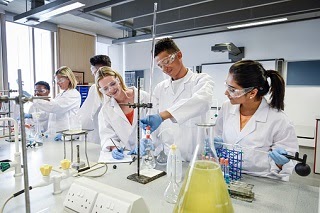
One of the consequences of lockdowns brought on by the pandemic is that much research activity has been halted. Researchers have been forced to abandon ongoing projects that, for example, require hands-on laboratory work. This could mean terminating or delaying projects, many of which may have been running for some time. The long term cell culture experiments in which bone formation is studied and the assessment of a particular diet in mice prone to obesity, are just two examples.

Particularly difficult is the termination of animal experiments and the maintenance of animal colonies until a return to work is authorised. Rodents are often used to assess the potential anti-tumour activity of a novel therapeutic agent and likewise, novel anti-retrovirals require extensive preclinical testing before they can be assessed in clinical trials. These and other experiments require time and continuous assessment to determine outcomes.

Experimental programmes like this highlight what may happen in the medical research field, in which solutions to urgent challenges around human health and disease are being sought.

Equally problematic are interruptions in research programmes where data can only be gathered at the time of a particular event. These include field programmes based on seasonal changes, where a year may be lost in having missed one season.

For example, some South African National Antarctic Programme projects have lost this year’s research data as the Agulhas research vessel has been unable to transport researchers and support marine research. Some of that research would have generated key data points in long term (multi-year) projects, and decades-long projects on global climate change, conservation, and environmental impact.

The same is true of numerous agriculture and plant production projects, with substantial impact on food production industries and future food security.

Researchers who use computational techniques to analyse data that is already in existence, such as bioinformatic analysis of genomic data, are able to continue working. But that data had to be produced initially, in laboratories or research stations. And there is always a need to generate new data, as we seek to validate answers and generate new research questions.

To restart these experimental programmes and begin generating new data will take time, considerable expense, and a coordinated effort for researchers, students, suppliers and funders.

Knock-on effects

The stoppages and delays will also affect students whose degrees require research projects to be completed in short time periods. A delay of several months, or perhaps a year, could mean the loss of a year of study, or possibly not completing the degree at all, putting future careers in jeopardy.

Research funders have specific requirements that need to be met to comply with timelines and objectives. This is often a requirement for continued funding. With delays of months or even years, deadlines will not be met and objectives not achieved. Funding agencies generally seem willing to take this into account. But investigator and research assistant salary cuts may be necessary to fund extensions in order to see projects through to completion.

There has been a rapid redirection of resources towards COVID-19-related research, quite understandably. In the long term, this resource reallocation is likely to result in budget cuts in all research areas.

Taking all this into account, we are possibly looking at a ten year legacy of a one year crisis.

Opportunities

The pandemic has stimulated a storm of questions as the world seeks to understand COVID-19 and its causative agent, the SARS-CoV-2 virus. There has been an unprecedented move towards stronger cooperation and collaboration between scientists across the world such, as for example, the COVID-19 Host Genetics Initiative. The drive to collect, analyse and publish data is fierce, as is the need to fast-track clinical trials and vaccine development.

This accentuated trend towards cooperation is not limited to understanding COVID-19. A spirit of compassion and collective gain pervades many research initiatives, often through multi- or trans-disciplinary collaborations.

There has been an explosion in the quantity of research being conducted on this topic. Close to 10,000 scientific articles have been published on COVID-19 in three months.

Several important changes in the way research is done and reported have occurred. Approvals from ethics committees and other regulatory authorities are being expedited. Now, it’s not necessary to wait for extensive periods – as has been the case before. The time for articles to be accepted and published in journals has been reduced significantly.

This, of course, has to be seen against the backdrop of needing to maintain research standards to ensure that quality is not compromised. The time-honoured system of peer review is still very important.

Opening up

Any unnecessary delay in getting going again needs to be avoided. Milestones need to be met, students need to graduate, and the pipeline leading to the development of new products and services needs to be filled. In order to do this, however, safety needs to be ensured and protocols developed to ensure that returning to work does not put people at risk.

All of this is possible with a well thought through strategy. Researchers, students and administrators can use the lessons learned to work smarter and more efficiently, to refocus and prioritise, and to offer new insights into complex global challenges.

We can also use this momentous experience to improve on ways of communicating new information and truths to the global public, thereby generating mutual trust.

(Source: The Conversation)

African Nations Seek Their Own Solutions In Virus Crisis

0

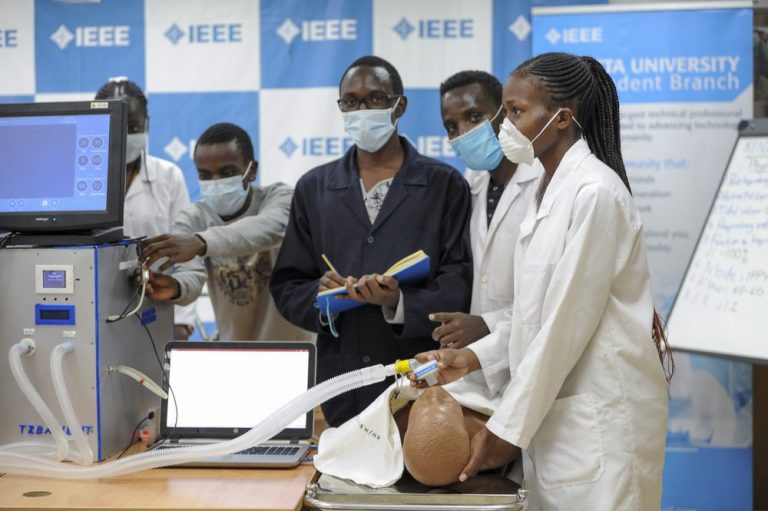
A loud hiss and grunt come from a green bag pressing air through a tube, as Senegalese researchers work to develop a prototype ventilator that could cost a mere $160 each instead of tens of thousands of dollars.

The team is using 3-D printed parts as it works to find a homegrown solution to a medical shortfall that has struck even the richest countries: how to have enough breathing machines to handle an avalanche of COVID-19 patients who need the devices to help increase their blood oxygen levels.

Complicating the task in Africa is the fact that the peak in coronavirus cases for the continent’ is expected to come later than in Europe and the United States, well after dozens of other countries have bought out available supplies.

“Africans must find their own solutions to their problems. We must show our independence. It’s a big motivation for this,” said Ibrahima Gueye, a professor at the Polytechnic School of Thies in Senegal, on the 12-member team developing the prototype ventilator.

Their efforts are being mirrored elsewhere across the continent, where medical supplies are usually imported.

Many hope that these efforts to develop ventilators, personal protective equipment, sanitizers and quick-result antibody tests will lead to more independent solutions for future health crises.

Although the quality of some products won’t meet as high a standard as in the U.S. or Europe, Gueye said there is excitement that level can be reached eventually, with enough time and investment.

In Ethiopia, biomedical engineer Bilisumma Anbesse is among those volunteers repairing and upgrading old ventilators. While the country has tried to procure more than 1,000 ventilators abroad, progress has been thwarted by the high demand.

“U.S. and Chinese companies that produce mechanical ventilators are saying they can’t accept new orders until July. The same is true with other medical items like PPE and gloves,” Annbesse said, referring to the personal protective gear worn to minimize exposure to health hazards.

Africans also are helping to develop tools for disease prevention and surveillance.

Institut Pasteur in Dakar is working on a rapid test for COVID-19 in partnership with the British biotech company Mologic, which developed a rapid Ebola test. They hope the coronavirus test, which can give results in 10 minutes, could be distributed across Africa as early as June. Once a prototype is validated, the test kits will be made in the U.K. and at a new facility in Senegal for infectious disease testing, DiaTropix, that was founded by Institut Pasteur.

Workers in Dakar are using laser cutters to make about 1,000 face shields per week for health care workers. They also are creating key chains with prevention messages such as “Stay Home.”

Alcohol-based hand sanitizers are being produced in Zimbabwe on university and technical college campuses that have been transformed into “COVID response factories.” Higher Education Minister Amon Murwira said the teams are also producing face masks, gowns and aprons.

It’s not known whether these projects will be finished before the virus hits its peak in Africa, but observers say the longer-term impact of such ingenuity is substantial.

“Necessity is the mother of invention,” Dr. Ahmed Ogwell, deputy director of the Africa Centers for Disease Control and Prevention, told The Associated Press. “What we’re seeing in Africa is going to change the way medical supplies in particular are manufactured.”

He predicted there would be a “new public health order” after the pandemic, with changes in global supply chains. Countries already are taking steps toward not having to rely on help from abroad.

Developing countries are scrambling for equipment as deliveries are hindered. But even India, where some engineers are also trying to build low-cost ventilators, has access to more than 19,000 of them in addition to domestic manufacturers who are expected to deliver tens of thousands more.

African nations are understanding the importance of local production and ingenuity.

Ghana is using drone technology to transport COVID-19 tests and protective gear in collaboration with a U.S.-based company called Zipline that already was distributing vaccines and other medical products to remote parts of the country.

“This is a global pandemic: 210 countries and territories across the globe are affected,” Nigeria’s President Muhammadu Buhari tweeted recently. “We cannot expect others to come to our assistance. No one is coming to defeat this virus for us.”

(Source: Associated Press)

COVID-19: Preparing For The Reopening of Schools in West and Central Africa

0

Nationwide closures in West and Central Africa are impacting 140 million children across the region, including forcibly displaced children who are integrated in national education systems in all the countries.

The negative outcomes of prolonged school closures are likely to disproportionately impact displaced children, who not only see their education interrupted but also lose the safety offered by a school and get exposed to a higher risk of abuse, neglect, violence and exploitation. The longer marginalized children are out of school, the less likely they are to return.

In many countries of the region, remote learning is a luxury because it assumes access to technology hardware (computers and tablets) and internet connectivity. According to UNESCO, in Sub-Saharan Africa, 89% of learners do not have access to home computers and 82% do not have internet. This has sometimes led to a rejection of distance education, a cruel indicator of the digital divide, by parents and teachers (see articles pages 3-4).

In this context, many WCA countries are already preparing for the reopening of schools. While the uncertainty of duration of school closures require flexible scenarios, when deciding whether to reopen schools, authorities should conduct a context-specific benefits and risks analysis across education, public health and socio-economic factors. Centrality of protection (with regards to physical health, mental health and continuity of learning) should be considered before, during and after the reopening process.

To ensure the continuity of learning in a protective environment and to prepare for the safe reopening of schools, UNHCR is working with Ministries of Education and education partners to support students access to distance education programmes, enhance health training for teachers, support community awareness-raising activities on COVID-19 and basic prevention measures while upgrading water and sanitation facilities in schools.

(Source: ReliefWeb) 

Ramaphosa Walks A Tightrope Of Protecting Health Without Killing Economy

0

Charles Molele

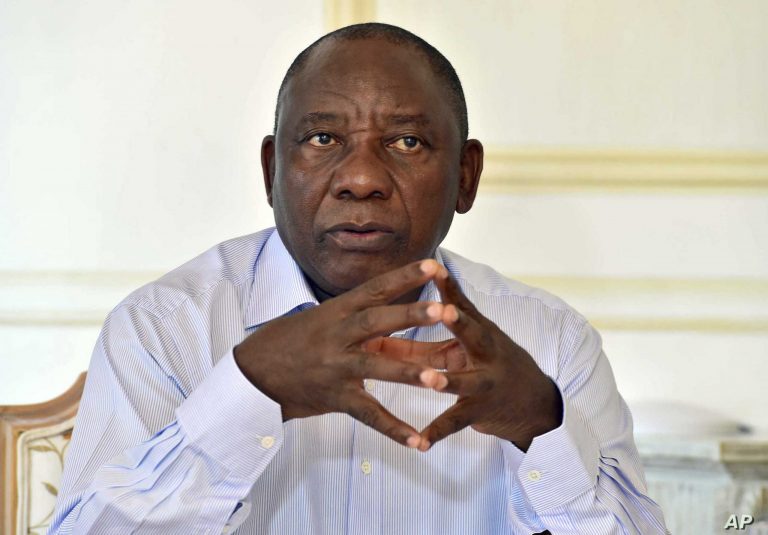
President Cyril Ramaphosa announced on Wednesday that consultations are underway to move the country to Level 3 of the nationwide lockdown by end of May.

Ramaphosa told South Africans that some parts of the country with higher infection rates of COVID-19 would remain under Level 4 Lockdown and that changes to that level of restrictions would be announced in the coming days after consultations with various stakeholders.

He pointed out that the country’s hardest-hit cities are set to keep lockdown restrictions in place as the rest of the country emerges from Level 4 lockdown.

Months into the crisis, the Western Cape, Gauteng, Eastern Cape and KwaZulu Natal remain the epicentres of the country’s coronavirus, having recorded more than 90% of the national total of confirmed cases.

In March, the National Coronavirus Command Council recommended that metros which are regard as epicentres should remain under lockdown, adding that these would pose a huge challenge to government as they are the main drivers of the South Africa’s economy and its growth trajectory.

 “For now, infections are mostly concentrated in a few metros and districts in our country. It is important to maintain stringent restrictions in those areas and to restrict travel out of these areas to other parts of the country,” said Ramaphosa.

“We will immediately begin a process of consultation with relevant stakeholders on a proposal that by the end of May, most of the country be placed on alert level 3, but that those parts of the country with the highest rates of infection remain on level 4. We will make further announcements after the completion of the consultations.”

Advancing through the stages will depend on factors such as how the rate of infection evolves, the number of intensive care beds available and compliance with social-distancing rules, said Ramaphosa, without providing concrete thresholds for how these measures would be evaluated.

“In the coming days, we will also be announcing certain changes to level 4 regulations to expand permitted business activities in the retail space and ecommerce and reduce restrictions on exercise,” he said.

“Some have questioned whether our approach in dealing with the coronavirus has been at the expense of the livelihoods of our people. Our strategic approach has been based on saving lives and preserving livelihoods. Our key objective has always been to slow down the infection rate through a number of interventions in our coronavirus prevention toolbox. Each of these prevention measures are crucial and non-negotiable.”

The Health Ministry said shortly after the president’s live address that some areas of the country would indeed be designated at a particular alert level, while others may be designated at other levels.

The ministry said this would be done according to the rate of infection in an area and the state of readiness and the capacity of its health facilities to cope with treating patients.

As of Wednesday evening the total number of confirmed COVID-19 cases in South Africa stood at 12 074.

“Out of the 12,074 confirmed cases in South Africa, we have recorded 4,745 recoveries and 219 deaths. Our field workers have now screened over 9 million people, and we have conducted nearly 370,000 coronavirus tests,” the health ministry said in a statement.

“The lockdown has worked. Without the lockdown the number of coronavirus infections would have soared uncontrollably, our health facilities would have been overwhelmed and many thousands more South Africans would have died.”

While Ramaphosa led the country from the front and has made an unprecedented announcement of a R500 billion economic package to deal with an extraordinary situation, he has been under pressure to lift the lockdown and allow some form of economic activity.

Reacting to his address, the DA’s interim leader John Steenhuisen dismissed Ramaphosa’s balancing act between the economy and a health crisis, saying the country needs to get back to work immediately.

“President Ramaphosa is attempting to defend the indefensible. This lockdown has cost more lives than it has saved. Millions of jobs and lives have been destroyed,” said Steenhuisen.

“We repeat our call for the national lockdown to end swiftly. It is not a rational strategy, and has not been so for weeks. It is irrational and disproportionate to the scale of the risk that Covid poses, relative to other risks. And it has not been supported by an adequate safety net for poor people and small businesses.”

Steenhuisen said Ramaphosa delivered a speech but said very little.

“Essentially, he doubled down on what has been a tragically flawed approach that has wreaked catastrophic, unnecessary and possibly irreparable damage to our country,” he said.

“South Africa’s economy and society must be opened up now, to save lives and livelihoods from all types of risks, not just Covid.”

Business for SA’s Martin Kingston told a media webcast last week that a minimum of one million jobs are set to be lost, but up to four million jobs are on the line as a result of the expected economic fallout from the Covid-19 pandemic.

The business body is forecasting that the GDP could shrink by between 10.3% and 16.7% – significantly higher than forecast from the South African Reserve Bank, National Treasury, Moody’s and IMF of around 6%.

“Despite the government’s Covid-19 economic stimulus and relief package, we are expecting SA’s GDP in 2020 declining between around 10% and 17%… In addition, between a million and four million formal and informal sector jobs are at risk,” Kingston said.

In his address, Ramaphosa argued that government’s approach has been to steadily increase economic activity while putting measures in place to reduce the transmission of the virus and provide adequate care for those who become infected and need treatment.

“Some of the actions we have taken have been unclear, some have been contradictory and some have been poorly explained. We will make mistakes but I can assure you, we will correct those mistakes,” said Ramaphosa.

This is how some South Africans reacted to Ramaphosa’s address:

How Lockdown Could Affect South Africa’s Children With Special Needs

0

Ella Bust, Dr Bronwyn Mthimunye and Anthena Pedro

The coronavirus pandemic has placed the education of hundreds of millions of children across the world on hold indefinitely.

In South Africa, schools have been shut down in the national lockdown, placing many children at risk of losing out on learning time. Particularly at risk are children with special educational needs and disabilities, who have various difficulties.

These include physical, behavioural and learning difficulties.

This is already a vulnerable group that requires specialised, time sensitive education and support. Wide scale, specialised programmes are not available to children with special educational needs and disabilities and generic home schooling and e-learning solutions may not be suitable.

As elsewhere in the world, the problems faced by children with special educational needs and disability needs are likely to be amplified by the country’s national lockdown. They often require specialised education programmes, services and support to which they will no longer have access.

Special educational needs and disabilities can range from learning difficulties to emotional, behavioural or physical challenges affecting a child’s ability to learn or socialise. For instance, a child who has been diagnosed with dyslexia will encounter difficulty in reading, writing and comprehension skills. A child with attention deficit hyperactivity disorder will lack concentration skills.

UNICEF estimates that there are about 93 million children with disabilities worldwide. According to the 2009 general household survey in South Africa, there are an estimated 2.1 million children with disabilities.

Of these about 600,000 have never been to school.

Implementing continued educational opportunities for children with special educational needs and disability requires collaborative efforts from both parents and government.

Children need tailored measures to ensure learning continues during the lockdown. Teaching must be adapted to accommodate children with various needs through scaffolding – a process of modelling or demonstrating how to solve a problem, then stepping back and offering support to a child as needed. Through differentiation and adaptation of activities parents can prepare work that is user friendly for a child. And they can work alongside the child to build confidence.

Materials, too, must be adjusted to a level of simplicity that is stimulating for the child, with assistance from the parent or caregiver.

Vulnerabilities

Education needs to be delivered time-sensitively and appropriately for their development.

Face-to-face contact lessons with caregivers and teachers are not available during the national lockdown. This puts strain on the parents having to fill in the gap. And some children will lose access to networks of support, leaving them vulnerable to isolation.

Before the pandemic, parents normally had the support of caregivers, teachers and organisations.

They also served as a source of information.

This was a lifeline for many and helped to facilitate learning and teaching.

A concern for children with special educational needs and disability during the lockdown is the educational capacity of their parents.

The government is providing resources such as the COVID-19 Learner Support initiative. But educating South Africa’s children now becomes the parents’ responsibility.

The pandemic is already placing stress on many South African families. But parents who have children with special education needs face even greater stress without adequate support. Some parents may not have the emotional resilience or the training to cope.

Children with special needs require routine and consistency in learning and development. A small break in special needs education delivery could mean that children’s foundation for future development is not adequately laid.

If delicate developmental windows of opportunities are missed, children with special needs may never be able to catch up. So it’s important to consider their needs and include them in COVID-19 education initiatives.

Recommendations

These will differ depending on the unique special needs of child. But there are various strategies to reduce stress and sustain learning.

Firstly, parents should talk to their children about COVID-19. They need to help them understand the pandemic using text or pictures and allow for the expression of difficult emotions such as frustration, anger, anxiety or fear.

Secondly, parents should foster calm and create routines for children. Where possible, these should mimic the routines they follow at school or day care or the routine provided by the usual caregiver.

Thirdly, if available, parents should reach out to the child’s teachers or carers for specialised advice or input. Communication is key using platforms that are accessible and effective during this time. Various learning resources may also be found online.

Finally, parents should prioritise self-care and reach out to family members or friends when they need support. This could be vital, given the reality of social distancing and limiting physical contact. Parents should also connect with other parents from the same school or even social media platforms that may have similar challenges.

For its part, government should work to make resources and learning materials available to South Africa’s most vulnerable children. Some small-scale efforts have been made by nongovernmental organisations and private individuals. But such resources must become widely publicised and readily available and accessible. Various media such as television, radio, internet and WhatsApp groups could be used to deliver information, activity ideas and support to children and families across South Africa.

(This story was originally published by The Conversation)

Angry Teachers’ Unions Accuse Motshekga Of Misleading Public About Back-to-School Talks

1

Charles Molele

Irate education teacher’s unions on Tuesday accused Basic Education Minister Angie Motshekga of misleading the public about consultations on the return to work by school management teams (SMTs) and the subsequent reopening of schools. .

This comes only a day after Motshekga held virtual meetings with governing body associations as well as teacher unions on Monday.

In a fiery joint statement issued on Tuesday night, the country’s five teachers’ unions said Motshekga had promised in previous meetings to deliver all non-negotiables to ensure safety at schools on Level 4 of the Covid-19 lockdown, but this has not happened.

The non-negotiables include, among others, the fumigation and disinfection of schools, proper school infrastructure in the form of proper toilet facilities, observance of social distancing inside the classrooms, reduction of class sizes, provision of sanitizers, screening of learners, teachers and social distancing in the transportation of learners to and from schools.

 “The rush to announce dates before assessing the practical situation is damaging to the reputation of the education system. It’s eroding public confidence, and this has to stop,” said the teachers’ unions in a joint statement signed by National Teachers Union (NATU), South African Democratic Teachers Union (SADTU), National Professional Teachers of South Africa (NAPTOSA), Professional Educators Union (PEU) and Suid-Afrikaanse Onderwysers Unie (SAOU).

“The only date agreed upon was the 18th for the SMTs to fully report for duty and any other tentative date would be considered, based on the readiness check list.”

SMTs were meant to return to schools from Monday, 11 May to prepare for pupils’ phasing in.

However, the unions said only two provinces, Gauteng and the Western Cape, were ready to receive the SMTs by May 13 and not earlier as announced by Motshekga.

Members of SMTs are tasked with determining if teachers and support personnel can return to work under safe conditions.

“The unions … emphatically told the minister that even the two provinces claiming to be ready were not ready, if they are going to use the SMTs members as screeners. The meeting agreed to use the whole of this week to allow the provinces to comply with the non-negotiables. To avoid confusion, we agreed that the schools must be having the essentials such as the PPEs, sanitisers and education support personnel to help the SMTs to prepare to receive the teachers,” they said.

The unions said Motshekga’s rush to announce dates before assessing the practical situation was damaging to the reputation of the education system.

“It’s eroding public confidence, and this has to stop. The meeting agreed to have a weekly meeting to receive reports and monitor progress,” they said.

“Education Trade Unions had a ‘consultation’ meeting with Minister of Basic Education on the 11th May as agreed in the last meeting of the 26 April 2020. The meeting received a one week’s progress report which was noted. We have noted the report and agreed to allow the Minister 24 hours to provide a summary of issues the unions have raised. We wish to correct the impression created by the statement attributed to the DBE’s spokesperson that the unions were consulted and agreed on the plan.”

Motshekga is expected to address the nation on Thursday to provide details of the final dates and detailed plans for the phased approach to the possible reopening of schools.

Cabinet is also scheduled to sit on Wednesday where it is expected that the Recovery Plan of the education sector will also be discussed.

The unions said Motshekga’s announcement to address the nation on Thursday was premature and ill-advised because consultations about the state of readiness were ongoing and still far from being concluded.

“We wish to state that for the Minister to address the nation before addressing all the areas that are still not compliant, will further erode the confidence in the public education system,” said the unions.

They also stressed the need for a single national calendar for public and private schools, and vehemently rejected the idea of a phased approach to provinces and schools reopening.

“We placed on record our concern at the increasing infection rate in the country and the impact this could have on the schools returning,” said the unions.

“The manner in which the department is conducting itself on the consultations is causing trust deficit with the unions and this must be addressed. The DBE must desist from misleading the public about unions having agreed on everything. We all want to see a smooth reopening of the schools.”

World Nursing Day: Ramaphosa Applauds Nurses For Their Role in Fight Against Coronavirus

0

Charles Molele

President Cyril Ramaphosa has paid tribute to South African nurses for their services in the fight against the novel coronavirus disease in a message marking International Nurses Day.

A total of 511 health workers have tested positive for the novel coronavirus in South Africa while 26 doctors have been hospitalized and two health workers, a doctor and a nurse, have died.

“Currently, nurses are placing themselves between our communities and the unseen enemy we face in COVID-19. We are humbled by their bravery, their hard work and their commitment to putting the interests of all South Africans before their own and those of their own families,” said Ramaphosa.

“Let us pause today to celebrate this invaluable and treasured cadre of our society and let us give them our full support and gratitude into the future.”

Other politicians paying tribute on International Nurses Day included the Deputy President David Mabuza.

In his capacity as Chairperson of the South African National AIDS Council (SANAC), Mabuza lauded the meaningful role played by nurses in the fight against COVID-19, HIV/AIDS and Tuberculosis in the face of current unprecedented workload of tracing, testing and treating patients with COVID-19, while also keeping with other essential health services. 

“We take this opportunity to convey our special and sincere gratitude to all our Nurses throughout the country, for their dedication in providing healthcare support to our people.  Through their dedication and commitment, Nurses play an important role in saving lives of our citizens by providing quality treatment and care,” said Mabuza.

“Whilst our country and indeed the whole world is confronted by the COVID-19 virus, which affects all elements of the social and economic fabric, it is our nurses as frontline workers, who care and instil hope in the minds of the patients.” 

Addressing health workers at Durban’s King Edward V Hospital on Tuesday, Health Minister Dr Zweli Mkhize said nurses are the face of healthcare in South Africa and played an important role in protecting and caring for communities.

“Let us remember those nurses who put their lives on the line every day to fight COVID-19 and the nurses who put our safety before their family’s. Happy International Nurses Day. We appreciate you,” said Mkhize

The International Nurses Day is observed each year around the world to mark and recognise the significant contribution that nurses make to society.

It is held on 12 May, Florence Nightingale’s birthday.

This year marks the bicentenary of the pioneering nurse’s birth.


SADTU Threatens To Pull 250 000 Teachers From Unsafe Schools

0

Nyakallo Tefu

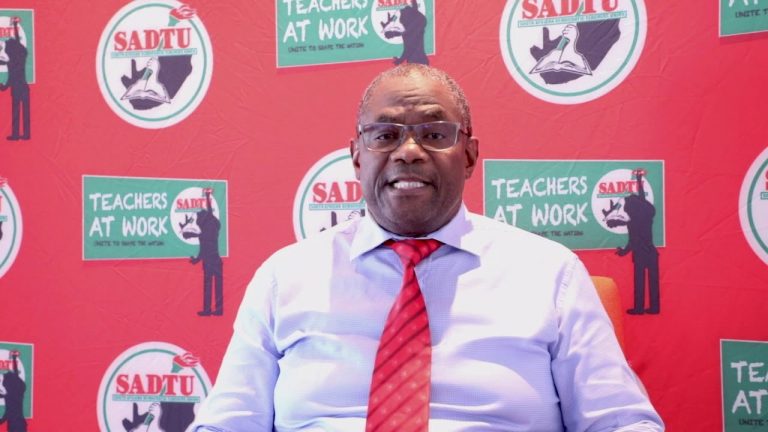
The teachers’ union SADTU has instructed its members not to return to work after a high-level meeting between it and the Department of Basic Education collapsed on Saturday.

The 250 000-strong teachers’ union General Secretary Muguena Maluleke said the Basic Education has failed to meet its non-negotiables, which include the provision of Personal Protective Equipment (PPE) for office-based personnel, school-based educators and education support personnel.

Maluleke said SADTU has since advised its members to remain at home until further notice. School Management Teams (SMTs) were scheduled to return to work on Monday, while teachers were expected back on May 18.

“We have taken a decision based on the responsibility we have to ensure that the occupation, education and health safety of workers is important,” said Maluleke in an interview with Inside Education on Monday  

“Therefore, we have asked them not to return to work today as the school management team because as far as we understand, the Minister was going to come back to us today and report back in terms of the readiness of the provinces to provide what the Department of Employment and Labour had prescribed as essential requirements, such as the screenings, the masks, the sanitizing and the cleaning of the offices as well as schools. That has not been done.”

Maluleke said the teachers’ union had a moral obligation to advise its members not to return to school until their safety was guaranteed.

“The provinces are not ready and therefore it was going to be an irresponsible act from our side if we let them go back and expose themselves to a possible transmission of the virus, because they would not be protected if they returned today as the delivering of protective equipment among others has not taken place,” said Maluleke.

Government’s guidelines call for schools to reopen in a second phase of recovery, after symptoms and cases of COVID-19 in a province or region have been on the decline for at least two 14-day periods.

Maluleke said as soon as the deliveries of PPEs are done, “we can call the school principals to confirm that the deliveries are done and then the SMTs can go back but not today.”

Many teachers in South Africa are scared of going back to school too early, and teachers unions are also cautioning against it.

They also fear for the safety and well-being of students who rely on schools for food, health care, social services and emotional stability

Health experts have warned that even if COVID-19 cases abated, a second wave of infection could arrive with the flu season about to start in a few weeks.

Maluleke said Saturday’s meeting with Basic Education Minister Angie Motshekga reached a deadlock because the department failed to persuade the union that it would deliver on non-negotiables.

“We called a meeting because we were seeing a lot of contradictions from provinces and we were beginning to have fears that at the end of the day, if we don’t intervene and meet with the Minister, we  will end up having a chaotic reopening of schools”, said Maluleke.

“We  told the Minister that we have taken the decision to ask our members not to return to work until the department gives a clear indication that all is well for SMTs to return,” said Maluleke. 

Department’s spokesperson Elijah Mhlanga said the minister met with various stakeholders on Monday to consider various reports on the state of readiness for schools to re-open.

“The Minister of Basic Education Mrs Angie Motshekga has today held a series of scheduled meetings with stakeholders in the basic education sector. The purpose of the meetings were to consider the state of readiness for the reopening of schools,” said Mhlanga.

“The first meeting was that of the Council of Education Ministers (Ministers and MECs). This was followed by another meeting with the leadership of teacher unions. The last session was held with the School Governing Body Associations and the South African Principals Association.

These consultative sessions happened ahead of the Minister’s return to the National Coronavirus Command Council set to take place on Tuesday, May 12. Cabinet is also scheduled to sit on Wednesday where it is expected that the Recovery Plan of the Education Sector will also be discussed.”

Mhlanga said the Minister will brief the media on Thursday on the preparations towards the reopening of schools.

SADTU’s secretariat officer, Xolani Fakude, told eNCA on Monday that Basic Education has not shown any evidence as yet suggesting that it is ready to receive the administration staff at schools.

“It is our very strong view as SADTU that the department has not shown any evidence as yet to suggest that it is ready to receive the first cohort of education workers into the school environment”, said Fakude.

“The disinfecting process of schools and offices has not even reached 25%. It is unlawful to expect workers to report for duty when their safety is not guaranteed.” 

Meanwhile, Provincial Departments of Education in KwaZulu Natal and Western Cape have also urged their SMT workers not to return to schools this week. 

KZN Education MEC Kwazi Mshengu said the province has opted for teachers not to return to schools yet.

“We have done this in order to allow for the space for the deep cleaning and sanitisation of our schools, which is part of the non-negotiables agreed by all stakeholders in the sector,” said Mshengu.

“This does not mean that the province of KwaZulu-Natal will not be ready for the return of learners on 1st of June. We prioritise at all times the safety of the learners as well as the educators.” 

(Compiled Inside Education staff)

#2020BudgetVote: Limpopo Education MEC Sets Aside R3.4 billion For School Infrastructure

0

Nyakallo Tefu

Limpopo MEC for Education Polly Boshielo says the 2020/2021 education budget will prioritize infrastructure and sanitation at schools, Early Childhood Development (ECD), School Safety and Skills for the Changing World.

Boshielo tabled the education department’s budget vote at the legislative chambers in Lebowakgomo, Limpopo, on Thursday last week.

She said the department has been allocated R33.794 billion for the 2020/2021 financial year.

She said the budget was made up of R27 billion for Compensation of Employees, R3, 0 billion for goods and services, R2.5 billion for transfers and Subsidies and R1.2 billion for Education Infrastructure Grant (EIG).

Boshielo said the department has set aside R3.4 billion for key school infrastructure projects in the province, including the building of toilets, building of new schools, sanitation facilities, maintenance and general repairs.

“The Infrastructure budget will be utilized towards the building of new and replacement infrastructure, upgrading of existing infrastructure; refurbishment, rehabilitation and renovations of existing infrastructure (including storm damaged schools), as well as maintenance and repairs of existing infrastructure,” said Boshielo.

“We need to indicate that this budget speech is delivered at the time that the world is fighting the Covid-19 pandemic. This situation will create a new normalcy which might necessitate a review of the APP and the reprioritisation of our budget.”

She said by the end of the academic year 2020, 500 schools would be part of the entrepreneurship and employability education programme.

Smart Classrooms will be established in 106 schools and 110 schools will pilot coding and robotics.

Boshielo said in terms of training and development, 50 488 educators will be trained on the implementation of the Quality Management System this financial year.

“492 principals of underperforming schools will be trained on Curriculum Management and Support. 400 teachers and 100 subject advisors will be trained on subject content and methodology in Mathematics, Physical Sciences and Commercial subjects. The department will continue to use the 1% levy to fund bursaries and training programmes for officials,” she said.

(Compiled by Inside Education staff)