Chester Makana, Charles Molele and Nyakallo Tefu
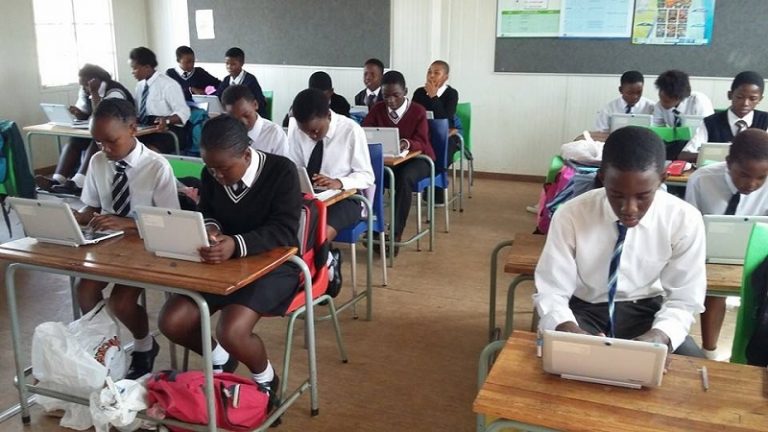
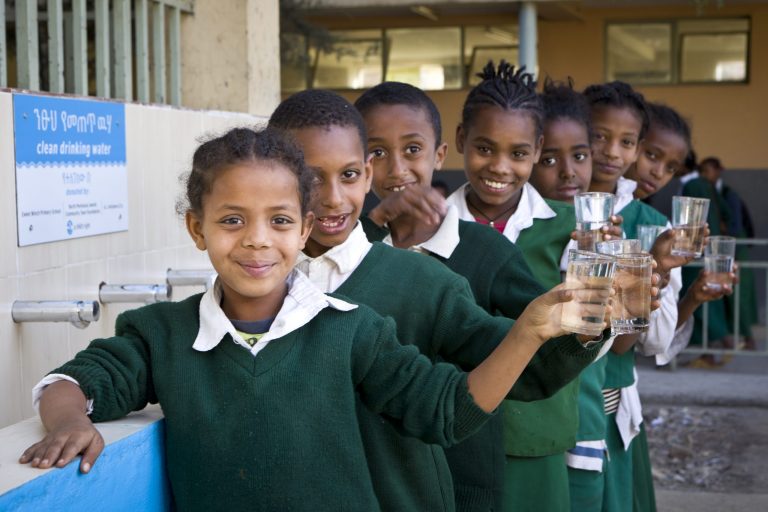
Teacher unions and non-governmental organizations (NGOs) are up in arms over the lack of water security at more than 3 500 schools across the country, just four weeks before the proposed re-opening plans by Basic Education Minsiter Angie Motshekga.
The unions are already calling for an urgent meeting with Motshekga, MECs of Education and Heads of Department to discuss safety measures before the proposed re-opening of schools, including the provision of water and toilets to rural areas.
The provision of water security is at the centre of the list of demands by the unions and NGOS because it plays a major role in the prevention of the transmission of the novel Coronavirus, which has no cure and has infected more than 6 783South Africans.
According to basic education’s Director-General Mathanzima Mweli, there are 3500 schools requiring emergency water provisioning in South Africa.
The DBE also plans
to provide mobile toilets to schools to replace pit latrines – there are
approximately 3700 schools with plain pit latrines as their only form of
sanitation, according to the DBE’s latest National Education Infrastructure
Management System (NEIMS) report.
The unions, among them SA Democratic Teachers Union (Sadtu), National Teachers Union (NATU) and National Professional Teachers Organization of South Africa (NAPTOSA), have asked to meet with Motshekga before the 6th and on the 10th of May to tick the box of all the non-negotiables. The NGOs concerned about water security include Equal Education, Equal Education Law Centre and Section 27.
“Our provincial
Secretaries will also request urgent meetings with the MECs and Heads of
Departments in provinces to monitor; the plan by the Minister and further
provincial plans,” the teacher unions said.
“If there is no
progress the Minister will be required, in the interest of transparency to
address the nation about the reasons and how the challenges are being addressed.
Workers will not be expected to report for duty because there will be no
safety. The law requires that the employer guarantees a safe workplace for the
employees.”
Teacher unions and the
NGOS believe the proposed date to re-open schools is premature because it is
impossible for government to deliver water tanks, toilets and personal
protective equipment by June.
NAPTOSA’s national
leader Basil Manuel said it was highly unlikely for the department of
education, working hand in glove with the Department of Water and Sanitation,
to reach the goal of providing water tanks to over 3 500 schools in less than
three weeks.
“I believe the reopening
of schools is a very tall order. Are we ready now? No. Will we be ready by 1
June 2020, highly unlikely? We have over 7000
schools that have water issues. Some of the water issues were easily resolved.
There are 3000 schools where there is simply no water provision. For example,
some schools will have the tank but the installation requires cement, which we
can’t buy at the moment,” said Manuel.
“I
can’t see this being solved if it couldn’t be solved in 25 years. The issue of
pit latrines is also something that seems hard to deal with, already looking at
that thing seems like you will attract so many diseases.”
NATU’s
president Allen Thompson said the issue of delivering tankers is not a problem,
but installing and getting them to work was the main issue.
“There
are 4 000 schools without toilets, almost 3 500 schools are without water, if
you have heard information from the minister of water and sanitation, she
claims to have delivered the tanks but the unfortunate part is that you don’t
need a tank to have water, you need the tank to be installed,” said Thompson.
“With
that process set to take place, it is not possible for all the 3 500 schools
to have received the tanks, have them installed and be tested plus add water to
them. The minister was just too ambitious to make pronouncement about the 11,
18 of May and 1 June. We do want to go back to school, but we need the minister
to give us a plan management.”
Equal Education’s
General Secretary Noncedo Madubedube said the NGO has been campaigning for the
provision of water for the past eight years, and government has not come to the
party, leaving close to 5 million people without access to water and about 15 million without access to basic sanitation.
“We have led a
campaign for the provision of water since 2012 to schools and not much has
changed. How are they are going to achieve that target within a short space of
four weeks when they couldn’t do it in the past decades,” said Madubedube.
“It’s impossible to resume classes under these conditions. It is irresponsible and careless for the minister to do this. The idea of saving the curriculum at the expense of learners and teachers is absurd.”
In the far-flung rural villages of Limpopo, plans to restart the 2020 academic year have struck fear among parents at schools which do not have access to running water and sanitation.
Parents at
Tshikalange primary school at Guyuni village near Kruger National Park’s Pafuri
gate in Limpopo believe that without water the ongoing fight against the
COVID-19 coronavirus will be a lost battle and may endanger the lives of their
children.
The village has
been struggling to have running water for more than five years and had to pay
at least R100 per bakkie load to access the precious resource.
Villager Ndivhuwo
Nemulodi who is also a school governing body secretary said her school has been
struggling to get water for more than five years.
“We understand that
government wants schools to reopen, but our main problem is that we are even
struggling to access water to cook learners meals in the school,” she said
Motshekga announced
that the DBE has engaged all stakeholders and will only reopen when all demands
made by education unions and other stakeholders are met.
But Nemulodi doubts
if the battle to have running water will be won in her village, saying they have
engaged the authorities without success.
“When the schools
closed there was no water; our children carry water from home to schools so they
could drink. The school only buys water to prepare meals,” said Nemulodi
Nemulodi said
parents are not much worried about access to water as they have learned to live
with the pain, and used child support grant to remedy the situation.
She argues that the
more Grade 7 pupils are allowed to return to class if one person had the virus
it will cause more damage than the intended desire to keep education rolling.
“This virus is
scary what we see on the news in other countries, if it strikes us we are all
going to perish, we are in a dilemma because even if we can have water we still
have lions that are roaming in our village,” said Nemulodi
When lockdown was
introduced to help flatten the curve against Covid-19, government also outlined
a plan to distribute water into villages.
Nemulodi said her
village is also getting water delivered with water tankers.
The villagers’ bid
to drill boreholes has failed as it appears the underground reserves have also
dried up.
The school has an
enrollment of 201 pupils, and is the feeder to Makuya secondary in the neighboring
village.
Nemulodi said
that’s where local children proceed to finish their matric.
How schools and
children will behave is not the question that is consuming Nemulodi alone.
Rofhiwa Netshipise
of Makuya Secondary said his village is too poor and ill prepared to see their
children returning to schools.
The Netshipise SGB
secretary argues that it is better to lose a school calendar than risking losing
children whose future could change their parents lives for good.
“I was watching
news channels – what’s going on in Brazil and Italy is scary, we are not
advance like them, I think we should just accept that 2020 was a year will not
count,” he said
Netshipise said
that collecting water on the streets defeat the purpose of lockdown, and the virus
can be passed in the streets.