Home Blog Page 419

Department of Basic Education Warns Against The Premature Re-Opening of Schools

Nyakallo Tefu

The Department of Basic Education has warned against the premature reopening of schools.

This comes after reports emerged that certain independent and public schools were preparing to re-open much earlier and had already started to receive learners ahead of the date announced by Basic Education Minister Angie Motshekga.

In a statement, the Department said some school teachers and principals were already reporting for duty. Parents meetings have also been held where plans were announced to have learners back this month. 

Motshekga’s spokesperson Elijah Mhlanga confirmed that the department was aware that some independent (or private) and public schools are already preparing to reopen.

“The premature reopening of schools is not permitted as the Department is still finalising COVID-19 school compliance protocols,” said Mhlanga in a statement.  

“The uniform standards will be applicable in schools as part of the measures put in place to protect learners and teachers, reduce infection and save the academic year.”

Department of Education’s Director-General Mathanzima Mweli condemned the premature re-opening of schools, saying the minister will next week return to the National Coronavirus Command Council to present an enhanced recovery plan for the basic education based on inputs and feedback received thus far.

 “I therefore urge schools to familiarize themselves with all the Regulations and Directives to ensure compliance. In the meantime, schools consult with the Department of Health and Department of Employment and Labour, in anticipation of the determination by the Minister”, said Mweli. 

“I am emphasizing that until this determination is made schools must remain closed.”

Parliament Hears National School Of Government Losing R10m Per Month Due to COVID-19

The National School of Government is currently experiencing a loss of over R10 million per month due to the COVID-19 national lockdown, according to the Portfolio Committee on Public Service and Administration.

This came to the fore in Parliament this week after the Portfolio Committee on Public Service and Administration received briefings from the Public Service Commission and the National School of Government on their 2019/2024 strategic and annual performance plans for the 2020/2021 financial year.

The committee said that it was deeply concerned over the sustainability of the National School of Government as contact classes had to be suspended due to lockdown, leading to a loss of R10.5 million per month.

The committee also heard that the school generates 80% of its income from the intake of students who register for various programmes that are offered by the school.

However, the committee said it was pleased to hear that the school had a long-term strategy for sustainability which included e-learning, a change in price modalities and an extension of its courses to other markets such as Parliament and the state-owned enterprises.

The National School of Government plays a significant role in overseeing the professional common purpose in addressing the systemic challenges of Public Service delivery, through the learning and development of public officials.

The school trains about 4 000 public servants annually at its premises in Sunnyside, Pretoria and 40 000 in external venues in other cities nationwide.

Face-to-face training was suspended last month in light of the national lockdown and will enhance online training during this period.
 
The Public Service Commission reported that, although the commission was not listed as an essential service provider according to the lockdown regulations, however, the Public Service Commission Corruption Hotline remains as an essential service, and its operation needs to continue.

The PSC also reported about the four vacant positions of commissioners that exist, and that must be filled, three at provincial level and one at national level.
 
 (Compiled by Inside Politics staff)

Gauteng MEC Panyaza Lesufi Saddened By Death of Two Hammanskraal Learners

Nyakallo Tefu

The Gauteng Department of Education has send condolences to the families of two learners who died in separate incidents in Hammanskraal, 30km north of Pretoria.

An 8-year old girl learner from Selang Primary School was electrocuted after touching an electric cable, while the 12-year old boy from Lethabo Phalane Primary School, who was diabetic, faced complications and subsequently died.

Gauteng MEC of Education Panyaza Lesufi said he was saddened by the death of the two learners.

“We would like to convey our sincere condolences to both families and the school community. We pray for their strength during this time of affliction” said Lesufi. 

The department said the Temba police are investigating the death of the girl who was electrocuted by an electric cable, which was wrongly earthed at home. 

According to the department, both schools will facilitate memorial services to celebrate their lives after the lockdown period.

SA Presidency’s Staff Member Tests Positive for COVID-19

Charles Molele

Access to the Union Buildings in the country’s capital Pretoria is currently limited after a staff member tested positive for COVID-19.

In a statement issued on Wednesday, the Presidency said all officials who were in contact with the staff member are currently being screened and tested for the deadly coronavirus strain that causes flu-like symptoms.

Presidency also said access to the Union Buildings is therefore limited to exceptional interactions.

“In line with government’s guidelines on the management of COVID-19 cases, steps have been taken to secure treatment of the relevant staff member and to provide support to the member’s family,” said the Presidency.

“The Presidency’s Pandemic Task Team, established to assist in managing all Covid-19 related matters, proactively initiated a process of disinfection and deep cleaning of all The Presidency facilities. This process commenced on Tuesday, 28 April 2020.”  

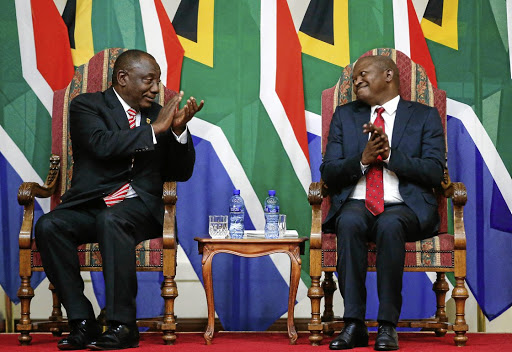
The statement also pointed out that President Cyril Ramaphosa and Deputy President David Mabuza have been working remotely and not from the Union Buildings since the start of lockdown, and were therefore not in contact with the infected person.

(Compiled by Inside Education staff)

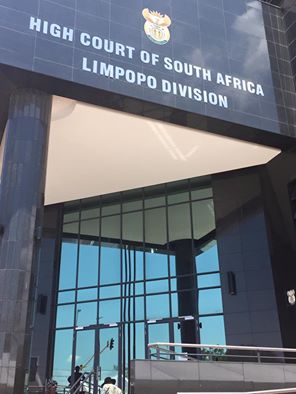
Limpopo High Court Dismisses Application to Halt Re-opening Of Schools in June

Nyakallo Tefu 

The Department of Basic Education has welcomed the judgment by the Limpopo High Court which dismissed an application by the Tebeila Institute of Leadership, Governance and Training.

The Institute went to court on an urgent basis to set aside the decision of the minister to re-open schools on June 1.

Judge Gerrit Muller dismissed the case, saying that Limpopo High Court had no jurisdiction over the matter.

He ordered parties to cover their own costs.

Judge Muller also agreed with the department that the competent court would have been the Gauteng Division of the Court in Pretoria because that is where the offices of the Minister and the Department of Basic Education are located, not Polokwane in Limpopo.

The department argued in court that the dates set by the minister for the re-opening of schools were tentative and not final.  

Motshekga said the National Coronavirus Command Council will have the final say depending on how the country is doing as it fights the COVID-19 pandemic. 

The department’s Recovery Plan states that learners will return to school in phases, with Grades 7 and 12 learners set to go back to school first, while teachers will be back on 18 May 2020 to prepare for lessons.

The department further outlined that the contemplated reopening of schools had been developed together with provinces, other government departments, all stakeholders and civil society through a consultative process over a number of weeks.

“Motshekga did not come up with the draft Recovery Plan overnight but it was being developed with rational, considered and responsible input from stakeholders as well as interested and affected parties”, said Basic Education’s Director-General Mathanzima Mweli in the answering affidavit.

In a statement, departmental spokesperson Elijah Mhlanga said Basic Education would now proceed with its plans as outlined by Motshekga. 

“On the substance of the matter, the department argued that the contemplated reopening of schools had been developed together with the provinces, other government departments, all stakeholders and civil society through a consultative process over a number of weeks. The announcement by the minister was of the proposed tentative dates only. A final date for schools to reopen will be informed by the readiness of schools to reopen,” said Mhlanga.

Anger Over Schools Without Water Mounts as Education Department Plans To Re-open

Chester Makana, Charles Molele and Nyakallo Tefu

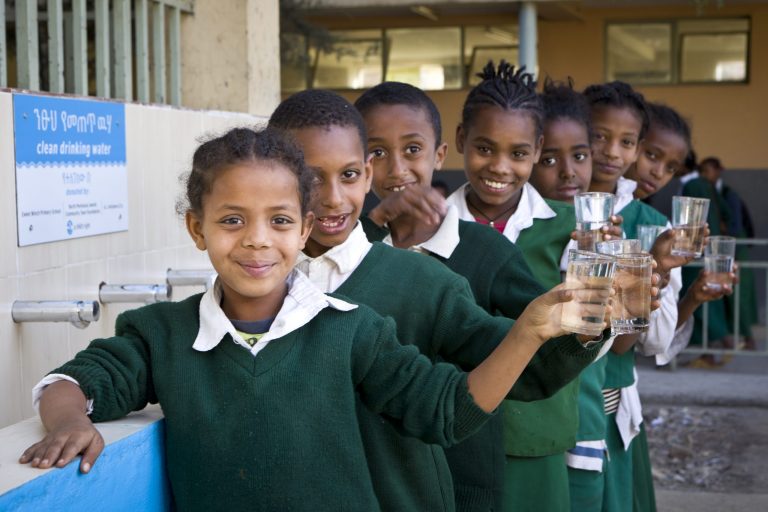
Teacher unions and non-governmental organizations (NGOs) are up in arms over the lack of water security at more than 3 500 schools across the country, just four weeks before the proposed re-opening plans by Basic Education Minsiter Angie Motshekga. 

The unions are already calling for an urgent meeting with Motshekga, MECs of Education and Heads of Department to discuss safety measures before the proposed re-opening of schools, including the provision of water and toilets to rural areas.  

The provision of water security is at the centre of the list of demands by the unions and NGOS because it plays a major role in the prevention of the transmission of the novel Coronavirus, which has no cure and has infected more than 6 783South Africans.

According to basic education’s Director-General Mathanzima Mweli, there are 3500 schools requiring emergency water provisioning in South Africa.

The DBE also plans to provide mobile toilets to schools to replace pit latrines – there are approximately 3700 schools with plain pit latrines as their only form of sanitation, according to the DBE’s latest National Education Infrastructure Management System (NEIMS) report. 

The unions, among them SA Democratic Teachers Union (Sadtu), National Teachers Union (NATU) and National Professional Teachers Organization of South Africa (NAPTOSA), have asked to meet with Motshekga before the 6th and on the 10th of May to tick the box of all the non-negotiables. The NGOs concerned about water security include Equal Education, Equal Education Law Centre and Section 27.

“Our provincial Secretaries will also request urgent meetings with the MECs and Heads of Departments in provinces to monitor; the plan by the Minister and further provincial plans,” the teacher unions said.

“If there is no progress the Minister will be required, in the interest of transparency to address the nation about the reasons and how the challenges are being addressed. Workers will not be expected to report for duty because there will be no safety. The law requires that the employer guarantees a safe workplace for the employees.”

Teacher unions and the NGOS believe the proposed date to re-open schools is premature because it is impossible for government to deliver water tanks, toilets and personal protective equipment by June.

NAPTOSA’s national leader Basil Manuel said it was highly unlikely for the department of education, working hand in glove with the Department of Water and Sanitation, to reach the goal of providing water tanks to over 3 500 schools in less than three weeks. 

“I believe the reopening of schools is a very tall order. Are we ready now? No. Will we be ready by 1 June 2020, highly unlikely? We have over 7000 schools that have water issues. Some of the water issues were easily resolved. There are 3000 schools where there is simply no water provision. For example, some schools will have the tank but the installation requires cement, which we can’t buy at the moment,” said Manuel.

“I can’t see this being solved if it couldn’t be solved in 25 years. The issue of pit latrines is also something that seems hard to deal with, already looking at that thing seems like you will attract so many diseases.”

NATU’s president Allen Thompson said the issue of delivering tankers is not a problem, but installing and getting them to work was the main issue.

“There are 4 000 schools without toilets, almost 3 500 schools are without water, if you have heard information from the minister of water and sanitation, she claims to have delivered the tanks but the unfortunate part is that you don’t need a tank to have water, you need the tank to be installed,” said Thompson.  

“With that process set to take place, it is not possible for all the 3 500 schools to have received the tanks, have them installed and be tested plus add water to them. The minister was just too ambitious to make pronouncement about the 11, 18 of May and 1 June. We do want to go back to school, but we need the minister to give us a plan management.” 

Equal Education’s General Secretary Noncedo Madubedube said the NGO has been campaigning for the provision of water for the past eight years, and government has not come to the party, leaving close to  5 million people without access to water and about 15 million without access to basic sanitation.

“We have led a campaign for the provision of water since 2012 to schools and not much has changed. How are they are going to achieve that target within a short space of four weeks when they couldn’t do it in the past decades,” said Madubedube.

“It’s impossible to resume classes under these conditions. It is irresponsible and careless for the minister to do this. The idea of saving the curriculum at the expense of learners and teachers is absurd.”

In the far-flung rural villages of Limpopo, plans to restart the 2020 academic year have struck fear among parents at schools which do not have access to running water and sanitation.

Parents at Tshikalange primary school at Guyuni village near Kruger National Park’s Pafuri gate in Limpopo believe that without water the ongoing fight against the COVID-19 coronavirus will be a lost battle and may endanger the lives of their children.

The village has been struggling to have running water for more than five years and had to pay at least R100 per bakkie load to access the precious resource.

Villager Ndivhuwo Nemulodi who is also a school governing body secretary said her school has been struggling to get water for more than five years.

“We understand that government wants schools to reopen, but our main problem is that we are even struggling to access water to cook learners meals in the school,” she said

Motshekga announced that the DBE has engaged all stakeholders and will only reopen when all demands made by education unions and other stakeholders are met.

But Nemulodi doubts if the battle to have running water will be won in her village, saying they have engaged the authorities without success.

“When the schools closed there was no water; our children carry water from home to schools so they could drink. The school only buys water to prepare meals,” said Nemulodi

Nemulodi said parents are not much worried about access to water as they have learned to live with the pain, and used child support grant to remedy the situation.

She argues that the more Grade 7 pupils are allowed to return to class if one person had the virus it will cause more damage than the intended desire to keep education rolling.

“This virus is scary what we see on the news in other countries, if it strikes us we are all going to perish, we are in a dilemma because even if we can have water we still have lions that are roaming in our village,” said Nemulodi

When lockdown was introduced to help flatten the curve against Covid-19, government also outlined a plan to distribute water into villages.

Nemulodi said her village is also getting water delivered with water tankers.

The villagers’ bid to drill boreholes has failed as it appears the underground reserves have also dried up.

The school has an enrollment of 201 pupils, and is the feeder to Makuya secondary in the neighboring village.

Nemulodi said that’s where local children proceed to finish their matric.

How schools and children will behave is not the question that is consuming Nemulodi alone.

Rofhiwa Netshipise of Makuya Secondary said his village is too poor and ill prepared to see their children returning to schools.

The Netshipise SGB secretary argues that it is better to lose a school calendar than risking losing children whose future could change their parents lives for good.

“I was watching news channels – what’s going on in Brazil and Italy is scary, we are not advance like them, I think we should just accept that 2020 was a year will not count,” he said

Netshipise said that collecting water on the streets defeat the purpose of lockdown, and the virus can be passed in the streets.

KZN MEC of Education Calls on Justice Minister to Deal With Cases of School Vandalism

Nyakallo Tefu 

KwaZulu Natal MEC for Education Kwazi Mshengu has called on Justice Minister Ronald Lamola to step in and intervene in the vandalism of schools in the province.

Mshengu said with no conviction of criminals happening, the justice system is failing to send a clear message to the criminals that they will be dealt with.

The Umlazi District in KwaZulu-Natal is among the worst hit by acts of vandalism and burglaries, with 41 schools affected. 

So far, in KwaZulu Natal, nine people have been linked to the recent attacks, and Gauteng has the highest number of targeted schools, with 60 schools vandalized so far.

“We are arranging a meeting with the Minister of Justice because we want to raise our frustration to say, ‘there’s never been a single conviction on any case related to vandalism and break-ins into our schools,’” said Mshengu. 

“Despite raising my frustration with Community Safety and Liaison MEC Bheki Ntuli and the provincial Police Commissioner Lieutenant-General Khombinkosi Jula, there has not been a single conviction”, said Mshengu. 

The Department of Basic Education says at least 962 schools across the country have been vandalized since the country went on lockdown.

Motshekga said in all the incidents, administration blocks and laboratories have been targeted, and ICT (information and communications technology) equipment has been stolen.

“There are other suspects that were arrested for other burglaries that happened before, but there has not been a single conviction. All that happens is that they get arrested, get given bail, and roam around our streets,” said Mshengu. 

Schools are set to reopen in June, however, the targeting of schools will set the government back as they will need to repair and sanitize schools before teachers and learners return. 

“I will be failing my duty if I don’t express my deep concern about what is happening to our schools during the lockdown,” said Motshekga.

Motshekga has welcomed the work done by the police in ensuring that those behind the vandalism and robberies were brought to book and has called on communities to help with revealing the people involved in these crimes. 

This week people working in the education sector will return to work after the country entered Level 4 of the lockdown on May 01, where the economy is being opened gradually following a complete shutdown. 

Teachers are set to return to school on May 18 to prepare classes when the Grade 7s and 12s make a return on June 1. 

The minister said the return of learners depended on how the country will be doing in dealing with cases of the novel coronavirus.

Western Cape Schools to Undergo a Cleaning Process Ahead of Re-opening in June

Nyakallo Tefu 

MEC for Education in the Western Cape Debbie Schafer says her department will start with cleaning and sanitizing all schools in the province to make sure it is safe for learners to return in June. 

This follows an announcement by Basic Education Angie Motshekga last week that schools will re-open in June, starting with Grade 12 and Grade 7.

“We will be doing proper cleaning and making sure the teachers are ready for the learners come June,” said Schafer. 

The plan set out by DBE is to have schools reopen in phases, with two sets of groups returning as the country finds ways to fight the COVID-19 pandemic that has hit the world. 

Schools are set to reopen on 1 June 2020, and matrics and Grade 7’s will be the first group to go back followed by other grades. 

Motshegka said having Grade 7s and 12s meant that the learners would have the entire school to themselves, making it easier to practice social distancing and other safety protocols.

“Several measures to ensure that the education sector do not contribute to the spread of the virus will be put in place before learners return to schools. In this regard, the department would be working with the department of health and department of transport,” said Motshekga. 

The minister further announced that teachers will return to schools on May 18 2020 in order to prepare themselves for the continuation of the 2020 academic year. 

“Our department is also working to identify high-risk teachers and we may need funding for additional teachers in order to manage classes and social distancing measures when more grades return”, said Schafer.

The education sector will return on May 4th in order to get the schools cleaned and ready for schooling to commence.

One of the rules that have been set out with the return of learners is that schools need to ensure that the maximum number of learners in a class is 40. 

“The issue with 40 people in a class will begin when the rest of the other grades return, there are just some schools where we won’t be able to do that,” said Schafer.

Covid-19 Crisis: Angry Undergrads Suing Colleges For Billions In Refunds

College students, kicked off campus by coronavirus, have a new extracurricular activity: litigation.

United States undergraduates have sued more than 50 schools, demanding partial tuition, room-and-board and fee refunds after they shut down.

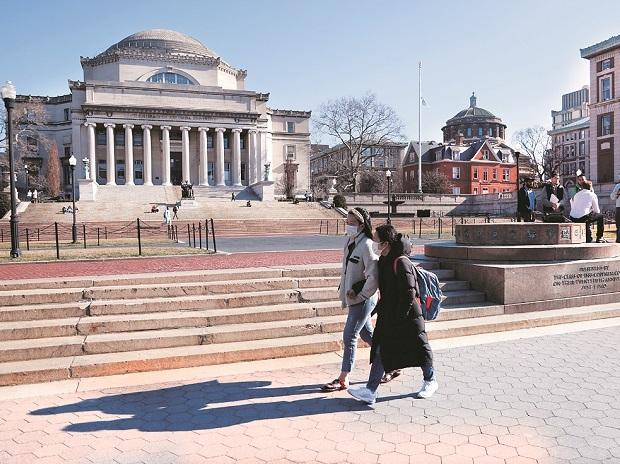
The proliferating breach-of-contract suits, many of them filed over the last week, target some of the biggest names in higher education: state systems including the University of California and Arizona State, as well as private institutions such as Columbia, Cornell and New York University.

The students’ lawyers, advertising on sites such as Collegerefund2020.com, are seeking class-action status on behalf of hundreds of thousands of students. While legal experts say the lawsuits face high hurdles, they could potentially involve billions of dollars in claims.

To justify annual prices that can top $70,000 a year, colleges have long advertised their on-campus experience, including close contact with professors and peers who will become a lifelong network. Now, millions of students are instead studying online.

Many of the suits are seeking compensation for the difference in value between the virtual and in-person experience. Plaintiffs include Grainger Rickenbaker, a freshman majoring in real estate management and development at Philadelphia’s Drexel University, which charges more than $50,000 in tuition and another $16,000 in room, board and other fees.

“I am missing out on everything that Drexel’s campus has to offer — from libraries, the gym, computer labs, study rooms and lounges, dining halls,” said Rickenbaker, 21, who is suing for a partial refund as he works remotely from his home in Charleston, South Carolina.

Most colleges declined to comment on the lawsuits. The California State System said it would defend itself against a complaint that understates the services it’s still providing. Arizona State said it was giving a $1,500 credit to all students who moved out of university housing by April 15.

Peter McDonough, general counsel for American Council on Education, a college trade group, said schools are battling circumstances outside their control. They’re putting tremendous time and resources into supporting remote learning, while still paying professors and bearing other costs, he said.

“Faculty and staff are literally working around the clock,” McDonough said. “We’re in the middle of a catastrophe. Schools are doing their best to work their way through it.”

Some colleges, including Harvard, Columbia, Middlebury, and Swarthmore, have agreed to refund unused room and board. Others are offering credits or haven’t decided what to do, according to Jim Hundrieser, a vice president at the National Association of College and University Business Officers.

Payments can add up. Small residential institutions, for instance, may be refunding $2 million to $3 million, while large schools with several thousand on-campus students are likely to return $8 million to $20 million or more, Hundrieser said. For individual students, the funds can be quite a boon in an economic crisis. A college charging about $8,000 for a semester’s room and board that cancelled midway might be sending students a check of about $4,000.

The federal suits vary in their demands. The Anastopoulo Law Firm in Charleston represents students at roughly a dozen schools, including Drexel, and is seeking a partial return of all unreimbursed payments. In its suits on behalf of California public college students, Chicago-based DiCello Levitt Gutzler is asking only for the return of student fees for such items as transportation and student organisations, which can nevertheless total thousands of dollars a year.

Both the University of California and the California State systems have already agreed to return unused room-and-board. Cal State said it’s still providing services, such as counseling, and will refund fees “that have been unearned by the campus.”

However the complaints are decided, they highlight the stakes for the $600 billion-plus a year higher education industry. Public universities rely on tuition and fees for 20 per cent of their total revenues; private non-profit colleges, 30 per cent, according to the most recent federal data.

In the fall, if many schools open only online, they would forfeit room and board fees and face pressure to charge less tuition.

Colleges can expect to see more suits soon, threatening what attorney Anthony Pierce called “an economic tsunami.”

(Source: Bloomberg)

Education Crisis in Africa: Broken and Unequal?

Mitch Rankin

The education crisis in Africa seems an old-age predicament among many issues. In the year 2000, an estimated 970 million children were robbed of their childhoods due to ‘childhood enders’ – life-changing events like child marriage, early pregnancy, exclusion from education, sickness, malnutrition, and violent deaths.

That number today has been reportedly reduced to 690 million – meaning that at least 280 million children are better off today than they would have been two decades ago.

Together, China and India account for more than half of the global decline in stunting alone. But what of the African education crisis?

Here are observations:

In South Africa alone, millions of children continue to be robbed of a childhood. We now need to continue to push to reach every last child and ensure they receive the childhood they deserve.

Local governments can and must do more to give every child the best possible start in life. Greater investment and more focus is needed if we are to see every child can enjoy a safe, healthy, and happy childhood.

For those countries that made the most progress, including Sierra Leone, Rwanda, Ethiopia, and Niger, the results showed that political choices can matter more than national wealth.

With COVID-19, the conditions of community rural schools will be worse as maintenance will be made impossible by budgets diverted to address more urgent needs related to hospitalization, care, and daily subsistence. What are these school conditions that beg for our attention? Let’s peek at a child’s diary:

Dear Diary

My friend Petunia Buthelezi wrote to me yesterday and said she is not sure when they will be going back to school as the education department and the government is in conflict about social distancing measures and how they would apply in a classroom setting. She has 65 fellow students in the class…. How does social distancing work in a school like this?

South African education crisis

In many parts of South Africa, the schooling system looks more like a war zone than a field ripe for fertile minds.

Amnesty International recently reported a bleak picture of the basic education system that is failing learners from poorer communities. Titled Broken and Unequal: The State of Education in South Africa, it highlights the dire situation of South African education.

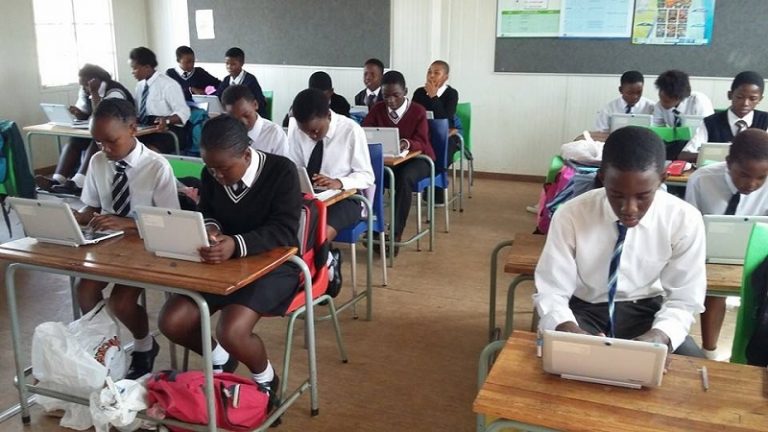
This is a far cry from the words spoken by President Cyril Ramaphosa at his state of the nation address in 2019, that in the next six years the government would provide every school child in South Africa with a tablet.

Many schools would be grateful to have a toilet. Of the 23,471 public schools, 20,071 have no laboratory, 18,019 have no library and most have dilapidated restrooms with what passes for toilets. Of the schools, 37 have no sanitation facilities at all.  4,358 schools are using pit latrines and 269 schools have no electricity.

This story is not unique to South Africa, and the same issues as the African education crisis are afflicting many developing countries. 

If we look at this bleak picture of education, mirrored in many parts of the world, it is almost inconceivable to marry it to the bright picture of an interconnected online education system that provides an equitable, fair learning platform for every student.

The Solution? Unless pressure is applied to the governments in emerging markets to spend the allocated funds, the education system will remain defunct for the foreseeable future. In South Africa, the education budget was 16.7% of government expenditure in 2019/2020.

If a significant portion of it had been spent correctly and not misappropriated, the amount would have gone a long way to alleviate the plight of a sinking education system in the country.

Sub Saharan Africa and Asia

In 2006 UNESCO, estimated that over 84 percent of classrooms had over 40 pupils per teacher. 

Sub-Saharan Africa and Asia have the most schools with pupil-teacher ratios (PTR) exceeding 40:1 are in. 

SubSaharan Africa has the highest PTR with Congo having a PTR of 54:1, Mali 55:1, Mozambique 67:1, Rwanda 65:1, Ethiopia, and Malawi around 70:1, 

Afghanistan with 83:1, Cambodia 50:1, and Bangladesh 50:1., and other South Asian countries have high PTR. (UNESCO, Institute of statistics, 2008). 

The pressure to fulfill the international mandate of providing more teachers has more and more developing countries in Sub-Saharan Africa, South, and East Asia, and Latin America regions using the services of under-qualified teachers, who not only are inexperienced but also have no expertise in teaching a classroom of 50+ pupils. 

Large class sizes often go beyond 100 pupils

The classroom conditions are particularly acute in a number of developing countries where large class sizes often swell up and go beyond 100 pupils. We see a lack of planning by government agencies. Or is it a matter of focus and involvement with children? Is it a matter of lack of resources or inattentiveness to the African education crisis?

The rush to fill the physical classroom void left in the wake of Coronavirus in developed countries highlights the growing gap for marginalized students that do not have access to technology infrastructure or data, leaving them further behind each day that passes. 

On the one hand, we have the resources, finances, and students. And on the other hand, we have corrupt officials in governments, the custodians of the education system, and our future workforce. 

Teaching is moving online, on an untested and unprecedented scale. Student assessments are also moving online, with a lot of trial and error and uncertainty for everyone. Many assessments have simply been canceled. Importantly, these interruptions will not just be a short-term issue, but can also have long-term consequences for the affected cohorts and are likely to increase inequality.

The education crisis now becomes more insurmountable, bigger than the problem of latrines. The case of the broken and unequal education crisis becomes highlighted now with incompetence and corruption.

A child to the rescue? Or will adults redeem themselves?

Do we need a Greta Thurnberg to take on the African education crisis and say her emotive and daring speech during the UN Climate Summit:

I shouldn’t be up here. I should be back in school on the other side of the ocean. Yet, you all come to us young people for hope. How dare you? You have stolen my dreams and my childhood with your empty words. Yet, I am one of the lucky ones. Children are suffering.

Crypto investors are looking at Africa as the new hub for business expansion and we look at only a part of the incoming revenues to be channeled towards the region with the “worst education system”. We are encouraged by this prediction by one crypto writer:

The Africa Bitcoin love affair is yielding encouraging results for the crypto. Bitcoin use cases are growing exponentially, and developing economies are discovering every new way to boost BTC adoption. This narrative has played out pretty well for the African continent, where Bitcoin adoption is going strong.

I am reminded of the saying Quis custodiet ipsos custodes? a Latin phrase found in the work of the Roman poet Juvenal from his Satires (Satire VI, lines 347–348). It is literally translated as “Who will guard the guards themselves?”