Mitch Rankin
The education crisis in Africa seems an old-age predicament among many issues. In the year 2000, an estimated 970 million children were robbed of their childhoods due to ‘childhood enders’ – life-changing events like child marriage, early pregnancy, exclusion from education, sickness, malnutrition, and violent deaths.
That number
today has been reportedly reduced to 690 million – meaning that at least 280
million children are better off today than they would have been two decades
ago.
Together,
China and India account for more than half of the global decline in stunting
alone. But what of the African education crisis?
Here are
observations:
In South
Africa alone, millions of children continue to be robbed of a childhood. We now
need to continue to push to reach every last child and ensure they receive the
childhood they deserve.
Local
governments can and must do more to give every child the best possible start in
life. Greater investment and more focus is needed if we are to see every child
can enjoy a safe, healthy, and happy childhood.
For those
countries that made the most progress, including Sierra Leone, Rwanda,
Ethiopia, and Niger, the results showed that political choices can matter more
than national wealth.
With
COVID-19, the conditions of community rural schools will be worse as
maintenance will be made impossible by budgets diverted to address more urgent
needs related to hospitalization, care, and daily subsistence. What are these
school conditions that beg for our attention? Let’s peek at a child’s diary:
Dear
Diary
My friend
Petunia Buthelezi wrote to me yesterday and said she is not sure when they will
be going back to school as the education department and the government is in
conflict about social distancing measures and how they would apply in a
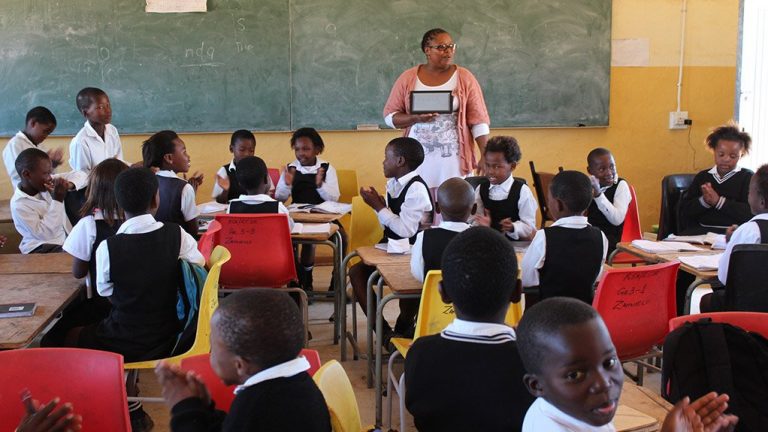
classroom setting. She has 65 fellow students in the class…. How does social
distancing work in a school like this?
South African education
crisis
In many
parts of South Africa, the schooling system looks more like a war zone than a
field ripe for fertile minds.
Amnesty International
recently reported a bleak picture of the basic education system that is failing
learners from poorer communities. Titled Broken and Unequal: The State of Education in South
Africa, it highlights the dire situation of South African education.
This is a
far cry from the words spoken by President Cyril Ramaphosa at his state of the nation
address in 2019, that in the next six years the government would
provide every school child in South Africa with a tablet.
Many schools
would be grateful to have a toilet. Of
the 23,471 public schools, 20,071 have no laboratory, 18,019 have no library
and most have dilapidated restrooms with what passes for toilets. Of the schools, 37 have no sanitation
facilities at all. 4,358 schools are using pit latrines and 269 schools
have no electricity.
This story is
not unique to South Africa, and the same issues as the African education crisis
are afflicting many developing countries.
If we look
at this bleak picture of education, mirrored in many parts of the world, it is
almost inconceivable to marry it to the bright picture of an interconnected online education system that provides an
equitable, fair learning platform for every student.
The
Solution? Unless pressure is applied to the governments in emerging markets to
spend the allocated funds, the education system will remain defunct for the
foreseeable future. In South Africa, the education budget was
16.7% of government expenditure in 2019/2020.
If a significant portion of it
had been spent correctly and not misappropriated, the amount would have gone a
long way to alleviate the plight of a sinking education system in the country.
Sub
Saharan Africa and Asia
In 2006
UNESCO, estimated that over 84 percent of classrooms had over 40 pupils per
teacher.
Sub-Saharan
Africa and Asia have the most schools with pupil-teacher ratios (PTR) exceeding
40:1 are in.
SubSaharan
Africa has the highest PTR with Congo having a PTR of 54:1, Mali 55:1,
Mozambique 67:1, Rwanda 65:1, Ethiopia, and Malawi around 70:1,
Afghanistan
with 83:1, Cambodia 50:1, and Bangladesh 50:1., and other South Asian countries
have high PTR. (UNESCO, Institute of statistics, 2008).
The pressure
to fulfill the international mandate of providing more teachers has more and
more developing countries in Sub-Saharan Africa, South, and East Asia, and
Latin America regions using the services of under-qualified teachers, who not
only are inexperienced but also have no expertise in teaching a classroom of
50+ pupils.
Large
class sizes often go beyond 100 pupils
The
classroom conditions are particularly acute in a number of developing countries
where large class sizes often swell up and go beyond 100 pupils. We see a lack
of planning by government agencies. Or is it a matter of focus and involvement
with children? Is it a matter of lack of resources or inattentiveness to the
African education crisis?
The rush to
fill the physical classroom void left in the wake of Coronavirus in developed
countries highlights the growing gap for marginalized students that do not have
access to technology infrastructure or data, leaving them further behind each
day that passes.
On the one
hand, we have the resources, finances, and students. And on the other hand, we
have corrupt officials in governments, the custodians of the education system,
and our future workforce.
Teaching is moving online, on an
untested and unprecedented scale. Student assessments are also moving online,
with a lot of trial and error and uncertainty for everyone. Many assessments
have simply been canceled. Importantly, these interruptions will not just be a
short-term issue, but can also have long-term consequences for the affected
cohorts and are likely to increase inequality.
The education crisis now becomes
more insurmountable, bigger than the problem of latrines. The case of the
broken and unequal education crisis becomes highlighted now with incompetence
and corruption.
A child to the rescue? Or will adults redeem
themselves?
Do we need a Greta Thurnberg to take on the African education crisis and say her emotive and daring speech during the UN Climate Summit:
I shouldn’t
be up here. I should be back in school on the other side of the ocean. Yet, you
all come to us young people for hope. How dare you? You have stolen my dreams
and my childhood with your empty words. Yet, I am one of the lucky ones.
Children are suffering.
Crypto investors are looking at Africa as the new
hub for business expansion and we look at only a part of the
incoming revenues to be channeled towards the region with the “worst education
system”. We are encouraged by this prediction by one crypto writer:
The Africa Bitcoin love affair is
yielding encouraging results for the crypto. Bitcoin use cases
are growing exponentially, and developing economies are discovering every new
way to boost BTC adoption. This narrative has played out pretty well for the
African continent, where Bitcoin adoption is going strong.
I am
reminded of the saying Quis
custodiet ipsos custodes? a Latin phrase found in the work of the Roman poet Juvenal from his Satires (Satire VI, lines 347–348). It is literally
translated as “Who will guard the
guards themselves?”