Home Blog Page 420

How South Africa Can Address Digital Inequalities in e-Learning

Mmaki Jantjies

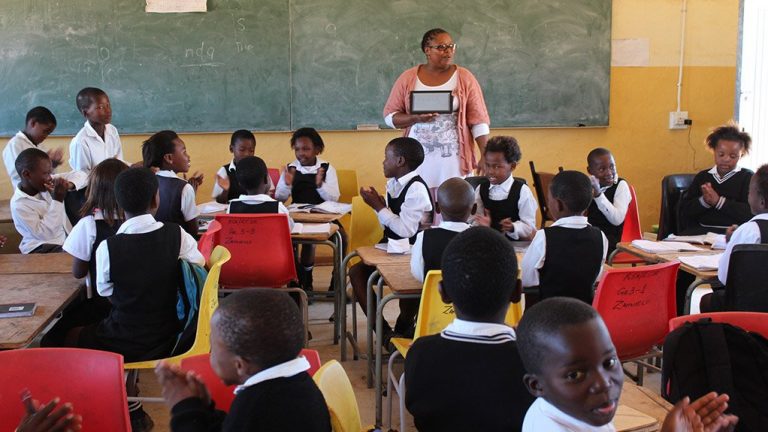
South Africa’s education system is complex, with historical inequalities dating back to apartheid. Most of the country’s pupils come from disadvantaged backgrounds.

Language is an issue; most pupils do not speak English as a mother tongue, yet English dominates in many classrooms.

And, as the COVID-19 crisis has showed, there’s a huge digital divide at play.

The ongoing effects of the virus have kept pupils and teachers at home. This has necessitated a move to e-learning.

In theory, this could be an important step towards a fairer education system.

Digital platforms enable equitable access for learners to digital books, simulated science labs and related innovative learning resources.

Electronic and mobile learning can thus be seen as an additional learning resource that can also help enhance access to learning tools.

Access to e-learning is not a panacea to the challenges in South African education. But it does provide an opportunity to make access to learning resources for all children more equitable.

But the reality in South Africa, as in most developing countries, is very different. Teachers have varying digital skills. Many families and teachers also cannot afford the data necessary to sustain some online learning activities.

COVID-19 has shown that technology is no longer a luxury but an important component of the education process. In presenting solutions, a wide range of factors must be considered. These range from access to computers, to teacher training, to the social and economic challenges faced by teachers, pupils and schools in their communities.

National focus

There are already some strategic policies and resources in place to help schools and teachers use technology as part of the teaching and learning process.

Information and Communications Technology is also taught as a school subject. But the government needs to consider an additional range of issues if it’s going to solidify a commitment towards e-learning. This includes policies and strategies surrounding connectivity, data costs, skills development, hardware access as well as contextual multilingual digital learning content.

Many schools have little or no technology facilities. Some have tablets and only a few have advanced computing laboratories. Formal training in applied technology skills is provided for teachers who want to teach a technology specialist subject in schools.

But all this needs to be extended. Adequate digital skills training should become a mandatory component of all teacher training programmes in universities, universities of technology and colleges. While there have been several digital training programmes for both in-service and trainee teachers in some provinces, it is time for a concerted national programme to ensure all teachers are skilled in digital teaching and technology.

Several studies have reflected on the innovative use of mobile phones and related applications to support learning in South Africa.

But South Africa has some of the highest data costs on the continent. This means that pupils can’t always easily access information on their mobile phones.

In the wake of South Africa’s first COVID-19 cases, as schools closed, several educational sites were zero rated; this means they are now free to use. This should be extended to support home schooling and any future returns to school, so that data costs don’t keep schools in poorer communities from accessing these resources. Policies to enable such beyond the pandemic should be considered.

Projects that work

As an educator who focuses on Education Technology research, I know there is enormous enthusiasm among teachers and pupils to become more digitally savvy. I have worked with a number of under-resourced schools, supporting the teaching of Science, Technology and Maths subjects through basic software applications, learning management systems and other free-to-use cloud-based education platforms.

When pupils and teachers receive the right support for digital learning, the response is often remarkable. I have met many teachers who willingly dedicate their weekends and school holidays to digital learning and teaching, with no financial incentives but a passion to equip pupils with digital skills.

I am particularly proud of a collaboration between computing students from the University of the Western Cape with teachers in a high school in an underprivileged part of Cape Town. Their work together has cultivated computing skills and sparked learners’ interest in other subjects like chemistry and astronomy.

A similar collaboration has been expanded to the North West province and convinces me that there are thousands of teachers who are keen to retrain to prepare their pupils for the digital era.

The COVID-19 crisis offers a unique opportunity to harness this enthusiasm. With the right support and training, digital teaching and learning can become ubiquitous even in resource-strapped environments.

(Source: The Conversation)

#TuksAthletics: Leotlela Glad To Be On The Track Racing Again

Tuks’s Gift Leotlela can honestly claim to be South African athletics forgotten sprinter, but as it said you can’t “slow” a quality sprinter down forever.

During the Gauteng North Championships at Tuks, he clocked a time of 10.31s in the 100m. It was his best in three years.  Since April 2017 he hardly raced. First, it was due to a lower back fracture. Then his hamstrings started to act up. 

To Leotlela’s credit, he never considered quitting as an option even during the “darkest of days”. It was a dream of running that perfect race that kept him going. 

In 2016 the Tuks sprinter was the “talk of the track”. At the World Junior Championships in Bydgoszcz, Poland he won a silver medal in the 200m (20.59s). He was fourth in the 100m (10.28s). Best was that he had qualified in the 200m to compete at the Rio Olympics. It meant being only 18 years and two months old he was the youngest track and field athlete to represent South Africa at the Games.

Leotlela continued to get faster. In 2017 he set a South African junior record running 10.12s in the 100m. At the time only 10 South African senior sprinters had run faster times. Another highlight was beating the legendary Wayde van Niekerk over 100 metres in Bloemfontein. 

Then disaster struck. The Tuks sprinter got injured during the South African Championships in Potchefstroom. It led to him not racing for nearly two years. 

His first dedicated attempt at a comeback only happened last year in 
Europe. From a statistical perspective, his first race could be considered as catastrophic.

He ran a time of 11.40s in the 100m.

Leotlela was, however far from despondent.

All that mattered to him was to be in the starters blocks hearing the starter saying: “on your marks . . . get set . . .”

“I did not realise how I missed hearing those words. My adrenaline started pumping. Unfortunately, I was really rusty. It led to me being slow out of the blocks, and not really getting any faster. Not that it mattered. I was racing in front of spectators. It was fantastic.”

Leotlela is realistic about running 10.31s during the provincial championships. 

“My start was terrible . . . really terrible. I will need to work on it. My top-end speed was sort of OK.”

According to the Tuks sprinter, his biggest challenge this season was to learn to trust his body again.

“When you have been injured for such a long time, you start to doubt whether your body will hold up under pressure. I know now that it can. I would have loved to compete in a few more races, but I understand why all sport had to come to an abrupt halt.

“There will still be plenty of time to race. Now at least I got more time to work on getting faster and to finish my studies,” said the final year information science student.

Leotlela was confident of dipping under 10.10s if the season had continued.

He also had planned to race the 200m. 

(Source: University of Pretoria)

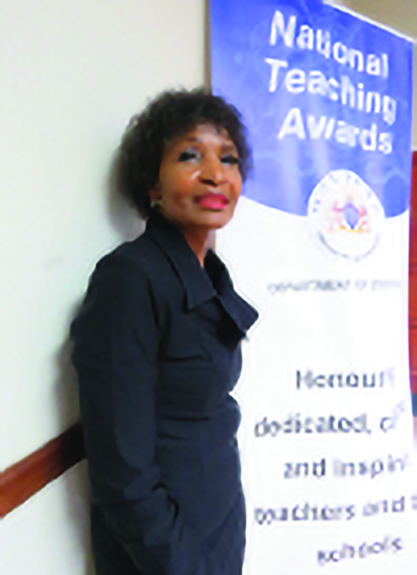
Teacher of the Week: Julia Hlahle from Moriting Primary School in Tembisa, Gauteng

CLASSROOM CORNER

Teacher of the Week

Teacher: Noni Julia Hlahle

School: Moriting Primary School in Tembisa, Gauteng

Noni Julia Hlahle found her calling as a school teacher from an early age because she took leadership roles during her Sunday school days.

Hlahle also formed a Youth Club, an initiative that prompted people to believe that she had qualities of being a teacher and a leader.

“I started seeing myself as a teacher from a young age and since then the love of teaching developed in me,” she says.

From there she just wanted to see herself being a qualified teacher.

Her passion and love for teaching and interacting with learners, teachers and community members contributed in making her a provincial winner.

She will always pride herself for participating in the nation-al level and this means that she is making a difference as an educator, leader and follower of the South African schooling system.

“I have actualised my dream and become the best, excellent leader in primary school,” she says.

Her main challenge is facing learners with learning disabilities, parents who do not get involved in the children’s education, inadequate infrastructure, lack of libraries, not fully equipped computer laboratories, lack of sports-fields and under-resourced school halls.

Despite the existence of all the challenges, she is prepared to confront those challenges by assisting learners with disabilities and by also creating good relationships with the parents. She also provides extra classes for those learners and ensure that School-Based Support Team (SBST) gives all the support needed to both the educators and the learners.

She also confronts those challenges by inviting parents to the school. She gives them schedules of meetings where on dire circumstances she visits the learner’s families with the assistance of the School Governing Body (SGB).

In addressing the computer laboratory she has partnered with Clicks Foundation, and they have donated 50 computers to the school. She has a very good rapport with all stakeholders by treating everyone with respect and dignity.

‘Oaky and the Virus’ a New Book Teaching Children About COVID-19

Nyakallo Tefu

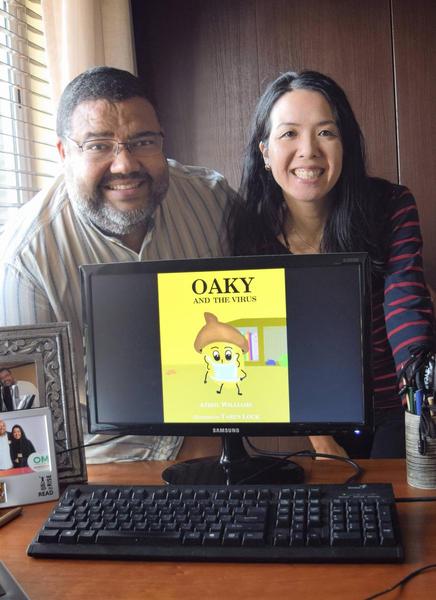
As the debate on the reopening of schools continues, lecturers at the University of Cape Town’s Graduate School of Business (GSB), have released a free COVID-19 book for children. 

Oaky and the Virus publisher Theart Press has released the book for free distribution and download for to assist in keeping children at home, reading and avoiding infection. 

This week, the Department Of Basic Education announced that the reopening of schools will happen in phases, with matriculants and grade 7’s set to return first on June 1st.

However, this has not been welcomed by some parents, teachers unions and political parties. 

Oaky and the Virus is one of seven books in the series, is written by senior lecturer at the University of Cape Town’s Graduate School of Business (GSB), Athol Williams. 

In a statement the university says Oaky and the Virus follows Oaky and his sister, Oaket, as they learn about COVID-19 in a fun, accessible and educational way. 

As soon as the two acorns learn about the virus, they quickly practise the appropriate safety measures: they wear their masks, wash their hands and stay at home.

With the aim of not only educating children, Theart Press is also urging the public to contribute to Read to Rise, which is fundraising for care packs for children in vulnerable communities.

Motshekga Unveils Proposed Plan to Re-open Schools by June

0

Schools will re-open on the 1st of June for grade 7 and 12 learners after being closed for more than two months due to the Coronavirus outbreak.

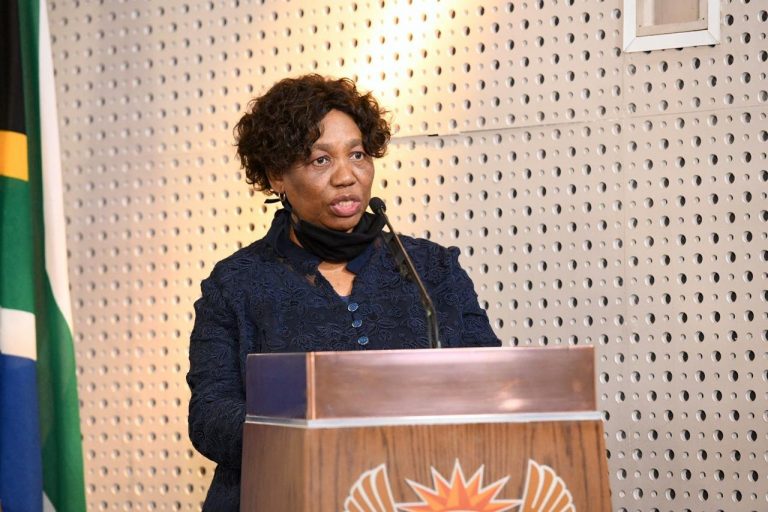
Basic Education Minister Angie Motshekga made the announcement on Thursday evening at a joint media briefing alongside the Department of Higher Education, Science and Technology Minister Dr Blade Nzimande.

This is despite concerns on the increasing numbers of infections in big metros such as Tshwane, Johannesburg, Buffalo City, Ethekhwini and the City of Cape Town.

Announcing the department’s recovery plan, Motshekga said each province, district, circuit and school must have a practical and comprehensive catch-up plan to be implemented.

“The past few weeks have affected South Africans in many ways we have never experienced before. This, there has been an increase in anxiety and confusion in relation to the status of schooling, and when learners would be allowed to go back into their schools,” said Motshekga.

She said the department has worked with provinces to prepare for the re-opening of schools.

“Each province, district, circuit and school, must have a practical and comprehensive catch-up plan to be implemented. The plans must talk to the risk profiles of the areas in which schools are located, and this must be based on the infection rate in the specific geographical areas,” she said.

Motshekga said the safety of learners and teachers was imperative and as a result she consulted widely on the matter.

She said class sizes will be limited, social distancing will be required, and so will wearing masks on transport and in school.

No hugging and shaking of hands will be allowed during and after school.

Cloth masks should also be worn by learners and teachers at all times.

“The Council of Education Ministers (CEM) agreed on a number of steps that must be taken to ensure that the health and safety of our learners and teachers are not compromised.  These measures are contained in the Standard Operating Procedures Booklet, which will be used in all schools,” she said.  

She said the department also held high-profile meetings South African Democratic Teacher Union (SADTU), National Professional Teachers of South Africa (NAPTOSA), Suid Afrikaanse Onderwysers Unie (SAOU), National Association of Teacher Union (NATU), and Professional Educators Union (PEU).

The department also met with dozens of other stakeholders such Umalusi, universities and the South African Principal Association (SAPA), Federation of Association of Governing Bodies (FEDSAS) and the National Association of School Governing Bodies (NASGB).

“In all the meetings the principle of opening of schools at the right time was accepted once all the conditions have been met. They proposed that in order to deal with social distancing they requested the department to use community and town halls, platooning and shifting,” said Motshekga.  

“They requested the department to provide Personal Protection Equipment. The department should provide awareness campaign to parents particularly in rural areas. They also proposed that the phased in reopening should also include special schools.”

“We have also received representations from ordinary members of the public, who are concerned about the impact of the COVID-19, insofar as it affects schools.  We appreciate all the proposals; it is really helpful.”

“We are also mindful of the huge size of the sector and the many responsibilities we have in our hands.”

MEC Debbie Schafer: Re-Opening of Schools In Western Cape Not Possible

0

Nyakallo Tefu

MEC for Education Debbie Schafer says learners in the Western Cape will not return to school next as announced by Basic Education Department on Wednesday.

Schäfer said the dates announced by Basic Education Director-General Hubert Mweli were not definite and do not constitute an official announcement.  

Mweli on Wednesday announced that schools will be re-opened on the 6th of May, starting with matriculants and Grade 7. 

“The departments announcement has caused an understandable level of confusion and anxiety for schools, teachers and parents”, said Schäfer. 

“The national Minister of Basic Education is scheduled to make an announcement tomorrow morning on the plan to reopen schools, and we will only be in a position to comment in more detail after that.  However, we will not be in a position to receive learners next week.”

SADTU Rejects Basic Education’s Schools Re-Opening Plan

0

Nyakallo Tefu and Charles Molele

The South African Democratic Teachers Union has accused the Department of Basic Education of engaging in bad faith, insisting that no schools will be re-opened until their demands are met.

This comes hours after the Department of Basic Education’s Director-General Hubert Mweli announced COVID-19 sector plans on the re-opening of schools next week, starting with Grade 12 and Grade 7 learners using a phasing approach.

The Department’s approach to re-open schools is largely informed by rigorous research on the ground, National Coronavirus Command Council COVID-19 protocols and solid comparative studies with other countries, which includes Taiwan, China, Singapore and Denmark.

 SADTU said the Department’s approach was deeply flawed and not backed by scientific data, given the recent spurt in COVID-19 cases in South Africa.

The country has 4 996 confirmed Covid-19 cases and 93 deaths related to the coronavirus. This is an increase of 203 on Monday’s 4 793 confirmed cases.

“We reject importing the Taiwan, China, Denmark and Singapore misrepresentation by the Director General. The context and culture are not the same. We must use our context, culture and data to inform our actions,” it said.

The 220 000-strong teachers union said it stood firm that no schools shall open until its concerns are met.

“We urge the Department to comply with minimum requirements which we articulated in 14 points,” SADTU said in a statement on Wednesday.

“These included among others, the fumigation and disinfection of schools, proper school infrastructure in the form of proper toilet facilities, observance of social distancing inside the classrooms and on court yards, reduction of class sizes, provision of soap, sanitizers an masks, screening of learners, teachers and support personnel, social distancing in the transportation of learners to and from schools, provision of psychosocial services to assist learners as well as teachers to build resilience and calm down fears among learners and teachers.”

Basic Education Minister Angie Motshekga has held several high-profile meetings with MECs of Education, heads of department, teacher unions and other interested pressure groups and NGOs in the last few days to discuss the re-opening of schools and the impact of COVID-19 on the 2020 Schools Calendar and Curriculum.

The teachers union said it is now clear that the Department was engaging in bad faith.

“This is undesirable when we are faced with a virulent and contagious pandemic”, said SADTU. 

“If Stage 4 regulations are to be adhered to, there should be no re-opening of schools under Stage 4. The Minister should meet with stakeholders before any announcement is made and after making sure that the Department of Health has expertly assessed the risks.”

COVID-19 Crisis: DBE Announces Phased Re-Opening of Schools for Matrics and Grade 7 Learners

0

Charles Molele and Nyakallo Tefu

Department of Basic Education on Wednesday announced guidelines to reduce the risk of coronavirus infection in schools that are scheduled to re-open next week after month-long closures, calling for thorough sanitization of all schools and warning against gathering in cluster groups.

The guidelines also requests compulsory wearing of masks throughout the school day by learners and teachers, including physical distancing in classrooms and total avoidance of hugging, handshaking and direct contact.

If an infection is suspected or detected, the infected learner or staff member will be considered for isolation and testing.

 These and other stringent measures were announced on Wednesday by Basic Education Director-General Hubert Mweli during a joint meeting between the portfolio committee on basic education and the select committee on education and technology, sports, arts and culture.

The health and safety measures affects more than 12 million learners in South African public and private schools, and 407 001 educators accounting for  23 076 schools in the country.

Early this week, Inside Education reported that  Basic Education Department has proposed a phase-in approach in a leaked confidential document labelled Framework for a Curriculum Recovery Plan- Post Covid19 that will see only Grade 7 and Grade 12 returning to school on May 6, an increasing number of stakeholders, including senior government officials have warned against allowing lower grade learners back in the classroom at the height of the pandemic, saying the action would put the lives of many learners at risk.

https://insideeducation.co.za/government-lobbied-to-limit-re-opening-of-schools-to-grade-12-learners-only/

Mweli said the department will ensure that learners go back to an environment that is safe against any outbreak of COVID-19, which was already claimed 92 lives and infected 4 996 people since the outbreak of the deadly virus since the Spanish flu in 1918.   

Mweli further announced a draft amended school calendar for the 2020 academic year, saying teaches would return to school by the 4th of May, with learners back in the classroom on the 6th of May.  

According to Mweli’s 50-page COVID-19 Basic Education Sector Plan, the re-opening of schools would be phased in, starting with Grade 7 and Grade 12.

The sector plan stipulates that all learners, educators and support staff will receive orientation and training at the start of the school reopening next week, commencing with Grade 7 and 12.

Teachers and learners will also be screened for temperature checks before the resumptions of classes.

“Grades 12 and Grade 7 are phased in first because these are your older, matured and much more aware learners who’ll have adequate infrastructure in primary and high schools. For younger learners, when they come they’ll help to orientate them,” said Mweli.

While the original school calendar year started on 15 January 2020 and would have ended on 4 December 2020, the amended school calendar will end on 9 December 2020.

Mweli said the grades will be phased-in, starting with Grades 7 and 12.

“The lost school days will be recovered by shortening the June holidays to 5 days and the September holidays to a long weekend in order to make up these days. The 4th term will also be lengthened to close on 9 December 2020 for learners and 11 December 2020 for teachers,” said Mweli.

He said the Grade 12 will be expected to write the set fully fledged examinations, based on covering the entire curriculum and other grades will be given a reworked curriculum and assessed on 80%.

The May-June Exams for the National Senior Certificate (for Grade 12) will now be combined with the October-November Exams and rescheduled for November-December 2020.

In addition to safety measures, content in Life Orientation and Skills will be rearranged to address personal hygiene, self-study skills, emotional and psychological trauma at South African schools.

Every lesson should contribute five minutes teaching awareness on COVID-19, Mweli to the joint portfolio committees in education.

“Before teachers teach, each subject must dedicate 5mins to raise awareness about the Covid-19 pandemic. They should not only hear about the coronavirus during orientation, they should learn about it like other learners did when HIV/AIDS hit the world,” said Mweli.

Basic Education Department also announced that procurement of Personal Protective Equipment (PPE) will be centralized as set out by National Treasury regulations.

National Treasury has already contracted the Tshwane-based company Imperial Health Sciences, a decision which has been widely criticized by some in business and government.

IHS is a business unit of logistics giant Imperial South Africa.

The non-executive directors of the multinational company include Phumzile Langeni, Graham Dempster and Peter Cooper.

Langeni is one of President Cyril Ramaphosa’s special investment envoys.

The Portfolio Committee on Basic Education, and the Select Committee on Education and Technology, Sports, Arts and Culture announced on Wednesday afternoon that it welcomed the sector plan and commended the Department of Basic Education for re-opening schools as this would likely also lead the country to get ready and most likely also lead the country to move to a lower level regarding the Covid-19 lockdown. 

The portfolio committee’s chairperson Bongiwe Mbinqo-Gigaba said she appreciated the work done by the DBE behind the scenes.

“Please communicate so our people know what is happening. If there are changes, please inform the public. We are all stressed. But we need to work together. Even if our kids go back to school there will be challenges and our responsibility as MPs is to support and assist and report for those challenges to be rectified,” she said after the presentation.

The committee also commended the department for its efforts in getting the sector ready for the start of schooling next month.

This includes providing masks to learners up to quintile 4 and to all teachers, a basic sanitation and hygiene package, mobile facilities to replace pit latrines, cleaners, screening, additional teaching posts as no classes should have more than 40 learners, additional substitute posts, provision of mobile classrooms to deal with overcrowding as a temporary measure, and incubation camps for progressed and weaker learners, especially in Grade 12, she said.

Meanwhile, SA Democratic Teachers Union reiterated its position on Wednesday that no school should be open until all safety concerns were addressed.

“We urged Department to comply with minimum requirements which we articulated in 14 points,” Sadtu said in statement.

“These included among others, the fumigation and disinfection of schools, proper school infrastructure in the form of proper toilet facilities, observance of social distancing inside the classrooms and on court yards, reduction of class sizes, provision of soap, sanitizers and masks, screening of learners, teachers and support personnel, social distancing in transportation of learners to and from schools and provision of psycho-social services.”

‘Clueless’ Higher Education Minister Failing University Students: EFFSC

0

Nyakallo Tefu 

The Economic Freedom Fighters Student Command (EFFSC) has accused Higher Education Minister Blade Nzimande of ‘inaction’ and ‘indecisiveness’ on how best to deal with the commencement of the 2020 academic year at universities and TVET colleges in the face of the coronavirus crisis.

In an interview with Inside Education this week, EFFSC President Mandla Shikwambana said Nzimande should stop running away from dealing with the issues of remote online learning and the commencement of the 2020 academic year. 

“Minister Blade Nzimande cannot keep running away from us, he needs to address the issues at hand because running away will not work for his department,” said Shikwambana.

“I don’t know if Minister Nzimande is becoming too old to deal with issues of the ministry of Higher Education, but we have never seen any leadership from him up to so far. He is not coming forward with directions. He is just quiet.”

The Departments of Higher Education and Basic Education twice postponed scheduled media briefings on how to go about re-opening schools during the Level 4 lockdown.

Shikwambana said they have written to Nzimande to provide electronic devices for all students (laptops and tablets), data to all students and that all university websites and TVET college websites must be free to access for all students.

He said government should also ensure that network coverage is improved for all students to be able to commence with learning online.  

“All institutions must create an institutional fund to address the issue of finance for all that the EFFSC is suggesting,” said Shikwambana.

The Democratic Alliance Student Organization’s (DASO) chairperson Kwena Moloto said his organization wanted all students to receive the same quality of education, regardless of where they come from.

“There needs to be constant communication across the sector to consistently keep tabs on how students are doing. No academic exclusions of the results that students receive during this time,” said Moloto.

“In addition, no student should lose their NSFAS or bursary based on the results that they receive during the course of this period and no student is charged in the following academic year for any modules that they have to repeat because of difficulties faced owing on to e-learning.”

There has been controversy surrounding the implementation of remote online learning at universities, with most student organizations and students saying that this new system will work against underprivileged students. 

However, some students say they have adapted to remote online and learning despite challenges elsewhere.

Fourth year student at the University of the Witwatersrand Sello Mathibela said the transition from contact lessons to online learning was hard but he eventually got used to it.

“I am actually enjoying it since the lessons are recorded for us to download. Basically, it is great and convenient”, said Mathibela. 

First year student at The University of Johannesburg Thoko Ndaba said online has been going very well for her her fellow students.

Wits has provided students with 30GB of data (10GB day and 20GB night), while UJ has given its students 30G of data (20G day and 10G night express). 

Shikwambana said as much as they are not against e-learning, they view this decision by the department of higher education as a premature solution for the academic year to continue. 

“We are saying that South African students are not ready for this way of learning, not only the students, but the institutions of higher learning and TVET learning”, said Shikwambana. 

Shikwambana added that the higher learning institutions do not have systems that will allow for online learning to be successful in the country. 

Students at some universities like the University of Stellenbosch and the University of Cape Town will only commence with the online system as from May 04. 

Moloto said DASO was the first to student organization to raise the issue online learning. 

“It is difficult times that we are facing and the reality is that we have to adjust because one thing we agree on as student organizations together with the department of higher education, is that we want to see the completion of the 2020 academic year,” said Moloto.

Students at UCT Forms COVID-19 Research Task Team

0

Faculty of Health Sciences students at the University of Cape Town have formed a special COVID-19 research task team to act as the official voice for COVID-19-related research projects and other interrelated functions in progress in the faculty.

In a statement, the university said the task team was formed as a subgroup of a broader group of academics, convened by the Dean of Health Sciences, Professor Lionel Green-Thompson, to coordinate teaching, clinical services, administration and social responsiveness initiatives.

Director of Research at the FHS and research task team coordinator, Dr Yolande Harley said following the outbreak of COVID-19 in South Africa and the subsequent lockdown, staff in the faculty received many requests for information about how research should be managed, how researchers could get involved with COVID-19 projects and the “rules” around COVID-19 research in particular.

The task team’s first priority was to establish the faculty’s approach to research-related activities during the pandemic. 

The document summarised key points, which includes prior COVID-19 communication, and provides additional information to “ensure appropriate research practice”. 

Research into COVID-19 currently underway, or in advanced stages of planning in the faculty, aims to understand a combination of primary, secondary and tertiary interventions to achieve “a meaningful degree of protection” against the disease.

Primary interventions refer to those that prevent patients from contracting the disease, supported by research on vaccine development.

Secondary interventions involve detecting the disease and preventing it from exacerbating, supported by research on diagnosis tools, screening strategies and pathogenesis.

Tertiary interventions concentrate on how to manage the disease and involve research on how to treat COVID-19 complications like cardiovascular, neural and respiratory problems.

Behind the scenes

Harley said that there’s been a hive of research activity progressing behind the scenes (while adhering to lockdown regulations). Each area, while different, has one common goal – to contribute to better managing the pandemic in the country and coming up with ways to deal with other future outbreaks.

“Quite a number of research groups in the FHS are planning and progressing [on] research projects that focus on the COVID-19 pandemic,” she said.

“These studies are tackling a range of challenges related to the virus and the disease it causes.”

Treatment trials

She said researchers are attempting to understand the process in which the virus spreads in the country, as well as how susceptible South Africans, including those infected with HIV and tuberculosis, are to COVID-19.

(Source: UCT)