Home Blog Page 422

Parliament’s Proposed Plan To Rescue The 2020 Academic Year For SA Universities

0

Nyakallo Tefu

The portfolio committee on higher education has proposed that there should be no return to face-to-face campus activity until September when the peak of the coronavirus virus is over.

The parliamentary committee also proposed a return to learning and teaching through online and remote methodologies at all universities as from May 4.

This comes a few days after top universities in South Africa resumed classes using remote online learning and teaching.

On Tuesday, Parliament’s Portfolio Committee on Higher Education also held a virtual meeting to assess the impact of the lockdown on the higher education sector.

The Minister of Higher Education, Science and Technology, Dr Blade Nzimande also attended the meeting and presented government’s plans from the department, universities and Technical Vocational Education and Training (TVET) colleges on how to rescue the 2020 academic year.

Parliament’s proposals are contained in a PowerPoint presentation entitled, Plans For Academic Year 2020 And Response To COVID-19 Pandemic.

In the presentation, the parliamentary committee on higher education highlights that every institution has pledged to complete the financial year, even if it goes into the year 2021.

The committee also said that no student would be left behind, more especially those that can’t access online teaching and learning.

According to the proposed plan, before re-opening of universities, 360 degree screening and testing of students or staff returning to campuses should be conducted.

It further states that all campus quarantine facilities should be made available at each and every institution.

The plan also proposed a mental health support and other forms of support necessary for staff and students throughout the academic.

It said there will be no changes to NSFAS funding for qualifying students at this stage.

“Given the likely extension of the academic year, as mentioned, modelling is being done to determine the costs of the different scenarios,” according to the plan.

“According to the latest report received by the Minister from NSFAS, a total number of 5,516 student (first-time entering) appeals have been approved, and a further 1,404 student appeals were unsuccessful. A total number of 24,571 continuing students’ appeals have been received from institutions, of which 14,117 have been approved. NSFAS has established a virtual contact centre using web platforms and social media and has been able to successfully continue engaging with students.”

UCT Provides Free Pre-paid Data To Students For Online Learning

0

Nyakallo Tefu

University of Cape Town is now offering pre-paid data to all students at no cost, UCT vice-chancellor and principal Mamokgethi Phakeng announced on Wednesday

This comes after students, parents and political parties raised concerns about the high costs of data and access to internet connectivity in South Africa following the decision to resume online classes at UCT and other universities across South Africa on Monday.

Service providers Cell C, Telkom and Vodacom have now all agreed to zero-rate access to UCT online learning platforms.

“We know that online learning may not be available to every UCT student. UCT is setting up an additional system to distribute printed learning materials and USB drives for students who cannot access the internet in any form”, said Phakeng on Wednesday.

The university said students would now be able to access all online learning material provided by the university without digging deep into their pockets and at no cost.

Phakeng said the university has purchased a data bundle for each student with a valid South African cell number.

Each student will receive 30G to 40G, depending on their network provider, valid for 30 days.

These agreements were negotiated separately with each service provider and students have already started receiving data bundles as from Monday April 21, according to Phakeng.

“When it is safe to return to campus, students who were not able to study online, as well as other students who feel they have fallen behind in their studies, will be able to catch up through a programme of blended learning combined with face-to-face teaching.”

This is how the provision of data works at UCT:

CELL C: 30GB for a month after it is provisioned: 10GB is available during the day, 20GB as part of Cell C’s Nite Data offering from 00:00 to 05:00.

MTN: 30GB for a month after it is provisioned: 10GB is available during the day, 20GB as part of MTN’s Night Express offering from 00:01 to 04:59.

Telkom: 40GB for a month after it is provisioned: 20GB is available during the day, 20GB as part of Telkom’s Night Surfer offering from 00:00 to 07:00.

Vodacom: 30GB for a month after it is provisioned: 10GB is available during the day, 20GB as part of Vodacom’s Night Owl offering from 00:00 to 05:00.

Food Aid Parcels in South Africa Could Do With A Better Nutritional Balance

0

Hester Vermeulen, Hettie Carina Schonfeldt and Carmen Muller

Food insecurity is a reality for many South African households, with approximately 50% of households living under the poverty line and not being able to afford basic healthy eating. Low-income households typically spend about a third of total expenditure on food.

The spread of the global COVID-19 pandemic to South Africa is causing further pressure on vulnerable households facing temporary or permanent employment interruptions. In addition, the primary caretakers of these households now have more mouths to feed, including children that previously benefited from the National School Feeding Programme also relying on their primary care givers for food.

The COVID-19 outbreak in South Africa has forced government to develop interventions to ensure vulnerable households have access to safe and nutritious food during the current state of emergency. One being implemented on a provincial government level involves the distribution of food aid parcels to vulnerable households. The food parcels will see may households through one of the greatest pandemics of our time.

But are these food parcels nutritionally adequate?

Food parcels

Gauteng is home to just over a quarter of the South Africa population and is viewed as the economic hub of the country. In Gauteng the food parcel relief scheme is available to citizens who earn a combined household income of less than R3,600, as well as to recipients of South African social security agency pensioner, disability, child welfare and military veteran grants.

Each food aid parcel being distributed in Gauteng includes: starch-rich foods (10kg maize meal and 5kg rice), protein-source foods (1kg soya, two tins of baked beans, two tins of fish and 880g peanut butter), two litres of cooking oil, one packet of tea bags, 2.5kg sugar, 1kg salt and three non-food items (one bottle of dish-washing liquid, one bottle of all-purpose cleaner and two bars of laundry washing soap). In the Gauteng province approximately 7,000 food parcels are requested daily. By early April 8,000 families had received food parcels.

The president, Cyril Ramaphosa, has also announced that a further 250,000 parcels will be distributed across the country. The implementation of technology-based solutions to provide food assistance at scale through vouchers and cash transfers will also be incorporated to ensure that help reaches those who need it faster and more efficiently.

Our objective was to determine whether the nutritional value of this food parcel met the requirements of what is generally accepted as a nutritionally balanced diet. In this case a balanced diet was defined based on the nationally accepted nutritional guidelines: the South African food based dietary guidelines combined with the eating patterns suggested in the guidelines for healthy eating.

Benchmark values of selected nutrients were obtained from the World Health Organisation. In this case a reference family was assumed to consist of one adult female, one adult male (older than 16 years), an older child (aged 10 to 14 years) and a younger child (aged 3 to 9 years).

The Gauteng food aid parcel has a retail value to the recipient household of approximately R507 (based on current online retail prices) with a total weight of approximately 30kg.

From a food group perspective the Gauteng weekly food parcel relies heavily on starch-rich staple foods (maize meal and rice) and could potentially provide the reference family of four people with enough staple food servings for a two week period. The food parcel could furthermore provide the reference family with enough protein-source foods and oil for approximately 1.5 weeks and 2 weeks respectively. But the food parcel is lacking in dietary diversity in relation to items such as dairy, eggs, fruits and vegetables.

Macro-nutrients are the energy providing substances consumed in the form of carbohydrates, fats and proteins. Considering macro-nutrients, we found that the food parcels had more than adequate carbohydrate, protein and fat content compared with nutritional guidelines.

Dairy, eggs, fruits and vegetables supply the much needed recommended dietary amounts of zinciron and vitamin A which are critical micro-nutrients of concern in South African diets. These three micro-nutrients are essential for an optimally functional immune system and immune cell growth which is crucial in assisting the body in fighting diseases including optimistic infections such as COVID-19.

Iron has an important role to play in cellular processes assisting the body in fighting off pathogens by increasing the number of free radicals that can destroy them. Vitamin A provides cell structure to the respiratory tract and zinc maintains the integrity of the mucous membrane. Both are essential in fighting off respiratory infections. The food parcel provides a sufficient amount of zinc and iron but vitamin A isn’t up to the recommended level.

In addition, the lack of fresh produce causes a shocking 98% deficit in daily recommended allowance for vitamin C. Vitamin C protects cells from oxidative stress which reduces the occurrence of free radicals that can cause inflammation. Adequate vitamin C ensures that the immune system is able to fight off disease.

Our analysis also suggests that there could be a reduction in the salt and sugar content of the food parcels. The country has legislation aimed at reducing the intake of both.

What needs to be done

Based on our analysis we would recommend the following changes to the food aid parcels:

  • Staple foods: reduce the quantity of maize meal and consider the inclusion of preferably self-raising wheat flour (eliminating the need to include baking powder or yeast).
  • Animal source foods: include eggs and shelf stable milk.
  • Legumes: include dried beans or samp and beans.
  • Vegetables: include shelf stable tomatoes and vegetables.
  • Fruit: include oranges and apples, which are currently in season.
  • Flavouring: Reduce the quantity of sugar and salt and add tea.

Providing food to the most vulnerable during the pandemic will ensure relief where it is most needed. Striving to provide more nutritional food can ensure better health outcomes that will reach beyond the pandemic.

Source: The Conversation

University Bosses Clash With Students Over Online Learning Amid COVID-19 Lockdown

0

Charles Molele

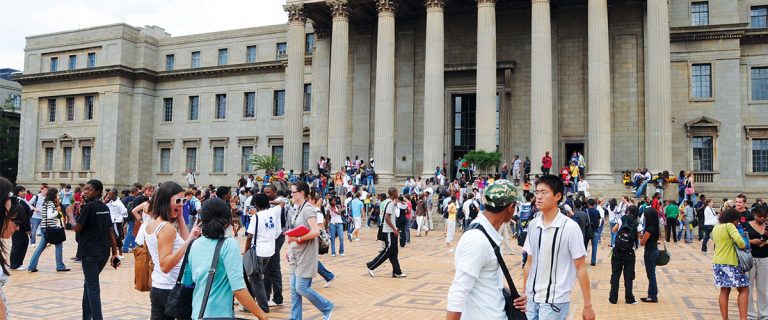
University students at three top South African universities are up in arms over a sudden decision to resume the 2020 academic year using remote online learning and teaching during the national lockdown period. 

Last week, the University of the Witwatersrand, University of Johannesburg and the University of Cape Town announced radical plans to restart the academic year this week using remote online learning and teaching methods as of their recovery plans in the wake of the coronavirus pandemic. 

This comes as the Portfolio Committee on Higher Education, Science and Technology meets on Tuesday to discuss the impact of the lockdown on the higher education sector.
 
The committee will also receive a briefing from the Minister of Higher Education, Science and Technology, Dr Blade Nzimande on plans of the department, universities and Technical Vocational Education and Training (TVET) Colleges to rescue the 2020 academic year.

On Monday, students said the Government continued to turn a blind eye to the inequalities which exist between historically white institutions and historically disadvantaged black institutions,

They also reacted angrily to resumption of classes, saying the move flies in the face of pervasive and deep social inequalities, including the lack of access to the internet, high costs of data and access to the fundamental resources necessary for online education.

University of Johannesburg’s Students Representative Council (SRC) said on Sunday that all online activities should be suspended during the duration of the lockdown until the end of April. 

“This action will present the management with the assistance of the interim SRC to distribute resources such as devise, data and other study material to needy students before the commencement of online learning,” said UJ SRC in a statement. 

“Many students are studying in homes that do not favour learning, presenting many challenges on the academic performance of students, which could result in failure and academic exclusion.”

The South African Students Congress has also voiced its opposition to the sudden implementation of e-learning and called for a single coordinated higher education system. 

 “The University of Witwatersrand, University of Pretoria and other historically privileged institutions have been given the green light to continue with their systematic exclusion of students from poor and working class backgrounds,” it said in a statement. 

“These institutions and government are fully aware that a large majority of their students are from remote areas which are poorly serviced by government and largely not demarcated to receive services such as courier services and network connectivity; these are the lived realities of communities which get poor service delivery from government.”

On Sunday, Deputy Minister of Higher Education, Science and Technology Buti Manamela described the decision of the three institutions to resume classes this week as ‘irresponsible’ and ‘inconsiderate’. 

“For Wits University and others to insist on resuming academic programmes online tomorrow even when some students will be left behind, and after agreement with all stakeholders to work towards a later date when we are all ready, is irresponsible and inconsiderate,” said Manamela. 

He added: “The principles are clear. No institution should be left behind. No student should be left behind. Students who have no study gadgets or internet connectivity should not be treated as though they are the cause of COVID-19. We [must] ensure that we take all students along.” 

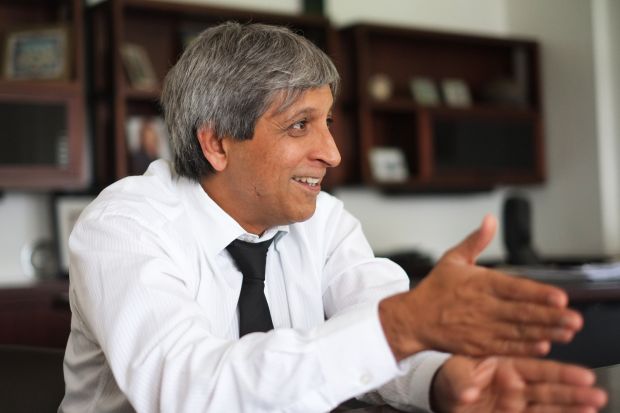
In an interview with Inside Education, Wits vice-chancellor, Professor Adam Habib, dismissed opposition to the resumption of classes on the basis of socio-economic inequalities, saying social justice doesn’t require a reversion to the lowest common denominator. 

“It requires an awareness of inequalities and an active intervention to mitigate its consequences. This is what we have done,” said Habib. 

Habib said SACO, EFF Student Command, the Deputy Minister of Higher Education and other political formations opposed to the resumption of classes were spewing empty rhetoric and offered no tangible solutions to the problems faced by institutions of higher learning. 

“I wonder what they get out of it. I have heard protests by SASCO, the EFF Student Command and so on. We are trying to equalize the place. Why is it that the only thing the political parties can do is to stop learning. We are trying to fix things. Is it going to be perfect? Of course there will be mistakes. We learn from mistakes. We will fix it,” said Habib. 

Habib also wrote on Twitter that the Deputy Minister of Higher Education’s comments on the resumption of e-learning were irresponsible and did not accord with the facts and was based on political gossip and hearsay. 

“Be measured, deputy minister, and act in the interest of the nation and not just political factions. This factional behaviour is what has destroyed so many public institutions,” he said. 

Habib said the next two weeks will be used to acclimatize to the online learning process. 

He added that lectures will be recorded on Wits Learning Management System and can be accessed at the student’s convenience. 

He said academics are on standby to assist students as they come online. 

“We have created a mobile bank. We bought 5 000 computers. We are going to loan these computers to students. That’s the first thing. Secondly, we have cut a deal with MTN and Vodacom and they are giving 30 Gigs of data. They will charge the university and not the students. That means they have been given a leg up,” he told Inside Education.  

University of Johannesburg vice-chancellor, Tshilidzi Marwala, said management has a responsibility to ensure the completion of the academic year. 

“We have put in place measures to assist academics and students with both teaching and learning remotely. UJ has already established itself as an institution that has embraced technology. Even prior to the lockdown, Blackboard and alternative modes of teaching and learning had been successfully implemented,” said Marwala. 

“While we are fully cognisant of the fact that students face difficulties with access to technology and data, the university is in discussion with the telecoms industry. UJ is not unique and alone in this dilemma and every effort both from university level to national are engaged in resolving these matters.”

University of Fort Hare vice-chancellor Professor Sabelo Buhlungu’s office said although the university has expedited the provision of Online teaching and learning during this period, the capacity to implement that fully  has been limited due to a number of factors. 

The university spokesperson Tandi Mapukata told Inside Education that key among these was that a large proportion of Fort Hare students, compared to more advantaged universities, did not have laptops, connectivity and data.  

“Fort Hare is a rural university and the majority of our students come from disadvantaged households.  In addition, poor network signal in some of the villages impedes internet access,” said Mapukata.  

“These barriers to remote teaching and learning have been acknowledged by DHET and its regulatory bodies such as the Council on Higher Education.”

UCT spokesperson Elijah Moholola said the university has put in place several measures to support students during this period. 

 “The university conducted an urgent student access survey. The survey asks questions about the conditions where students are now living and how those conditions will affect their ability to study. These include access to wifi and the internet; access to a quiet place for dedicated study or research; the hours students expect to be able to study or do research, among others,” said Moholola. 

“Of the 90.4% who had completed the survey by 15 April, 89.5% has access to a laptop/desktop, while 1.3% had no device. UCT has arranged for door-to-door delivery of the laptops to eligible students.” 

 “A further 91.4% had internet access. The university is investigating how it can further support the 8.6% students without internet access, in addition to other measures already put in place, such as an agreement with Cell C and Telkom to zero-rate access to certain UCT websites. The university calls on the remaining two cellphone providers to support this call, which comes not just from UCT but from across the higher education sector. This kind of support is essential to continue teaching and learning online during UCT’s second term.” 

COVID-19: Wits Boss Hits Back At Higher Education Deputy Minister Over e-Learning Controversy

0

Charles Molele

Wits University vice-chancellor and principal Adam Habib has hit out at Higher Education Deputy Minister Buti Manamela for criticising his decision to resume classes using online learning and teaching, describing his comments as ‘irresponsible’ for person holding a senior position in government.

This comes after Manamela took to Twitter on Sunday to lambast Wits management and other top universities for opting to implement remote online learning and teaching during the coronavirus lockdown despite deep social inequalities and fractures in South Africa.

The decision by Wits University, University of Johannesburg and the University of Cape Town to implement remote online learning and teaching this has drawn the ire of students and various student political formations such as the EFF Student Command (EFFSC) and the South Africa Students Congress (SASCO).

They believe that the decision by Wits University to offer e-learning during lockdown will negatively affect those who come from lower-income areas, the majority of whom do not have access to a computer, the internet and live in poor and overcrowded conditions.

In a series of hard-hitting tweets on Sunday evening, Manamela said Wits University’s decision to proceed with e-learning lectures while thousands of students from poor backgrounds did not have access to internet connectivity was ‘irresponsible’ and ‘inconsiderate’.

“For Wits University and others to insist on resuming academic programmes ONLINE tomorrow even when some students will be left behind, and after agreement with all stakeholders to work towards a later date when we are all ready, is irresponsible and inconsiderate,” said Manamela.

“Yes, universities have autonomy, but this does not legitimize turning them into fiefdoms that disregard national consensus so as to serve the interest of a few. If answers can’t be given on how students who can’t study online will be covered, then why continue?”

“The principles are clear. No institution should be left behind. No student should be left behind. Students who have no study gadgets or internet connectivity should not be treated as though they are the cause of #COVID-19. We will ensure that we take all students along.”

Habib hit back at Manamela shortly afterwards, describing his comments as ‘irresponsible’ and not backed by facts.  

“It does not accord with the facts and is based on political gossip and hearsay,” said Habib, who wrote a lengthy response to Manamela about remote online learning and the need to proceed with the 2020 academic year.

“Be measured Deputy Minister, and act in the interest of the nation and not just political factions. This factional behaviour is what has destroyed so many public institutions. There are other universities also beginning online teaching on 20 April as agreed at USAF. There is no violation of a national agreement – we agreed to enable multiple pathways of learning and to ensure that all students are given a fair opportunity to complete the year,” said Habib.

“The interpretation of social justice underlying your tweet translates into a retreat to the lowest common denominator. This populist interpretation is anti-developmental, will weaken our institutions and entrench global inequality.”

“Our vision of social justice, which we believe accords with our Constitution, requires us to be conscious of the inequality in our midst and to intervene to address its consequences.”

Habib went on to ‘school’ Manamela about how the university arrived at the critical decision to implement remote online learning and teaching at Wits University.

“We were aware that some students didn’t have devices, so we established a facility to loan 5000 laptops to disadvantaged students. Many of these laptops have been dispatched & others will be delivered before the end of the week,” said Habib.

“Lectures will be recorded on our Learning Management System and can be accessed at the student’s convenience. Academics are on standby to assist students as they come online. The next 2 weeks will be used to acclimatise to the online learning process. No tests or assignments will be due until 4 May.”

The Portfolio Committee on Higher Education, Science and Technology is expected to meet on Tuesday to discuss the impact of the lockdown on the higher education sector.
 
The committee will also receive a briefing from the Minister of Higher Education, Science and Technology, Dr Blade Nzimande on plans of the department, universities and Technical Vocational Education and Training (TVET) Colleges to rescue the 2020 academic year.

Ramaphosa: Coronavirus Lockdown Has Gravely Exacerbated a Longstanding Problem of Food Security in SA

0

Cyril Ramaphosa

Many countries around the world have imposed coronavirus lockdowns with a view to saving the lives of their citizens.

We have done the same in our country, but our lockdown has revealed a very sad fault line in our society that reveals how grinding poverty, inequality and unemployment is tearing the fabric of our communities apart.
 
There can be no greater anguish than that of a parent whose children cry out to them for food, but they have none to give.
 
There can be no greater injustice than a society where some live in comfort and plenty, while others struggle at the margins to survive with little or nothing at all.


Yes, these are the residual effects of a fractured and unequal past. But they are also a symptom of a fundamental failing in our post-apartheid society.

The nationwide lockdown in response to the coronavirus has gravely exarcerbated a long-standing problem.
 
Over the past three weeks, we have been confronted with distressing images of desperate people clamouring for food parcels at distribution centres and of community protests against food shortages.
 
We have also had to contend with allegations both disturbing and disgusting.

A number of provinces have received reports that callous individuals, some of them allegedly government officials, are hoarding or selling food parcels earmarked for the needy and destitute, or diverting them to their friends and families.
 
If there is found to be substance to these allegations we will deal with the individuals concerned harshly.
 
With the declaration of a national state of disaster and the imposition of a nation-wide lockdown we entered uncharted waters.

South Africa has never had to deal with a public health emergency of this magnitude.
 
We had to act quickly to save lives. And we must acknowledge that in the days and weeks that have followed, the provision of support to our country’s most vulnerable citizens has been slower than required, and that lapses have occurred.
 
However, the payment of social grants has proceeded relatively smoothly, and after a number of technical challenges, the food distribution system is being streamlined.
 
Imposing a nationwide lockdown at very short notice presented several challenges. We have had to weigh up the proportionality of the national response and the extent of restrictions we would need to impose.
 
We ultimately chose to err on the side of caution. And as the presentation by the Ministry of Health last week indicated, enforcing a lockdown at the time we did has slowed down the rate of infection and, more importantly, bought us time to prepare for a probable surge in infections in the coming weeks and months.
 
We had to consider the impact on an already floundering economy in both the long and short term, and the impact of this substantial disruption on the livelihoods of millions of people.
 
We had to consider what weeks of confinement to the home would mean for the employed not paid regular salaries, for the unemployed and those seeking work, for those in casual or seasonal employment, for those in the informal sector, for the indigent and for the vulnerable.
 
Cabinet will finalise a set of measures to respond to the impact of the lockdown on the livelihoods of our people. This has been preceded by a range of engagements with a number of stakeholders including business, labour, religious organisations, civil society and the Presidential Economic Advisory Council.
 
The social partners have put forward a number of proposals on interventions that could address the immediate vulnerability of the poorest of the poor, most of whom rely on social assistance to survive.
 
We will scale up welfare provision during this period to help households living below the poverty line.
 
Even when the nation-wide lockdown is lifted, its effects will continue to be felt for some time to come.
 
Those fortunate to have a steady income will be able to return to their jobs; but for millions of others this will be a lost month where they would otherwise have found temporary work, done business in the informal sector or saved money earned to meet their family responsibilities.
 
Food support is a short-term emergency measure. It will need to be matched by sustainable solutions that help our most vulnerable citizens weather the difficult times that are still to come.
 
I wish to thank the many NGOs, religious groups and ordinary citizens who are donating money and volunteering to help feed the hungry and destitute.
 
Alleviating hunger is not an act of charity. It is an imperative for any society that is founded on respect for human rights.
 
We are at a point in our battle with the pandemic where complacency could prove disastrous. I call on each and every one to remain vigilant, to continue to abide by the regulations, and to keep safe and keep others safe.
 
As government we will this week be providing information on the direct interventions we are taking to shield our most vulnerable citizens from the grim prospect of starvation.
 
Among the many difficulties our people face at this time, wondering where their next meal will come from should not be one of them.

Dramatic Spike in Theft and Vandalism of 424 Schools Haunts Basic Education Minister

0

Nyakallo Tefu 

Basic Education Minister Angie Motshekga has condemned the violent destruction, theft and vandalism of school property during the COVID-19 national lockdown, saying those responsible should be arrested and prosecuted by law enforcement agencies. 

As of Sunday, 424 schools in South Africa were burgled and burnt down by criminals during the national lockdown.  

According to preliminary police investigations, criminals were targeting schools for various items such as groceries, learning and teaching material, including Information, Communications and Technology equipment such as laptops and tablets. 

Motshekga appealed to local communities to safeguard their schools and report suspected criminals to the police.

 “We want to see the arrest and prosecution of every single criminal responsible for this kind of behavior”, said Motshekga.

 So far, 44 suspects have been arrested in Gauteng, including those found in possession of stolen property linked to school break-ins in the province.

 Education experts and teacher unions have expressed their disappointment at the escalating incidents of violent destruction of school property during the national lockdown and have called on law enforcement agencies to tighten security to protect national assets such as school infrastructure.

Traditionally, most schools are usually targeted during violent service delivery protests, which are more than an expression of voter discontent.

However, education authorities and experts who spoke to Inside Education this week said they were baffled as to why disgruntled South Africans would resort to burning schools in a country bedevilled by record-high inequality, unemployment and poor education.

Allen Thompson, chairperson of the National Teachers Union (NTA), said the teacher union was disappointed that so much vandalism of schools was happening during a health crisis that affected everyone, rich and poor.

 “Our worry is that this is going to have a very negative impact on the recovery plan that we are currently crafting with the department of basic education and it is going to derail the education of learners further, beyond what has been done by the lockdown to our education system”, said Allen.

 Executive director of the National Professional Teacher’s Organization of South Africa (NAPTOSA) Basil Manuel described the vandalism of schools taking place in South Africa as ‘tragic’, saying it robbed learners of a better future.

 “People need to realize what is happening because what happens in a community when three or four schools in one community has been vandalized, and made almost useless, it means that this is robbing the next generation”, said Manuel.

Professor Mary Metcalfe said government needs to provide some geo-mapping of the schools attacked and painstakingly focus on those areas.

 “If we see a pattern across the areas, this will help in a more systematic response to prevention,” said Metcalfe.

“We need to work with community structures to be able to develop a preventative response to these attacks on school infrastructure.”  

Thompson said the NTA has already written a letter to the Minister of Police Bheki Cele and the Minister of Defence Nosiviwe Mapisa-Nqakula, raising among others concerns that they thought that during the national lockdown period, the only people who are supposed to be active on the streets were members of the SA Police Services (SAPS) and South African National Defense Force (SANDF).

 “Our expectation was that they were going to move around the government institutions which are more or less unoccupied right now. We have challenged them to apprehend all the people implicated in vandalism that our schools are finding themselves in”, said Allen.

 The vandalism, theft and burglary of school properties come at a time when there is uncertainty on when normal schooling will resume as the cases of COVID-19 in South Africa continue to rapidly grow.

 “Yes, I recognize that times are tough and there are difficult choices to be made, but we have seen how criminals in our societies have taken advantage of the current situation”, said Manuel.

“The Constitution guarantees the right of everyone to basic education and further provides that the rights of the child are of paramount importance in every matter concerning the child. Actions to undermine these rights cannot be tolerated by any society.”

 Motshekga said the damage caused due to vandalism of schools would obviously have a negative impact on the implementation of the proposed recovery plan once the lockdown was lifted.

Motshekga further asked for South Africans to work together with the department of education and the police to safeguard the future of school learners by exposing these criminal elements.

The department of education said police are still searching for the culprits behind these attacks.

Access to E-learning in Rural Villages of Limpopo Highlights Stark Educational Inequalities in SA

0

Rolivhuwa Sadiki

Though several e-learning platforms have been created for learners to catch-up on school work during the nationwide lockdown as the country fights the COVID-19 pandemic, some parents in rural areas have no idea what it (e-learning) is and how it works, making it almost impossible to keep home schooling running.

“I have no idea what e-learning is all about. It is my first time hearing it from you,” says 30 year-old Thifhelimbilu Mamali from Maniini village outside Thohoyandou in Limpopo, who has to teach her son so that he at least does not forget the basics.

Although she owns a smartphone, she does not know how it (e-learning) works.

After showing her one of the platforms created for learners, she tells me that some of the things should have been written in her mother tongue (Tshivenda) because English is a bit hard for her.

Moreover, using the smartphone means commuting to and fro a friend’s homestead, a few metres from her home since she does not have access to electricity.

“My phone and the power bank charger have to be charged on a daily basis. I always need to be cautious of what I use it for to save the battery,” says the unemployed mother.

Mamali has been trying to assist her 8 year-old son Thandululo, who is in grade 3 in catching up with schoolwork by using textbooks, an activity that does not come easy at all.

“It is quite frustrating and a bit hard assisting him and I am short-tempered. If ever I teach him a certain activity twice and he comes back the 3rd time needing clarity, I start shouting,” she said.

For unemployed Khathutshelo Phosa whose daughter is in grade 7, when it comes to e-learning, this mother of two’s tale is the same as that of Mamalis’.

“I don’t know what e-learning is. What is that? She asked.

Phosa, 32, says her daughter has only been catching up with schoolwork by listening to learners support programmes on some of the public broadcaster’s TV channels and radio stations.

“I do have a smartphone but I have only heard that for those in high school, there are some WhatsApp groups created that enable them (learners) to catch-up with schoolwork. I was not aware that learners in primary have such materials put online,” said Phosa.

After President Cyril Ramaphosa declared the country’s lockdown on March 26, the department of basic education announced a series of online and broadcast support resources as a way of preparing children by the time they go back to school.

Some of the resources put together online for parents, caregivers and learners to support learning at home during the lockdown include study, multimedia and reading materials.

The ministry led by Minister Angie Motshekga is to stand before Cabinet this week, with proposals that could see major changes in the academic calendar.

Source: Mukurukuru Media

Deputy Minister of Higher Education Blasts Top SA Universities

0

Charles Molele

Deputy Minister of Higher Education, Science and Technology Buti Manamela has lambasted Wits University, University of Cape Town and University of Johannesburg after the institutions announced they would resume classes this week using remote online learning and teaching methods.

Manamela on Sunday described the decisions by the three institutions as ‘irresponsible’ and ‘inconsiderate’.

“For @WitsUniversity and others to insist on resuming academic programmes ONLINE tomorrow even when some students will be left behind, and after agreement with all stakeholders to work towards a later date when we are all ready, is irresponsible and inconsiderate,” said Manamela on his official Twitter account.

He added: “Yes, universities have autonomy, but this does not legitimize turning them into fiefdoms that disregard national consensus so as to serve the interest of a few. If answers can’t be given on how students who can’t study online will be covered, then why continue? “

“The principles are clear. No institution should be left behind. No student should be left behind. Students who have no study gadgets or internet connectivity should not be treated as though they are the cause of #Covid_19. We will ensure that we take all students along.”

Inside Education has conducted interviews with vice-chancellors of all the three institutions and they were adamant that the online learning and teaching was the right decision given the current situation.

Watch out for the full interviews later on Inside Education.

DBE Launches STEM Lockdown Digital School Amid Outcry Over Using Celebs To Teach Pupils

0

Nyakallo Tefu 

In the wake of the extended national lockdown in South Africa, 34 teachers have signed up to teach about 600 pupils online following the launch of the Coronavirus Science, Technology, Engineering and Mathematics Lockdown Digital School. 

The STEM Digital School has been introduced to enable teachers with reliable internet connectivity to offer their services to learners in order to catch up during the lockdown period.

This initiative has been made possible by a partnership between the Sasol Foundation, Department of Basic Education and Ms Zora, an artificial intelligence-based educational platform developed by Africa Teen Geeks, and IT company, Apodytes, to support the Department of Basic Education (DBE) in its mission to pilot its coding and robotics curriculum across 200 schools this year

“We are acutely aware of the importance of keeping our children safe from all sorts of dangers, including abuse and the anxiety caused by Covid-19. In this regard, we encourage families to make use of the materials made available by our partners and those interested in seeing the basic education system continuing even under the current circumstances”, said basic education department spokesperson, Elijah Mhlanga.

The initiative has attracted media personalities in the country who have offered and volunteered to be digital readers of the e-learning materials to school learners.

They include radio and TV celebrities such as Pearl Modiadie, DJ Sbu Leope, Khaya Mthethwa, Penny Lebyane, Thuli Thabethe, Phumeza Mdabe and Somizi Mhlongo. 

Mhlanga said the department was grateful for everyone who has come on board to assist in these trying times. 

The announcement of the media personalities joining the project has been received with mixed reaction by South African’s on Twitter, with some angry commentators saying they are not qualified teachers to teach: 

https://twitter.com/naledi91347433/status/1249367147605889027?s=21

Following a wave of backlash on Twitter, Mhlanga responded to a number of tweets, clarifying the role of the celebrities involved in the project:

The virtual classrooms are offered at no cost across all school grades and sessions will be recorded and posted on the following sites: Africa Teen Geeks, Ms Zora and Department of Basic of Education.  

It is our wish as Africa Teen Geeks to reach out, not only to students with the required digital resources but to also extend our services to those in rural places who are at a disadvantage during this lockdown; therefore, we will not rest until our bad becomes better and our better becomes best,” says Lindiwe Matlali, Founder – Africa Teen Geeks.