Home Blog Page 423

Unisa Cancels Venue-based Exams For First Semester Of 2020

0

Clinton Matos

The University of South Africa (Unisa) has announced that it will not be enforcing traditional venue-based examinations, where students were previously required to physically write in a crowded hall. This affects the May / June examination period for the school’s first semester of 2020.

As expected this change is due to the ongoing coronavirus (COVID-19) pandemic which has forced South Africa into a lockdown that will continue for the remainder of April. While Unisa is a distance learning institution, venue-based examinations were required to cap off each semester.

Instead Unisa has announced “alternative assessment formats” which will take the place of paper-based exams. As for what these alternatives are, students and other interested parties will need to wait even longer for more information.

“Your lecturers will confirm on myUnisa the type of examination you will write for each module. This information will be available on myUnisa early in May 2020. While the May/June 2020 examinations will take a different format, we remind you that Unisa has a zero tolerance for any form of plagiarism or examination dishonesty,” Unisa writes.

While some may prefer to write their exams at home in a different capacity, there is the issue of internet and computer access, something many students are struggling with. While Unisa does encourage that students study from home, the school’s various campuses around the country usually provide the facilities to complete those studies as part of tuition.

With the campuses inaccessible during this time, even this online assessment solution is not ideal. For those in that situation Unisa has another alternative:

“While we wish to encourage all students to make use of the non-venue based May/June exam opportunity, students who are unable to complete this assessment will automatically be deferred to the October/November 2020 examination period without penalty or additional cost,” the statement reads.

UNISA: Read Unisa’s full statement about this decision here.

Source: HyperText

Rugby: The BBC Exposé on Steroids in SA Schools

Mike Henson

The butcher in Salmon van Huyssteen’s home town did more than sell meat. It also operated as an informal post office, a collection point for parcels and packages in his Pretoria suburb. In September 2012, a delivery arrived for Van Huyssteen. Then 16 years old, and a promising number eight, he wanted to fill out his frame fast.

But instead of steak, sausages or some other protein hit from over the counter, a small container, wrapped in tape to hide the contents, waited for him in the back.

It had been sent by his body-building cousin and was collected by his parents. That same evening, Van Huyssteen’s mother took a syringe and injected him with a millilitre of the product, named ‘Deca 300’. In the morning, she did the same again.

A year later, Van Huyssteen was part of an excited band of teenagers collected together at Loftus Versfeld, home of the Bulls, Pretoria’s Super Rugby team.

Wearing the garish green, red and yellow blazer of his prestigious Afrikaans Boys’ High School, he crowded close to his new team-mates as a photographer captured their call-ups to the Blue Bulls under-18 side.

They were to compete in Craven Week, perhaps the world’s most famous showcase of elite teenage rugby players

Televised by South Africa’s biggest broadcaster and sponsored by a global soft drinks giant, it draws in overseas and local talent scouts to watch the age-grade sides from the country’s biggest teams face off in a week-long festival format.

Alongside Van Huyssteen in the squad photo was RG Snyman, who would go on to play in South Africa’s World Cup final win over England in 2019, and Ivan van Zyl, another future Springbok.

But any plans that Van Huyssteen had of following a similar path were derailed.

A sample given to anti-doping officers at Craven Week showed traces of the steroid nandrolone, two times over the World Anti-Doping Authority’s permitted limit.

Van Huysteen appealed unsuccessfully against a two-year ban. World Rugby’s lawyers had questions over his story.

If, as he claimed, his parents had stopped using it after those first two injections, why was nandrolone still present in his system at such high levels 10 months later? Why was the container still in the family’s fridge?

As for the question of why he took the drug in the first place – there is perhaps an easy answer. But it wouldn’t tell the full story.

“Steroids are going to give you everything that a young rugby player would want – strength, power, speed,” says Dr Jon Patricios, a past president of the South African Sports Medicine Association and a former team doctor to the Cats and Golden Lions teams.

“It is going to make you a much better athlete, regardless what position you play. Those are the benefits. What these young players don’t realise are the side effects.

“Steroids can affect almost any system in the body, but most are hidden. Blood pressure, changes to the heart, sugar and cholesterol levels, potential infertility, liver, kidneys, psychological damage – almost every aspect can be affected.

“That is what they are not too concerned about, because they can’t see them.”

Van Huyssteen is not the only one to run the risk.

Flick to page 40 of the South African Institute of Drug-Free Sport’s (Saids) latest annual report and ‘Name redacted (minor)’ appears six times in the annual list of doping offenders.

All were teenage rugby players who tested positive for steroids at the 2018 edition of Craven Week. It was no blip. The event has turned into one of the most reliable hunting grounds for anti-doping officers.

Three players tested positive at the 2017 event, four in 2016, five in 2015 and three in 2014. All for steroids.

It would be more surprising if all these schoolboys turned out to be clean.

A survey of more than 12,000 boys in 23 rugby-playing schools in South Africa’s KwaZulu-Natal province in 2014 revealed that almost a tenth of 18-year-old boys had tried steroids.

One prominent Johannesburg school offered an amnesty to its pupils, encouraging them to hand in unused steroids and turn things around.

The director of rugby at a school in Cape Town was suspended last year after a former pupil claimed he was helped to inject steroids. The director has denied the allegation.

Dr Patricios has been visited by parents who want advice after discovering cooler bags of potions and pills under their sons’ beds.

“A lot of it is pressure that builds in making an elite sports team or the first XV rugby team,” he says.

“That pressure may be internal from the boys themselves, or from their parents or peers, and certainly a significant amount of it is from the coaches.

“There are cases where coaches will tell players they need to pick up 10kg before the start of the season if you want to make the team.

“There is that sort of innuendo that the kid interprets as them needing to ‘bulk up’ to make the team.

“I honestly believe that there are coaches and headmasters who are turning a blind eye, and I think there are parents who turn a blind eye. Not all parents come to see me.”

Clinton van den Berg agrees. Formerly sports editor at South Africa’s Sunday Times, he now works as a communications manager for SuperSport, the country’s leading rugby broadcaster.

“Anecdotally people tell me it is happening all over schoolboy rugby,” he tells BBC Sport.

“There is a demographic of schoolboy whose great ambition is to become a professional rugby player and there are absurd amounts for contracts.

“Even if that doesn’t happen there is the possibility of being poached by another school, where the bursary system would see part of your fees being paid. There is an enormous incentive to excel – to be faster, bigger, stronger, better.

“But what you have to also understand is that a lot of schoolboys are taking ‘juice’ for vanity, not performance. It is because they want to be big and buff. That also comes into it.

“There is a big gym culture in South Africa. People love the outdoors and the beach and the guys want to look big.”

It is an aesthetic the Springboks have perfected.

In the build-up to the Rugby World Cup, a photo of the champions-to-be went viral.

Apparently shot in the aftermath of an intensive training session, the squad are stripped to their shorts, gleefully showing off a collective mountain of shrink-wrapped, shredded muscle.

Admiration was not universal.

One Twitter user shot back with a GIF of peak-dominance Lance Armstrong making his infamous ‘zipped-lips’ gesture during the 2004 Tour de France. The syringe emoji was also given an extensive work-out.

Despite none of the Springbok World Cup squad ever having tested positive, South Africa’s schoolboy steroid tests have fed into a subculture of suspicion.

But they are not the only factor.

Aphiwe Dyantyi picks up his breakthrough player of the year award at the World Rugby Awards in Monaco, a little more than seven months before his positive doping test

Aphiwe Dyantyi, International Breakthrough player of the year in 2018, was not part of that Springboks gym group shot.

The 25-year-old wing, who made a try-scoring debut in June 2018’s win over England in Johannesburg, tested positive for a sophisticated cocktail of banned substances a little over a year later.

As he waits for his hearing, so does Chiliboy Ralepelle.

The hooker, who preceded Siya Kolisi as the first black player to captain the Springboks when he led them in a non-cap match against a World XV in 2006, is facing the third anti-doping ban of his career.

For Ralepelle, now 33, another ban would surely mark the end of his playing days. For Dyanti, perhaps not.

During his time with Munster, current Springbok coach Rassie Erasmus decided that a served steroid ban was no reason not to sign second row and compatriot Gerbrandt Grobler for the Irish province.

Grobler has since moved to Gloucester where the head coach is Johan Ackermann, another former Springbok who served his own two-year doping suspension.

The day after his own two-year ban expired, Van Huyssteen was back in the Blue Bulls set-up as a replacement in their under-19 team.

The incidence of doping in South African rugby and the speed with which offenders have been reintegrated prompted questions during the World Cup.

And not only of the Springboks.

Ireland back row CJ Stander, a star turn at Craven Week in 2007 and 2008, was asked about his experiences of youth rugby and drugs in his homeland.

“It’s something that, if you want to go look for it and you want to do it, it’s probably there,” he said.

Two days earlier South Africa’s then forwards coach Matt Proudfoot, now with England, had made a strong defence of the testing regime his players were put through, but admitted he “understood why the narrative is there”.

Patricios believes that the positive tests at Craven Week come because South African youth rugby builds so momentously towards that one week, rather than being indicative of a malaise that has spread to the upper reaches.

“Craven Week is pretty much a watershed. If you break through at that level you are going to be noticed, pulled into the Varsity Cup system, contracted to unions and the path is easier for you,” he says.

“Those kids that don’t break through then and make it later are few and far between.

“There is a massive disconnect between what goes on in schoolboy rugby and what goes on in professional rugby.

“As soon as these players enter the professional ranks they are subjected to regular squad and random testing, not only by South African drug authorities but also in other countries, for Super Rugby fixtures for instance.

“You are tested regularly and it is difficult to get away with it.”

Drugs in sport: Dangers of doping in rugby

Rugby is second only to athletics as the most tested sport in South Africa. A total of 342 tests in rugby last year unearthed 16 offenders. All but two were for steroids.

By comparison, UK Anti-Doping carried out 837 tests for the Rugby Football Union in England alone during that time. Across a total of 11,922 tests in all different sports, only eight athletes returned positive tests for illegal steroid use.

But those stark stats are no reason for northern hemisphere complacency or condescension.

The majority of UK teenage players are educated, rather than tested.

Daniel Spencer-Tonks, a former England Under-16 rugby union player banned for four years for steroid use in 2015 at the age of 20, warned that doping was “hugely widespread through all levels of rugby”.

In the wake of Sam Chalmers testing positive for two anabolic steroids while on a Scotland under-20s training camp in 2013, a 19-year-old Scottish National League player told the BBC that illegal drug use was rife north of the border as well.

On his way out of the Wales door this November, head coach Warren Gatland said he had suspicions over one of his players during his time in charge.

“I cannot comment on how South Africa compares to other countries. I have no data to support such comparisons,” says Khalid Galant, chief executive at the South African Institute of Drug-Free Sport.

“Sport is only a mirror of our society. Currently in South Africa we are dealing with lots of corruption and ethical breaches at the highest level of leadership.

“Our society may be becoming more tolerant towards cheating as a means to achieve goals because there is also an absence of consequences.”

Van Huyssteen, Ralepelle, Grobler and Dyantyi have certainly felt the full implications of their offences. For unknown others, in South Africa and beyond, Galant is right.

Half Of America’s Public School Students Are Home For The Rest Of The Year

As of Thursday afternoon, 26 states, representing about half of the nation’s public school students, have recommended or ordered their schools to remain closed for the rest of the academic year, according to a tally by Education Week.

The closures affect about 25 million of the nation’s 50.8 million public school students.

Louisiana joined the list Wednesday, when Gov. John Bel Edwards announced he would extend the closure of his state’s schools.

When states began closing schools in mid-March, state leaders suggested the closures would be short-lived — perhaps just two to three weeks. But the surge in coronavirus infections has forced states to extend the closure of both schools and businesses. In fact, many of the states that have not yet closed schools for the rest of the academic year may yet do so.

Maryland’s schools, for example, are technically scheduled to reopen after April 24, but that seems unlikely.

While nearly all of the nation’s K-12 schools are currently closed, a recent review in The Lancet of research on school closures questions the extent of their effectiveness.

“Recent modelling studies of COVID-19 predict that school closures alone would prevent only 2-4% of deaths, much less than other social distancing interventions,” the authors wrote. But note the authors’ use of the word “alone”: In the U.S., school closures have not been implemented on their own and have played a key role in keeping adults at home.

Though, in keeping schools closed, state leaders are making it increasingly difficult for the Trump administration to make good on its commitment to reopen the U.S. economy as soon as possible. As long as tens of millions of children are stuck at home, their parents will be too.

School closures aren’t just hard on the economy; they’re also hard on kids. The Lancet review cites “loss of education, harms to child welfare particularly among the most vulnerable pupils, and nutritional problems especially to children for whom free school meals are an important source of nutrition.”

In the days after schools initially closed, districts raced to build new ways of distributing food to kids, including packaging more than one meal at a time and even distributing food on traditional bus routes.

As one big-city school superintendent told NPR, for many kids, school is simply the safest place they can be.

With so many schools closed, students have been forced to learn remotely, either online or, for those without access to a device or Wi-Fi, through printed paper packets. But it’s becoming increasingly clear that many children are being left behind. A recent effort to estimate students’ learning losses, by the nonprofit NWEA, suggests “impacts may be larger in mathematics than in reading, and that students may return in fall 2020 with less than 50% of typical learning gains, and in some grades, nearly a full year behind what we would expect in this subject under normal conditions.”

That means, while district and state leaders are still focused, for the moment, on when and how to reopen schools, they’ll soon have to grapple with an even tougher question: whether to adopt new, potentially unpopular strategies to make up for some of this lost learning, including mandatory summer school or potentially holding back children who have lost too much ground.

(SOURCE: NPR.ORG NEWS)

DSTV Unveils Education Channel for Primary School Learners

A new educational channel has been created on DStv, aimed at primary school students and providing a source of learning during the lock down period.

“This is a presentation from MultiChoice Africa and the Mindset Network, which was originally launched by Nelson Mandela in 2003, and is called Mindset Pop,” said Liz Dziva, publicity and public relations manager of MultiChoice: Zimbabwe.

Mindset Pop started broadcasts on DStv this April and features educational programming covering content found in the early childhood development, primary school and early high school curricula.

The channel aims at keeping children alert and in a mode of learning until schools re-open.

Mindset PoP delivers live lessons with six new hours each day. Content ranges from literacy, numeracy and maths to natural sciences and from English and life orientation art and physical education activities.

A website is available for parents to download worksheets and information sheets to work through with the channel’s expert teachers and this website is promoted on the channel.

Although the lessons are based on the South African Curriculum Assessment Policy Statements, they are also aligned to the Cambridge curriculum.

Mindset Pop is available to subscribers across all DStv platforms on channel 317.

“We are delighted that this partnership between DStv and Mindset brings the classroom into the homes of DStv subscribers during the lockdown period,” said Dziva.

Source: 263Chat/DSTV

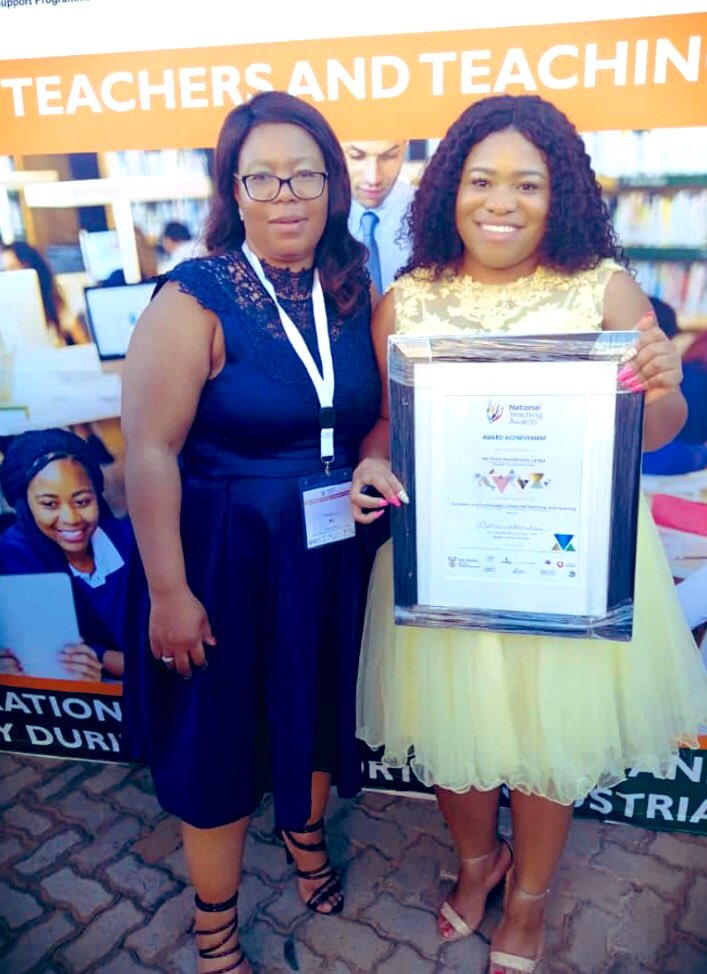
Our teacher of the week is Pearl Langa from Dalpark Secondary School in Brakpan, Gauteng

CLASSROOM CORNER

Teacher of the Week

Teacher: Pearl Langa

School: Dalpark Secondary School, Brakpan, GAUTENG

School teacher Pearl Nonhlanhla Langa’s English lessons are integrated with digital content, videos, music, online quizzes, which help her learners to keep abreast with real life scenarios.

Since her formative years, Langa always had a passion to impart knowledge to young minds.

Dealing with the adolescent learners who also come from communities that lack support and adult mentorship makes her enjoy being a teacher.

She enjoys sharing knowledge with them and seeing them succeed academically regardless of their socio-economic status.

As an English teacher, she enjoys literature, especially poetry, plays and novels. She admits that in her school, there is high substance abuse related issues.

Learners adopt certain cultures and practices in their communities and bring these to the schooling community. The school has set specific measures to curb the use of drugs within the school premises.

While teaching, she always ensures that learners participate in classroom activities and further encourage them to participate in the extra-curricular activities at school.

Having high confidence levels and visible passion enabled her to become the provincial winner. As a way of confronting the Fourth Industrial Revolution (4IR), Langa ensures that all the learners attain the necessary skills.

She believes that teaching does not end in the classroom and there are endless possibilities within the educational sector nationally and internationally.

Having taught abroad, she confirms that learners are the same, teachers just have to prepare and acquaint themselves with what goes on in the world.

She indicated that there are things that teachers can do in order to remain prepared, that will include taking a short course about classroom management, partaking in community service, reading books, watching the news; entering into competitions and teaching workers after normal school hours.

Basic Education Postpones Matric Supplementary Exams to End of the Year

Nyakallo Tefu.

Basic Education Department has postponed the May and June supplementary examinations to an as yet unspecified date later in the year due to the coronavirus outbreak.

More than 350 000 part-time candidates were to sit for the matric supplementary examinations between May and June this year.

Learners who were meant to sit for the exams include candidates who did not meet the pass requirements in the 2019 final exams, as well as those who sought to rewrite to improve their marks.

Inside Education reported two weeks ago that the government was planning to postpone the matric supplementary exams scheduled for June to December due to the novel coronavirus pandemic disruption of the 2020 academic year.

This means that the number of students sitting for Senior Certificate and National Senior Certificate national exams in December this year will increase from roughly 700 00 students to about 1-million.

Basic Education Director-General Mathanzima said that the May and June supplementary exams will now be merged with the November 2020 examinations.

“At the HEDCOM meeting on April 10 2020, it was agreed that the May/June examination should be merged with the November 2020 examination” said the director-general of the DBE, Mathanzima Mweli.

https://insideeducation.co.za/government-in-secret-talks-to-postpone-vital-matric-exams-over-coronavirus/

Mweli urged learners to continue preparing for the exams as it will announce the new dates in due time.

He said details regarding the merged June and November examination will be communicated in due course.

 “Candidates will be informed regarding registration, examination centres and time-tables. The Second Chance Matric Support Programme link on the website is still available to assist especially those who had been studying independently as part-time candidates,” said Mweli.

“The lockdown has since been extended to 30 April 2020, this has resulted in a disruption to schooling and hence the writing of May/June 2020 examinations has to be re-scheduled.”

Wits to Resume Classes on April 20 After Switching to Remote Online Teaching and Learning

Nyakallo Tefu  

The University of the Witwatersrand announced on Tuesday that lectures will resume as from 20 April, after it launched an emergency remote online teaching and learning programme as one of the measures to help minimize the time lost in the 2020 academic year.

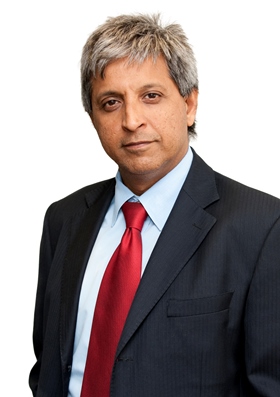
 Professor Adam Habib, Wits Vice Chancellor and Principal confirmed the decision to resume lectures, saying the global coronavirus pandemic has presented major disruptions for higher education and the only way to navigate the challenges brought on by the rapid spread of COVID-19 was through remote online teaching and learning.

 “We are acutely aware of the anxiety and uncertainty that online teaching and learning presents for both our colleagues and students. The world as we know it is in flux, and it will take our collective courage, dexterity and commitment to fend off the effects of this pandemic and to adapt to new ways of teaching and learning,” says Professor Adam Habib, Wits Vice-Chancellor and Principal.

Online learning has been a debatable issue in the country, with many worried about everyone having access to the internet and the high cost of data in South Africa.

However, the Wits education department says it has done its own research regarding the challenges of online teaching solutions and has come up with the following solutions:

Access to devices, data and learning resources

Multiple surveys across the institution have revealed that between 10% and 15% of Wits students do not have access to appropriate computing devices, adequate access to data or conducive learning environments.

To this end, the University is putting in place the following measures to ensure that the majority of students are able to learn remotely:

* Wits has established a Mobile Computing Bank which will enable qualifying students who do not have access to appropriate mobile learning devices to loan basic devices from the Bank. These basic computing devices will be suitable for educational purposes and will be pre-loaded with the required learning resources before being delivered via the South African Post Office to students who absolutely need them. The cost of the device will be added to students’ fee accounts and will be reversed if the device is returned in good order at the end of the 2020 academic year. The students most in need will be prioritised when devices are allocated;

* The University has finalised an agreement with four telecommunications service providers: Telkom, MTN, Vodacom and Cell C to zero-rate Wits’ library and learning management sites from 15 April 2020. The full list of zero-rated sites is available via this link: https://www.wits.ac.za/mywits/zero-rated-data-to-students-and-applicants/

“We understand that our emergency remote teaching and learning plan has to take into consideration the different learning environments of our students and their access to learning resources, appropriate devices and data,” said Professor Ruksana Osman, Deputy Vice-Chancellor: Academic.

“The University is aware that the playing field is uneven and that whilst many in society and our community enjoy greater levels of privilege, the consequences of the pandemic have illuminated and amplified the existing inequalities in our society with the poor, marginal, precarious and under-resourced disproportionally experiencing its fallout”, said Osman.

Motshekga To Meet Top Education Officials To Discuss Schools Recovery Plans

Charles Molele and Nyakallo Tefu

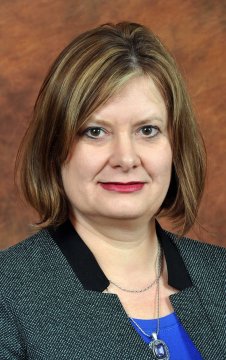
Basic Education Minister Angie Motshekga this week meets top education officials, including provincial MECs and heads of education departments to discuss proposed amendments to the 2020 School Curriculum, which could result in the cancellation of the June and September school holidays.

The high profile meeting is expected to take place between Wednesday and Thursday and will also discuss proposals by teacher union Sadtu to conduct compulsory mass screening of all learners and teachers before the re-opening of schools.

The earlier than expected school closures in March has adversely affected all learning programmes in public, independent and private schools as well as the early child development centres across the country.

Government is now looking at May 5 as a possible date for the reopening of schools after President Cyril Ramaphosa’s decision to extend the lockdown to end of April.

Inside Education reported two weeks ago that the department was looking at the possibilities of postponing this year’s matric supplementary examinations in June to December due to coronavirus pandemic disruption of the 2020 academic year.

There have also been behind-the-scenes discussions within the Basic Education Department to amend the curriculum as part of government’s plans to recover time lost during the lockdown period.  

These will, among others, include cancellation of the June and Septermber holidays.

Learners could also find themselves having to attend schooling right through seven days a week in order to get back on track and make up for the lost time.

Motshekga has said in recent days that the department was also preparing recovery materials which would intensify teaching at the end of the lockdown. 

Professor Mary Metcalfe said basic education would need to contract the cirruculum as part of its recovery plans for at least 18 months.

“I am confident of the careful thinking that is being invested in the unfolding scenarios by the DBE. Contracting the curriculum in a recovery plan of at least 18 months without compromising the development of core knowledge and skills in each subject is an inevitability and a priority – and teachers will need support in implementing this appropriately relative to the needs of learners,” said Metcalfe.

“The big unknown is the various scenarios for schools opening, how a phased introduction will work in practice, and over what time frame.  The greatest priority for learners during the lock down is for them to be supported to have structured and purposeful days that include learning – but few families have the resources to ‘replace’ the learning of school, and teachers will need to pull together where the learners are in planning forward; typically learners ‘forget’ some learning after an extended school break.”

Ruksana Osman, Professor and Deputy Vice-Chancellor at Wits University, said amendments to the cirruculum was another viable way to recover lost time during the lockdown.

“Curriculum amendments can certainly be made in thoughtful ways; secondly calendars can be adjusted and finally online can be a viable option,” said Osman.

“For a while now the DBE has been speaking about rollout of tablets in schools. Some of this could work for some of the students. This will not be a perfect solution that will work for all, and searching for one solution in an Imperfect context will not work.  We need multiple approaches. Most important thoughtful interventions with due consideration for learning at this point is what will work. Focusing on online initiatives for all in an equitable way can help us out of the question about cancelling the year or having 7-day week school week. This virus has taught us that being resilient, caring and agile is what works,” said Osman.

After her meeting with provincial MECs and HODs, Motshekga will table the recovery plan to cabinet for further deliberation before the plan gets implemented.

During a meeting of directors general at the weekend, it was proposed that schools should reopen on May 5 following the president’s decision to extend the lockdown period to end of April.

 “There’s a view that schools must be reopened on May 5, but there’s high possibility that not all schools would be reopened depending on whether or not the areas in which they are located are regarded as high risk areas,” said a senior government official who asked to remain annonymous.

He added: “There was consensus during the meeting that the lockdown liftment should be done gradually. Areas that are high risk should remain closed. We cant lift the lockdown throughout the entire country as this could undo the progress that we have made in flattening the curve. There are areas that are high risk and if we lift the lockdown in those areas, it would be recipe for disaster,” said the senior government official, who attended the National Command team secretariat meeting at the weekend.

A senior Gauteng education official told Inside Education the province supperted calls to conduct screening of all learners and teachers before schools reopen. 

“One of the things that we need to look at is mass screening of the learners because we dont know who is positive or negative. We can’t have an influx of kids coming back to schools without knowing their status. We also need to discuss how to go about the process of fumigating the schools before learning resumes. We must also agree on the protocols around social distancing and whether or not learners put on musks on a daily basis and what the financial implications of that will be. The fact of the matter is that the schooling environment is going to be very different. Even within the department, we are going to have to decide whether its a wise move to have everyone back at work at the end of the lockdown or say only senior management should be back at the office while the rest of the officials are working from home,” said the provincial education official.

Western Cape MEC Debbie Schafer Under Fire For Re-Opening School Feeding Scheme During Lockdown

Charles Molele

A war of words has erupted between Western Cape MEC for Education Debbie Schafer and national government over the implementation of the emergency school feeding scheme in the province amid COVID-19 lockdown.

The tensions between the DA-led provincial government in the Western Cape and the national government came after the province announced the R18 million emergency school feeding programme to help vulnerable learners who depended on the National S.

All in all there are 9.6 million learners who rely on the government’s school feeding scheme in the country.

Schafer told Inside Education through her spokesperson Kerry Mauchline on Monday that the feeding scheme, which caters for over 100 000 learners in the province, will go ahead despite the disapproval from Basic Education Minister Angie Motshekga, Portfolio Committee on Basic Education, labour federation COSATU and its biggest affiliate, teacher union SADTU.  

“The emergency feeding of children will go ahead. Under the lockdown, we are allowed to leave home to collect food, and buildings used to distribute food are allowed to be open. Social distancing protocols are being observed,” she told Inside Education.

“It is unfortunate that SADTU and COSATU have chosen not to support a humanitarian programme to feed children who might otherwise not have a meal that day.”

This week, Chairperson of the Portfolio Committee on Basic Education Bongiwe Mbinqo-Gigaba took a swipe at the provincial government for implementing the feeding scheme despite President Cyril Ramaphosa’s call to observe social distancing protocols.

“We do not want to expose our communities to the possibilities of contracting the virus. We cannot be telling people to stay safe and stay at home and at the same time we are encouraging them to collect food at school,” said Mbinqo-Gigaba.

Motshekga is on recording saying her department will not support any feeding scheme programmes during the lockdown period.

“We are not going to do anything different outside of what we normally do; we are not going to have special programmes; we are not going to run feeding schemes. We have accessed our capacity and we will not be able to do it,” Motsekga was quoted in media reports.

But the Western Cape provincial government insisted this week that the emergency feeding school programme will go ahead as planned.

The education MEC’s office told Inside Education that the department had informed the police about its plans to feed school children.

“SAPS has also been made aware of the plans, and has agreed to patrol the areas around the schools when meals are being served,” said Mauchline.

“We have issued detailed protocols to schools for the implementation of this essential work to ensure that social distancing is maintained and that our learners and staff are kept safe. Learners must bring their own food containers from home, which are not touched by the staff or volunteers. We also ensure that learners remain at least 1.5m apart from one another. We also provide soap and water for learners to wash their hands, or hand sanitizer. Learners will not eat at school – they will go directly to school, collect their meals, and go directly home.”

On Monday, Equal Education, the Equal Education Law Centre, SECTION27, the Centre for Child Law, and the Children’s Institute wrote a letter to Motshekga urging her to restore the National School Nutrition Programme (NSNP) immediately.

“We encourage the Department of Education to urgently reconsider its approach to the provisioning of school nutrition programmes during school closures. To allow for the safe and accessible distribution of food, schools should be able to serve as collection points for food packages or pick-up-and-go meals specifically tailored for beneficiaries of the NSNP,” NGOs told Motshekga in the letter.   

“Minister Motsekga, these are exceptional times that call for compassionate, clear and decisive leadership. The continuation of school nutrition provisioning for learners is critical and urgent and we urge you to ensure that children’s needs are prioritized and protected in government’s plans.”

Cosatu said at the weekend that while Ramaphosa and government were trying to prevent COVID-19 from spreading, Schafer was doing the opposite.

“We condemn her conduct in the strongest possible terms and herewith support the Sadtu for her immediate removal as MEC of Education in this province,” said Cosatu in a statement.

The trade union federation said it cannot allow children to risk being infected with Covid-19, saying Schäfer should be charged and investigated for her actions.

“We call on the premier of the Western Cape to remove the MEC with immediate effect and to replace her with a capable person. We also call on the national health minister to intervene in this matter,” it said.

Cosatu has also called for Schafer to be charged for contravening the lockdown regulations and for an investigation by the Human Rights Commission.

Rural Learners Offline as COVID-19 Lockdown Stretches

Xalati Nkhwashu

Grade 11 learner Vutlharhi Nkhwashu is worried she might not be able to catch up on her studies following the COVID-19 lockdown.

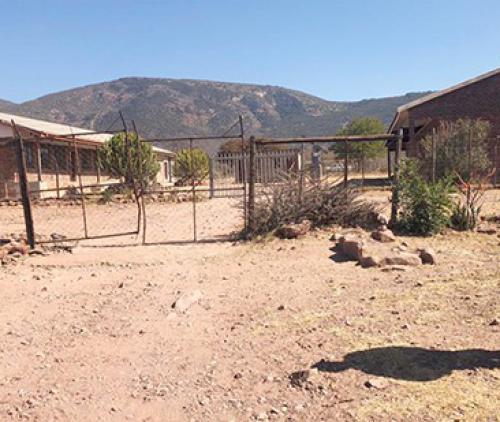
The Cata Secondary School learner lives in Mafarana, a rural village near Tzaneen in Limpop province.

She is among hundreds of thousands of learners trapped in rural areas with erratic cellphone network and limited resources to connect to the outside world.

Minister of basic education Angie Motshekga announced last month that the Council of Education Ministers had agreed to focus on catch up programmes through the Promotion of Learning and Teaching in homes.

Motshekga said together with provinces the department had prepared online and broadcast support resources comprising subject content and a focus on Grade 12 learners and the promotion of reading for all the grades. She said some of the programmes would be available from April 1.  

However most learners in rural areas such as Nkhwashu are finding it difficult to access online programmes due to connectivity issues, lack of funds to purchase data and a general lack of resources such as laptops, tablets and smartphones.

“Well, since I am used to having a teacher teaching and helping me with questions that I battled to understand, this lockdown has really changed everything. No traditional classes, extra or weekend classes anymore,” said the 15-year-old.

“I find it hard to study forward because of that one section that I don’t understand.  And these TV programmes are mainly focused on the Grade 12,” she explained.

She said the programmes she can access have a short time slot for grade 11s. Her grade subjects include Mathematics, Physical sciences, Geography and Life science.

“I do own a smartphone but buying data is really hard. It’s useless owning a smart phone with zero data because you can’t participate on online or WhatsApp classes that everyone is talking about,” she said.

Her mother is a volunteer at a local school and only gets paid when the learners contribute R50 each. And since schools are closed that means she will not receive her salary for April.

“And my father is in the security department, but he has to cover his rent, grocery and transport. So the money that he sends this side only contributes to our groceries and electricity bill,” said Nkhwashu.

“But the fact of having a mother who works a job of no work no pay sometimes I can’t buy data and if the lockdown is extended again it will mean that our DSTV account will be suspended and this will mean I can’t watch the programmes offered by the mindset channel,” she said.

Motshekga said the department was working closely with key partners to coordinate and make available content tailored to support learners’ educational and health needs during the lockdown. She said they would make available among others broadcast lessons working with the SABC TV and Radio, DSTV channel 180, e-tv, community radio stations and that electronic readers would be available via all platforms in partnership with Vodacom, MTN, Telkom and Cell-C.

Orphaned grade 12 learner Vutivi Mhlarhi plans to save enough money for data to be able to download more online learning materials during the lockdown because he can’t afford daily online classes without data.

“With these expensive data and without attending everyday classes and regular access to our teacher, its not easy,” said Mhlarhi also from Cata Secondary school in Mafarana.

Mhlarhi (19) said having teachers assisted them stay  up to date but now , without teachers, they are on their own and must make sure they update themselves until there’s possibility to lift our national lockdown.

“I’m an orphan, both my parents passed away. My grandmother is looking after me but she can’t afford to spend her money for groceries on data,” he said.

“I can’t afford a proper functioning smartphone. I don’t have data and no laptop. It’s tough for me,” he said.

“The lockdown has caused destruction in my life. I don’t know if I will pass my exams because everything has come to a standstill,” he said.

Mhlarhi’s matric subjects are Economics, Geography, Life Sciences, Maths Literacy, English, and Life Orientation and Xitsonga.