A research group based at the University of
Pretoria (UP) is playing its part in disseminating factual information about
the novel coronavirus that the world is currently in the grip of by setting up
a databank that offers users real-time updates about COVID-19.
The Data Science for Social Impact group aims to use data science as a way to find solutions to social problems and to get end-users and decision-makers to better understand how to use and understand data science and its limitations.
The manner in
which the information is presented will hopefully empower South Africans with
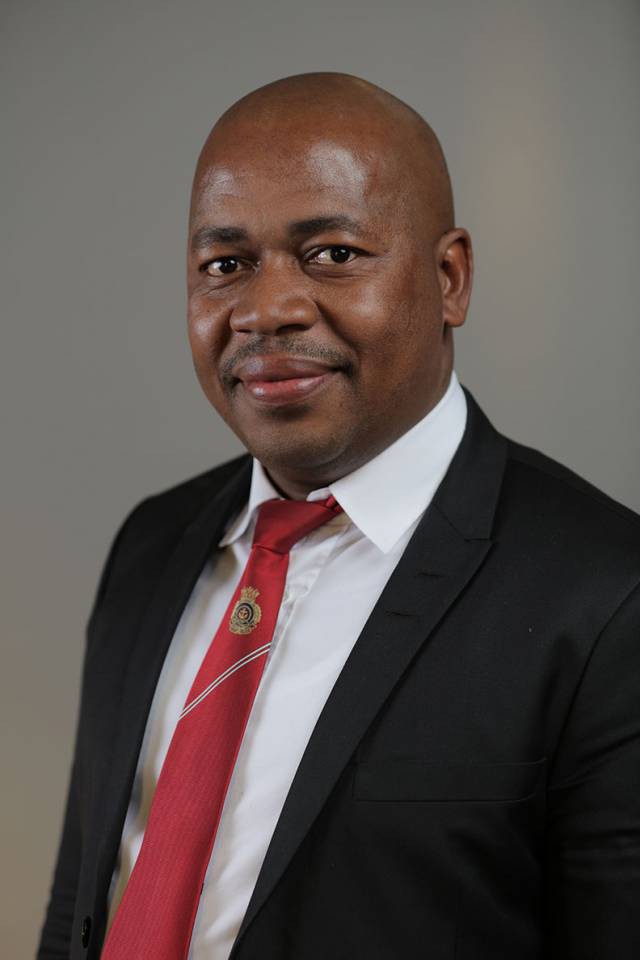
accurate data and statistics, says Dr Vukosi Marivate.
The data is presented in an easy-to-interact
format on a dedicated site. ABSA Chair of Data Science at UP Dr
Vukosi Marivate leads the group and says the databank was set up to pool
resources in a time of crisis.
“Very early on we saw that the coming epidemic was going to stretch the country’s data capabilities,” says Dr Marivate who is a senior lecturer in UP’s Department of Computer Science.
“Once the minister of health and the NICD started publishing their data only in statements, we thought about how other researchers may need to get hold of this information in a more accessible way. As such, group members and collaborators have worked to build tools to automate the data gathering and cleaning as much as possible. Validation is also done through discussions about errors and rectifying them as soon as possible.”
The group also set up the repository and database
in order to provide an interactive dashboard that the public could use to better
understand the impact of the pandemic on the country.
The research group consists of more than 15
members, including masters and doctoral students, other research organisations
as well as affiliate members who regularly collaborate with UP.
The databank was
set up to pool resources in a time of crisis.
“One member of the research group, Herkulaas Combrink, has a health background and advised us on some of the needs of health professionals,” adds Dr Marivate.
“As it stands, the project has become very volunteer-driven, with many volunteers from South Africa and beyond lending their skills. We now have maps and an API [application programming interface] courtesy of these volunteers.”
The group is, however, cautious about making predictions about the progression of COVID-19. “We believe that predicting the spread of the virus is best left to epidemiologists at the moment,” says Dr Marivate.
“We look to the leadership of NICD and the South African Centre for Epidemiological Modelling and Analysis for their experience in disease modelling. We need to be responsible. Many predictions are being made, but we need our energies to get us through this. We do not want to add to any unnecessary panic or get sidetracked. We would like to have the best data to be available to experts.”
Another challenge of the COVID-19 pandemic is
curbing the spread of fake news in relation to the disease. Dr Marivate says
the transparency of the data research group and the manner in which the
information is presented will hopefully empower South Africans with accurate
data and statistics.
“A big part of our design and discussion with regards to the dashboard was on it being simple to navigate and being factual,” he says. “As such, we update only from NICD or DoH reports, so anyone can check our raw data to confirm how we come up with our visualisations and numbers. We are very transparent in our process.”
Danielle Van
Eck received an award for excellence in teaching Natural Sciences.
She is
engaged in two innovative programmes – namely, Women in Science and Protea
Heights Academy Science Week initiative, which focus on bringing
learners from all socio-economic
groups and expose them to science activities and
guest speakers.
These
activities include whizz-bang science shows, snake shows, bridge
building, robotics and inspirational speakers.
Van Eck, the
GET Natural Science teacher from Protea
Heights Academy in Western Cape, says her passion for teaching was ignited by working as a
demonstrator for several years
during the time she studied at Stellenbosch University for the degree.
She would
often do individual tutoring with students who didn’t
understand the work.
She was
motivated by seeing her students’
understanding of concepts after the tutoring.
She is passionate about teaching and providing the
learners with deeper
understanding of how the world around them works.
She adds
that she loves being innovative and inspiring young minds to think beyond the problem.
She is a
practical person and a
critical thinker and encourages her learners to be the same.
The major
challenge she faces is getting buy-in from the learners,
sometimes colleagues and from other schools to partake
in projects. She has also experienced challenges with funding and as a result has had to be very
innovative when it comes to
getting sponsorship for the programs she runs.
Van Eck wants to continue to provide quality education in natural sciences and give back as much to the surrounding communities as possible in the scientific field.
By Shabir Madhi, Alex van den Heever, David Francis, Imraan Valodia, Martin Veller, Michael Sachs, University of the Witwatersrand
The public debate on strategies to tackle COVID-19 often unhelpfully positions health and economic considerations in a diametric fashion – as trade-offs. In fact, economic policy has health consequences. And health policy has economic consequences. The two need to be seen as parts of a coherent whole.
In the case of South Africa, the country currently faces three
interrelated problems. These are the public health threat from the
COVID-19 pandemic, the economic and health effects of the lockdown, and a
range of intractable economic problems not directly due to the current
pandemic. These include high unemployment, low economic growth and
falling per capita income.
Any potentially viable response to COVID-19 needs to address all
three aspects in concert. This is particularly important as the country
plans for the next stage of its response after the lockdown. Focusing
only on the health challenges and not paying attention to the economic
issues will result in significantly higher economic costs, and will also
undermine the health imperatives.
Our view is that a protracted lockdown won’t necessarily have the
effect of ridding the country of the virus, but it will result in
unacceptably high health and economic consequences.
The cost
The initial lockdown was prudent and is likely to have lowered the risk of community spread of SARS-CoV-2.
But the true number of COVID-19 (the disease caused by SARS-CoV-2) cases
is difficult to quantify. A limited number of tests have been done, and
community-wide screening for suspected infectious cases has been
delayed.
The available evidence on the COVID-19 pandemic suggests that any
initial containment of the disease through a lockdown will be
short-lived. Also, it’s likely to result in a rebound of cases in the
absence of aggressive community-wide screening for SARS-CoV-2 infectious
cases, isolation of the identified cases and quarantine of their close
contacts for at least 14 days.
On top of this, South Africa may find itself permanently harmed by
the simultaneous destruction of both the demand and supply sides of the
economy under an extended generalised lockdown.
This will have other unintended long term health and economic consequences.
For example, an extended lockdown could result in the undermining of
other health services, such as the immunisation of children.
The economic effects of a lockdown, too, are severe.
Early forecasts suggest significant economic disruption from the
current lockdown, which is costing the economy an estimated R13 billion
per day. Preliminary projections by the South African Reserve Bank
indicate that South Africa could lose 370,000 jobs
in 2020. Projections by private banking analysts (based on the initial
21-day lockdown) suggest a GDP contraction of 7% during 2020, leading to
a fiscal deficit of 12% of GDP (forecast at 6.8% in the 2020 budget)
and a debt-to-GDP ratio in excess of 81% in 2021. This means that the
country’s already limited public finances will be further constrained.
Towards a post-lockdown strategy
Globally, attention is turning from initial containment through
generalised lockdowns to short- and medium-term risk-based public health
and economic strategies. We present some considerations for a health
and economic policy beyond the lockdown in South Africa.
In this we proceed from the following assumptions:
The SARS-CoV-2 will not be eliminated in South Africa until
either a vaccine is introduced (yet to be developed), or sufficient
natural immunity in the population is achieved. It is therefore
necessary to put in place and maintain a sustainable mitigation strategy
for COVID-19 for the remainder of 2020, or until a vaccine is available
(an optimistic timeline for this is 18-24 months).
A generalised lockdown is not a viable long-term prevention
strategy for COVID-19 due to its deleterious effects, including the
resultant long-term impact on society, public health and the economy.
Removal of the lockdown without appropriate health and economic
measures will result in an excess mortality from COVID-19, resulting in
further economic hardship.
South Africa’s health and economic strategy beyond the current
lockdown must be designed to ensure good health care and be economically
sustainable. We argue that the country needs to transition to a
risk-based strategy which offers effective health protection and allows
for the resumption of some economic activity.
This approach has been advocated by researchers in both Germany and the Indian state of Kerala.
First, mitigate the rapid spread of the virus, while allowing for natural immunity in the population to increase gradually.
Second, strengthen health care systems to ensure optimal
treatment for as many patients as possible, both those with COVID-19 and
those with other serious illnesses.
Third, protect individuals at high risk for severe COVID-19 disease; and
Fourth, make economic activities possible with measures in place to manage the health risks associated with these activities.
Economic and health strategies
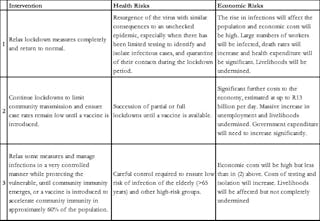
At the highest level, there are three broad intervention strategies
available to South Africa (summarised in the table below), adapted from a
recent article
by leading Australian health academics James Trauer, Ben Marais and
Emma McBryde. We believe that option three is the only practicable one
for South Africa. And the details of its implementation matter.
Table 1: Typology of interventions and risks
Adapted from (Trauer et al., 2020)
A health strategy based on an extended generalised lockdown is
economically unsustainable. It is also damaging to public health.
Instead, we need a unified health and economic strategy that allows for
some economic activity while inhibiting the uncontrolled spread of the
virus. This requires a number of health and economic measures to be
implemented in a coordinated manner.
First, to reduce the rate of infections, the country must have ready
the capability of mass virus testing and efficient contact tracing
before the end of April 2020. This must be accompanied by a
comprehensive approach to social distancing. Relying solely on screening
of symptomatic individuals will not effectively reduce the rate of infection because high viral loads of SARS-CoV-2 in the upper airway occur in pre-symptomatic and possibly asymptomatic people.
To be successful, the scale of testing needs to be at least equivalent to that in South Korea (17,322 tests per day in South Africa, eventually testing 1 in 150 people). At best, it must be equivalent to that carried out in Germany (36,399 tests per day in South Africa).
Test turnaround times must result in identification of infected
individuals within 12 to a maximum of 24 hours. This must be followed by
immediate isolation and contact tracing. Isolation of infected
individuals and contact quarantine must last for at least 14 days,
either at home, if suitable, or in designated isolation and quarantine
facilities.
The annual cost of conducting 17,000 tests per day is approximately
R5 billion. There would perhaps be an additional annual cost of R4
billion for contact tracing and quarantine. These costs compare
favourably to the daily economic cost (R13 billion) of the generalised
lockdown.
Secondly, economic activities must be allowed in a way that is
consistent with the aim of preventing the uncontrolled spread of the
virus. Within the constraints of the health strategy outlined above, a
risk-based economic strategy is required that balances economic and
health imperatives.
Decisions on differential opening of the economy should be made in line with the criteria proposed in a recent paper
by German researchers. This includes, for example, opening sectors with
low risk of infection (highly automated factories) and less vulnerable
populations (child-care facilities) first. It could also include areas
with lower infection rates and less potential for the spread of
COVID-19. Of course, these decisions will have to be based on a careful
assessment of factors such as household structure and composition in
South Africa, and public transport.
To do this, the country will need excellent data on the extent and
location of any community outbreaks of the virus. Such data will be
generated by mass testing, and accurate information about the ability of
certain sectors of the economy to reopen safely and in compliance with
the health protocols.
The health and economic strategy will thus need to be implemented in a dynamic fashion, responding to the latest evidence.
New York City Mayor Bill de Blasio said on
Saturday public schools will remain closed for the rest of the school year as
the city battles the outbreak of the novel coronavirus.
“Having to tell you that we cannot bring our
schools back for the remainder of this school year is painful, but I can also
tell you it is the right thing to do,” he told a news conference.
De Blasio had ordered public schools shut
beginning March 16 to curb the spread of the disease, with an initial goal of
reopening by April 20.
But the mayor said it soon became clear that
date goal was unrealistic as the city emerged as a major U.S. coronavirus hot
spot.
The city
closed its public schools on March 16 as the virus continued its rapid spread.
Families
lacking computers or laptops are being loaned city-owned devices for use in
online learning; 175,000 have already been distributed.
The
citywide closing affects 1.1 million students in what is by far the country’s
largest public school district.
Ekurhuleni mayor Mzwandile Masina has pledged to donate 33% of his salary to the Solidarity Fund over the next three months.
Masina made the announcement on Thursday night shortly after President Cyril Ramaphosa addressed the nation about his decision to extend the national lockdown period by two more weeks.
Masina said the City Manager and Group Chief Financial Officer will both donate 33%, Members of the Mayoral Committee 25%, the Speaker of council 20% and the Chief Whip of council 15 per cent.
He added that discussions were currently underway with heads of departments to donate 25% over the three months, divisional heads 12.5% and officials five per cent.
“We
must all heed the call made by President Ramaphosa for us to rise to the occasion
and live up to this national Thuma Mina moment. Every effort and gesture we can
make as citizens will go far in assisting efforts to flatten the curve,” said
Masina.
“We
welcome the 14-day nation-wide lockdown extension. Indeed now is not the time to
relax, our struggle against this invisible enemy must be intensified. The City
of Ekurhuleni will continue to work in collaboration with both the Provincial
and National spheres of Government in combating the COVID-19 global pandemic.”
On Thursday night, Ramaphosa announced that his Cabinet would also take a one-third cut in their salaries for the next three months.
This portion of their salaries would be donated to the Solidarity Fund
The
Solidarity Fund, which is run by the private sector, has raised more than R2.2 billion
from corporate and private individuals.
The money is earmarked to bolster the state’s health response, humanitarian efforts and providing care for the sick.
Ramaphosa said that many companies
and individuals have come forward to provide financial and other assistance to
businesses in distress.
“We are calling on other public office bearers and
executives of large companies to make a similar gesture and to further increase
the reach of this national effort,” he said.
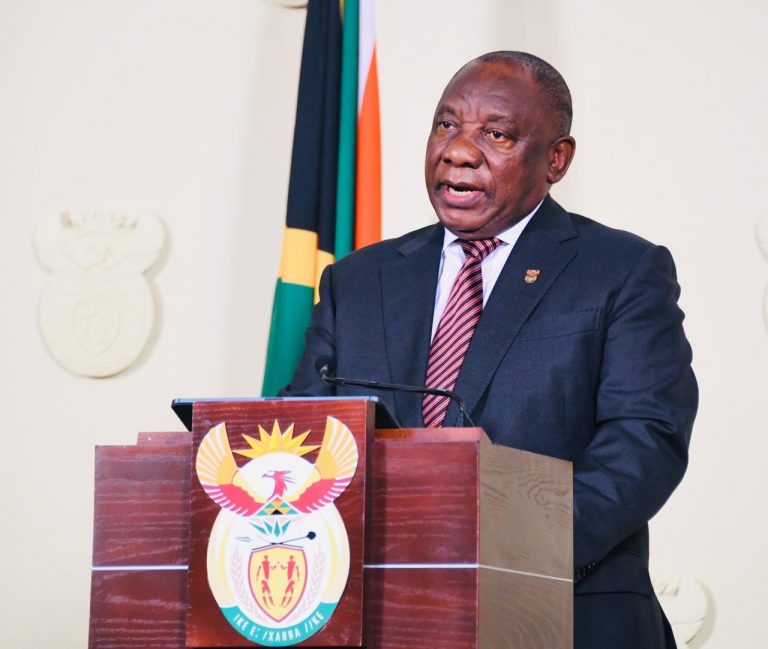
After a few days of speculation, President Cyril Ramaphosa has extended the national lockdown by another two weeks until the end of April in a bid to curb the spread of the novel coronavirus.
Ramaphosa said the decision to extend the lockdown was based on rigorous research and empirical evidence gathered on the ground by officials from the department of health and members of the National Coronavirus Command Council currently based at the Council for Scientific and Industrial Research in Pretoria.
Addressing the nation on
Thursday evening, Ramaphosa said if the government ended the lockdown “too soon
or too abruptly”, it risked a “massive and uncontrollable resurgence of the
disease”.
“This evening, I stand before you to ask you to
endure even longer,” said Ramaphosa.
“I have to ask you to make even greater sacrifices
so that our country may survive this crisis and so that tens of thousands of
lives may be saved. After careful consideration of the available evidence, the
National Coronavirus Command Council has decided to extend the nation-wide
lockdown by a further two weeks beyond the initial 21 days. This means that
most of the existing lockdown measures will remain in force until the end of
April.”
He said the decision to extend the national lockdown in South Africa was not taken lightly.
“We did not take this decision to extend the
lockdown lightly. As your President, I am mindful of the great and heavy burden
this will impose on you. I am keenly aware of the impact this will have on our
economy. But I know, as you do, that unless we take these difficult measures
now, unless we hold to this course for a little longer, the coronavirus
pandemic will engulf, and ultimately consume, our country.”
Ramaphosa said government has already put in place measures to provide support to “businesses in distress, to workers facing loss of income, to the self-employed and to informal businesses”.
He said the Unemployment Insurance Fund has set aside R40 billion to help employees who will be unable to work, as part of the effort to prevent jobs losses as a result of the lockdown.
To date, he added, the UIF has paid out at least R356 million to claimants.
Ramaphosa also announced that
the Industrial Development Corporation has set aside R3 billion for the
procurement of essential medical supplies.
“It has already approved R130 million in funding
and expects to approve a further R400 million in the coming week to companies
who applied for funding under this special facility. The Small Enterprise
Finance Agency has approved the postponement of loan repayments for a period of
6 months,” he announced.
“The small business debt relief and business growth
facilities are currently adjudicating applications for assistance. There is a
total of R500 million available in support. Government has reprioritised R1.2
billion to provide relief to smallholder farmers and to contribute to the
security of food supply.”
Turning to the Solidarity Fund, Ramaphosa said it has already raised R2.2 billion in donations from companies, high-net-worth and private individuals.
He said many companies and individuals have come forward to provide financial and other assistance to businesses in distress.
He also announced that the President, Deputy President, Ministers and Deputy Ministers will each take a one-third cut in their salaries for the next three months.
This portion of their salaries will be donated to
the Solidarity Fund.
“We are calling on other public office bearers and executives of large companies to make a similar gesture and to further increase the reach of this national effort,” he said.
— Presidency | South Africa 🇿🇦 (@PresidencyZA) April 9, 2020
This week, Old
Mutual announced that its executives will donate a portion of their salaries to
Solidarity Fund, according to the company’s interim chief executive officer Iain
Williamson.
“Salary reduction
would be equivalent to the inflationary increases we received at the end of
2019 and we’ve agreed with Old Mutual that they wouldn’t put that money into
corporate savings. It would be donated straight to the Solidarity Fund, on a
monthly basis,” said Williamson.
He said the
company will also be making R4 billion worth of cover available to over 400,000
healthcare workers.
The Johannesburg
Stock Exchange also announced that it will also donate money to the Solidarity
Fund.
Ramaphosa
said government will use the extended lockdown period to ramp up its public health
services to contain the spread of the virus.
He said that in the two weeks before the lockdown,
the average daily increase in cases was about 42%, but since then it has
dropped to around 4%.
“Our immediate priority is to
slow down the virus and not allow it to consume our country. We have used the
last week to improve our screening and testing methodology,” he said.
“Since the lockdown came into effect, the rate at which new cases
have been identified here in South Africa has slowed significantly. From 1,170
confirmed cases on the 27th of March, the number of confirmed cases today
stands at 1,934.”
“While it is too early to make a definitive analysis of the progression
of the disease in South Africa, there is sufficient evidence to show that the
lockdown is working.”
Wits University and the Gift of the Givers Foundation have joined hands
in the fight against COBID-19 pandemic by opening up a testing station at the
campus.
The testing station is open to patients who fit the National Institute for
Communicable Diseases criteria and have been referred to by a doctor.
The testing takes place on the Braamfontein Campus, where Gift of the
Givers manages the testing station while Mullah Laboratories co-ordinates the
sites and reports to the NICD.
The University has since provided a criteria fortheCOVID-19 testing on
its premises:
Who can be tested?
Patients must fit the NICD case definition criteria and must have a doctor’s referral before testing. This reduces contamination risk and contact time in the best interests of all concerned.
HPCSA rules require that the patient has to consult his/her OWN doctor if it’s a telephonic consultation or any doctor if it’s a face-to-face consultation.
Costs: The COVID-19 PCR testing costs R750, and payment is due via EFT before testing.
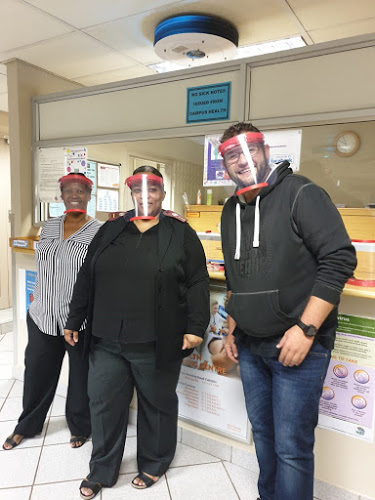
Meanwhile, engineers at the university announced that it has come
up with face shields to add to the shortage of protective gear in the
country.
The face shields, which are made from polyvinyl chloride
(PVC) sheeting, are a flat pack consisting of two pieces that can be
rapidly assembled.
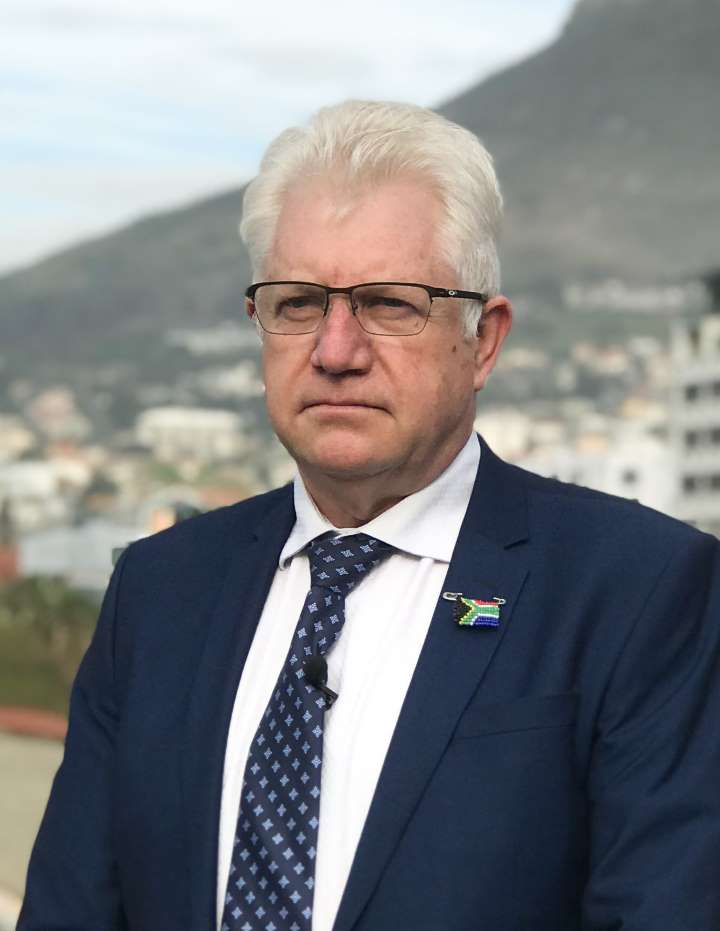
The Western Cape Department of Education has come under fire following its decision to go it alone by launching an R18 million feeding school programme in the province during the national lockdown period.
Bongiwe Mbinqo-Gigaba, chairperson
of the Portfolio Committee on Basic Education, said she was concerned that the
provincial department of education MEC Debbie Schafer, as well as the Western
Cape Premier Alan Winde, are continuing with the feeding school programme
despite the President Cyril Ramaphosa having declared a national lockdown.
Mbinqo-Gigaba
said members of the public in the Western Cape have raised concerns regarding
social distancing in the province.
Mbinqo-Gigaba said
many people questioned Schafer’s decision to go ahead with the school feeding scheme
even after Basic Education Minister Angie Motshekga made it clear that the
department will not be able to continue with the feeding programme as this will
contravene social distancing rules put in place by Ramaphosa.
“I will write to Minister Motshekga requesting further information about
this deviation of the agreed plan regarding the NSNP, and as well as requesting
information on how people can be allowed to enter school premises during a
national lockdown, risking exposing many to the virus,” said Mbinqo-Gigaba.
“As a caring nation that understands the plight of the poor, we have the
greatest of empathy with those less fortunate. But at the same time, the health
of our nation is also at stake and therefore assisting families in need, as
part of the comprehensive country’s plan, is now not the responsibility of the
education department.”
The special
school feeding programme in the Western Cape is running from April 8 until
April 20.
Schafer
said the department is working with service providers to ensure that children
who normally qualify for the national school feeding programme received their
meals during the lockdown.
“The National School Nutrition Programme
feeds about 483,000 of our poorer learners. We need to get to as many learners
as possible in this very difficult time,” said Schafer.
Soon after the national lockdown was announced, Motshekga handed
over the school nutrition functions to Social Development Minister Lindiwe
Zulu.
President Cyril Ramaphosa has placed Communications
and Digital Technologies Minister Stella Ndabeni-Abrahams on special leave for two
months – one month of which will be unpaid, after she violated government’s
lockdown regulations.
The suspension of Ndabeni-Abrahams follows a wave of backlash on social media after pictures of her enjoying a family lunch at the stylishly luxurious and expensive home of former Higher Education and Training Deputy Minister, Mduduzi Manana, surfaced on Instagram while the entire country observed stringent lockdown regulations, including social distancing.
Presidency spokesperson Khusela Diko said Minister
in the Presidency Jackson Mthembu will be acting in Ndabeni-Abrahams’s
position.
This is one of the clearest signals that Ramaphosa, who has been cautious to maintain the complex balance between contending ANC factions since succeeding former President Jacob Zuma, has taken a decision to act firm against errant Cabinet ministers and corrupt government officials.
Diko said Ramaphosa summoned the Communications Minister to the Union Buildings on Tuesday 07 April where he expressed his disapproval of the Minister’s actions, which he said undermined the requirement that all citizens stay at home and save South Africa from the spread of the coronavirus.
He also reprimanded Ndabeni-Abrahams
and instructed her to deliver a public apology to the nation following her
indiscretions.
“The
nation-wide lockdown calls for absolute compliance on the part of all South
Africans. Members of the National Executive carry a special responsibility in
setting an example to South Africans, who are having to make great sacrifices,”
said Ramaphosa.
“None of
us – not least a member of the National Executive – should undermine our
national effort to save lives in this very serious situation. I am satisfied
that Minister Ndabeni-Abrahams appreciates the seriousness of what she has done
and that no-one is above the law.”
Ms Khusela Diko, Spokesperson of President Ramaphosa on Minister Stella Ndabeni's censuring by the President pic.twitter.com/gT2ZEuBqoM
— Presidency | South Africa 🇿🇦 (@PresidencyZA) April 8, 2020
Manana explained on Tuesday that
Ndabeni-Abrahams was not at his home for a social visit and was there to
collect PP equipment as she was in Fourways and sought the equipment to
distribute to learners who needed it.
“On her arrival, my family was having lunch
and I courteously invited her to join us. She then collected the material and
headed to her next assignment. She took the first batch for the Fourways
students and indicated that the next visit will be tomorrow (April 8) at the
Menlyn site which our team will be delivering,” said Manana.
“In hindsight, it was irresponsible to post a
picture without a clear context and thereby creating the impression that it was
a social lunch. For this I profusely apologise.”
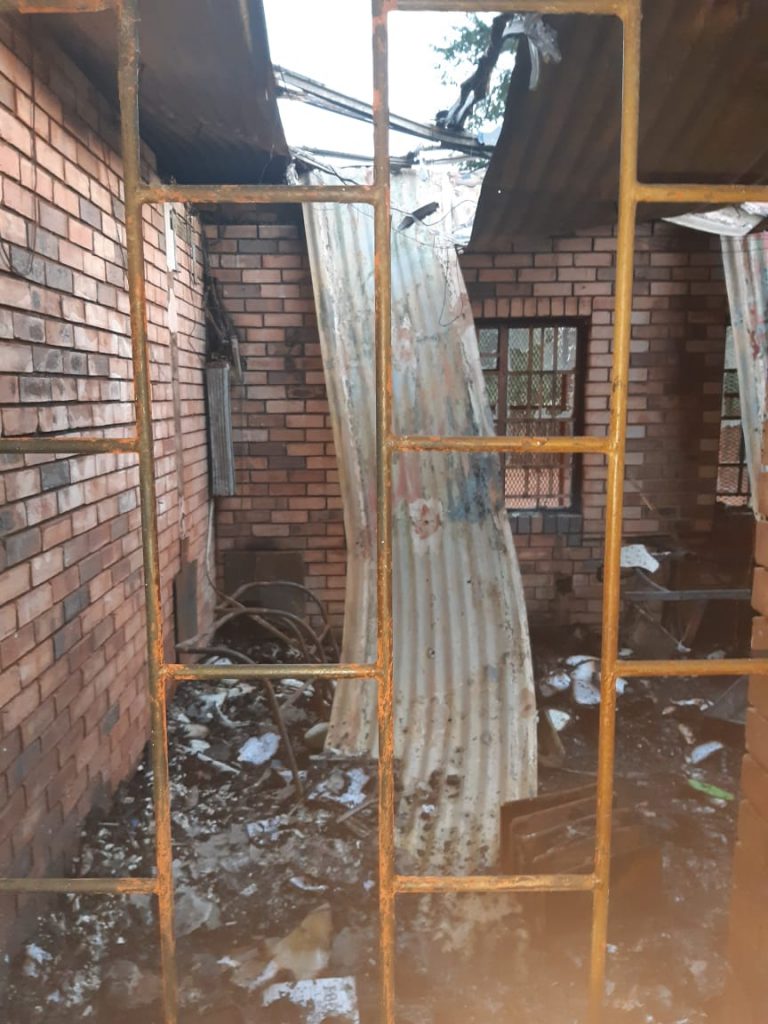
Thugs have burnt down Soshanguve High School in Pretoria during the early hours of Wednesday morning, according to officials from the Gauteng Department of Education.
This brings to four the number of schools that have been burnt down in
Soshanguve during the 21-day lockdown period.
The
other three schools burnt down in Soshanguve includes: Amogelang Secondary School,
Lethabong Secondary School and Phuthanang Primary School.
The provincial education department said
criminals were taking advantage of the lockdown by robbing and vandalising
schools.
The department said in a statement that the administration block of the
Soshanguve High was completely burnt down.
The department said the principal of the high school was alerted about
the incident this morning by a community member and rushed to the school were
the police and firefighters were already on scene.
Firefighters fought the fire for hours this morning in an attempt to
save the little that could be saved during the blaze.
“We really don’t know what is happening in Soshanguve, this is to
register our plea with the Security Cluster to protect our schools. We are
dismayed to report about yet another school destroyed by fire, worse within few
days in the same area”, said Gauteng MEC of Education Panyaza Lesufi.
An investigation is currently underway to determine the cause of the
fire and the value of the loss.
“This is worrisome, it looks like same modus operandi is used, we are tempted to believe that there is a syndicate operating in the area, the sooner these cowards are arrested the better,” said Lesufi.
Meanwhile, the provincial education department has confirmed that a
total of 22 schools were vandalized during the 21-day lockdown in the country.
The School Governing Bodies have been advised to reinforce security
measures at schools.
“This is appalling and unbelievable, that we are actually on day 13 of
the Lockdown, one ponders on how will the picture look like after this period”,
said Lesufi.
Valuable equipment and school nutrition groceries have also been
reported to be stolen at the schools during the lockdown.
“The members of the community are encouraged to continue report to the Police. Indeed, we cannot allow this barbarism to continue rob our children their future”, said Lesufi.