Home Blog Page 426

Panyaza Lesufi’s Mission To Help The Poor And Vulnerable During Lockdown

While many South African have been spending time at home due to the 21-day nationwide lockdown, Gauteng MEC for Education Panyaza Lesufi has hardly rested.

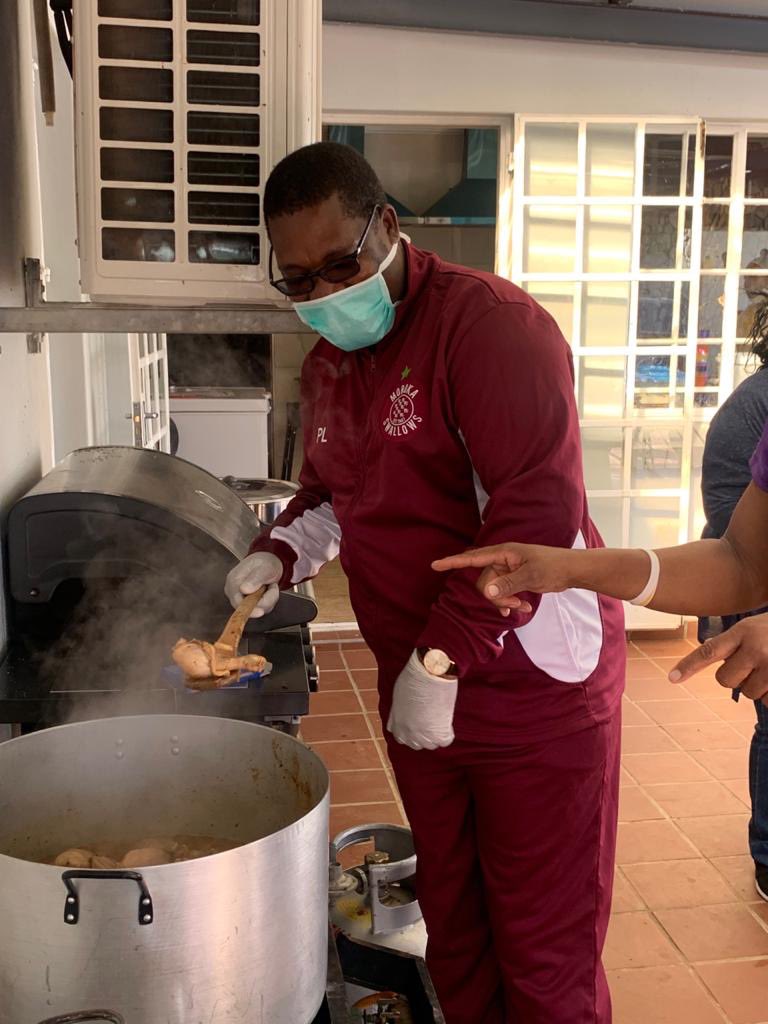
The hardworking education MEC has criss-crossed the Province in the past few days, ensuring that vulnerable school children and their families were provided with food and necessities.

South Africa has more than 9.6 million school learners who rely on the school feeding schemes, but since the lockdown which was announced by President Cyril Ramaphosa, most have been going to bed on empty stomachs. According to research, the meal they receive at schools normally is their main meal of the day.

Lesufi has been visiting the homeless centres in Gauteng, providing thousands of homeless people with much-needed food parcels, dignity packs and new mattresses.

“We must not get tired of caring for the homeless and the poor. This agenda must be accelerated beyond here,” said Lesufi.

“Our agenda is simple, to take care of the weak and vulnerable.”

Lesufi’s hard work did not go unnoticed.

Twitter users praised the Gauteng MEC for Education efforts, with some saying he should become the country’s next Deputy President in future.

Depression and Anxiety Takes a Heavy Toll on Students After Lockdown Announcement

Nyakallo Tefu

Thousands of school learners in South Africa are finding it hard to cope with the closure of schools since the government announced a national lockdown in March to curb the spread of COVID-19.

Matriculants, university students and student representatives told Inside Education this week that there has been significant levels of depression and anxiety among fellow learners following President Cyril Ramaphosa’s announcement of a lockdown.

Matriculants are the hardest hit by depression and anxiety, according to Khumo Puso, a Grade 12 learner from Florida High School in Roodepoort.  

“The lockdown has added a lot of academic pressure than I had in the beginning of the year because I feel that face-to-face interaction is more effective than the new methods put in place currently,” according to Puso. 

“The lockdown makes me fear not only for my academics but my future because this is happening at a time when we as matriculants need to grasp everything within a short space of time. It gives me so much anxiety and adds to the stress I already have”, says Thato Bame, a grade 12 pupil at West Ridge High School. 

Following the lockdown announcement, government said learners would be able to work from home in order for them not to miss out on school work and extra learning material would be available on the universities and education department’s websites, national radio and television channels. 

Bame says at her school, learners have been making use of a ‘Google Classroom’, where the teachers upload some of their work.

She said they have also been studying through a WhatsApp group for some of their school subjects. 

“It really isn’t easy for me because sometimes I don’t understand what is required of me and the teachers don’t fully explain like they would in a normal classroom setup”, said Bame. 

NAPTOSA’s Basil Manuel told Inside Education that the level of resourcing for teachers is very important at this point because not all of them know how to access learning material online. 

“We have been helping teachers to ensure they know where all the material provided by the government is, to make sure they are well equipped to assist learners”, said Manuel. 

Manuel said they have not received communication regarding the replacing of teachers who lose their lives due to COVID-19, but will be meeting with the department to find a way forward. 

He added that the biggest concern among teachers currently was going back to schools where the whole social distancing rule would be hard to implement in a class of more than 50 pupils.

“How do you tell Grade 1 learners not to hug each other when they see one another, how do you make sure they are far apart from one another during reading time of the carpet and most importantly, how do we convince and assure parents that their children will be safe at school”, asked Manuel. 

University students have also taken a knock as direct teaching and learning plays a huge role in their academic life. 

University of Rhodes first-year law student Kgabo Molele says even though lecturers are assisting them with school work, this has taken away her varsity experience. 

“Being able to go to class, going to the library and then interacting with friends, that has been taken away because of this lockdown”, says Molele. 

Molele says her biggest concern with online learning is that some of her fellow students will be stressed out as they either don’t have smartphones, laptops and or access to the internet. 

Thabo Shingange, national spokesperson of the South African Union of Students, says before the lockdown, one of the sentiments shared was that students should not be forced to vacate residences on campus. 

“Leaving the campus residence means some won’t have access to all the resources provided by the university, however here we are in 2020 with a pandemic and this has been made to seem like the only solution, not considering those that don’t have much”, said Shingange. 

 “Students that have access to social platforms are even contacting me via DM’s concerned about their academics”, said Shingange. 

Earlier this week, the Department of Higher Education announced members of a new task team that will come up with solutions for higher learning institutions during the COVID-19 pandemic.

Nzimande has established COVID-19 Teams for the Department of Science and Technology and the Department of Higher Education and Training, respectively.

The Department of Higher Education and Training team is led by the Deputy Minister Buti Manamela and is comprised of Universities South Africa (USAF), South African College Principals Organisation (SACPO), the South African Union of Students (SAUS), Labour Unions, Higher Health and the Department of Health to coordinate the PSET sector response to the virus.

Shingange, who is part of the task teams, says part of their task is to come up with solutions on the impact of COVID-19 on the education sector and find ways to move forward. 

“We are happy, that myself and Palomina Jama from SAUS will be on the team and we can share our ideas about dealing with the issue at hand”, said Shingange. 

Many have questioned whether the academic year is going to waste because no one knows long this virus will remind in the world and specifically in South Africa. 

“The academic year hadn’t even started, students haven’t written any tests so at this point we can’t say the academic year has been wasted,” said Shingange. 

Molele says she doesn’t think the academic year has gone to waste, adding that staff at her institution is trying by all means to stick to the plan of online learning, eve thought assignments and tests have been cancelled or postponed. 

Shingange says students have been raising concerns about having to be home and studying from there.  

The task team appointed by Nzimande is expected to meet and come up with solutions as soon as the country has entered its second week of the 21 day nationwide lockdown. 

SADTU Pays Tribute to KwaZulu Natal School Teacher Who Died From COVID-19 Complications

Nyakallo Tefu 

The South African Democratic Teachers Union has conveyed condolences to the family of KwaZulu Natal school teacher Tholakele Shandu, who died from COVID-19 complications.

Shandu, who taught at the Plattdrive Primary School in Isipingo, Durban, died a few days after she was admitted at the St Augustine Hospital died on March 31.

Her children and a close friend who had contact with her have all tested positive for COVID-19, according to health authorities.

Shandu allegedly suffered from severe abdominal pains. She was admitted for the first time around the 6th of March and spent close to two and a half weeks at the St Augustine Hospital.

She was later discharged but she fell more ill and was readmitted and diagnosed with asthma. 

She passed way at the hospital on Tuesday, 31 March 2020, from COVID-related issues. Her family says she was hospitalized with an elderly patient in her ward.

Sadtu general secretary Mugwena Maluleke has urged those who have been in contact with her to go get tested in order to ensure that they did not contract the virus.

“As we mourn her death, we call on hospitals to try their best, with the limited resources they have, to also exercise social distancing on patients”, said Maluleke.

“As the COVID-19 spreads, we call on the society not to stigmatise those who are affected and infected by the virus and their families. We call on the society to educate those who are still thinking that the virus knows boundaries and conspiracy theories to abide by the rules and regulations as promulgated by the government and stay indoors.”

Basic Education Minister Angie Motshekga said in a statement that they will ensure that the families, colleagues and classmates of the learner receive counselling. 

“Losing teachers at a time like this is particularly hard when they are instrumental in ensuring that learning and teaching continue learning and teaching continue during the time of the lockdown,”, said Motshekga.

Motshekga also conveyed condolences to the Shandu family.

Blazing A Trail For Female Sports In South Africa

0

Amid the International Women’s Day celebrations at the end of March and few days before the lockdown, 25 women in sport – including this group from University Sports South Africa – came together for a countrywide three-day Women in Sport Leadership Training Workshop.

“We need to be demanding a seat at the table, and not waiting for someone to put out a chair,” says University Sports South Africa national committee member Mel Awu.

With the success of female sportswomen in South Africa ever increasing, it is not only the action on the pitch that has been receiving much-deserved plaudits and support. 

From female student athletes earning three of the country’s five gold medals at Napoli 2019 and former Universiade star Refiloe Jane joining AC Milan, to swim sensation Tatjana Schoenmaker being nominated for the FISU Female Athlete of the Year award and rugby pioneer Babalwa Latsha becoming the first contracted women’s player abroad, female student-athletes past and present have been flying the flag high for South Africa over the past year.

Championing the cause of female sports leaders has made great strides in South African university sport yet championing their cause are a number of female sports leaders who have equally made great strides as they continue to fight their way and make their mark in a male-dominated environment.

Amid the International Women’s Day celebrations earlier this month, 25 women in sport from across South Africa gathered in Johannesburg for a three-day Women in Sport Leadership Training Workshop hosted by the South African Women and Sport Foundation (SAWASF), facilitated by the Women Sport Leadership Academy (WSLA) from University of Chichester and the Anita White Foundation (AWF).

Among the attendees were several female national committee members from USSA – University Sports South Africa – including Mel Awu, who apart from her national position, currently works as Sport Co-ordinator at the University of Cape Town.

A Sports Management graduate from the Nelson Mandela University, Mel has worked in sports administration at five different tertiary institutions across the country while serving on the national committees of USSA Squash, USSA Chess, USSA Athletics and USSA Rugby, where one of her highlights was donning the coveted green and gold blazer when she managed Team South Africa at the 2018 FISU World University Rugby 7s Championships in Swakopmund, Namibia.

The passionate administrator, who has long fought for gender equality in the sports arena, was thrilled with the informative and inspiring workshop, which poignantly drew to a close on International Women’s Day, March 8.

“This was one of the best workshops I have ever attended,” she claimed, before further explaining, “It was a safe space, and everything was practical. We were broken into smaller groups, and sometimes paired randomly, which gave us more of an opportunity to get personal with our partners, and great friendships were formed. I left there knowing everyone’s name.”

Topics covered over the three days included Conflict Management, Networking, Communication, Presenting with Impact, Having the Difficult Conversations as well as Team Building.

“The practicality of the entire workshop blew me away,” Mel said. “We did group activities, we role-played, and I learnt so much. It was a safe space to not be afraid to approach someone and network, ask for help, or share knowledge.

“Learning with sisters who have the same passion for development was very special for me – it was all very supportive, the feedback was given in a structured manner, and we all went away with lessons.”

The workshop has definitely provided Mel with renewed impetus for her work as she acknowledges the many challenges women in the sports industry face.

“Besides being thought to only be able to take minutes at meetings, I feel, as a woman, I have to be at my best game all the time, meaning I have to work thrice as hard at everything compared to men. And if I don’t cut it, then it’s ‘these women…’”, she admits, before choosing to see the bright side. “Having said that, I have enjoyed great encouragement and respect from some male colleagues and mentors, so I always choose to celebrate that.”

Within USSA’s structures, Mel reveals that the association – led by five males and three females in the Executive Committee – is very supportive and encourages gender balance, no doubt fully supported by the president Ms Nomsa Mahlangu, who was last year elected as the first female president of the Federation of African University Sport (FASU).

“She is a hard-worker, she is efficient and she is a woman!” Mel says of the association’s leader. “She is amazing, and the wonderful thing about her is that she is so down to earth and willing to teach others. She is an inspiration; when seeing her, every female believes that ‘we can do it too’.”

While facing the challenges of being a female sports administrator on a daily basis, Mel feels a lot needs to be done to encourage equality, starting with a change in mentality from her male counterparts. 

“RESPECT,” she spells out when asked what can be improved. “Men need to learn to respect women for who they are, their character and their abilities – and not just as ‘possessions’, but as leaders. As women we need to step up, and hold each other accountable. I dream of a day when there will be a 50:50 gender split across all Sports Committees, which will be full of competent leaders who want to take the sport forward, not their personal agenda.”

Mel feels that women should not merely sit back, but take action themselves. 

“As women, it is our responsibility to empower ourselves – we cannot leave that responsibility to men,” she says.

“As a woman, you have to want to constantly improve yourself, upgrade yourself and keep opening doors – we need to be demanding a seat at the table, and not waiting for someone to put out a chair. We have to empower and uplift each other, while we must also realise that there are men who are advocates for gender equality, and we need to celebrate them and work with them in this fight.”

Mel hopes better structures will be put in place to help women across the board in their daily struggles. 

“As a country we need to put systems in place for the development of women, and demolish destructive patriarchal systems,” she argues. “Women need to initiate that, because some men see nothing wrong with the current systems, as they are in a position of privilege. We need to open up safe spaces for those conversations.”

This month’s successful workshop was indeed one of those safe spaces, inspiring Mel and her female colleagues to continue the ongoing struggle for gender equality in sport.

The South African Women and Sport Foundation are continually doing their part in assisting female sports leaders where possible, and with their annual sports conference set for August, Mel will no doubt be joined by many more to continue blazing the trail for South African women in sport.

Advancing Fourth Industrial Revolution Through CSI

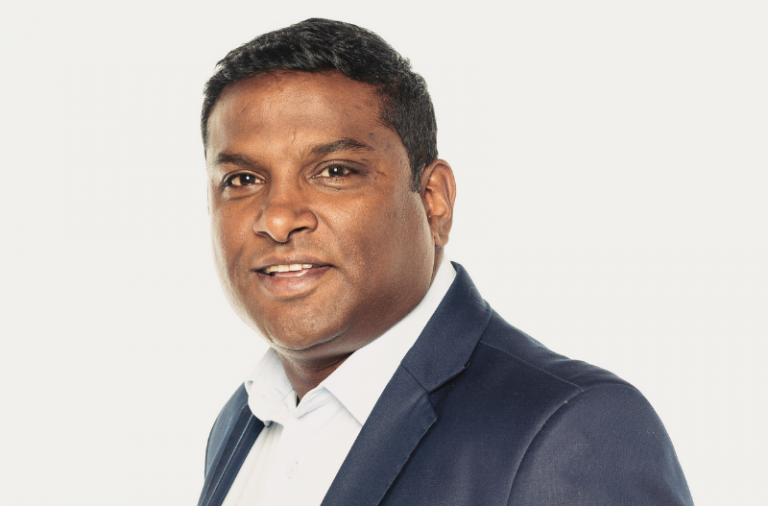
Vino Govender

With enormous potential to better human lives, the dawn of the connected technological age has placed telecommunications companies at the foreground of the advancement of society.

The onus is on companies within the 4IR value chain to take the lead in ensuring that the economic benefits are shared amongst all South Africans.

One of the ways in which they can achieve this is corporate social investment. Indeed, CSI has become increasingly integral to business strategy; however, only robust, well-designed programmes are likely to bring us closer to achieving the increased economic equality that 4IR potentially holds.

One of the key intended outcomes of CSI in South Africa is securing the economic benefits for previously disadvantaged sections of our population. It achieves this through a mix of non-voluntary or compliance-driven activities, such as those needed for B-BBEE, and voluntary CSI programmes initiated by the organizations themselves.

Because of the legislation around B-BBEE, activities in these areas are usually regarded as an attempt to fulfil requirements to be able to do business.

Depending on the level of compliance, it can have either legal implications or implications in terms of being excluded from economic opportunities where potential partners can decline to do business because they perceive that there is a lack of commitment to transformation.

On the other end of the spectrum, we have voluntary CSI with its own set of benefits.

Unfortunately, there is no real way to measure how well the industry is doing this.

A number of CSI reports have aimed to quantify the benefit in real money terms. For example, a report from IO Sustainability and Babson College’s Lewis Institute for Social Innovation determined that CSI activities could increase a company’s market value by 4%–6% and reduce staff turnover by as much as 50%.

Whether the motivation is purely philanthropic or just aimed at enhancing reputation or gaining acceptance in communities and societies, the potential benefits to business have pushed it far beyond being a perfunctory exercise.

The amount of money that has been directed into CSI by South Africa’s corporates was in excess of R10 billion in 2019, according to the Trialogue CSI Handbook. But what impact are these investments making?

A McKinsey report on CSI found that, to a great extent, companies tended to formulate their CSI efforts based on their own superficial research, raising the concern that it is unlikely that these activities would be sufficient to tackle real challenges.

Identifying the need is, therefore, an important first step in designing a programme that will best serve the intended beneficiaries and be more sustainable.

One of the key benefits of voluntary CSI remains the fact that companies are able to focus on sector-related issues when identifying the societal interventions that will feature in its CSI strategy.

For the telecommunications industry this has tended to include issues such as the low meaningful participation of women in the sector, the use of technology to address challenges in education and health, and ICT skills development.

Of these, arguably the most critical is skills development for a number of reasons.

Shortage of ICT skills has been one of the factors behind the continued exclusion of women and previously disadvantaged groups from opportunities in the R229-billion local ICT industry.

These are opportunities that require a high level of specialized technical knowledge.

The limited availability of these skills hampers technological progress, putting South Africa far behind other countries in exploiting the many benefits that the era of 4IR promises.

According to Wits University’s JCSE Skills Survey of 2019, the areas where skills are scarcest are particularly those required for advanced technologies, such as programming or coding, automation, and artificial Intelligence. The report highlighted what it described as an ‘alarming trend’ where a growing number of employers have been forced to recruit talent from outside the country in an attempt to meet their skills requirements.

This at a time where South Africa unemployment rate is at its highest in over 16 years.

This is of concern to both the private and public sectors, and the South African government has placed closing the ever-widening ICT-skills gap very high on the national agenda, with a number of corrective measures that, in many cases, see it joining efforts with the private sector.

As they roll out their CSI initiatives, companies across the industry have come up with programmes to address the shortage. These range from simply funding existing initiatives to fully-fledged programmes aimed at tackling the issue at the root through initiatives that cover deficiencies in STEM education for women in particular.

Some have even gone as far establishing training institutions either fully run by the company or in partnership with specialist training providers. While some would argue that the motive behind CSI activities isn’t important as long as there are beneficiaries, it can influence the impact and substantiality of CSI initiatives.

In addressing the challenges as an industry through our various CSI efforts, we should reach a point of convergence where both beneficiaries and benefactors gain considerably.

This should keep us focused on the common objective and ensure that we are in it for the long run.

I have no doubt that the sum of our efforts will take us that much closer to closing the gap and realising both the known and hidden benefits of the new era.

(Vino Govender: Executive for Strategy, Mergers and Acquisition and Innovation for DFA)

Global Partnership for Education Grants US$250 Million for Developing Countries Battling COVID-19

The Global Partnership for Education (GPE) will provide US$250 million to help developing countries mitigate both the immediate and long-term disruptions to education being caused by the COVID-19 pandemic.

The funds will help sustain learning for up to 355 million children, with a focus on ensuring that girls and poor children, who will be hit the hardest by school closures, can continue their education.

GPE Board Chair, Julia Gillard said, “The COVID-19 pandemic is creating an education emergency that could have devastating impacts on children in developing countries. Unless we act now to support education systems, millions of vulnerable children, especially the poorest girls, may not be able to resume learning when this crisis is over.”

At least 630 million children are out of school in developing countries in Africa, Asia and Latin America and the Caribbean. Of the 67 countries eligible for the GPE funds, 63 have already closed schools nation-wide in response to the pandemic. This has already cut more than 350 million children off from learning, but also from other vital services provided through schools, including health care and nutritious meals.

Long-term school closures threaten hard-won development gains and could expose the world’s poorest children to increased risks. Evidence shows that girls who are excluded from school are more vulnerable to gender-based violence, early marriage and other forms of sexual exploitation and abuse.

During the Ebola crisis in Sierra Leone, school closures were linked to 11,000 schoolgirls becoming pregnant and being unable to return to school. Boys are at increased risk of being recruited into armed groups. Teachers may be forced to find other sources of income and may not return once the pandemic is over.

GPE Board Vice Chair, Serigne Mbaye Thiam said, “GPE has acted swiftly in the face of an unprecedented challenge. These funds will ensure that developing countries, like Senegal, are able to act quickly to mitigate the detrimental impact COVID-19 will have on the most vulnerable children and maintain the resilience of education systems.”

GPE funding will be available immediately to support coordinated and country-driven responses in up to 67 countries and meet both urgent and longer-term needs. Ministries of Education and local education partners can use the funds to ensure learning can continue, particularly for the poorest and most vulnerable, for example by producing educational radio and television programs and distributing equipment such as radios and textbooks to the poorest households.

The funds can also be used to support teachers, ensure children with special needs and disabilities are included; collect data to know that learning is happening; mitigate poverty and gender barriers to learning, which will be exacerbated by economic shock; and ensure that teachers and schools are equipped to re-open when it is safe to do so.

GPE’s Chief Executive Officer, Alice Albright said, “We are stepping up to mitigate the impacts that school closures in developing countries will have on the most vulnerable children. GPE is committed to ensuring that learning can continue, and that no child’s education is left behind.

The US$250 million has been made available by repurposing uncommitted funds, with an expectation that additional funding will be required to help developing countries keep their education systems going through the pandemic and assist children who are vulnerable as a result of school closures.

(Compiled by FundsForNGOs and Inside Education staff)

Teacher Of The Week: Limpopo school teacher Tshililo Rambau

CLASSROOM CORNER

Teacher of the Week

Teacher: Tshililo Rambau

School: Muungadi Primary School, Limpopo

Tshililo Rambau, a teacher at Muungadi Primary School at Zamenkomste in Limpopo, received the provincial Excellence Natural Science and Technology teaching award during a ceremony at The Ranch Hotel near Polokwane in January.

He received a certificate, a trophy, a laptop, and a DVD and data projector.

Rambau started teaching in 2007.

The well-known Limpopo school teacher wanted to be part of the noble profession with the hope of one day being counted among those in whom future teachers find inspiration.

Rambau likes to groom children to become responsible adults who will do positive things in their respective communities.

Rambau points out that the behaviour patterns of the learners, bullying, disengaged parents, changing standards, low pay, lots of paper work and management work are some of the challenges he is grappling with.

To counter this, he involves the community and this has assisted a lot.

He plans to have meetings and workshops with teachers and inspire them so that they can participate in the National Teachers Awards (NTA) as it forms part of professional development.

Rambau thanked the Department of Basic Education for initiating the competition, including his principal, SGB and his colleagues for being supportive.

(Compiled by Inside Education staff)

Ramaphosa: COVID-19 Will Be ‘Extremely’ Disruptive To SA Economy

0

Cyril Ramaphosa

The world is in the throes of a public health emergency on a scale not witnessed in over a century.
 
The spread of the coronavirus, which causes the disease known as COVID-19, has been alarmingly swift and widescale, and is now defined as a global pandemic.
 
It knows no geographical or territorial boundaries, has infected both young and old, and is on the rise in developed and developing countries alike.
 
As screening and testing is scaled up, the number of infections in South Africa is expected to rise.
 
Yesterday, I declared a national state of disaster, a measure proportionate to the severity of the threat to our people, to our society and to our economy.
 
This will enable us to have an integrated and coordinated disaster management mechanism and to set up emergency, rapid and effective response systems.
 
This virus will be extremely disruptive, and our priority is to safeguard the health and well-being of all South Africans.
 
We also have to address the inevitable economic fallout.

We must expect a decline in exports, a drop in tourist arrivals and a severe impact on production, business viability and job creation and retention.
 
Cabinet is in the process of finalising a comprehensive package of interventions to mitigate the expected impact of COVID-19 on our economy. This is being done in consultation with business, labour and other relevant institutions.
 
It was Louis Pasteur who said that fortune favours the prepared mind.
 
South Africa is prepared, and has been so for some time.
 
Since the outbreak was first reported we have acted to put screening and containment measures in place.
 
Our national response has been driven by an Inter-Ministerial Committee (IMC) chaired and ably led by the Minister of Health, Dr Zweli Mkhize.
 
The manner in which the IMC and the support teams have responded to this emergency has been both exemplary and reassuring, particularly in helping to quell public panic.
 
I will be chairing a National Command Council to coordinate all aspects of our national response.
 
South Africa has a positive track record in managing public health emergencies.


We have the knowledge, the means and the expertise.

Our scientists and epidemiologists are world-class.
 
As was announced yesterday, we have put a raft of emergency measures in place, and will make funding available to support their implementation.
 
They include travel bans on visitors from high-risk countries; mandatory testing, self-isolation or quarantine for South African nationals returning from these countries; and strengthening surveillance, screening and testing at ports of entry into the Republic.
 
Social distancing is critical if we are to contain the spread of COVID-19.
 
Gatherings of more than 100 people are prohibited and mass celebrations of national days are cancelled. Visits to all correctional centres are being suspended for 30 days with immediate effect. Non-essential international travel for government officials has been proscribed and non-essential domestic travel discouraged.
 
A total of 35 land ports and two sea ports will be closed, as will schools from the 18th of March until after the Easter weekend. We will soon be announcing measures with regards to universities and colleges.
 
Next month will be Easter, a sacred period for a number of faiths and a time in which mass services and gatherings will take place. The faith community should take decisions in this regard in the best interests of the health of their congregants and the country as a whole.
 
Hygiene control should be intensified in all sectors.
 
Every citizen should take charge of their own safety by observing measures such as frequent hand-washing with soap or hand-sanitizers and covering their nose or mouth with a tissue or flexed elbow when coughing or sneezing.
 
As part of our national effort the Department of Health will continue with an intensive and ongoing campaign to raise awareness about prevention, transmission and infection symptoms. I encourage all South Africans to acquaint themselves with the relevant preventative material.
 
These measures are similar to those in other countries, and it is important we all understand that they are not punitive but a matter of public safety.
 
One of the greatest dangers at this time is ignorance and misinformation.
 
We should stop spreading fake and unverified news, especially on social media. This can exacerbate an already tense national mood and damage the national effort.

We must also not give in to the expressions of bigotry that we have seen in other countries directed at nationals of countries from where the outbreak began or the current epicenter in Europe. This is clearly a virus that affects people of all nationalities.
 
Let us lower the wing of compassion to those who are infected, and to those who have returned home from high-risk countries.
 
Let us assist those in need and those more vulnerable, instead of shunning them. We will remain faithful to the values of tolerance and respect that define us as a people.
 
On behalf of all the people of South Africa I thank the team who repatriated our compatriots from Wuhan, China, as well as the leadership and people of Limpopo who are assisting with the quarantine process.
 
This is a difficult time.
 
And yet it is in times of adversity that our strength is revealed.
 
We will act decisively, with determination and with purpose. We will act as a collective, for it is upon the actions of every South African that the success of our efforts depend.
 
The Thuma Mina moment is upon us, perhaps as never before.
 
This too shall pass.
 
We shall overcome.
 
We are South Africans

President Cyril Ramaphosa Orders Schools To Be Closed On Wednesday To Curb Spread of Coronavirus

0

Charles Molele

President Cyril Ramaphosa has announced that schools will be closed on Wednesday following a decision by Cabinet to take ‘urgent and drastic measures’ to stem the spread of the novel coronavirus.

As the number of infections from the coronavirus rose to 61 on Sunday, Ramaphosa also declared a “national state of disaster” in terms of the Disaster Management Act.

The president also imposed a travel ban on foreign nationals from high-risk countries such as Italy, Iran, South Korea, Spain, Germany, the United States, the United Kingdom and China as from 18 March 2020.

“Schools will be closed from Wednesday, 18 March, and will remain closed until after the Easter Weekend,” said Ramaphosa.

“To compensate, the mid-year school holidays will be shortened by a week.”

Ramaphosa said government was working closely with colleges, universities and other public facilities such as Parliament, prisons, police stations and military installations to intensify hygiene control.

He said government was aware of the confirmed case of a student who has tested positive for the coronavirus at Wits University.

“Those who have been in contact with the student will be quarantined. The Minister of Higher Education, Science and Innovation is consulting with vice chancellors of universities and colleges across the country and will soon be announcing measures in this regard,” said Ramaphosa.

Meanwhile, Wits University has cancelled classes and other academic activities as from Monday 16 2020.

Graduations ceremonies at the university have also been postponed.

Kenya Closes Schools After Recording 3 Virus Cases

0

Kenya has suspended learning in all institutions of learning after confirming the third case of coronavirus.

Health Minister Mutahi Kagwe announced that two people who had sat next to the first patient on the airplane as she traveled back from the United States via London had tested positive.

“As a result of this we are going to implement the following measures: Only Kenyan citizens and foreigners with valid resident permits will be allowed to come into the country provided they proceed on self-quarantine or in a government quarantine facility,” President Uhuru Kenyatta said at a news conference late Sunday.

All day primary and secondary schools will be closed from Monday, while learners in boarding schools are expected home on Wednesday. Universities must also close by Friday.

The president announced that entry to the country will be blocked to all except citizens and residents and shutting schools as the number of confirmed cases rose to three.

Kenyatta said this would come into effect in the next 48 hours and would remain in place for 14 days.

Every foreigner who has entered the country in the past 14 days has been ordered to self-quarantine. 

All companies have been urged to allow employees to work from home.

Kenyatta also said citizens should avoid congregating in places of worship and shopping malls.

“I want to assure you that my administration is at the forefront of managing this pandemic,” he said.

After being relatively spared from the global pandemic which has killed over 4000 and infected over 159,000, Africa now has 25 countries reporting cases.

“Where possible, government offices, businesses, and companies are encouraged to allow employees to work from home, with the exception of employees working in critical or essential services,” the President said.

To avoid the risk of transmission through physical handling of money, the President said, “We encourage the use of cashless transactions such as mobile money and credit cards. We appeal to mobile operators and banks to take into consideration the situation and reduce the cost of transactions during this period.”