Home Blog Page 427

Eastern Cape launches winter league programme for disadvantaged schools

0

Nyakallo Tefu 

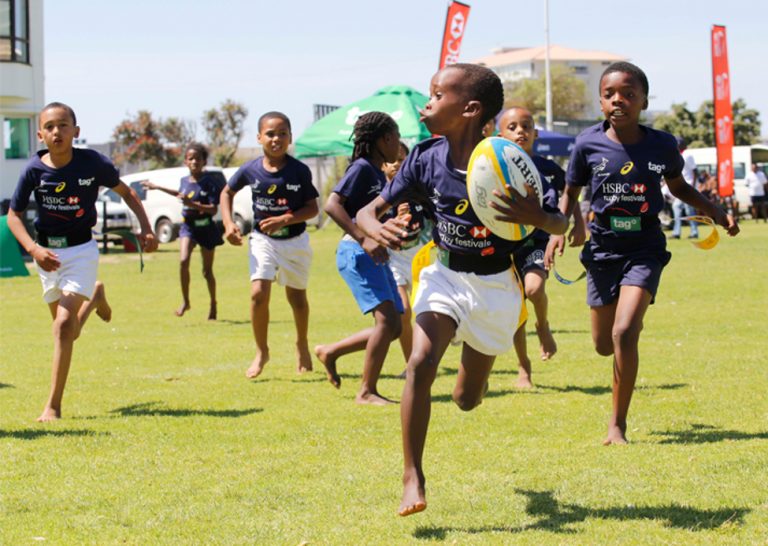
In efforts to promote talent not only in the classroom but on the sporting field, learners from Port Elizabeth, Grahamstown, Komga and surrounding areas of the Eastern Cape will from April 2020 be part of a winter league programme.

The winter league programme is all about bridging the sports development gap that exists and nurturing the talent and skills in previously disadvantaged areas, which will be hosted by Khulasande Sports Development.

Founder and Managing Director Thobela Thoba says learners at schools will be competing against each other, as there are no competitive leagues available in remote areas of the Eastern Cape.

The programme organizers have announced one of its sponsors as African Bank. 

African Bank National Corporate Social Investment Manager Kennedy Dembetembe says the bank is proud to have this opportunity to collaborate with an inspirational NPO, which is providing them with a platform to remind the youth to believe in themselves.

African Bank says it will sponsor sports kits for three of the beneficiary schools that will participate in the Grassroots Youth Development Winter Sports League.

Violent university protests continue in South Africa with no end in sight

0

Nyakallo Tefu 

The fight for universities to do more for students and to scrap historic debt seems to continue in South Africa with thousands of students protesting and interrupting academic activities at higher learning facilities. 

In 2019, the Parliaments Portfolio Committee on Higher Education and training announced that students in South Africa owe universities almost R10 billion.

However, since the beginning of 2020 universities in SA saw academic activities being halted due to protesting students making several demands, which includes the issue of historic debt and accommodation.

Universities SA’s Professor Ahmed Bawa says historic debt is a national issue and it cannot be resolved at institutional level.

At the time of going to press, the Cape Peninsula University of Technology’s (CPUT) campuses had been shut down [9 March 2020] following protests by students on Friday.

At least four people were arrested last week after they disrupted lectures and damaged cars at the Bellville campus. 

It has been reported that students are protesting over historic debt and residences. 

The university management released a statement on twitter, saying academic activities are expected to resume on Tuesday 10 March adding that the halting of all activities at the facility is for the safety of both students and staff. 

“Staff must work from home, if possible. All university operations will resume on Tuesday 10th March 2020,” says the university. 

Meanwhile at the University of Witwatersrand, the student representative council says they have come to an agreement with the MEC for health to re-open the Wit-Waters building to provide accommodation for students in urgent need. 

The SRC released a statement on Twitter at the weekend confirming this agreement

Last week, a video emerged on social media of students sleeping on the floor in the institution’s library, this led to protests at the facility, with students calling for the university to assist those in desperate need of a place to stay as they complete their studies. 

Academic activities were also halted at the school, however resumed the following day. 

However, the university remains adamant that the SRC broke an agreement they had reached on 10 February 2020, that the university will release R17 million to the Wits Hardship fund to aid students. 

Following the protest at Wits, the SRC says it was able to assist 100 students with accommodation at some of the facilities accommodation.  

This year during the state of the nation address, President Cyril Ramaphosa announced that R64 billion will be spent on student accommodation in the next few years.

“The young people who are at TVET and University face serious accommodation challenges, some don’t even have places to sleep after lectures and resort to sleeping in libraries”, said Ramaphosa

The Wits SRC says the lack of funding for accommodation has become an intergenerational battle which haunts the entry of black intellectuals into the academic space as they face the disadvantages of class and historic oppression. 

However, the EFFSC was not for the shutdown at the institution saying they were not consulted as students. 

Chairperson Sivuyile Mhatu in a video on the EFFSC’s Twitter page, says the only way to have a shutdown is if and when students all come to an agreement regarding a certain matter. 

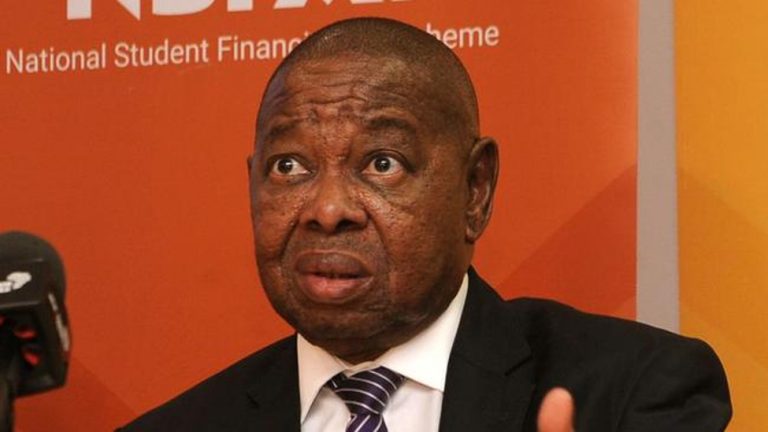
At the weekend, Higher Education, Science, and Technology Minister Blade Nzimande met with student representatives, with the aim of finding a resolution for the issues at the helm of higher learning institutions.  “Universities need to work together in order to solve the problems they are facing and not to allow their legitimate grievances to be used by political opportunists”, says Nzimande”.

Huawei To Bring 5G Skills To Eastern Cape

0

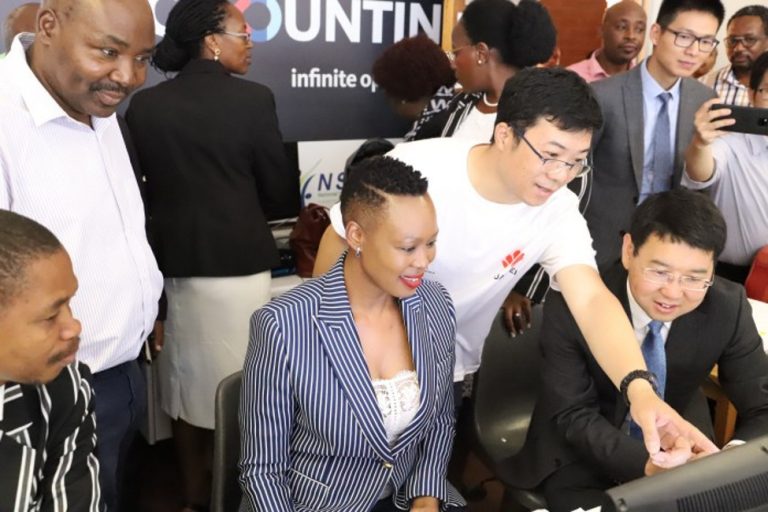
As part of a partnership to equip South African students to succeed in the Fourth Industrial Revolution (4IR), Huawei and the Department of Communications and Digital Technologies today launched a free 5G training programme at Walter Sisulu University.

The launch is part of an ongoing campaign by Huawei to help South Africa’s young people understand the possibilities of 5G while giving them the skills to realise that vision.

The programme started at Wits University and the University of Pretoria last year and will train up to 5 000 students online, and 1 000 on-site at partner universities across South Africa.

The event was attended by Minister of Communications and Digital Technologies Stella Ndabeni-Abrahams; Huawei South Africa CEO Spawn Fan, and representatives from the Eastern Cape government and the university.

“We’re proud to partner with Walter Sisulu University,” said Fan.

“We appreciate that WSU is a developmental university, focused on urban renewal and rural development through science, technology and innovation, which aligns perfectly with Huawei’s vision.”

This forms part of Huawei’s ICT Talent Ecosystem Program to grow and support ICT training in South Africa, especially in the latest technologies of 5G, artificial intelligence as well as Cloud and Data Services.

“Digital skills transfer is critical for today’s students to gain capabilities relevant in the emerging 4IR era,” said Fan. “This era is underpinned by the mass connectivity of 5G – hence Huawei’s commitment to 5G training.”

https://i2.wp.com/techfinancials.co.za/wp-content/uploads/2020/02/Huawei-SA-CEO-Spawn-Fan-addressing-the-audience.jpg?resize=696%2C837&ssl=1

PHOTO: Huawei South Africa CEO Spawn Fan

Fan said that 5G – or fifth-generation cellphone technology – was a key part of 4IR, which is changing the way we live, work, play and consume services. He said research predicted that by 2020, 70% of all jobs would have an information and communications technology (ICT) component.

Communications and Digital Technologies Minister Stella Ndabeni-Abrahams said,” Digital skills is a priority that requires all role players to collaborate in massifying skills throughout society. In 2018, we set a bold vision to train one million young people on data science and related skills. We have therefore sought to collaborate with various partners, including Huawei to realise this vision.”

The programme’s two-day courses are open to students both in the Mthatha area and online. They include components on 5G applications, network capabilities and key technologies to help students understand 5G and its potential.

Ndabeni-Abrahams added, “This 5G training comes at an opportune time as we are seized with preparing South Africa for the licensing of IMT Spectrum. We will, therefore, need a capable army that is equipped with relevant skills to assist the government in achieving its mandate of ensuring that South Africa is poised to aptly respond to 4IR requirements.”

“As South Africa moves into the 4IR, no one must be left behind,” said Fan. “South Africa’s young people have the potential to mature into world-class experts. By enhancing industry-academic cooperation, Huawei hopes to help South Africa achieve its development goals.”

Source: Techfinancials.co.za

The GET Language and Maths Strategy: Nine Pillars to Success

0

Thalia Holmes

As educators and administrators, we recognise the urgent need to improve learners’ performance in languages and mathematics. In order to respond to this, the General Education and Training phase (GET) has pioneered a nine-pillar strategy.

Pillar One: Assessment and diagnosis

We started by gauging where we are at, and what we need to achieve. In order to do that, the department conducted a systemic assessment to determine the oral reading fluency of grade three learners that study English as a First Additional Language (EFAL) in the province. A total of 735 schools participated, with forty Grade Three EFAL learners in each school completing a one-minute passage reading.

In addition to this, the department developed and implemented a baseline assessment for Grade One.

Pillar Two: Resources

We increased both physical and skills resources for learning mathematics. Learners were provided with mathematics kits to enhance the teaching of challenging topics, scripted lesson plans, calculators, charts and Mental Maths activity booklets. Teachers were given training and support as per pillar four.

Pillar Three: Learner support

The department took a number of steps to increase the institutional framework of support for learners engaged in learning maths and languages. To name a few: we introduced a Mental Math Challenge, which 1450 schools participated in at Grades 1-3. Support and intervention activities for both under- performing learners and high- flyers were developed. Learners were encouraged to participate in mass learner programmes such as provincial Olympiads. In addition, the department has begun the implementation of computer coding and Robotics in Grade 1. To assist with this, we have introduced concrete applications to enhance coding development.

Pillar Four: Teacher support

The department rolled out teacher and school management team “just in time” content and workshops.

The just in time teaching process usually involves a two-step series of learning. In the first step, students complete a focused set of activities outside of class and submit their work to the instructor. In the second step, the educator identifies, from the responses, areas of understanding and misunderstanding. They then adjust the next lesson so that students can receive specific “just-in-time” teaching in the areas where they are struggling.

The aim of just in time teaching is to encourage more student responsibility for learning the content outside of class; to use your class-time more efficiently, and to allow more time for interaction and discussion. Research suggests that educators who use just-in-time teaching also find that learners are more actively involved and more interested than they would be in a more traditional lesson.

Pillar Five: Senior Management Team (SMT) support

We are overseeing that SMTs support teachers in implementing coding and Robotics, from Grade 1 onwards. Furthermore, SMTs have been capacitated on mentoring and coaching. This will continue ongoingly.

Pillar Six: District and Head Office. Common assessments in June and December are administered  by the DHO across the province.

Pillar Seven: Stakeholder Involvement. We recognise the involvement of all stakeholders in order to generate quality education. This includes active collaboration from community leaders, parents and caregivers in the learning process of their children, policy implementation as well as the oversight of the practicalities of school life for the child.

Pillar Eight: Participation in International National and Provincial Assessments, Olympiads and Competitions. Participation in these standardised assessments will help garner learner enthusiasm and interest in the maths and language subjects. It will also serve as a measure for the department to determine provincial progress. As mentioned in pillar three (learner support), there will be renewed focus on encouraging learner participation in these programmes.

Pillar Nine: Research, monitoring and evaluation.

We will harness the ICT tools available to develop content knowledge in ICT applications. We will oversee the use and application of available “coding software” in the relevant curricula.

On a macro level, the department will continuously gauge our progress and success through audits and standardised assessments.

As per the instruction of the Premier in the State of the Province Address 2019, “MEC Panyaza Lesufi will implement the national integrated assessment framework, which will ensure rigorous assessment of all primary schools. The results of this assessment will be publicly released as we do with Grade 12 results.” 

As the department and educators work together to implement and administer these pillars, we will collectively ensure a comprehensive, holistic and cohesive approach to the promotion of quality teaching and learning.

Education MEC Panyaza Lesufi unpacks how R2.5 billion will be used towards improvement of ECD

0

Thalia Holmes

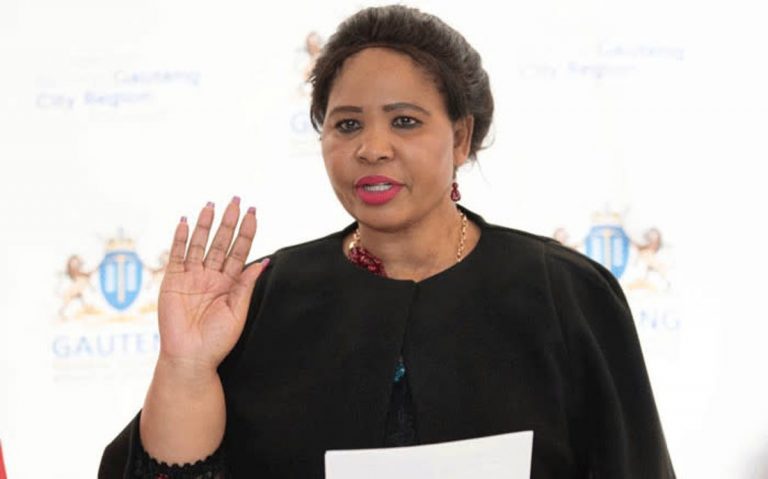
In her maiden budget speech last week, Gauteng Finance MEC Nomantu Nkomo-Ralehoko announced that a whopping R2.5 billion would be put aside over the next three years for “ensuring that all learners entering the schooling system have gone through early childhood development, regardless of their socio-economic status”. In particular, the money is earmarked “to complete the Universalisation of Grade R and preparing and piloting the introduction of Grade RR in public schools.”

But what exactly does that entail? We caught up with Gauteng MEC for Education, Panyaza Lesufi, who gave us the breakdown. The department plans to spend in the following four areas:

  1. Ensuring that all ECD teachers are correctly qualified and trained

Historically, Grade R and Grade RR teachers were not required to be formal teachers. As a result, the training and education of these educators range vastly. “The majority of those practitioners were not appropriately qualified as fully fledged educators,” said Lesufi in an interview.

The department has already undertaken a programme with the University of South Africa to provide training to all Grade R and Grade RR public school teachers across the province, who need it.

“We need to conclude that programme – we are at 85% now, we are left with about 15% of the practitioners who need to come on board.” These expenses not only go for upfront training, but also towards continuous development programmes and bursaries to would-be ECD teachers.

With Grade RR now set to become a recognised part of the formal schooling process, there are also additional training implications for the relevant teachers. “It means that all those practitioners that are planning to come on board, have to go through this process of conversion,” says Lesufi.

  • Training and Curriculum Development

The second portion of the budget will go towards developing standardised curricula for both grades. This will include “not only curriculum development, but development of the material and also training those teachers on how to utilise those materials,” explains the MEC. 

  • Developing norms and standards for Grade R and Grade RR classrooms

The department will spend some time developing the basic classroom norms for both grades and conduct an audit to get a sense of how many schools are meeting the required standards. “Those that are below the norms, we must lift them up to be at the level of where you need,” says Lesufi. This will include ensuring that infrastructure is appropriate for structured learning. “So, the classroom must not just be a room where kids sleep and dance,” explains the MEC. “It must have proper infrastructure: a library; sanitation must be the right size for the children, and all those things.”  

  • Finalising the Grade RR transition into the Department of Education

The last category of spending will go towards finalising the transition of Grade RR into the umbrella of formal education. “Remember that Grade RR was with the Department of Social Development. Now it’s coming to the Department of Education,” says the MEC. “The transition means absorption of staff members – you need to carry their costs, tools of trade, their phones, their laptops.”

In addition to employing more teachers, the department needs to assess the timeframe of absorbing the learner-related costs of overseeing another grade. “As we speak now, the state only gives school nutrition and scholar transport from Grade 1 upwards,” explains Lesufi. The department will conduct a study to determine whether it can absorb the extra costs of feeding and transport at once, whether it needs to be phased in, or whether parents will still be required to pay indefinitely.

While the R2.5 billion cost outlay is significant, the MEC is confident that these steps will make long-term improvements in education outcomes in Gauteng. “This is where we need to train the best,” he says. “I’m quite convinced that with the investment that we are making now, and with the commitment that the MEC for Finance and the Premier made for Grade R and Grade RR, we’ll be in a position to turn a corner.”

Meet Refilwe Dlulwayo, one of SA’s top-performing teachers

0

TEACHER: Refilwe Dlulwayo

SCHOOL: Thubelihle Primary School, Mpumalanga

During her school days, Refilwe Dlulwayo, a teacher at Thubelihle Primary School in Mpumalanga, assisted fellow classmates with mathematical concepts and problems.

She also assisted younger children from her community and that propelled her passion of making a difference in their lives.

She hopes that some day her tutorials will be offered globally.

“Knowing that I will be inspiring my learners to become future leaders, artists or well-rounded individuals with love for learning drove me into this career,” says Dlulwayo.

Teachers interact with different learners who are inquisitive and eager to learn new things, she says.

She gets the opportunity to inspire her learners not only academically but on a personal level.

Dlulwayo believes discipline is one of the key pillars to achieving success.

She also involves the school management team, disciplinary committee and parents to foster collaboration and co-operation among all stakeholders involved.

She stood out and became a provincial winner because she incorporates real life experiences with the curriculum.

She ensures that her learners benefit educationally while playing at the same time.

“Having come this far means that I am a valuable teacher in the education sector and I will continue to develop learners holistically and contribute to community building and shaping of the next generation.”

She plans to be more involved in community outreach programs that will benefit learners and the community as a whole.

COVID-19: Don’t Panic, Be Alert, says Basic Education Minister Angie Motshekga

0

Nyakallo Tefu 

As the number of coronavirus infections in South Africa continues to rise, concerns have been raised on the state of readiness of the Department of Basic Education Department amid the closures of some schools in the country. 

The Basic Education Department has urged schools not to panic when it comes to COVID-19 cases, adding that the plan to deal with the virus at schools has been integrated with that of the public.

#Ramaphosa: “You are our patriots. We are proud of you. This is an important mission for the whole nation. We will be looking to you to execute this mission to bring our young people back home.”

“We have received a many enquiries regarding our plans to deal with the Coronavirus in schools. We have redirected all the enquiries to the Department of Health, that is leading the interventions regarding the management of cases,” said Basic Education Minister, Angie Motshekga.

“We have sent a Circular to all our schools to provide guidelines on what to do in terms of general hygiene standards. The Department of Health however, will communicate should any announcements be made specifically on the Coronavirus. The safety of our learners and teachers remain a priority in the sector. This year we are experiencing several tragedies involving learners, where some of them, have sadly passed away. We convey our heartfelt condolences to all the affected families and schools. We continue to work with our stakeholders to ensure that we avoid the unnecessary loss of lives.”

https://insideeducation.co.za/coronavirus-department-of-basic-educations-guidelines-to-assist-schools/

Last week, Cowan House Preparatory School in Pietermaritzburg, KwaZulu-Natal, was closed after a parent at the school became the first confirmed coronavirus case in South Africa.

The parent had been one of the 10 people who had recently travelled to Italy. 

This week, Grayston Preparatory School in Sandton, Gauteng, was also closed due to fears of a possible coronavirus patient at the school. 

The school said one of the teachers disclosed that she was in contact with one of the 10 people who travelled to Italy recently and has since gone into self-isolation. 

The Gauteng Department of Basic Education says this was not communicated to them but they have since asked the school to provide reasons for their decision.

“Schools and educators cannot decide to close the school without communicating with the education department and the department of health”, says spokesperson Steve Mabona. 

In the Free State Province, the education department spokesperson Howard Ndaba says they will be meeting this week to discuss ways to deal with COVID-19 should it hit any of the schools in the province. 

In the Eastern Cape, MEC for Education Fundile Gade said the Department has embarked on an advocacy programme to create awareness about COVID-19.

“Our advocacy campaign is aimed at creating awareness and making sure our populace has a better understanding of the virus itself,” said Gade.

“Our advocacy programme involved communities, schools, National Association of SGBs and trade unions. We are currently satisfied in terms of our state of readiness.”

The basic education department says the most important thing for parents, school children, school staff and the public in general is to remember to practice basic hygiene, which includes:

–      Regular washing of hands 

–      Covering your mouth when you cough 

–      Avoid coming into contact with people who are sick 

–      Avoid touching your eyes, ears, and nose 

–      Seek medical help if you are sick

“We are being led by the Health Department, so no school should close without instruction from the department”, says Mhlanga.  

At the weekend, the third coronavirus case was confirmed in South Africa.

This was the wife of the first man diagnosed after returning from Italy. 

The group of 10 that travelled to Italy is currently being tested and in self-isolation.

However, both their children have tested negative for COVID-19. 

 The novel coronavirus has infected more than 108,000 people globally and killed more than 3,800.

As of this past weekend, the global number of confirmed cases of COVID-19 has surpassed 110 000, according to the World Health Organization’s spokesperson, Tarik Jasarevic.

“WHO calls on all countries to continue efforts that have been effective in limiting the number of cases and slowing the spread of the virus. Every effort to contain the virus and slow the spread saves lives. These efforts give health systems and all of society much needed time to prepare, and researchers more time to identify effective treatments and develop vaccines,” said Jasaveric.

“We must stop, contain, control, delay and reduce the impact of this virus at every opportunity. Every person has the capacity to contribute, to protect themselves, to protect others, whether in the home, the community, the healthcare system, the workplace or the transport system.” 

#FeeMustFall activist Mcebo Dlamini found guilty of public violence

0

Fees Must Fall activist Mcebo Dlamini has been found guilty of public violence and sentenced to two years and six months with a suspended sentence of five years.

Over the last four years, Dlamini has been facing a drawn-out court battle in the Johannesburg Magistrate’s Court, facing a range of charges in connection with the violent Fees Must Fall protests which began in 2015.

The Johannesburg Magistrate’s Court sentenced Dlamini to two years, wholly suspended for five years, for public violence.

He was also given six months’ imprisonment, again wholly suspended for five years, for unlawfully staying in the country.

Dlamini took to Facebook to announce the end of the legal battle.

“As a law-abiding citizen, I accept the ruling. I am tired of fighting,” he said.

“Today marked the end of my legal career. Court found me guilty of public violence, thus [sentencing] me to 2 years 6 months… Suspended sentence of 5 years. I will take time to reflect on my future moving forward including my political career. I thank you.”

Panyaza Lesufi announces top performing primary schools ‘to kick-start a skills revolution’

0

Charles Molele

MEC for Education Panyaza Lesufi recently announced the performance results of more than 900 primary schools in Gauteng, saying the move was intended to empower Grade 1- 9 learners to achieve functional literacy and acquire skills that match labour market demands.

Lesufi was addressing 6 000 teachers, HODs and principals at the inaugural primary school summit held at Rhema Bible Church in Randburg, north of Johannesburg.

“We are going to measure performance of primary schools – from the performance of the principal, school teachers, HODs and the resources and infrastructure of the school.  We are transforming the whole education sector and preparing our children for a better future,” said Lesufi. 

“Gone are the days when primary schools were recommended in terms of the uniform the learners wore to school. We are now going to apply rankings to all schools just as we grade hotels in terms of stars, from 3 to 4 and 5 stars.” 

Lesufi said from 2020 academic year, Grade 1 to Grade 4 learners in the province would now learn about coding, sign language, entrepreneurship and many other skills to match the labour market and the demands of the Fourth Industrial Revolution.

“Our focus is to build the skills of the future. We need to embrace new changes that are coming in future as a result of technological advancements. If we don’t get our education system right we will never get the skills for our economy.”

The summit was also addressed by the department’s Deputy Director-General Albert Charney and head of department Edward Mosuwe.

Gauteng Premier David Makhura delivered a keynote address.

“This inaugural summit is quite historic. We are not only fixing education. We are fixing the foundational phases of our education system. A house built on shifting sands cannot withstand the storms,” said Makhura.

“Todate, the spotlight was on matric results only. We must now shine the spotlight on our primary schools. This summit is important for us because the Diagnostic Report says the problems we have in matric and post-matric stages arise from the early phases of our education system.”

Makhura said education was important for the future of Gauteng – the country’s economic hub, which comprises of approximately 14.7 million people.

 “As it were, 85% of Gauteng’s total budget is spent on Education, Health and Social Development. We must spend all our resources to educate our people.”  

Mosuwe, Gauteng education’s HOD, said in his presentation that one of the most worrying issues of primary school results was the increasing high failure rate and repetition.

At least 21 000 learners failed their subjects in 2019. 

“Most of the overage learners are due to having repeated at least one grade in their school career. Most of the learners who are at least two years older than their cohort would have repeated grades in more than one phase,” said Mosuwe.

“In the interpretation of the graph above, it is important to remember that a learner may not repeat more than once in a phase, accordingly the number of learners repeating in the “last grade” in a phase; i.e Grades 3, 6 and 9, appear fewer than in the following grades – Grade 1, 4 and 10. Grade 7 is an exception, as this is the last year of primary school and schools seem to promote learners so that they can move to secondary school.”

Mosuwe said in the primary school level, very little difference exists between the % passes in the fee-paying and the no-fee

schools. However, in the Secondary schools the difference becomes a lot more noticeable. “There is an overall drop in the performance of the learners when they get to Grade 8, as is true will all of the subjects, this is however, more pronounced in the no-fee schools,” said Mosuwe.

Mosuwe said in the primary school level, very little difference exists between the % passes in the fee-paying and the no-fee schools. However, in the Secondary schools the difference becomes a lot more noticeable.

“There is an overall drop in the performance of the learners when they get to Grade 8, as is true will all of the subjects, this is however, more pronounced in the no-fee schools,” said Mosuwe.

NYDA Boss On A Mission to Create 1 000 Businesses in 100 Days

0

Charles Molele

Sifiso Mtsweni, the tenacious and forward-thinking chairperson of the National Youth Development Agency [NYDA], showed entrepreneurial prowess from an early age.

He started out selling an assortment of sweets and vetkoeks at primary school, procured from his mother’s tuck shop in Motetema, outside Groblersdal, Limpopo Province.

By the age of 12, the former COSAS leader was selling ice-cold drinks and national Sunday newspapers on the dusty streets of his township to school teachers, government officials and other ‘black diamonds’ in his neighbourhood.

Little did he know that one day he would be at the forefront of entrepreneurship and small business ownership, working with young enterprise owners across the nine Provinces after joining the youth development agency.

Since then,  Mtsweni has assisted hundreds of young entrepreneurs to start up their own enterprises, attributing his business acumen to his ‘sharp’, ‘street wise’ character, and adding that being ‘a sweets seller’ at an early age worked in his favour. 

Mtsweni, in a wide-ranging interview with Inside Education, says there’s nothing that makes him more happier than to see thriving enterprises owned by young entrepreneurs creating much needed jobs and contributing towards economic growth in the country.

“We must continue to support entrepreneurship and small business ownership. Is one of the ways South African can turn its economic fortunes around, like the Asian Tigers countries, who went through rapid growth by supporting small businesses and encouraging entrepreneurship at all levels.”

With the ever increasing unemployment and tough economic conditions that South Africa is currently experiencing, the youth development agency, under Mtsweni’s leadership has set itself a target to assist 1 000 businesses in 100 days- from March to June-  to coincide with Youth Month activities.

The NYDA, in conjunction with the Department of Small Business Development, has embarked on a recruitment drive to fund 1000 young South Africans to start their own enterprises.

These 1000 eligible young entrepreneurs, says Mtsweni, will receive an NYDA Grant Funding.

The campaign also aims to support the young entrepreneurs through mentorship and financial resources to grow their start-ups and burgeoning companies.

During his State of the Nation Address in February, President Cyril Ramaphosa announced that government would be implementing the Presidential Youth Employment Intervention programme, which will focus on six key areas.

These include creating pathways for young people to be party to the country’s economic growth.

“Our campaign is aimed at empowering young people to run their small businesses. Most of SMMEs in this country fail in their first three years of existence, largely because they have to service the loan they receive from many development finance institutions such as Small Enterprise Development Agency, National Empowerment Fund and the IDC,” says Mtsweni.

“We came up with a model where you apply for funding and we offer you compulsory training on how to run a business through an Enterprise Development Programme. However, we do not put money into people’s pockets. If you need material, we buy it for you and supply you with stock.”  

South Africa has the highest rate of unemployment for young people in the world.

The recession announced by Stats SA has made matters worse, according to Mtsweni.

A new study by the Ichikowitz Family Foundation Charity has found that half of young people across Africa said that if they were offered 100 dollars, they would use it to start a business. 

Some 17% of those questioned said they wanted to do so in the retail sector, while 10% of respondents said they would look to either start a business in technology or agriculture. 

Social entrepreneurship, according to the study, was a popular theme among young people in Africa, with 63% of respondents saying that their idea for a business or social enterprise would benefit those living in their community. 

When he took over as the Chairperson of the NYDA, Mtsweni says he found an institution which was perceived to be corrupt, and unable to create jobs for young people.

Mtsweni said he worked really hard to overcome these challenges by, among others, assembling a highly qualified team including a deserving young CEO.

He cited a number of other challenges during his two-year term, including restoring public confidence and trust in the organisation, fighting with government to increase the NYDA budget to at least R1 billion per annum, and increasing the number of NYDA offices from 15 to 48 today across all nine provinces to ensure that more young entrepreneurs have access to the organisation.

At the same time, the NYDA also formed a partnership with the National Student Financial Aid Scheme for applicants to use their centres to apply for the NSFAS bursaries.

As his term is coming to an end in April, Mtsweni is proud to boast that under his leadership the agency has managed to maintain the clean audits that it received in five consecutive years.

The Sub-committee of the Portfolio Committee on Women, Youth and Persons with Disabilities, and the Select Committee on Health and Social Services is currently processing the appointment of new members of the NYDA Board. Mtsweni, who received praises from president Ramaphosa for turning the organisation around, has been asked to reapply to ensure continuity.

The president will announce the new Board in April.

Some of the things that Mtsweni counts as achievements include the concerted campaign that he put in ensuring work experience was no longer a requirement to obtain employment in South Africa for young people.

He said the agency wanted 40% of the workforce of private companies and government departments to employ youth graduates – even without work experience.

“We fought vehemently the notion that there are no jobs for young people. Saying there is no job is a myth. Jobs are there. The problem is experience. This has resulted in many graduates without jobs and placements because employers are demanding experience,” says Mtsweni.

“Why does anyone have to possess a five year experience to do a darn mere admin job, or become a driver? It is ridiculous. There is a South African Police Services warehouse that has over 50 000 stationery vehicles and there are no drivers to drive these vehicles. Why can’t we employ young people with driver’s licences to drive those cars and become police reservists – and help the country in combating crime?”

Mtsweni, who is 34 years old, has been approached by several ANC leaders to contest for the leadership of the ANC Youth League at an upcoming elective conference in May in Bloemfontein, Free State.

Mtsweni this week refused to comment about lobbying for positions but he expressed his views on how best the ANCYL could be revitalized to its former glory.

In the last ten years since the expulsion of Julius Malema and his cohorts, the Youth League tended to be entangled in internal issues of the ANC and factional battles.

“The youth league needs to change direction and reach out to more young people. EFF is currently occupying that space. Policies such as land expropriation without compensation, nationalization of the mines and other strategic minerals are Youth League policies,” says Mtsweni. 

“We need to build structures on the ground and mobilize our youths in rural areas, universities … TVET Colleges, townships … suburbs … and those who are active on social media platforms such as Twitter and Facebook to come home to the Youth League,” says Mtsweni.

He says the youth league also needs to mobilize young people in the creative arts space such as Cassper Nyovest, TV personality Bonang Matheba, rapper AKA, comedian Trevor Noah and Miss Universe Zozibini Tunzi.

He says during the preppy 1950s and 1960s, the ANC youth league mobilized young artists and celebrities such as songstress Miriam Makeba, music superstar Dorothy Masuku, trombonist Jonas Gwangwa and trumpeter Hugh Masekela, among others, who went on to mobilize the world against apartheid and the isolation of the racist minority regime.

One thing is for sure, Mtsweni still has a lot to contribute to youth development issues in SA and on the continent.