Home Blog Page 429

Lectures Resume at Wits University After Violent Protests Over Student Accommodation

0

Nyakallo Tefu 

Academic activities at the University of the Witwatersrand in Johannesburg resumed on Thursday after a violent protest march on Wednesday.

Wits’ Student Representative Council embarked on a protest to demand student accommodation for over 200 students, accusing the university management of leaving desperate students to sort out this issue themselves. 

In a statement on Wits’ Twitter page, management said it was disappointed that the agreement between the university and students signed on February 10 was broken by the Wits SRC.

It further added that the university released R17 million to the Wits Hardship Fund (a fund created for students who are in urgent need of assistance), to help those in need of accommodation. 

Wits SRC President Thuto Gabaphethe said students have been sleeping at libraries because they have no accommodation.

Eastern Cape student, Nomonde Foli, shared her story at the march, saying she had been sleeping at the university’s 24-hour library since the beginning of the year. 

Foli said she had a historical debt of R89,000, which she owed to the institution and has had to make a commitment with the finance office to make a payment of R500 a month, in order to be allowed to register for the 2020 academic year. 

“The number of black students sleeping in laboratories is disgusting and our moral conscious does not allow us to turn a blind eye”, said Gabaphete.

Wits management said despite an agreement between the two parties being broken, the Dean of students, Jerome Seppie, is still willing to engage with leaders of student councils to find a resolution to the issue. 

However, Ander Crouch, management and vice principal at Wits addressed students, saying that the university is not in a position to assist every student registered with a bed.

Key Highlights of #GPBudget2020 in Less Than 10 Minutes

0

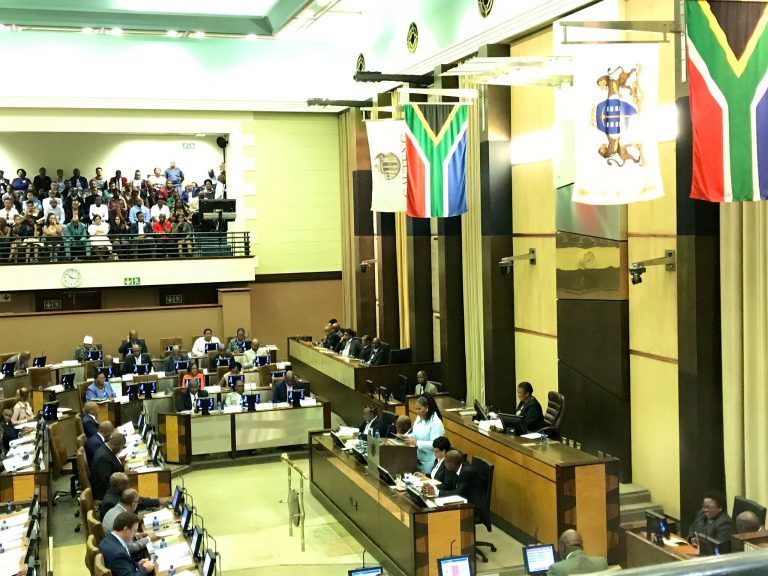
MEC for Finance and e-Government Nomantu Nkomo-Ralehoko tabled her budget on Thursday at the Gauteng Provincial Legislature.

Here some of the key highlights of #GPBudget2020:

  • Overall 2020/21 Budget R 142.4 billion, now up by R10 billion
  • R33.3 billion goes to Premier David Makhura’s Plan, Growing Gauteng Together;
  • R157 million allocated for support of the taxi industry and establishment of the Gauteng Transport Authority;
  • Tshwane Automotive Zone has received R 200 million;
  • R 625 million has been allocated for crime-fighting priorities,  including R280 million for recruiting 400 traffic officers;
  • R 189 million allocated over the next three years for Gender-Based Violence and the training of officers and establishment of victim empowerment centres; 
  • R 205 million has been allocated for 10 000 serviced stands
  • R 157 million for completion of all incomplete Human Settlement projects;
  • The GPG wage bill to be maintained at 60% of the total budget 
  • The Forensic Unit at Treasury will now move to the Premiers Office;
  • Commitment to pay suppliers on time;
  • Lifestyle audits for supply chain and human resource officials are being introduced to help fight corruption and fraud.

(Compiled by Thebe Mabanga)

Taung School Principal Arrested for Submitting Fraudulent Travel Claims

0

Nyakallo Tefu 

A school principal from Taung in the Northwest will appear in court on Thursday following her arrest on charges of fraud. 

The Hawks’ Serious Corruption Investigations Unit arrested the 35-year-old principal on Wednesday after she attempted to submit a travel claim of over R17 000. 

According to a statement from SA Police Services, preliminary investigations have revealed that she allegedly used a state vehicle in October 2017, and fraudulently claimed official kilometers as though she used her private vehicle whilst executing work related duties.

Forensic Report into Enock Mpianzi’s Death Finds the Lodge, Parktown Boys’ High Teachers Liable and Negligent

0

A forensic report into the drowning of Parktown Boys’ High pupil Enock Mpianzi has found Nyati Bush Lodge, school principal and teachers liable and negligent for his death.

Lawyer Peter Harris told the media in Johannesburg that the Grade 8 pupils on the fateful trip were not given life jackets.

He also said there was no accurate roll call for those who went to the school’s orientation camp in Brits, North West.  

When calls were made the following day to parents if their boys were at the camp, all parents confirmed.

It was only at 12:45 on the Thursday that it was found that Mpianzi was actually missing.

“If the correct roll call list was used they would have discovered 18 hours earlier that he was missing at 17:30 the previous day,” said Harris.

Harris, a lawyer at Harris Nupen Molebatsi Attorneys in Dunkeld West, Johannesburg, released the damning report on Wednesday night.

“We find negligence and extreme recklessness on the part of the school … the headmaster, educators and the bush lodge,” said Harris.

The 13-year-old Mpianzi went missing while attending the camp.

His body was found washed down the Crocodile River after he drowned while participating in a water-based activity.

Harris said the school and educators were also negligent in fulfilling their duties such as making sure every child was accounted for.

Harris said the district officials and the school principal, Malcolm Williams, who is currently on suspension, should be the subject of a disciplinary hearing.

Harris said the investigation has also recommended that Gauteng Department Education should in future regulate all outings to school camps.

“It should not be something left to the school alone. As it is the schools who choose the camps and this should not be the case in future,” he said.

Harris said Mpianzi was the fifth person to die in water-based activities at the same camp.

Gauteng MEC for Education Panyaza Lesufi also briefed the media after the release of the Forensic Report into the Death of Mpianzi.

Lesufi said criminal charges were being laid already for those responsible for the boy’s death.

“Heads will roll. They have to,” said Lesufi.

“However, we cannot pre-empt if police are going to charge people. All the other four deaths were reported to the police but nothing was done. We are going to ensure that Mpianzi’s death does not go the same route,” he said.

Lesufi said government has established a team of lawyers who negotiate settlements on behalf of government.

“Our approach is that there must be a reasonable settlement on this matter especially when a life has been lost,” he said.

(Compiled by Charles Molele)

Wits University Students Protest Over Lack Of Student Accommodation On Campus

0

Lectures and other academic programmes were disrupted on Tuesday at the University of the Witwatersrand after students took to the streets to protest against lack of accommodation on campus.

Wits Student Representative Council has now vowed to shut down the university until students are given accommodation.

Wits SRC President Thuto Gabaphethe, addressing hundreds of students on campus, said about 200 students were still in need of accommodation, resulting in some of them sleeping in laboratories, libraries and open spaces.

During the rally on campus, some students suggested that management should talk to government to request that buildings be donated to Wits University students.

However, the university said in a statement that it was disappointed with the actions of Wits SRC, who apparently broke the agreement signed on 10 February, saying it  R17 million to Wits Hardship Fund to support those facing hardship and those in need of accommodation. “To date, 800 students have been helped. Another 50 are being helped this morning as more beds from a private service provider have become available. Despite the  @Wits_SRC having broken this agreement, the Dean of Students  @JeromeSeppie is still willing to engage in order to resolve any further issues. It is now up to the  @Wits_SRC to show leadership in this regard,” the university said in a statement.

Wits Vice Chancellor Adam Habib told EWN that he has an agreement with the students and the SRC is not telling the whole truth.

“What she (SRC secretary-general Katie Morget) is not telling you is that the vast majority of students who have problems with accommodation are people who have lost their National Student Financial Aid Scheme (NSFAS) bursaries. They lost those bursaries because they failed more than two times,” said Habib.

(Compiled by Charles Molele)

Higher Education Minister Blade Nzimande Condemns Violent Protests On University Campuses

0

Higher Education Minister Blade Nzimande has condemned violence and destruction of property at several tertiary institutions.

Nzimande was addressing Parliament on Tuesday and speaking about the state of readiness for the 2020.  

The minister’s comments come in the wake of reports of violent protests at the University of KwaZulu-Natal, University of the Western Cape and the TUT in Pretoria.

“The beginning of this academic year has been marked by some violent student protests at a number of our institutions,” he said.

“In all these cases, my department has been working with them to address specific challenges. We wish to particularly condemn violence and destruction that has accompanied some of these protests. No matter how legitimate a complaint is, we must protect property and life at our institutions,” said Nzimande.

Earlier, Nzimande told the media that for students burdened with debt to register, they need only “sign an acknowledgement of debt form and meet the required academic targets to receive continued funding”. 

(Compiled by Charles Molele)

Louise Fullard Our Teacher of the week from Mpumalanga

Classroom Corner

Our Teacher of the Week

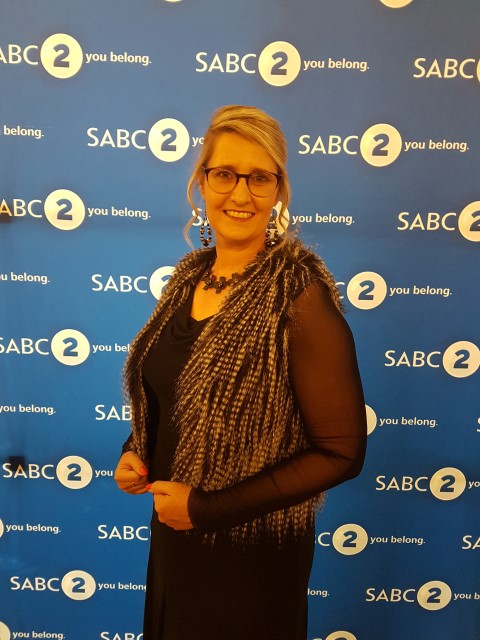
 School Teacher: Louise Fullard

Hoerskool Bergflam, Mpumalanga Province

Louise Fullard always had an inner desire and calling to be a teacher.

Since she started her teaching career 25 years ago, she has been driven to think out of the box.

She is determined to make her mark in education sector and to leave a positive legacy.

“I am a futurist and a visionary. I have confidence in my ability when I approach a challenge, to see the resolution, identify the steps to address it and anticipate the successful outcome and result,” she says.  

She says the current challenges faced in education, is that many people do not fully comprehend the impact and effect that Fourth Industrial Revolution (4IR) has on our society, education and future.

“Everything is changing and we are not going back,” says Fullard.

 “Therefore, we need to adopt technology in teaching to prepare our learners for life.”

She says, however, that data and software is a challenge.

She utilises technology herself and knows where she is going.

 She has the gift to positively change the perceptions of others and when she hits a stumbling block and finds a way around by partnering stakeholders.

During the NTA coaching session, the district director described her as a national agent of change, especially in the perceptions about digital education and Fourth Industrial Revolution (4IR).

She promotes collaboration on all levels with regards to her subject and utilises cloud technology to store and share all her teaching and learning materials.

“This is on the public domain where my learners and educators across the country have access to it”.

Another example is when she initiated and organised a 4IR Indaba at Bergvlam Hoerskool and invited various stakeholders, educators, and student executive members, teachers, educational experts, sponsors, leaders and inspirational speakers.

“As a national winner of this category, I am definitely encouraged to pursue my (4IR) dream for education in our country. I will use this platform to reach out to more schools in my district, to assist and equip them in areas of technological need”.

Ramaphosa Saddened By Eastern Cape Horror Bus Crash Which Killed 25 People

0

President Cyril Ramaphosa has expressed sadness and concern following a bus accident which left 25 passengers killed and 61 injured in Centane Road, Eastern Cape.

Most of the deceased are said to be pensioners and school learners from the surrounding areas.

Ramaphosa has since directed Minister of Transport Fikile Mbalula and the Provincial Government of the Eastern Cape to reach out to affected families and provide the necessary assistance, as well as to establish the factors that led to this tragedy.

“This is a sad day for the people of the Eastern Cape and our nation at large,” said Ramaphosa.

“This tragedy leaves our country deeply saddened and forces us to focus yet again on the need for transport providers and other road users to exercise care and consideration on our roads.”

“We must take care of one another as compatriots and, from this incident we see the need for us to be especially considerate towards elderly persons and children who depend on others to be conveyed around communities and the country.”

“Safer roads begin with safer attitudes and behaviour. This tragedy is, sadly, yet another wake-up call to all of us to ensure that we arrive alive and those who are entrusted to our care arrive alive.”

According to the Road Traffic Management Corporation, the bus was travelling on a gravel road near the Tafalofefe Hospital on Monday morning around 08:00 when it overturned, said RTMC spokesperson Simon Zwane.

“The Marcopolo bus was travelling from Chebe, picking passengers at locations along the road to Butterworth,” he said.

 Zwane said the driver reportedly lost control of the bus in the bushes down an embarkment.

Eastern Cape Department of Health spokesperson Sizwe Kupelo said they had dispatched two helicopters and ambulances after hearing about the accident between Mazeppa Bay and Cebe.

Mbalula told eNCA on Monday night that the RTMC officials were on the ground to investigate the cause of the bus accident.

“Forensics [officials] are also on the ground,” said Mbalula.  

We should be able to get a report as soon as possible. It is not business as usual for me. I want to know what happened. I suspect that the bus was overloaded.”

(Compiled by Charles Molele)

Nigerian Academic and Literary Icon, Professor Harry Garuba, Dies

0

Aishat Babatunde

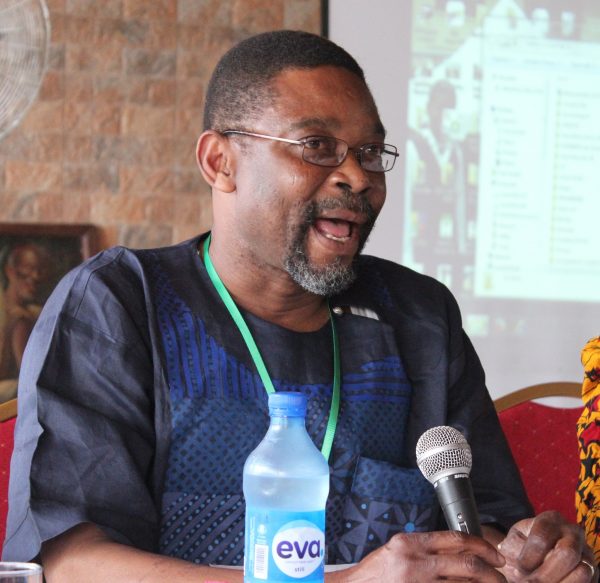
Renowned Nigerian academic and poet, Professor Harry Garuba, has died.

He was 61. Garuba passed away on Friday evening in South Africa, following a long illness.

A statement on Saturday by the University of Cape Town where the poet had taught for much of his career, announced his death.

The university, on its Facebook page, described Mr Garuba as ‘a masterful writer and poet’, ‘a luminary in the field of African literature and a champion of postcolonial theory and postcolonial literature.’

“His dedication to his field was critical in developing the UCT Centre for African Studies as a hub for research on the African continent.

“As part of the university’s Curriculum Change Working Group (CCWG), Professor Garuba was committed to developing thinking about what a decolonised curriculum would look like in Africa and the global south and what a multicultural curriculum would look like in the West,” the statement read.

As a revered academic, Mr Garuba was praised for his scholarly contribution to the canons of African studies and literature with his warm personality and empathy for his students.

The Acting Vice-Chancellor of UCT , Lis Lange, remembered Mr Garuba as ‘a genuine person who dedicated his time to moving the university forward and supporting his students.’

“His passing is a great loss to the university and the transformation project, but we must continue this important work in his absence and build on the foundation he has left,” she said in the statement

The statement said details of the funeral and memorial service would be shared as the university expressed its condolences to the Garuba family.

‘Humble beginning’

Born in Akure, Ondo State in 1958, Mr Garuba was a literary prodigy.

He was still a teenager when his one-act play Pantomime for Saint Apartheid’s Day was published in the Festac Anthology of Nigerian New Writing, a publication compiled on the occasion of the Second World Black and African Festival of Arts and Culture, held in Lagos in 1977.

He was seventeen when he began his undergraduate studies in English at the University of Ibadan where he would later bag both his Master’s and Doctoral degrees.

While he was a student at the university, he founded ‘The Poetry Club’ which met every Thursday. It was at the club that poets like Afam Akeh, Remi Raji, Onookome Okome, Chiedu Ezeanah, Bose Shabah, Sanya Osha, Niyi Okunoye first planted their seeds of literary creativity.

He published his first academic book, Mask and Meaning in Black Drama: Africa and the Diaspora, in 1988. He taught at the university for fifteen years before migrating to South Africa to teach in the English Department at the University of Zululand.

In 1988, he edited the collection Voices from the Fringe: An ANA Anthology of New Nigerian Poetry.

In 2001, he moved to the University of Cape Town, where he taught in the African Studies and English departments until 2019, and published widely in the fields of African and postcolonial literature.

Meanwhile, in 2017, he published a second collection of his own poetry, Animist Chants and Memorials.

In addition to being an author and poet, Mr Garuba was a member of the editorial advisory board of the Heinemann African Writers Series and one of the editors of the journal Postcolonial Text.

He also served as acting dean of the Faculty of Humanities from February to December 2017, and held research fellowships at the University of Texas at Austin, Harvard University and Emory University.

In late 2019, he wrote a blurb about the emphemerality of life and the permanence of art in Wreaths for a Wayfarer, an anthology of poems in honour of late Nigeria scholar, Pius Adesanmi.

‘Literary Luminary’

The immediate-past National President, Association of Nigerian Authors (ANA), Denja Abdullah, described the poet as a literary luminary to crops of young talented writers Nigeria is currently proud of.

“He was a great teacher and influence to many young writers of today.

“His contribution to African scholarship is highly eminent and goes beyond mere mentions.

“He will be greatly missed,” Mr Abdullah told PREMIUM TIMES.

Mr Garuba is survived by his immediate family in Cape Town, his wife, Zazi, son, Ruona (20), and daughter, Zukina (14).

  • SOURCE: PREMIUM TIMES

How South African universities can tap into the continent’s knowledge systems

0

South Africa’s higher education sector has experienced turmoil in recent years. Some of it stems from students’ financial woes. Some relates to experiences of alienation in the country’s universities.

Some students, most of them black, have also rebelled against what they see as Eurocentric instruction. As a result, South Africa’s academic institutions are starting to recognise they can’t exclude African knowledge traditions and histories from their curricula.

Apartheid in South Africa excluded black people from most universities. Twenty five years after the end of apartheid, power relations still reflect inequalities and colonial values. As scholars Ronelle Carolissen and Peace Kiguwa argue, experiences of alienation or belonging are shaped by power relations within institutions. As they argue:

In South Africa black students… despite (their) legitimate student status… continue to experience their rights within universities as conditional, contingent, marginal and circumscribed by the terms of the other.

This sense of exclusion has its roots in the country’s past. Many students are the first in their family to go to university. Their parents and the generations before them were excluded from higher education, or were unable to afford it. This means that many students aren’t accustomed to tertiary institutional cultures.

My research aimed to find sources of knowledge that help create more inclusive curricula and learning experiences. The goal was to help students feel they belong in South Africa’s universities.

For example, precolonial social and economic organisation seldom features in commerce and political science curricula. And knowledge about trade, agriculture and economics during Africa’s precolonial phase is overshadowed by models inherited from the Global North.

The research

My study considered possible roles that African knowledge systems could play in diversifying knowledge in universities. I found a useful resource in the form of a book about indigenous African institutions by the Ghanaian scholar George Ayittey.

Ayittey is a rich source of African history and insights that can balance Eurocentric modes of knowledge generation. His book highlights African ways of using human and natural resources in all kinds of activity, from agriculture to communal governance, trade or medicine. Examples include:

  • Social sciences: Africa has rich and ample examples of poetry and oral histories accessed through izibongi (praise poets) and elders.
  • Trade: Reviving precolonial and cross-border trading nodes could stimulate economic growth and reopen dormant African markets that were used for centuries.
  • Medicine: Traditional healers have ancient knowledge of plants which researchers can study.

In well-researched detail, Ayittey sets out the thinking behind social organisation as well as scientific and social pursuits in every region of the continent. He shows how Africa’s precolonial societies were not all alike. Community structures were diverse and ranged from hunter-gatherers to monarchies and village confederacies.

Few scholars have matched the comprehensiveness of Ayittey’s book. He has been invited to economic forums around the world by people who want to learn more about African knowledge systems. Organisations such as the Institute for Security Studies recognise his contribution to the reconstruction of Africa’s social systems. They also note that indigenous ways of organisation have the potential to help prevent and resolve conflict.

Exposing students to this knowledge will give them a greater appreciation of local systems. It will counter any idea of precolonial Africa as a continent that lacks philosophy, culture and systems of social organisation.

University’s responsibilities

African universities have a responsibility to resurrect the continent’s knowledge archives. Not only can they share knowledge practices as highlighted by Ayittey’s book, academics can use multiple languages in teaching and learning. Allowing students to incorporate their own languages into coursework can help students access the African knowledge archive.

Languages reflect cultures. By welcoming all South African languages, university curricula can reduce students’ experiences of alienation and cultivate an environment of community.

Going forward

Ayittey’s book is only one perspective of precolonial Africa. But it reintroduces principles of social and knowledge organisation that were lost in South African universities.

But curricula that draw on Ayittey’s text shouldn’t be presented in an exclusive way. African knowledge and precolonial modes of organisation should be taught alongside philosophies and theories that are used by established scholars worldwide.

Applying Ayittey’s text to mainstream instruction is only one of the methods curriculum designers and instructors can use. But it’s a good resource for incorporating African knowledge systems and organisation into learning experiences.

  • THE CONVERSATION