Home Blog Page 430

Lectures Continued On Wednesday At UKZN Despite Violent Protests on Campus

0

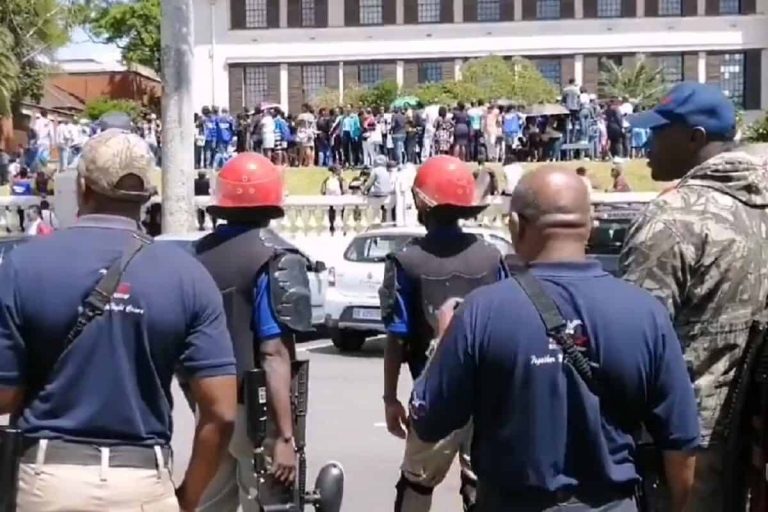
The University of KwaZulu-Natal says while violent protests took place on campus on Wednesday morning, lectures continued without any interruptions at carious campuses.

More than 120 students took part in a protest, damaging property and burning mattresses.

A 70-year-old professor was also was attacked by angry students upon entering campus in the morning.

He was immediately taken to hospital for treatment.

Students are protesting against paying 15% of their historical debt

KZN police spokesperson Captain Nqobile Gwala confirmed the protests on campus, including a dozen students who climbed and attacked a police Casspir.

Gwala said a case of public violence had been opened for investigation by Westville South African Police Service (SAPS). 

“This morning at 05:00, a group of about 120 students gathered at UKZN Westville campus where they blockaded the road, burned mattresses and fridges,” said Gwala. 

UKZN’s spokesperson, Indu Moodley, said the University Academic Programme is continuing as scheduled on all campuses. “This morning one of the three entrances to the Westville Campus was blocked but has since been cleared. South African Police Services and University security are currently monitoring the situation,” he said.

KZN Education Department Urges Parents To Explain Dangers Of TikTok’s “Skullbreaker” Challenge At Schools

0

THE KwaZulu-Natal Parents Association is urging parents and caregivers to explain to their children the dangers of a new social media craze that has caught the attention of South African teenagers.

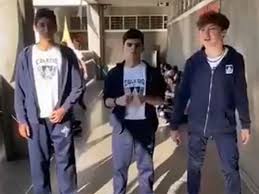
The ‘Skull-Breaker’ or ‘Tripping Jump’ challenge has gone viral after initially emerging on video-sharing social networking app TikTok. 

It involves three participants – with one of them being kicked by the other two as they jump up. The jumper plummets to the ground after being kicked.

The association’s Vee Gani says the challenge could lead to severe injuries.

“The thing is somebody can die. There is a possibility that people could have passed away. It is very irresponsible. No child should attempt to do anything of that sort.”

“As you have seen in the videos, you can hit your head very hard on the concrete floor, and it can cause irreparable damage, if not death – and you would be then charged with murder because that’s exactly what it is.”

Gani says he fears that the challenge has now crept into local schools. 

“Having come into our schools means that our children are going to try to perform those acts and unsuspectingly on their colleagues who don’t know about it.” 

KZN Education spokesperson, Muzi Mahlambi has issued a warning to pupils not to follow the trend.

The department is also appealing to parents and caregivers to discourage their children from participating in the challenge. 

SOURCE: ECR.CO.ZA

Professor Adam Habib has resigned from Wits University to take up a cushy job in London

0

Charles Molele

Professor Adam Habib, Vice Chancellor of Wits University, has resigned. This follows his appointment as director School of Oriental and African Studies (SOAS) at the University of London, United Kingdom.

Habib, who has led Wits University since 2013, will step down from his current role in December and join SOAS in January 2021.

He will succeed Baroness Amos, who is set to become master of the University College, Oxford, in August this year.

“I was approached to apply for the SOAS position at the end of last year. I threw my hat into the ring and was surprised when they offered me the post. After much deliberation with my family and considerable engagement with the Wits Council and the Executive, I have agreed to accept the offer. My decision was not made lightly – I am a proud leader and champion of Wits University and South Africa, and will continue to fly these flags high,” said Habib in a statement.

“I have committed to strengthening ties between the South African and UK higher education sectors in my new role.”

Habib implemented the Wits 2022 Strategy.

Under his leadership, Wits has exceeded in all indicators – Wits’ research output has increased by more than 60% (in quality, international journals), throughput rates are up (more students are passing) and a record number of students have graduated in recent years.

Wits University’s Tshimologong Digital Innovation Precinct has also flourished under his leadership, Wits’ finances are stable and it has strong, independent governance structures in place.

“Wits has recorded significant achievements in the last seven years,” added Habib.

“In 2019 we graduated over 9 500 students, the most in the University’s history. In line with the Wits’ aim of becoming an increasingly postgraduate university, we enrolled 15 000 postgraduate students last year. Our research outputs have increased from 1 200 units in 2013 to just under 2 000 in 2020, without compromising on quality – about 90% of our papers are published in peer-reviewed international journals – these are phenomenal achievements for any university, and I will leave Wits in a strong position.”

Mr Isaac Shongwe, the Chairperson of Wits University’s Council said about Habib’ resignation and appointment at SOAS University of Londo: “Please join me in congratulating Professor Adam Habib on his appointment. He is a dynamic leader, who has without a doubt made a significant contribution to Wits and the higher education sector, both locally and abroad. His fearless, forthright commentary and his general robustness has left our University, and South Africa, a richer intellectual space, for which we are grateful.”

According to Times Higher Education, Habib will face formidable challenges at SOAS, which describes itself as the world’s leading institution for the study of Asia, Africa and the Middle East.

Last month the institution introduced restrictions on academic research leave, in a bid to save spending on temporary replacement staff.

In May 2019, Times Higher Education reported that the school’s director, Baroness Amos, had told trustees that the Bloomsbury institution would “exhaust [its] cash reserves” by 2021-22 unless it took action. It returned a £1.2 million deficit in its 2017-18 accounts.

Last August, SOAS said acceptances of new undergraduates had fallen by 8 per cent over the past two years, but claimed that its “finances are healthy” with a projected surplus of 3 per cent in 2022-23.

R12,000 school voucher system in South Africa – Give parents the choice

0

A school voucher system is an efficient way for the government to make the most of the billions it spends on education, and to eradicate poor schools and teachers.

This is the view of Hermann Pretorius, campaign coordinator at the South Africa Institute of Race Relations.

According to the IRR, school vouchers can be distributed to parents in the form of smart cards and the money can only be spent on education.

The system, which is tantamount to a universal bursary system, will empower parents to buy schooling wherever they chose instead of the current system where the state decides.

The idea will introduce competition throughout the education system, as schools will have to compete for voucher-bearing customers in the form of pupils.

Schools unable to attract or retain pupils will have to close. This will ensure that schools are run in the interests of pupils, rather than in the interests of teachers.

Speaking to CNBC Africa, Pretorius said the quality of education in many South African schools is lacking – and is hurting learners’ chances of receiving a good education.

He added that the ANC government’s ideological approach of gaining more and more power with regards to education is also hurting the system.

Parents whose children are not doing well at school have a very difficult route to find accountability, because of how the schooling system works, he added.

“The problem is that schools are ensured of funding whether they perform well or not. In most cases teachers are also ensured of jobs whether they perform or not,” he said.

He said parents must therefore be given more power to hold schools and teachers accountable.

“The current amount of R250 billion that the state spends each year on paying teachers and running schools should be redirected to parents in the form of vouchers worth some R12,000 each.”

SOURCE: MYBROADBAND

SONA: Ramaphosa Announces New University of Science and Innovation for Ekurhuleni

0

Charles Molele

City of Ekurhuleni will finally build its own University of Science and Innovation, President Cyril Ramaphosa announced during his state of the nation address.

This will be the third new university to be built after the Sol Plaatjie University of Kimberley, Northern Cape and the University of Mpumalanga since the dawn of the new democracy.  

“We have decided to establish a new University of Science and Innovation in Ekurhuleni,” said Ramaphosa.  

“This will enable young people in that metro to be trained in high-impact and cutting-edge technological innovation for current and future industries.”

The ANC’s Ekurhuleni regional secretary TK Nciza said the party welcomed Ramaphosa’s announcement on the establishment of the OR Tambo University of Science and Innovation.

“This is a historic breakthrough and a milestone of the collective Leadership led by the ANC Regional Chairperson and Executive Mayor Cde Mzwandile Masina. This achievement continues to demonstrate a committed and stable government that is able to discharge its constitutional mandate diligently,” said Nciza.

“The ANC wishes to underline the fact that the OR Tambo University of Science and Technology will be designed to directly respond to the economic structure of the City of Ekurhuleni. The primary curriculum of the university will be intended to deepen research on a number of spheres in the science field, and thus producing an output of academics who will accelerate and expand the already existing Industrial Economic structure of the City of Ekurhuleni.” 

During his previous state of the city address, Ekurhuleni mayor Mzwandile Masina said the new university would cost between R5bn and R6bn, which was the national average based on the universities currently being built in Mpumalanga and the Northern Cape.

Masina said they had considered the feasibility and budget of the project since Ekurhuleni contributes 23.1% to the economy of Gauteng and 8.1% to the national economy.

“We commissioned a feasibility study on the University of Ekurhuleni to focus in the areas of applied engineering, logistics, science, aviation, tourism and hospitality. That study gave us the understanding that indeed there is a need and immense potential for a University within the city,” he said.

Ekurhuleni is one of the only two metros in the country without a university.

Masina said they have already engaged with various stakeholders, including the private sector and government, to develop skills and training in the area.

Although a formal name had not been agreed upon yet, an interim name of Ekurhuleni Applied Sciences and Technology University was being used.

The curriculum design would focus on engineering, agriculture, logistics, aviation and aerospace studies, as well as design.

South Africa: Broken And Unequal Education Perpetuating Poverty And Inequality

0

The South African education system, characterised by crumbling infrastructure, overcrowded classrooms and relatively poor educational outcomes, is perpetuating inequality and as a result failing too many of its children, with the poor hardest hit, according to a new report published by Amnesty International on Tuesday.

Broken and Unequal: The State of Education in South Africa calls on the government to urgently address a number of endemic failings in the system in order to guarantee the right to a decent education for every child in South Africa.

The report particularly highlights poor infrastructure in public schools including sanitation which has tragically resulted in the death of two children in pit latrines in recent years.

“For South Africa to comply with both its own constitutional and international human rights obligations with respect to education, major change is needed urgently,” said Shenilla Mohamed, Executive Director of Amnesty International South Africa.

“The right to quality education includes having a school where learners are safe to learn and have the adequate infrastructure and facilities to do so, but our research has found that this is not the reality for many learners in the country.”

The report details how the education system continues to be dogged by stark inequalities and chronic underperformance that have deep roots in the legacy of apartheid, but which are also not being effectively tackled by the current government.

For example, it brings to the fore that many schools and the communities they serve continue to live with the consequences of the political and economic decisions made during the apartheid era where people were segregated according to their skin colour, with schools serving white communities properly resourced. The result of this modern-day South Africa is that a child’s experience of education still very much depends on where they are born, how wealthy they are, and the colour of their skin.

As the President prepares to deliver the State of the National Address this week, the critical question is: why is it that a child’s experience of education in South Africa still depends very much on where they are born, how wealthy they are, and the colour of their skin?

While the report acknowledges that there has been progress made since the end of apartheid on widening access to education as well as other aspects, it has identified weaknesses by the Department of Basic Education, such as repeatedly failing to reach its own targets with respect to infrastructure and facilities.

In these circumstances it is not surprising that educational outcomes remain relatively poor. For example, a recent international survey found that more than three quarters of children aged nine cannot read for meaning. In some provinces this is as high as 91% in Limpopo and 85% in the Eastern Cape. And of 100 learners that start school, 50-60 will make it to matric, 40-50 will pass matric, and only 14 will go to university.

“South Africa has one of the most unequal school systems in the world. Children in the top 200 schools achieve more distinctions in mathematics than children in the next 6,600 schools combined. The playing field must be levelled.”

The right to quality education includes having a school where learners are safe to learn and have the adequate infrastructure and facilities to do so, but our research has found that this is not the reality for many learners in the country

Broken promises

In 2013, the government enacted the Minimum Norms and Standards for educational facilities, requiring the government to ensure that by November 2016, all schools have access to sanitation and electricity and that all pit latrines are replaced with safe and adequate sanitation and schools built from inappropriate materials, such as mud and asbestos are replaced. Yet as the government’s own statistics show, these targets have not been met.

As the government continues to miss its own targets to improve learning facilities, Amnesty International’s research in Gauteng and the Eastern Cape found numerous examples of schools with poor infrastructure and lacking basic facilities.

These included badly maintained buildings that had never been renovated, many of them dating back decades to the apartheid era and even previously. The buildings were hazardous, built with dangerous material such as asbestos and poorly maintained, in some cases putting the safety and security of learners at risk. The buildings were also unhygienic, poorly maintained and in some cases unsafe. Schools that were visited by Amnesty International had overcrowded classrooms without basic equipment and materials such as furniture and textbooks, with lack of security exacerbating the problems of vandalism and burglary.

One of the key infrastructure issues is poor sanitation which compromises not just learners’ education but also their health, privacy and dignity. Amnesty International researchers found numerous examples of badly maintained, broken or unsanitary toilets, including pit latrines. Students who were interviewed by the organisation in Gauteng raised it as a particular concern, saying that in many cases toilets were “dirty” and “unhealthy”. In the Eastern Cape, issues of concern included lack of sufficient toilets for the number of pupils in line with the learner to toilet ratio of 1:30; lack of an adequate and/or reliable water supply often requiring use of a borehole; poor hygiene with associated health problems among learners; leaking septic tanks; broken sanitation infrastructure that could not be repaired owing to lack of funds and an inability to remedy vandalism or theft in sanitation facilities.

“The fact that the Limpopo Department of Education says that it will take an estimated 14 years to replace all pit latrines in the province’s public schools is shocking. Given the recent deaths, it is unacceptable that the government cannot guarantee that more children won’t die this year or any coming years for that matter,” said Mohamed.

Beyond infrastructure, other barriers that children face to access a quality education include lack of sufficient transport, which often impacts on not just their ability to access education but also can put their safety at increased risk.

Some children walk for between 30 minutes and an hour to get to their educational institution meaning it is likely to be more than 3km. This is despite the fact that the Department of Transport, in collaboration with the Department of Basic Education, is required to ensure that transport is provided to grades R to 12 pupils who live more than 3km from the nearest school.

Children in the lowest income groups are also more likely to walk to school than those in the highest income group. In KwaZulu-Natal alone, where more learners walk to school than in any other province, more than 210,000 pupils walk for more than an hour each way, and 659,000 walk for between 30 minutes and an hour each way.

When they do get to school, students are often being taught in overcrowded classes impacting on their ability to learn effectively. For example, Amnesty International saw many cases of teacher learning ratios exceeding the stipulated ratio of 1:35 increasing to double this figure in one case.

Amnesty International visited numerous schools that had insufficient resources to meet the requirements for a decent education and this is borne out by the Department of Basic Education’s own statistics.

According to the Department’s own statistics for 2018, out of 23,471 public schools, 20,071 have no laboratory. Furthermore, 18,019 have no library, while 16,897 have no internet.

Almost 1,000 schools have no sports facilities, while 4,358 have only illegal plain pit latrines for sanitation; 1,027 have no perimeter fencing, essential for teacher and pupil safety, while 239 have no electricity, and 37 have no sanitation facilities at all.

In its recommendations, Amnesty International calls for the review and reform of how the education budget is distributed in order to achieve quality education for all and to combat entrenched inequality in the system.

The repeated failure of government to address the issues is not only a question of accountability, it has consequences for the life chances of thousands of young people and the future of this country

“The repeated failure of government to address the issues is not only a question of accountability, it has consequences for the life chances of thousands of young people and the future of this country,” said Shenilla Mohamed.

SOURCE: AMNESTY INTERNATIONAL

What the discovery of a new HIV strain means for the pandemic

0

Linda-Gail Bekker

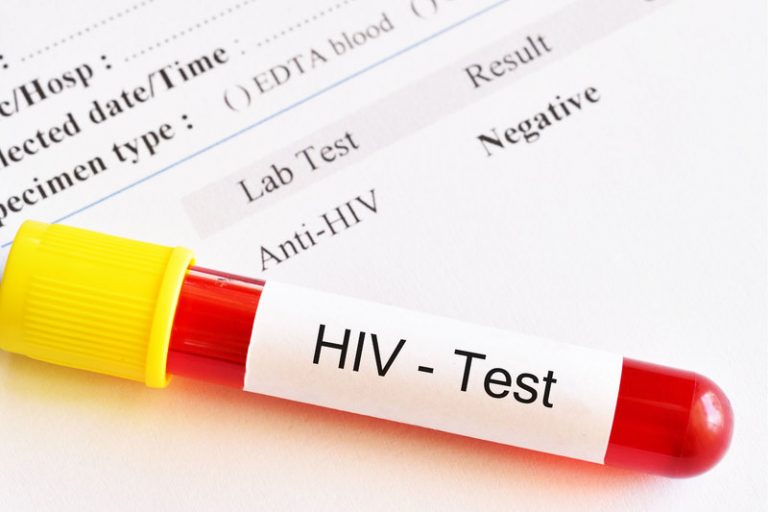
University of Cape Town’s (UCT) Professor Linda-Gail Bekker said the fight against HIV has made some formidable gains in treatment and treatment outcomes with remarkable gains in longevity. Further, a thorough understanding of HIV is crucial in ensuring that HIV tests are effectively detecting the virus, and deeper insights could have a bearing on vaccine development.

The discovery of a rare new strain of HIV for the first time in nearly 20 years recently made headlines around the world.

The big question is what the discovery means for the overall response to the HIV epidemic.

A team of US researchers from Abbott, an American medical devices and health care company, led by Mary Rodgers and co-authors at the University of Missouri, announced the discovery in a study published in the Journal of Acquired Immune Deficiency Syndrome. The new subtype is the first strain to be identified since guidelines for classifying new HIV strains were first established in 2000.

HIV has a multitude of different subtypes and, like other viruses, it changes (mutates) over time. This new strain is an important discovery, but it does not signify a new public health threat. It occurs rarely and can be effectively treated with existing antiretrovirals. Because antiretrovirals target characteristics of HIV that are common across all different subtypes, this new finding will not affect treatment and antiretroviral agents will still be effective as long as drug resistant mutations have not occurred.

The essence of the discovery is that it enhances scientists’ understanding of the complexity of the human immunodeficiency virus and its evolution and adds detail to the already comprehensive viral picture.

Having a thorough understanding of HIV is crucial in ensuring that HIV tests are effectively detecting the virus. Deeper insights could also have a bearing on vaccine development.

Viral strains

There are two main types of HIV. HIV-1 is the most common. HIV-2 is less common and accounts for fewer infections. The strains of HIV-1 can be classified into four groups – M, N, O and P. While N, O and P are quite uncommon, group M is responsible for most of the global HIV epidemic, accounting for roughly 95% of all infections worldwide. The newly discovered strain (also known as a clade) is part of group M and has been labelled as “subtype L”.

The prevalent strain found in South Africa is known as a subtype of clade C.

One of the candidate HIV vaccine regimens currently under investigation in South Africa is designed to be effective against subtype C. It is not yet known whether, if found to be effective in this region, it will be as effective in a region with a different prevalent strain. For example, in the US the predominant strain is subtype B.

The process of confirming a new strain of any virus can be long. Three separate cases need to be identified before a new subtype can be announced. The first two cases of this new strain were found in the Democratic Republic of Congo in 1983 and 1990 and the third case in 2001. So while the strain has been known to scientists for 18 years, the entire genome needed to be tested for confirmation. The technology to do this did not exist at the time.

The genome sequencing technology available today allows scientists and researchers to build entire genomes at a faster rate and lower cost than ever before. To use this next-generation technology successfully, the responsible scientists had to apply new techniques that focus on the virus portion of the collected sample in order to fully sequence the genome.

From a scientific point of view, the discovery helps us stay one step ahead of a virus. Furthermore, the role that new technology played in identifying the strain serves as an important reminder of how far we have come. The innovation and advancements in technology and molecular virology should be celebrated.

The fight against HIV has made some formidable gains in treatment and treatment outcomes with remarkable gains in longevity.

UNAIDS estimates that new infections have decreased by 16% from 2,1 million in 2010 to 1,7 million in 2017. Undoubtedly one of the most promising achievements is the reduction in mother-to-child transmissions around the world. But the HIV response does not favour complacency.

Emergency persists

The notion that HIV is no longer an emergent threat is one that jeopardises the work of scientists and communities who continue to drive prevention of HIV and fight against the pervading stigma. The HIV emergency is not over. The epidemic still needs vigilant attention, especially as reduction rates stall.

The ultimate solution is a working cure and preventative vaccine. The HVTN studies in South Africa are currently conducting HIV preventative vaccine trials in the hope that one day there will be an effective vaccine to prevent HIV. But until then, we need to refocus our energy on scaling up the effective treatment and prevention tools we have in hand to all those who need them.

Linda-Gail Bekker, Professor of medicine and deputy director of the Desmond Tutu HIV Centre at the Institute of Infectious Disease and Molecular Medicine, University of Cape Town.

SASCO calls on Ramaphosa to address student accommodation crisis in his SONA speech

0

THE South African Student Congress has called on President Cyril Ramaphosa to make a bold commitment to address student accommodation and build more universities during his State of the Nation Address on Thursday.

SASCO also called on Ramaphosa to improve already existing universities, in particular the historically disadvantaged and black campuses.

The ANC-aligned SASCO made these demands after its 21st electoral conference at the Saint Georges Hotel in Irene, Pretoria.  

This after the conference was scheduled unsuccessfully three times last year – in Port Elizabeth, Mpumalanga and KwaZulu-Natal.

“Should President fail to declare these emergency student issues, we will take war at his door step and demand to be taken serious,” said SASCO’s incoming President Bamanye Matiwane.

SASCO also paid tribute to the late Joseph Shabalala, founder of Ladysmith Black Mamambazo, who died on Tuesday at Pretoria hospital after a long illness.

“We shall be using shall be using the song “Homeless’ to capture the frustrations of many students in our country who yearn for the decent, affordable and safe student housing/accommodation.

The national congress elected its new leadership with a new mandate for the next two years.

Matiwane, from Nelson Mandela University, was elected president and Buthanani Ngwane from the University of South Africa in Johannesburg was elected SASCO’s secretary-general.

Among those present at the SASCO’s national congress was ANC secretary-general Ace Magashule, who delivered an address on Saturday evening.

Gauteng MEC Panyaza Lesufi Distraught After Randburg Learner Dies

0

Gauteng MEC for Education Panyaza Lesufi is saddened with yet another learner passing away in Gauteng – a Ferndale High School learner died on Tuesday morning after falling from the third-floor school’s balcony.

Spokesperson for the department, Steve Mabona, said the information at their disposal is that the learner had an epileptic seizure which resulted in him falling from the third floor.

“Paramedics and the parents of the said learner were immediately called to the scene and the learner was rushed to a nearby hospital after being attended to on the scene. Unfortunately, the learner succumbed to his injuries,” he said.

Lesufi tweeted: “Sadly, the boy passed on. Once more, We must go and face the family and break the news , it’s too much now. Our sincere condolences to the family and friends and learners at Ferndale High. This is the 11th death since the reopening of schools this year— Panyaza Lesufi (@Lesufi).

Lesufi will visit the school on Wednesday.

TUT IT whizzkids invent device to assist visually impaired people

0

C4Me (See for me), as the invention is called, enables the visually impaired to avoid obstacles.

Two final year Information Technology students at the Tshwane University of Technology (TUT) have invented a device that will assist the visually impaired move freely and know exactly where they are going. C4Me (See for me), as the invention is called, enables the visually impaired to avoid obstacles.

Siphamandla Mqcina and Philanjalo Ndlovu have been working on the device since June 2019. They recently travelled to Toronto, Canada, where they presented their device at a global workshop.

Mqcina and Ndlovu have been studying Computer Industrial Systems at TUT’s Soshanguve South Campus for the past three years.

Mqcina says an encounter with a visually impaired student inspired their invention.

“C4Me was inspired here on campus. We were walking and when we looked, we found that the person cannot see. So we felt guilty about it and we sat around and discussed the issue. We discussed on how we can help that person with the knowledge that we have about technology.”

Mqcina and Ndlovu have been spending their own money, even sacrificing their bursaries, to ensure that C4Me succeeds.

Ndlovu says their biggest challenge now is getting developers and sponsors on board to assist in manufacturing their device.

“Right now we need money; we need funds, we need people with experience, we need everyone who can help us so that we can make C4Me and help people who can’t see.

Story originally published on SABCNEWSONLINE