Barely two weeks into the new school year, and South Africa’s education sector continues to make headlines for all the wrong reasons.
In the latest incident, gunmen posing as parents opened fire Wednesday at the Buhlebethu Primary School in Inanda township, KwaZulu-Natal (KZN) wounding a teacher.
“The suspects suddenly opened fire, shot at, and injured an educator who was immediately taken to hospital for medical attention,” the KZN Education Department said in a statement.
A case of attempted murder has been opened, Department of Basic Education spokesperson Elijah Mhlanga said on Facebook.
The KZN school shooting comes a litany of episodes reverberated across the country.
Also in KZN, two learners at the Old Mill Secondary School in the King Cetshwayo District stabbed each other on the school premises.
“One learner was rushed to hospital, however there was no fatality,” Mhlanga said.
In addition, a teacher at Kangikho Primary School collapsed in front of the learners and died.
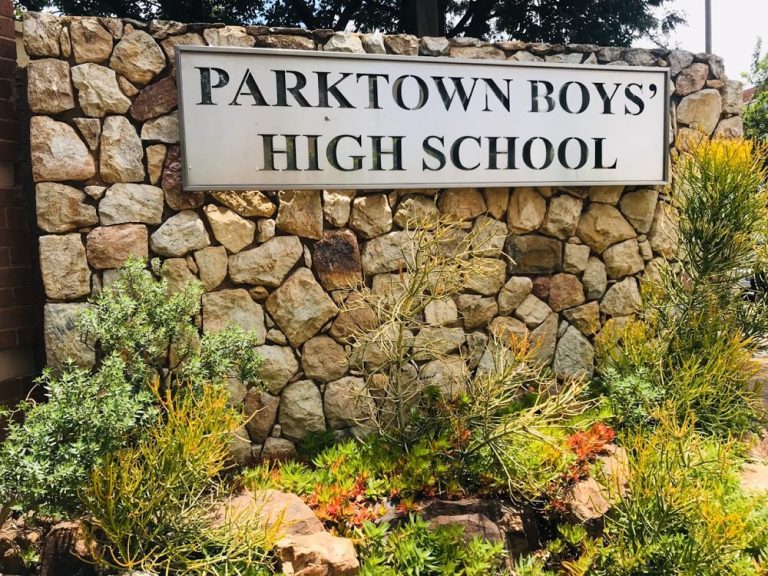
On January 15, 13-year-old Parktown Boys’ High pupil Enoch Mpianzi drowned at an orientation camp in Brits when a makeshift raft he was on capsized on the Crocodile River.
A 13-year-old Grade 7 learner, Keamogetswe Shaun Seboko, also drowned in a pool at Laerskool Bekker in Gauteng last week.
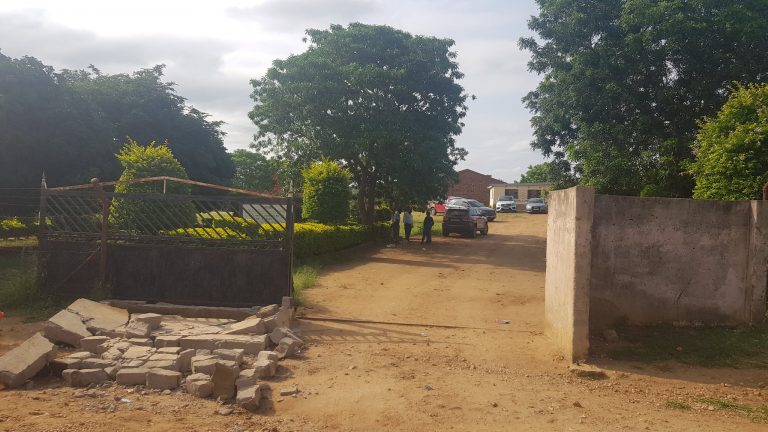
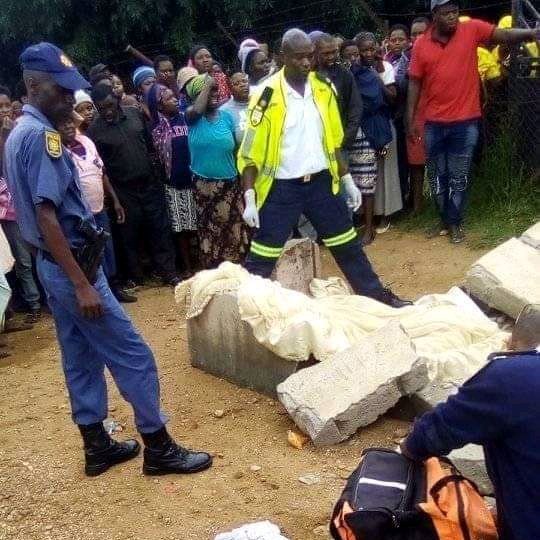
On Wednesday, seven-year-old Sello Fortunate Mohale and five-year-old Rethabile Nakana were killed when a truck delivering food to Lekgolo Primary School crashed into a wall which then collapsed on two pupils.
And investigations are continuing to determine the cause of a fire at the Khutlo Tharo secondary school in Sebokeng in the Vaal, a day before the new school year got underway.
The Limpopo Education Department has confirmed that two pupils died, and two rushed to hospital in critical condition after a wall collapsed on them at the Lekgolo Primary School in Sekgosese.
Officials said a truck delivering food items at the school crashed into the wall.
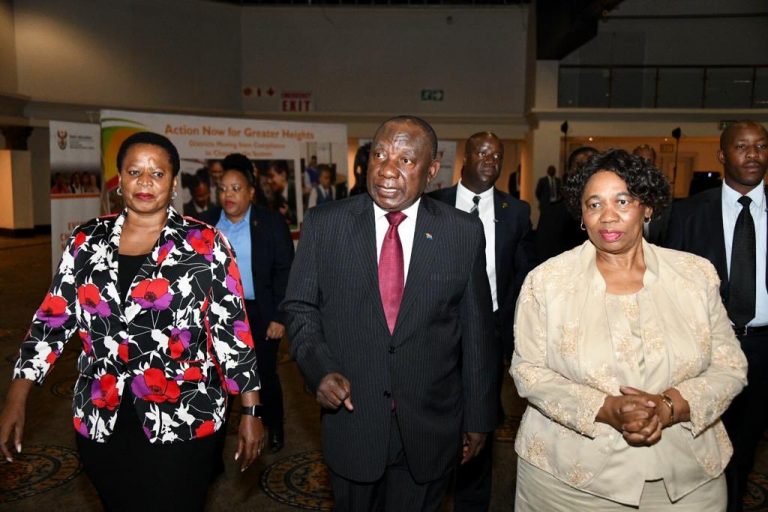
Education MEC Polly Boshielo is at the school.
Limpopo Education MEC Polly Boshielo arrives at Lekgolo Primary School where 2 learners died after the school wall collapsed on them. The wall was hit by the trailer of a food delivery truck. Two others have been rushed to hospital. All 4 are from the same family. #sabcnewspic.twitter.com/NYZRLJyvrE
Are you an ambitious Sales Executive?
Inside Education has an exciting opportunity for an Advertising Sales
Executive. The successful candidate needs to be a “hunter”, someone
who thrives on the challenge of finding and securing new clients and uncovering
new business opportunities.
Hunters are
responsible for finding and securing new business and doing their own
prospecting and cold calling. They excel at generating and qualifying leads,
have high energy levels and endurance. They are also ambitious and
revenue-driven.
You are invited to apply if you:
Have a passion for sales!
Are willing to sharpen your
skills for success
Have self-confidence and an
adventurous, can-do attitude
Can bring in new
business and retain existing business
Are able to plan and
execute a sales strategy
Have your own car and
a valid driving licence
Matric essential; tertiary business or marketing related qualification an advantage.
Advantageous:
Proven track record in sales
Media sales experience
Experience in
business-to-business advertising sales
Experience using a CRM
Digitally savvy
To be included in your application: A paragraph outlining why you “get”, want and are
capable of performing in the role.
Remuneration: R12 000 plus 15% Commission
Company Description
Inside Education is Africa’s first
digital platform, devoted to education and all education related matters
throughout the continent. Inside Education covers the entire education process
from Early Childhood Development to Lifelong Learning.
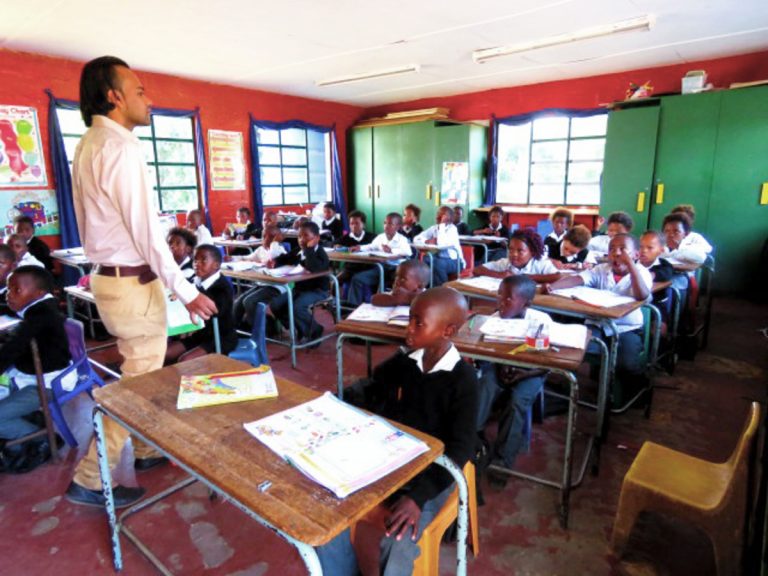
A common refrain from teachers who bemoan the fact that children struggle to follow simple instructions, even moments after they’ve been given.
Rather spend a few extra minutes going over directions than wasting tons of precious time trying to unravel chaos!
Here are I’ve got 5 strategies that will, hopefully, end all this frustration and get your class back on track!
1. When I Say “Go”
Every single time you give directions, insert the magic phrase: “When I say ‘Go.’” Every.Single.Time.
When you’re giving a series of directions to children, they often hear just one part (usually the part that sounds most interesting) and forget the rest. As teachers are talking through the steps, they’re thinking about that one part and wanting to get started right away!
When kids are excited about what they’re going to do (or choosing their spot or finding their partner, etc.), they’ve switched into ACTION mode when we still want them in LISTENING mode.
Help students stay in listening mode longer by including the phrase “When I say ‘Go.’” This means that no one is moving or starting their work until I’ve said my magic word.
“In just a moment, I’ll send you off to get started on your monster story. When I say ‘Go’ I want you to grab your supplies, choose your smart spot, and get started quietly.“
2. Repeat to a Partner
Having students repeat the steps to a partner is a powerful way to improve the chances of everyone knowing and following directions.
As you give directions, many students lose track of the steps even though they were listening. Before moving into ACTION mode, have students turn to a partner and explain what they are about to do.
“In just a moment, we’ll get started. But let’s see who remembers what we’re going to do. Turn to your partner and tell them the five steps.“
If you notice any student/s who aren’t sure of the directions, ask for a volunteer who you think is confident enough to share the steps with the entire class. Then have everyone turn back to their partner and try again.
3. Post the Steps
I have discovered that one powerful way to help students understand and follow directions is to post simple reminders of the steps they’ll be taking.
After posting the reminder cards, jot down any additional reminders off to the side of each step. The cards simplify the steps and offer a visual reference for students, so if anyone has trouble remembering what to do, they know exactly where to look.
4. Mirror Modeling
Most teachers are already in the habit of modeling for students. You show the exact steps students will take and talk them through our actions. But, to make this even more powerful, have students copy what you are doing, acting out each part like little mimes.
When you add in movement, students can’t just zone out! You can easily see who is paying attention and who is missing the directions.
5. Guided Release
The idea with guided release is that you slow down the transition from listening to action and make sure that everyone knows exactly what to do.
After giving directions, ask for a few volunteers to go first and demonstrate what will happen next. For example, if you’re beginning math stations and you’d like students to walk quietly to their first spot and get started right away, choose a few students to model this for the rest of the class.
As the models begin, ask students to point out what they notice. (Cassie is walking. Jabu got started right away.) If you think the rest of the class is ready, then send them all off, or send another small group to continue modeling.
With this strategy, it’s easy to get the entire class started on their next activity without a single off-task student or missed step.
A Class That Follows Directions
The strategies above can be stacked and combined in various ways to ensure that everyone in your class knows exactly what to do and actually does it.
With simple changes to routines and language, you can help learners make better choices, engage in learning, and grow into their best selves.
Basic Education (DBE) Minister Angie Motshekga has called for investigations into the circumstances surrounding the death of the learners, Enoch Mpianzi and Keamohetswe Seboko.
Mpianzi, a Parktown Boys’ High learner, allegedly drowned during a river rafting exercise on a school orientation camp on Wednesday in Brits, North West.
Keamohetswe was found dead at Laerskool Bekker’s Hostel Swimming pool in Magaliesburg.
Motshekga said the circumstances surrounding the death of the learners must be thoroughly investigated in order to avoid similar occurrences in the future.
“We also appeal for patience and urge members of the public to refrain from speculating, as we await the outcome of the investigations into the drowning of Enoch Mpianzi and Keamohetswe Seboko. Our prayers are with the families of the deceased learners,” the Minister said Monday.
The education minister also seconded a team from the DBE’s school safety unit to help with the investigations.
“The team will also assist in ensuring that the affected families are supported in these difficult times,” she said.
Motshekga expressed her condolences to the families and school communities of the deceased learners and that of the principal who was shot dead last week.
Motshekga also strongly condemned the torching of schools and theft of school property.
“We have full confidence that law enforcement agencies will find and bring to book, those responsible for damages to school infrastructure.
We urge communities to take back control of schools by safeguarding educational facilities and reporting any suspicious activity at the nearest police station.”
The SA Human Rights Commission (SAHRC) has offered legal assistance to the family of the 13-year-old Parktown Boys’ High School learner who drowned at a Grade 8 orientation camp in the North West last week.
Enoch Mpianzi went missing at the Nyati Bush and Riverbreak Lodge last Wednesday. His body was found on Friday.
Mpianzi was last seen when a makeshift raft which he and other boys were using overturned on the first day of camp on the Crocodile River.
In another incident, Keamohetswe Shaun Seboko of the Magaliesburg’s Laerskool in Johannesburg drowned in the school’s swimming pool on Wednesday, 13 January 2020.
The SAHRC’s Buang Jones said the Commission stepped in after the Mpianzi family indicated that it would like the Chapter 9 body to help.
The SAHRC is to meet with the family Monday.
“The meeting is to give them an opportunity to ventilate their concerns and give them an opportunity to explore the remedies they are seeking. But we stand ready to provide legal support to the family,” Jones said.
Parktown Boys’ High School and the lodge have come under fire after the incident and has been widely criticised for the way it handled the case.
The criticisms relate to questions about why it took the school several hours to report the disappearance of the boy – both to his parents and to other parents whose children were on the camp.
Questions have also been raised about whether the boys were wearing life jackets at the time they took part in the “water activity.”
Parliament’s Select Committee on Education said it was “devastated” by the high number of the recent incidents of tragic deaths of learners around the country.
Tributes are pouring in for a missing 13-year-old Grade 8 pupil whose death was confirmed Friday following an orientation camp outing that went horribly wrong.
Shocked and teary-eyed parents and pupils at Parktown Boys’ High School in Johannesburg were seen walking out of the school gates, as Gauteng Education MEC Panyaza Lesufi informed that Enoch Mpianzi’s body had been found.
The Gauteng Education MEC said the boy’s death will be investigated.
“I am here with the parents and the leadership of the school. We hoped and wished [that he would be found alive], but police retrieved the body. It was difficult to brief the family,” a visibly upset Lesufi said.
Such a Tragedy. Enoch Mpianzi, May your soul rest in peace🙏🏻 The teachers who accompanied the kids on camp should be held accountable. Why didn’t they do a head count immediately after the raft capsized?
Danie van der Merwe, marketing manager at Nyati Bush and Riverbreak, where the camp took place, referred all media queries to the education department, News24 reported.
Devastating. Horrific incompetence demonstrated by this school and the camp organizers. Heartbreaking, devastating consequences. #EnochMpianzi 💔
Quality, relevant and targeted education is one of the most pressing issues of our times. In this fast and ever changing world, parents the world over are anxious over the kind of education models on offer which would remain relevant in their children’s lives with the onset of the Fourth Industrial Revolution (4IR).
In today’s world of seemingly unlimited opportunities, the excess of options have also create confusion for parents.
In addition, policy makers are grappling and scrambling to institute appropriate educational system which will meet the demands of tomorrow.
What is relevant today may be irrelevant tomorrow. The skills which were considered job oriented a decade back are now outdated. Automation and AI have put humans in competition with machines.
“As globalization and rapid advancements in technology continue to transform civic space and the world of work, education systems have grown increasingly disconnected from the realities and needs of global economies and societies.”
Automated Pepper during the National Senior Certificate (NSC) 2019 Ministerial Announcement at the Vodacom Dome in Midrand. 07/01/20 Photo: Oupa Nkosi
“Education models must adapt to equip children with the skills to create a more inclusive, cohesive and productive world,” the report states.
The WEF believes that these models and school systems would “serve as the inspiration for driving a holistic and transformative action on this important agenda.”
The report is the result of a widely consultative process with educators, policy and business leaders, education technology developers, and experts curated by the Platform for Shaping the Future of the New Economy and Society, the WEF said.
The eight models for future schools to prepare for 4IR have been dubbed: ‘Education 4.0.’
The 8 models were picked from 70 submissions from across the globe after analysis based on four criteria: – alignment with the education 4.0 framework; – potential for scaling up; – a multitask holder approach to design and implementation; – demonstrated improvement in student outcomes, access to learning and learning outcomes.
They are summarized as:
1. Global citizenship skills: Content that focuses on building awareness about the wider world, sustainability and playing an active role in the global community. Examples: Green School of Indonesia and Ka Kuma Project of Kenya. The Green Schools of Indonesia focus on environment while Ka Kuma model has devised a curriculum based on the on 17SDGs (Sustainable Development Goals) of the United Nations for the year 2020.
2. Innovation and creativity skills: Content that fosters skills required for innovation, including complex problem-solving, analytical thinking, creativity and systems analysis. Examples: The Knowledge Society of Canada and Kabakoo Academics of Mali.
4. Interpersonal skills: Content that focuses on interpersonal emotional intelligence, including empathy,cooperation, negotiation, leadership and social awareness. Examples: iEarn of Spain and South Tapiola High School of Finland.
5. Personalized and self-paced learning: Shifting from a system where learning is standardized, to one based on the diverse individual needs of each learner, and flexible enough to enable each learner to progress at their own pace. Examples: Pratham of India and Anji Pay of China.
6. Accessible and inclusive learning: Migrating from a system where learning is confined to those with access to school buildings to one in which everyone has access to learning and is therefore inclusive. Examples: Prospect Charter Schools of the US and Tallahassee Community College (TCC) of the US.
7. Problem-based and collaborative learning: Moving away from process-based to project and problem-based content delivery, requiring peer collaboration and more closely mirroring the future of work. Examples: Innovative Schools of Peru and British School Muscat of Oman.
8. Lifelong and student-driven learning: Move away from a system where learning and skilling decrease over one’s lifespan to one where everyone continuously improves on existing skills and acquires new ones based on their individual needs. Examples: Skill Builder Partnership of the UK and Skilling for Sustainable Tourism of Ecuador.
“Activating Education 4.0 will require greater alignment between actors on defining and assessing the skills of the future, preparing the teaching workforce to lead this transition, and enhancing connectivity across schools and school systems,” the WEF report said.
The WEF said it’s engaging academic and political leaders from across the world to discuss these models and to adopt them as “per their needs” in their respective countries.
The @wef Annual Meeting 2020🌏will take place 21-24 January. Join in the conversation using #wef20, tag us in your posts and find out more about the event themes here: https://t.co/omHTOTN4fz
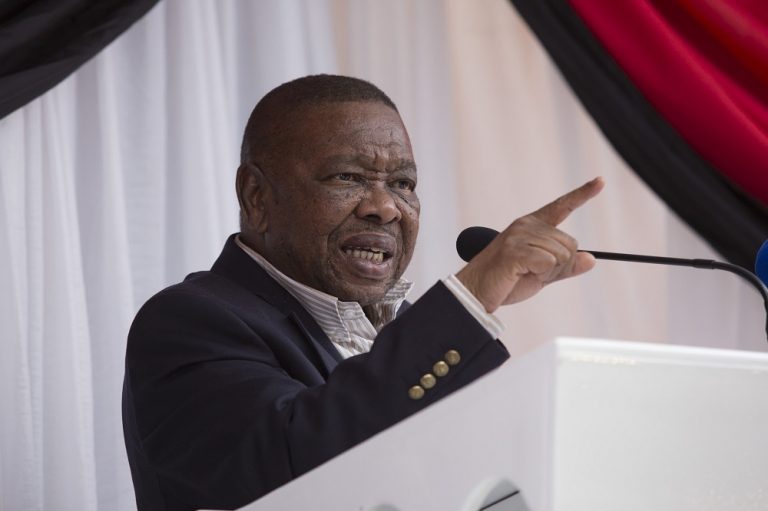
South Africa’s Higher Education Minister says he’s concerned with the numbers which show that fewer matriculants achieved more than 40% for mathematics in the 2019 matric examinations.
A record 81.3% of matrics passed in 2019, with over 180,000 achieving bachelor passes.
However, Blade Nzimande said, fewer pupils would be allowed to study programmes in mathematics and science compared to the previous year.
Nzimande pointed out that most bachelor degree programmes that required mathematics would not accept candidates who achieved lower than 40%.
“The actual number who passed with 40% or above in mathematics was lower than the number in 2018. The number in 2018 was 86,874. In 2019, the number was 77,751, which means it’s a drop.”
The minister was speaking on the implications of matric results on the post-school education and training sector.
Analysing the application statistics, he noted that more students opted for universities rather than TVET colleges.
Statistics showed that 453 157 students preferred admission at universities, while 90 111 chose colleges, said Nzimande, adding that more than 212 000 returning university students have been declared eligible for funding from the National Student Financial Aid Scheme (NSFAS) funding for the 2020 academic year.
NSFAS received more than 500 000 applications for the 2020 academic year.
Nzimande said applicants included those who were writing their 2019 NSC examinations, grades 10 and 11 pupils intending to further their studies at TVET colleges and returning pupils.
The student financial aid scheme has so far approved 430 000 applications, he said.
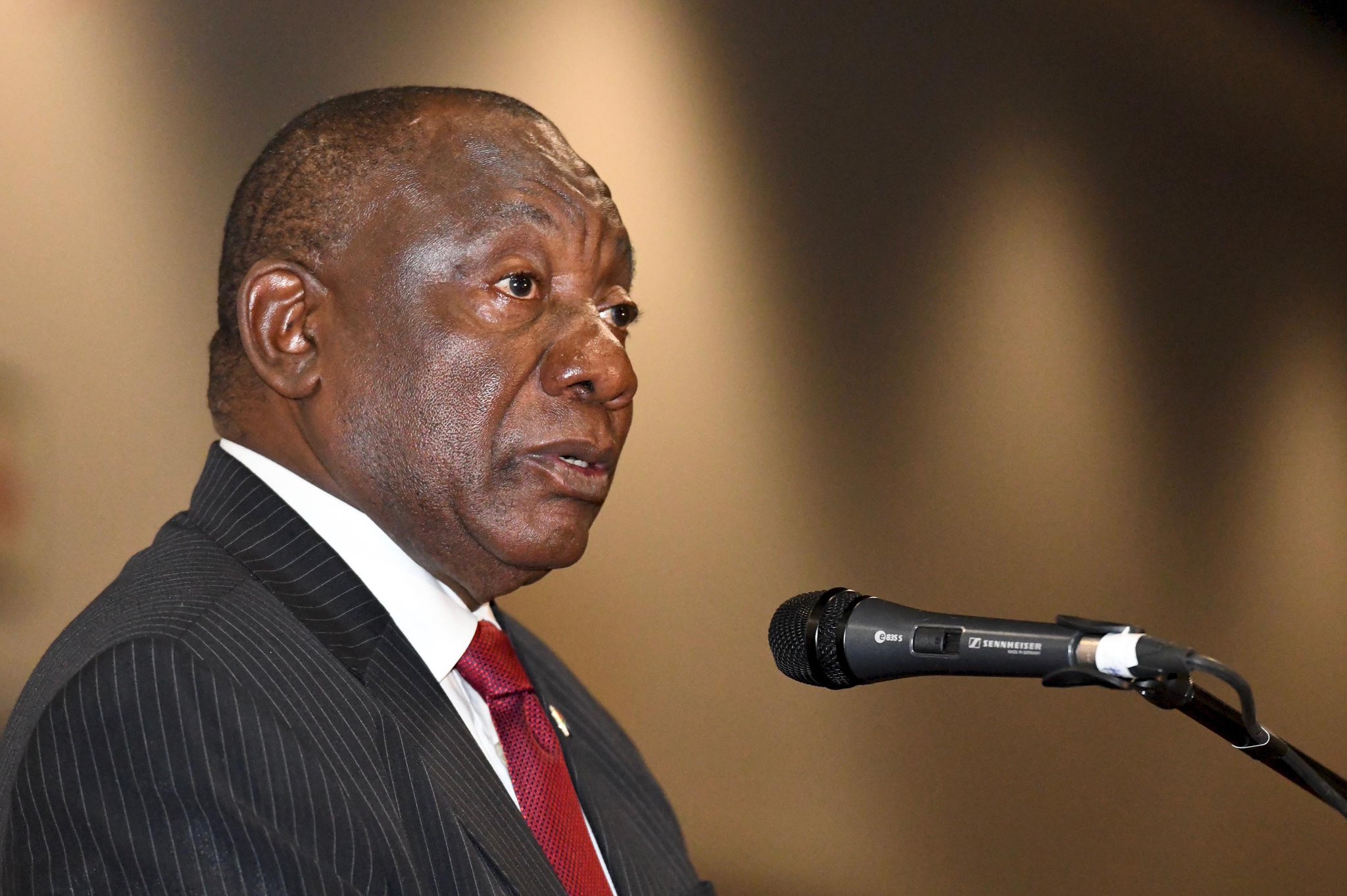
President Cyril Ramaphosa told key stakeholders in the basic education sector immediate task as government is to improve the foundational skills of literacy and numeracy, especially reading.
“It is for this reason that reading for meaning has now been declared an apex priority,” Ramaphosa told delegates at the Annual Basic Education Sector Lekgotla in Kempton Park, Ekurhuleni.
The President said that by 2030, “South Africans must have access to education and training of the highest quality, leading to significantly improved learning outcomes.”
He added that skills such as literacy, numeracy and science must be complemented by team work, critical thinking, communication, persistence, and creativity. “All these skills are interconnected,” he said.
“They are part and parcel of the skills set necessary to meet the demands of a changing economy and the future of work.”
#2020DBESectorLekgotla Ramaphosa: Education resides at the centre of what is the future of work. Globalisation, 4IR, climate change and we have found the future of work revolves around lifelong learning. pic.twitter.com/NynIgghsDC
“The main thrust of our plan is to ensure reading for meaning across the curriculum, in all grades, and in all schools throughout the country. Our plan is to ensure that we teach all our learners to read well.”
He said society needs to play its part so that all learners and young people becoming lifelong readers.
“Today, we say to all South Africans that reading is not a portion of education, it is education.”
President Ramaphosa called for a collaborative approach.
“We cannot succeed on our own as government to get the nation reading. That is because the first real teacher of any child is the parent. What is taught at home must be reinforced at school. Similarly, what is taught at school must be reinforced at home.”
He said government has moved to strengthen the capacity of the sector, especially teachers, through the wall-to-wall capacity building of anyone in the reading ‘supply chain.’ “All teachers are going back to school to be taught the latest how-to-teach reading methodologies.”
Ramaphosa also spoke of the “value and importance” of partnerships in meeting the developmental needs of our country.
#Ramaphosa: Our challenges in the basic education are still immense. Judging by the recent progress, it shows that we are capable of achieving greatness as a nation. #DBE2020SecotorLekgotla
“Our collective task as a nation is to move South Africa to the next frontier of economic development, in which basic education plays a key role,” said Ramaphosa.