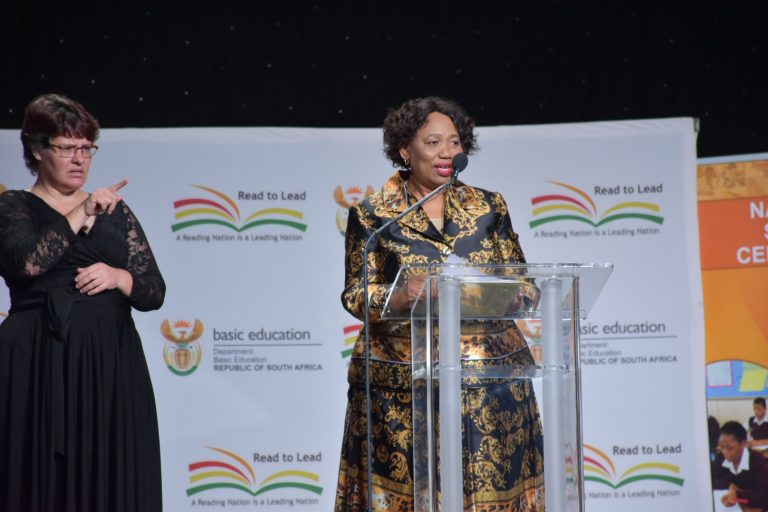
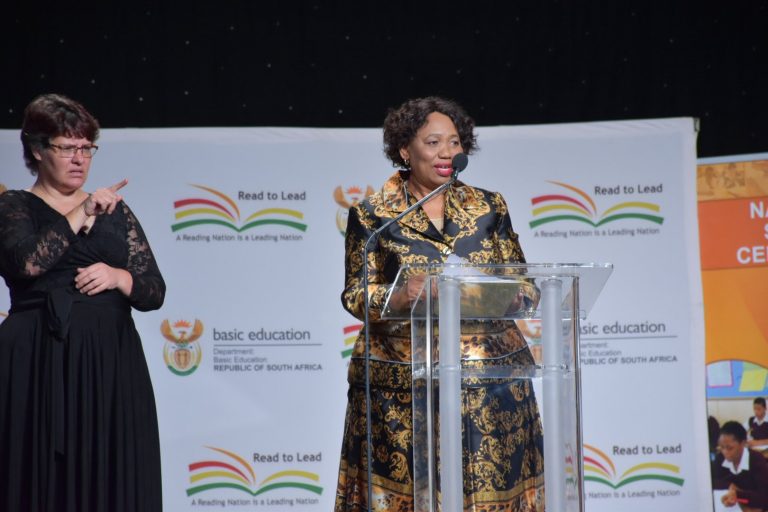
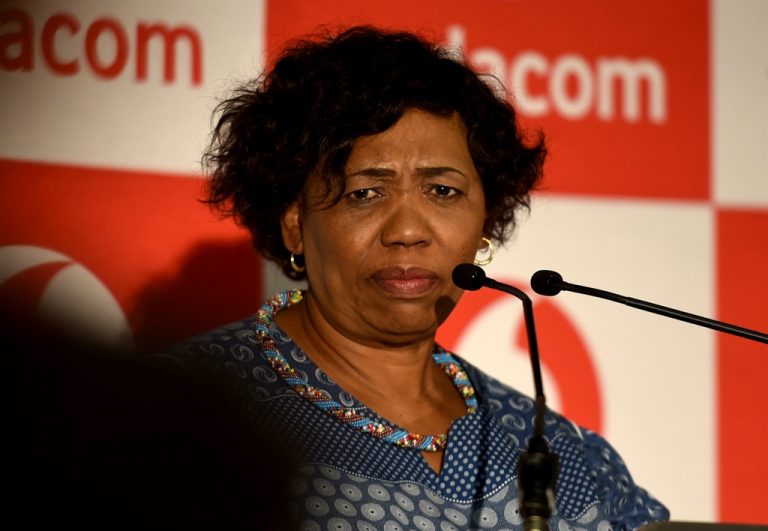
South Africa has “for the first time in the history of our democratic country,” achieved a national matric pass rate of 81.3 percent, a beaming Basic Education Minister Angie Motshekga announced in Midrand Tuesday evening.
The figure is up from the 78.2% pass rate recorded in 2018.
Motshekga said with more than 90% of SA pupils attending public schools, it is commendable that the “glass ceiling” that is an 80% matric pass rate has been shattered.
The Class of 2019 produced 156 884 distinctions, Motshekga announced.
@DBE_SA Minister Mrs Angie Motshekga is pleased to announce that national pass rate at 81.3%. A first for our democracy. Halala Class of 2019 Halala! #NSC19#MatricResults#MatricResults2019
A breakdown of the provinces, in order of achievement rates showed that Free State province has reclaimed its title in the 2019 National Senior Certificate examinations with last years rate in brackets: Free State 88.4% – (2018 87.5%) Gauteng 87.2% – ( 2018 87.9%) North West 86.8% – (2018 81.1%) Western 82.3% – (2018 81.5%) KZN 81.3% – (2018 76.2%) Mpumalanga 80.3% –(2018 80.4%) Eastern Cape 76.5 – (2018 70.6%) Northern Cape 76.5% – (2018 73.3%) Limpopo 73.2% – (2018 69.4%)
The minister said 65% of learners passed with diplomas and bachelor passes and will be eligible for admission to universities. Some15,7% achieved higher certificates that enable entry into TVET colleges.
The minister said 96% of parents send children to public schools which showed that parents “have confidence” in the public schooling system, but, added that “we have to ramp up ECD, the 3-stream curriculum and assessment regime.”
But, Motshekga said, in the future, result announcements will not only focus on the overall percentages, but will look at a range of issues including a province’s participation in maths and science, provincial distinction levels, and the level of support given to learners.
#MatricReaults19 The province with the highest number of Batchelor passes is Gauteng.
Western Cape has the highest number of distinctions.
President Cyril Ramaphosa is reportedly pleased with the outcome of the 2019 matric results after being briefed by Minister of Basic Education Angie Motshekga.
In line with protocol, the minister briefs the president on the outcome of the results before releasing the results to the public.
Inside Education understands from an insider that Ramaphosa “was very happy” with the results following the briefing by Motshekga who is expected to release the matric results to the public at Vodaworld in Midrand on Tuesday evening.
Education Minister Angie Motshekga. Matric Results 2019
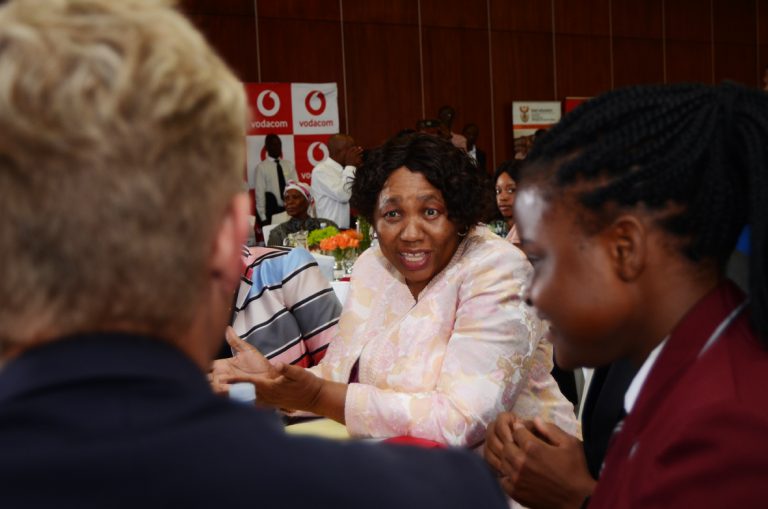
The minister hosted a breakfast meeting of the 30 best performing matriculants at the same venue Tuesday morning.
#Umalusi said what should be "celebrated" was the increase in the number of subject marks that were left unchanged… an indication that the quality of subjects was improving. pic.twitter.com/29YgpcREFd
Umalusi, the Council for Quality Assurance in General and Further Education and Training, has approved the release of the 2019 national examinations results.
The authority said it had successfully conducted the quality assurance of the management and administration of exit point examinations.
It said its quality assurance process focused on aspects of its mandate which include the external moderation of question papers for all subjects, learning areas, instructional offerings across all qualifications and assessment bodies among others.
Umalusi said it “is satisfied that apart from the administrative errors noted during the writing of the examinations, there were no systemic irregularities reported that may have compromised the overall integrity and credibility of the November 2019 NSC examination.”
This article was made possible by the generous support of Vodacom SA.
The sight of the graves of his family members dotted around the homestead prompted Eastern Cape learner Lomso Dumezweni to enquire about the cause of their deaths.
On being told that many of them had died from chronic illnesses he resolved he was going to study medicine to ensure people in his village didn’t die unnecessarily from illnesses that could be treated.
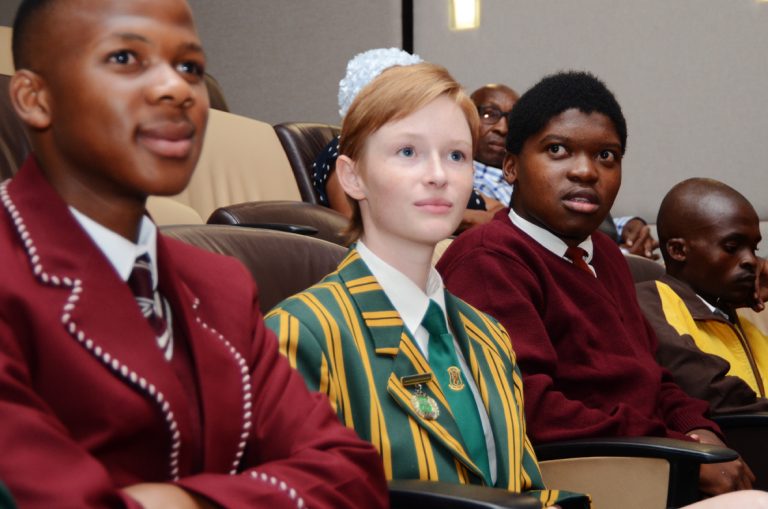
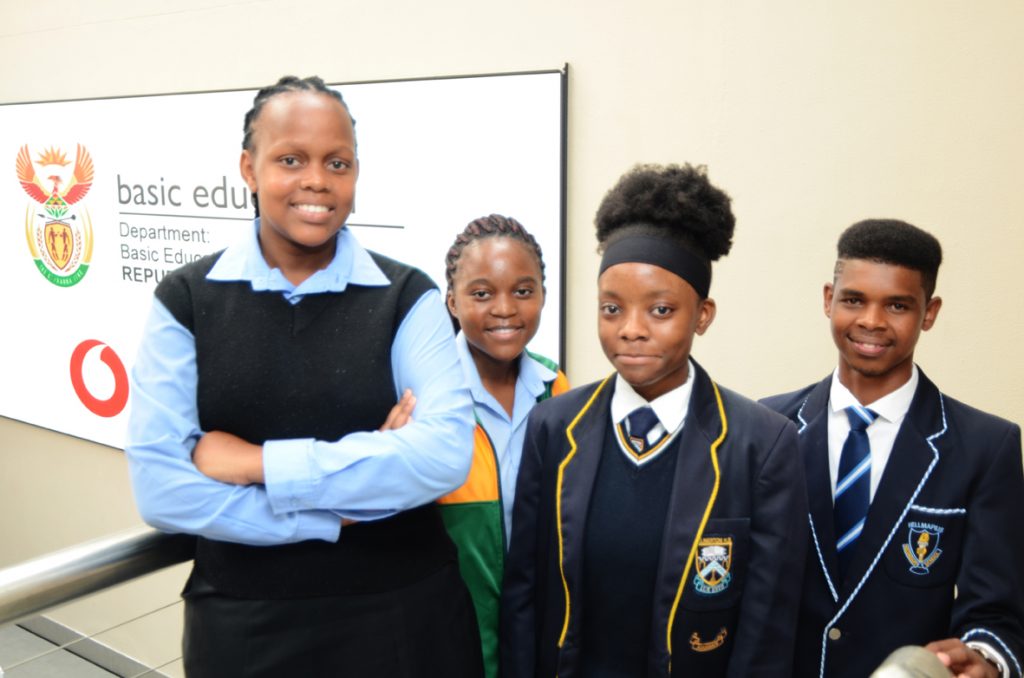
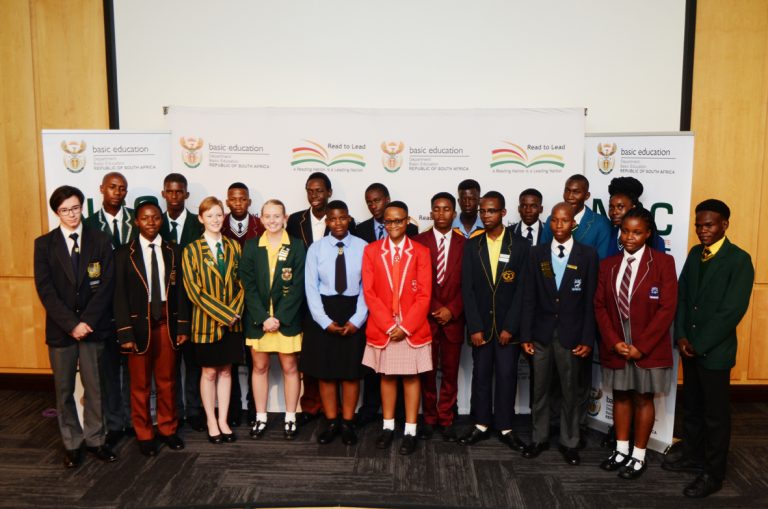
This week the matriculant from Nyanga Secondary School in Ncobo, Eastern Cape was among the top 30 matric achievers invited by Minister of Basic Education Angie Motshekga to the announcement of the national matric results at Vodaworld, Midrand in Gauteng.
Top 30 Matrics 2019
Motshekga said the learners who came from public schools around the country were the pride of the nation who had excelled from 700 000 matric pupils who sat for the national exam in 2019.
The department of basic education said a total of 790 405 candidates sat for 147 question papers in 7 416 examination centres nationwide last year.
Basic Education Minister Angie Motshekga. Matric Results 2019
She said the country should not be afraid of the Fourth Industrial Revolution as this crop of learners was going to carry the country through the upcoming revolution through the skills they will acquire in higher education.
Dumezweni was still in bed at his home in Sheshegu, Dutywa when the call inviting him to the ceremony came through.
After his father broke the good news to him he rushed out into the street to celebrate, edging him closer to his dream of being a doctor.
He is now going to study medicine at the University of the Western Cape, far away from the tough conditions of his village.
He was so determined to pass matric with flying colours that he only visited his home village three times during the entire academic year, opting to stay at the school hostel 75km away to put in extra work.
The Eastern Cape is one of the poorest provinces in the country, dogged by a lack of resources in schools.
Dumezweni and his colleagues were not left untouched by this dire lack of resources, having to make do with a science laboratory with barely any chemicals or tools to conduct experiments.
But this did not deter him. He used his cellular phone to download experiments from the Internet. Dumezweni is worried that his lack of access to computers may be a serious challenge in his first year of university study.
“That is a challenge many rural learners face. We have very little access to computers and I have heard that in varsity they use computers every day. But I am ready for the challenge,” he said.
#MatricResults2019 Fortune Khoza from Acorn-oaks Comprehensive High School in Mpumalanga. He says he’s proud to have done so well despite lacking much needed family support. pic.twitter.com/thCbgeEqdw
In KwaZulu-Natal Bhekamandaba Makhonza’s matric year was severely disrupted by the hospitalisation of his mother which affected his concentration. “I thought we were going to lose her. The situation at home wasn’t great. I still don’t know how I did it,” said Makhonza.
But he was not about to let this factor stand in the way of his dream to study actuarial science. His school was also dogged by a lack of resources which frustrated his efforts to master scientific experiments.
But help came through his teacher who upon recognising his burning desire to succeed and dire family circumstances, gave Makhonza his old, broken laptop. Makhonza got the old machine fixed and used it to download experiments and research information critical to his studies.
In addition, he revised by tackling past matric papers. His school Edendale Technical High School near Pietermaritzburg, KwaZulu-Natal is also plagued by a lack of resources.
But he is now on top of the world after being among the top matric performers nationally. He is planning to study actuarial science. “My passion is in mathematics,” he said.
Blessing Tsakane Chauke from Dendron Secondary School in Mogwadi, Limpopo, also overcame the odds of studying in a rural school to make the cut.
Motshekga praised the school for always having a learner in the top matriculants through the years despite their location in a rural area.
Chauke said discipline and working hard throughout the year prepared her for the tough end of year exams. She is going to study chemical engineering “to broaden my skills and knowledge to become a professional engineer.”
#Matricresults2019 Phillip Mmusi from Hazyview Comprehensive School in Mpumalanga says he’s still surprised to have been recognised as one of the top achievers. He says if he could ask the minister for anything, it would be better resources for his school. pic.twitter.com/sb1WwFqvzH
Greta Catharina Kupershoek from- Hoërskool Middelburg in the coal mining town of Mpumalanga said she has now set her sights on studying actuarial science after acing her matric. She said her secret to success was balancing her very active life as prefect and sports fanatic with her studies.
Mukona Martin Ranzida said being a learner at Mbilwi Secondary School in Sibasa, Limpopo, encouraged him to work hard because he didn’t want to be one to dent the school’s reputation as a national top performer.
“Our teachers also pushed us to work hard. We went to school on Saturdays and during holidays and that really helped,” he said.
This article was made possible by the generous support of Vodacom SA.
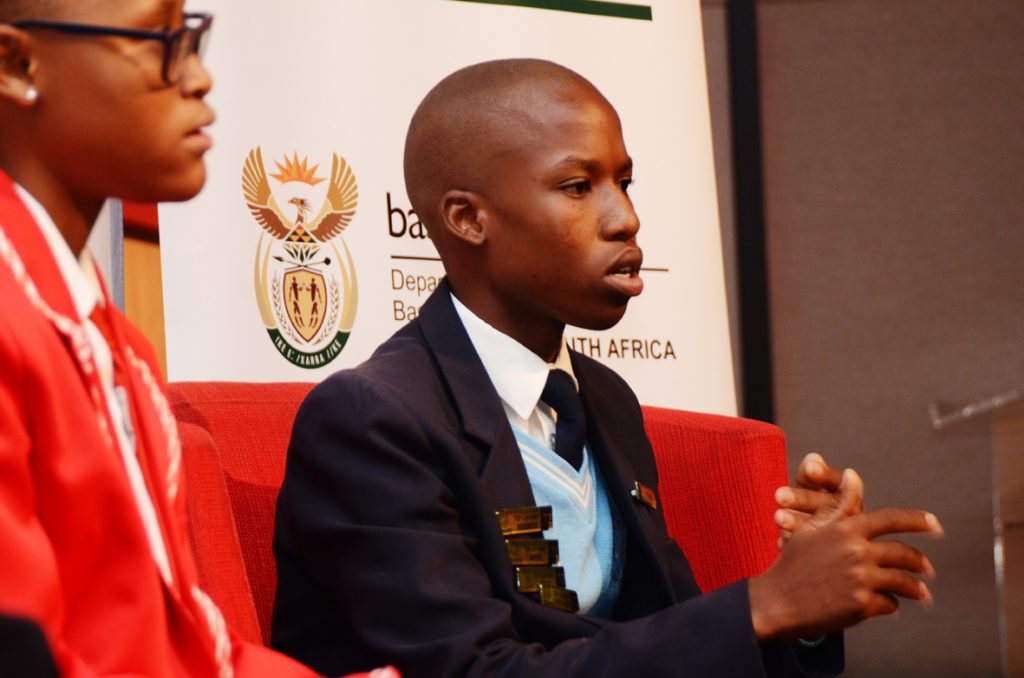
Basic Education Minister Angie Motshekga has lauded 30 top achievers out of 700 000 learners who sat for the national senior certificate exams last year.
Speaking at a breakfast held in Midrand, Motshekga praised the learners as “the pride of the nation” and said that despite challenges facing education such as poor infrastructure, the 30 learners managed to beat the odds and pass their exams with flying colours.
“Despite serious challenges such as infrastructure, you managed to climb Kilimanjaro and achieve the best. You are now at the peak of it all. For that we are grateful,” said Motshekga.
“We are putting our hopes in you. We are watching you with very hawkish eyes. You are our national asset. We are celebrating you as the country’s asset. We don’t have to panic or be intimidated by the Fourth Industrial Revolution because in you we have brilliant and dedicated kids.”
2020/01/06 Basic Education Minister Angie Motshega. Matric Results 2019
Motshekga said she was extremely of the overall matric exams, especially because many schools servicing the poor came to the party and performed extremely well than in the past years.
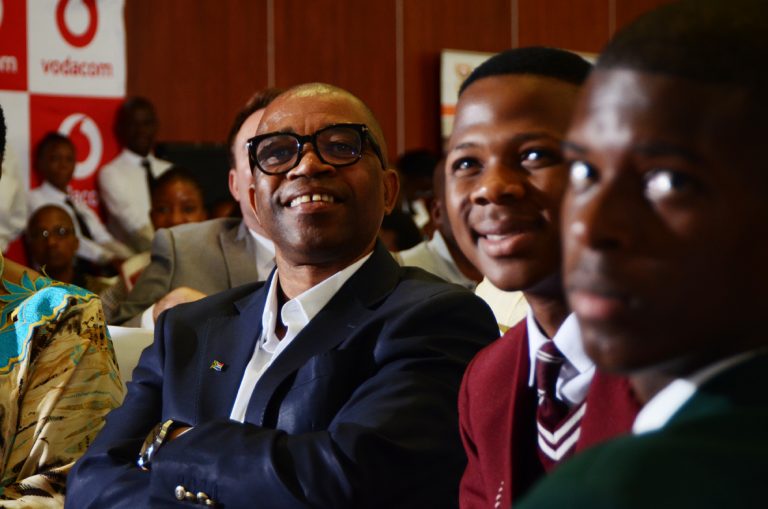
Themba Kinana, managing executive of public, policy and engagement, thanked the department of basic education for its commitment to the betterment of education in South Africa and Africa as a whole.
“On behalf of Vodacom CEO Shameel Joosub, we would like to thank the department for believing in the partnership with Vodacom. We have traversed this road together in ensuring that we bring the results we are talking about today. We also thank the parents, children and all the MECS for their hard work,” said Kinana.
“Vodacom believes that SA is in the success path. We are committing to contribute to the betterment of the education system in SA in order to build an African child. The education of SA contributes to the growth of the education system in Africa.”
This article was made possible by the generous support of Vodacom SA.
Vodacom is committed to enhancing learning outcomes in South Africa as well other African countries in which it has a presence.
Themba Kinana, Managing Executive for Public Policy and Engagement, told a ministerial breakfast where the 30 high achievers of the class of 2019 were recognized, that the company, as a matter of policy, wants to plough back into the communities and enhance the educations systems in countries where they are operating.
“As Africans, we must ensure that every African child is equipped to meet the challenges of the economies of the future.”
When the call came to say she was one of the Class of 2019 top achievers, Northern Cape learner Tlotlo Lekgoba from Boitiredi technical and Commercial School, said she broke down in tears. She's attending breakfast with Minister Motshekga #MatricResults2019pic.twitter.com/gOYjKU9God
He pointed to the education centres, “some 3000 schools” initiated by Vodacom across South Africa as but one example of how the company, in partnership with the Department of Basic Education (DBE), is helping to shape and improve education systems in the country.
“Through these centres, we are helping to develop the skills of learners and communities to be ready to for the Fourth industrial Revolution (4IR).”
Kinana said Vodacom has been in partnership with the DBE for ten years to build a sustainable education system in South Africa, emphasising a strong focus is on rural areas.
He added that the company is also training some 250000 teachers to ensure they are “responsive to the ICT requirements of South Africa.”
This article was made possible by the generous support of Vodacom SA.
Vodacom’s managing executive for Brand Marketing and Communications, told a ministerial breakfast honouring 30 high achievers of the class of 2019 that hard work beats talent and appealed to them to remain humble.
Abey Mokgwatsane emphasised that service is key, “service to the community and to the broader society.”
He told learners that it is a daunting task ahead, but implored them not to not lose hope and to remain positive despite the challenging, contemporary times.
His advice to the learners was to “identify issues and causes that you believe in and believe you can make a difference.”
Mokgwatsane said the 2019 matric high achievers must “inspire and lead” to ensure SA succeeds.
“Find and identify your purpose… Never stop learning, reading and being curious. Move beyond social media as a source of information and knowledge,” he said.
Mokgwatsane said Vodacom is committed to help move society forward, adding that the company has pioneered a “multifaceted education ecosystem model that looks at the interdependencies and interrelationships of ECDs, high schools and incorporates teacher training, parents and local communities to significantly transform our education system.”
These include a school of excellence model which supports 12 schools across the country selected from the 3000 schools that Vodacom has supported with Information Communication Technologies (ICT) since 2008.
Vodacom’s managing executive for Brand Marketing and Communications, ended by telling the high achievers that “hard work beats talent.”
This article was made possible by the generous support of Vodacom SA.
The Independent Examinations Board (IEB) has announced that 98.82% of pupils passed the 201 National Senior Certificate examinations.
CEO Anne Oberholzer said in a statement that the IEB pass rate decreased from 98.92% from the previous year.
Some 11 818 full-time pupils and 779 part-time pupils sat for the exams in October and November.
Oberholzer said 89.51% qualified for entry to study a degree, while 7.91% qualified for entry to study a diploma and 1.4% for studying at the Higher Certificate level.
“Umalusi has monitored all aspects of the 2019 examination process and has declared the results to be fair and valid,” she added.
The closing date to apply for re-marking is January 13. Results from re-marking will be released on February 6.
Basic Education Minister Angie Motshekga is expected to announce the national matric pass rate Tuesday evening.
The Department of Basic Education will release the National Senior Certificate matric exam results on Wednesday.
In March 2019, Vodacom unveiled an education ecosystem to support government’s Vision 2030 comprehensive approach to education.
The ecosystem recognises that the success of the education system depends on a smooth interface and implementation of various pillars, underpinned by partnership of various players.
Some research studies paint a despondent picture of our education system.
For instance, authors of an IMF working paper which received wide media coverage in March 2019 indicated that despite relatively high levels of public spending on education – over six percent of our GDP, the country continues to suffer from weak educational quality.
The paper concludes that to improve the situation, what is required is to package interventions together that would include, inter alia, improving teacher training and accountability and, school management.
In his 2019 State of the Nation address, President Cyril Ramaphosa said government will make Early Childhood Development (ECD) compulsory for all children before they enter Grade 1, as this is essential in equipping children to succeed in education, in social skills and in life.
It is our firm belief at Vodacom that a renewed focus on ECDs will strengthen our basic education system and help our government produce well-rounded professionals and this way overcome poverty, unemployment and inequality.
At Vodacom we hold the firm view that the country remains a promising investment destination with a bright future.
In our considered view, if our government is going to make any significant advances in improving the quality of education, the government in partnership with leading corporates such as Vodacom need to find innovative ways to improve the quality of basic education by building a solid foundation in education, particularly in the early years.
In this respect, Vodacom, as a long standing partner of government and as part of our 25 year old existence, has pioneered a multifaceted education ecosystem model that looks at the interdependencies and interrelationships of ECDs, high schools and incorporates teacher training, parents and local communities to significantly transform our education system.
The six pillars of this multifaceted education ecosystem include: A school of excellence model which supports 12 schools across the country selected from the 3000 schools that Vodacom has supported with Information Communication Technologies (ICT) since 2008.
Each school of excellence is closer to an ECD Centre, a Teacher Centre and a Vodacom ICT youth Academy.
Since December 2018, after making a R500m pledge over the next 5 years at the Global Citizen festival, to support digital literacy and the eradication of pit latrines, the Vodacom Foundation has spent over R33 million on infrastructure development in the ECD Centres and schools of excellence.
The pillars below underpin the schools of excellence model:
Pillar 1 – Early Childhood Development (ECD) Centres: Vodacom Foundation has committed to upgrading and renovating 15 ECD centres. To date, six ECD centres have been upgraded and renovated and received an ICT trolley solution and a mobile library. We have also decommissioned pit latrines in these ECD Centres.
Pillar 2 –Infrastructure and ICT: We have provided each of our 12 schools of excellence with a computer centre and security. We have also decommissioned pit latrines in these schools.
Pillar 3 –Teachers and school leadership: We collaborate with partners to train teachers on the integration of ICT in the classroom. In the 2018/2019 year, we spent over R12.7 million in providing unlimited connectivity in 92 teacher centres and provided more than 92 centre managers with digital skills training.
Pillar 4 – Communities: The above-mentioned teacher centres also serve as technology hubs where communities can access the internet. In South Africa, at these centres, more than 450 female farmers have received ICT training.
Pillar 5 – Partnerships: Annually, the Vodacom Foundation invests R5 million in 12 Not for Profit Organisations (NPOs) that have improved the lives of more than 73 900 people through this support in the past 20 years.
Pillar 6 – Learning Materials: Learning materials play a key role in providing effective support to teachers and learners. Vodacom Foundation has partnered with DBE to provide free unlimited internet access to quality digital Curriculum and Assessment Policy Statements (CAPS) aligned content through e-School which is a zero-rated platform for Vodacom subscribers.
This means Vodacom absorbs the costs of the service and does not generate revenues from the e-school service run in partnership with DBE.
Crucially and as part of our Digital Literacy training for women initiative, we provided basic computer training to more than 1 600 survivors of gender based violence in government safe shelters nationally.
We also trained just over 800 women farmers on using social media (Facebook, Twitter, and Instagram etc.) to enable them to reach out to the outside world, and promote their farm produces.
Following this, these female farmers are then able to participate in the second phase of the programme which will connect small scale farmers across the agricultural value chain to enterprises and potential suppliers looking to source agricultural goods, such as crops and livestock, by registering on Vodacom’s Connected Farmer app.
Our approach is aligned to the foreword of the South African National Curriculum Framework for children from birth to four years old, adopted in February 2015 which said “Delays in cognitive and overall development before schooling can often have long-lasting and costly consequences for children, families and society.
“The most effective and cost-efficient time to intervene is before birth and the early years of life. Investment in Early Childhood Development should be a key priority.”
We believe in strong public-private partnerships and our partnership with the DBE is testimony of our commitment to making a contribution to improving the quality of education guided by our technological innovations and government policies.
We acknowledge that we exist in societies with high levels of inequality and abject poverty and therefore it is incumbent upon us to collaborate with the public sector and non-government organisations and come up with innovative solutions to assist government to deal with some of the socio-economic problems plaguing our society in this milieu.
Given where South Africa finds itself right now, there is a pressing need to forge increasingly meaningful partnerships to deepen and accelerate the impact of our collective programmes and help to move South Africa forward.
It’s the moment of truth for the Class of 2019 as the countdown to the annual matric result release has begun with first Independent Examinations Board (IEB) results expected to be released from midnight Tuesday.
The IEB will announce the private schools matric results at midnight on Tuesday, January 7, 2020.
Basic Education Minister Angie Motshekga will announce the national matric pass rate later Tuesday evening.
The Department of Basic Education (DBE) will release the National Senior Certificate matric exam results on Wednesday, January 8.
Last Friday, the quality assurance body, Umalusi, approved the 2019 matric results after its evaluation found that there were no exam paper leaks or systemic irregularities.
Umalusi CEO, Dr Mafu Rakometsi, said the exams were largely unmarred by disruptions, protests or issues with the papers.
“The quality of questions papers is a very important aspect of the integrity and credibility of the examination,” Rakometsi said.
#Umalusi CEO @mafurakometsi said the #2019matric exams did not have any question paper leaks, which is "where we should be as a country."
“It is therefore pleasing to see a marked improvement in the overall quality of question papers across the assessment bodies, as more papers are approved after first or second submission to external moderators.”
Rakometsi also announced that there were no systemic irregularities picked up or paper leakages, which would compromise the integrity of the examinations.
#Umalusi said what should be "celebrated" was the increase in the number of subject marks that were left unchanged… an indication that the quality of subjects was improving. pic.twitter.com/29YgpcREFd