Gauteng Education MEC Panyaza Lesufi says they will step up security at schools in the province during the Christmas holiday period.
Lesufi said schools were prone to vandalism and break-ins during the festive season and called on community members to do their bit to help the Department protect schools and infrastructure.
Since the start of this year, more than 250 schools were affected by theft and vandalism with damage exceeding over R120 million.
Passions are running high in South Africa about a proposed new curriculum for education about sexuality in schools. Aimed at children in grades 4 to 12, it’s intended for roll out in public schools in 2020.
Concerns raised by parents, schools and civil society organisations include that elements of the curriculum are not appropriate for the age of the children who will be targeted – mostly 10-year olds – and that it undermines the authority of parents.
Another concern is that key stakeholders, including parents, schools and teachers were not consulted. Anger about this is reflected by the fact that a parent-based Facebook group #LeaveOurKidsAlone gained over 100 000 members in less than four weeks.
The political question that the new curriculum has raised is: does it show that the government has over-reached its powers? Has it overstepped the mark in the delicate relationship between the state and society? And what does this say about the divide between what is public and what is private?
The Department of Basic Education has retracted the option for parents to have their children excluded from the lessons. This, and the fact that parents were not widely consulted, contravenes the White Paper on Education and Training which stated:
Parents or guardians have the primary responsibility for the education of their children, and have the right to be consulted by state authorities with respect to the form that education should take and to take part in its governance.
Parents have the inalienable right to choose the form of education which is best for their children, particularly in the early years of schooling, whether provided by the State or not, subject to reasonable safeguards which may be required by law.
The parents’ right to choose includes choice of the language, cultural or religious foundation of the child’s education, with due respect to the rights of others and the rights of choice of the growing child.
In addition, the new curriculum is not in keeping with the spirit of section 15 of the Bill of Rights of the South African Constitution, which protects individual rights, such as the freedom of opinion, religion and expression.
It is indicative of a prescriptive state in terms of shifting the imparting of norms and values in a sensitive area such as sexuality from parents in the family context, to the state through public schools. This is a move towards a more moralistic and intrusive state.
Theories of the state
The state is either limited in power, a neutral umpire in society that doesn’t favour any particular group, individual, family, religion or ideology. Or it is overarching and prescriptive in terms of beliefs, norms and values.
In the classical liberal understanding of the role of the state, the authority given to those in power through elections is limited by a constitution; checks and balances, either horizontal (such as an independent judiciary) or vertical (such as organised civil society and an independent media); and the recognition of sphere sovereignty.
The idea of sphere sovereignty implies an institutionally pluralistic society, where power and authority are divided among various “spheres”. Thus, the state, the family, religious institutions, civil society have their own jurisdiction.
And, as long as they don’t do any harm, other spheres of authority should not intrude on them. It recognises that societies are pluralistic.
These countervailing distributions of power protect the liberties of citizens and guard against the centralising impulse of the state from infringing on them.
Philosophical pluralists, ranging from John Stuart Mill to the contemporary Hannah Arendt, contrast this recognition of diversity with the monist nature of totalitarian states, which penetrate all aspects of society.
The other form of state-society relations is one in which a state actively intrudes into the personal or private realm and becomes prescriptive, especially around beliefs, norms and values.
Such a state becomes more than a neutral arbiter and rather dictates how people should live and conduct their lives.
On a scale, less extreme forms of this would be a nanny state, with its extensive social responsibilities, as some would classify the welfare state of the UK. But the scale moves towards totalitarianism, as evident in North Korea.
The common feature is that the distinction between the public and the private becomes blurred, and the state prescribes moral values, behaviour and meddles in every aspect of human life.
Historical examples include the Holy Roman Empire, which conflated church and state, imposing one religion on all.
There are also the communist systems of the Soviet Union and its satellite states; and the fascist states such as Nazi Germany and Italy under the dictator Benito Mussolini. In both, only civil society organisations and religion approved by the state were allowed.
The Fascist conception of the State is all embracing; outside of it no human or spiritual values can exist, much less have value.
South Africa’s state
South Africa’s governing party, the African National Congress, has long historical and ideological ties with communism. It continues to understand itself as the vanguard of society.
Marxist ideology advocates that a prescriptive state is necessary for correcting social inequalities. Coupled with this is the growing interest in Critical Theory. This takes the Marxist ideas of a prescriptive state further, into the realm of culture, and thus norms and values.
Unlike other theories, which seek to understand or explain society, Critical Theory actively seeks to change it.
Reclaiming parents’ rights
The push-back against the curriculum by parents, teachers, schools, religious bodies and civil society alike, is a clarion call to the state to stay out of their homes.
Parents are reclaiming their sphere of jurisdiction, in particular the right to teach and raise children in accordance with their norms and values. Will the South African government respect this?
Academic freedom is at the heart of successful universities. UNESCO defines it as the right “to freedom of teaching and discussion, freedom in carrying out research and disseminating and publishing results.”
Academics have pointed out that it also means self-governance and security of academic jobs to ensure independence.
The government of Turkey, for example, has attacked, dismissed, and imprisoned its critical academics. And the Hungarian government has undermined university autonomy and attacked certain fields of study. This has forced the Central European University to leave Budapest.
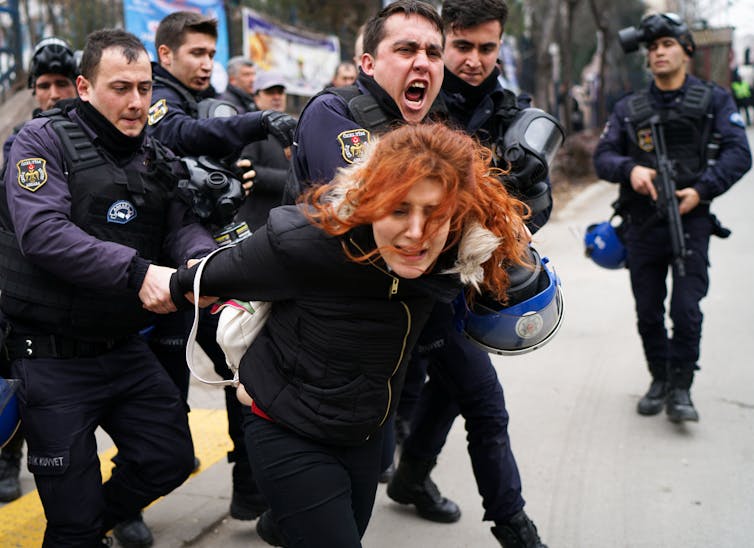
Riot police detain a demonstrator during a protest against the dismissal of academics from universities, outside the Cebeci campus of Ankara University in Ankara, Turkey.
The commercialisation of higher education has also led to more subtle and institutional threats to academic freedom. This has brought with it a worrying trend for universities to compete in a market for students and money – striving to outdo each other in highly problematic “excellence” rankings.
The marketisation of higher education has also led to the increase of short-term or zero hours contracts for academics and the erosion of academic autonomy in many countries.
Collaboration and exchange with academic actors in repressive systems – such as China – has also led to new dependencies and vulnerabilities for universities around the world.
If engagement is not transparent and subject to ethics guidelines, there is a risk that universities may become complicit with rights violations abroad – and undermine academic freedoms at home.
Debates about what can and cannot be tolerated as part of academic discourse have also at times been derailed. In some cases, extreme right-wing speakers have been invited to engage in hate speech on campuses. The populist right has portrayed criticism of such invitations as attacks on free speech.
In other cases, outraged groups have demanded unacceptable retaliation for merely offensive views. In 2018, for example, university students petitioned for a university professor to be removed for expressing his view that homosexuality was a sin.
Such derailments have blocked genuine discussion of the boundaries of academic freedom and its relationship with free speech. This comes at a time when academic freedom – and ways to defend it – badly need to be addressed.
And in the face of larger, political, structural and institutional threats, universities have a responsibility to provide a space for critical discussions and the pursuit of truth.
Tackling new and rising threats
The European Parliament proposed in 2018 the adoption of an international declaration on academic freedom and the autonomy of higher education institutions. Such a declaration would be welcome, because it could help identify and address the threats to academic freedom internationally. But it can only be a starting point.
The complex and interrelated threats to academic freedom can only be solved if scholars, universities, professional associations and potentially international bodies come together.
NGOs like Scholars at Risk, which support and defend the principles of academic freedom and human rights of academics around the world, have long called for further action to be taken by institutions and their networks.
To respond to direct attacks, there must be more active solidarity. University bodies such as the European University Association have, for example, spoken up on threats to academic freedom in Turkey.
And the Association for Asian Studies recently issued a statement on the extrajudicial detention of Muslims in China’s Xinjiang Uyghur Autonomous Region. But this is not enough.
To tackle commercialisation, universities need to reform funding structures. They also need to stop acting as competitors in a market that bases success on rankings – as this threatens to undermine academic freedom “from within”.
This included markers such as gender equality which alter traditional rankings. Such exercises can challenge, if not subvert, current “league tables”. And might also motivate universities to pay more attention to values they profess to uphold.
But more must also be done to raise awareness at universities of what academic freedom means and to encourage students and staff to engage with this central issue.
This can be done by integrating and discussing academic freedom in teaching, organising debates on the topic, and deepening knowledge through existing courses.
Universities also need to adopt ethics guidelines for global engagement – drawing on those proposed by Human Rights Watch – and create ethics committees and other mechanisms to implement them. And they must speak out, especially when students and scholars in partner institutions are at risk.
Critical thinking has never been more important than it is today – when the world is facing enormous governance challenges. And to be able to contribute to the solutions of these challenges, universities need to protect academic freedom, both at home and abroad.
Every year, more than 300,000 pupils drop out of South African schools after Grade 9. The average age at this level of schooling is 15 years old.
Some of them aren’t academically prepared to progress to the next grade; some leave because of financial difficulties.
Many of the pupils who leave school at that stage remain unemployed for years. Around half of the population under 25 years old is unemployed, in an economy that’s barely growing and lacks skilled workers.
The South African government has proposed a new certificate for school leavers at Grade 9, which is the second year of high school.
It’s aimed at giving them some indication of competence in the job market. Currently, the only school leaving certificate is issued at the end of Grade 12, the final year of high school.
Some critics argue that the new certificate may encourage more pupils to drop out of school. But we argue that the additional testing for the certificate is a positive move.
This is because of its potential to improve the quality and structure of education in ways that support youth employment and the economy.
The General Education Certificate will be a formal qualification that school leavers can use to enrol at technical and vocational education and training colleges or to look for work.
Post-school pathways
As things stand, after Grade 9 pupils can enter into the academic stream from Grade 10 to Grade 12 in schools. Or they can enter technical or occupational streams at colleges. This latter route is not popular.
In a 2015 Trends in International Mathematics and Science Study, more than 70% of Grade 9 pupils said they wanted a tertiary qualification in the form of a certificate, diploma or university degree.
In the same survey, only 4% intended to apply at Further Education and Training colleges after Grade 9. Reasons for this include a lack of awareness about other training options.
This overwhelming preference for the academic pathway is a problem in a country ranked among the lowest in academic tests.
The South African education environment is structured in a way that hasn’t allowed young people to be realistic about their potential and the availability of options other than finishing high school to gain a university entrance.
To change this, the minimum competencies required to obtain the new mid-level high school certificate must be made explicit. The subjects that will be chosen for assessment must be valued by society.
Examples are English for business communication and mathematics for numeracy. These subjects should signal the readiness of learners to succeed in technical vocational and occupational programmes or the labour market.
One of the positive side effects of putting in place an assessment tool for a high quality and economically relevant qualification is that the quality of education offered at lower grades in the schooling system will improve.
The assessment would, for example, force schools and teachers to spend more resources and effort at lower grades to prepare pupils better for the Grade 9 certificate exams. They currently make this kind of effort for the Grade 12 certificate.
When vocational and training colleges are expected to play a more important role in the education system, they will have more opportunities to offer relevant training in areas such as agriculture, business, tourism, information and communications technology. This can happen if colleges receive more public and private funding.
If the mid-high school certificate becomes a generally accepted qualification for admission into technical and vocational education and training colleges, fewer learners will wait until completing Grade 12 before applying to those colleges.
Most technical and vocational college qualifications are ranked lower than or similar to a Grade 12 certificate. It’s therefore a waste of time for pupils to complete Grade 12 before entering a college programme at a lower qualification level.
Concerns
Critics point out that many of the country’s vocational training institutions aren’t equipped to cope with a possible influx of learners who have the new certificate.
Although this argument has merit, it can also be argued that with the new certificate in place, there would be an incentive to improve the curriculum and management of those institutions.
With more public and private sector focus on these colleges they would be forced to respond to job market needs better than they do now. The Grade 9 certificate would contribute to improving the colleges’ responsiveness to market demands.
Another concern is that the certificate would encourage higher drop-out rates from the schooling system. This may be true for pupils who want to enter the job market but currently stay in school because they don’t have alternatives. The certificate would give them something to show the job market.
With more options made more explicit, leaving the academic route to follow more vocational technical and occupational streams couldn’t be classified as dropping out of the schooling system altogether.
Going forward
The quality of the mid-level high school certificate should provide a choice of different types of technical and vocational programmes. These should include short term occupational and trade qualifications through private colleges, not only the three year technical programmes normally offered at public colleges.
This means that all vocational and training college programmes must have high economic currencies that are responsive to the practical demands of the labour market.
For the education system to work better as a whole, there needs to be more alignment of vision, policy and implementation between the Department of Basic Education and the Department of Higher Education and Training.
Both government departments must find strategies for working with the private sector to ensure that education and training is always relevant to economic needs.
With a meaningful mid-level high school certificate and the above mentioned programmes in place, the prevailing negative mindsets of learners and employers around vocational technical and occupational routes are also likely to disappear.
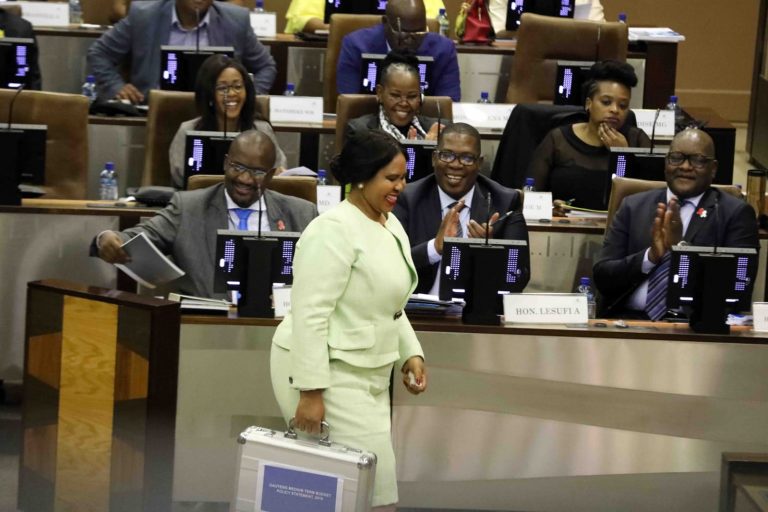
A new finance MEC, a new administration, and the roll-out of a new provincial plan. The Gauteng Medium-term budget policy statement, presented on Tuesday by Nomantu Nkomo-Ralehoko, was all about taking stock and adjusting the strategic focus adopted by South Africa’s economic hub.
Access to quality education is a fundamental human right rather than a privilege. A number of international conventions and the United Nations have also recognized quality education as a fundamental right to ensure all-round development of an individual.
The Sustainable Development Goal 4 of the United Nations also commits to “ensure inclusive and equitable quality education and promote lifelong learning opportunities for all.”
But despite a number of initiatives, commitments, and recognitions, the right to education is being denied to millions around the world, particularly in low and middle-income countries.
Recent statistics published by the UNESCO Institute for Statistics (UIS) reveal that there has been little or no progress in reducing out-of-school numbers in over a decade.
Sub-Saharan Africa has the highest out-of-school rates followed by South Asia and Eastern and South-Eastern Asia in the second and third spots, respectively.
Furthermore, if the trend continues, one in every six children will still be out of primary and secondary school in 2030 and only six out of ten youth will complete secondary education.
The statistics are more alarming for girls who continue to face the greatest barriers to completing 12 years of education.
Factors like poverty, child marriage, gender disparity, child marriage are responsible for keeping girls out of school and learning.
Taking the above facts and figures into account, governments, international organizations and other stakeholders need to renew their efforts to give increased attention to Sustainable Development Goal 4 i.e. quality education for all.
It’s high time for the world to go for innovative approaches like e-learning over traditional learning methods that need physical infrastructure, long-term planning, and huge investment.
Digital forms of education offer tremendous possibilities, both in terms of access and quality. As the internet and smartphone penetration is constantly increasing, online learning methods are also becoming more accessible.
The global education technology aka EdTech market is expected to grow to USD 40.9 billion by 2022, at a Compound Annual Growth Rate (CAGR) of 18.3 percent, led by seismic shifts in technological demands and innovation, according to a forecast by research and consulting firm Frost & Sullivan.
EdTech is not only transforming the way education is approached but also helping achieve gender parity in education.
Here are a few EdTech tools or programs from around the world that are reshaping the education sector by eliminating the obstacles children face in accessing quality education.
EduTrac
Introduced by the Uganda’s Ministry of Education and Sports along with UNICEF, EduTrac is a mobile phone-based real-time information management system that seeks to identify bottlenecks at school level and improve the learning environment for Ugandan children.
EduTrac, as the name suggests, tracks students’ and teachers’ attendance, progress in literacy and English curriculum, hygienic facilities, child abuse, violence, and other education indicators to improve planning for education and provide targeted responses.
Since its introduction, absenteeism and school drop out rates have significantly reduced. EduTrac aims to reach all primary schools in Uganda by 2020.
Worldreader
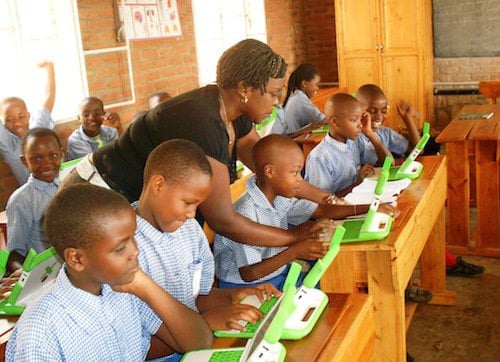
In line with its commitment to cultivate reading around the globe and ultimately contribute to eliminating poverty, reducing inequality and improving prosperity, Worldreader, a non-profit organization, provides Kindle e-readers and e-books to schools, libraries, and underserved communities in sub-Saharan Africa where printed books are either not available or are prohibitively expensive.
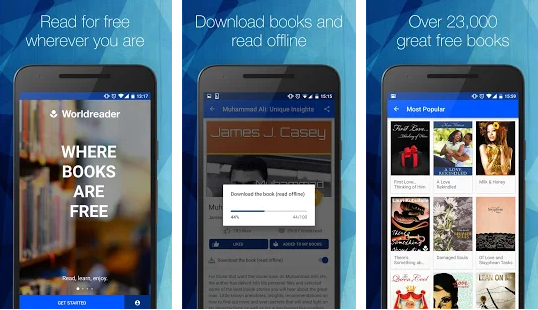
The Worldreader app developed by the organization provides learners access to an enormous digital library with thousands of free carefully curated ebooks in 40+ languages from around the world. If the reader goes out of data or can’t connect to the internet, the offline reading option guarantees an uninterrupted reading, anytime and anywhere.
The Read Out Loud feature helps readers to listen to any book in the Worldreader library by pronouncing an individual word or phrase.
Hello World works with the most vulnerable and marginalized communities to build solar-powered outdoor Internet kiosks called ‘Hello Hubs’ to help them access the Internet and information and educational resources.
The WiFi-enabled, solar-powered Hello Hubs are designed to withstand extreme outdoor weather and are energy-autonomous. One Hub provides unlimited internet access to over 1500 people.
The Hubs are also equipped with large 9.7-inch iPads, enabling children to learn and play simultaneously.
Project Hello World is a fine example of how access to affordable internet and Self Organized Learning Environment (SOLE) can help marginalized and isolated communities with no or limited access to learning tools to empower themselves with education and have a voice in the global community.
ClassroomQ
The website has been designed to make the lives of students easier by giving them the opportunity to ask questions without fear.
Just by tapping the assistance button, students can ask questions without embarrassment or without interrupting the class and wait for their teachers’ response.
How does it work?
After creating an account, teachers hit the start button to start a session and get a class code.
Students join the ClassroomQ session by entering their names and their teacher’s class code.
With the push of a button, students can ask for assistance and their name will be added to the queue.
Kolibri
Kolibri is an offline app built to deliver high-quality educational content in connectivity-scarce environments such as rural schools, refugee camps, orphanages, non-formal school systems, and prison systems.
Developed by Learning Equality, a non-profit organization committed to enabling every person to realize their right to education, the open-source platform seeks to address educational inequality caused by limited or no connectivity.
Kolibri curates educational content from different sources around the globe and makes it available completely offline, on low-cost devices. The openly licensed educational content library includes both formal educational materials such as lessons and assessments and exploratory materials, such as books, games, and simulations.
onetab
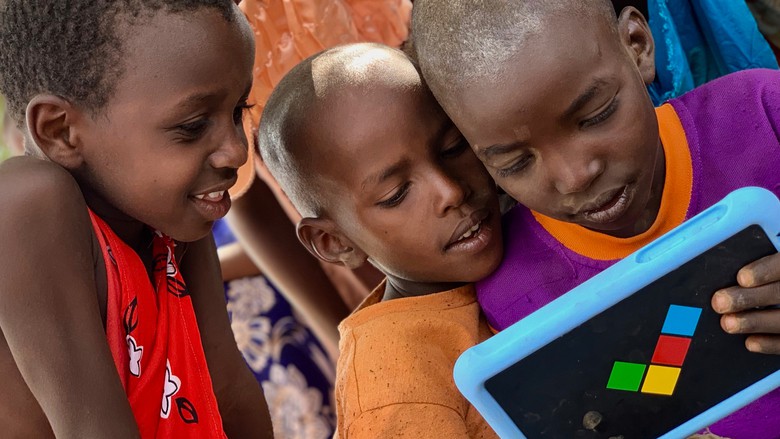
Developed by onebillion, a London-based non-profit organization, the onetab is a robust, dedicated tablet designed to deliver reading, writing, and numeracy in the child’s own language.
Built for children in and out of school, particularly for children with special educational needs, refugees and girls and boys in remote areas, the dedicated learning device comes in a durable carry case and can be optionally charged via a solar charger.
SWAYAM
Initiated by the Government of India, the program focuses on achieving three key pillars of education policy i.e. access, equity, and quality.
The SWAYAM program seeks to provide the best learning resources to all, particularly the underprivileged social segments, whilst simultaneously bridging the digital divide.
The program includes:
video lectures
high quality reading material
self-assessment tests through tests and quizzes and
With some 9,000 children still unplaced for the 2020 financial year, Gauteng Education MEC Panyaza Lesufi is to tour various areas this week to address the school placement challenge.
The figure is down from 34,000 unplaced learners at the beginning of November.
Earlier this month, angry parents expressed frustration after they were sent texts informing them to go to the department’s offices, only to find the centres short-staffed and incapacitated.
Lesufi said Alberton and Centurion have been identified as problem areas, where most high demand schools have reached capacity.
“So, on 26 November I will go to Laerskool Uitsig, which is in Centurion, at 5am and I’m addressing all parents that have not placed their children. And then, on Wednesday, I’ll go to Hoerskool Marais Viljoen in Alberton.”
Lesufi said he would be frank during talks with parents. “And that’s the attitude I am taking to those meetings so that parents can see that this is not a deliberate attempt to deny their children access to those schools. But it’s the capacity of the school have been reached and that we need to find alternatives together.”
Lesufi said parents who were dissatisfied with the schools assigned to them can lodge an appeal with the district and that will be processed in 14 to 21 days.
Lesufi meanwhile, accused AfriForum of creating a “smokescreen” to advance its own agenda, following its allegations of irregular expenditure by the GED.
Lesufi was reacting after AfriForum reportedly laid a criminal complaint against him for the irregular expenditure of R900 million.
He said the allegation was not about money being stolen, but rather because he was changing a school placement system that had favoured white children over their black counterparts for years.
“If they want to fight me, they are free to do so. They have been following me. They have been following my children and family. They have tried to attack me. They have tried assassinating me. They have tried to go through my bank accounts. I don’t mind you coming after me, but leave my children and family out of this,” Lesufi said.
Students who do not have access to funding and who intend to study at a public university or TVET college in 2020, has just over a week before the National Student Financial Aid Scheme (NSFAS) application cycle on closes on 30 November 2019.
As part of the intensified application drive, NSFAS has rolled out a regional “town to town” outreach intervention programme – to reach out to prospective beneficiaries and students who have not yet applied.
NSFAS says it aims to use these town visits to leverage equal opportunities for access to higher education and training in mainly disadvantaged communities.
Over the next few days, NSFAS officers will continue to be deployed across all nine provinces (see schedule below) with a particular focus on the Eastern Cape, Free State, North West, Northern Cape, and Western Cape – due to the low number of applications received in these provinces.
The scheme has to date received 365 922 applications nationwide, with KwaZulu-Natal, Gauteng, and Limpopo provinces continuing to lead with the highest number of applications.
NSFAS Administrator, Dr Randall Carolissen, said that although the number of applicants living with disability increased significantly over the prior year to over a 1000, it remains disappointingly low.
Carolissen said that NSFAS has prioritised engagements with relevant government departments and agencies to improve applications in this regard.
Applicants who do not have access to computer facilities and smart phones, are urged to visit their nearest National Youth Development Agency (NYDA) offices, local libraries, Government Communication and Information System (GCIS), Thusong Centres, and Department of Basic Education (DBE) District Teacher Development Centres national wide, to apply for funding.
The mental health of Fees Must Fall activist Kanya Cekeshe is getting worse, his lawyer said Tuesday.
Cekeshe was released from hospital Sunday night after being admitted for mental health issues.
The student activist was convicted of public violence and malicious damage to property for trying to set alight a police van during student protests in 2016 and sentenced to eight years in prison.
He recently lost his bid to appeal that conviction and sentence.
His lawyers argued that there was insufficient evidence against him despite his conviction.
“There was no attack on him. For the last couple of weeks, his mental health has taken a tremendous strain and he’s going from bad to worse every day,” Steyl said.
English is only one of 11 official languages spoken in South Africa. It’s currently the preferred language of education and is used in many of the nation’s schools.
But most children entering the education system are not native English speakers and many are still in the process of learning English by the time they arrive at school.
The main language of instruction in education influences academic and career progress. Oral language proficiency is a foundational skill that’s required to develop the ability to read which in turn is required, together with writing, for all types of learning.
Language use in schools has been a focus in both national and international research. It is largely agreed that learners should be taught in their home language.
However, many countries continue to promote English instruction including Kenya, India, and South Africa. The conflict between what is being implemented in schools and what is recommended by the available research remains unresolved.
There is a strong body of work that shows that learning problems can develop if the language in which a child has oral proficiency is not the same as the language of instruction.
As a result, policymakers in most countries now recommend home language instruction for the first years of education after which a gradual transition to another language can be made.
But the policy won’t succeed unless there is buy-in from the general public. In designing and implementing education language policy, it’s therefore necessary to understand peoples’ preferences.
We set out to find out what these are in South Africa. We examined public attitudes towards main language of instruction at different levels in the South African education system.
Preferences for language of instruction at different stages of education was examined for the period 2003–2016 and this allowed us to map any changes in attitude.
We found that a majority of the population favoured English as the language of instruction at all levels of education.
It is clear that people are unaware of the benefits of home language instruction and may resist efforts to promote the teaching of African languages in South African schools.
The research
We used data from the South African Social Attitudes Survey for this study. The survey series is nationally representative and is used to track public attitudes on important social and political issues. The series is administered by the Human Sciences Research Council and has been conducted annually since 2003.
In each round of the survey, people were asked: “What do you think should be the main language of instruction in: (1) grade 1–3; (2) grade 4–9; (3) grade 10–12; and (4) higher education?”
In 2003 about half (55%) of the population preferred English as the language of instruction against about two-fifths (41%) selected home language at the foundation phase (grades 1-3).
Thirteen years later popular support for English as the language of instruction during the foundational phase had gone up to 65% – the highest level since polling began.
The most recent survey, the results of which have not yet been published, found little change in 2018.
The preference for English extended into later years of education too. In fact, we found that the number of people supporting English rose the higher up the education ladder went.
In other words, the more advanced the phase of education the smaller the share of the public supporting options other than English.
There was remarkably little variation in attitudes for the last decade indicating the durability of these preferences. And over the ten years attitudes among South Africa’s population groups remained very similar.
The best way forward
A preference for English over home language may be motivated by economic concerns. Research has shown that English proficiency in South Africa is linked to socio-economic advancement.
Another reason for the popularity of English as a language of instruction could be the general lack of school resources and training required for educators to teach in many of the country’s African languages.
When compared to other languages, greater resources are devoted to helping teachers educate learners in English.
The disparity in resources could, in turn, reinforce the view that English is superior to African languages.
What next
We believe that post-colonial education policies should nurture multilingualism and promote all languages. This will require a well-resourced programme to overcome common misconceptions about the alleged inferiority of African languages.
The development of compelling teaching materials for African languages is required as well as educating teachers on how to use such materials. Although there may be opposition from some, learners will ultimately benefit from such a programme.
The government is moving in this direction. The Department of Basic Education recently launched the Incremental Implementation of African Languages programme which aims to strengthen the teaching of African languages in South African schools.
The goal is to reach 3,558 public schools across all grades by 2029.
But, as our research shows, South African policymakers must convince the public to support home languages as the main language of instruction if the programme is going to succeed.