Home Blog Page 44

KZN’s hidden crisis: Alarming rise in child pregnancies sparks calls for urgent action

By Palesa Nguqu

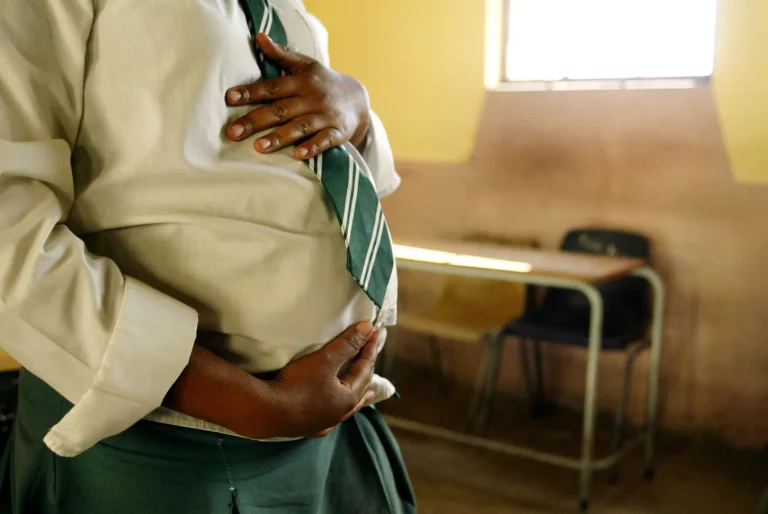
KwaZulu-Natal is grappling with a grim truth – hundreds of young girls are falling victim to sexual abuse and becoming mothers at an alarmingly young age.

Recent statistics paint a stark picture of a crisis that demands urgent intervention.

A recent report by Statistics South Africa (Stats SA), covering the period from 1 January 2024 to 28 February 2025, reveals a distressing trend in KZN.

During this period, a significant number of young girls — some as young as 10 — have given birth, a clear indication that many are likely victims of statutory rape.

Thousands more, aged 15 to 19, also became pregnant. These figures are deeply troubling, especially considering that the data represent only registered births, meaning the real numbers are likely much higher.

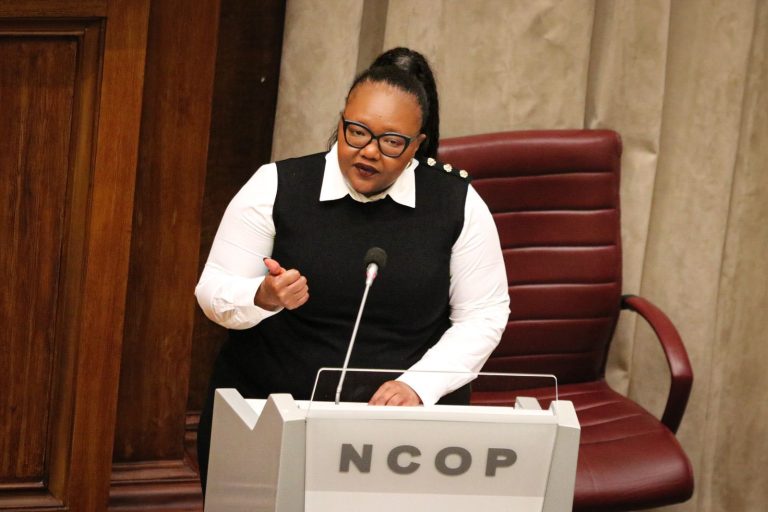
Inkatha Freedom Party (IFP) MP Liezl van der Merwe, Chairperson of the Portfolio Committee on Women, Youth and Persons with Disabilities, called for the urgent need for action.

“The IFP believes that teenage and child pregnancies are a national crisis, and more must be done to protect our children,” said van der Merwe.

Riona Gokool, the DA’s KZN Spokesperson on Community Safety, has also called for urgent and coordinated action to address the rising cases of child abuse and underage pregnancies.

She emphasised the need for the immediate creation of a dedicated interdepartmental task team, with a clear mandate to identify, report, and prosecute cases involving minors.

Gokool outlined her expectations for the task team — to be established within 30 to 90 days — with district units operational within three months and full provincial deployment within six months.

She stressed that this approach aligns with the DA’s national efforts to promote multi-stakeholder action and provincial oversight.

“The DA demands the immediate creation of a dedicated interdepartmental task team,” Gokool said.

“Our expectations include a mandate to identify and flag every underage pregnancy reported at clinics and schools, ensure mandatory reporting obligations are met, monitor investigation progress from report to docket to NPA, and convene weekly case review meetings for high-risk matters.”

She further highlighted the need to move from reactive audits to real-time, proactive monitoring — including digital docket tracking, court-watching, mandatory reporting protocols, and escalation procedures.

Quarterly public reports in the legislature, she added, would ensure transparency and accountability, tracking data on statutory rape reports, investigations, prosecutions, and convictions.

She further said that the DA is actively advocating for these measures at both provincial and national levels, pressing for the immediate formation of the task team with clear terms of reference, dedicated resources, and a timeline for full implementation.

Concrete interventions such as digital dashboards, expanded court-watching, mandatory reporting checks, specialist detective training, and an NPA fast-track pathway form part of their strategic plan to better protect children, she said.

The report also highlights systemic issues such as delays in birth registration, which hinder access to healthcare and education.

Many births are registered late — sometimes years after birth — due to administrative delays or lack of awareness.

Under the Births and Deaths Registration Act, all births must be registered within 30 days, yet compliance remains a persistent challenge.

Van der Merwe, on the other hand, underscored the need for a coordinated, multi-sectoral response, emphasising that addressing child abuse and underage pregnancy requires collective effort from government, law enforcement, civil society, and communities.

The DA expressed deep concern over the rising statistics, framing them as a systemic failure and a crisis of neglect.

DA MPL Shontel de Boer stated: “Our young girls cannot suffer in silence. Every child deserves to grow up free from abuse, exploitation, and fear. We must do more to safeguard their rights and ensure justice is served.”

These alarming figures serve as a wake-up call for urgent reform.

Protecting children requires early intervention, strong law enforcement, sustained education campaigns, and active community involvement.

Prioritising birth registration is also essential to ensure every child’s rights are protected from day one.

Van der Merwe called for strengthening the Children’s Act 38 of 2005 to clarify enforcement procedures, employing trained social workers, and providing resources to NGOs working with vulnerable children.

INSIDE EDUCTION
Parliament slams DBE over vetting failures amid rising statutory rape cases in schools

By Levy Masiteng

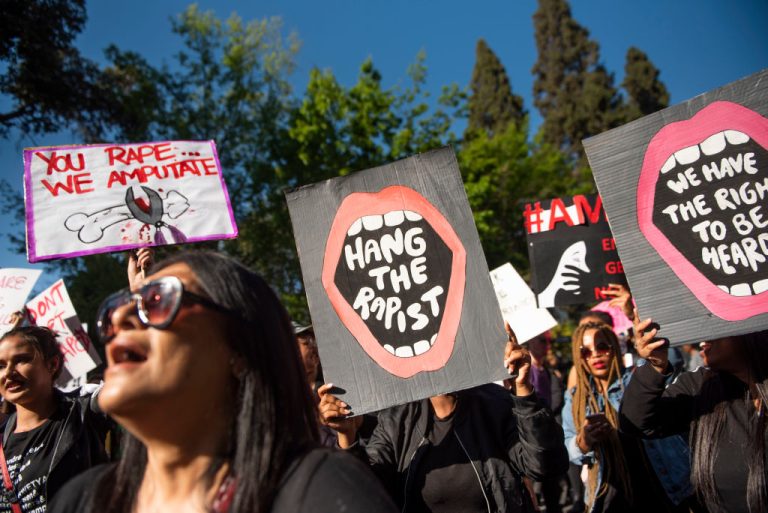
The Portfolio Committee on Basic Education has expressed deep concern over the alarming number of statutory rape cases in South African schools, revealing that only 42,650 of the country’s 405,000 educators have been vetted.

This shocking figure emerged during a parliamentary enquiry on Wednesday aimed at addressing the prevalence of sexual offences in schools and identifying measures to prevent such incidents.

The committee called for the urgent acceleration and expansion of the vetting process to include all school staff, not only teachers.

The enquiry heard submissions from the Department of Basic Education, provincial departments, teachers’ unions, legal advocacy groups, and learner representative organisations.

Committee chairperson Joy Maimela said the proceedings exposed several disturbing cases, including that of a school principal in the Eastern Cape who was accused of sexual misconduct, resigned before the case was finalised, and was rehired at another school a year later.

“The South African Council for Educators (SACE) had no records of the case because authorities never reported it. This meant the accused kept his SACE certificate and was rehired as an educator,” Maimela said.

She criticised the Eastern Cape Department of Education for its failure to explain the re-employment, adding:

“The Eastern Cape cannot evade this matter. We want answers on why the case was not reported to SACE and how the perpetrator was rehired.”

The incident, Maimela said, raised serious questions about the effectiveness of vetting mechanisms and the ability of education authorities to protect learners.

“The problem is multifaceted,” she added. “It cuts across social, economic, and cultural lines — reflecting deep-rooted structural inequalities and moral failures in our society.”

Basic Education Minister Siviwe Gwarube acknowledged systemic weaknesses.

“This is a complex issue. One of the biggest challenges is ensuring reports lead to convictions. The key to ridding our schools of sexual offenders is having them in jail,” said Gwarube.

Learner representatives told the committee that many teachers lack the training and knowledge to handle statutory rape cases or to report such incidents properly.

“Teachers do not have the skills to deal with statutory rape in schools, and some do not even know how to report these offences,” one representative said.

The committee also heard that underreporting by principals and families remains widespread, driven by cultural silence and fear of victimisation.

“We have noted with concern that, while policies mandate reporting, compliance remains inconsistent across provinces and districts,” Maimela said.

The committee recommended legislative amendments to make it compulsory for parents to report statutory rape, alongside comprehensive education on the age of consent and reporting obligations.

Maimela concluded that the committee will probe legislative gaps and scrutinise departmental awareness campaigns, adding:

“This confusion leads to under-reporting, delays, and the continued victimisation of children. The challenge is not the absence of law, but the failure of implementation — and the gap between policy and practice remains wide.”

INSIDE EDUCATION

Boys, bullying and belonging: understanding violent initiation at a South African school

By Ndumiso Daluxolo Ngidi and Melusi Andile Dlamini

Violence among learners in South African schools is a pressing concern. The minister of basic education told parliament in 2025 that hundreds of bullying cases had been reported in the first few weeks of the year. Since then, a series of alarming incidents have further drawn public attention.

While these occurrences mirror the high rates of violence in the country, they are also symptoms of systemic challenges within South African schools.

In 2015 the government introduced the National School Safety Framework to set minimum standards of safety and help schools understand and meet their responsibilities. It noted “the relationship between violence and other ecological factors relating to safe and caring schools by locating the school within its broader community”.

The framework suggests an awareness of structural determinants of violence in schools. But the sustained rise in incidents of interpersonal violence among learners points to the need for renewed attention, especially among schoolboys.

We are researchers whose interests include the anthropology of masculinities and health, and inclusive education and children’s geographies.

In a recent study we encountered a practice in schools called ukufikisana: a kind of initiation through which senior boys assert their dominance over junior boys, often through violence and intimidation.

Derived from the isiZulu phrase ukufikisana emandleni (“testing each other’s power”), the practice shares similarities with “hazing” or bullying. But it also reveals the social and cultural dimensions of violence within schools. For instance, schoolboys described ukufikisana as how one becomes “fully a boy”, suggesting that the experience and exertion of violence are inevitable.

Our findings demonstrate how ukufikisana reinforces hierarchical gender relations and normalises violence as a means of navigating power and identity among boys. This is deeply entrenched in the school environment.

We suggest that solutions lie in the interplay of poverty, violence and gender norms.

What boys said about bullying

The study drew on a larger photovoice study exploring learners’ perspectives on violence in and around their school. It focused on 14 teenage boys (aged 14-17) attending a poorly resourced, co-educational school in Inanda, KwaZulu-Natal province. Inanda is an urban area characterised by poverty, unemployment and high levels of violence and crime. Its circumstances are a legacy of the policies applied to black South Africans under apartheid.

The study engaged boys as experts in their own lives, allowing them to share their experiences through images and films. We followed ethical protocols to get consent from schools, parents and learners. A social worker was available to provide support.

We prompted the participants to visually depict what violence looked like in their school environment.

Working in pairs, the boys captured images of simulated acts and experiences of violence using cellphones, discussed them and added captions. Then they presented this material in focus group discussions, which were recorded audiovisually and transcribed. We looked for themes in what was discussed.

The boys produced images showing the various ways that violence emerged at school. In one instance, two participants recreated a stabbing incident in which senior boys threatened to stab a junior boy.

Senior boys spoke of ukufikisana as an initiation practice that reinforced their position as “leaders”. One described the “younger and powerless boys” as “puppets”; another said “it’s to show them who is boss in this school”. Another spoke of it as a “baptism of fire”, saying: they must always be prepared for it because it is coming for them … We show them that we are in charge of the school and they must respect that.

Younger boys told us: They don’t listen when we try to stop them; they just threaten to beat us.

I was scared of them. So I just kept quiet and let them do whatever they wanted.

It hurt in more ways than one. One boy said:

Ukufikisana is not just what they do; it is also what they say to you … After that experience, I just kept to myself, and I am now more reserved at school.

What ukufikisana does

From our analysis of what the boys said, it appears that ukufikisana serves a dual function. For senior boys, it works as a rite of passage that solidifies their position as “fully boys”, and warrants their demonstration of physical strength, authority and control. For junior boys, the experience enforces submission and vulnerability, framing them as incomplete or “lesser boys”.

This dynamic normalises violence among boys in school settings. It also perpetuates rigid and harmful ways of being boys at school. At school, boys must always be ready to fight and to show their power through violence.

From this perspective, it’s possible to understand why violence may be prevalent and persisting in some South African schools.

For most boys, ukufikisana primes boys to think that bullying and the reinforcement of power through violence are key attributes for their lives. The participants described how this practice shaped their daily interactions, fostering a culture where dominance and submission were ingrained in their understanding of what it meant to be a man.

These findings align with broader concerns raised in recent anti-bullying research, globally and locally, which highlights the need for school approaches to address bullying.

What needs to change

We suggest that to effectively combat bullying, schools should move beyond punitive measures and zero-tolerance policies. Instead, they should adopt participatory and community-driven strategies that not only consider the interplay of poverty, violence and gender norms, but also allow learners to contribute to possible solutions to violence.

One way this might be done is through actively involving learners as equal stakeholders in school violence interventions.

Ndumiso Daluxolo Ngidi, Senior Lecturer, University of KwaZulu-Natal.

Melusi Andile Dlamini, Lecturer in Anthropology, Rhodes University.

THE CONVERSATION

Dr Mugwena Maluleke appointed Acting NSFAS Board Chair after Stander’s resignation

0

By Thapelo Molefe

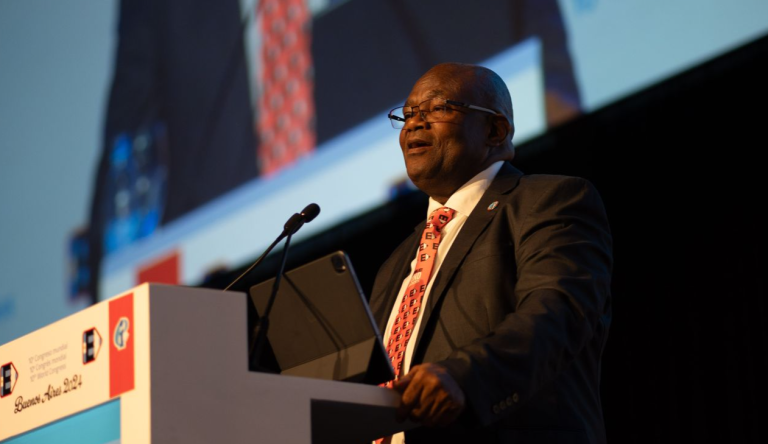
Higher Education Minister Buti Manamela has appointed Dr Mugwena Maluleke as the Acting Chairperson of the National Student Financial Aid Scheme (NSFAS) Board, effective from Monday this week.

The appointment follows the resignation of Karen Stander, who stepped down after citing racism, bullying, intimidation, and safety concerns.

In a statement on Tuesday, the Department of Higher Education and Training said the appointment ensures continuity and stability as the minister proceeds with a self-review court application to regularise the board’s appointment process.

The self-review, lodged in the High Court, was initiated after legal advice indicated procedural shortcomings in how the current NSFAS board was appointed earlier this year.

The minister said the review was a proactive measure to “uphold good governance and transparency in public appointments,” and not a response to any legal challenge.

“The functioning of NSFAS is not affected by the review process. Students can be assured that services are continuing. Applications for 2026 NSFAS funding remain open until 15 November 2025. I encourage all eligible students to apply now,” Manamela said.

The department emphasised that the board remains fully functional and that its operations, including student funding disbursements and application processing, will continue without disruption.

Maluleke currently serves as Vice President of Education International and General Secretary of the South African Democratic Teachers Union (SADTU). He is also a former council member of the Vaal University of Technology (VUT) and the Human Resource Development Council.

His extensive leadership experience, both domestically and internationally, is expected to help guide NSFAS through a critical transitional phase.

The ministry said Maluleke’s leadership “will help uphold governance standards, reinforce public trust, and strengthen oversight within the institution”.

Maluleke’s appointment comes at a challenging time for NSFAS. The entity has faced months of governance instability, student protests, and public criticism over delayed payments and administrative inefficiencies.

Stander’s resignation last week added to the turmoil, coming just months after she was appointed by former minister Nobuhle Nkabane.

In her resignation letter, Stander described NSFAS as being gripped by a “toxic working environment” marked by bullying, intimidation, and racial hostility. She said these conditions had made it impossible for her to discharge her duties “effectively and in good conscience”.

Stander also warned of systemic weaknesses within NSFAS, including flawed ICT systems, poor integration between operational functions, and leadership instability that has “plagued the organisation for nearly a decade”.

Parliament’s Portfolio Committee on Higher Education, chaired by Tebogo Letsie, expressed concern over the circumstances of her resignation, describing it as “deeply unfortunate” given the board’s recent reconstitution.

Letsie said the committee would engage both the department and remaining board members to ensure stability and accountability going forward.

Manamela, who met with Stander last week, said the ministry was taking her concerns seriously and reaffirmed his commitment to transparency and accountability within NSFAS.

“These matters warrant serious attention,” he said at the time.

“NSFAS plays a vital role in expanding access to higher education, and we must ensure that it operates in a manner that is ethical, transparent, and accountable.”

The minister has said that he will not oppose any legal action arising from the self-review process and will abide by the court’s decision.

Manamela congratulated Maluleke on his appointment and wished him success in steering the board through its transitional phase.

INSIDE EDUCATION

Early-reading survey launched as Gwarube warns many pupils miss benchmarks

0

By Lebone Rodah Mosima & Charmaine Ndlela

Basic education minister Siviwe Gwarube said on Monday that many pupils are failing to reach reading-fluency levels needed to read with comprehension by Grade 4.

Gwarube made the comments while launching the Funda Uphumelele National Survey (FUNS).

She said the baseline will, for the first time, measure across all 11 official languages the share of Grade 1–3 learners meeting language-specific fluency targets.

The benchmarks cover letter-sound recognition at the end of Grade 1 and oral reading fluency at the end of Grades 2 and 3, developed “language by language” over about six years, she said.

Gwarube said the results confirm “serious challenges in the early grades” but provide a clearer diagnosis of underlying skills such as phonemic awareness, vocabulary, and letter-sound association that enable comprehension.

“We are not measuring for the sake of measuring,” she said. “The value of good data: it gives us the power to act intelligently, not blindly.”

The minister said the survey emphasises home-language instruction because children “learn to read most effectively in the language they understand best,” adding that strong foundations make it easier to build bilingual proficiency, typically with English as a First Additional Language.

The department is “rolling out Mother Tongue-based Bilingual Education in Grades 4 and beyond,” she said.

According to Gwarube, the data will be used at three levels: to track progress nationally, provincially and by language; to strengthen accountability and support through district offices and school management using new, language-appropriate assessments; and in classrooms, where teachers will run diagnostic checks and target remediation.

She said the assessment instruments were developed by linguists and researchers from universities nationwide with department officials, and thanked philanthropic and multilateral partners that financed the work. “Today’s launch is not just the release of a report. It is a call to refocus our attention,” she said.

“We want all children to read with understanding by the end of Grade 3,” Gwarube said.

“When we conduct the next round of Funda Uphumelele, I am confident that we can see progress… in the daily experience of children who can now open a book and make sense of the world around them.”

INSIDE EDUCATION

Former finance clerk jailed for embezzling over R800k from Pretoria school

0

By Levy Masiteng 

A former finance clerk was handed a three-year jail sentence, suspended for five years, for stealing R846 000 from Laerskool Akasia in Pretoria, the Gauteng Department of Education (GDE) said on Monday.

The conviction was handed down on 9 June 2025, finding Lorraine Scheepers guilty of fraud and theft.

Last week, Scheepers was sentenced to three years’ imprisonment, with five years’ suspension, and ordered to repay R210 000 to the school by the Pretoria North Magistrate Court.

According to the GDE, Scheepers stole approximately R846 000 in school funds between 2019 and 2021 and manipulated bank statements to conceal the theft.

The department’s Anti-Corruption Unit launched an investigation following an anonymous tip-off, uncovering the fraudulent activities.

“The GDE commends its Anti-Corruption Unit for its diligent work in ensuring accountability and reiterates its zero-tolerance stance on corruption and financial misconduct within schools,” said Gauteng Education MEC Matome Chiloane.

The department urged all school communities to report any suspected irregularities through official GDE channels.

INSIDE EDUCATION

Manamela Approves Five-Year University Enrolment Plan for 2026–2030

0

By Thapelo Molefe

Higher Education Minister Buti Manamela has officially approved the Ministerial Statement on Student Enrolment Planning for Public Universities for the 2026–2030 academic period, setting out targets for student intake, graduation, and system growth over the next five years.

The plan, which also covers the associated funding cycle through to 2032/33, follows months of consultation between the Department of Higher Education and Training (DHET) and all 26 public universities.

It represents the culmination of a comprehensive national planning process that included bilateral meetings, a national workshop in November 2024, and the submission of institutionally approved enrolment and graduation plans.

According to the approved targets, total university enrolments are projected to rise from 1.07 million in 2023 to 1.18 million by 2030, reflecting an average annual growth rate of 1.5. 

The intake of first-time entering undergraduates is expected to grow by 1.8% per year, alongside steady improvements in graduation rates and postgraduate output.

While welcoming these projections as a milestone for stability and predictability, Manamela warned that the current trajectory may still fall short of meeting the broader National Development Plan (NDP) targets, particularly in key fields such as science, engineering, teacher education, and scarce skills.

“This enrolment plan provides much-needed stability and predictability for our system. But we must also be honest: at the current rate, we are unlikely to meet the full scope of our NDP targets by 2030. This is not a moment to sit back, it is a call to act,” Manamela said in a statement on Monday.

The minister emphasised that the approved enrolment targets are not a final destination but rather a foundation for transformation within the post-school education and training (PSET) system.

“We are committed to a more articulated, integrated and responsive PSET system,” he said.

“This means growing our TVET and Community College enrolments, improving quality and relevance, and expanding digital, work-integrated and occupational training pathways.”

Manamela said that several initiatives are already underway to support this reconfiguration. These include the development of a Skills for Growth Compact with industry and government, a revision of universities’ Programme Qualification Mix (PQM) to better align with national priorities, and strengthened articulation pathways between TVET colleges, community colleges, and universities.

The department is also focused on expanding distance and blended learning opportunities to widen access, and is working with the Department of Basic Education to strengthen mathematics and science performance in schools, boosting the pipeline for STEM (Science, Technology, Engineering and Mathematics) disciplines in higher education.

The approved ministerial statement will now be communicated to all public universities, each of which will receive institution-specific targets and guidelines. Universities are expected to confirm their commitments through their councils and integrate the new targets into their annual performance plans.

The DHET will monitor implementation annually and remain open to adjustments based on budget changes, policy developments, and system performance, it said.

INSIDE EDUCATION

SA marches into knockout rounds at FIFA U-17 World Cup despite defeat to Italy

0

By Johnathan Paoli

South Africa’s U-17 national football team, Amajimbos, made history on Sunday by qualifying for the knockout stages of the FIFA Under-17 World Cup for the first time, despite a 3-1 defeat to European champions Italy at the Aspire Academy complex in Al Rayyan, Qatar.

The young South Africans finished second in Group A with four points from a win, a draw, and a loss, thanks to a goalless draw between hosts Qatar and Bolivia in the group’s other fixture.

“This result shows that South African football is moving in the right direction. Our boys gave everything against a top European side. The experience will serve them well as we prepare for the knockout stages. We respect every opponent, but we fear none,” coach Vela Khumalo said after the match.

Italy topped the group with a perfect nine points, while Qatar and Bolivia exited the tournament with two and zero points respectively.

The match started at a frenetic pace, with Italy, the reigning European U-17 champions, asserting themselves immediately.

South Africa’s defensive shape was tested early, and within four minutes, Borussia Dortmund prodigy Samuele Inacio struck the opener.

A precise through ball from Valerio Maccaroni found Inacio in space on the right, and the winger’s low drive beat goalkeeper Solethu Radebe at his near post.

Italy looked dominant, creating a string of chances through their front three of Inacio, Antonio Arena, and Simone Lontani.

AC Milan’s Lontani came close to doubling the lead in the 20th minute, only for Radebe to pull off a sharp stop.

Amajimbos gradually found their rhythm and began to show more ambition going forward, being rewarded in the 32nd minute when Emile Witbooi, one of the tournament’s most exciting attackers, earned a free-kick near the touchline.

Taking it quickly, Witbooi picked out Kamohelo Maraletse bursting down the flank; his shot cannoned off the post, but Shaun Els of Kaizer Chiefs reacted quickest to slot home the rebound and level the game at 1-1.

That goal lifted Vela Khumalo’s young charges, who defended bravely to keep the Italians at bay until halftime.

Italy coach Massimiliano Favo, visibly frustrated by his team’s lack of sharpness, reorganised his side during the interval, with the adjustment working almost immediately.

Ten minutes into the second half, a pinpoint Maccaroni corner found Antonio Arena, the AS Roma forward, who rose above the South African defence to head home and restore Italy’s lead.

Barely three minutes later, Italy delivered another devastating blow.

Substitute Destiny Elimoghale surged down the left wing, exchanged passes with Arena, who then squared the ball to Inacio for a composed finish and his second goal of the match.

Despite the 3-1 scoreline, Khumalo’s side showed determination and tactical discipline against one of Europe’s finest youth teams.

For South Africa, the result was secondary to the achievement.

The draw between Qatar and Bolivia confirmed Amajimbos’ progression to the Round of 32, marking the first time a South African U-17 side has advanced beyond the group phase at a FIFA World Cup.

Their qualification adds to a growing wave of optimism surrounding South African football, with the country’s youth and senior teams showing marked improvement across age levels.

The U-20 side, Amajita, reached the last 16 at their World Cup in Chile last month, while Bafana Bafana secured qualification for the 2026 FIFA World Cup; their first appearance since 2002.

The 2025 edition of the FIFA U-17 World Cup marks a new era for the competition, featuring 48 teams for the first time, up from 24 in previous tournaments.

The expansion has allowed more African teams to showcase their talent, with South Africa, Senegal, and Zambia all advancing to the knockout rounds.

Morocco, meanwhile, remains in contention following a record-breaking 16-0 victory over New Caledonia.

For Amajimbos, qualification is a landmark achievement that reflects the resilience and potential of a new generation of South African footballers.

Their next challenge will come in the Round of 32, where they will face one of the tournament’s group winners.

INSIDE EDUCATION

NEHAWU and NSFAS reach settlement after seven-month-long wage dispute

By Johnathan Paoli

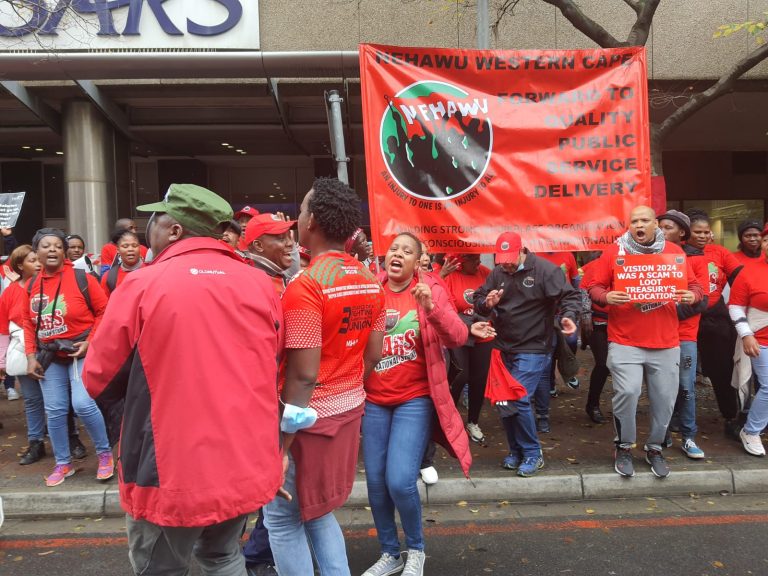
The National Education, Health and Allied Workers’ Union (NEHAWU) and the National Student Financial Aid Scheme (NSFAS) have concluded their seven-month wage dispute, bringing an end to a protracted period of negotiations and industrial action that disrupted operations within the student funding body.

NEHAWU Western Cape Provincial Secretary Baxolise Mali praised the “resilience and discipline” of union members who “maintained solidarity” throughout the negotiations.

“NEHAWU as a red fighting militant union, appreciates the loyalty, and patience of our members during these protracted negotiations. As NEHAWU, we will continue without flinching in championing the interests of our members and workers at all materials,” he said.

The settlement provides for a 7 percent across-the-board salary adjustment for all employees within the NSFAS Bargaining Unit, covering levels three to twelve, with the increase backdated to April 1, 2025.

Workers will also benefit from a substantial rise in the housing allowance, which has been increased by 83.3 percent from R1,200 to R2,200. Of this amount, R1,793 will take effect from April 2025, while the remaining R227 will be implemented in April 2026.

In addition, the agreement introduces once-off long service awards, recognising employees’ dedication and years of service with payments ranging from R5,000 for five years of service to R30,000 for thirty years.

While these improvements address some of the most pressing demands, both parties agreed that several other matters would require ongoing engagement through established forums.

Issues such as the staff dependent bursary policy, early retirement options, hybrid working arrangements, the recognition threshold for new unions, further consultations on decentralisation, and the implementation timeline for job evaluation outcomes will continue to be discussed within the National Bargaining Forum and the National Consultative Forum.

Both NSFAS and NEHAWU agreed that by resolving the long-standing dispute, not only were immediate employee grievances addressed, but also set the stage for more constructive dialogue in the future.

In an official statement, NSFAS acknowledged that the bargaining process had been lengthy and, at times, difficult, but said that the discussions helped clarify expectations between management and staff.

NSFAS said that the successful resolution of the dispute now allows all parties to concentrate on bringing the 2025 academic year to a smooth conclusion and preparing for an efficient start to 2026.

“NSFAS workers are a core part of the organisation’s delivery machinery. They are at the coal face of student funding processing applications, appeals, managing cases and disbursements and providing a service to Higher Education Institutions,” the organisation said.

INSIDE EDUCATION

Biovac opens new product lab in Cape Town with DSTI, Gates to bolster Africa’s vaccine capacity

0

By Lebone Rodah Mosima

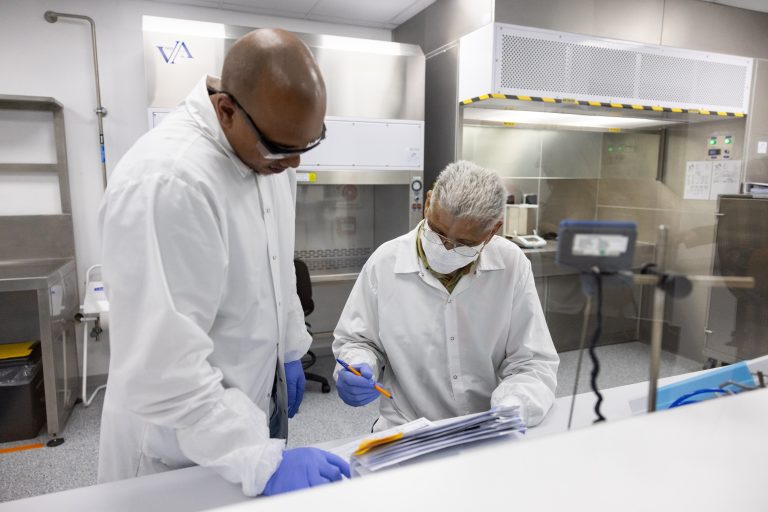
Cape Town-based Biovac has launched a new Product Development Laboratory in collaboration with South Africa’s Department of Science, Technology and Innovation (DSTI) and the Bill & Melinda Gates Foundation, marking what the company called a milestone for Africa’s vaccine self-sufficiency and health security.

Biovac CEO Morena Makhoana and company representatives told Inside Education the facility advances the country’s vision to become a continental leader in vaccine research, development and manufacturing.

Founded in 2003 as a public-private partnership with the South African government, Biovac develops, manufactures and “fill-and-finishes” vaccines for South Africa and other African markets.

The laboratory was designed to ensure Africa possesses the tools, expertise and capacity to develop high-quality vaccines and respond rapidly to future outbreaks and pandemics, Makhoana said.

The facility has developed three technology platforms – mRNA, bacterial and cell culture — enabling Biovac to pursue vaccine projects across multiple fronts.

“Biovac is evaluating project opportunities on all three platforms to ensure sustainable vaccine development for Africa, prioritising the development of vaccines for diseases with significant public health impact in Africa, such as the Oral Cholera Vaccine (OCV),” the company said.

“The end-to-end capability (including R&D) being built will enable future expansion to other high-burden diseases.”

Biovac plans to build on the momentum of mRNA gained during the COVID-19 pandemic by applying the technology to Africa’s major viral threats, including TB, RSV and HIV. While it called mRNA a key tool against the continent’s disease burden, the company added that vaccine development is multifaceted and no single approach is sufficient, so it is broadening its technology stack to deliver durable, locally suited solutions.

The company has developed strong collaborations with South African universities, research institutions, and global health partners.

The new lab will strengthen these partnerships, said Biovac, providing a “collaborative engagement with key institutes and enable growth of the bio-economy”.

“Furthermore, the facility can also be used to work closely with these institutes to foster local talent and providing opportunities for training and development of an African workforce that can meaningfully contribute to critical skills in South Africa and even beyond our borders.”

Through partnerships with UvuBio, SAMRC, and DSTI’s National Research Foundation (NRF), Biovac offers internships and graduate placements for young researchers, providing exposure to multiple vaccine platforms, including mRNA. It said that many these trainees have transitioned into permanent roles within Biovac or the broader biotech industry.

Biovac said that the Gates Foundation’s confidence in its work – and its 10 year collaboration – were pivotal in its ability to deliver on large-scale initiatives.

“DSTI’s commitment to science and innovation has demonstrated to our partners that the South African government stands firmly behind initiatives like this.”

The company plans to significantly expand its manufacturing footprint, aiming to manufacture at least five products for export within the next five years and to double its manufacturing capacity and workforce by 2030.

“We will do our best to retain our current skills as well as attracting new local skills into employment, through the meaningful work and world-renowned skills development exposure on offer through the scientific and manufacturing projects that we currently have in our stable, as well as new projects we are planning”, the company said.

The laboratory has been positioned within Africa’s growing pandemic-preparedness network, meaning it will act as a regional backbone for rapid vaccine response.

Biovac will be able to design, test, and produce outbreak vaccines quickly, to strengthen supply-chain resilience and regional readiness, through its mRNA and other vaccine platforms. “Unlike during the COVID-19 pandemic, Africa is now building the capabilities needed to take care of its own health needs.”

Environmental sustainability is also a priority, the facility said, citing energy-efficient designs, water recycling and secure bio-waste management systems. Biovac said that local vaccine production will reduce emissions associated with long-distance logistics, contributing to a lower-carbon, more resilient African health supply chain.

Biovac plans to create over 400 new jobs in the next five years, growing its workforce from 320 to more than 740 employees.

“Our Science & Innovation department typically employee up to five graduates per year, for a period of 6 to 12 months, and these graduates will participate in the current, as well as the new product development lab activities, so to grow their experience across multiple technology platforms, including mRNA.”

DSTI Deputy Minister Nomalungelo Gina called the lab a “milestone” for South Africa.

“This high-tech facility, equipped with advanced mRNA technology and state-of-the-art research capacity, will empower scientists to tackle the most prevalent diseases in Africa, ensuring that home grown innovation addresses the health needs of the citizens.”

INSIDE EDUCATION