Home Blog Page 440

Load Shedding Disrupt Matric Exams

Department of Basic Education spokesperson, Elijah Mhlanga, says areas mostly affected by load shedding on Wednesday were in Gauteng, KwaZulu- Natal and the Western Cape, where large numbers of learners were sitting for the Computer Application Technology exam.

Mhlanga added that the DBE is worried about today’s examination, where most of the subjects under examination, such as Information Technology, will require electricity.

He said they are in discussions with Eskom to convey the Department’s concerns and to seek solutions.

Gauteng Education MEC Panyaza Lesufi says its clear that stage 2 of Eskom’s load shedding cycle had badly affected the start of the Matric examinations in the province.

The MEC provided a breakdown of the centres affected while reassuring that learners who missed their exams, or were affected by the blackouts, will be given an opportunity to write a backup paper on a soon to be announced date.

He said 36 centres were affected by the power cuts, and three centres were unable to save candidates work.

Gauteng education spokesperson Steve Mabona said: “It’s quite unfortunate that we were severely affected, and we hope today as we’re writing information technology, we’ll be given an opportunity to proceed with our examination. To learners, they should focus on and write what they know.”

Ronald Nyathi responded on Facebook: “This is Not Good Leadership ! The Kids went to hell n back Preparing for their Exams only to be let Down like this.”

And Zaza Sizane said, “Its difficult Mr MEC for a child who is not used to studying by using a candle to be able to study.”

The Western Cape Department of Education (WECD) said measures are in place to deal with load shedding while matriculants write their final exams, adding that more than 30 out of the province’s 274 exam venues were affected.

The WCED said that they are in constant communication with all the schools via their subject advisors to ensure that the exam is managed in consistent manner.

“Our priority is to ensure that learners are not further disadvantaged as a result of these cuts.”

DBE Says Contingency Plans In Place As Eskom Warned Not To Use Rolling Blackouts As Bargaining Tool For More Money

The Department of Basic Education (DBE) says Eskom’s power cut announcement is “extremely unfortunate” as it coincides with the start of the matric exams.

Speaking from China, departmental spokesman, Elijah Mhlanga said the extent of the impact of the blackouts has not yet been established, but reassured that “contingency plans are always put in place to accommodate situations of this nature.”

Eskom said it will cut up to 2000 megawatts of power from the national grid from Wednesday due to a shortage of generating capacity starting at 9am.

Mhlanga added that the DBE is engaging Eskom on the matter.

The DA, also expressed concern over the impact of the blackouts on the 2019 Matric Exams.

“The DA has been receiving concerned calls from principals and teachers across the country, regarding the impact of rolling blackouts on today’s Computer Application Technology practical exam,” the party said in a statement.

The DA added that the embattled power utility is “more concerned about funding Eskom’s deteriorating operations than the actual job of making it a profitable, efficient and stable energy producer.”

Grand Affirmation For the Man ‘Who Loved To Affirm People’ – Matthew Goniwe Memorial Lecture To Take In National Teacher Awards

Anti-apartheid activist Matthew Goniwe, who was also a teacher, principal, community leader and one of the so-called ‘Cradock Four’ murdered by apartheid security forces, is to be honoured at a gala evening at the Rhema Bible Church later this month.

The Gauteng Department of Education (GDE) will host the annual Matthew Goniwe Memorial Lecture in tandem with the National Teacher Awards (NTA) to commemorate, honour, and deepen the legacy of this legendary activist educator who hailed from the Eastern Cape.

Image result for matthew goniwe

Described as a leader and a teacher loved by learners, parents and his community, Goniwe epitomised the noble ideals, civic values and strength of character which broadly characterize the qualities sought in determining South Africa’s stand out teaching professionals.

The aptly named theme, ‘The Living Legacy of Matthew Goniwe: The future of Education in the 4IR era,’ underlines the fourth industrial revolution as the next frontier that will require much more interdisciplinary teaching, research and innovation, much in line with Goniwe’s visionary approach – albeit in a different era – to promote excellence in teaching performance and outcomes.

To mark the 20th anniversary of the NTA, the DBE has expanded the initiative by including in its deliberations the judging criteria considered by African Union (AU) and the Global Teacher Prize (GTP).

The move affords South African educators’ efforts to be recognized in a wider context when being considered as candidates in the AU and GTP awards.

The annual Matthew Goniwe Memorial Lecture and National Teacher Awards further coincides with the month in which the world celebrates the unique and vital role of arguably its greatest resources, its teachers.

Image result for matthew goniwe

The NTA is thus part of the GDE’s efforts to raise the public image of the teaching profession, by recognising and excellence in teaching performance, and in so doing deepening the “living legacy of Matthew Goniwe.”

It further seeks, to honour dedicated creative and effective teachers and schools, while encouraging best practices in institutions of learning.

Matthew Goniwe’s widow, Nyameka, described her late husband as a “man who loved to affirm people,” and as the nation – through his memorial lecture and NTA – readies to honour his laudable legacy, the GDE has provided a platform for South Africa to publicly thank all her those committed educators who are spurred on by the adage: “It is not about what I can get, but about what I can give.”

Much like how Matthew Goniwe lived his life.

The 2019 Matthew Goniwe Memorial Lecture/ National Teaching Awards
Friday, 25 October 2019
Rhema Bible Church

Kathrada Foundation Announces Top 3 ‘Against Racism’ Essays

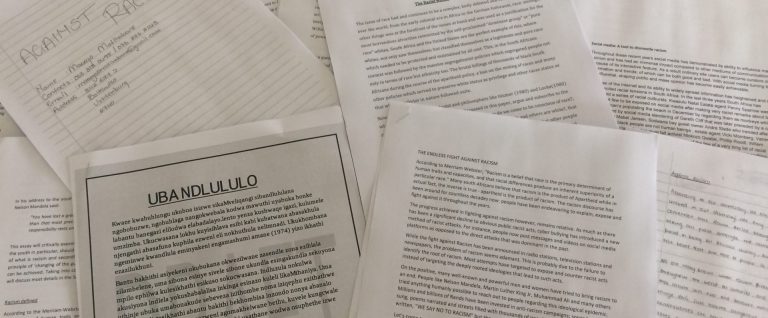
The Ahmed Kathrada Foundation (AKF) has announced the three winners in the Foundation’s Youth Essay Writing Competition against racism.

The announcement came as the Foundation hosted its 10th annual lecture Tuesday, with retired Constitutional Court Justice Albie Sachs in conversation with law professor Nomboniso Gasa.

The top three are Jaydon Farao, 24, of Eerste River, Cape Town; Charissa Cassels, 23, of King William’s Town; and Mbalenhle Shandu, 17, of Felixton, KwaZulu-Natal.

Here is the first instalment of the three essays.

What I heard
By Jaydon Farao

When I was 10, I got into the habit of eavesdropping on adult conversations. A perilous and thrilling endeavour. It was around this age when I first heard the word I wasn’t supposed to hear.

A relative had uttered it with a casualness of a Sunday afternoon stroll. The context of the conversation eludes my memory, but the word’s pronouncement remains indelible.

They said k*ffir

The way in which the word strolled from their mouth, briefly sitting on their lips, only to rush out and permeate the innocence of my ears, was horrifying. The word had immense weight, leaving me unable to discard it from memory.

A dark mould capitalising on my infantile consciousness. I stared into the hateful home the word had just left, into the moving mouth continuing its momentum without stammering. I stood there in silence. There were other mouths there besides mine. 

No one said a word.

When South Africa “discarded” its chromatic scheme of classification and embraced one symbolic of a rainbow, the euphoria clouded judgement just long enough for the Truth and Reconciliation Commission to complete its proceedings.

All was meant to be well. Instead, the Republic still sat with the foundations of its transgenerational trauma, racism and white supremacy; the destructive factors that led to my encounter with the K-word.

Racial hatred often follows demographic patterns. This time, it did not. It came from a so-called coloured person. This is no surprise to many South Africans. Anti-black rhetoric is rife within the coloured community, clearly signalling the success of the Apartheid state’s goal; to divide on the grounds of race.

One only needs to sit around the dinner table on holidays, as politics inevitably veers in, to experience the racism infested within the coloured community. 

I began grappling with these thoughts as I entered adulthood, while simultaneously entering my racial identity crisis. I fleshed out what it means to live in a city as racially segregated as Cape Town, trying to dismantle the social and spatial obstructions that remain strongly built by Apartheid. Some of those structures affording me opportunities while concurrently obstructing my dignity.

I was privileged enough to visit the UK on an exchange programme when I was in Grade 10. It was my first trip outside the African continent. It would also be my first confrontation to questions of my identity regarding my race.

I was sitting alone one day, in the cafeteria at lunch time and had reluctantly welcomed a fellow student, a Connor-type, when he asked to join. The conversation had begun with pleasantries and continued with my rehearsed responses flowing freely. It took a turn just as I had exhausted my script.

“What are you exactly? Are you white? Black?” Connor ambushed into the territory he was obviously preparing for. I entertained this as a genuine inquest while he glared at my low-fade haircut, perplexed by my light skin tone.

I explained how race had been defined under the Apartheid government and the box I need to tick when filling out any application. Connor sat back and took a moment to finish chewing his food. Eventually, he unleashed his actual reason for sitting directly across from me.

“What’s a k*ffir?” 

I stopped drinking my water, and slowly set my glass on the table, shocked at the ease with which the word had crossed continents to fall upon my ears. I begged his pardon, attempting to imagine he had said something else. 

He repeated his question. 

I paused once more. Still naïvely assuming his innocence, I explained the vulgarity of that word. Contextualising the similarities and differences with the N-word. Attempting to bridge the gap in his ignorance. He sat there, I thought, digesting the painful thing he had said. I imagined he would be ready to apologise and that we would fetch our dessert before continuing down another path of conversation.

I was a fool though, because he knew the meaning of the word before we had sat down. He wanted me to explain its power and its painful history, so that he could say, “Cheers k*ffir,” as he got up to leave the dining hall. Leaving me to hear it once more, sitting with my empty plate, my embarrassment, and my shame.

In that moment, in which I felt incredibly lonely, I picked up my tray, dropped it off, and walked to my room. Smiling to anyone I recognised, hiding what I had experienced. Exceptional othering of intense indignity. I was left to navigate the reception of that hatred knowing that in South Africa, people who looked and sounded like me were using that exact word to denigrate and direct hatred towards Black people.

My dignity was stripped that afternoon, but coloured people back home were still acting as agents of white supremacy, forcing Biko to roll in his grave while Verwoerd rejoiced in his. How was I supposed to position myself on the receiving end of that word, when people who resemble me have used it?

This dichotomy poses a challenge to reconcile and exhibit my Blackness with the ever-present racial rift that exists in this country. I am not supposed to hear the K-word, but I do. It has travelled oceans and generations to the delight of white supremacists and it disheartens me.

Much of my anger and shame concerning the K-word is rooted in my acknowledgement of the power of words and language. A power which has been capitalised by many malevolent individuals in history.

It has presented itself on all spectrums of hate. “Those people”, “them”, “illegal aliens”. A masterstroke of othering. This kind of language does not develop spontaneously, so in trying to understand the power of a word, one can often look towards its roots. The K-word has Arabic origins but was stolen by Europeans to describe indigenous people of South Africa. A descriptive word, with existing derogatory undertones. Its path towards violence in this country was carefully constructed.

During Apartheid it put on its cloak and strutted on the racist landscape it was free to inhabit, with the campaign slogan of the National Party in 1948 being, “Die k*ffir op sy plek.” 

In 1976 the word became unlawful in South Africa, but still very much in mainstream racism nationally. It would take 24 years before it was classified as hate speech, with the first conviction of a person using racist language, Vicki Momberg, occurring only in 2018. The incident was recorded. She had said the K-word 48 times (that we know of).

It took convicted racist Vicki Momberg saying that dehumanising word 48 times, on camera, to allow the extent of her actions to be reprimanded by law. This was not her first day at the K-word rodeo. She was fully aware of her power, despite her lawyers arguing her state of mind being out of the ordinary in that way that racists are usually presented.

People who are under “stress” in vulnerable situations and just cannot help but blurt it out. The people making excuses for these racists have usually encountered such behaviour before and encouraged or ignored it. It may not have begun with extreme vulgarity, but it began somewhere. The way in which we criticise cultures.

The way in which we other different people. This is how power develops. This is how white supremacy operates. So, when I hear that “word” being spoken around me or at me, I freeze. I am angry with myself because I haven’t done enough to combat it. This is part of why I despise that “word”. It reveals my complicity in its continuing legacy.

Part of the word’s power is silence. Silence from those who would never dream to say it, but upon hearing it, join it in its invisibility. This invisibility includes reactions to all expressions of hate, with or without vile words.

We contribute to the everlasting breath of racism if we are to disengage and detract. It’s a culture of silence that has grown from an irrational loyalty and fear of confrontation, and it aggregates our complicity.

We need to categorically call out racism, to the extent of embarrassing its agents, in order to limit its relevance.

It begins around the dinner table as you’re dishing up the main course, and that one uncle says something you’re not supposed to hear. 

Declining Quality Education Means Africa’s Youth Not Prepared For Job Market – Report

A sharp decline in the quality of education and training provided by African countries since 2014 has left many of the continent’s young people ill-prepared to enter the job market, an influential report said Tuesday.

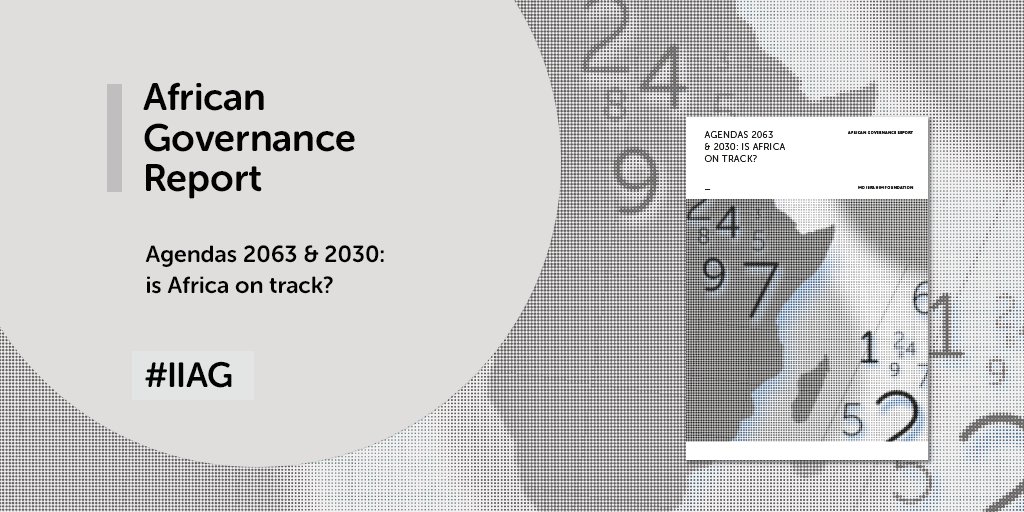
The African Governance Report 2019, the most comprehensive survey of its kind on the continent, provides a framework for governments, institutions, civil society and the private sector to accurately assess the delivery of public goods and services, and policy outcomes, across the African continent.

The 2019 launch edition, which used data from the Ibrahim Index of African Governance (IIAG), found that enrolment and access to education was particularly low in the tertiary sector.

2019 Mo Ibrahim African Governance Report.

“This has resulted in the burgeoning youth population being faced with increasing struggles when entering the job market,” researchers at the Mo Ibrahim Foundation said.

Under 15s now made up the majority age group in Africa, the authors added, they added.

The index rates 54 African nations on criteria such as security, human rights, economic stability, just laws, free elections, corruption, infrastructure, poverty, health and education. 

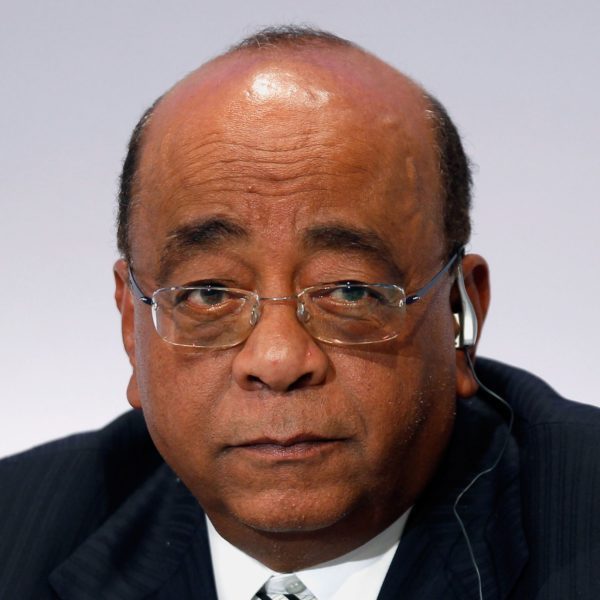
Mo Ibrahim, a Sudanese telecoms tycoon who launched the foundation, said it was down to Africans to confront the issue.

“When it comes to education, really we have a problem,” Ibrahim told Reuters. “When you look at the demographics, and you look at the economic growth, you see that we’re actually falling behind.”

“If you manage to take care of your young people, that is a wealth. If you fail to do that, it is a burden, a threat”

Mo Ibrahim

Africa is expected to account for more than half of the world’s population growth between 2015 and 2050, according to United Nations data.

The continent’s population is projected to double by 2050, and could double again by 2100, the UN has said.

“Africa’s ‘data gap’ needs to be urgently addressed,” the study said further.

“This will create an environment conducive to sustainable and equitable development, ensuring no one is left behind.”

Chinese and South African School Principals Learning From Each Other

 Elijah Mhlanga

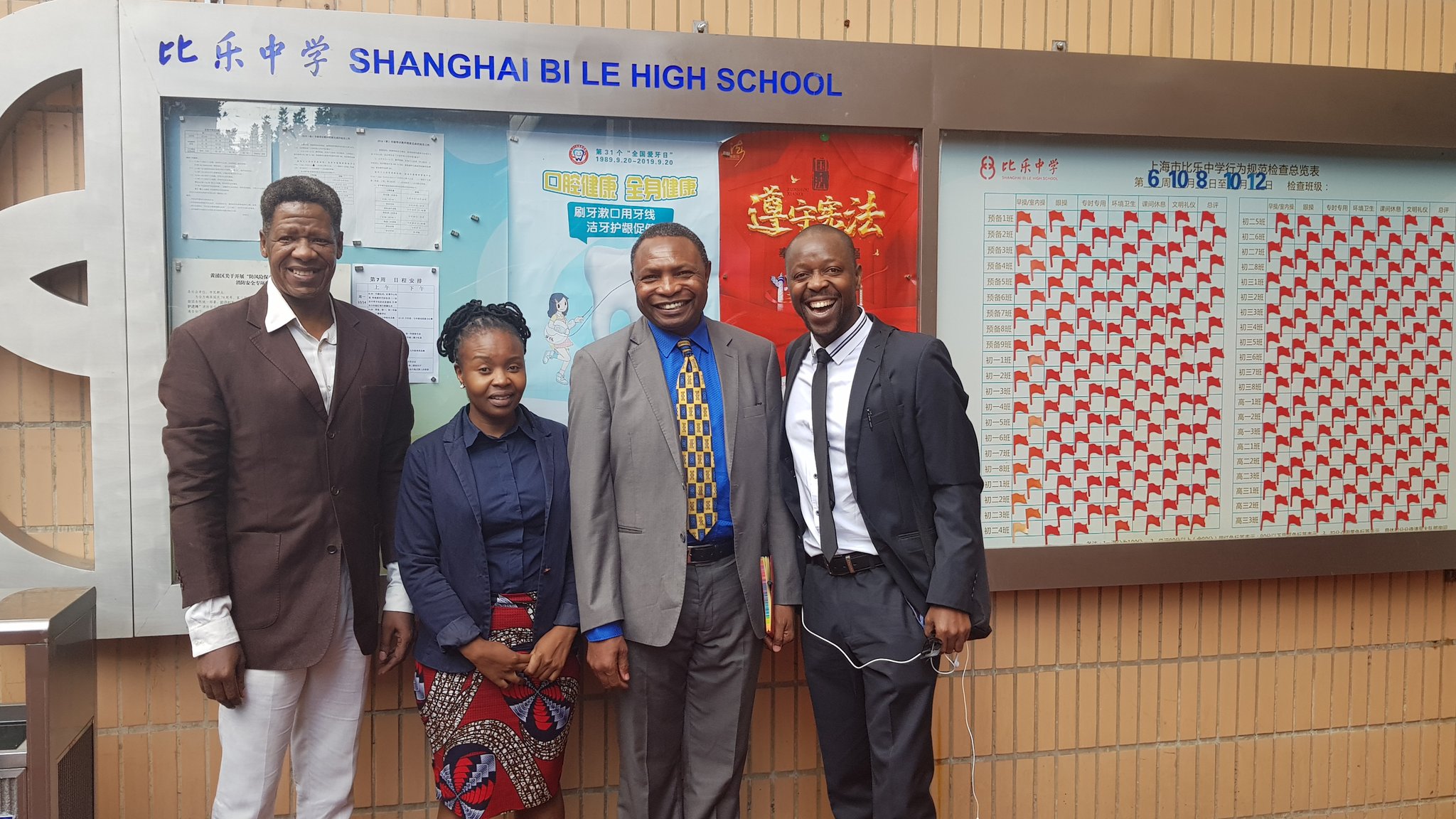
SHANGHAI – Cooperation between parents and teachers is a critical factor in a child’s development, while school principals should play the lead role in creating the environment for such a partnership to be effective.

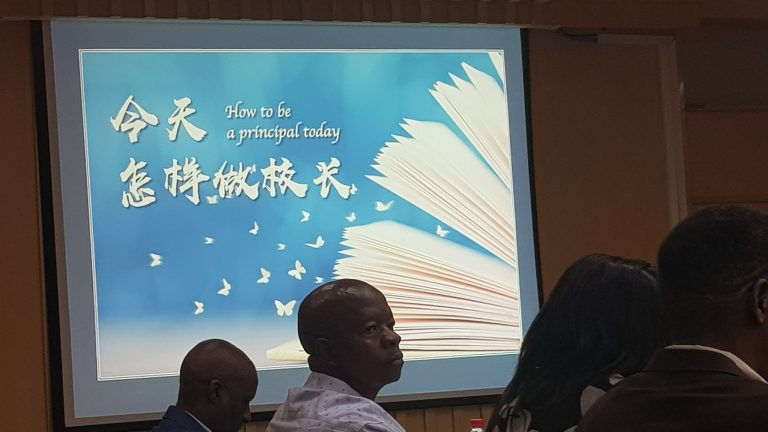
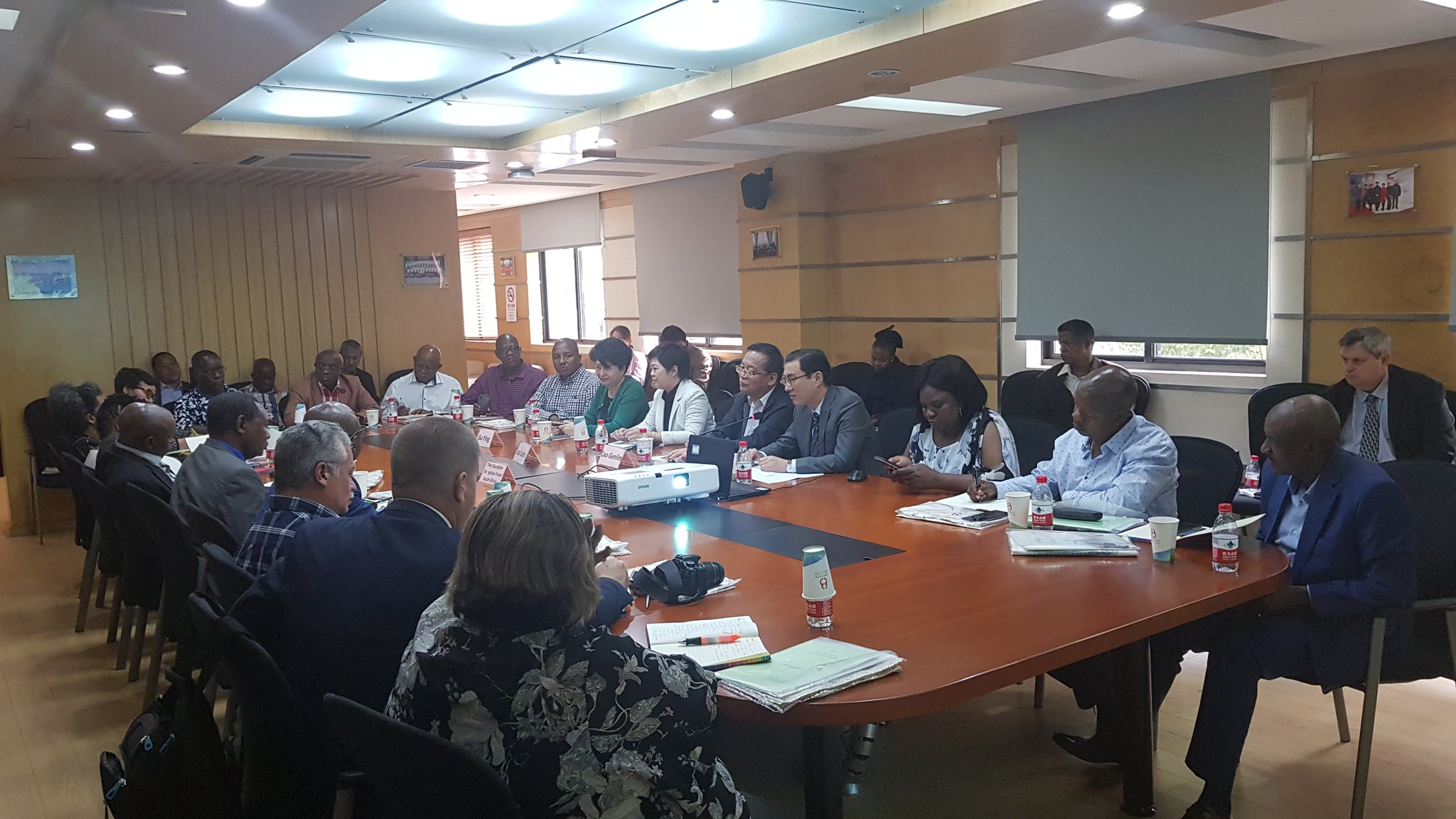
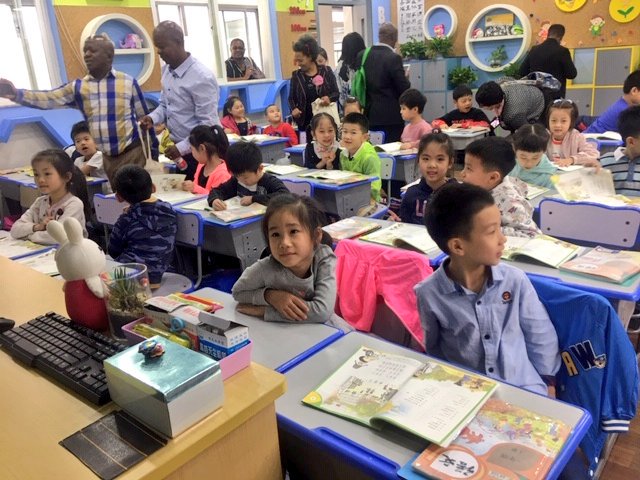
This was raised at a session at the Bi le High School in Shanghai, China where school principals from China and South Africa shared best practices on managing schools for enhanced performance outcomes.

Bi Le School principal, Luo Lixin, told her South African counterparts that in her country, they place huge emphasis on the notion that education is not the sole responsibility of a school and educators, but also the function of parents, stakeholders as well as the broader the society.

Luo said it’s the duty and responsibility of school principals to understand the strengths and weaknesses of their teachers to ensure the desired learning outcomes.

“A principal must work together with the teachers, create an environment of harmony and have parents on board as well,” she said.

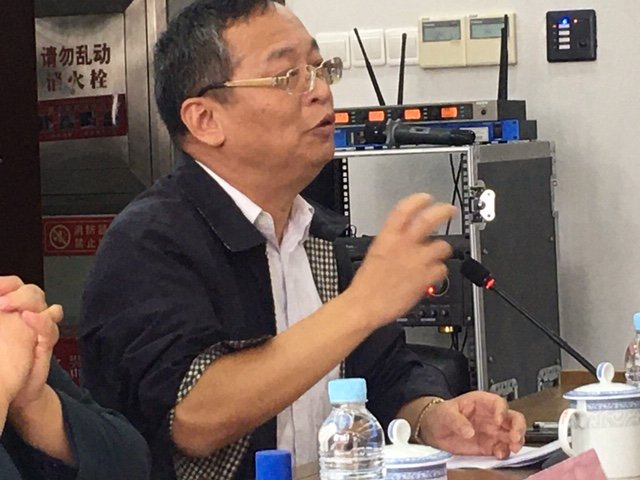
The district director, Cao Genlin, said teachers and parents had a responsibility to instil and maintain discipline among learners. Corporal punishment is banned in China and any teacher who administered it could lose their teaching license.

He said substance abuse and bullying in his schools were not major problems because parents were deeply involved in the education of their children.

Luo pointed out that learners had different ways of learning, and it is important for parents to closely monitor their children and support them accordingly.

“My learners are energetic and are always interested in learning and that is very rewarding for me,” she said.

The visiting South African principal delegation also visited the other top performing schools in the city and engaged further with their Chinese counterparts.

Wang Jue, the principal of Shanghai Ghezi Junior School, said: “We teach our learners character, life long development, patriotism and we also want them to be down to earth.”

Wang said the key to being an effective principal is putting people first, adding, “you also need to know how to utilize resources for better education for your children.”

“A good principal is a good school. A good school can make a good principal.”

In his parting advice to the South Africans, Cao listed some strategies to consider.

A good principal, he said:

– is a good Manager; you manage people and resources

– is a leader; when you have an idea or a vision you need a team to

help you realise the vision.

– is a facilitator; coordinates relationships between all stakeholders,
deals with conflict and find resolutions, it can involve learners and
teachers or among teachers themselves.

is a peacemaker; creates a friendly atmosphere in the school

is a reformer; introduces reforms to the school so it can keep up with
times. If you don’t adjust to new ways of working your school won’t
be successful.

“The(se) principles we are giving you have worked for us because Shanghai has always been a leading city in China especially the District we are in. We hope it helps you too in South Africa since you are in basic education,” said Cao.

And, it appears, the input from the Chinese has resonated with the South African delegation.

“This is my first day to visit the schools in Shanghai, I’m not exaggerating when I state that the staff of both schools were exceptionally professional, courteous, and above all knowledgeable,” enthused Lydia Mpeqeka from Thea-Morafe Focus School in the North West.

“The expertise as displayed in their classrooms and all over both schools contributed immensely to our group’s overall learning experience,” she added.

Gerben Janse van Rensburg from the Laerskool Malelane in Mpumalanga said they have gained invaluable insights in their engagements with Chinese educators.

“What a wonderful experience to see work ethics in motion. Children learn because they want to, teachers teach because they are passionate. They have an intrinsic motivation to do their best to change the state of the nation. It is not about what I can get, but about what I can give!”

The principal at the Esithebeni Primary School in Gauteng, Thembi Magubane-Mkhonza, said the interactions had given her a lot to think about.

“A school environment and school culture that promotes learning was emphasised and that includes promotion of values in the school that guides both teachers and learners,” she said.

“That made me think about fightings that are happening at our schools which can be minimised by the character of the school that is values driven. Hard working is a value that can lead learners working hard at school even writing their homework.”

She said teachers and learners should come to school every day because they respect (value) themselves, their learners and their colleagues.

“That’s what I am taking to my school. 2020 is the year. Watch the space There is more but this will be the first one,” said a fired up Magubane-Mkhonza

The study tour continues.

Elijah Mhlanga is the Spokesperson for the Department of Basic Education

DBE Clarifies Stance On General Education Certificate In Parliament

On the eve of the National Senior Certificate (NSC) Matric examinations, the Department of Basic Education (DBE) has again clarified, this time in Parliament, the nuances around the General Education Certificate (GEC) General Occupational Certificate (GOC) for Grade 9.

This stems from what the DBE says is the “misinterpretation” of Minister Angie Motshekga’s GCE announcement at a SADTU National Congress last month, and which sparked huge public debate around the issue.

The Department reiterated that contrary to media reports stating that “learners would finish school in Grade 9,” the DBE emphasized that GEC is not an exit certificate.

“The GEC and GOC will enable learners to elect various pathways and in fact continue with their education at different institutions where they will be exposed to skills training in available trades,” said the minister.

Motshekga told Parliament’s education committee that the GEC was part of a skills revolution and to “create an enabling environment for an integrated approach to education and training.” 

Deputy Basic Education Minister Reginah Mhaule, pointed out that approximately a third of South Africa’s young people aged 15-24 years (3.4 million), are not in employment, education or training (NEET) and 2 million of whom have not finished Grade 12.

“Collectively this points to the need for a standardised assessment and a qualification to usher learners into different pathways at the end of compulsory schooling in the form of the GEC,” she said.

The DBE said the GEC is aimed at enabling learners to take advantage of further education opportunities that exist as the GEC also “provides a standardised benchmark against which schools can compare their internal assessments” while bringing these qualifications to parity with the South African National Qualifications.

“This will allow for the enhanced quality of education and training while facilitating smoother access, mobility and progression within education, training and career paths,” emphasised Chief Director for Curriculum Moses Simelane.

The GEC aims to address the mismatch between the available skills and competencies against the expectations and requirements of the labour market.

The DBE said it has has worked closely with industries from aviation to maritime to develop the curriculum that will assist learners to enter the job markets by ensuring that the courses offered will be relevant and which will add value to the respective industries.

South Africa, the Department said, is refocusing the curriculum towards a competence‐based approach, integrating the 21st century skills and competencies across the subjects and introducing new subjects and programmes that are responsive to the demands of the changing world.

Three-Stream Model

The GEC certificate is predicated on a Three-Stream Model: an academic pathway, a technical vocational avenue, and a technical /occupational stream.

The DBE outlined the objectives of the proposed Three Stream Model:

  • To implement learning pathways that meet the diverse needs of the young people in the country;
  • To empower learners to be creative and organised system thinkers
  • To promote the acquisition of skills and competencies for a changing world
  • To focus on the foundational skills of reading, writing and counting (arithmetic); and
  • To improve the quality and efficiency of learning outcomes throughout the sector.

“The proposal of the GEC and three stream model is not new,” said Motshekga.

“The sector is now moving towards implementation, as this will not only fundamentally/radically change the Education and Training Landscape, but will contribute immensely to the skills revolution desperately needed by the country.”

‘Urgent Assistance’ for Jailed Fees Must Fall Activist Kanya Cekeshe – Justice Min.Lamola

Justice Minister Ronald Lamola says his department is urgently assisting ‘Fees Must Fall’ activist Kanya Cekeshe with “legally available avenues” to secure his release from prison.

This includes a possible application for a presidential pardon.

This after the Johannesburg Magistrates Court dismissed an application by Cekeshe for leave to appeal his 2017 conviction and sentence for public violence and malicious damage to property.

Cekeshe was sentenced to eight years in jail – with three years suspended – after he was found guilty of torching a police vehicle during the Fees Must Fall protests.

“There is a process that we are willing to implement and follow to ensure that people who were convicted during the Fees Must Fall protests, we can assist them to ensure that, where necessary, we expunge their record and facilitate a presidential pardon,” the minister’s spokesperson Chrispin Phiri said.

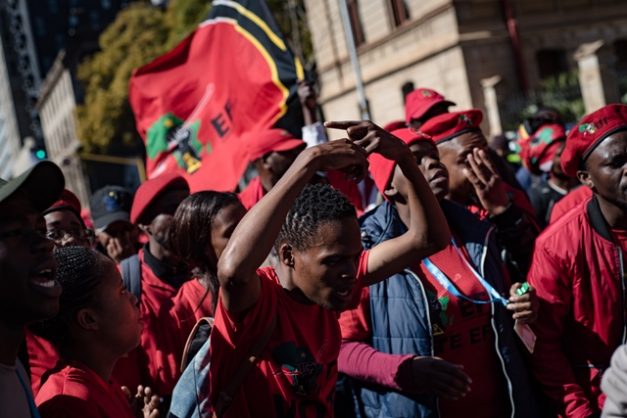
The Economic Freedom Fighters’ Student Command (EFFSC) reacted angrily to the court ruling, warning that they would force authorities to release Cekeshe.

EFF members protested outside the Johannesburg Magistrates Court and called for Cekeshe’s release.

The court also dismissed Cekeshe’s application for bail pending an application in the High Court in Johannesburg against both his conviction and sentence.

Magistrate Theunis Carstens said the defence’s applications “did not hold water” and no other court would find differently.

SA Delegation in China To ‘Learn and Improve’ Local Education Outcomes

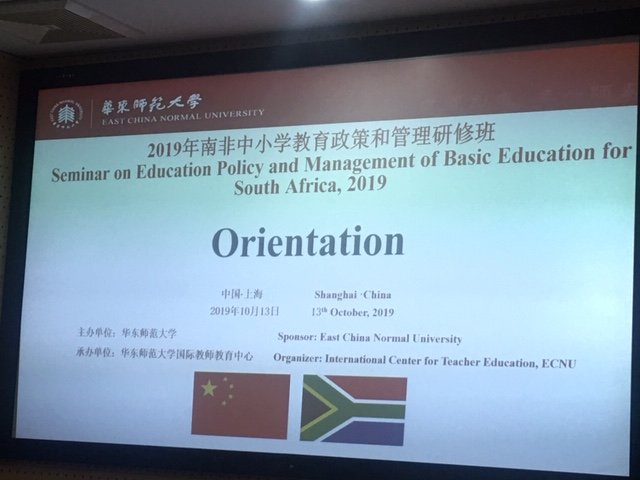
A South African delegation led by the Department of Basic Education (DBE) is in China to participate in a seminar on policy and management of the basic education sector.

The group comprises 25 school principals and four officials from the DBE.

The principals represent South Africa’s provinces and were selected from the leadership structures of the South African Principals’ Association.

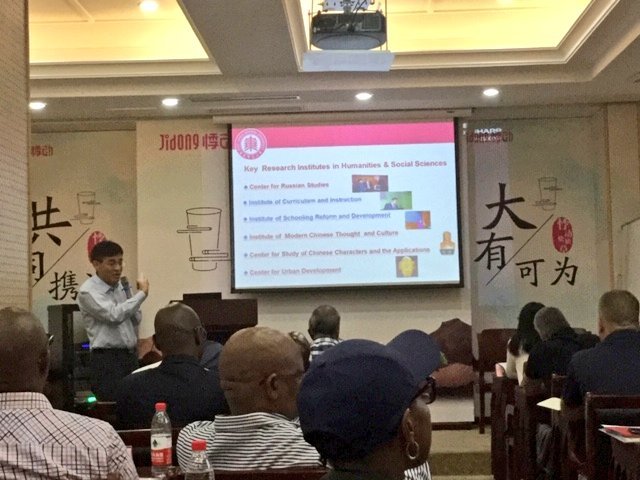
“The Seminar on Education Policy and Management of Basic Education is being hosted by the International Centre for Teacher Education at the East China Normal University (ECNU) in Shanghai. Seven lectures have been organised to make presentations and lead discussions during the 14 day programme,” the DBE said.

The delegation will also attend the International Confederation of Principals (ICP) Conference.

The visit further emphasises government’s commitment to support professional associations in the field of leadership and management in line with the National Development Plan (NDP), said the DBE

The delegation is led by James Ndlebe who is responsible for education management and governance in schools at the DBE.

“It is important to expose our school principals to opportunities that can help them grow and develop for the benefit of their colleagues and indeed the learners.

“We cannot adequately prepare our learners to participate in the global economy as global citizens unless we ourselves become the compass to show them the direction by being global citizens ourselves,” he said.

Ndlebe said there is a need to take a leaf from the experience of other countries.

“We need to start seeing what other countries are doing so we can learn and improve our situation. We need to expand our knowledge through the professional learning communities that we are establishing through this exercise,” he said.

The Embassy of China in South Africa is sponsoring the delegation’s participation in the seminar.

General Education Certificate is a Transitional Qualification – Umalusi

The Council for Quality Assurance in General and Further Education and Training (Umalusi), says the proposed General Education Certificate (GEC) is not an exit qualification as widely reported but rather a transitional qualification.

“In principle, Umalusi supports the idea of a GEC – provided it is properly understood as a transitional qualification rather than an exit qualification,” said Umalusi CEO Mafu Rakometsi.

The CEO made the remarks at a briefing on Umalusi’s state of readiness for the 2019 matric exams. 

“One of the advantages of the GEC is that it could provide valuable national data to gauge the performance of our education system. However, Umalusi will firstly evaluate the GEC qualification and then issue a formal statement on the outcome of that process,” said Rakometsi.

Rakometsi’s comments follow a misinterpretation of Basic Education Minister Angie Motshekga comments made at the SADTU National Congress on the GEC.

Motshekga earlier clarified that the GEC plan proposes to send more learners into technical education and introduce new subjects which could be referred to as applied mathematics and applied science.

Rakometsi said Umalusi would advocate for learners to continue with schooling after the GEC. 

“The General Education Certificate (GEC) is not an exit qualification. It is there to help us understand how the system is doing. What we are going to be doing and what we will encourage the department to do is encourage learners not to leave the schooling system after GEC.”

“You and I know that at the end of GEC a learner will not be able to make a lot of mileage in terms of their career opportunities with the GEC,” said Rakometsi