Home Blog Page 441

Some Areas of Concern, But Umalusi Ready For Matric 2019 – CEO Rakometsi

The Council for Quality Assurance in General and Further Education and Training (Umalusi) has given assessment bodies the greenlight to administer the 2019 matric exams.

The 2019 matric exams will begin on 23 October and wrap up on 28 November 2019.

Umalusi said it had conducted a thorough assessment of the readiness of the basic education system to manage and conduct the 2019 national examinations.

“To this end, the Council is generally satisfied that all assessment bodies are ready to undertake this massive task,” said Umalusi CEO Mafu Rakometsi.

Umalusi has however identified 495 venues as high risk centres.

“These are centres where there may be challenges at those centres including issues of cheating,” said Rakometsi.

As a contingency measure, these high risk centres are assigned resident monitors who are stationed at these centres.

Umalusi further highlighted evidence of shortage of markers in key subjects with high enrolments at the time of the audit.

Image result for UMALUSI

These were found in the Northern Cape (Agricultural Sciences Afrikaans markers), Western Cape (History Paper 2), and Eastern Cape (English First Additional Language, Physical Sciences, Life Sciences and Afrikaans markers).

While contingency plans are in place to address these shortages in the interim period, Umalusi called on all affected provincial departments to urgently address these.

Furthermore, the quality assurance body noted high levels of vacancies in critical areas within examinations directorates in Limpopo, Northern Cape, Mpumalanga, Free State, KwaZulu-Natal, North West and the Eastern Cape.

“Nevertheless, Provincial Education Departments have put measures in place such as allowing available staff to work overtime to mitigate the shortage of staff,” said Rakometsi.

In terms of the National Senior Certificate (NSC), there are a total of approximately 751 668 candidates, a decrease of more than 40 000 candidates compared to 2018.

Approximately 629 197 full-time learners and 122 471 part-time candidates will sit for the 2019 exams at more than 6 900 centres across the provinces.

On the other hand, the IEB has 11 839 full-time candidates across the country and 840 part-time candidates at 215 full-time examination centres including one in Mozambique, seven in Namibia and six in Eswatini.

The South African Comprehensive Assessment Institute (SACAI) has registered 2 073 part-time candidates and 570 repeat candidates with a total of 2 643 candidates at 77 examination centres.

Umalusi focused on eight areas as part of its quality assurance of assessment regime.
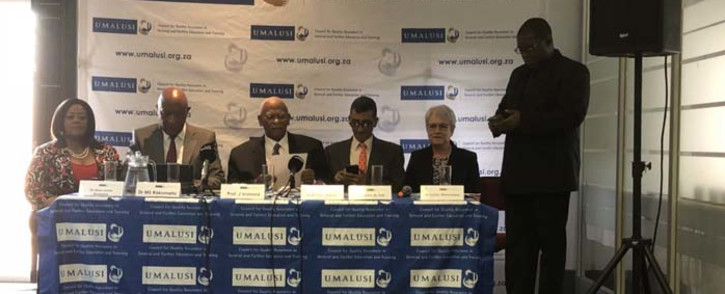
Image result for UMALUSI

These focused on management, registration of candidates and examination centres; school-based assessment, printing, packaging and distribution of question papers; conduct of examinations, marker selection and appointment of marking personnel, systems for the capturing of marks; and management of examination irregularities.

As a Quality Council, Umalusi monitors and verifies the work of public assessment bodies such as the Basic Education Department (DBE) and Higher Education and Training Department (DHET) – and private assessment bodies – Independent Examinations Board (IEB), the South African Comprehensive Assessment Institute (SACAI) and Benchmark Assessment Agency (BAA).

Additional reporting by SA Gov. News.
Matric 2019: Extra Security Measures To Ensure No Leaks

The Department of Basic Education (DBE) says security around matric exam question papers have been tightened, with staff involved in the printing of question papers having been vetted and have also signed non-disclosure agreements.

Briefing Parliament Thursday, Paddy Padayachee, the Department’s Deputy Director General responsible for Planning, Assessment and Information, said the transporting of question papers will take place under police or private security escort.

A total of 147 examination question papers for the 2019 November examination have been set and externally moderated by Umalusi.

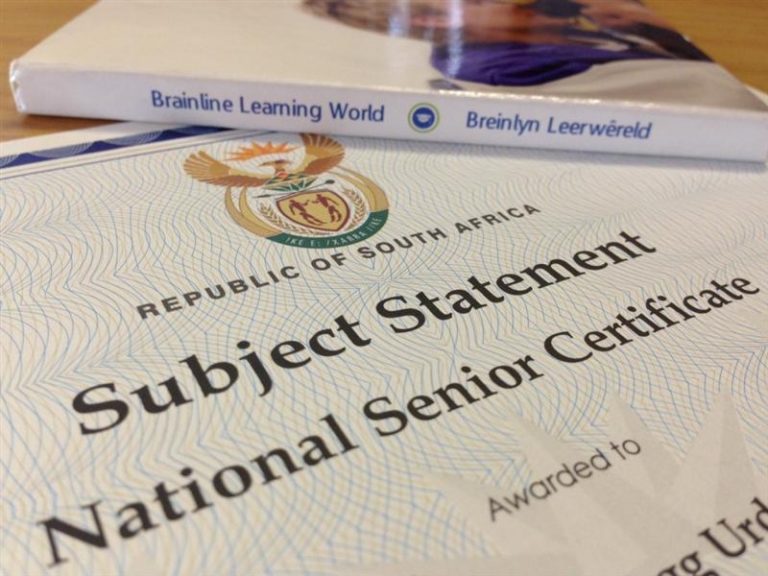
“Basically, as the national department and the provincial departments, our role is to ensure that the exams are credible so that when Umalusi quality assures it, we are able to indicate that they have given approval and we find that the currency of the certificate is intact and that when it is presented by our learners at any institution – whether locally, nationally or internationally – it basically retains its identity as a valid certificate,” Padayachee said.

The DBE, in conjunction with provincial departments, has conducted audits of all examination papers storage points, examination centres, marker appointments and district exam systems.

Padayachee said the the final state of readiness visits to all provincial departments were also conducted throughout last month.

DBE Director-General Mathanzima Mweli said the Department has intensified its monitoring and support programmes in a bid to ensure that the system is ready for the exams.

As part of ongoing monitoring and support for learners, teachers and officials, the department, including the Minister and Deputy Minister, visited vacation, winter and spring schools,” he said.

Mweli visited 112 winter schools whilst the department’s subject specialists monitored 135 winter schools across nine provinces.

Image result for SOUTH AFRICA VOCATION SCHOOLS

Vacation schools target progressed learners, learners at risk, moderate and high achievers, learners from under-performing schools, serial under-performing schools, schools with new Grade 12 teachers and first time new Grade 12 schools. 

Academic learner support in South African schools comprises a broad collection of educational strategies, including extra tutoring sessions, supplementary material, vacation classes, after-school programmes, teacher training, volunteer teachers such as university students, as well as alternative (differentiated) ways of grouping, and instructing learners.

Previous question papers and additional learning resources were provided to learners for revision and extra classes, which were offered in the afternoons, Saturdays and/or during winter holidays.

Learners have access to the prescribed literature after hours by using the schools’ laptops and computers.

He also said the department has finalised the moderation of the 2019 preparatory exams in 10 key subjects.

NSFAS Staffers Arrested On Fraud Charges

The National Student Financial Aid Scheme (NSFAS) says three of its employees have been arrested following allegations of fraud relating to student allowances.

The staffers from the Wynberg Office were diverting student allowances to their personal accounts.

“It has come to the attention of NSFAS that there are people who are misrepresenting themselves, posing as NSFAS officials soliciting applicants to pay a sum of money in order to have their application processed or have access to application forms,” NSFAS said in a statement.

NSFAS Administrator, Dr Randall Carolissen, has instituted a number of forensic investigations relating to the general disbursement of student funds, student allowance, leakage of sensitive and confidential information, and human resources related issues, since the entity was put under Administration in August last year.

Government’s students financial aid body has warned all students applying for the 2020 funding to be careful in managing their accounts and highlighted that NSFAS applications are free. 

The best way to apply for NSFAS funding is through your smartphone. If you are not able to apply or do not have a smartphone, you are safe to approach the National Youth Development Agency office, or the Vodacom Teacher Training and Development Centre for assistance.

“We have our people stationed there to help with the applications. We are also going out into rural areas, in partnerships with various provincial departments of education,” NSFAS said. 

“We appeal to students, applicants, employees and community members to report any suspicious activity promptly on the fraud hotline. All calls are kept strictly confidential and callers may remain anonymous.”

The scheme reassured the public that the arrest of the three employees will not have an impact on the 2020 applications cycle, which is expected to close on 30 November 2019.

NSFAS has also set up a dedicated independent fraud hotline called Vuvuzela.

NSFAS Toll free number: 0860 247 653, SMS “Call-back” to 30916, or email nsfas@thehotline.co.za. www.thehotine.co.za. 

New Technologies Can Be A Force For Good In Africa If Developed From The Ground

Roland Benedikter, Wroclaw University

Sub-Saharan Africa is at a point where new technologies such as artificial intelligence (AI) could present both opportunities and threats to development.

But civil society, governments and international organisations need to make sure that everyone benefits from these technologies – not just elites.

AI is, in principle, a strategy aimed at developing human-fed machine learning towards self-sustained learning systems.

As the idea goes, mechanical systems should more and more govern themselves in applying practical solutions to complex problems, learning by their experiences to improve capabilities and their features.

It’s not yet clear whether such “grand expectations” in the human-technology-convergence will hold true or not.

Image result for technology  africa

Young people in Africa are among the most inventive and efficient “early adopters” of this ambiguous and nascent AI revolution.

Even under difficult circumstances, there are many examples of new technological tools related to AI being adapted, or developed to suit local African realities and needs.

In some cases the change is coming “from above”, when global companies introduce something new. In other cases it is coming “from below”, when young people themselves create solutions.

What global players see in Africa

One example of innovation “from above” is Google’s first “Africa Artificial Intelligence lab, opened in Ghana in April 2019.

The global company is “betting big on Africa.” This is because of the continent’s young and ambitious workforce and the engineering talent that already exists in certain African universities.

Image result for google africa

Google also believes that in Africa, AI could show how it can contribute to development rather than just replacing employees with machines – a scenario that some people in the West fear.

The company has a “library” of tools and resources that anyone can use freely to build machine learning applications. The library and an example of what it has already produced is an app that allows farmers to diagnose diseased plants using a mobile phone.

AI could also present solutions for a range of other things. These include managing doctor shortages in rural areas, reducing costs in financial transactions or increasing the efficiency of logistics.

The technology, if properly applied, could give Africa a great push towards meeting people’s needs more sustainably.

Other global players may follow Google into Africa on the basis of similar perspectives.

But people in many African countries aren’t just waiting for that to happen. They are innovating “from below” and starting new ventures using AI. Even children can take the initiative to improve daily life through sophisticated technology. This is what the example of a 12-year-old Nigerian coder shows.

Whether it’s from above or from below, technology adaptation and creativity lead to opportunities for employment and global export competitiveness. This should be remembered when considering Africa’s economic growth prospects.

Image result for technology  africa

Earlier this year the MIT Technology Review stated that “The future of AI is in Africa.” And last year Nature invited its readers to “look to Africa to advance Artificial Intelligence.”

But there are still too few AI researchers on the continent. Steps are being taken to address this.

Recently the University of Pretoria in South Africa pointed out in a report that AI was an opportunity for growth, development and democratisation if properly implemented.

And at an upcoming AI EXPO Africa more than 700 representatives of AI enterprises and the data science community will be showcasing the growth of “high performance science” in Africa.

The flip side of tech

There is, however, another side to technology. It can present threats to democratisation.The United Nations University has pointed out that “deep fakes,” or “the creation of artificial videos, voice recordings and data, could be used to emphasise existing ethnic and religious divisions and to attack nascent democratic institutions.”

The university also mentioned misinformation through social networks to manipulate voter and political behaviour in favour of interest groups and those with access to technological knowledge.

And it noted the use of AI “to lower the cost of violence by both non-state and state entities alike.”

What needs to be done

As AI rises, so will the importance of these issues. The African Union should be watching the interface between positive and negative effects of AI, digitalisation and the technological revolution on the continent.

So should national governments and civil society, as well as their bridging alliances like the Alliance for AI in Africa (A4AI). And youth organisations such as Earth Guardians Africa, which use advanced technology to protect natural resources and the environment, should be on guard.

Image result for Alliance for AI in Africa

This is both a question of legislative readiness and of practical tools which have to be provided to those in power – not generally any more, but context-wise, in the end, to be more effective, and grounded for those who need it most.

The emerging relationship between new technologies and Africa may be some of the most promising news for the continent. But only if developments “from above” and “from below” involve and satisfy the whole population. And only if they aren’t used to distort African democracy.

Roland Benedikter, Research Professor of Multidisciplinary Political Analysis, Wroclaw University
This article is republished from The Conversation under a Creative Commons license. Read the original article.

Basic Education Committee In Parliament ‘Shocked’ Over Fatal School Stabbings In Gauteng & WC

Three suspects have been arrested in connection with the fatal stabbing of a 16-year-old Grade 10 pupil at the Hillcrest Secondary School in Mossel Bay Monday. 

The suspects are in Grade 10 to 12. 

“The victim was taken to hospital but unfortunately succumbed to his injuries. He sustained multiple stab wounds to his upper body,” police said. 

The Chairperson of the Portfolio Committee on Basic Education, Bongiwe Mbinqo-Gigaba, has, meanwhile expressed shock and sadness at the death of a 14-year-old learner, who allegedly died at the hands of another learner at a Sebokeng-based school in Gauteng, also Monday.

Although according to a recent presentation by the Department of Basic Education to the committee on violence in school, statistics seemed to be on the decline, I am extremely concerned about such incidents in our schools. One life lost, is one life too many,” said Mbinqo-Gigaba.

She said education is a societal matter, one that all South Africans should play an active role in, to ensure that schools remain safe spaces.

“What is happening in schools is a reflection of the society in which pupils live. This violence tends to play itself out on the school grounds when learners think violence is the only way to solve problems or to address challenges,” added Mbinqo-Gigaba.

A 15-year-old has been arrested in connection with the stabbing.

New Dawn For Somalia’s Schools As Government Rolls Out Synchronised Curricula

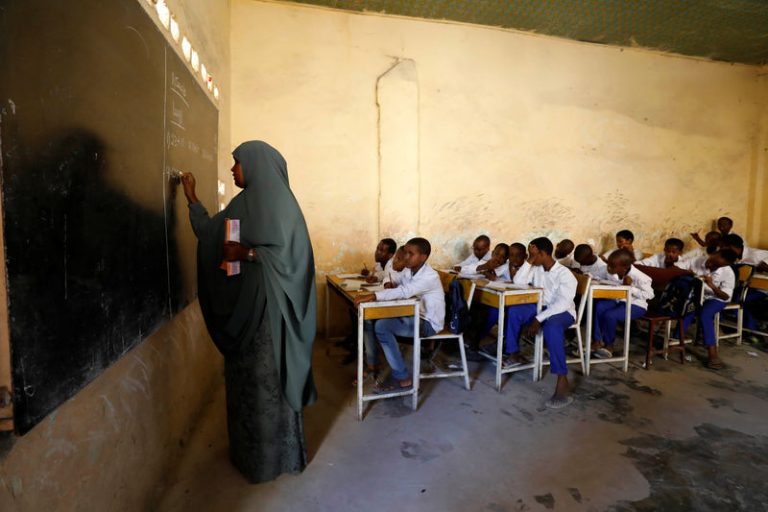
The start of this school year in Somalia marks the first time since the civil war broke out in 1991 that the government has issued a new curriculum for primary and secondary school students.

As clan warlords battled each other and armed factions rose and fell, schools had to make do with whatever materials came to hand.

More than 40 curricula were used across Somalia, creating chaos as in the education systems served in a variety of languages, the government said.

Since August, schools have synchronized academic terms, the ministry of education said.

“This new syllabus is better than the old Kenyan syllabus, which was in English. The new curriculum is the best,” one year seven learner said. sitting three-abreast at a desk in his maths and physics class.

Image result for somalia schools

Somalia has one of the world’s lowest enrolment rates, with only four out of 10 children in school, according to UNESCO.

Education accounted for $16mn out of this year’s budget of $344mn, said UNESCO.

 Schools sourced textbooks from more than 10 countries during the civil war and English and Arabic replaced Somali as the language of instruction.

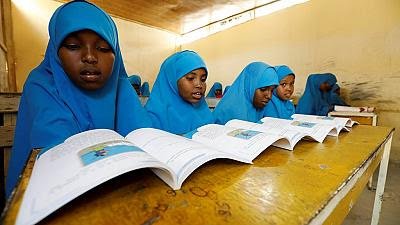
The new books cover English, Arabic, Somali, maths, Islamic studies, science, physical education, technology, and social studies.

“Students have coped well with the new curriculum because it is based on their religion, culture and vernacular,” said teacher, Abdulkadir Mohamed Sheikh.

Religious education is particularly important, said State Minister of Higher Education And Culture Abdirahman Mohamed Abdulle.

The al Qaeda-linked al Shabaab insurgency also regularly carries out deadly bombing attacks in Somalia in a bid to impose its own strict version of Islamic law.

The government hopes the new textbooks will help counter their message.

Clerics helped the government train teachers in Islamic ethics and create a syllabus that “will produce students who are sound, who are free from terror ideology, moderate students who have Islamic knowledge as well as other subjects,” Abdulle said.

However, challenges remain. Only 22% of Somalia’s 30,000 teachers are certified, Abdulle said.

NSFAS Applications Flooding In Ahead Of November Deadline

The National Student Financial Aid Scheme (NSFAS) says it is receiving more than 4000 applications a day on average.

NSFAS said it had received 141 933 applications since the beginning of September when the application period opened.

“The number is going as high as 6 000 a day on peak weeks.”

Some 101 545 applications were received around the same time last year, NSFAS said in the statement.

The NSFAS applications cycle has officially opened for Grade 9 to 12 learners and out of school youth who wish to further their studies at any TVET college in South Africa during the 2020 academic year.

Prospective applicants have until 30 November 2019 midnight to apply for funding.

Image result for nsfas

NSFAS has embarked on a nationwide 2020 applications roadshow as part of the application drive.

“The purpose of the roadshow is to reach out to learners and out of school youth who need NSFAS funding but have challenges with accessing the application resources,” said NSFAS.

Applications can submitted online by creating a myNSFAS account on the NSFAS website; www.nsfas.org.za.

Applicants with an existing account can sign in using their usernames and password or Facebook/Google accounts. 

Students can also submit their applications using their smartphones.

Qualifying criteria:

Be a South African citizen

  1. Intends to enrol at any of the 26 public universities; or 50 TVET colleges in 2020.
  2. Comes from a family with combined household income of up to
    R350 000 per annum (up to R600 000 per annum if the applicant has a disability).
  3. Should not have received NSFAS funding in 2019, (those who were successfully funded previously, are automatically funded for 2020, provided they meet academic requirements).
     

Applicants who do not have access to internet facilities are encouraged to visit their nearest Government Communication and Information System (GCIS) Thusong Centres, and Department of Basic Education District Teacher Development Centres nationwide.

Mpumalanga & KZN Pupils More Likely To Be Victims Of Sexual Crimes – GCE

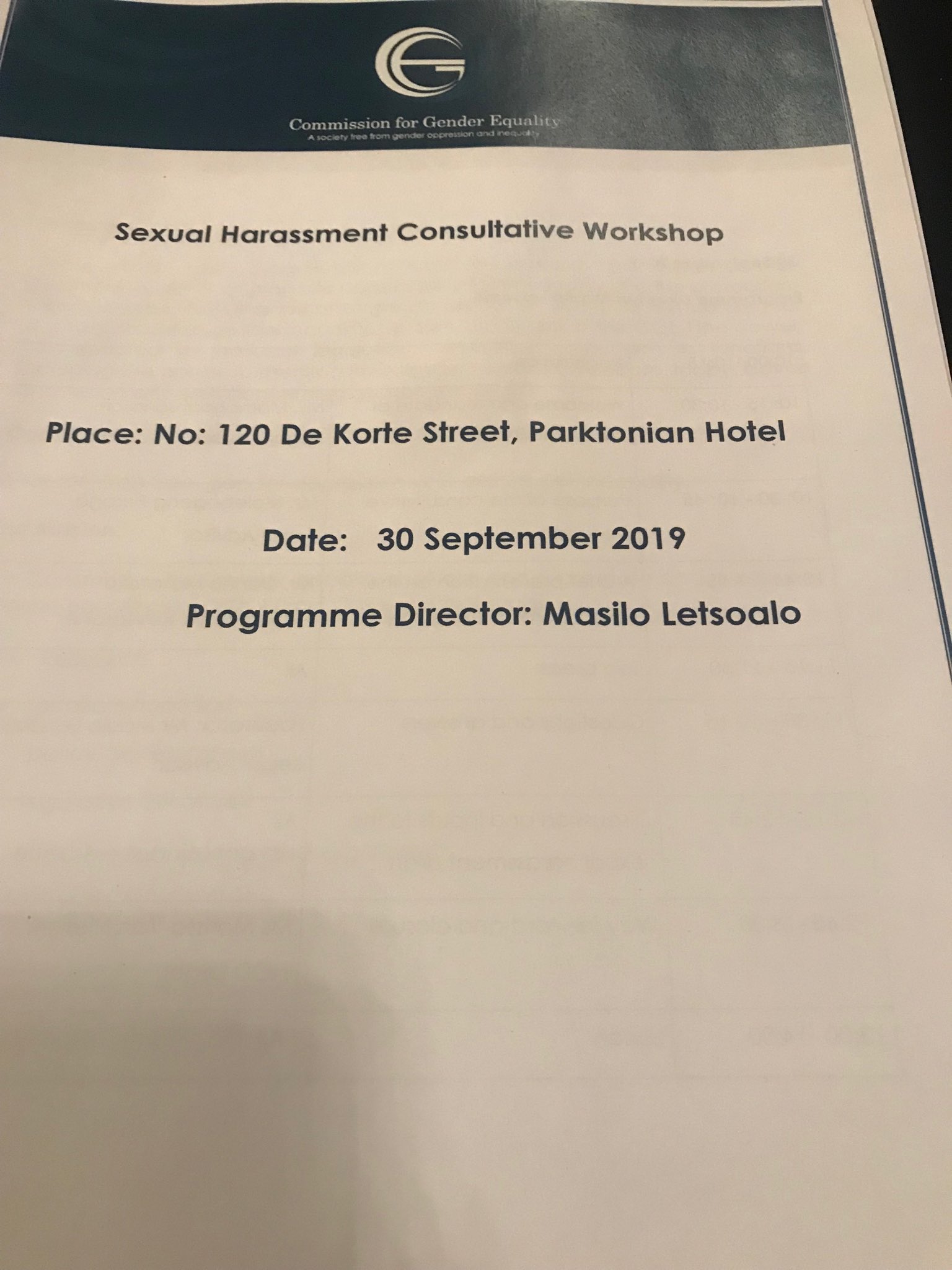
Against a backdrop of increasing incidents of sexual violence in South Africans schools – perpetrated by both learners and educators – the Commission for Gender Equality (CGE) met with the Basic Education Department (DBE) to address concerns over sexual harassment at schools.

The Commission’s Javu Baloyi said they wanted the DBE to explain their efforts to keep sex offenders out of the education system.

The Commission, which recently conducted site inspections at various schools across the country, found that pupils from Mpumalanga and KwaZulu-Natal are more likely to fall victim to sexual crimes.

In its summation of sexual violence in schools across Gauteng, Eastern Cape, Free State, KwaZulu-Natal, Mpumalanga, Limpopo, Northern Cape and North West, the CGE observed:

  • An extremely high rate of sexual violence in schools across the country;
  • Cases mentioned herein are only an indicator of the reality faced by multitude of learners and educators;
  • High number of pregnancies as a result of inappropriate sexual behaviour which leads to girls being unable to complete their schooling;
  • Sexual harassment perpetrated by educators against learners and amongst educators;
  • Unsafe spaces in the school environment as the majority of these offences take place at school, even during school hours;
  • Victims of sexual violence are both males and females.

“We’ve also realised some teachers who do these things move from one province to another. One teacher moved from Gauteng to Mpumalanga to another province, impregnating pupils,” said Baloyi.

Addressing teachers’ union Sadtu’s congress last week, President Cyril Ramaphosa urged teachers to stop initiating romantic and sexual relationships with pupils.

Innovative Mirrored Classroom Highlights Scale Of Massive Global Education Crisis

Riyaz Patel

A non-profit organisation (NPO) dedicated to exposing the severity of the global education crisis, has presented a compact mirrored installation to delegates at UN General Assembly to drive home that around 260 million children are missing from classrooms around the world every day.

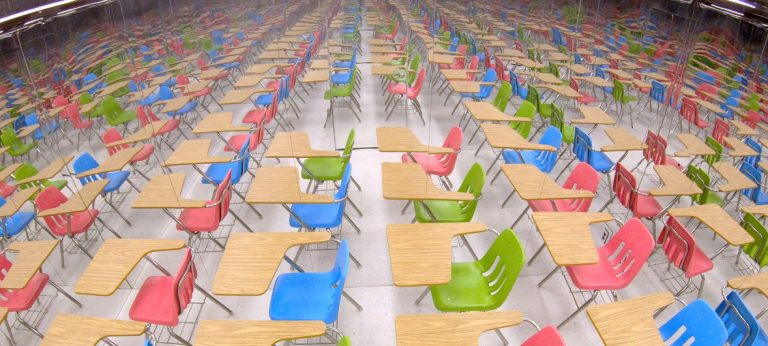
The Infinity Classroom‘ exhibition by THE NPO, Theirworld, is a mirrored room filled with what appears to be an infinite number of empty school desks – representing the millions of children out of school. 

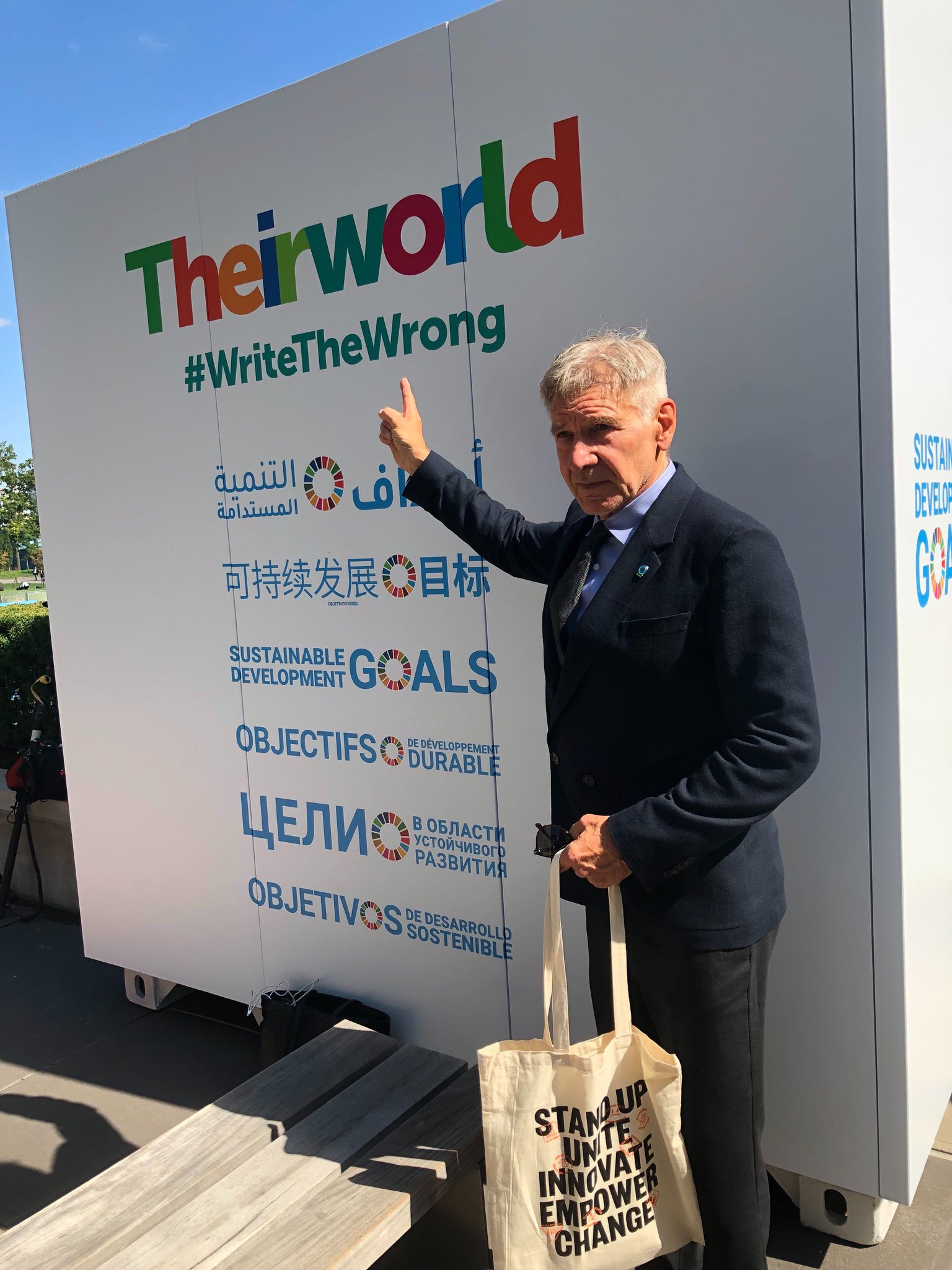
The mirrored station is the centerpiece of the organisation’s #WriteTheWrong campaign, aimed at building awareness and mobilizing the political will as well as financial support needed to give every child a chance to realise their potential.  

LISTEN: 260 million children are missing from classrooms around the world

Founder and Chair of the NGO, Sarah Brown, said: “The world has the largest number of refugees and displaced people since the Second World War, half of whom are children.”

“We owe them what we want for our kids – a safe place to learn. That’s why we’re calling on all countries and international institutions to make education a priority.”

More than a thousand visitors have passed through the Infinity Classroom during the high-level proceedings this week, according to the NGO, including heads of government, senior officials, activists and celebrities.

On Wednesday, donors and foundations announced more than $200 million for the global fund, Education Cannot Wait, to make school possible for millions of children caught up in conflicts, disasters and displacement crises. 

In addition, guarantees of $500 million and grants of $100 million for the International Finance Facility for Education (IFFEd), another education funding resource, will allow an additional $2 billion to be mobilised to get children into school in the so-called “missing middle” – countries which lie between the developing world and rich nations. 

“This is the largest amount unlocked for education in a single day because IFFEd multiplies donor resources and unleashes new funding streams,” said Theirworld President Justin van Fleet. 

“If nothing changes, by 2030, more than half of the world’s 1.6 billion children won’t have basic skills to get an entry-level job or participate in society,” van Fleet added.

“We are at a crossroads and we must act. It is within our reach to end the global education crisis.”  

Reports On Grade 9 School Exit Point ‘misleading’ – DBE

SAnews.gov.za

The Department of Basic Education says it has noted with concern misleading media reports and social media posts claiming that learners could leave school in Grade 9, saying this is not the truth. 

“It seems the reports emanate from a misinterpretation of what Minister Angie Motshekga said yesterday, 26 September at the SADTU National Congress at Nasrec.

As a result the message communicated by media reports is unfortunately causing confusion as it is not a true reflection of what the Minister meant in her speech,” the department said in a statement.

It clarified that the Minister said: “The Field Trial for the General Education Certificate (GEC) at the end of Grade 9 is scheduled for completion at the end of July 2020.

“A draft framework for the GEC has been developed. Assessment and examination modalities for the GEC are being investigated and have been presented at the HEDCOM meeting. The Technical Occupational subjects have been packaged and submitted to Umalusi for approval.”

The GEC certificate is predicated on the 3-Stream Model which has the academic pathway, the technical vocational pathway and the technical/occupational pathway.

The plan aims to send more learners into technical education.

“Under the technical vocational stream, there was a target of 10 000 artisans per year. The department has also introduced new subjects – technical mathematics and technical science – which could be referred to as applied mathematics and applied science.

“These were relevant in supporting areas of specialisation and schools that offer these subjects were currently being unveiled in different parts of the country with the majority of them presently launched in Gauteng.”

With regard to the strategic direction, the department said it was responding to international protocols and obligations of which South Africa was part, and the Sustainable Development Goal 4 was important in this regard.

“The public discussion on the GEC certificate is not new as it took place earlier this year when it was first raised in January,” the department said.

President Cyril Ramaphosa mentioned the GEC in three speeches earlier this year. In all three speeches, what was communicated was that GEC would facilitate the pathways between schools and colleges at a level below Grade 12.

Apart from facilitating the transition from school to college, the department said a GEC would address the current problem of hundreds of thousands of young people leaving education completely each year with no national qualification with which to navigate the labour market.

The purpose of awarding a General Education Certificate (GEC) is to equip learners with the values, knowledge and skills that will enable or enhance meaningful participation in society, contribute towards developing sustainable communities, provide a basis for learning in further education and training, and establish a firm foundation for skills develop that will prepare learns for the workplace (SAQA: 2001),” said the department.

Offering a GEC is not an indication of the exit of learners from a learning pathway in schools but provides better decision-making for and access to further learning after Grade 9, the Basic Education Department said.