Education expert, and former Gauteng education MEC, Mary Metcalfe believes the proposed introduction of a school-leaving certificate in grade nine would open opportunities for pupils.
Basic Education Minister Angie Motshekga yesterday told delegates t the national congress of the South African Democratic Teachers Union (SADTU) that the process is are underway to formalise grade nine as a second exit point of schooling.
This would mean that pupils were able to complete the grade and get a general education certificate.
The minister said that the move was aimed reducing the rate of failure, repetition and drop-outs.
Metcalfe said that the initiative should be commended.
“What we have at the moment is as many as 50% of our young people who leave school before succeeding in matric.
“What a grade 9 certificate will mean is that they hold in their hand some form of certification then have a certificate which to enter the diverse range of schooling options that the Department of Basic Education is opening up,” said Metcalfe.
“The first cycle of systemic evaluations in grades 3, 6 and 9 will be finalised by June 2020. The field trial for the general education certificate at the end of Grade 9 is scheduled for completion at the end of July 2020,” Motshekga said.
The minister added that 11 focus areas have been identified for the 2019 to 2024 medium-term strategic framework.
These include the decolonisation of basic education through the teaching and promotion of African languages, South African and African history and national symbols as well eliminating the digital divide by ensuring that within six years, all schools and education offices have access to internet and free data.
When people talk about quality education, they’re often referring to the kind of education that gives students the knowledge and skills they need for the job market. But there’s a view that quality education has wider benefits: it develops individuals in ways that help develop society more broadly.
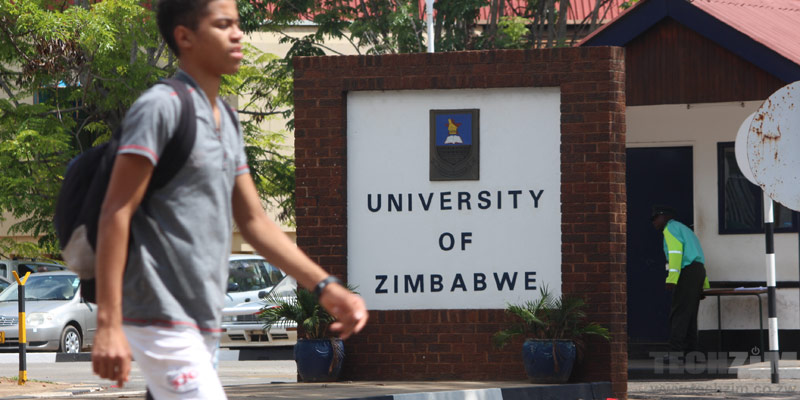
In Zimbabwe, for example, the higher education policy emphasises student employability and the alleviation of labour shortages. But, as my research found, this isn’t happening in practice.
University education needs to do more than produce a graduate who can get a job. It should also give graduates a sense of right and wrong. And it should instil graduates with an appreciation for other people’s development.
Tertiary education should also give students opportunities, choices and a voice when it comes to work safety, job satisfaction, security, growth and dignity. Higher education is a space where they can learn to be critical. It must prepare them for participating in the economy and broader society.
This isn’t happening in Zimbabwe. Graduate unemployment is high and employers and policy makers are blaming this largely on the mismatch between graduate skills and market requirements.
Investigating Zimbabwe’s universities
My research sought to examine how a human development lens could add to what was valued as higher education, and the kind of graduate outcomes produced in Zimbabwe.
I investigated 10 of the universities in Zimbabwe (there were 15 at the time of the research). Four were private and six public.
I reviewed policy documents, interviewed representatives of institutions and held discussions with students. Members of Zimbabwe’s higher education quality assurance body and university teaching staff were also included.
I found that in practice, higher education in Zimbabwe was influenced by the country’s socio-political and economic climate. Decisions and appointments of key university administrators in public universities and the minister of higher education were largely political.
In addition, resources were limited and staff turnover was high. Universities just couldn’t finance themselves through tuition fees.
Different players in the higher education system – employers, the government, academics, students and their families – have different ideas about what “quality” means in higher education.
The Zimbabwe Council for Higher Education understands quality as meeting set standards and benchmarks that emphasise the graduates’ knowledge and skills.
To some extent, academics and university administrators see quality as teaching and learning that gives students a mixture of skills and values such as social responsibility.
But lecturers must comply with the largely top-down approach to quality. They tend to do whatever will enhance students’ prospects of getting employment in a particular market.
The educators and students I interviewed acknowledged that developing the ability to work and to think critically were both central to higher education. But they admitted that these goals were hard to attain.
This was because of the country’s constrained socio-political and economic environment. Academics and students felt that they couldn’t express themselves freely and critical thinking was suppressed.
Stuck on a road to nowhere
The study illustrates how an over-emphasis on creating human capital – skilled and knowledgeable graduates – limits higher education’s potential to foster broader human and social development.
University education should do more, especially in developing countries such as Zimbabwe that face not just economic, but also socio-political challenges.
Before building more universities and enrolling more students, authorities and citizens should consider what quality education means in relation to the kind of society they want.
It’s possible to take a broader view of development, quality and the role of higher education. This broader approach – one that appreciates social justice – can equip graduates to address the country’s problems.
The road ahead
Universities can’t change a society on their own. But their teaching and learning practices can make an important difference.
Because quality teaching and learning means different things to different people, people need to talk about it democratically. Institutional and national policies must be informed by broad consultations to identify the knowledge, skills and values they want graduates to have.
University teaching and learning should emphasise freedom of expression and participation so that students can think and act critically beyond university.
Also, academics don’t automatically know how to teach just because they have a PhD. Universities should therefore ensure that academics learn how to teach and communicate their knowledge.
Curriculum design, student assessment and feedback, as well as training of lecturers should all support this goal of human development.
When universities see quality in terms of human development, their role becomes more than production of workers in an economy. It gives them a mandate to nurture ethically responsible graduates.
These more rounded graduates are better equipped to imagine an alternative future in pursuit of a better society, economically, politically and socially.
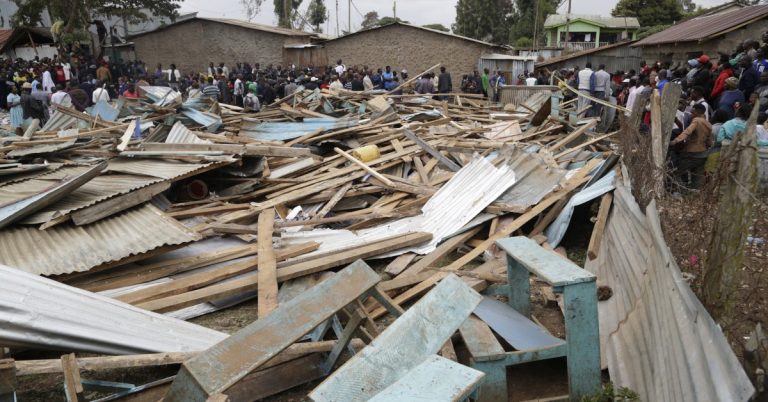
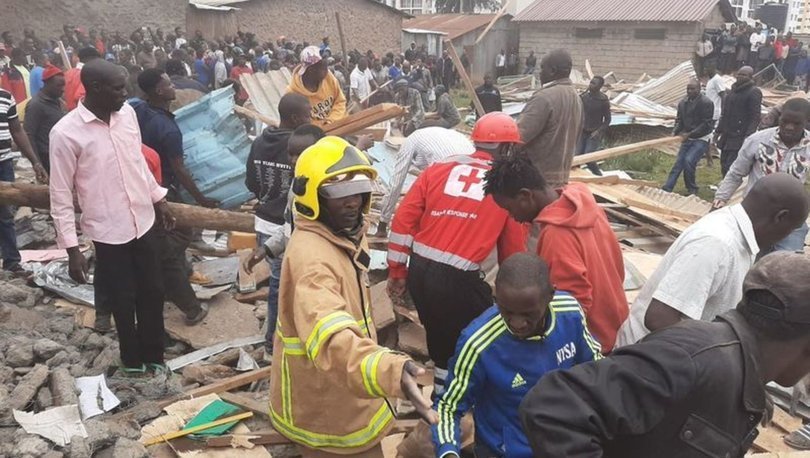
Residents of Dagoretti, a district of Nairobi, Kenya are still in shock, two days after the collapse of a classroom claimed the lives of seven children.
Fifty-seven others were injured when the wooden structure at the Precious Talent Top School collapsed just minutes into the start of the school day Monday.
Tracy Oduor was in her classroom when the tragedy occured.
“We were in class and we were reading and we heard pupils and teachers screaming and the class started collapsing and then…and then a stone came and hit me on the mouth and then we got out of the class and then we were saved. We heard…when we got out of the gate we heard that pupils were dead,” the 10-year old said.
The disaster highlights the “lack of regulation for educational institutions, particularly in this type of informal housing,” said Peter Ouko, the founder of Crime si Poa (The Youth Safety Awareness Initiative).
“Basically this is the quality that is supposed to support slabs. This is a slab that is carrying so many people, so much weight yet you can easily break it with your own hands.”
Ouko added: “As easy as that, this is chicken wire, not a construction material and someone had the guts to use this to build a construction for our kids. I think this is basically premeditated murder. It’s not like – it’s sad, it’s sad, it’s sad, it’s sad, that this could happen.”
Several buildings have collapsed in recent years in Nairobi and other cities in Kenya, a country in the midst of real estate boom.
The quality of construction materials is regularly questioned, including the practice of unscrupulous developers to circumvent regulations through bribes.
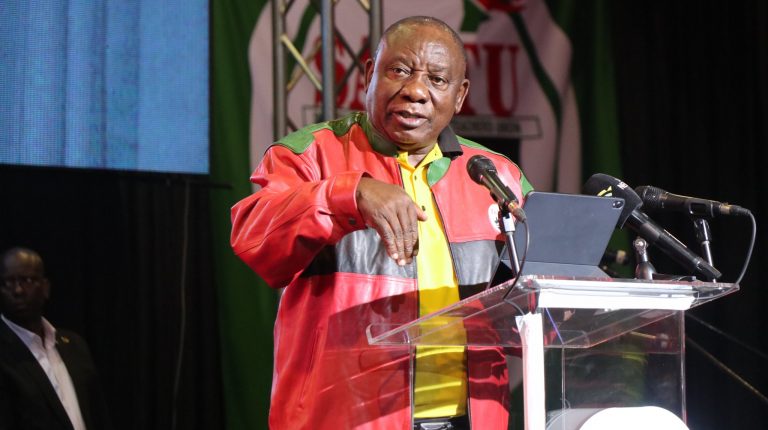
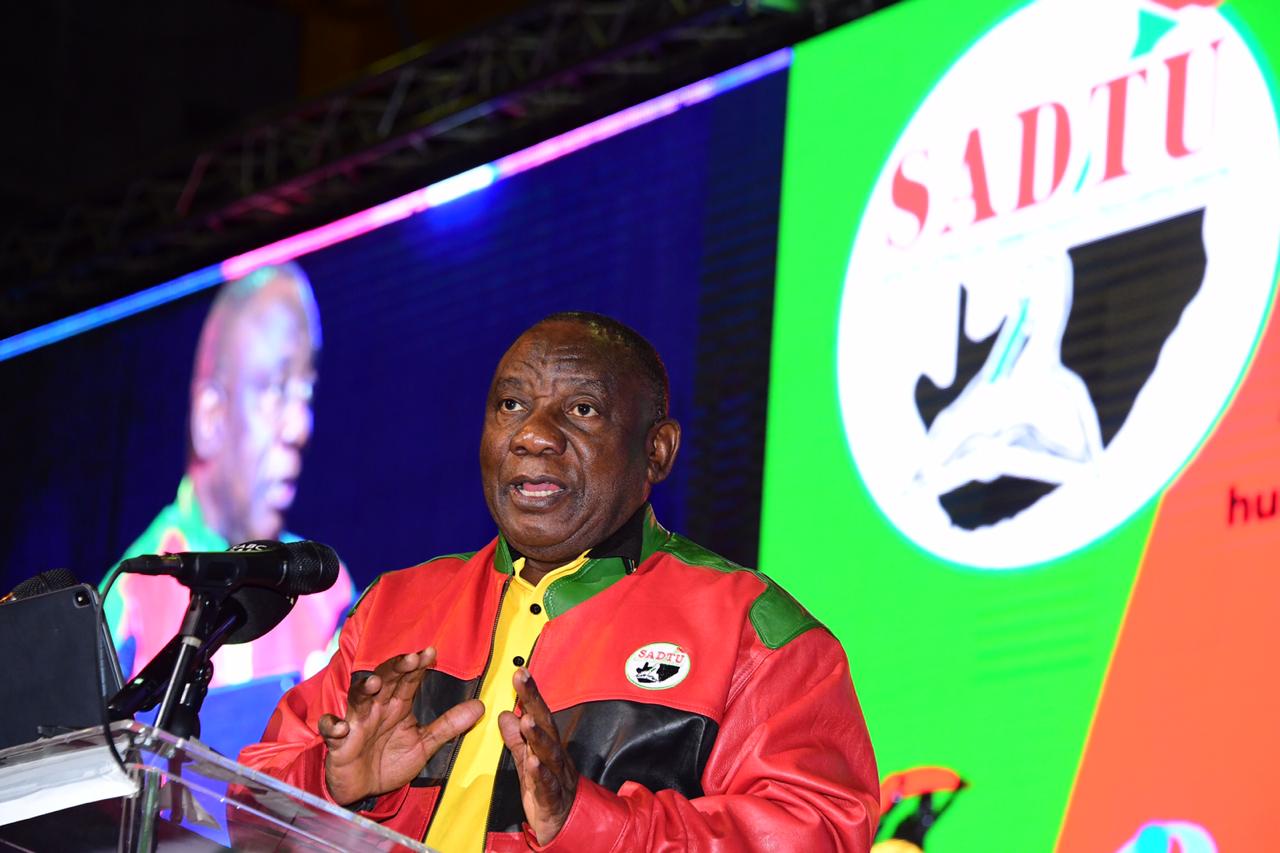
President Cyril Ramaphosa says the South African Democratic Teachers Union (SADTU) has an important role to play in an increasingly digitised world, calling on its members to step up efforts in attaining desired learning outcomes.
“Not only must you, comrades, prepare yourselves for new technologies and new subjects, but you must also prepare our young people for this new world,” he said, delivering the keynote address at SADTU’s 9th national congress at Nasrec, Johannesburg on Wednesday.
South Africa’s education system has been criticised for failing to adequately prepare learners with appropriate outcomes to meet higher learning and workplace demands.
Ramaphosa told SADTU members they must continue to strive for enhanced education outcomes in the country to help grow and meet the needs of the economy.
“Our teachers are the economic player and they need to make sure that a learner is stimulated enough to become a participant in the country’s economy.”
Ramaphosa reiterated that that government had put various programmes in place to address the quality of education, adding that the current curriculum was being reviewed to prioritise the demands of the fourth industrial revolution.
“The school curriculum is being adjusted. We have begun to teach our learners for the changing way of work. We must prepare our young people for this new world that will be shaped by climate change and the 4IR.”
Ramaphosa said too many teachers were overburdened and under-resourced and it was the government’s duty to improve teaching and learning conditions and to make schools safer.
“Sadtu must become more active in the ECD field and also help government develop programmes to make sure more children have quality education from their early stages.”
Ramaphosa further called for improved salaries for early childhood development (ECD) educators, adding that teachers should not be concentrated in urban areas.
“This abhorrent behaviour must stop.”
Shifting focus to the issue of teacher/learner relationships, Ramaphosa said there were too many reports of sexual relations between educators and learners.
“Your jobs is to be parents of children who come to your schools. You are not supposed to be lovers of these children,” calling on SADTU to be at the forefront of efforts to stop this “abhorrent behaviour.”
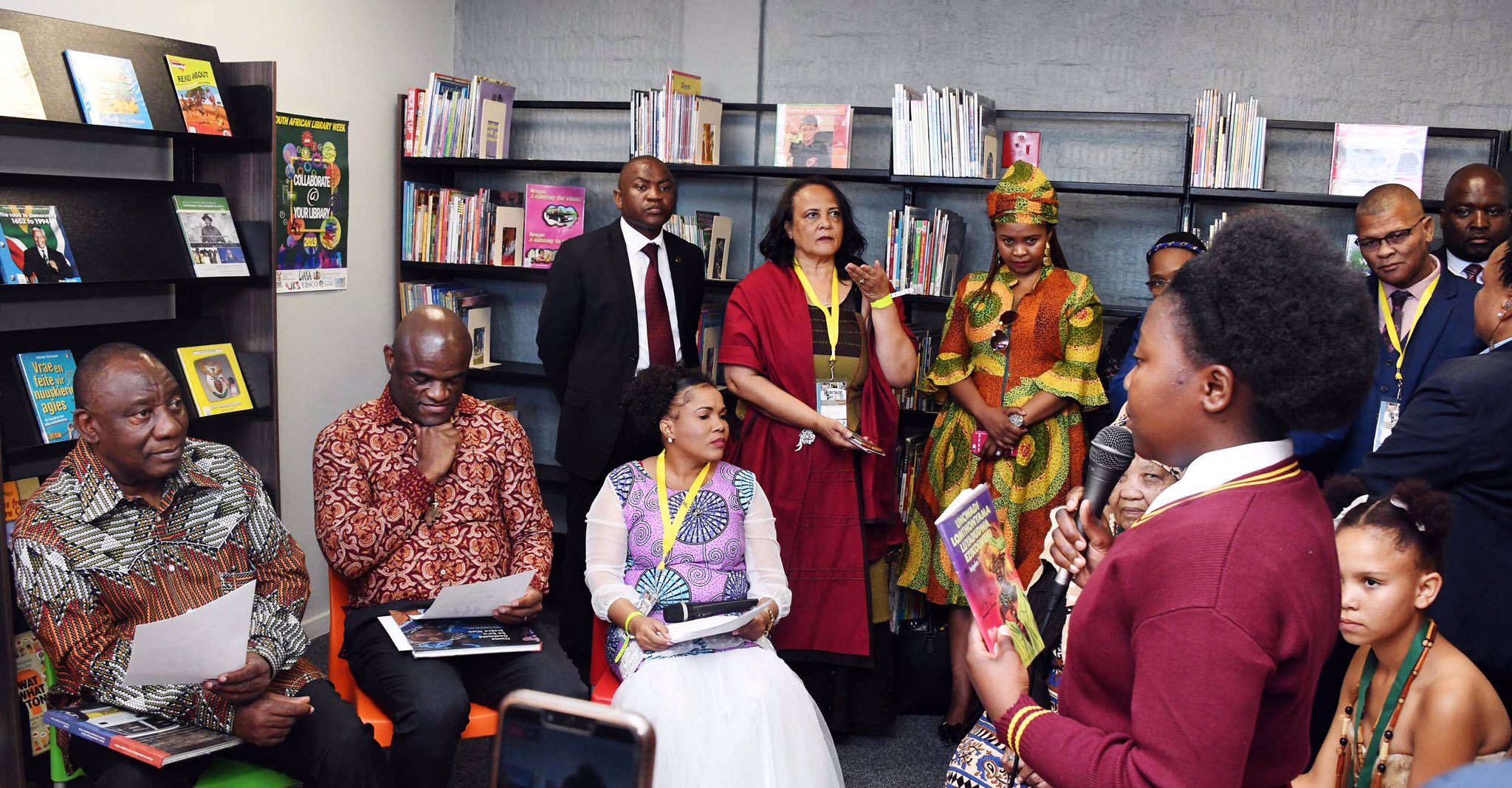
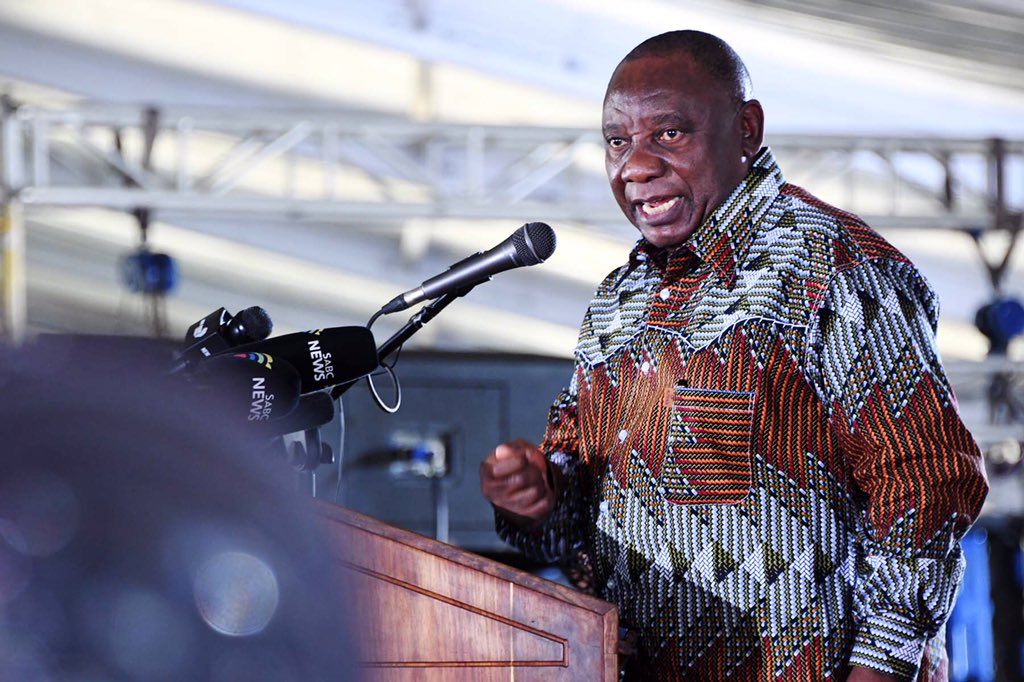
President Cyril Ramaphosa has emphasized the importance of reading and preserving indigenous languages while leading South Africa’s Heritage Day celebrations in Upington, Northern Cape.
“On this day we celebrate our many cultures, traditions and languages. We also celebrate our greatest legacy of all, and that is our freedom.”
This year’s theme for Heritage Day focuses on the promotion of indigenous languages and literature to ensure its revival and preservation.
“Language is the great transmission line that binds us to our forebears. It helps us to understand where we have come from and anchors us and our children in the present,” said the president at the Mxolisi Dicksy Jacobs Stadium in Upington.
Breaking off to speak in some of South Africa’s eleven official languages, Ramaphosa underlined that there is “no language in this country that is superior over another.”
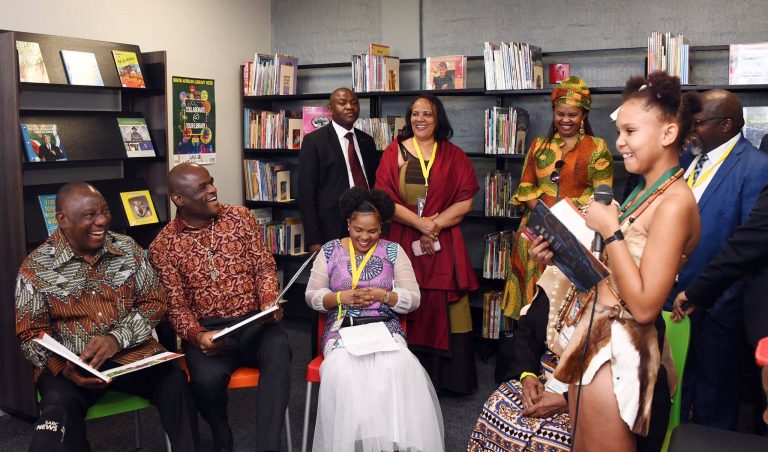
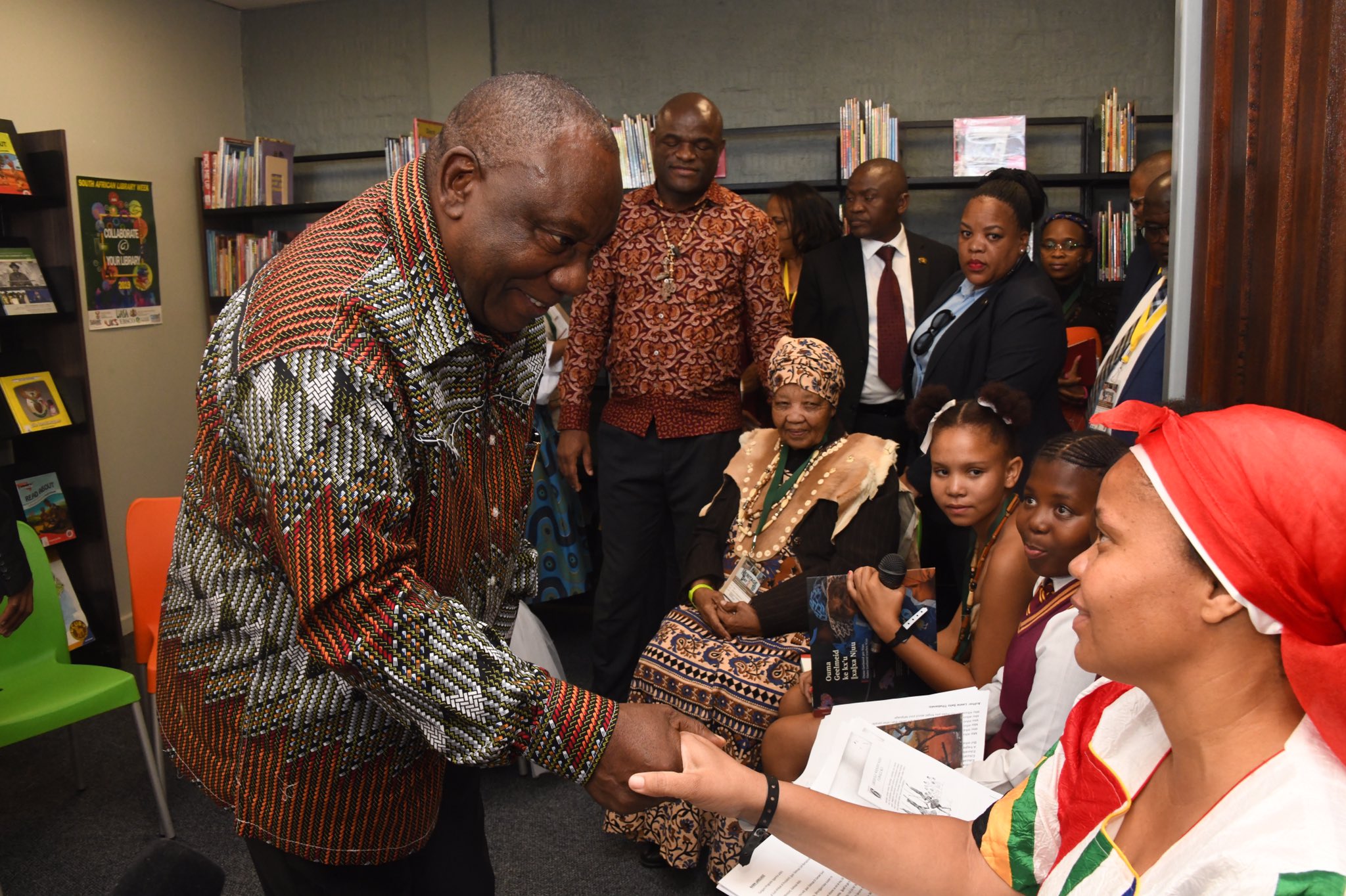
Earlier, the president opened the Sandile Present Community Library, in Upington, where he met with Mama Katrina Esau, who has for years taught the endangered N|uu language to the people of the Rosedale community from a school in front of her home.
“She tells me that she is even moving with the times and wants to make educational CDs and DVDs so that everyone can learn this language, even me,” quipped Ramaphosa.
“Language is the great transmission line that binds us to our forebears.”
The president said government is actively working to make sure African languages are offered in all of South Africa’s 23000 public schools, adding that Parliament has also been tasked to elevate Sign Language to the status of an official language.
He said more than half a million copies of classical texts in indigenous languages have been distributed to various public libraries, school libraries, resource centres and university libraries as part of the Reprint of South African Classics programme.
“I also want to issue a challenge to our musically gifted young people here in the Northern Cape: we want to hear from the Sho Madjozi’s and King Monada’s of the Northern Cape.”
Twenty five years ago, Ramaphosa reminded, “millions of South Africans stood in queues around the country to vote for the first time. Their actions helped give birth to a new country rooted in equality, non-sexism, non-racialism, respect for human rights and tolerance of differences.”
He said the young men and women of South Africa are the inheritors of this political heritage.
“May you always remember the sacrifices that were made so we could live in freedom, and never forget it is the duty of all of us to guard this freedom and to ensure that it is passed on to those who are yet to come.”
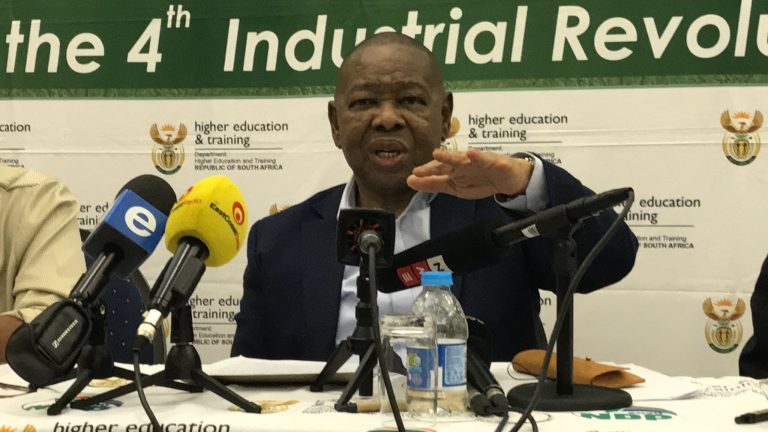
The Higher Education Minister on Monday urged the University of Zululand (Unizulu) to urgently start work on building 3500 new bed spaces using the R230mn that his department had recently made available.
Blade Nzimande said plans for infrastructure development also included the refurbishment of current stock at the institution. “I have agreed that the university should start procurement for the first stage of construction as soon as possible.”
He said he met with Unizulu council and management Friday to address several issues, including the assault of a student in an off-campus residence and subsequent violent protests by students.
UniZulu students have highlighted the vulnerability of students living off campus to burglary and related violent crimes, and the dire shortage of sufficient and safe student housing on the university campus. #universityofzululand#mediabriefing
The students were angry at the lack of security at off-campus residences following the shooting of Msawenkosi Nxumalo, a 23-year-old student who was robbed of his laptop and cellphone.
On Monday last week, students burnt tyres and branches to block roads in and around the KwaDlangezwa campus, including the R102 and N2 freeway.
Schools in the vicinity of the campus were also damaged and disrupted.
A satellite police station near the campus was also set alight during Monday night’s protests. The campus was closed Tuesday and students were told to vacate the premises.
Nzimande strongly condemned the routine destruction of property during student protests. This deprived future generations, he said.
About 30 students were arrested following the torching of the station.
The safety at Unizulu was linked to its location and the surrounding community, the Higher Education minister pointed out.
But he added, only about 30 percent of students could have their accommodation needs met by the university itself, and the rest had to rent rooms in the nearby communities.
Sometimes, he said those renting to students set up “shack like structures” with little or no security, which were not accredited by the university.
He said that in 2020, Unizulu would be celebrating 68 years of existence. Despite this, the land on which the institution operated was still tribal.
It was imperative that the land be transferred to the university if costly investments were to be made.
He called a meeting with relevant stakeholders that included the department of cooperative governance and traditional affairs, ministry of police and traditional authorities to discuss the issue.
No formal application for Afrikaans-only Institution
Nzimande also used the opportunity to caution trade union Solidarity to desist from calling its new planned higher education institution a ‘university.’
He said the current legal framework didn’t permit private institutions to be called universities.
The union must ensure that its planned Afrikaans-private facility did not discriminate on the basis of race as this could result in it not being approved in the first place, Nzimande said.
Is there room for a language-based university? Should a language be used to perpetuate racist agendas? Just when a university is supposed to be a leveller in our society, an institution that closes the gap between the rich and the poor, should we unearth another form of racism by allowing an Afrikaans-only university?
The answer is: No ways! I and many South Africans are not opposed to the Afrikaans, Afrikaner culture and its trappings.
But we will never support those who want to hijack this language, just like they did during the dark days of apartheid, to conceal their hatred of a democratic South Africa.
To make matters worse those involved in building this Afrikaans only university have a horrible history of anti-transformation.
They defend the apartheid flag, support the music of Steve Hofmeyr, despise affirmative action and only represent Afrikaans speakers in labour disputes and challenge any promotion of blacks in labour matters.
The post-apartheid education policy is based on the constitution, and among its objectives are the redressing of past imbalances and the addressing of education based on race.
Excising apartheid education’s most blatant excesses
The democratic government’s most dramatic stride toward equalising institutions of learning by dismantling 15 distinct departments of education and creating a single non-racially based one came in the early heady days of democracy.
“I am sustained by my conviction that non racialism is not wrong. I am sustained by my conviction that we are better off together than being a divided nation.”
Our goal was straightforward and attainable. We wanted to excise the most blatant excesses of apartheid education by officially doing away with racially divided institutions of learning and a white-supremacist curriculum.
Over 25 years into our democratic dispensation, any school district, university or tertiary institution that wishes to short-change students is anathema to our society and a disgrace to the constitution of the republic.
For me it is a historical principle? I am the MEC for Education because of Beyers Naude, a man of the cloth who was rejected by his people and expelled by an Afrikaans only church, the Dutch Reformed Church or “NGK” Nederduits Gereformeerde Kerk, just because he wanted it to open its doors to all South Africans.
He believed that we must live together as South Africans.
My relationship with “Oom Bey” began during the state of emergency of 1988 when I was detained without trial at Modderbee prison for leading a class boycott against apartheid education.
After my release, in a letter written in Afrikaans, my school was instructed to expel me and other student leaders. With a possible bleak future, the thought of going to exile to join Umkhonto we Sizwe lingered in my mind. That was until someone told me about this progressive Afrikaner, Beyers Naude, then secretary general of the South African Council of Churches
When I met him, even before I could end narrating my story he authorised that I be granted a bursary to enrol at a school associated with his church so that I can conclude my then Matric, now National Senior Certificate, and later went to go and study at the University of Natal.
Imagine if “Oom Bey” would have told me that he was only assisting Afrikaners to access education. Where will this Sepedi speaking boy be today? I will surely not be an MEC for education.
Desecrating the graves of people like Beyers Naude
So, should l betray the soul of Uncle Beyers when those with deep pockets want to build a language based university in the sea of inequality and poverty and the ticket to enter this university is that you must speak Afrikaans or else you don’t qualify? No ways!
Lest we forget that this Afrikaans only university was conceived soon after the Constitutional Court saw nothing wrong with the universities of South Africa, Pretoria, Free State, Stellenbosch and Potchefstroom, in changing their language policies to accommodate all South Africans.
Instead of supporting the apex court, they angrily decided to use their apartheid acquired wealth and skills to desecrate the graves of people like Beyers Naude who believed in an all-inclusive South Africa.
It is a pity that even under a democratic state, we are still being insulted and the overwhelming majority of our people, still live in squalor, not out of their own making but because of the historic injustices of apartheid education.
It is those living in informal settlements and rural areas without skills that need this university. But they will be excluded because they do not speak Afrikaans.
Indeed, we will be defeating Reverend Naude and former president Nelson Mandela’s ideals if we don’t work together to collectively defeat poverty, inequality and unemployment but are obsessed with language-based institutions.
No one is born poor but it is the conditions that they are born in that shape and sharpen their economic status. We were born under apartheid that denied us and our parents equal education.
No one is born hating another
The truth is, institutions that vigorously support this university do not have a history of social cohesion but are divisive and support racist flags, hate black economic empowerment and affirmative action, glorify Hendrik Verwoerd and his ilk.
Let us heed President Mandela’s inspirational advice when he said: “No one is born hating another person because of the color of his skin or his background or his religion. People must learn to hate, and if they can learn to hate, they can be taught to love, for love comes more naturally to the human heart than its opposite.”
The future South Africa we want must include everyone not exclude others. I am sustained by my conviction that non racialism is not wrong. I am sustained by my conviction that we are better off together than being a divided nation.
So the insults that I am a racist will not stick. I fought for non-racialism even when racism was unleashed with brutality and revenge will have been a better and easy option.
I have since taken Afrikaans lessons to demonstrate that I am not against the language. My daughter also went to an Afrikaans school that accommodated other languages. So the shallow calls that I hate Afrikaans are baseless and meaningless.
Indeed, to forgive apartheid beneficiaries for their sins should not be equated to stupidity but with the fact that we sacrificed our happiness so that our country, not a language, should prosper.
I fully support multilingualism where all languages are protected and developed not only the language of the haves and the rich, while the have nots and the poor can only be taken care by the state.
The opening of this language-based university, especially a language that was used to oppress us, is not good for the future of our country.
Just imagine if we were to render services on the basis of who speaks which language than who is South African? God help us all.
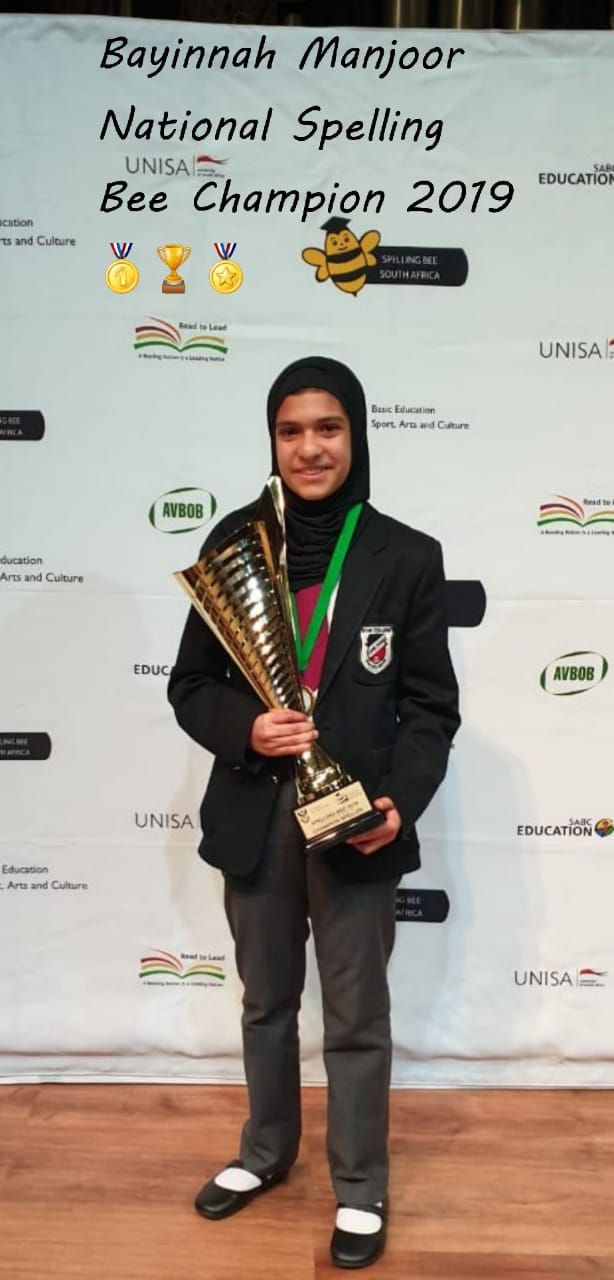
Bayinnah Majoor from Star College Sybrand in the Western Cape is ‘queen of the hive,’ after buzzing her way to the top spot of the 2019 Spelling Bee competition.
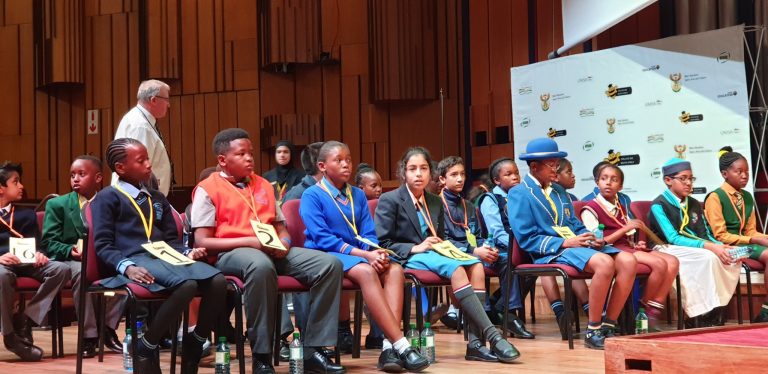
Twenty-seven hopefuls between Grade 4 and 6 descended on the ZK Mathews Hall at the UNISA Main Campus in Pretoria to measure their spelling skills against peers from across the country.
The Spelling Bee initiative is a collaboration between the Department of Arts and Culture, SABC Education, the AVBOB Foundation and UNISA.
The initiative, started in 2014, forms part of the Department’s commitment to deepen a culture of reading across the country.
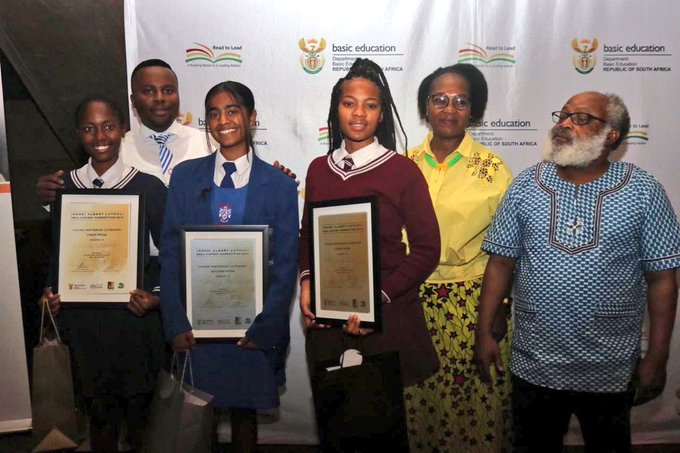
Meanwhile, hopefuls from across the country put their history, storytelling and recital skills to the test in the 2019 Inkosi Albert Luthuli Oral History Competition.
The iNkosi Albert Luthuli Oral History Programme celebrates the lives of significant heroes and heroines, as well as those unsung activists who also played a role to bring about democracy, peace, and unity in South Africa.
It also creates platforms for engagements on significant historical events that has played out across country, the continent and the world.
The Oral History Programme further rekindles the love for history as a subject of choice in schools and expands the knowledge on heritage and cultural aspects.
“It is only through reading that one’s grasp of language and spelling can be improved. Today, we witnessed first-hand the value of reading with understanding from a young age — be it our champion spellers or our Oral History champions with their compelling storytelling, who have certainly raised the bar,” said DBE spokesperson Elijah Mhlanga.
Having come successfully through the provincial rounds, representatives in both competitions braved the might of the adjudicators, held their nerve and represented their provinces with aplomb.
“As the Spelling Bee continues to grow, the latter part of 2019 will see the department pilot four new African languages to be used in the Spelling Bee, namely, XiTsonga, TshiVenda, SePedi as well as SiSwati, which will only prove to strengthen the department’s efforts to promote and preserve African Languages, as well as a culture of reading for understanding,” said Mhlanga