Home Blog Page 443

‘Hidden Hunger’ Lurks On Campuses Throughout South African Universities

Marc Wegerif, University of Pretoria and Oluwafunmiola Adeniyi, University of the Western Cape

Food insecurity at tertiary institutions is aptly described as “the skeleton in universities’ cupboards” because it receives so little attention.

The few studies on food insecurity – the lack of reliable access to sufficient quantities of affordable, nutritious food – at South African tertiary institutions show an alarming picture that mirrors the social divisions bedevilling the country. At the University of the Free State 64.5% of students are food insecure.

Image result for UKZN

At the University of KwaZulu-Natal 55% of the students from low income families were food insecure. This is partly because they used some of the limited money they received as students to assist their needy families.

More than two decades after apartheid has left behind a legacy that still persists of disenfranchisement and subjugation in many socio economic spheres. These include the education sector. Tertiary education under apartheid was highly fragmented by race and the politics of race.

The majority of black students at tertiary institutions across South Africa today are first or second generation to reach this level in their families and are from poorer families. This legacy doesn’t suddenly end because they enrol to study at institutions of higher learning.

Image result for UKZN students

Students also suffer the double burden of malnutrition – hunger and obesity. This results in stress, poor health, poor academic scores and increased drop-out rates. All of this wastes precious resources invested in higher education and perpetuates inter-generational poverty and inequality.

Students from all walks of life are affected. But the most impacted are black students from poorer households who represent their families’ hopes as the first generation to access higher education.

Students who go hungry are denied the possibility of achieving their full potential. Families, communities and the nation are denied the skills and full contribution such students could have made.

Ending student hunger

Poverty is the primary cause of the problem, combined with increases in food prices, fees, accommodation, transport, and books. Students are torn between different demands on limited resources.

“Interventions so far have been ad hoc, not institutionalised, and fall far short of meeting people’s right to food.”

The situation is made worse when students don’t have access to cooking facilities and campuses have limited options for affordable and healthy food. Sboniso Ngcobo, a student at the Durban University of Technology, put it plainly when he said

“most students… eat what is readily and cheaply available”.

Image result for student hunger south africa universities

Some universities have responded with interventions such as food banks, feeding programmes, and food gardens. The Stop Hunger Now initiative at the University of Johannesburg serves 7‚000 meals a week.

Food-insecure students at the University of the Free State receive modest allowances and one balanced meal a day through the No Student Hungry Programme.

The University of the Witwatersrand started a farmers’ market to make fresh produce accessible to students and benefit local farmers.

While all of these programmes have some positive impacts, there are challenges. These include the stigma attached to being seen as poor and hungry.

Queuing for food handouts is often seen by students as one of the most undignified experiences they could have. The interventions so far have been ad hoc, not institutionalised, and fall far short of meeting people’s right to food.

To address this at an institutional level, the Dullah Omar Institute at the University of the Western Cape, together with the DST-NRF Centre of Excellence in Food Security, has rallied stakeholders – students, academics, university executives, and representatives from the state and civil society – under the Access to Food for Students Project. The aim is to find comprehensive solutions to food insecurity at tertiary institutions.

Dr Stephen Devereux, SA-UK Research Chair in Social Protection for Food Security

A national colloquium held in 2018 discussed a human rights based approach. A series of advocacy meetings in 2019 produced a petition, which was submitted to the South African Human Rights Commission, calling for concerted action to address this crisis.

It’s essential that students be recognised as a vulnerable group deserving of intervention when it comes to food security. Students are mostly unemployed, aren’t eligible for social grants, and there’s no food security programme in place for them as there is in schools.

What needs to be done

Right to food policies need to cover students at public and private institutions, from training centres to universities.
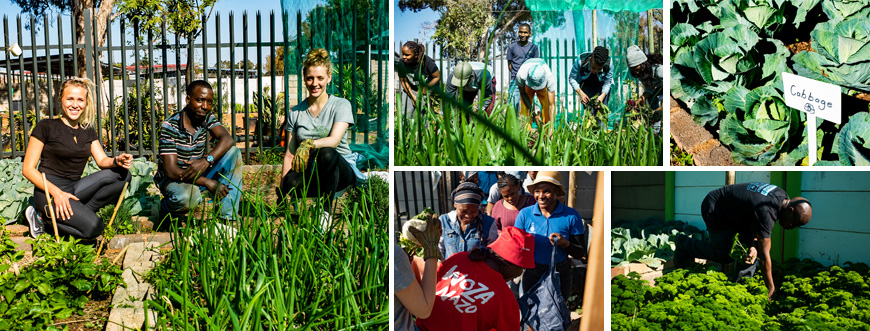
Image result for student hunger south africa universities

The higher education sector needs legislation, regulations and programmes of action with budgets to deal with this.

Students at state colleges and universities are in the care of the state, which is obliged to ensure that the students’ rights are fulfilled. Private education institutions must also be held to the same standards.

Tertiary institutions can be leaders in the just transition to sustainable food systems by integrating research and learning on food and food systems and developing food studies programmes.

Institutions can also ensure that campuses are thriving food environments that make healthy food accessible where students live and study.

Beyond their campuses, tertiary institutions have a responsibility and opportunity to use their influence and their buying power to promote more just and sustainable food systems, such as through promoting agroecology and supporting black farmers and land reforms.

Practical initiatives – such as better structured food assistance, food gardens, opening space for small-scale food vendors on campuses – can meet some of the needs and show what’s possible.

Ultimately, however, government legislation is needed to confirm students’ rights and the obligations of the state and tertiary institutions in this regard.

Marc Wegerif, Post-doctoral fellow, University of Pretoria and Oluwafunmiola Adeniyi, Doctoral Researcher, Dullah Omar Institute, University of the Western Cape. Coordinator of the Access to Food for Students Project of the Dullah Omar Institute, University of the Western Cape

This article is republished from The Conversation under a Creative Commons license. Read the original article.
Lesufi Shocked At Fatal Shooting Of Grade 6 Learner In Katlehong

Gauteng Education MEC Panyaza Lesufi has expressed shock at the fatal shooting of a 12-year-old Grade 6 learner from Mogobeng Primary School in Katlehong who was killed during a shootout between rival taxi association.

“On behalf of the entire education fraternity in Gauteng, we would like to extend our deepest condolences to the family of the deceased learner and the grandfather of the Grade R learners.”

The Mogobeng Primary learner left her school to meet with her friend at Izibuko Primary when the deadly shootout happened.

“We want to call upon police that it is their task and mandate to hunt these criminals. We want to urge them to release the 72-hour call that they normally release to have these people arrested within the next 72 hours. If you can’t arrest them, we risk rendering our country into a lawless institution that anyone can do what they wish,” Lesufi said.

The deceased learner was unfortunately caught in a crossfire between rival taxi associations, which also resulted in the fatal shooting of a man, who had come to collect his two grandchildren in Grade R at Izibuko Primary School who were returning from a school trip, the Department said.

The Grade 6 learner was wounded during the shooting. She was rushed to Bertha Gxowa Hospital, where she succumbed to her injuries Thursday. Lesufi visited both bereaved families to convey his sincere condolences.

“May they find comfort in knowing that we too share their loss. Furthermore, we strongly condemn such violent acts which threaten the safety of our learners, in and around our schooling environment,” said Lesufi.

A Psycho Social Unit was dispatched by the department to offer support and counselling services at both affected schools, as well as the bereaved families.

Police are investigating the circumstances which led to the incident.

UCT Tops In Africa In All Five Major World University Rankings

Riyaz Patel

The University of Cape Town (UCT) has jumped up 20 places to 136th position in the latest 2020 Times Higher Education (THE) World University Rankings.

This puts UCT in the top spot in the country, as well as on the continent.

“It is encouraging to see UCT demonstrate such excellence in international rankings,” said UCT Vice-Chancellor Professor Mamokgethi Phakeng, “particularly given the incredibly competitive, global arena we operate in and the enormous challenges we face in terms of declining national funding and the imperative to transform our institution.”

He added that while UCT view university rankings with caution, “UCT’s performance helps to reinforce the message that our teaching and learning and our research are of the highest standards.”

“It is encouraging to see UCT demonstrate such excellence in international rankings, particularly given the incredibly competitive, global arena we operate in.”

The World University Rankings, published once a year, assess almost 1 400 institutions worldwide, using performance indicators grouped into five areas:
– Teaching (30%)
– Research (30%)
– Citations (30%)
– International outlook (7.5%) and,
– Industry income (2.5%).

In the area of teaching – the learning environment – UCT’s scores increased, with the university rocketing up 35 places.

In the research category, UCT ranked 177th globally, and its research reputation survey score, which is part of this category, also increased.

This, the institution says, is clear evidence of UCT’s growing reputation among leading international academics.

“UCT is well-known for its research excellence; this is evidence that our teaching and learning is strengthening.”

UCT’s citations category score, which measures the number of times a piece of research is cited, also showed a marked increase, moving up 35 places to sit at 121st place globally.

In the international outlook category, however, UCT ranked 160 worldwide – a drop of 22 places from its previous ranking. This was mostly due to a decline in the numbers of international students studying at UCT, particularly in the Semester Study Abroad programme.

UCT has put in place a programme to increase these numbers again as it views the international students and staff as an incredible asset to institutional life and the diversity of our campus.

International staff numbers continue to grow at UCT and collaboration with international partners is flourishing, UCT said.

UCT’s strongest performance, though, remains in the industry income category, in which it ranked 78th despite a drop of 18 places. This reflects the large contribution of the university’s research to industry.

Having recently been placed top on the continent in the Academic Ranking of World Universities (ARWU) 2019, these latestresults mean that UCT remains in the lead for Africa in the five major world university rankings: THE, ARWU, Quacquarelli Symonds, Centre for World University Rankings and US News Best Global Universities Rankings.

It’s Official, No More Spanking – #ConCourt Judgement

Riyaz Patel

The Constitutional Court ruled Wednesday that corporal punishment is illegal in South African homes.

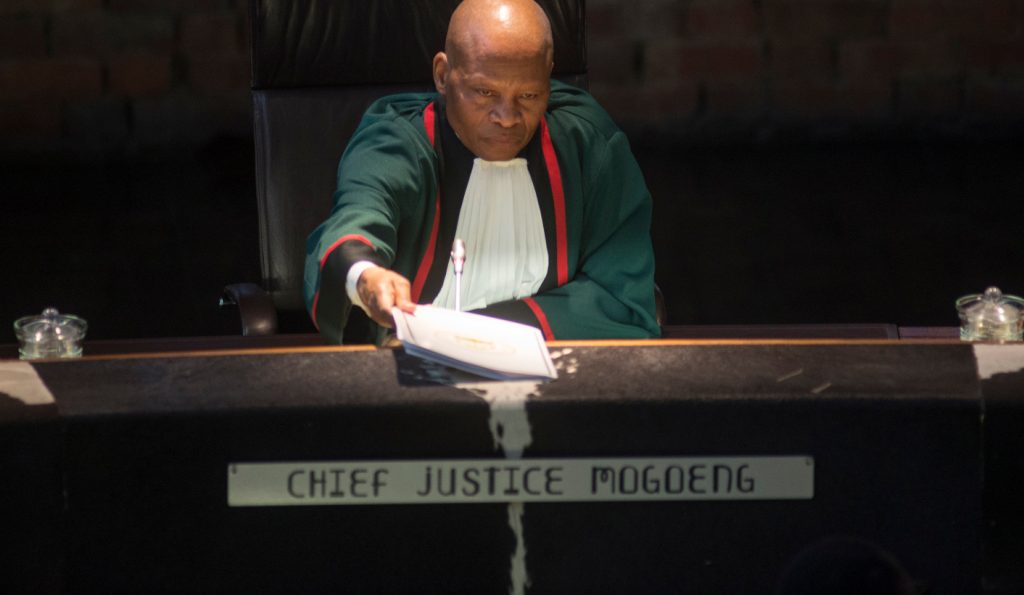
Chief Justice Mogoeng Mogoeng upheld a 2017 high court ruling which made it illegal for parents to spank their children at home, dismissing an appeal to the ruling.

The Chief Justice was delivering judgement on whether the common law defence of reasonable and moderate parental chastisement of children is consistent with the constitution.

Chief Justice of South Africa Mogoeng Mogoeng

The landmark ruling was appealed by civil society group Freedom of Religion South Africa (FORSA) which believed the judgment would make criminals of well-intentioned parents.

The Chief Justice insisted there were other ways to instil discipline.

“There is, therefore, a less restrictive means envisaged by Section 36 of the Constitution available to achieve discipline.”

The Constitutional Court’s decision nullifies the argument that parents should be given the right to discipline their children without the interference of the State.

The ruling, FORSA said, would see parents being prosecuted for assault if convicted.

Parents could have a criminal record for abuse, or the children removed from the family home if the court found them guilty, it said.

The lobby group believes there remains a clear distinction between violence, abuse, and mild physical correction.

FORSA wanted the Constitutional Court to overturn the High Court ruling abolishing parents’ defence of reasonable and moderate chastisement, and wanted the judgment set aside.

Children’s rights group, The Children’s Institute, lauded the ruling and said it was a clear victory for children’s rights and the end to the neglect of children’s rights.

Dr Stefanie Röhrs from the Institute, said it was important to understand that a child was going through the development phase, meaning they were still unclear on the rights and wrongs of their actions.

Gauteng Grade 1 to 8 Learner Placement Process Underway

0

The Gauteng Department of Education (GDE) has announced the commencement of online admission learner placement process for the 2020 academic year.

The department underlined that offers of placement for Grade 1 and 8 learners will not be sent to all parents on the same day, as it will be processing offers systematically in line with the Admissions Regulations.

It said parents of learners who have submitted the required documents can expect offers of placement via SMS from Wednesday, 18 September 2019 to 31 October 2019.

“We wish to remind parents that placement offers must be accepted within seven school days, therefore, the first offers received must be accepted by 8 October 2019,” said the GDE.

The department said the WA1 – WA4 numbers issued during the application period will not be used as the basis to determine placement.

The first offers of placement will be released to applicants who qualify for placement in terms of the Admissions Regulations, according to the following categories:
– The applicant learner’s place of residence is closest to the school
and within the feeder zone;   
– The applicant learner has a sibling attending the school OR the
previous school is closest to the school in the feeder zone;
– The place of employment of at least one of the applicant learners’
parents is within the feeder zone of the school.

While schools will close from 20 September to 1 October 2019, school holidays will be counted as part of seven school days.

At the same time, parents are welcome to accept offers online or visiting their nearest school.

Gauteng Education MEC Panyaza Lesufi urged parents to remain calm if offers of placement are not received immediately.

“It is paramount to note that the capacity of each school will determine the number of applicants that receive placement offers and the number of learners ultimately admitted to the school,” he said. 

Applications for the 2020 online application period opened on 20 May 2019 and closed on 22 July 2019.

Additional reporting SAGOV.news

Innovative Approaches To Global Education Challenges

The World Innovation Summit for Education (WISE), an initiative of Qatar Foundation (QF), has announced the six winners of the 2019 WISE Awards, recognizing and promoting six innovative projects from across the world that address global educational challenges.

Image result for Family Business for Education (Street Child)

Family Business for Education (Street Child) (UK/Sierra Leone, Nigeria and Liberia) – supports low-income families with support packages to help fund children’s’ education, including financial aid, business training, planning support, mentoring and access to incentivised savings schemes and loans. Since 2009, the project has supported over 15,000 families.

United World Schools: Teaching the Unreached (UK/Cambodia, Nepal and Myanmar) – develops community schools in highly remote villages, making education easily accessible and involving communities along the way through recruiting and training local teachers. Over 25,000 children have been given the chance to attend school for the first time as a result.

Micro:bit Educational Foundation (UK/Global) – an accessible and affordable device to help children and students around the world learn how to design, create, code and program. Supported by the BBC, Micro:bit works with partners globally to provide access to entry level technology, having a real impact on girls and under-represented groups.

Arpan’s Personal Safety Education Programme (India) – the largest NGO addressing child sexual abuse in the country, providing prevention and intervention services to children and adults. A total of 200,000 children and adults have been impacted by the program since its creation. 

Programa Criança Feliz (Brazil) – one of the largest early childhood development home visiting programs in the world, launched by the Brazilian Ministry of Citizenship. The intent is to reach all of the country’s most vulnerable pregnant women and young children, offering a network of protection and care services. Since 2016, the program has trained 20,000 home visitors and 3,000 supervisors to reach nearly 500,000 children and pregnant women.

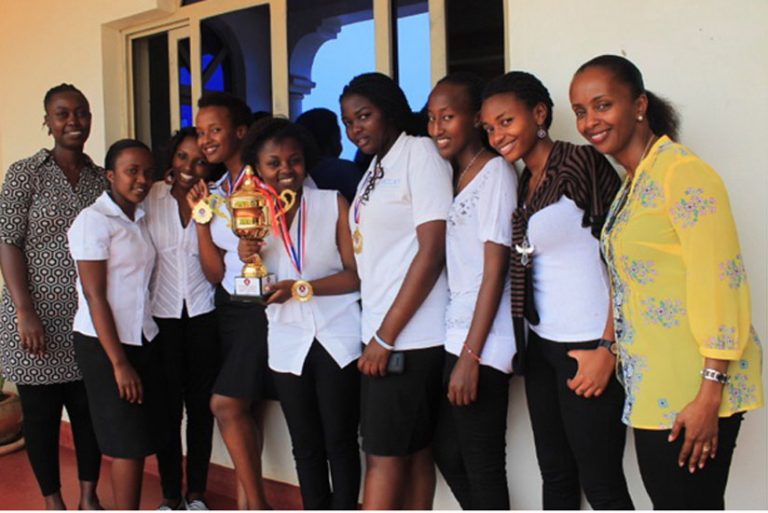
Akilah Institute  (USA/Rwanda) – an award-winning women’s college that delivers high-quality, market-relevant education through a lens of opportunity and sustainability for women at its Rwanda campus. Akilah’s model leverages technology, competency-based education, and personalized learning.

The projects will be celebrated during the WISE Global Summit from November 19- 21, 2019 in Doha, Qatar.

The theme of the global Summit is UnLearn, ReLearn: What it means to be Human.”

In addition to publicity and networking opportunities, each will receive $20,000.

Limpopo’s Ndlovu Youth Choir Dazzles USA Bringing Breath Of Fresh Air For Bruised & Battered SA

The Ndlovu Youth Choir from Limpopo has become the first African outfit to advance to the finals of the talent show competition America’s Got Talent (AGT), and South Africa is beaming with pride.

The Choir hails from a small town in Limpopo and since its inception in 2009, “have profoundly affected the lives of the choristers and demonstrates the potential of any human being to achieve excellence no matter their background, education or place of birth,” reads their official website.

A powerful rendition of Toto’s ‘Africa’ propelled the group to the final.

From its humble beginnings as an after-school activity, the choir has evolved into a truly outstanding professional ensemble.

For their AGT quarter-final appearance, the Ndlovu Youth Choir had the audience in raptures with a U2 ‘Beautiful Day‘ cover.

For the struggling community of Moutse, a dusty village about 200 kilometres from Polokwane, hope and inspiration has come in the form of Ndlovu Youth Choir.

The choristers has captured the imagination of South Africans and the world through their awe-inspiring and mesmerising performances on the world’s biggest talent platform.

Nokthula Maphanga was full of praise for the choir which was formed 10 years ago through the Ndlovu Care Group Centre, as a healing programme for the impoverished community.

She’s the guardian for 17-year-old Nonhlanhla Somo, who’s also competing in Los Angeles.

“There’s hope even when there’s nothing. There are children who want to change things and they don’t want to be teenage moms,” EWN reported.

The group was founded by Dr Hugo Templeman in 2009.

‘Please Don’t Remind Us About Apartheid’ – Lesufi Blasts Plans For Afrikaans-Only University

Gauteng Education MEC Panyaza Lesufi has slammed plans for an Pretoria-based Afrikaans-only university that is set to open in 2020. 

Lesufi recently retweeted a video in which he criticised the idea of the Afrikaans-medium university, saying that a “race-based institution” would not work in South Africa. 

Gauteng’s Education MEC believes the new Afrikaans institution would remind the country about apartheid. 

“I just hate racism when I see one! A race-based institution in a non-racial society won’t succeed. Please don’t remind us about apartheid,” Lesufi tweeted. 

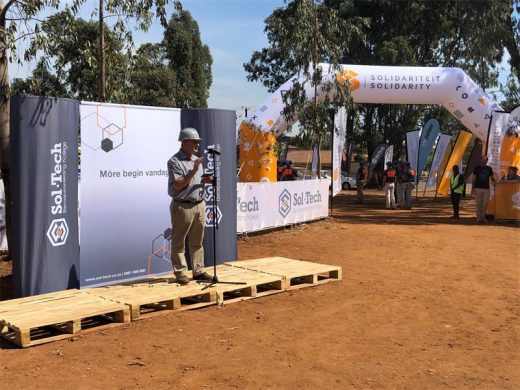
Earlier this year, trade union Solidarity announced plans to build its new Sol-Tech university campus in Centurion.

The project is set to cost R300 million, according to reports.

Solidarity COO Dirk Hermann said the project is funded through donations from the community. 

“The strength of Sol-Tech and of this campus lies in the fact that it is being built by the community. Thousands of members of the public donate smaller amounts each month to make the building of institutions such as Sol-Tech possible,” Hermann said. 

The DA said it supports Solidarity’s plan.

In an interview with a Cape Town-based radio station, Lesufi said the university was started “out of anger” after institutions across the country started “changing their language policies to promote inclusivity.” 

He said that he was not attacking Afrikaans but felt that the message that the new university was sending is negative. 

“We’re not saying this because we are attacking Afrikaans but because the message of ‘we only need one language’ is bad.”

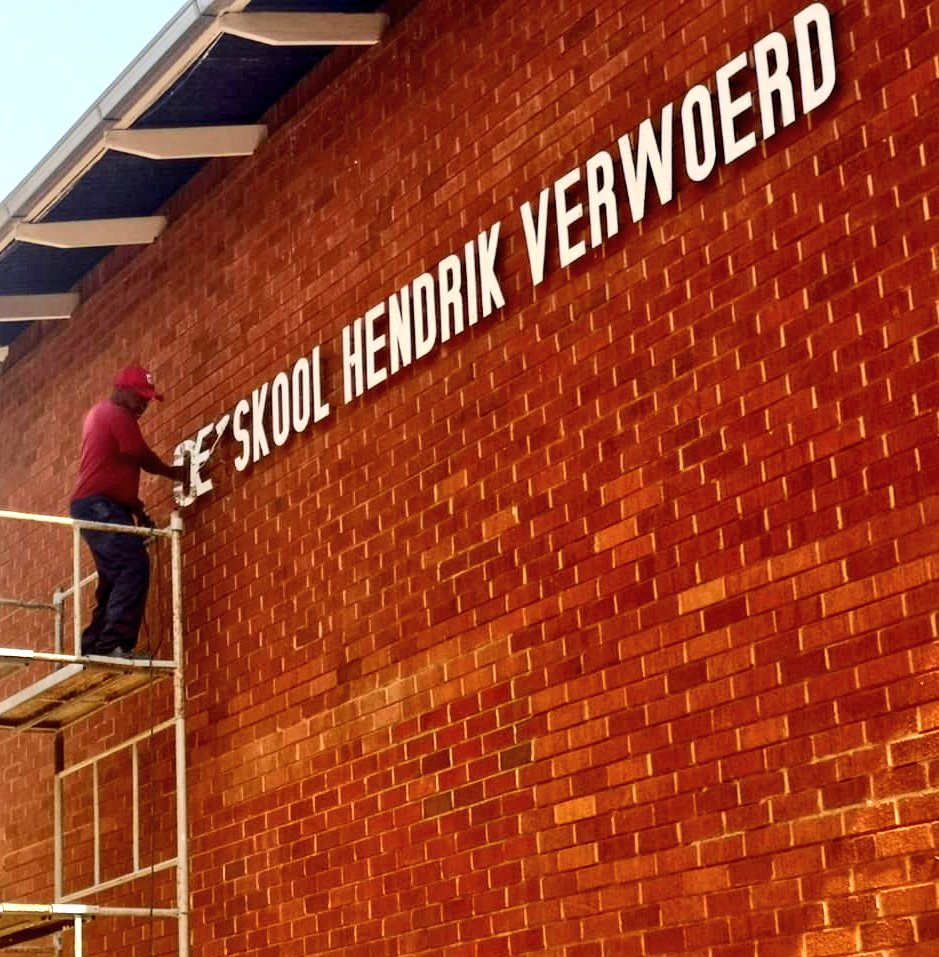
Rietondale High, Formerly Hoërskool Hendrik Verwoerd, Vandalised After Name Change

Gauteng Education MEC Panyaza Lesufi has expressed outrage and condemned the acts of vandalism at Rietondale High School, formerly Hoërskool Hendrik Verwoerd.

He said the vandalism is a violation of a fundamental human right and undermines government’s transformation agenda.

The school in Pretoria was vandalised Sunday after the department changed its name from Hoërskool HF Verwoerd to Rietondale Secondary last month.

https://insideeducation.co.za/hoerskool-hendrik-verwoerd-no-more-as-lesufi-unveils-rietondale-high/
https://twitter.com/EducationGP/status/1173589112735129601

Preliminary reports suggest that criminals defaced the main gate of the school and vandalised sections of the building.

We are appalled and shocked by this behaviour. We call on the police to do everything in their power to apprehend these faceless individuals. This act against the school is a violation of a fundamental human right and undermines our transformation agenda,” Lesufi said in a statement.

MEC Lesufi also called on communities to protect schools and assist the police in this incident.

“This act will not deter us from our agenda of transforming the education system. Vandalism targeted at our schools requires the urgent attention of all structures of civil society and our partners in the education sector.”

Legislative Amendments Seek To Strengthen National Qualifications Framework

The South African Qualifications Authority (SAQA) says there is more to the National Qualifications Framework (NQF) Amendment Act than just criminalising qualifications fraud.

The legislation tightens the legal requirements and strengthens the hands of NQF bodies to inspire confidence in the education and training system, SA Government News reported.

Skills development providers now need to be registered by the Department of Higher Education and Training, which was not the case in the NQF Act of 2008.

Private providers are also required to be registered.

“The Amendment Act also brings with it some new and revised definitions aimed at strengthening the legislation so that there is effective implementation of the NQF. For instance, it introduces the definition of authenticity concerning a national and foreign qualification and part-qualification,” SAQA outlined.

An authentic national or South African qualification, or part-qualification must be registered on the NQF, offered by a registered and accredited education institution or skills development provider, and be lawfully obtained.

On the other hand, an authentic foreign qualification or part-qualification must be lawfully obtained from a foreign country and evaluated by SAQA.

The NQF Amendment Act further gives SAQA the legal responsibility to verify all national qualifications and part-qualifications.

Employers, government departments, education and training institutions (both public and private), and professional bodies must first check if their employees or members’ qualifications are registered on the NQF.

“If the qualifications are not registered, they can refer them to SAQA for verification. Similarly, South Africans and foreign nationals who have obtained qualifications and part-qualifications from other countries must also have their qualifications and part-qualifications verified and evaluated by SAQA,” the organisation said.

SAQA has warned that education institutions and skills development providers that are not registered or accredited or offer qualifications and part-qualifications not registered on the NQF, will face closure.

Such institutions may also be declared unfit to apply for registration for a period not exceeding 10 years, and those found guilty of qualifications fraud, will be liable to a fine or imprisonment for a period not exceeding five years, or to both a fine and such imprisonment. 

“South Africa needs an effective education and training system where the movement between general and further education, higher education as well as occupational qualifications and the world of work is seamless,” SAQA said.

Furthermore, the NQF Amendment Act amplifies the role of the National Learners’ Records Database (NLRD) to include a separate register for professional designations.

The NLRD will also have records of qualification and part-qualification requirements and other related information, including details of education institutions and Quality Councils that awarded the qualifications and part-qualifications.

While the NQF Amendment Act was signed and published for general information, it will only come into effect on a date that will be determined by the President. – SAnews.gov.za