Home Blog Page 450

Positive Parent-Teacher Partnerships

Teachers are often stuck with the challenging task of telling parents things they don’t want to hear.

Telling a parent that their child is struggling in school, making poor choices, or is otherwise not perfect, can be hard.  

Children are a direct reflection of their parents. So when we tell parents bad news, it’s easy for them to take it personally and end up defensive, angry, or hopeless. 

With some simple shifts in our language, we can help parents understand our message and get them on board to support their child.

“Good teacher-parent partnerships save time & creates opportunities for the child to develop in school and at home.”

ECD Trainer, Cindy Olivier

Make a Positive Connection

Before a parent can HEAR a tough message, they need to KNOW that you love and care for their child.

Every phone call, meeting, or conference must begin with the teacher sharing something positive about the student.

It can be something simple, but it has to be TRUE!

  • You’ll never believe what Modise said during reading group yesterday. It was so deep and thoughtful that she sounded like an adult!
  • I just have to tell you how much I appreciate Barry’s help with welcoming our new student. He has such a kind heart!
  • The music teacher kept telling me about Nomfanelo’s singing talents. I finally went down to listen and she is amazing!

When parents see that you care for their child and view them as a unique individual, they become much more receptive to tough news. 

When you share something negative, they’ll know it comes from a place of concern and care for the child.

Describe Without Judgment

When we are frustrated with a child’s behavior or lack of progress, it’s easy to use emotionally-charged or judgmental words.

Telling a parent that their child is lazy, disrespectful, hyper, aggressive, or mean can set off alarm-bells and make it hard for them to really hear and process our message.

Instead, describe the situation and offer the parents clear information about what you’ve been seeing at school.

Rather than: “Your child is rude.”
Describe What You’re Seeing: “I’m concerned about her relationships with other students. Last week, she told another child ‘You’re not cool enough to play with us.’ And this week, she teased a child for getting a bad grade.”

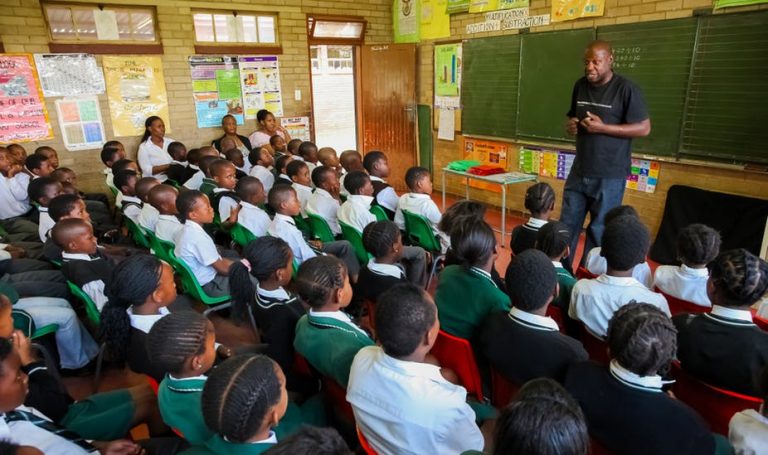
Parent’s Day at Benoni Junior School

Rather than: “Your child is failing math.”
Give Information: “Here are Lerato’s last few assignments. I’ve been working with him in a small group, but here is his last test. He hasn’t mastered these concepts YET.”

When we describe and offer information, parents are free to make their own judgments, and we avoid upsetting or offending them.

In sharing learner progress with parents, give some specific strategies for helping them understand how their child is performing academically.

Speak Like You’re a Team

Another shift that makes a big difference is using language that shows you are all on the same TEAM.

Parents may feel overwhelmed, anxious, embarrassed, or confused when they hear about their child’s challenges.

Rather than: “YOU need to be reading with your child every night. YOU should have been practicing sight words at home.”
Try: “Let’s make a plan for how WE can help Ramees. I can work with him in a small group every day at school. Are you able to read with him for twenty minutes every evening?”

Make sure they understand that you are in this together to support the child.

Key Snapshots


1: Parent Perspectives (Mindset Shifts)
Discover the key mindset shifts necessary for building collaborative
relationships with parents.

3: Strong Start (Set Up for Success)
Start the year off with simple, but meaningful contact that promotes a year-long, positive relationship.


5: Clear Communication (What Goes Home)
Simplify your system of sharing information with parents and create routines that encourage participation.

7: Collaborative Conversations (Parent-Teacher Conferences)
Plan and host collaborative parent-teacher conversations that lead to
your intended outcome.


2: Prickly Partnerships (Handle With Care)
Learn the Do’s and Don’ts for maintaining respectful and friendly
connections.

4: Talking Tips (Words That Work)
Use language that allows parents to hear your message without feeling
defensive or attacked.


6: Student Progress (Make it Meaningful)
Share student growth and progress in was that parents can truly
comprehend.


8: Tough Talks (Tricky Topics)
Lead hard conversations in ways that encourage parent understanding
and involvement

Remember, parents must ‘conspire’ with teachers for the good of the child.

Tributes Flood In For Aspiring SA Astronaut Who Died In Accident

Tributes are pouring in for 30-year-old Mandla Maseko, 30, the first black African who would have travelled to space, but who died in motorcycle accident this weekend.

Maseko, known as ‘Spaceboy’ and ‘Afronaut,’ beat off millions of entrants and won a spot on the Axe Apollo Space Academy in the US, along with 22 others.

However, his trip to space was not meant to be after he died after being hit by a car while riding his motorcycle on Saturday.

“He really thought that if he went up to space he could inspire young African children that they could do anything. He used to always say that the sky was no longer the limit,” close friend and business manager Sthembile Shabangu said.  

A Soshanguve resident, Maseko went on to train as a private pilot and became a corporal with the South African National Defence Force.

Shabangu added that as a public speaker and community worker, Maseko worked tirelessly to inspire African children to pursue careers in science.

He was also an avid biker with the Tshwane Legend Bikers.

In 2016, he was honored by the Gauteng Department of Education and had the science building at the Curtis Nkondo School of Specialisation named after him.

#4IRSA… The Enabler To Solve Poverty, Inequality & Unemployment In SA – Ramaphosa

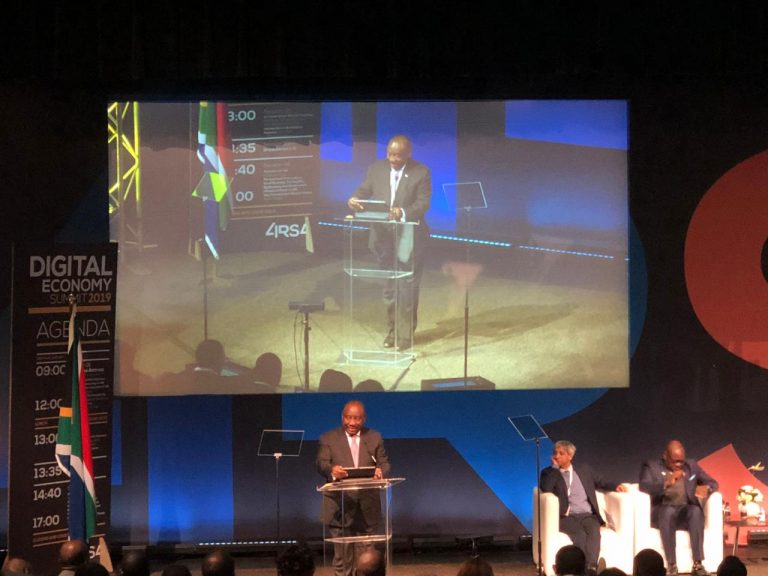
President Cyril Ramaphosa says jobs will be lost with the onset of the Fourth Industrial Revolution, but that many opportunities will be created. as economies embrace the 4IR.

“As SA we must gear ourselves for the eventuality of this disruption by improving our educational outcomes to harness skills revolution,” Ramaphosa said, speaking at the inaugural Digital Economy Summit in Midrand, north of Johannesburg.

The summit was convened by 4IRSA, a platform bringing together key stakeholders, decision makers, and pioneers to define the principles and vision of industry 4.0 and its future effects on South Africa. 

“We have an opportunity to be early adopters of technology and opportunities presented by the 4th Industrial revolution,” the president said.

Ramaphosa has established and chairs the Presidential Commission on the 4IR, which will identify policies, strategies and action plans that will position South Africa as a competitive global player.

“The digital age provides an opportunity to be build an entrepreneurial state and find fertile ground for companies to succeed with strong venture capital,” he added.

Earlier, Communications Minister Stella-Ndabeni Abrahams pointed out the advantages of investing in digital transformation. “A recent study by the WEF estimates that investment in digital transformation of government and industry in South Africa would result in an economy wide value of R5 trillion and would result in roughly 4 million new jobs,” Ndabeni Abrahams said.

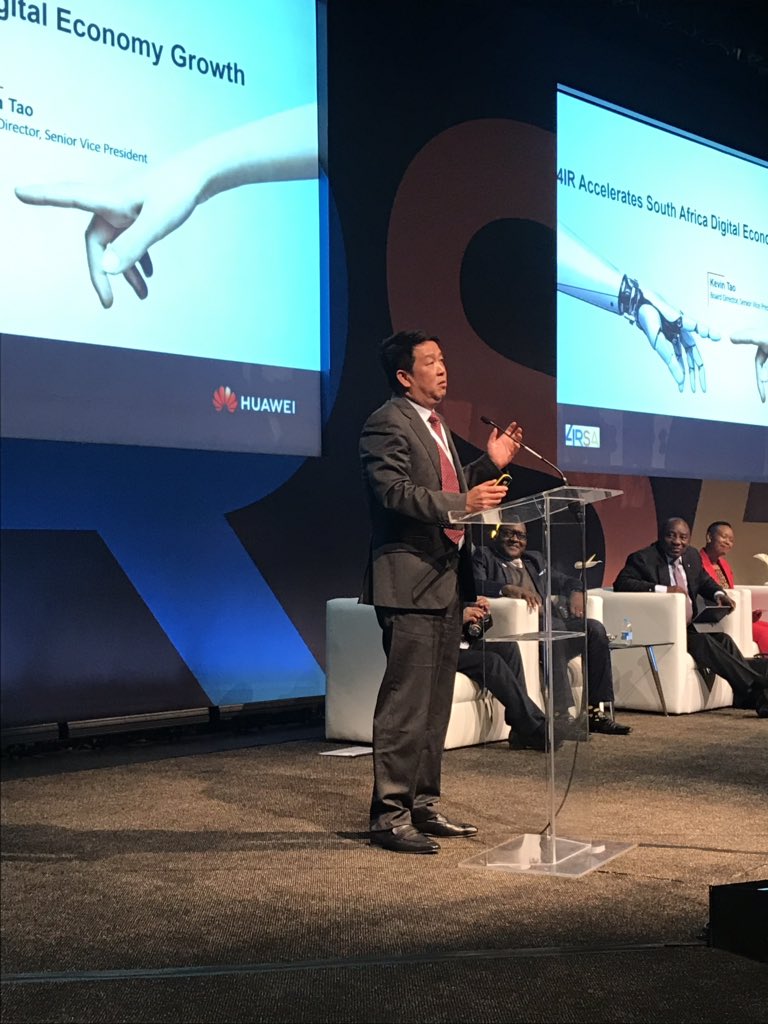
Tao Jingwen, president of Huawei Africa, said South Africa has the capability to leapfrog other countries in rolling out digital economy tech.

He committed his company to upskilling 6000 people each year to ensure South Africa becomes the digital economy hub in Africa.

Wits VC Prof. Adam Habib said it’s imperative for the public & private sectors, civil society and academia to work together to form a coherent national response to #4IRSA. “Our end goal is to create a more fair, just, inclusive society.”

The summit will feature key themes which will be unpacked in breakaway sessions, including: the future of work and jobs; society, state and citizen; opportunities; critical success factors and the 4IR in the township economy.

Education in South Africa: Hits & Misses Over The Past 25 Years

State of the Nation addresses are delivered at the start of South Africa’s parliamentary year. They focus on the current political and socio-economic state, highlight progress made and signal new policy directions for national government. It is a grand red carpet event, and the public (and markets) expectantly await reports of progress and new hope.

We reviewed 25 years of the education priorities set out in the annual address since the first by President Nelson Mandela in 1994. The review revealed that there’s been success in early childhood development, infrastructure and social protection.

But quality and learning outcomes remain elusive. We found that while it’s easy to report on access and inputs, it’s much more difficult to achieve educational quality and meaningful outcomes as there are many intangible factors that impede progress.

The first 10 speeches eloquently articulated the centrality of human resources and skills development to catalyse economic growth. But the country has made very little progress.

A report released last year showed that there wasn’t enough alignment between the skills being taught in education and training institutions and what was needed to grow the economy.

This is where the country needs to focus its attention.

The question is: will President Cyril Ramaphosa’s latest state of the nation address, to be delivered on 20 June 2019, simply repeat the perennial issues? Or will he have the wherewithal to take the next step in tackling the more complex challenges?

One of these is the mismatch between education outcomes and what the economy needs. While we think that SONA would articulate the needs of the economy, it is important that government convinces post-school institutions to align their programmes to the needs of the economy. The second is how to improve educational quality.

The findings

Mandela’s administration (1994-1999) focused on establishing democratic institutions, enacting legislation, improving infrastructure and increasing access.

His 1994 address highlighted human resource and skills development. The aim was to grow the economy and decrease unemployment. At the school level, he expressed concerns about the culture of teaching and learning.

One of the key social protection programmes, the Primary School Nutrition Programme, was introduced. Given the levels of household poverty and hunger, this had two objectives: food security and education.

The 1999 policy address highlighted the non-delivery of textbooks, an issue which has embarrassed government many times thereafter. Mandela called this “inexcusable” and went on to say:

“If our administrations are unable to carry out such straightforward projects, then … ordinary citizens like myself will feel justified in calling for heads to roll.”

Former President Thabo Mbeki’s administration (1999-2008) recognised the country’s deep economic inequalities. It’s therefore not surprising that he focused on socio-economic transformation and growth, macro-economic stability and job creation.

The importance of education and skills responsive to the needs of the economy were key to stimulating job creation. Mbeki highlighted the importance of human resource development, releasing a strategy paper that outlined the vision for early childhood development, primary and secondary education, technical and vocational education, adult education, skills development and unemployment.

In the first 10 years of democratic governance, there was little mention of educational quality. Basic education was subsumed within the broad Human Resource Development Strategy.

From 2006, concerns were raised about the quality and quantity of educational outcomes, and a focus on Grade 12 as well as the mathematics and science pass rates emerged.

Interventions

One of the strategic interventions was the expansion of the early childhood development programmes. The 800 000 learners enrolled for Reception year is one of government’s success stories as research has shown that importance of early learning.

Another social protection intervention, the elimination of fees for the poorest schools began in 2006. Today, most schools are categorised as no-fee. This means that more learners can remain in school.

Zuma’s administration (2009-2014) adopted an outcomes-based approach. The government set achievement targets, and outlined a programme of action for basic education. In his 2014 address he said:

“We want teachers, parents and learners to work with government to turn schools into thriving centres of excellence.”

The focus was to improve the ability of children to read, write and count in their foundation years. The rallying cry for improved education was the triple “Ts”: teachers, textbooks and time.

In his second term Zuma reverted to focusing on infrastructure development (schools, universities, colleges) and the address was dominated by fee-free post school education and training policies.

President Cyril Ramaphosa’s administration (2018-2019) has focused on infrastructure and subsiding free higher education.

Read More: What SA teachers are saying

It has promised to improve the education system and develop skills needed for now and the future, including skills for new and emerging technologies. It also signalled the expansion of early childhood development to two compulsory years and improving reading comprehension in the first years of school.

Going forward

Government has, to a large extent, delivered on school infrastructure programmes, though there are some persistent problems – 100 schools still to be built, 9000 schools still using pit latrines, 300 schools without electricity – which must be corrected.

But now the focus must shift to school resources that affect teaching and learning (libraries, science and computer laboratories).

Government has been successful when it comes to social protection. Three quarters of learners get a meal at school and are not obliged to pay school fees. There’s also been an increase in the aid scheme for university students.

But, the question is whether these many social protection programmes, after 25 years of rule, are a mark of progress or concern. With development, and an increase in household incomes, success should be measured by a decrease in social protection

While state of the nation addresses have signalled clear plans to improve basic education and human resource development, these have not translated into programmes and actions. It’s time that changed, and words became deeds.

Sylvia Hannan also contributed to this article.

Vijay Reddy, Distinguished Research Specialist, Human Sciences Research Council and Ncamisile Zulu, Researcher, Human Sciences Research Council

This article is republished from The Conversation under a Creative Commons license. Read the original article.

ANC Withdraws Nominee Zukisa Faku for Basic Education Chair

0

The ANC has withdrawn the nomination of a controversial candidate as chairperson of the Portfolio Committee on Basic Education.

Zukisa Faku was put forward to chair the Parliamentary Committee on Basic Education when ANC Secretary General Ace Magashule and Chief Whip Pemmy Majodina announced the party’s nominees for the chairpersons of Parliament’s portfolio committees on June 19, the day before the State of the Nation Address.

Faku, a former mayor of Buffalo City, was convicted on nine counts of fraud relating to the use of her official credit card, and sentenced to three years’ house arrest and community service in 2016, while she was an ANC MP.

She apparently stayed on as MP pending an appeals process.

In the days following the announcement, NGO Equal Education campaigned to have Faku’s nomination withdrawn.

Last Friday, the list of which MPs will serve on the Parliamentary Committees was published and Faku’s name didn’t appear on the list.

Equal Education, naturally, welcomed the withdrawal of Faku’s nomination.

“Not only did Faku’s nomination contradict the ANC’s public commitments to clean governance, it also went against the standards of ethical behaviour for public representatives as set out in Parliament’s Code of Ethical Conduct and the South African Constitution. Among others, MPs must exhibit selflessness, integrity, objectivity, openness and honesty and must place the public interest above their own.”

Majodina confirmed that Faku’s nomination had been withdrawn, but said it wasn’t due to public pressure.

#TALIS 2018 – What SA Teachers Are Saying

Results of the Teaching and Learning International Survey (Talis) which covers about 260,000 teachers in 15,000 schools across 48 countries and economies is being released at the Nellmapius Secondary School in Pretoria.

South Africa is the only African state represented in the list of international countries participating in the Talis research study.

Basic Education Minister Angie Motshekga says the country’s education system is on the rise, but the classroom still faces many issues.

Deputy Basic Education Minister Reginah Mhaule said a unique feature of the #TALIS study is that it affords teachers and principals a voice on educational policy, analysis and developmental key areas.

TALIS 2018 Key Findings on South Africa:

South Africa is the country where school safety incidents occur the most frequently. One out of three principals reported that acts of intimidation or bullying among students occur at least weekly in school.

Incidents of violence in South Africa’s schools are more than double compared to other countries that took part in the survey.

Some 71% of teachers in SA work in schools with over 30% of socio-economically disadvantaged students. This pattern signals high levels of poverty and inequality.

South Africa Indicators 2018

Teachers aged 50 and above – 32.4%

Class time spent on teaching and learning – 66%

Teachers feeling prepared to manage the classroom – 82.4%

Teachers feeling prepared for the use of ICT for teaching – 53.7%

Teachers feeling prepared to teach in multicultural settings – 66.9%

Teachers feeling prepared to teach in mixed-ability settings – 67.4%

In South Africa, 69% of teachers report having participated in some kind of formal or informal induction when they joined their current school, compared to 42% of teachers across OECD countries and economies participating in #TALIS.

At least 97% of teachers in SA cite the opportunity to influence children’s development or contribute to society as a major motivation. 90% also see it as a steady career path.

In SA, the study found, 60% of teachers are female yet only 20% of women are principals.

Teaching was the first-choice career for only 49% of teachers in SA, which was the lowest share of teachers among the the 48 countries part of the survey.

The main author of the report, OECD’s Dr Noémie Le Donné, highlighted linguistic challenges, noting that on average, 62% of teachers work in a school where there is 10% of students whose first language is different from their language of instruction.

The study showed that 81% of teachers feel they can cope with the challenges of a multicultural classroom “quite a bit” or “a lot” in teaching a culturally diverse class as compared to 67% across the OECD.

Principals in SA reported significant material resource shortages. Most of the concerns related to library materials (70%) and infrastructure (56%).

Mhaule said the findings helps policy makers to review and develop policies and create a climate for effective teaching and learning.

At least 97% of teachers in SA cite the opportunity to influence children’s development or contribute to society as a major motivation. 90% also see it as a steady career path.

Teaching was the first-choice career for only 49% of teachers in SA, which was the lowest share of teachers among the the 48 countries part of the survey.

Read More: https://doi.org/10.1787/23039280

When SA teachers were asked what they would do if they could reconfigure spending priorities, teachers said that they would reduce class sizes and increase teacher salaries.

The research focuses on a number of critical areas in the teaching profession, including instrumental practices and beliefs and teacher education and initial preparation.

The Basic Education Department said that this report would provide valid, timely and comparable information that will help the department review and define policies for developing high-quality teaching in the country.

School Safety Is Premier’s Priority – Makhura at SOPA 2019

Gauteng Premier David Makhura has ordered Education MEC Panyaza Lesufi to produce annual primary school results, adding that school safety is a priority for his office.

Speaking at his State of the Province Address (SoPA) Monday, Makhura said Lesufi has been instructed to implement the national integrated assessment framework, which will ensure rigorous assessment of all primary schools.

“The results of this assessment will be publicly released as we do with Grade 12 results. This groundbreaking initiative will promote accountability and transparency on performance across the entire system and will empower parents to make better decisions regarding the education of their children, the Gauteng Premier said.

“In the first 100 Days, Lesufi will present a plan to the executive council on the status of all primary schools as well as the improvement plans to turn around poorly performing primary schools,” he added.

Last year, Gauteng achieved a pass rate of 87.92%. Eight of the 10 best-performing districts are also in the province.

“I want more attention to be directed at strengthening and improving the performance of primary education in Gauteng.”

He added that Lesufi must outline, within 100 days, interventions which will focus on turning around the poorest performing primary schools through systematic support to ensure that “we also drastically reduce the number of children who are lost through the system between Grade R and Grade 12.”

School safety will also be a key priority for the provincial government. Makhura directed Safety MEC Faith Mazibuko to deploy 10 patrollers in every ward to secure schools from criminal elements.

He added that his government, with private sector partners, will increase the number of Schools of Specialisation from 17 to 35.

“We will continue to build new schools for learners with special educational needs at a rate higher than ever before to ensure that no learner or child is left behind or left out,” Makhura said.

“Gauteng should be a hub of fourth industrial revolution skills and a centre of excellence for digital economy breakthroughs.”

He said in preparing for the fourth industrial revolution and the digital age, Gauteng is investing in wall-to-wall broadband coverage, with an emphasis on deprived communities.

Image result for gauteng innovation hub

“Investing in internet connectivity will increase our GDP by 1.5%, improve service delivery to citizens, create new industries and provide new platforms for small businesses to integrate with the mainstream economy,” Makhura said.

There are plans to expand the infrastructure and the offerings of the Gauteng Innovation Hub in “order to revive the of growing it into Africa’s Silicon Valley that will drive the development of our digital economy.”

Moves To Dent High Youth Unemployment Gather Pace

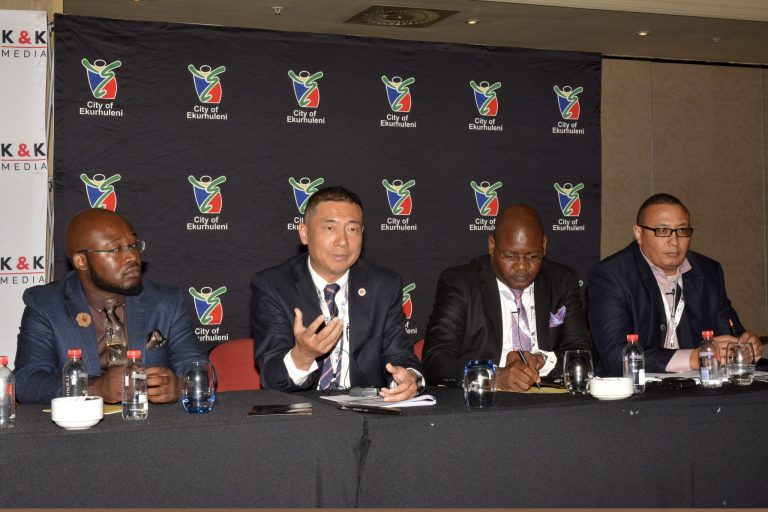
“Limited opportunities,” “Empty promises by government,” “lack of funding and support,” “being exploited as graduates,”‘ “ideas being stolen”… These were some of the frustrations expressed by unemployed youth at the inaugural Ekurhuleni Youth Summit on Unemployment in Kempton Park.

Against the backdrop of South Africa’s youth unemployment rate declared a “national crisis” by President Cyril Ramaphosa, the City of Ekurhuleni in partnership with K&K Media, convened the gathering which saw local government, the private sector and the city’s youth engaged in a conversation, seeking sustainable solutions and chart a way forward.

Ekurhuleni In An Economic Context

Ekurhuleni the fourth largest contributor among the metros in South Africa, contributes approximately 8.8% to the country’s national economy. 

In the context of Gauteng, it contributes 23.4% to the total provincial economy. Around 26.4% of the City’s economic capacity is produced in the Kempton Park areas, followed by Alberton (19.3%), Edenvale (15.2%), and Benoni (14.7%).

Ekurhuleni Human Settlements MMC, Lesiba Mpya said the City of Ekurhuleni seeks to position itself as more than just economic and industrial powerhouse, but also a place where people are encouraged to live, play and invest.

To this end,Mpya said, “Ekurhuleni prides itself in the relations it has with all its stakeholders. We seek to continue to strengthen such relations, particularly with the private sector. One of the ways we aim to achieve these strengthened relations is by entering into various social compacts that deal with youth unemployment, inequality and poverty.”

He added that said this youth summit was critical to youth development because it served as a “platform on which to engage young people and expose them to captains of industry, the private sector and government in an effort to realise the innovations of tomorrow, which depend on the opportunities made available and accessible for young people today.”

Big Business Stepping Up

This image has an empty alt attribute; its file name is EMT0790.jpg

Dr Haiyan Song, CEO of Aberdare Cables reaffirmed his company’s commitment to South Africa and creating jobs and opportunities.

Dr Song said its parent company, Hengtong, has recently invested R250 million in SA and the Ekurhuleni region.

He further pointed out that Aberdare contributes 100% tuition fees for its bursary programme.

Joseph Mudau, Head of Training at the Gibela Rail Consortium which earned a mention in Ramaphosa’s SONA debate reply, said his company has committed huge resources to address the much lamented skills development gap.

Maudau pointed to Gibela’s apprentice and artsian programmes and its bursary scheme as concrete examples of how it is helping to dent unemployment.

He added that their apprentice and artisan programmes are structured in a such a way as to absorb these people into formal employment.

During a panel discussion between five young unemployed people, the youth were urged to “seize the moment,” “take charge of their future,” be “proactive,” and not wait on “government to do everything.”

Panelist, Lerato Mokoenyane said if young people have the drive and the determination, they will succeed no matter what the obstacles.

Kolobe Mamabolo suggested that big business be part of the curriculum development in higher education so that students are trained in line with the demands and requirements of the workplace.

This, he said, will go a long way in clearing the backlog of graduates who spend years at tertiary institutions only to discover their knowledge and skills are not what is needed or required.

Chaile Makaleng, the interim CEO of SAA Technical, moved by the desperate experiences shared, promptly announced that he is extending the deadline for bursary applications by one week, and instructed staff to ferry 100 applications to the summit venue.

The youth were advised to take up any volunteer and internship opportunities as this would help offset the lack of experience on their CVs.

Sakhile Siwela, founder of Spartan-based Flolite, announced that his lighting company is planning to offer 200 learnerships at his firm and called on potential partners to step up.

Siwela believes that expanding South Africa’s local manufacturing base will help dent the high unemployment rate and also promote the ‘Buy SA Campaign.’

The Nigel Youth Development Foundation (NYDF), a small start-up focused on the so called Fourth Industrial Revolution, said it’s high time government looks beyond the big tertiary institutions and support interventions such as theirs.

Tebogo Maselesele said the NYDF’s efforts need to be recognized as they are skilling people, and with no funding, to meet the demands of our future world.

Mpya said the City of Ekurhuleni has structured budget to put youth development at the centre of its efforts to tackle youth unemployment.

The MMC added that should not descend into just another talk shop; and industry and Ekurhuleni should leave with “firm commitments and a review in 5 months to evaluate commitments made.”

Nzimande Promises More Higher Learning Institutions For SA

0

South Africa will have a university or other further learning institution in each of its 44 municipal districts, the minister responsible for higher education has promised.

“Within the next 10 years there will be no district municipality that would not have at least one post-school education and training institution,” Blade Nzimande, the Minister of Higher Education, Science and Technology said this week. 

Nzimande was responding in Parliament to president Cyril Ramaphosa’s 2019 State of the Nation Address.

He added that his department will realign all its programmes to focus on the government’s economic priorities, as outlined in Ramaphosa’s speech. This includes an aim to be on the forefront of big data analytics.

He said that development of student housing would also be a government priority, with details to be set out in the budget vote in the National Assembly on 12 July.

Nzimande also defended the merging of the higher education and science departments under one ministry. 

“By putting together [the departments] we have opened huge opportunities to place our country onto a much higher plane in terms of better coordination between what higher education institutions are doing as well as the science councils,” he said.