Home Blog Page 460

Business Economic Indaba: Strategic Dialogue for a Transformed and Inclusive Economy”

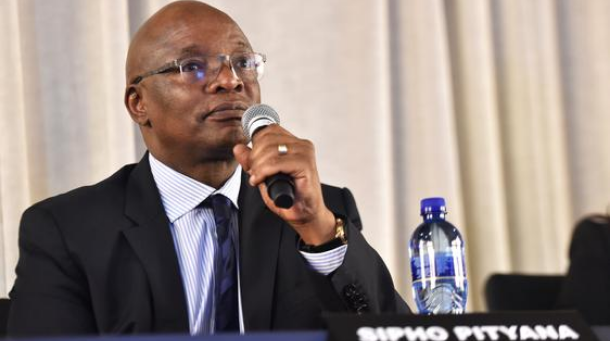
Sipho Pityana

Sipho M Pityana, the president of Business Unity South Africa (BUSA) address at the  Business Economic Indaba.

This inaugural Business Economic Indaba follows my promise to the President, after the Jobs Summit, on your behalf as the business community, that we will gather thus in order to reflect on a litany of promises we’ve made in the course of the year to ensure we deliver our side of the bargain, identify additional ideas and contributions to advance our partnership. 
 
As President Ramaphosa said at the World Economic Forum in Davos, we must all bemoan the fact that South Africa has essentially lost nine years of its life under his predecessor. If we use this opportunity wisely, those years will be a forgotten past. While we will never get back the lost years – we must be spurred on, to make up for the lost time, and to ensure that we get our economy, our democracy and our wonderful country back on track.
 
The Economic Backdrop
 
The transformation of our economy into an inclusive one is a key imperative for all of us gathered here. There can be no higher priority.
This is more so given the prognosis that South Africa’s economic growth will remain tepid this year, with high unemployment, while sluggish credit growth, which accounts for roughly two thirds of our GDP, will weigh on private consumption.
Weak economic growth will act as a headwind to fiscal revenues, thereby limiting the government’s ability to render adequate public services, particularly in the education, health and social welfare areas.
 
All these factors and our poor rating on the ease of doing business as well as our decoupling from our emerging market peers, are set to act as continued headwinds to investment.
 
Disconcerting too is the prospect that the trade war between the US and China accelerates, or a harmful Brexit. With SOE debt remaining a continued challenge, economic growth would be constrained even more.
 
Given that the private sector accounts for more than 70 percent of economic activity, investment and employment in the South African economy; these economic challenges can only be resolved when Business, a critical stakeholder in any society, is clear about its role and intended contribution.
 
As the apex entity representing South African business, we as BUSA – with your help — must come up with the apex blueprint for how business will assist in driving the process of ensuring inclusive high economic growth.
 
We should therefore use this Indaba to identify pressing challenges and set the tone and narrative of how we can play our part.
 
President Ramaphosa has made a concerted effort to maintain sufficiently business-friendly policy to encourage foreign investment. Similarly, the President’s economic stimulus and recovery plan includes measures to improve the regulatory environment in critical sectors of the economy.
 
Over the past year, we have made huge progress in restoring the spirit of purposeful partnership among the key role players in the economy. Working alongside our partners in government, labour and the community sector, we have:
 
Rescued our economy from the brink of collapse;
 
Staved off further sovereign ratings downgrades;
Pledged tangible investment undertakings; and 
Reached an accord to wherever possible preserve and stimulate job creation across our key economic sectors.
 
We should, without being complacent, take enormous pride in these achievements and the difference they are making for many families and businesses in our country.
 
But at the same time, we must also recognise that despite our GDP more than doubling from $139 billion in 1994 to $315 billion currently, millions of our economically active population remain on the margins of the economy, with no prospects in sight.
For me it is not enough to see growth in the national economy if your local economy is shrinking. It is not ambitious enough to have record jobs growth, unless those jobs are secure and delivering real growth in wages. And we are not fulfilling South Africa’s potential if, despite having world class and renowned learning institutions, we cannot turn their ideas into the products and services on which the industries of the future will be built.
 
Framework for Growth
 
Our country needs a new framework for growth. Given the waves of discontent pulsing through our country, exemplified through violent service delivery protests, it is clear that a substantial part of our society has, understandably, become embittered not only with the excesses in our political system, but also with those who hold economic power. If unchecked, this rumbling resentment and the feeling of despair could trigger populism that may reverse all our democratic gains.
In short, the level of inequality in our country is now an economic risk.
 
The answer is not to close ranks and protect each other at all costs. Rather, we should foster a genuine partnership that sets us on the path to transformed and inclusive growth.
 
Our genuine desire for partnership will be tested by our commitment to walk the journey, not only with Government, but our social partners in securing economic justice, particularly for the marginalised and the discontented.
 
If the notion of partnership is only about the creation of a conducive environment for business to thrive, important though that may be, we might be perceived as opportunistic, self-serving and indifferent to the real challenges of the day.
 
In short, when government and business sit down to talk, our conversation should be more than about business contracts — more importantly it should be about social contract. Business must define itself as a reliable partner with Government in delivering economic justice.
 
Economic Risk Mitigation
 
This moment of crisis can be used to build bridges and catalyse cohesion, to drive sustainable economic outcomes for all, through a public-private cooperation framework. This should be a framework that builds on the business sector and frees the markets as a force for sustained economic growth, yet always striving for the public good of environmental sustainability and social inclusiveness.
 
Equally, this framework must recognise that we are living in an innovation and artificial intelligence driven economy. Given our low ranking in digital skills, it is no exaggeration that we are unprepared for the magnitude of change that is required.
 
The 4th Industrial Revolution is upon us, and it will not wait for us to find our way. We must therefore plan, and plan properly, for the fundamental changes it will bring to how we live and work. With the unprecedented pace of technological change, it is apparent that our systems of education, transport, communication, health and manufacturing, to name a few, will be completely transformed from what they are today. This will require policy certainty on this front, in addition to the urgent need for developing new skills and rethinking our methods and models of education and work.
 
Together we must ensure a just transition to a low carbon, high-tech economy. And in doing so, we must cushion the vulnerable in our midst through income and redeployment support and access to retraining opportunities. It should be clear to all our leaders by now, that lifelong learning is going to be central, as technology advancements create a continuous need to upgrade skills.  
 
Our new partnership framework must ensure that nobody is left behind. And it should be anchored on political maturity and ethical conduct. In developing our framework, and with a view to ensure integration with the global world, we must draw on the Sustainable Development Goals and the Paris Climate Agreement, which provide a roadmap for a zero-poverty and zero-carbon world.
 
What do we bring to the Partnership?
 
In articulating the key tenets of our partnership, I’d like to touch on five critical areas, our starting point being people and underpinned by Ideas, Infrastructure, Ease of Doing Business and Communities.
 
People
 
We must strive to equip people with the means to earn a decent living. What is going to be our contribution as Business on this score? Beyond offering bursaries, we must develop pathways for graduates to earn experience in our respective businesses. For a country with low levels of educational outcomes, we can ill afford unemployed graduates or lose others to overseas markets.
 
We have inspiring examples on our doorstep. Our construction companies worked with the Government to create courses in construction skills in the run-up to the 2010 World Cup.
 
Ideas
 
 
Our ability to develop new ideas and deploy them requires both the Government and the private sector to invest more in Research and Development. We need to do better in turning exciting ideas into strong commercial products and services and this requires investment in skilling our people. We must strive to build a South Africa that lives on the digital frontier.
 
What sacrifices are we going to make as Business to raise our R&D levels to 25% of GDP from the current 17%?  What R&D tax credits are we willing to settle on with the Government?
 
What are we going to contribute to ensure a world-class higher education system?
 
How many artisans are we willing to produce in the next 3 to 5 years to stem the tide of youth unemployment?  Among the graduates we’ve financed, how many are we willing to employ?
 
I am raising all these questions because we must bring tangibles to the Partnership with Government in line with our commitments to our social partners. If Government picks up the Shovel, we must be willing to shoulder the Pick.
 
Infrastructure
 
The third area of intervention is around infrastructure, which is a critical underpinning of our lives and work. Having a modern and accessible infrastructure throughout our country is crucial to our high-growth ambitions.
 
Our infrastructure choices should not only provide the basics for our economy; it must support long-term productivity and link up people and markets to attract investment, while taking into account mega global trends. Providing the right infrastructure in the right places boosts the earning power of people, communities and businesses. 
 
 
Ease of Doing Business
 
 
With the right people, ideas and fit-for-purpose infrastructure, and working with our partners, we need to ensure that our country is the best place to start and grow a business. This requires competitive tax and regulatory regime and we should be welcoming to global talent and disruptive start-ups.
 
Communities
 
Lastly, and while most South Africans are moving to cities to seek opportunities, we must ensure that development is evenly spread across our cities, towns and rural areas. This calls for more connected infrastructure and ensuring that land is available for recreation, residential and business purposes.
 
Ladies and Gentlemen, the time for moaning is well past. Now, we must focus on meaningful partnerships for change.
We must be clear about the role that, we as Business, will play in ensuring that our compatriots are ready for the opportunities of 4IR, while helping to mitigate its risks.
When millions of people are condemned to poverty; when thousands of graduates roam our streets with no job prospects; when our cities’ infrastructure is bursting at the seams due to rapid urbanisation fuelled by the paucity of opportunities on the countryside; when SME’s are driven out of business by monopolies and unfair business practices; when some businesses are paraded at the Zondo Commission for their active roles in corruption and the state capture project, it is clear that the current model must change.
 
To rebuild trust and restore confidence in our economy among both domestic and foreign investors, the challenge of building a Transformed and Inclusive Economy with strong ethical foundation, must be met.
 
I hereby declare this inaugural Business Economic Indaba open. We look forward to exciting ideas that would be up for vigorous debate and discussion.

Concern mounts over school disruptions in Eldorado Park, Noordgesig

0

Lindi Masinga

The Gauteng Department of Education (GDE) said on Tuesday that they had noted with concern, the disruption of learning and teaching affecting schools at Eldorado Park and Noordgesig.

The disruptions in the South of Johannesburg areas occurred on Monday.

“The South African Democratic Teachers Union (SADTU), Gauteng Central Region had called for a shutdown, against alleged racism in Eldorado Secondary School, in solidarity with about seven educators who were barred by SGB and some community members to report back to school,” the GDE said in a statement

“Fortunately, the strike was called off following an intervention from the SADTU National Office for its members not to participate in the said strike.

However, learning and teaching had already been disrupted.

“We commend the SADTU National leadership for their swift intervention and hereby confirm that learning and teaching will resume without disruption this morning, 29 January 2019.”

The department said it was paramount to note that recovery of any curriculum time lost during disruption of school was cumbersome. Therefore such disruption was to be discouraged.

“All stakeholders in the education sector are encouraged to always engage on all issues and resolve challenges amicably. We implore on the SGB and the Eldorado Park community to accept the seven teachers in order for the necessary integration process into the school to be finalised.”

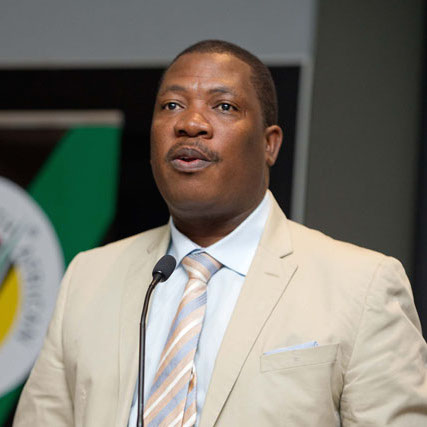
Meanwhile, MEC Panyaza Lesufi said he was impressed by the Bryanston High School Governing Body’s (SGB) swift action regarding allegations of a sexual assault.

“The SGB suspended the educator pending the finalisation of the alleged learner abuse case, which allegedly took place between 2017 and 2018.”

Lesufi said an investigation by an independent law firm has been finalised. The teacher’s hearing has been scheduled for early February.

“The matter is also under investigation by the South African Police Services. The department has dispatched the psycho-social unit to the school for the necessary support and counselling to all affected learner,” said Lesufi.

In another incident, the department said they were shocked and saddened to learn of a car crash involving pupils from Jabulani Tech Secondary School in Soweto.

The driver of a Subaru allegedly lost control of his vehicle and ploughed into about 20 learners who were walking along the busy road on Monday.

“The learners were taken to Chris Hani Baragwanath Hospital, Bheki Mlangeni, Koos and Dobsonville Clinics for necessary medical observation and assistance. One learner is critically injured,” said the GDE.

“The department strongly condemns the careless driver for his reckless behaviour in and around a school environment with so many young innocent souls. We are hopeful that law enforcement agencies will investigate this case and bring the perpetrator to book.”

Meanwhile, in the East Rand, the department said there was another break-in at its premises – this time, at the Gauteng East district office in Springs.

The department said the suspects took off with about 29 PC boards and 6 monitors. No shooting or injuries were reported.

“It looks like, we are under siege, how do we explain theft of our equipment at different institutions at this rate; really, it seems we are hit by robbers every second week,” said MEC Lesufi.

“This is unacceptable and concerning. We appeal for patience as there may be service disruption while the police investigate. We call upon members of the public to work with law enforcement agencies and share any valuable information that might assist to apprehend the suspects.”

African News Agency (ANA)

DJ Zinhle, Oskido, Themba and Jeremy Loops join SAE Institute

0

Bang Showbiz

SAE Institute once again partnered with Bridges for Music and some of South Africa’s most respected and influential artists, DJ Zinhle, Oskido, Themba and Jeremy Loops, to offer new scholarships for deserving disadvantaged students wanting to study audio at the industry-leading school.

The scholarships are in partnership with international non-profit, Bridges for Music, who provide education opportunities to disadvantaged young creatives and have global artists that include Skrillex, Ritchie Hawtin and Luciano as their ambassadors.

The recipients of the 2019 scholarships will be awarded an opportunity to study towards a one-year Higher Certificate in Sound Production at SAE’s new state-of-the-art campus in Rosebank, Johannesburg.

The new patrons join the likes of Black Coffee, AKA, Young Guru (Jay Z’s engineer and tour DJ from New York), Ready D and Hlubi Mboya who, in partnership with SAE Institute and Bridges for Music, have continued their commitment to social responsibility and growing the education landscape in South Africa.

“We have always been deeply committed and passionate about giving back to the industry and we are proud to have partnered with some of South Africa’s most respected local artists to facilitate opportunities to help the aspiring youth make their musical ambitions a reality,” says Trenton Birch, Director of SAE Institute South Africa.

“I’m excited to be part of this programme, the thought of even one woman receiving the opportunity to change their life makes me happy. I can’t wait to meet and work with whomever is deserving of this life-changing opportunity,” says DJ Zinhle, whose scholarship will only be open to female applicants.

DJ Zinhle is one of the most celebrated female house DJ’s in South Africa, with hits such as “My Name Is” ft Busiswa. She is also a successful producer, TV host and entrepreneur.

Oskido is a South African recording artist, DJ, record producer and businessman, best known for being one of the pioneering artists to popularise the Kwaito genre of music outside the townships of South Africa. He co-founded record label, Kalawa Jazmee.

Themba, formerly known as Euphonik, is certainly making a name for himself having burst onto the global dance scene in 2018 with a string of high-profile gigs and music releases.

Modern folk musician from Cape Town, Jeremy Loops, is a South African singer, songwriter, and record producer, who has released two studio albums in ‘Trading Change’ in 2014 and ‘Critical as Water’ in 2018, for which he is currently doing a world tour to promote the album.

New SAE Institute campus opens in February 2019.

SAE’s new 1,700 square metre campus in Rosebank, Johannesburg is a powerful addition to the creative media education landscape, providing students, staff, and guests with an inspiring environment in which to work and study.

The campus is based in the trendy, vibrant Design District building that is the home to film companies, TV channels, casting studios and music businesses. Within a five-minute walk of the Gautrain, it is also surrounded by a multicultural mix of restaurants and venues with inspirational design shops and quirky stores.

Russia’s nuclear firm Rosatom offers scholarships for African students

0

Brian Sokutu

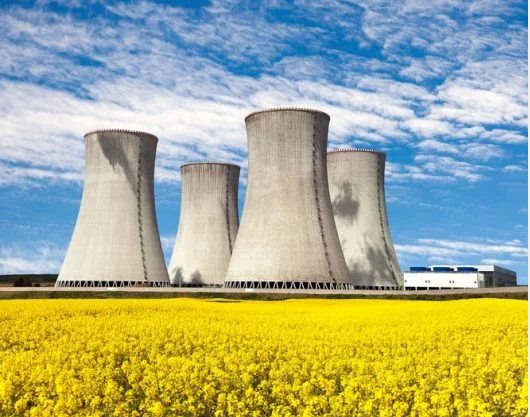
Russian nuclear energy giant Rosatom has announced scholarships for nuclear science studies for African students.

Applications, it said, were open and available for graduate and undergraduate programmes in nuclear research and engineering at leading universities in the Russian Federation “to help develop the next generation of African nuclear scientists and engineers”.

“The goal of the scholarship is to support interest in nuclear research and capabilities among young African scientists and engineers, contributing to solving some of the world’s most critical issues in the nearest future and allowing for the continent to be self-sufficient,” said Rosatom Central and Southern Africa’s chief executive Dmitry Shornikov.

Several study options are available at Russian universities, specialising in nuclear engineering such as the National Research Nuclear University (MEPhI) and Tomsk Polytechnic University in Siberia. MEPhI is the leading Russian university in the field, with over 75 years’ expertise in nuclear engineering.

It is the key partner of Rosatom in the field of educating young and highly qualified nuclear specialists; it hosts more than 1,500 foreign students from 57 countries, including more than 50 students from sub-Saharan Africa.

Bachelor’s degrees involve programmes in nuclear power engineering, thermal physics, nuclear reactors, materials and nuclear power plants.

“This is a great opportunity for scientists and engineers based specifically in sub-Saharan Africa as well as for the recent matriculants in the region who made progress in mathematics and the sciences and want to apply for nuclear specialties,” said Shornikov.

  • For more information, prospective students can visit the website www.russia.study
  • The deadline for the first round of applications is February 15, 2019.

Quality of education in Africa

0

Staff Reporter

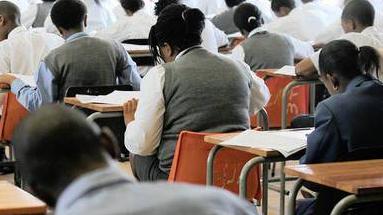
Africa is the most youthful continent in the world with more than 200 million youth aged 15 to 24, and creating productive employment options for all these young people is essential for the future of the continent.

A well-educated and skilled workforce is essential to many investors and employers, and we’ve seen that several employers across the African continent have been highly critical of the fact that there’s an absolute lack of basic and technical education and the skills of graduates.

Just like in the rest of the world, a robust education system is key for economic development and growth in nations across the continent.

The basic quality of primary, secondary, technical, vocational, higher, and post-graduate education is generally measured by workers’ performance on the labor market, and this means that the education system across Africa need to be strengthened to be able to absorb the millions of young people in Africa into the regional, national, or global workforce.

The working age population in Africa (15 to 64 year old’s) is continuing to grow rapidly, and by the year 2040, the African workforce is estimated to be over one billion.

The education system in Africa has come to a crossroad, and throughout history, we’ve never seen more students enrolled in schools across Africa. As such, that’s good news, but the education infrastructure, available study materials, and the number of well-trained and qualified teachers have in no way kept pace with the rapidly growing demand.

Increased student numbers have outpaced education funding by far, resulting in a drastic overuse of available facilities, extreme shortage of instructional supplies, and poorly equipped libraries across Africa.

But while we see many more students in the classrooms, but there’s a major and much deeper learning crisis going on: though they’re attending school, many students do not receive basic training at school, and many students are actually are not better off in school the children who are not going to school at all. This means that the quality of the education system in Africa is dangerously poor, and we can see more and more private institutions stepping in to fill these gaps.

In 2015, the average student-teacher ratio in Africa’s primary schools was 40:1, and this statistic hasn’t changed in almost twenty years. We all know that the quality of the education system in a country strongly predicts its economic growth capacity, and African nations have a better chance to benefit not only economically, but also in a broader sense, if their workforce is better educated and have well-rounded skills and knowledge so they are able to compete in today’s knowledge-driven global economy.

In Africa, we see that the increase in the number and quality of private schools, though as such not a negative development and a viable alternative, has come from terribly failing public education systems across the continent. Investing in public education is crucial for building a well-trained and highly skilled workforce and to grow Africa’s progress and prosperity.

Because they recognized the correlation between socio-economic development and the quality of their educational systems, several sub-Saharan countries have finally decided to gradually increase their public spending for educational purposes by over 6 percent annually, and in general we can see that African countries are devoting larger and substantial portions of their government budgets to their education sectors, despite often relatively modest GDP’s and many other developmental issues.

Often we see, though, that the increase in government spending on education is by far not enough to reach essential education levels and to provide decent education opportunities for their young people. Despite all these problems we also are convinced a change for the better will arise as the African countries, on average, are allocating the largest portion of their governments’ expenditure to their education systems (some 18.5 percent)

Francois Pienaar flummoxed by E Cape rugby being stuck in mediocrity

0

Khanyiso Tshwaku

The 1995 Rugby World Cup-winning captain Francois Pienaar said he didn’t understand why the Eastern Cape’s rugby talent hasn’t taken South African rugby by storm in the manner it should.

Pienaar‚ who is the chief executive officer of Advent Sports and Media Entertainment (ASEM)‚ was speaking at the Varsity Cup launch in Johannesburg on Wednesday afternoon.

The Eastern Cape rugby regions‚ Border and Eastern Province‚ aren’t represented in the main Varsity Cup but will be taking part in the Varsity Shield.

The University of Fort Hare (UFH) and Walter Sisulu University (WSU) are from the Border region while Rhodes University and the Nelson Mandela University play under the Eastern Province rugby banner.

“I’m perplexed that the talent in the Eastern Cape hasn’t come through in the way that I thought it would. They are fast‚ strong and incredibly skilled rugby players and there’s a much bigger platform for them‚” Pienaar said.

“If you look at the other platforms‚ there’s club rugby but club rugby in South Africa is OK‚ but not at the level of Varsity Cup rugby. The youngsters who are doing well at school level will get seen and get the opportunities to further their careers and play at a much higher level.”

UFH and WSU could be the toast of Border rugby in the absence of professional rugby in the region this season.

The Border Rugby Union was liquidated last year and one of the unfortunate spinoffs is the lack of a professional side that will represent the region in the SuperSport Rugby Challenge and the Currie Cup First Division.

Two major reasons that led to Border’s liquidation are a sizeable tax bill and a loan to SA Rugby they need to service.

The UFH “Blues” and the WSU “All Blacks” will open their Varsity Shield accounts on February 18 when they meet at the Davidson Stadium in Alice.

Pienaar said the Border would have benefited greatly because the region has a stable Schools Rugby conveyor that regularly produces high calibre players.

“This question should have been asked to Border Rugby because they’re the ones who should be answering this question. This is a platform that should be embraced because there’s some great schools there and then you have the universities‚” Pienaar said.

“You build from schools rugby into the next phase of the game and they’ve never quite had that level.

“It was the missing trampoline for talent where people stop playing rugby after school because what’s the next thing? You stop playing when you don’t have a professional contract.”

New academy teaches home languages

0

Karabo Ledwaba

A teacher has taken it upon herself to help young black Model C and private school kids learn their mother tongues.

Gomolemo Monye founded Solomon Projects Language Academy (SPLA) which teaches languages such as Setswana, Sepedi and Isizulu to children who have mainly been speaking English both at home and at school.

Monye, 33, said she noticed her two children, aged five and two, were struggling with Setswana and realised that more black families were likely to be experiencing the same problem.

“I had trial lessons with Motheo [her daughter] and I was so elated to realise how excited she was about learning Setswana and how easy it was for her to grasp the little and basics I shared with her,” she said.

Monye, from Mahikeng in the North West, said she had always been proud of her heritage and wanted the same for her children.

She said a child who understands their home language also knows how to behave in traditional settings.

“I was known as that girl who speaks Setswana. I did not conform to the Johannesburg way of speaking. I introduced myself as, “ke nna Gomolemo,” she said.

She said this puzzled everyone, however, she believes they immediately knew what she stood for. “I was so proud to be a Motswana girl from Mahikeng,” she said.

Her school, which is named after her late father Solomon Mookeletsi, has two campuses – in Midrand and Kempton Park. Lessons are offered to pupils as young as four years up to matric by Monye and four other teachers at a cost of R750 a month for a lesson
every week.

Most of her students are from private and Model C schools where African languages are not a priority in the curriculum.

Monye said she started off with five students and within a month the number doubled. She said there were children currently on the waiting list.

“Our selected teachers are well trained and qualified to teach children,” she said. To ensure she was placing her pupils in good hands, all her teachers have police clearance.

Monye has a BA corporate communications degree from the University of Johannesburg and an early childhood development diploma from the Montessori Centre South Africa.

Tumelo Papo, a parent with two daughters aged 11 and 15 who attend lessons at the academy, said she had already noticed a huge improvement in her children since they started lessons.

“We wanted them to get a clearer basics of Setswana because their school only offers languages such as Latin and French. They can now construct full sentences,” she said.

Motshekga takes education drive to Mpumalanga

0

Staff Reporter

Basic Education Minister Angie Motshekga is taking the #Read2Lead and #SecondChance programmes to the youth of Khotso Tsotetsi Lapa, eMbalenhle and Secunda in Mpumalanga today.

The Second Chance programme is a call for youth to register to rewrite their matric exams in June.

The exams are intended for learners who have not completed their matric and those who want to improve their results, as well as those who failed their matric.

Learners who wish to write or rewrite matric exams in June this year have until 31 January to register.

Learners can visit www.education.gov.za and click on the link to register for the Amended Senior Certificate examinations at the bottom left of the DBE website homepage. This will link learners to an online registration portal.

The Read to Lead campaign, on the other hand, aims to improve the reading habits of all South African children.

The campaign, which was launched in 2015, is geared towards helping to ensure that all learners are able to demonstrate age-appropriate levels of reading by 2019.

It provides teachers and schools with clear directives on the department’s expectations of achieving the expected levels of performance.

Some stakeholders will support the Minister on her drive by exhibiting their programmes at the roadshow. These include the Department of Higher Education and Training, which will give career guidance, and Vodacom, which will exhibit its e-School app, and how to register for free and access the programmes available to learners. – SAnews.gov.za

Zimbabwe: High school students abandon class fearing arrest over violent protests

0

Mashonaland East Correspondent

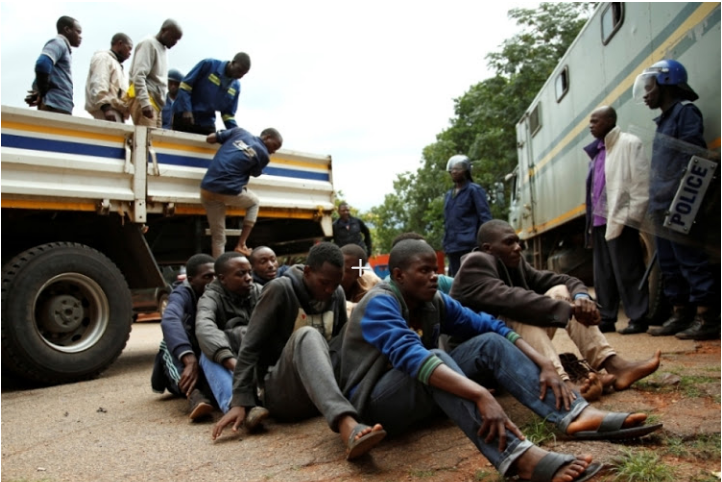
Some high school pupils in public schools here have not been reporting for class in the last two weeks fearing arrests for allegedly taking part in recent anti-government protests triggered by massive fuel increases.

Teachers in the town confirmed this past week that they were not conducting any meaningful lessons as terrified students were absconding class fearing that the police and army would pounce on them.

At least 33 people in Marondera have been arrested since the violent skirmishes which coincided with a three day job stay-away called by the Zimbabwe Congress of Trade Unions and some citizen movements January 14-16..

Most have been remanded in custody facing public violence charges.

The State is accusing them of attacking Dombotombo Police Station before looting property, which included police uniforms, money and cell phones valued at $30 000.

Among those arrested were two MDC Alliance councillors, Simbarashe Nyahuye of Ward 2 and Charles Ngwena, Ward 4.

However, most of the suspects now in remand prison are male youths and teenagers, some still in high school.

“We are not conducting any classes at the moment as most students are not coming to school as they fear that they will be arrested by police officers and soldiers,” a teacher at Rakodzi High in the town confirmed.

“The situation is the same at all government high schools here. We are hoping that by next week the situation would have improved for the better and we might start lessons.”

Armed police and army officers are still patrolling the area with reports that they are still hunting for more suspects after hundreds of demonstrators overran the police station during the protests.

Residents have also accused the State security agents of on-going harassment and assault especially during the night.

Over 700 people have been arrested across the country and were in remand prison while 12 have been confirmed dead by local NGOs with the deaths linked to army gunshots.

The state crackdown has elicited local and international condemnation.

The University of KwaZulu-Natal is lookin for a vice-chancellor

0

Mphathi Nxumalo

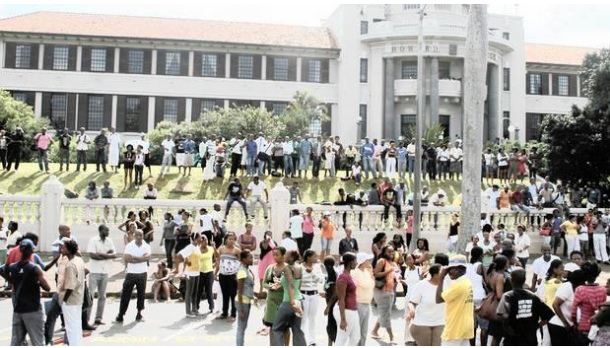
The hunt is on for a new boss for the University of KwaZulu-Natal (UKZN)

The deadline for applications for the position of vice-chancellor at the UKZN is this Thursday after an extension from January 1 and two education experts advised on the quality traits to look out for.

The advertisement followed the resignation of Dr Albert van Jaarsveld last year after a turbulent three years at the institution. His term was due to end in September this year.

During his tenure Van Jaarsveld had to deal with a number of issues including #FeesMustFall and claims of racism after some of the university’s top executives were suspended following an acrimonious fallout with him.

After his resignation in August last year, Professor Nana Poku was appointed as acting vice-chancellor.

Normah Zondo, acting executive director, corporate relations division at UKZN, said the post was initially advertised last year. She said the appointment process could take anything between three and nine months.

Some of the candidate requirements include a PhD or doctorate, at least eight years demonstrable leadership and experience at executive management of a faculty or college.

“The successful candidate must be a credible individual of unquestionable integrity with strong interpersonal and financial capabilities, who is an institutional leader and is able to establish substantive networks internally and externally with different stakeholders,” read the advert for the position.

According to Stellenbosch academic and a former vice-chancellor Jonathan Jansen, in the tough turbulent times that are facing higher education, vice-chancellors should have a good dose of humility.

In his opinion piece entitled: “Cheat sheet for VCs running universities in turbulent times”, which was recently published in the Daily News, he said vice-chancellors should work for the betterment of the institution and the people at the institution.

He said understanding one’s limitations and surrounding oneself with competent people was another key aspect for successfully running the university.

“A singular ambition. Sitting in the main office, you tend to overreach by wanting to do everything on a long list of goals. Do one or two big things well and you are more likely to make an impact,” Jansen advised.

Also weighing in, education expert Professor Kobus Maree said the new vice-chancellor would have to be adept at many things, including handling financial matters. “This is particularly important since free tertiary education was announced in the country and balancing the books is important. Another matter that needs to be changed is to decolonise the institution’s curriculum,” Maree said.

“Diversify staff and also recognise and promote people who have been previously excluded,” he said.

Despite the challenges that an institution faces, Maree said real leaders would not shy away from applying, but “would see this as an opportunity to turn the institution around”.

“It is a huge opportunity,” he said.

Daily News